
EcoGuard Pest Management
Professional fire ant control technician treating fire ant mound in residential lawn

Professional Fire Ant Control & Treatments

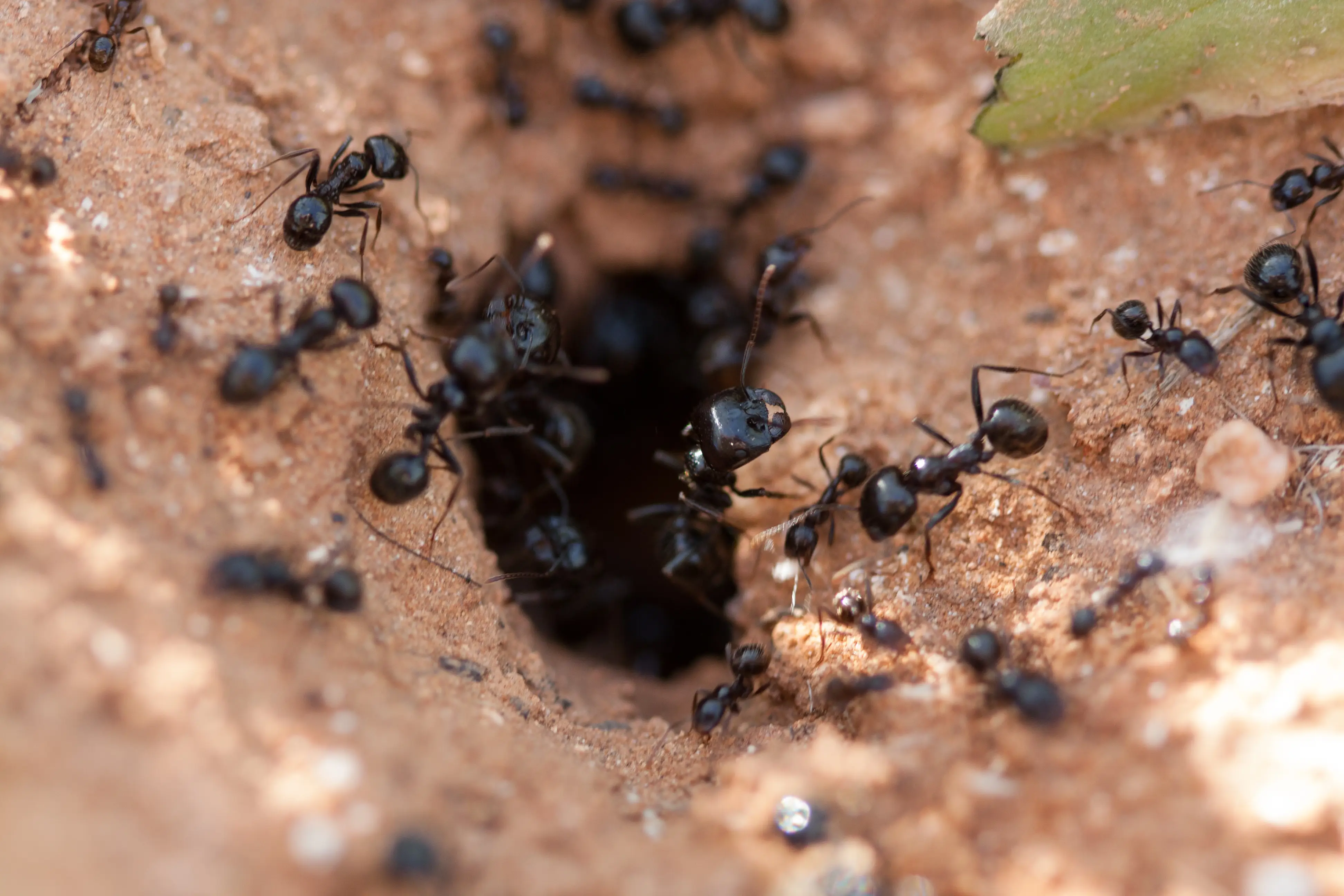
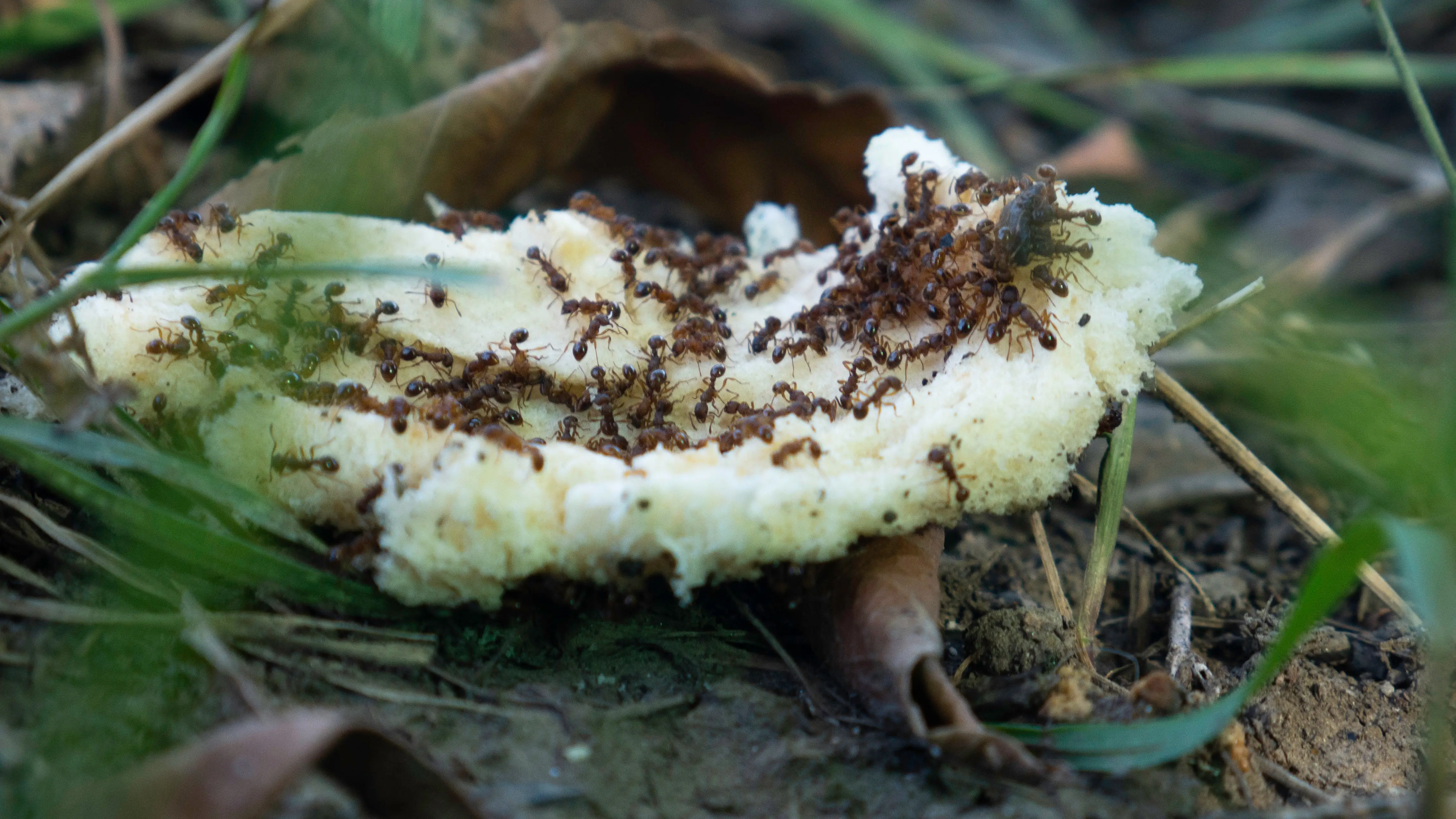
Fire ants are tiny insects with a burning sting that transform outdoor spaces from peaceful retreats into painful no-go zones. These aggressive invaders establish massive underground networks while their mounds disrupt landscapes and their venom sends thousands to emergency rooms annually. EcoGuard's specialized fire ant management programs eliminate existing colonies while creating long-term protection against these territorial pests.

Fire Ant Pest Control Experts

Successful fire ant management demands specialized knowledge of their complex colony structures, reproductive patterns, and territorial behaviors. Our certified fire ant exterminators undergo extensive training in fire ant biology, focusing on their unique multi-queen systems and underground network architecture. This expertise enables our team to implement strategic approaches that target entire colonies, including hidden queens, rather than simply treating visible mounds—ensuring complete elimination rather than temporary surface control.

Why Fire Ants Are a Serious Problem

These aggressive invaders create multiple challenges demanding professional attention:

  • Fire ants deliver painful, burning stings containing alkaloid venom that creates distinctive pustules and potential life-threatening reactions in sensitive individuals—a single disturbed mound can release thousands of ants that aggressively attack in coordinated waves
  • Unlike native ant species, red imported fire ants establish colonies with multiple queens, each capable of laying up to 1,500 eggs daily, allowing colonies to expand exponentially and making elimination extremely difficult
  • These destructive pests damage electrical equipment, irrigation systems, and HVAC units by building nests inside housings and chewing through insulation, while their excavation activities undermine foundations and pavements
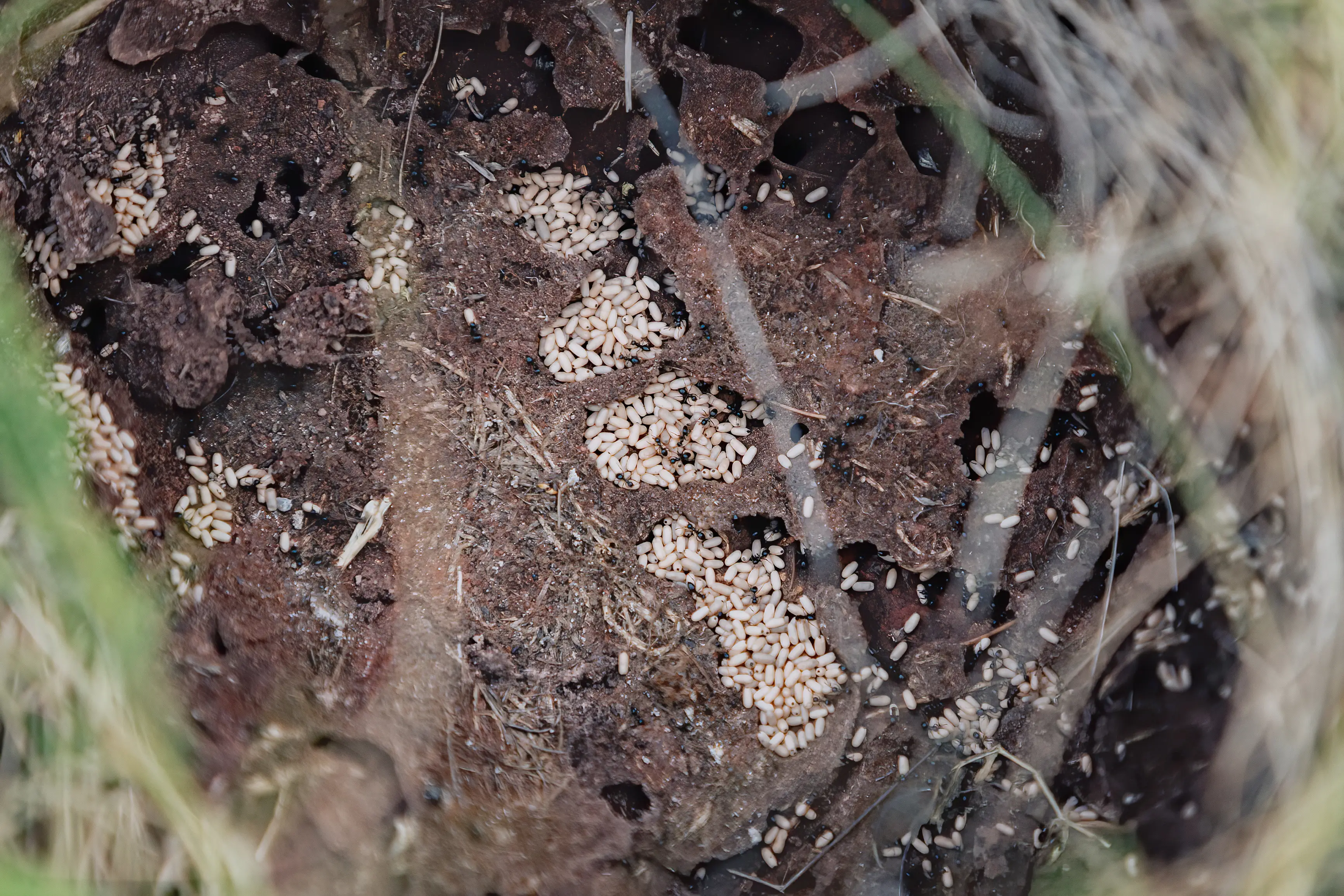
  • Fire ant colonies construct extensive underground tunnel networks extending 1-5 feet deep and up to 25 feet horizontally from visible mounds, creating widespread subsurface infestations invisible to property owners

Fire Ant Control Service Plans

Choose the protection level that's right for your property

One-Time Treatment
$249+
Starting price
  • Comprehensive property inspection
  • Species identification
  • Entry point identification
  • Targeted treatment application
  • Perimeter barrier application
  • Nest elimination
  • Treatment report & recommendations
  • 30-day guarantee
Get Started
MOST POPULAR
Annual Protection
Contact Us
For custom pricing
  • Everything in One-Time Treatment
  • Seasonal maintenance plan
  • Entry point treatments
  • Priority scheduling
  • Re-treatment guarantee
Get Started

* Prices vary based on property size, infestation severity, and treatment method. Contact us for an accurate quote.

Service Plan Comparison

FeatureOne-TimeAnnual
Comprehensive Inspection
Mound & Broadcast Treatment
Follow-Up InspectionsQuarterly
Perimeter Barrier Protection
Re-Treatment Guarantee
Seasonal Preventive Treatments

Get Your Free Fire Ant Quote

Protect your property with a free fire ant quote from our licensed experts.

✓ Same-day service available
✓ Licensed & insured
✓ Detailed property assessment
✓ No-obligation estimates

Service Areas

We provide fire ant control services throughout:

  • California
  • Oregon
  • Washington
  • Texas
  • Tennessee
  • Nevada
View All Counties →

Ready to Eliminate Your Fire Ant Problem?

Schedule your fire ant inspection today. Our experts will assess your property and provide a customized treatment plan.

📞 Call (866) 326-2847Get Free Quote

Fire Ant Treatment Options

Our comprehensive approach to fire ant pest control combines multiple professional-grade strategies designed for complete colony elimination. Each treatment method targets different aspects of fire ant biology to ensure thorough eradication and long-term protection.


Technician applying liquid drench treatment directly to fire ant mound to eliminate colony

Individual Mound Drenching

Powerful liquid applications penetrate mound structures, saturating tunnels and chambers to reach queens and developing brood deep within underground colony networks.

Pest control professional applying broadcast treatment across lawn for fire ant control

Growth Regulator Broadcast Treatments

Advanced insect growth regulators applied across entire properties, preventing queen reproduction and disrupting fire ant development cycles for long-term population control.

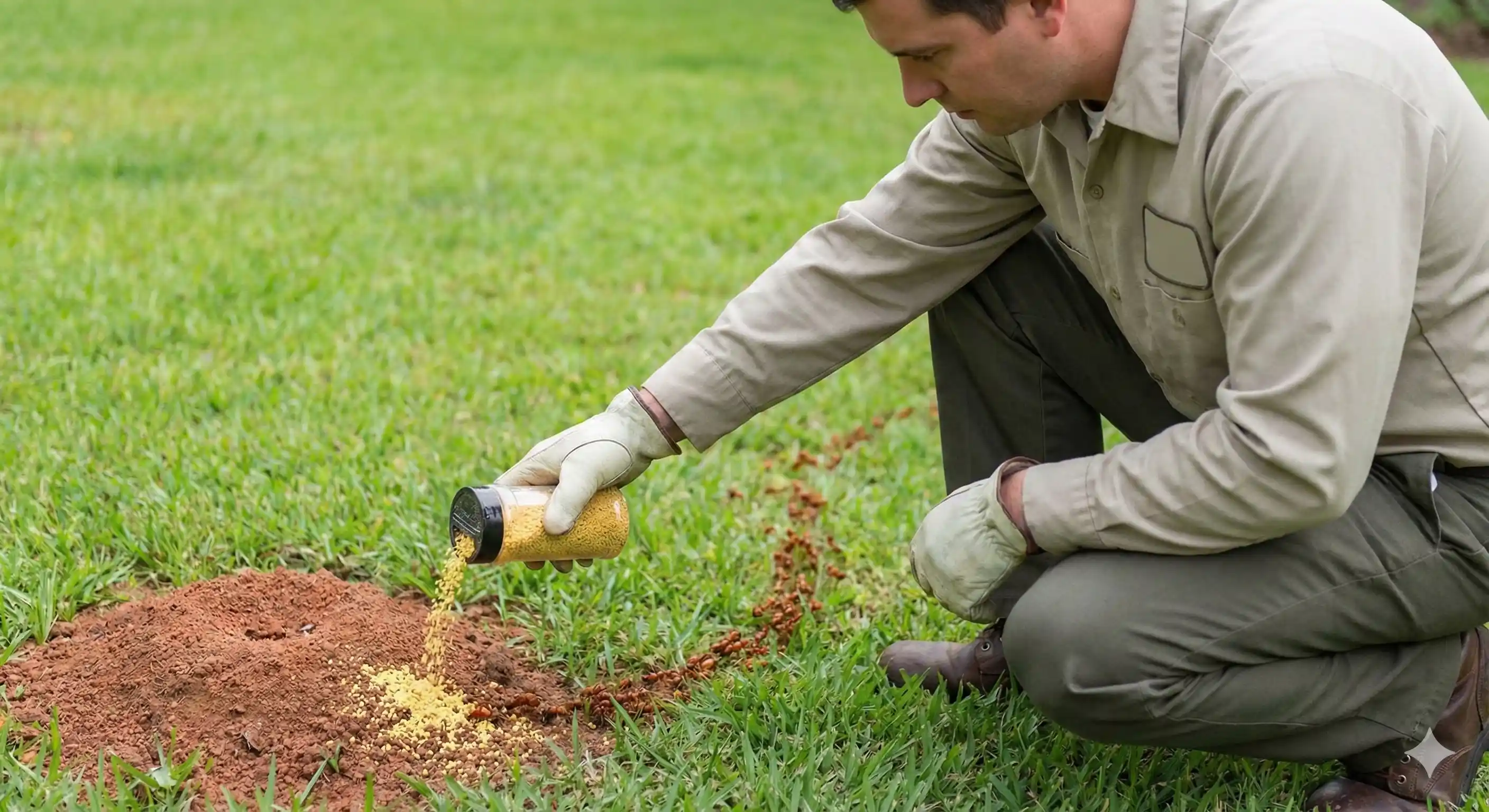
Technician placing strategic fire ant bait near mound and foraging trails

Strategic Baiting Programs

Professional-grade granular baits strategically placed where foraging ants gather food, utilizing their own workers to carry control agents directly to queens and larvae.

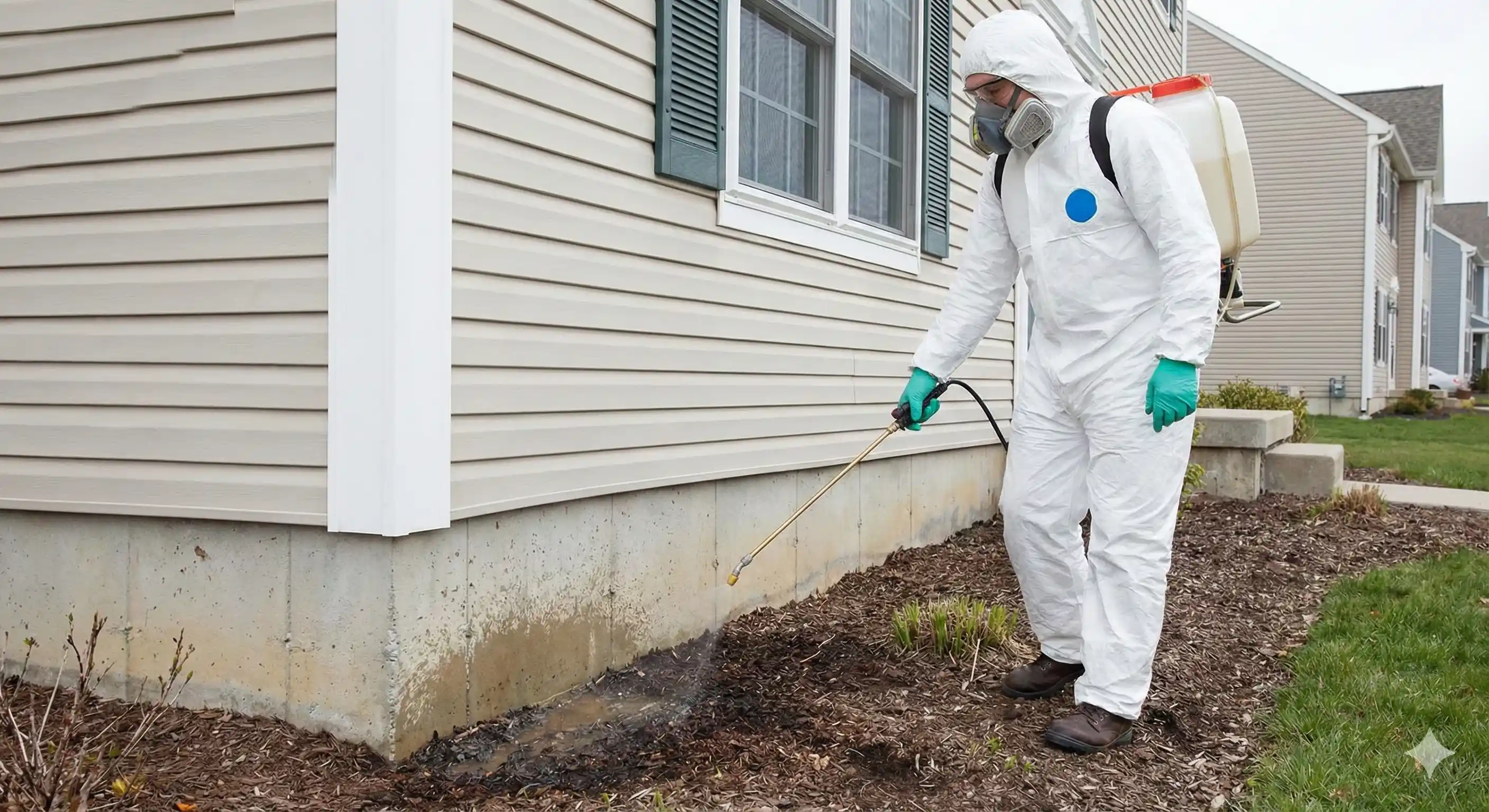
Professional applying perimeter barrier treatment around property to prevent fire ant invasion

Barrier Protection Applications

Creation of defensive perimeters using residual insecticides that maintain extended protection against new colony establishment and migration.

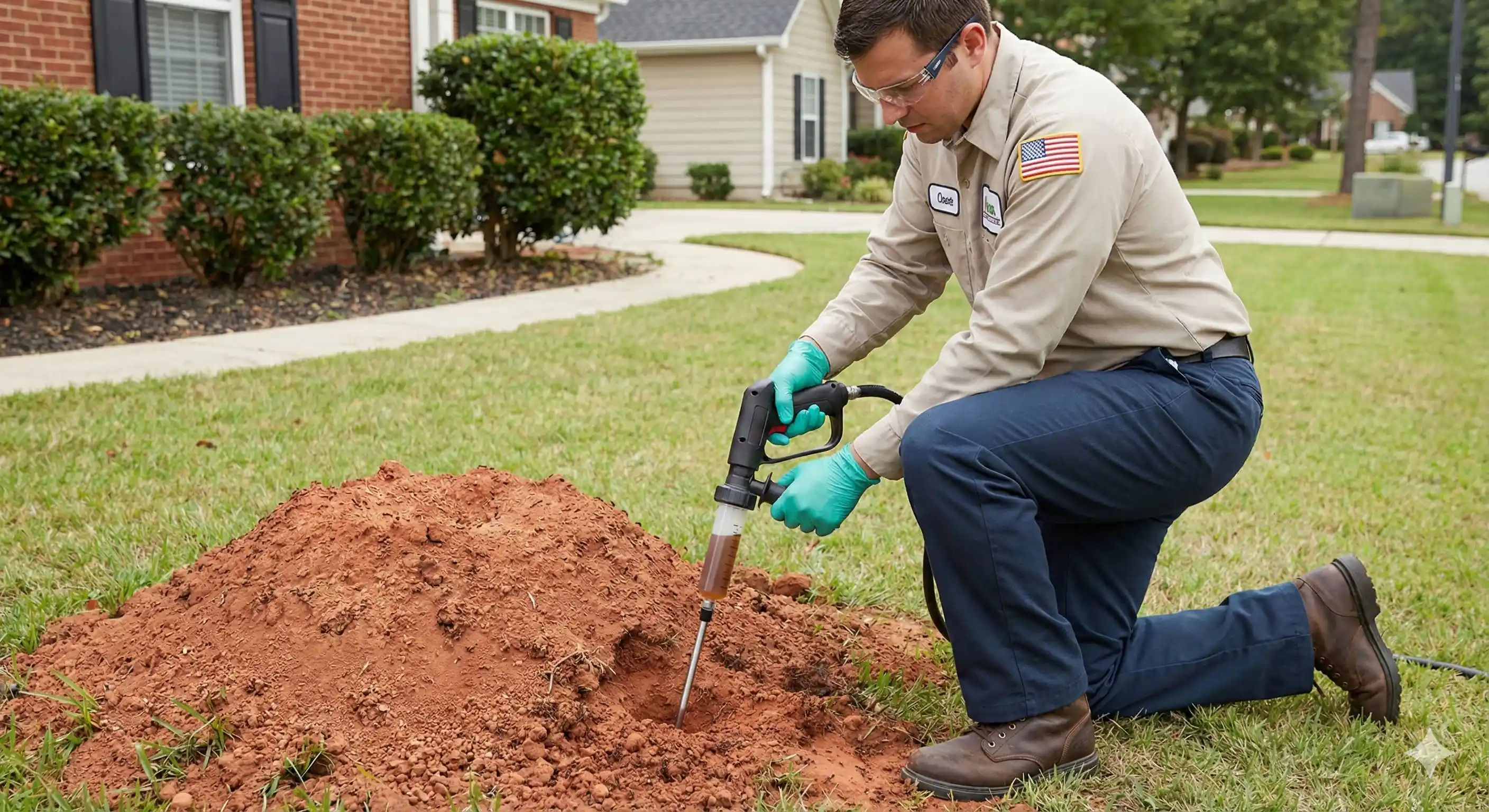
Technician incorporating fire ant treatment into soil to reach underground tunnel networks

Soil Incorporation Treatments

Deep-reaching formulations mechanically incorporated into soil profiles, targeting underground tunnels and satellite colonies developing below the surface.

Applying repellent treatment around playground and sensitive areas to deter fire ants

Repellent Systems

Specialized deterrent applications creating zones that fire ants actively avoid, particularly effective around sensitive areas like gardens, play equipment, and pet spaces.

What Causes Fire Ants?

Understanding the factors that support fire ant populations helps prevent infestations and improves control outcomes.
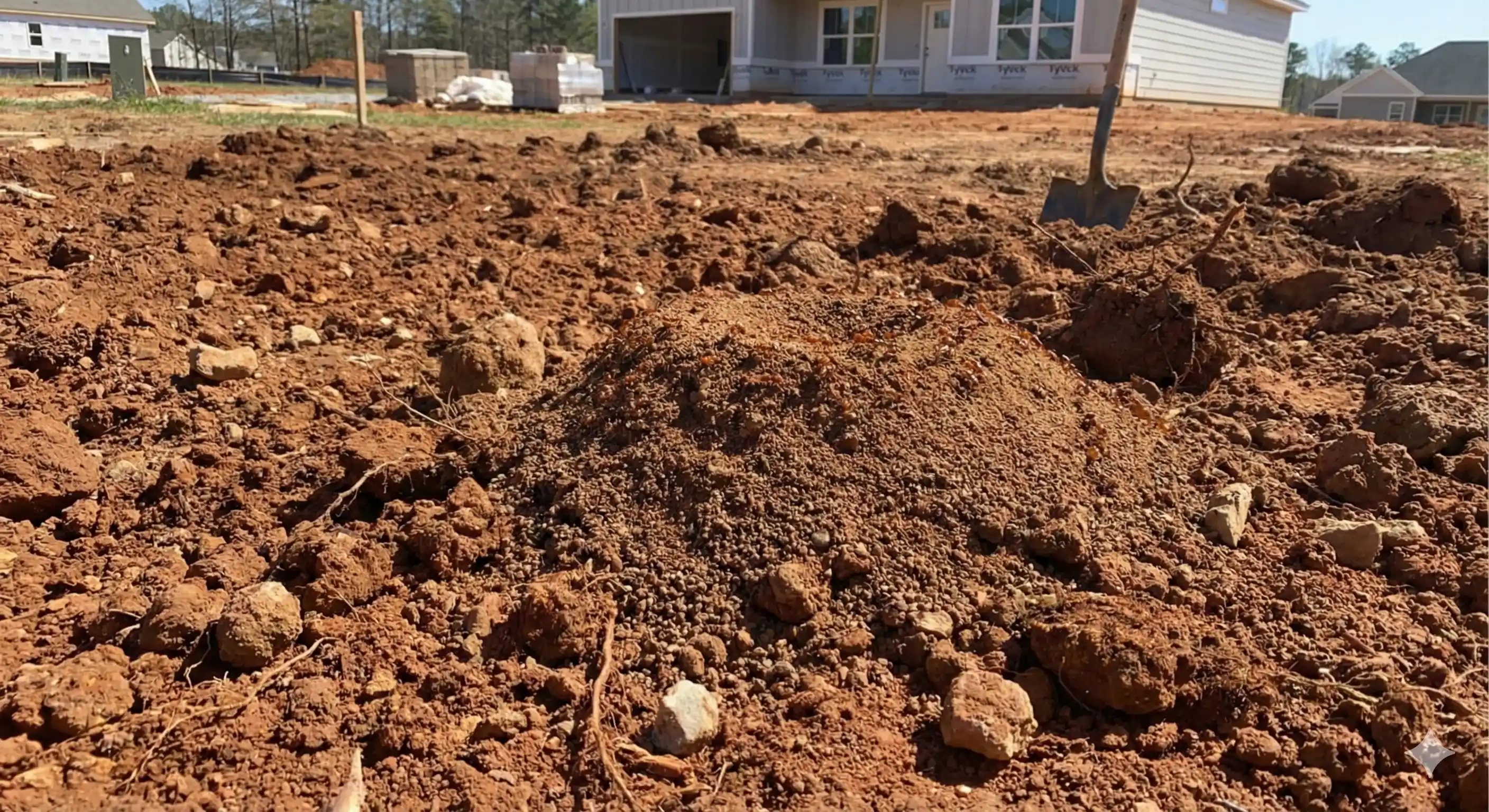

Recently disturbed soil from landscaping or construction attracting fire ant colony establishment

🏗️ Disturbed Soil

Recently landscaped areas, construction sites, and soil disturbances create ideal conditions for new colony establishment, as fire ants prefer areas with minimal competing ant populations and freshly exposed soil.

Open sunny lawn area with fire ant mounds visible in sunlit landscape

☀️ Open Sunny Areas

Fire ants thrive in open, sunny landscapes with minimal shade, particularly favoring lawn areas, pastures, and fields where solar heating warms their colonies and accelerates development.

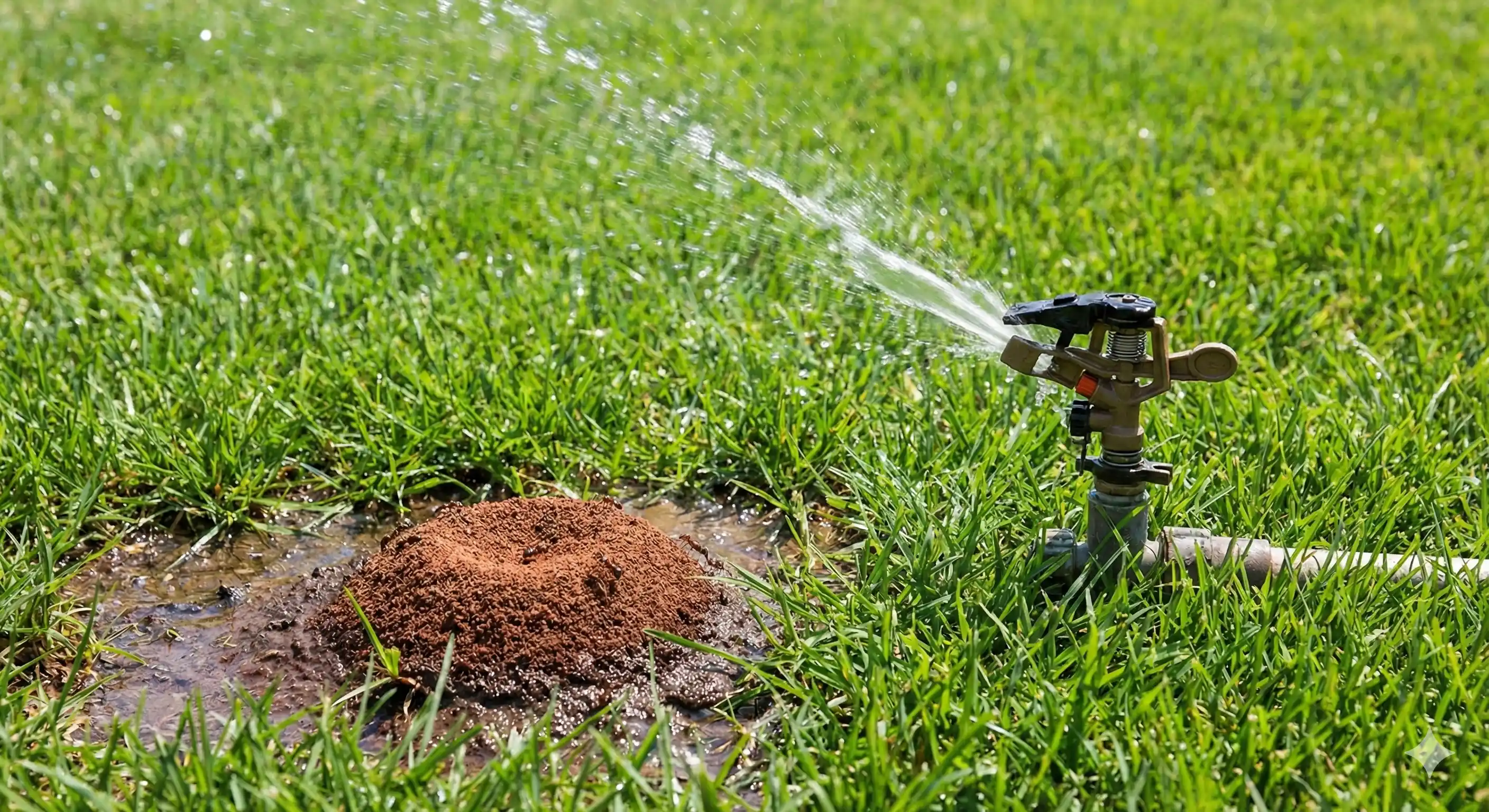
Irrigated lawn area with adequate soil moisture supporting fire ant activity

💧 Adequate Moisture

Properties with irrigation systems, water features, or moderate soil moisture support fire ant populations by providing necessary hydration without flooding colonies.

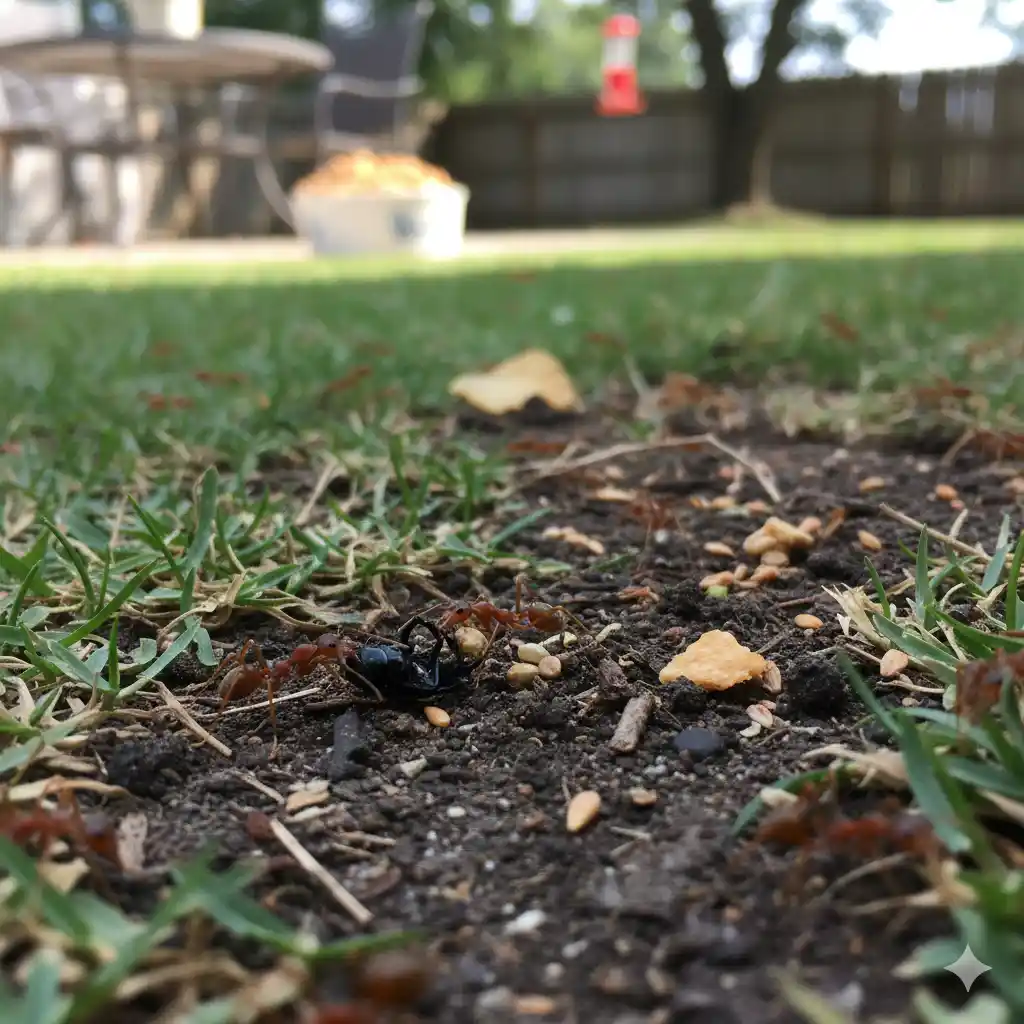
Landscape area with insects and food debris providing fire ant nutrition sources

🍎 Food Resources

Areas with abundant insects, seeds, and protein sources sustain growing fire ant colonies, with managed landscapes often providing ideal nutrition through plantings and outdoor human activity.

Learn More About Fire Ant Prevention →

What Are Signs of Fire Ants in Your Home?

Learn to identify these distinctive indicators of fire ant activity on your property.
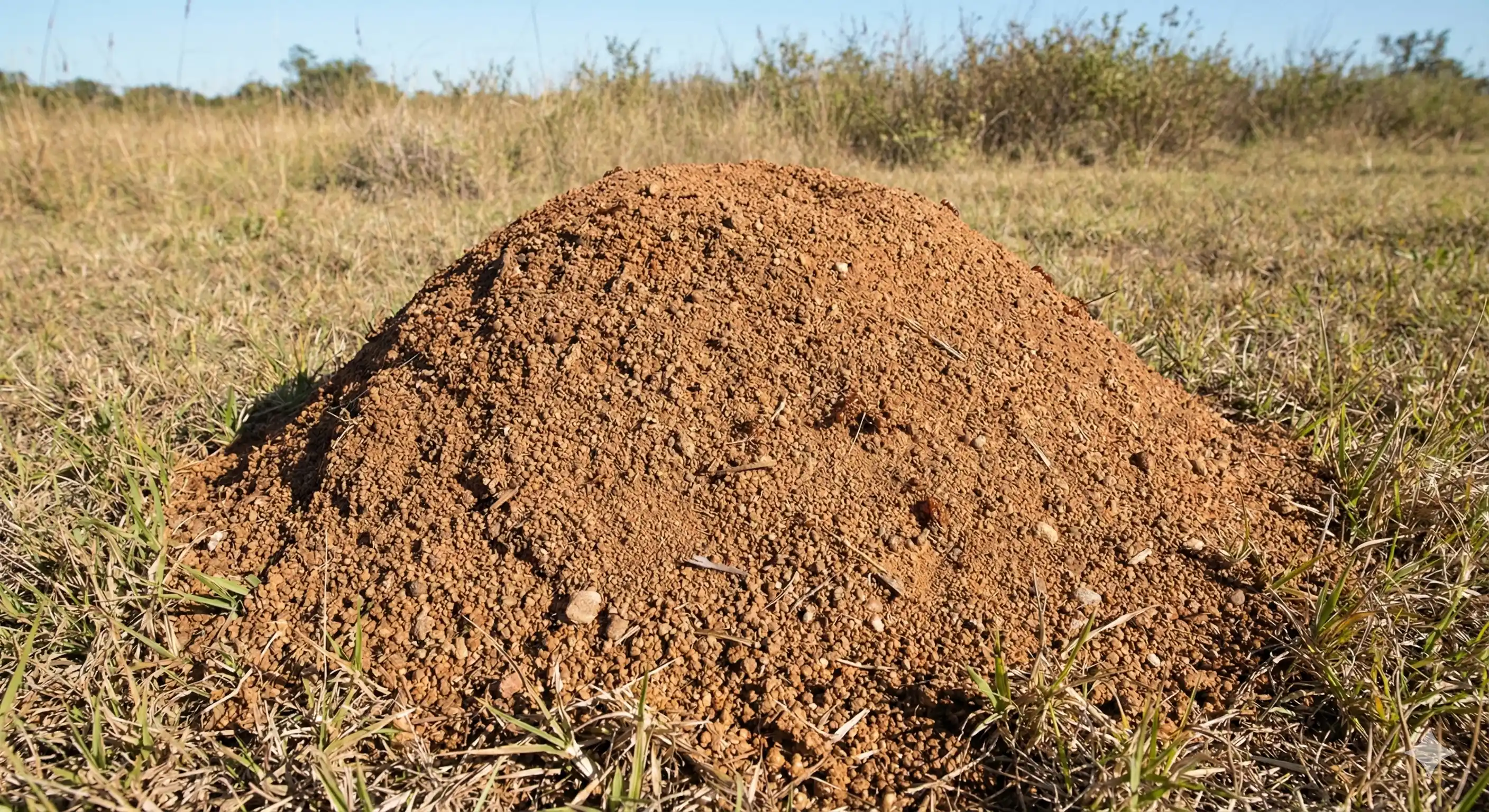
Dome-shaped fire ant mound made of loose granular soil in lawn area

Dome-Shaped Mounds

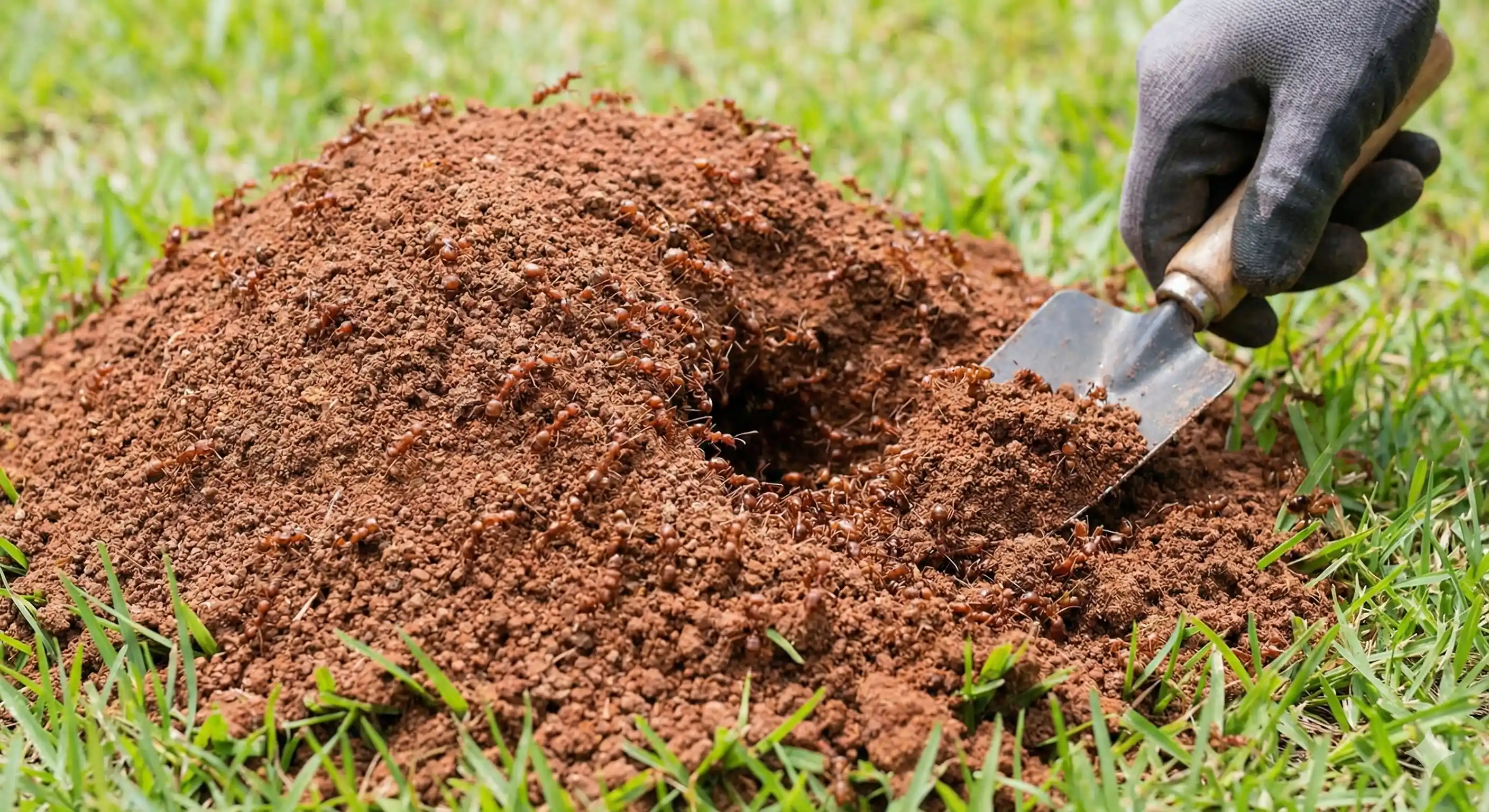
Distinctive mounds without central openings, typically 2-24 inches in height and composed of loose, granular soil, often appearing after rain.

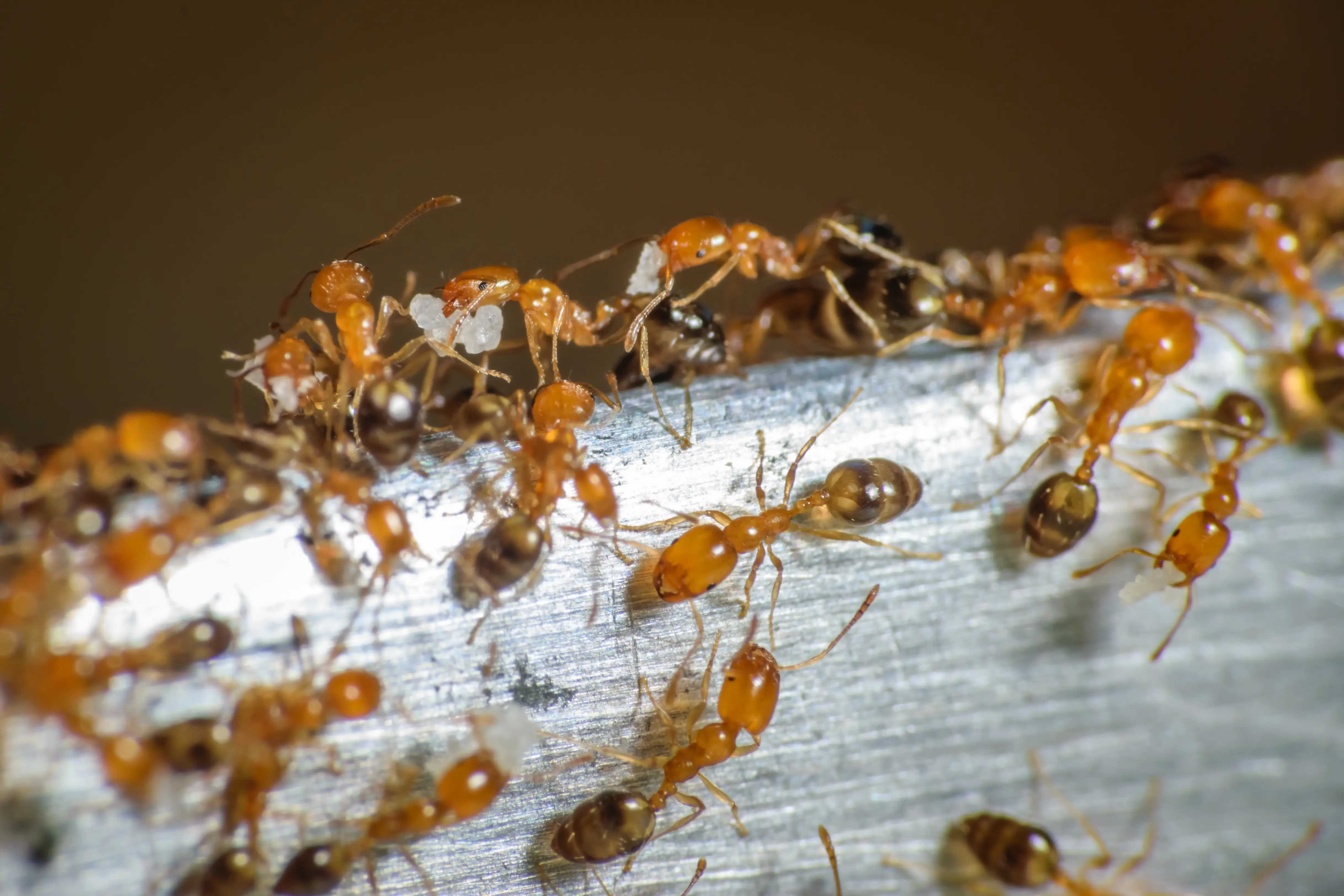
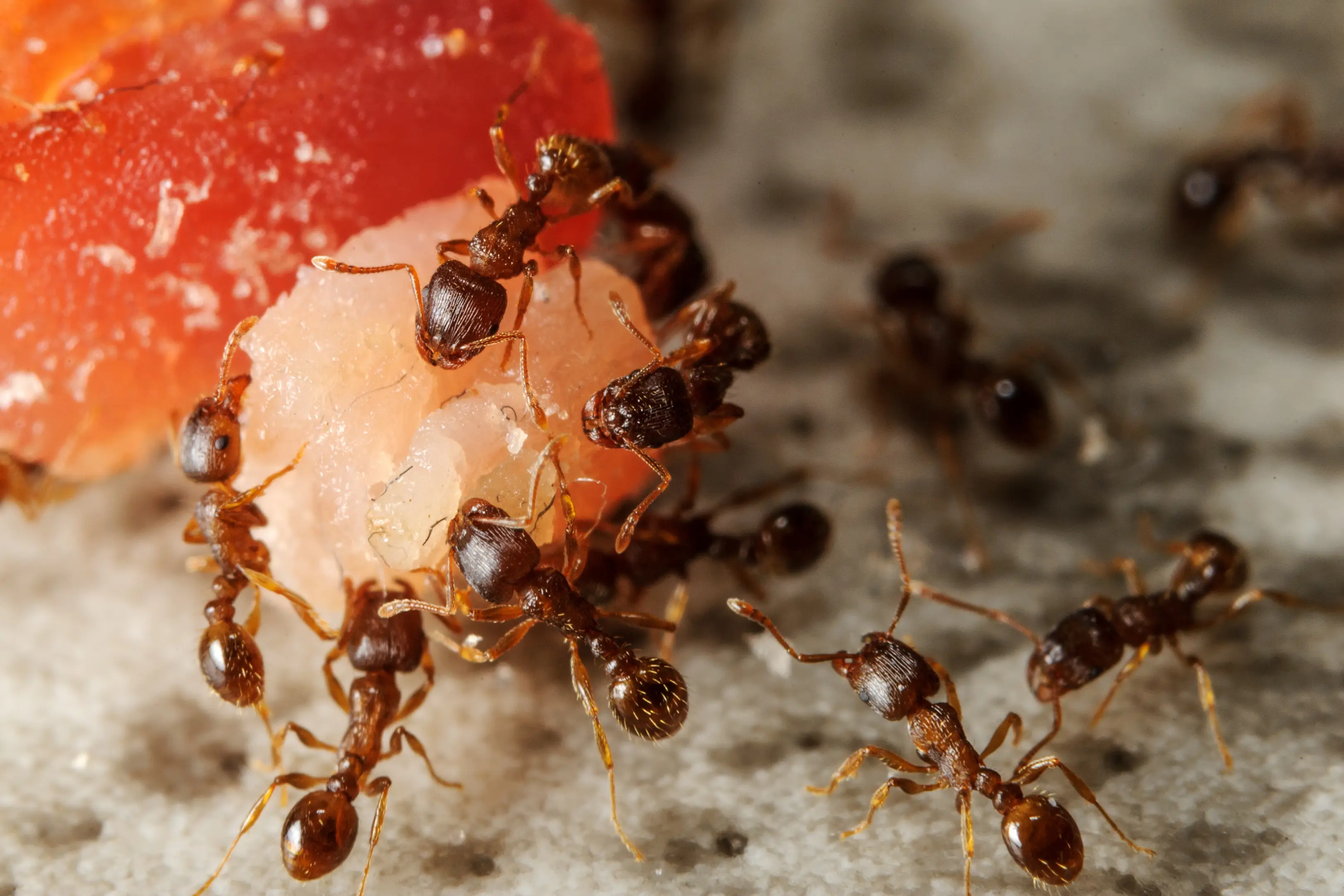
Reddish-brown fire ants swarming aggressively from disturbed mound

Aggressive Ant Emergence

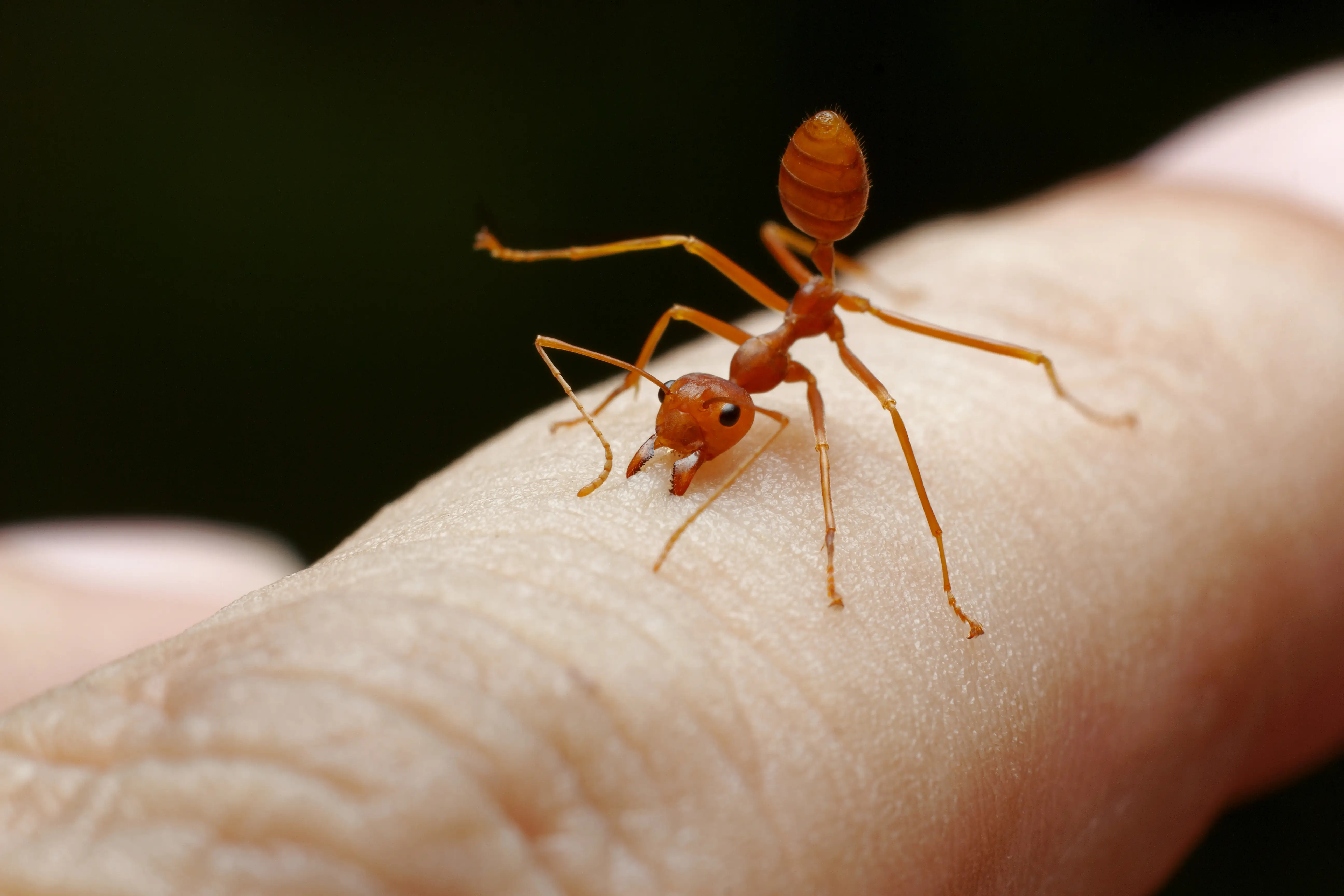
When disturbed, reddish-brown ants ranging from 1/8 to 1/4 inch in length swarm aggressively to defend the colony in coordinated waves.

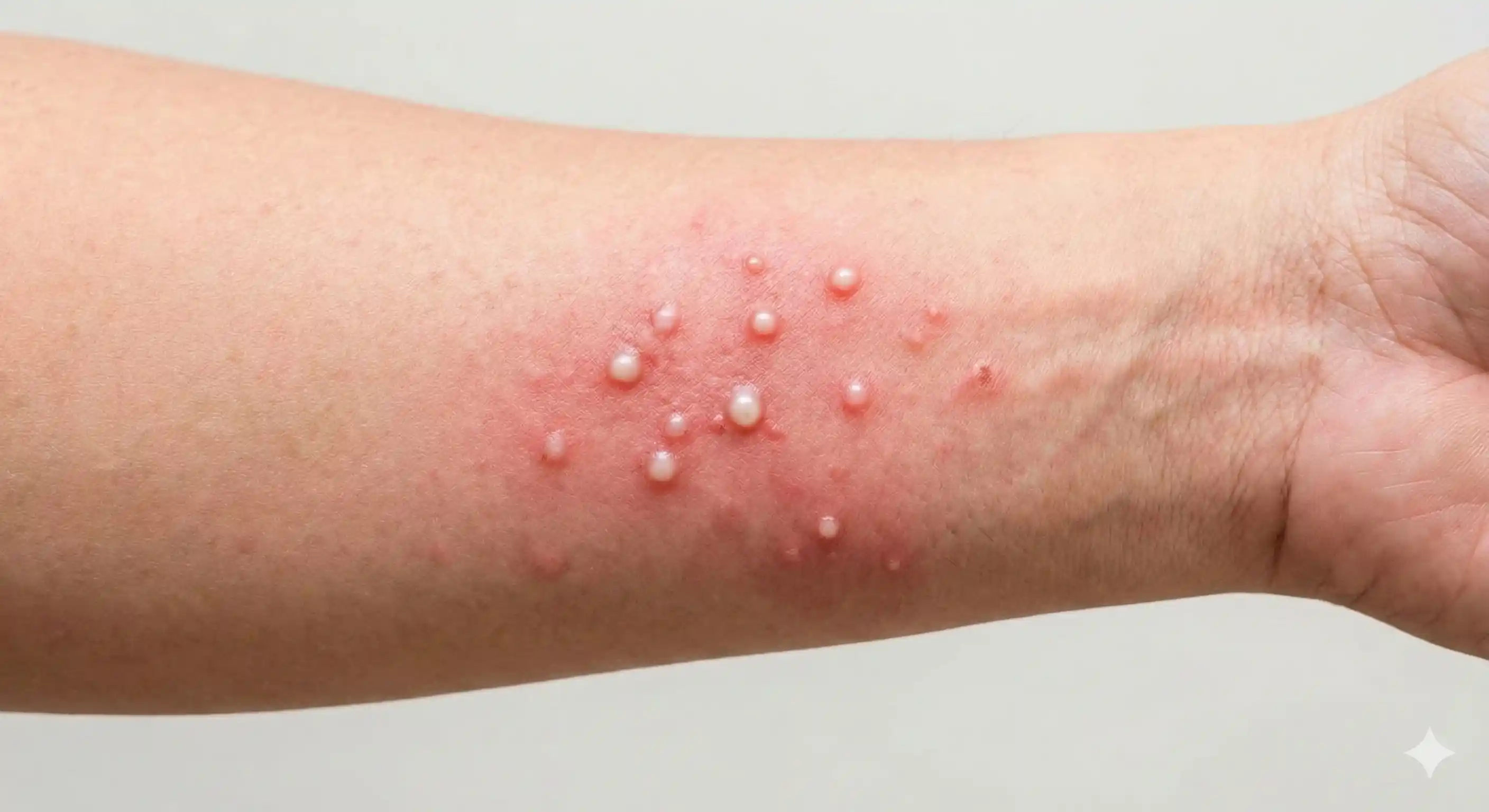
Fire ant sting marks showing characteristic pustules and skin reaction

Sting Pustules

Painful burning sensations and distinctive white pustules on skin following unknowing contact with fire ant colonies or foraging trails.

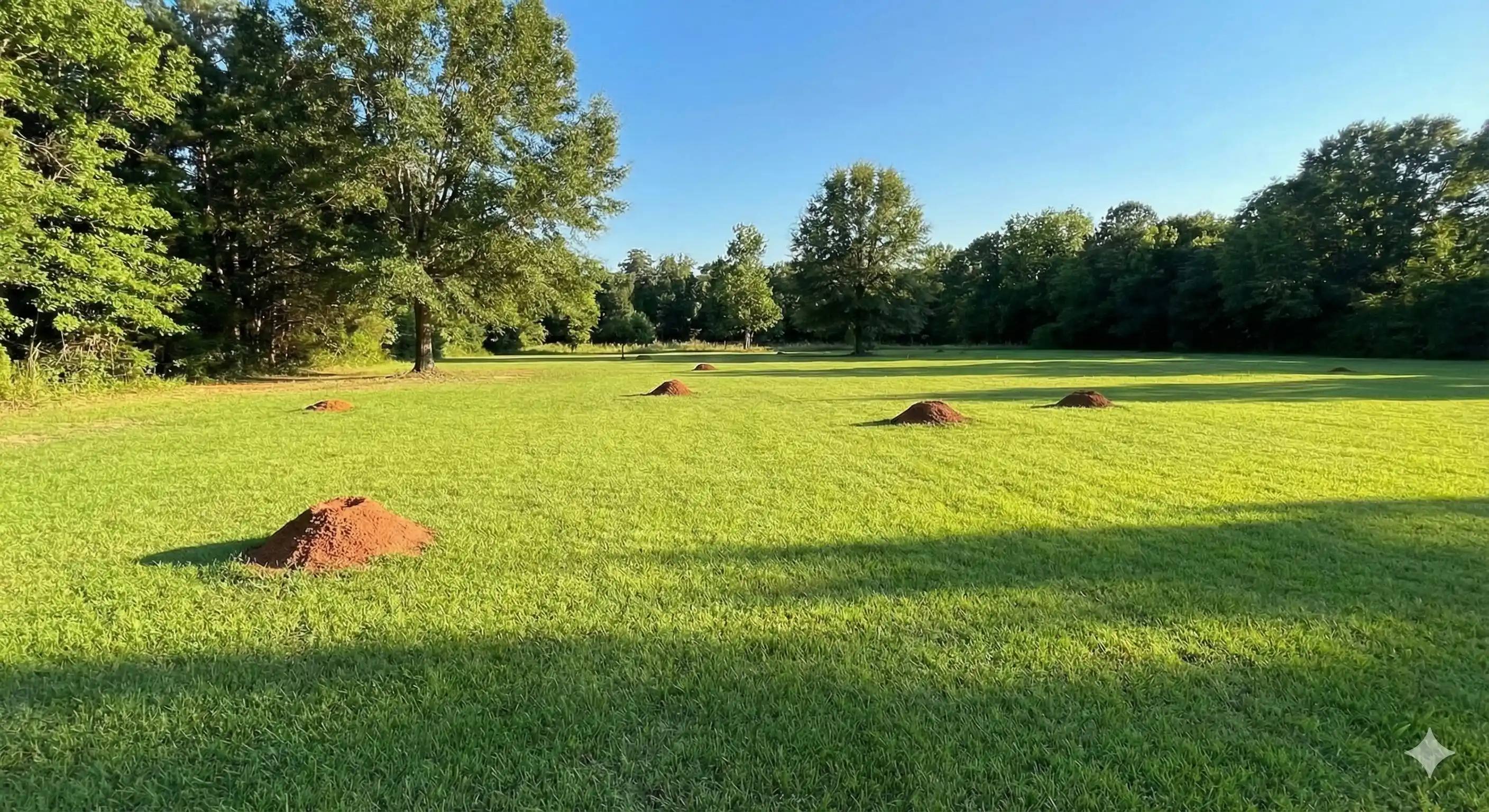
Multiple fire ant mounds visible across sunny lawn indicating interconnected colonies

Multiple Interconnected Colonies

Multiple mounds appearing across properties, often concentrated in sunny, open areas with adequate soil moisture indicating established infestation.

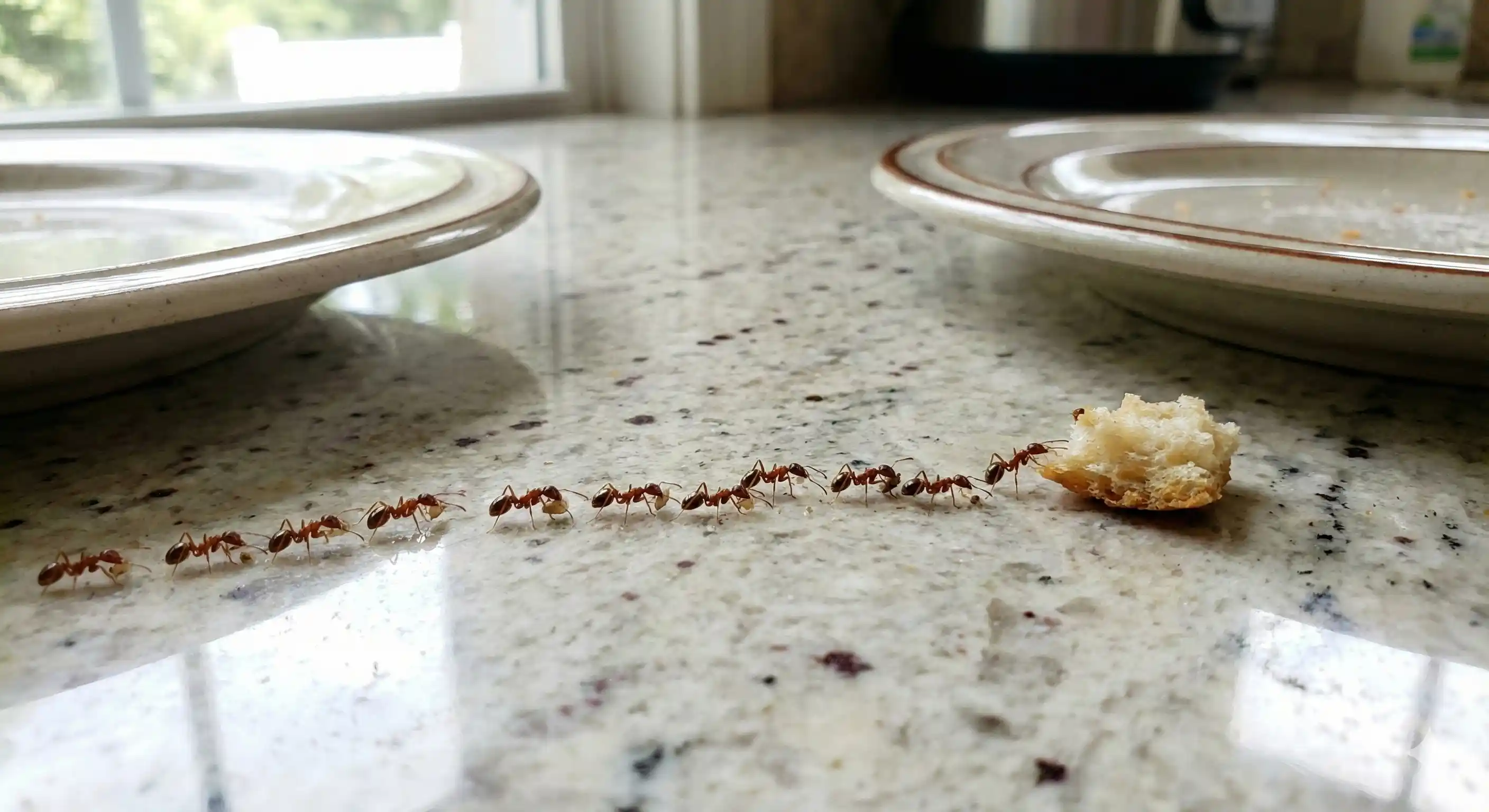
Fire ant workers following foraging trail between mound and food source

Worker Ant Trails

Worker ants following defined trails between mounds and food sources, particularly active during cooler morning and evening hours.

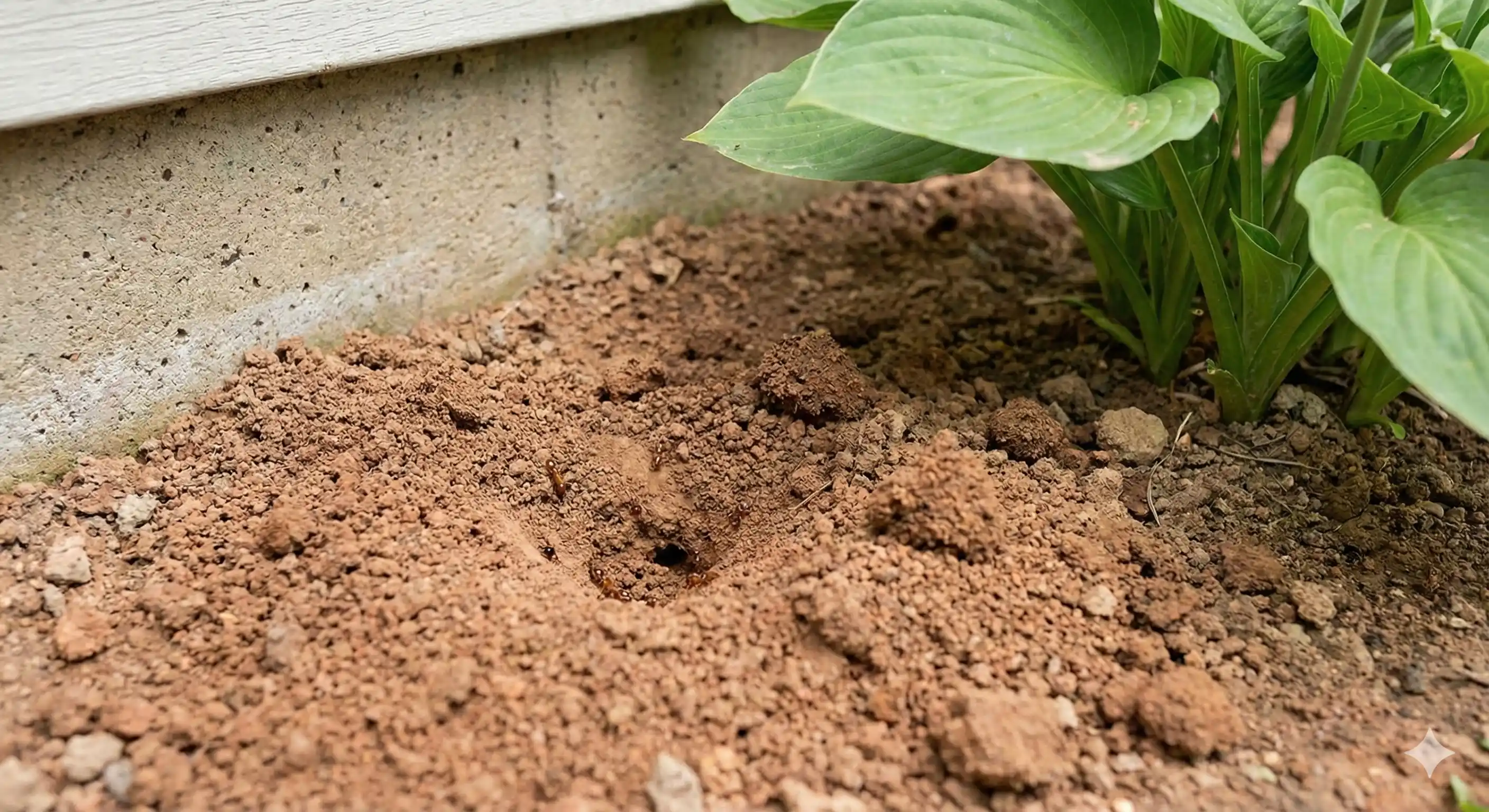
Soil disturbance near foundation showing fire ant tunnel expansion activity

Soil Disturbance

Evidence of excavation around foundations, plant roots, and landscape features as colonies expand their underground tunnel systems.

Learn More About Fire Ant Detection →

DIY vs Professional Treatment

Store shelves overflow with fire ant 'solutions' promising quick results, yet homeowners fighting these resilient invaders often experience a frustrating cycle of temporary victories followed by aggressive resurgence. These retail products typically deliver a deceptive initial impact as they kill fire ant workers while leaving the colony's reproductive core intact beneath the surface. Without reaching the queens, who remain safely protected in deep underground chambers, colonies quickly recover and often splinter into multiple new mounds.

What truly separates expert fire ant management from DIY attempts is our colony-centered strategy rather than surface-level symptom treatment. EcoGuard's approach leverages advanced pheromone-disrupting compounds, strategically timed applications that align with fire ant biological cycles, and property-specific treatment mapping that targets hidden satellite colonies. By combining deep-reaching soil treatments with scientific bait formulations carried directly to queens by the ants themselves, we break the reproductive cycle while creating defensive zones that prevent neighboring colonies from migrating onto your property.

❌ DIY Treatment

  • Kills only visible worker ants
  • Cannot reach queens in deep chambers
  • Colonies recover and splinter
  • No property-wide protection
  • Temporary results only
  • May cause colony relocation

✓ Professional Treatment

  • Targets entire colony structure
  • Eliminates queens and brood
  • Prevents colony fragmentation
  • Property-wide broadcast treatment
  • Long-term residual protection
  • Creates defensive barriers

Commercial Fire Ant Control

EcoGuard Pest Management implements customized fire ant control programs for commercial facilities that prioritize operational continuity while ensuring effective pest elimination. Our comprehensive commercial fire ant protection programs combine discrete treatment applications with flexible scheduling to maintain your business operations while ensuring complete elimination of fire ant problems.

We specialize in fire ant control solutions for:

  • Restaurants and food service establishments
  • Healthcare facilities
  • Hotels and hospitality venues
  • Educational institutions
  • Office complexes
  • Food processing facilities
  • Warehouses and storage facilities
  • Retail spaces
  • Manufacturing facilities
  • Multi-unit residential properties
Learn About Commercial Pest Control
100% SATISFACTION GUARANTEE

The EcoGuard Guarantee

EcoGuard offers a 100% satisfaction guarantee for all of our customers, and we stand by our promise to eradicate your fire ant problem until the very last fire ant is gone. That fire ant control guarantee comes with every service and if the fire ants come back, then so do we, at no additional cost. We are standing by to give you a free estimate and to help you set your first fire ant pest control service appointment.

📞 Call (866) 326-2847 Today

Our Fire Ant Control Process

A systematic approach to complete fire ant colony elimination and lasting protection

1

Thorough Property Inspection

Our technicians conduct thorough property examinations focusing on identifying active mounds, satellite colonies, and conducive conditions supporting fire ant populations. This comprehensive assessment documents colony distribution, determines queen density, and evaluates landscape features influencing fire ant pressure.

2

Targeted Treatment Application

Based on inspection findings, we implement targeted control measures using specially formulated products designed to penetrate fire ant colonies and eliminate queens. These applications combine immediate control with extended protection, strategically deployed based on your property's specific fire ant pressure.

3

Exclusion & Prevention

We create defensive barriers and implement habitat modifications that discourage new colony establishment while disrupting fire ant foraging patterns. These preventive measures include property perimeter treatments, soil management recommendations, and landscape adjustments.

4

Ongoing Monitoring

Regular property assessments track treatment effectiveness while identifying any new fire ant activity before it develops into established colonies. This proactive monitoring ensures early intervention against migrating colonies while maintaining comprehensive protection.

Seasonal Plan for Fire Ant Control

Year-round protection adapted to seasonal fire ant behavior patterns

Spring Fire Ant Control

Spring

Critical control period as overwintered colonies become fully active and queens begin maximum egg production; comprehensive broadcast applications combined with individual mound treatments

Summer Fire Ant Control

Summer

Peak fire ant season requiring vigilant monitoring; maintain control barriers during intense foraging periods; special attention to irrigation zones and landscape edges where colonies establish

Fall Fire Ant Control

Fall

Strategic treatment targeting colonies before winter dormancy; fire ants particularly receptive to baiting programs as they forage intensively; preventive perimeter treatments with extended release formulations

Winter Fire Ant Control

Winter

Though surface activity decreases, colonies remain active underground; focus on long-term suppression agents; comprehensive property inspections identifying overwintering colonies before spring

What Our Customers Say

Trusted by homeowners across 6 states for professional fire ant control

★★★★★

"Our backyard was unusable because of fire ants. My kids got stung multiple times. EcoGuard eliminated every mound and now we can actually enjoy our yard again. Worth every penny!"

Michelle R.
Austin, TX
★★★★★

"I tried every DIY product at the hardware store. The mounds just kept coming back. EcoGuard's two-step treatment actually worked. Three months later, still no fire ants!"

Carlos M.
Houston, TX
★★★★★

"Fire ants were destroying our landscaping and had even gotten into our AC unit. EcoGuard's quarterly plan keeps our whole property protected year-round. Highly recommend!"

James & Patricia T.
Nashville, TN

Fire Ant Control FAQs

Everything you need to know about fire ant control and treatment

Fire ants are reddish-brown to reddish-black, varying in size from 1/8 to 1/4 inch, with distinctive mounds lacking a central opening unlike most native ant species. The definitive identification comes from their aggressive behavior when disturbed—fire ants swarm from the mound in large numbers, climb vertical surfaces rapidly, and deliver painful stings that develop into pustules within 24 hours.

Fire ants establish colonies regardless of landscape maintenance because their primary requirements—adequate soil moisture, sunlight, and food resources—remain available despite mowing and basic yard care. Regular maintenance may actually support fire ant populations by creating soil disturbances ideal for new colony establishment, while eliminating competing ant species.

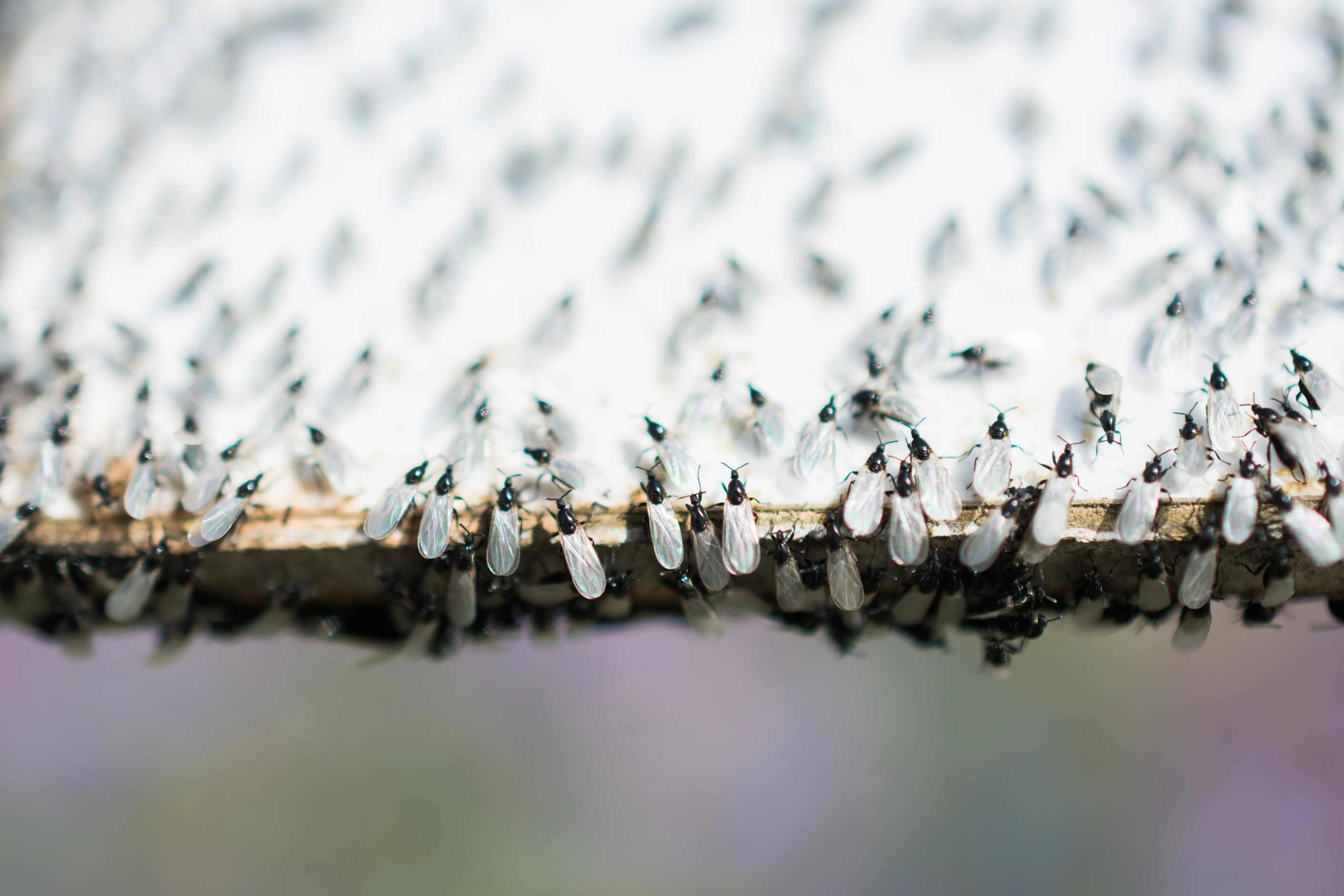
Untreated fire ant colonies can expand to contain 100,000-500,000 workers and dozens of reproductive queens, with mature mounds spanning 18-24 inches in diameter and extending 1-5 feet underground through extensive tunnel networks. More concerning, these mature colonies produce winged reproductives that establish satellite colonies, creating property-wide infestations.

Professional services utilize comprehensive approaches including two-step methods combining broadcast baits with individual mound treatments, specialized injection equipment that penetrates deep into colony structures, and commercial-grade insect growth regulators unavailable to consumers. Additionally, professionals implement strategic timing based on fire ant life cycles.

Professional fire ant exterminators target queens through strategic baiting programs utilizing the ants' own foraging behavior. Worker ants gather bait containing active ingredients specifically designed to be transported into the colony, directly to the queens and developing brood. Additionally, high-pressure injection systems deliver control agents through the entire underground tunnel network.

Professional fire ant treatments utilize EPA-registered products applied according to strict safety protocols that prioritize family, pet, and environmental protection. Our technicians receive extensive training in precise application methods that minimize non-target exposure, while utilizing innovative formulations designed to target fire ants' unique biology.

Initial fire ant treatments typically require 1-2 hours depending on property size and infestation severity, with technicians treating both active mounds and implementing broadcast applications. Complete control often requires a strategic sequence of treatments spaced 4-6 weeks apart to address the complete colony life cycle, with comprehensive programs spanning 2-3 months.

Professional fire ant control succeeds where DIY methods fail because it addresses the complete colony structure rather than just visible mounds, targets reproductive queens rather than simply killing worker ants, and provides property-wide protection against reinfestation. Professional-grade formulations deliver more effective active ingredients at precise application rates.

Most properties show significant reduction in visible fire ant activity within 72 hours following professional treatment, with mound activity decreasing dramatically as worker ants transport control materials throughout the colony. Complete elimination of established colonies typically requires 2-3 weeks, with property-wide protection established within 30 days.

Prevention focuses on creating defensive barriers around property perimeters, implementing strategic baiting programs timed to fire ant reproductive cycles, and applying long-residual control agents to vulnerable landscape areas. Professional services also provide guidance on landscape management practices that discourage fire ant establishment.

Most properties require an initial comprehensive treatment followed by 1-2 targeted follow-up applications to achieve complete fire ant elimination, with timing dependent on property size, infestation severity, and seasonal factors. Long-term maintenance typically involves quarterly preventive treatments strategically timed to fire ant life cycles.

EcoGuard fire ant control services provide comprehensive service guarantees covering specific time periods, typically offering retreatment at no additional cost if fire ant activity persists after initial service completion. These guarantees often extend 30-90 days depending on treatment programs.

While fire ant control can be implemented year-round in most regions, spring and fall represent optimal treatment windows. Spring treatments prevent colony expansion during peak breeding season, while fall applications eliminate colonies preparing for winter. For severe infestations, treatments coordinated with both seasonal windows provide most effective control.

Effective fire ant control typically requires treating entire properties rather than isolated mounds, with particular emphasis on perimeter zones extending 10-20 feet beyond property boundaries where possible. This comprehensive approach prevents reinfestation from neighboring properties while creating buffer zones against colony migration.

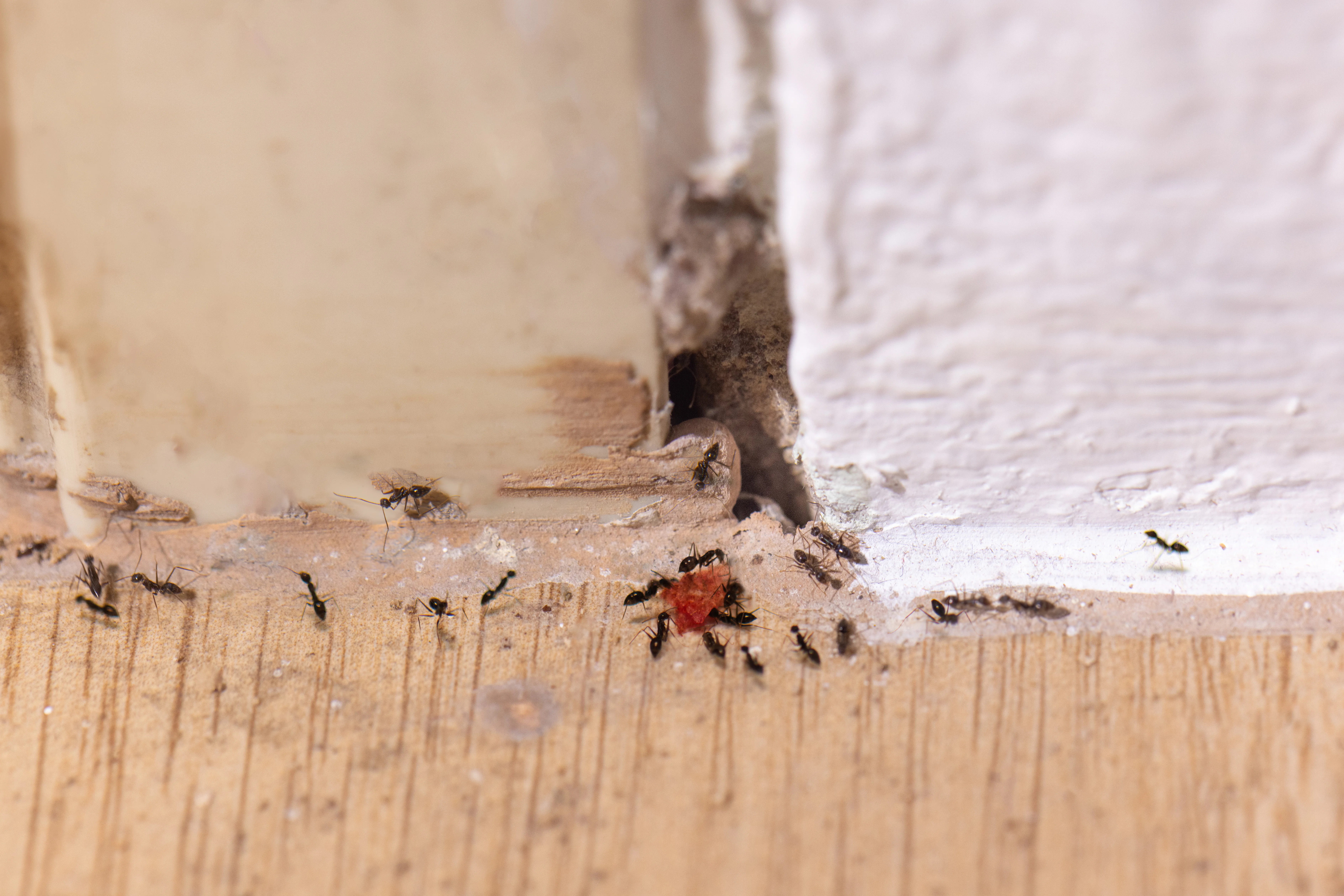
While fire ants primarily establish outdoor colonies, they occasionally enter structures seeking food, water, or shelter from environmental extremes. Professional services address both outdoor colonies and interior invasions through targeted crack and crevice treatments, perimeter applications that prevent entry, and specific treatments for utility penetrations.

Professional fire ant control costs vary based on property size, infestation severity, and treatment program selection. Contact EcoGuard for an inspection and accurate quote tailored to your specific situation. We offer tiered pricing with options ranging from one-time mound treatments to comprehensive annual protection programs.

Professional fire ant management implements property-wide treatment strategies specifically designed to prevent colony relocation. By combining broadcast applications covering entire properties with strategically timed individual mound treatments, professional services eliminate escape routes while simultaneously treating underground tunnel systems connecting multiple mounds.

Fire ants present serious health risks including painful stings that develop into pustules, potential allergic reactions ranging from localized swelling to life-threatening anaphylaxis, and secondary infections from scratching affected areas. These risks are particularly severe for children, elderly individuals, those with mobility limitations, and pets.

Weather significantly impacts fire ant treatment timing and effectiveness. Treatments should be applied when soil temperatures exceed 60°F with no rain forecast for 24-48 hours after application. Professional technicians monitor weather patterns to schedule applications during optimal conditions while utilizing specialized formulations for various moisture and temperature conditions.

Minimal preparation is typically required before fire ant treatments, though technicians may request temporary irrigation system shutoff for 24-48 hours following treatment. Simple preparations include flagging known mound locations, ensuring technician access to all lawn areas, and temporarily relocating outdoor pets during application.

The most effective fire ant control combines a two-step approach of broadcast baiting followed by individual mound treatments, creating both immediate colony elimination and long-term prevention. Professional-grade baits containing insect growth regulators disrupt queen reproduction throughout the property, while targeted mound drenching delivers immediate control to established colonies.

Professional technicians eliminate fire ants by implementing property-wide treatment systems targeting the colony's social structure rather than just visible workers. The process begins with comprehensive property mapping to identify active mounds and satellite colonies, followed by strategic application of specialized baits designed to be carried deep into the colony's reproductive chambers.

Related Articles & Resources

Learn more about fire ant prevention, identification, and control
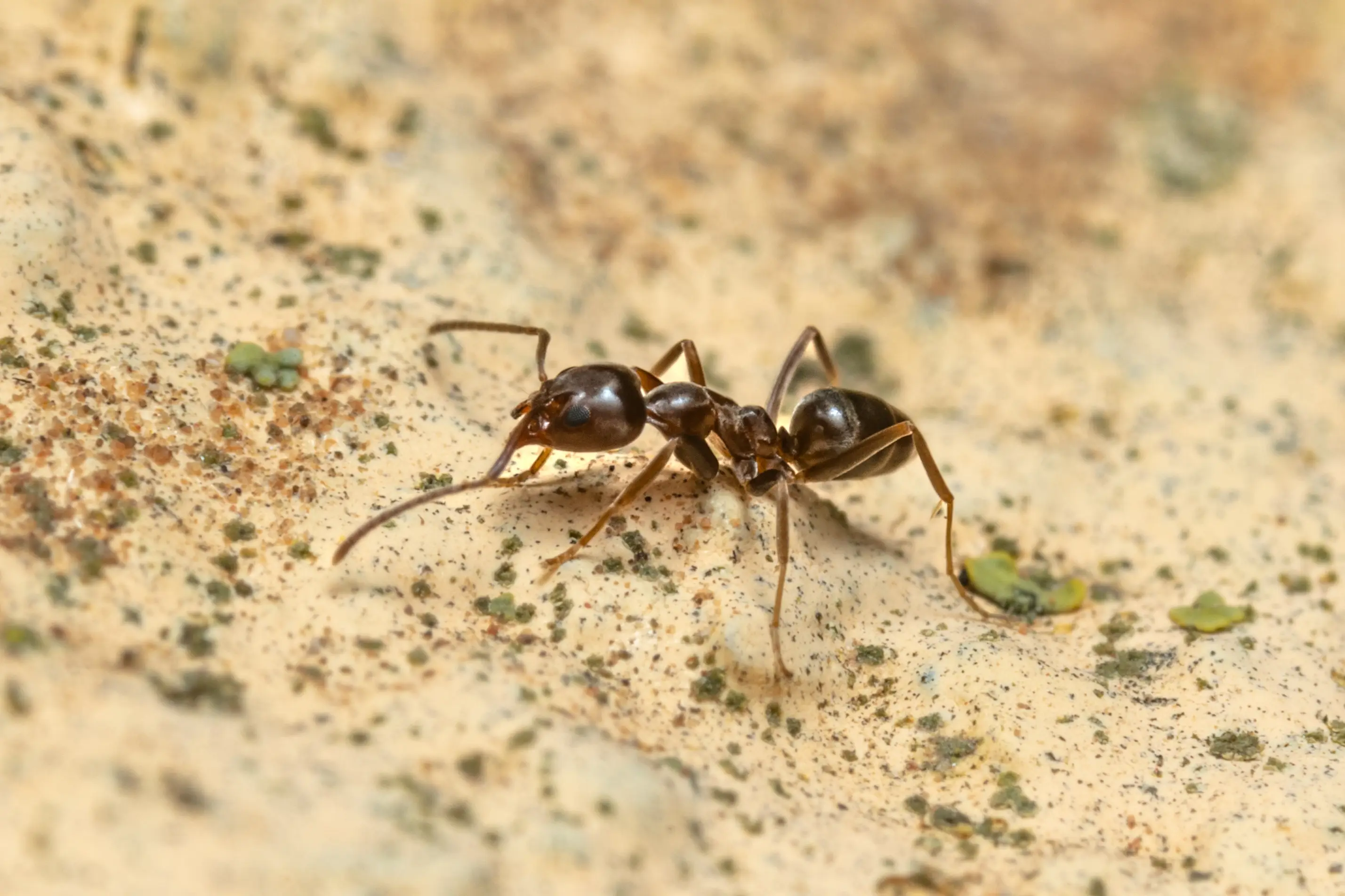
14 Natural Ant Repellent Strategies That Actually Work

14 Natural Ant Repellent Strategies That Actually Work

Discover effective natural ant repellents including mint, vinegar, cinnamon, and more. Learn how to keep ants out of your home using safe, natural methods.

Read Article →
16 Common Types of Ants in California | Identification & Treatment

16 Common Types of Ants in California | Identification & Treatment

Identify 16 common ant species in California including carpenter ants, fire ants, and Argentine ants. Learn their appearance, behavior, damage, and treatment methods.

Read Article →
Are Fire Ants Dangerous? Understanding Fire Ant Risks & Safety

Are Fire Ants Dangerous? Understanding Fire Ant Risks & Safety

Learn about fire ant dangers including painful stings, allergic reactions, and property damage. Comprehensive guide on fire ant venom, treatment, prevention, and when to call professionals.

Read Article →
Argentine Ants: Complete Identification, Control & Prevention Guide

Argentine Ants: Complete Identification, Control & Prevention Guide

Learn to identify Argentine ants, understand their supercolony behavior, and discover effective control strategies. Expert guide on eliminating these invasive ants from your property.

Read Article →
Common Signs of Carpenter Ant Damage

Common Signs of Carpenter Ant Damage

Learn to identify carpenter ant damage signs including frass, holes, tunnels, and how to distinguish carpenter ant damage from termite damage.

Read Article →
Do Ants Bite? Symptoms, Treatment & Prevention

Do Ants Bite? Symptoms, Treatment & Prevention

Learn about ant bites vs stings, which ants bite, symptoms, allergic reactions, treatment options, and how to prevent ant bites.

Read Article →
Do Ants Eat Aphids? The Ant-Aphid Relationship Explained

Do Ants Eat Aphids? The Ant-Aphid Relationship Explained

Learn about the fascinating relationship between ants and aphids, how ants farm aphids for honeydew, problems aphids cause, and how to control both pests.

Read Article →
Do Ants Ever Sleep? Ant Sleep Patterns Explained

Do Ants Ever Sleep? Ant Sleep Patterns Explained

Discover the fascinating sleep patterns of ants, how worker ants take 250 power naps daily, queen ant sleep habits, and when ants are most active.

Read Article →
Do Carpenter Ants Eat Wood? Understanding Carpenter Ant Damage

Do Carpenter Ants Eat Wood? Understanding Carpenter Ant Damage

Learn the truth about carpenter ants and wood. Unlike termites, carpenter ants don\

Read Article →
How Do Ant Baits and Traps Work? Complete Guide to Ant Bait Systems

How Do Ant Baits and Traps Work? Complete Guide to Ant Bait Systems

Learn how ant baits and traps work to eliminate entire colonies. Discover bait types, active ingredients, placement strategies, and why baits are more effective than sprays for long-term ant control.

Read Article →
How Do Ants Communicate With Each Other? Complete Guide to Ant Communication

How Do Ants Communicate With Each Other? Complete Guide to Ant Communication

Learn how ants communicate using pheromones, touch, sound, and body language. Discover why ant communication is key to colony survival and how it impacts pest control strategies.

Read Article →
How Do Ants Get in the House? Complete Entry Point Guide

How Do Ants Get in the House? Complete Entry Point Guide

Learn how ants get into your house through foundation cracks, windows, utility lines, and more. Discover entry points, prevention strategies, and sealing techniques to keep ants out.

Read Article →
How Do Ants Get Into Your House? Entry Points & Prevention

How Do Ants Get Into Your House? Entry Points & Prevention

Learn how ants enter your home through cracks, gaps, and openings. Discover where ants hide, what attracts them, and how to prevent ant infestations.

Read Article →
How Do Ants Mate and Reproduce? Ant Reproduction Explained

How Do Ants Mate and Reproduce? Ant Reproduction Explained

Learn how ants mate during nuptial flights, how queen ants reproduce, the role of drones, and unique reproductive strategies like parthenogenesis.

Read Article →
How Many Ants Are in a Colony? Complete Guide to Ant Colony Size

How Many Ants Are in a Colony? Complete Guide to Ant Colony Size

Learn how many ants live in a colony, from small carpenter ant nests to Argentine ant supercolonies with billions. Discover colony growth stages, queen numbers, and pest control implications.

Read Article →
How to Get Rid of Ants Inside and Outside Your Home

How to Get Rid of Ants Inside and Outside Your Home

Learn how to get rid of ants inside your home, repel them before they enter, and eliminate outdoor colonies. Complete guide to ant removal, prevention, and control.

Read Article →
How to Get Rid of Carpenter Ants in the House

How to Get Rid of Carpenter Ants in the House

Learn how to identify, eliminate, and prevent carpenter ants. Comprehensive guide to indoor and outdoor treatments, baiting methods, and professional solutions.

Read Article →
Understanding Ant Colony Structure and Hierarchy

Understanding Ant Colony Structure and Hierarchy

Learn about ant colony structure, hierarchy, and how ants work together. Discover the roles of queens, workers, drones, and how colonies form and grow.

Read Article →
What Are Ants? Complete Guide to Ant Biology, Behavior & Control

What Are Ants? Complete Guide to Ant Biology, Behavior & Control

Learn everything about ants including appearance, colony hierarchy, life cycle, diet, defenses, and how to get rid of them. Complete ant identification guide.

Read Article →
What Are Red Ants? Fire Ant Identification & Control

What Are Red Ants? Fire Ant Identification & Control

Learn about red ants and fire ants, how to identify them, their behavior, dangers of their stings, and effective prevention and control methods.

Read Article →
What Attracts Ants Inside the House? Prevention Tips

What Attracts Ants Inside the House? Prevention Tips

Learn what attracts ants to your home including food, water, and shelter. Discover prevention tips and how to get rid of ant infestations.

Read Article →
What Do Ants Eat and Drink in Your House?

What Do Ants Eat and Drink in Your House?

Learn what ants eat including sugars, proteins, seeds, fungus, and other insects. Discover how different ant species find food and what they eat in your home.

Read Article →
What Happens When the Queen Ant Dies?

What Happens When the Queen Ant Dies?

Learn what happens when a queen ant dies, how to identify a queen, the ant queen life cycle, and how to effectively eliminate ant colonies.

Read Article →
What's the Lifespan of an Ant? Guide to Ant's Life Cycle

What's the Lifespan of an Ant? Guide to Ant's Life Cycle

Learn how long ants live based on species, caste, and gender. Discover the ant life cycle from egg to adult and factors that impact ant lifespan.

Read Article →
When is Ant Season? Complete Guide to Ant Activity Patterns

When is Ant Season? Complete Guide to Ant Activity Patterns

Learn when ant season occurs in your region, peak activity times by species, and seasonal prevention strategies. Discover how temperature, moisture, and food availability affect ant behavior.

Read Article →
Where Do Ants Go in the Winter? Complete Winter Behavior Guide

Where Do Ants Go in the Winter? Complete Winter Behavior Guide

Discover where ants go in winter, how they survive freezing temperatures through diapause, and why they may invade your home during cold months. Learn prevention strategies.

Read Article →
Where Do Ants Live? Complete Guide to Ant Habitats

Where Do Ants Live? Complete Guide to Ant Habitats

Discover where ants live outdoors and indoors, from underground colonies to wall voids. Learn about species-specific habitats and how to prevent ant infestations in your home.

Read Article →
Why Are Flying Ants a Problem? Identification and Prevention

Why Are Flying Ants a Problem? Identification and Prevention

Learn why flying ants appear, how to identify them vs termites, which species swarm, and how to prevent and eliminate flying ant infestations.

Read Article →
Why Are There Ants in My Bathroom? Causes & Solutions

Why Are There Ants in My Bathroom? Causes & Solutions

Discover why ants invade bathrooms and learn effective solutions. Understanding moisture, food sources, and shelter attractions helps eliminate current infestations and prevent future invasions.

Read Article →
View All Pest Control Articles →

Ready to Eliminate Your Fire Ant Problem?

Get a free estimate for your fire ant problem today. Our experts will assess your property and provide a customized treatment plan.

Connect With Us

Follow EcoGuard Pest Management for tips, updates, and special offers

f𝕏yin