EcoGuard Pest Management
Professional bee removal services for residential and commercial properties

Professional Bee Removal Services

When bees establish colonies in or around your home or business, professional intervention becomes crucial for both your safety and the preservation of these important pollinators. Whether you're dealing with honeybees in your walls, carpenter bees damaging your structure, or aggressive colonies near high traffic areas, EcoGuard Pest Management provides expert bee removal solutions that prioritize both human safety and bee conservation when possible.

Bee Pest Control Experts

Successful bee removal requires specialized knowledge of different bee species, their behaviors, and proper handling techniques. Our certified technicians undergo extensive training in bee biology, hive assessment, and safe removal methods. This expertise allows us to accurately identify bee species, evaluate colony size and accessibility, and determine the most appropriate removal method while considering both safety requirements and conservation priorities.

Why Bees Are a Serious Problem

While bees play a vital role in our ecosystem, colonies in residential and commercial structures create significant risks that require professional attention:

  • Severe Health Risks: Bee stings can trigger life threatening allergic reactions in sensitive individuals, with reactions ranging from localized swelling to anaphylactic shock requiring immediate medical intervention. Multiple stings, even to non-allergic individuals, can cause serious medical emergencies.
  • Structural Damage: Honeybee colonies inside walls can contain up to 100 pounds of honey and wax, leading to severe structural damage, attracting other pests, and causing costly repairs. Carpenter bees bore into wood, compromising structural integrity over time.
  • Defensive Behavior: Established colonies aggressively defend their territory, posing serious risks to people and pets within their flight path. This behavior intensifies during late seasons when food is scarce or when colonies feel threatened.
  • Colony Growth: Untreated bee colonies expand rapidly, with honeybee hives potentially growing to 60,000 bees. As colonies grow, they can split and establish new hives nearby, compounding the problem.

Bee Control Service Plans

Choose the protection level that's right for your property

One-Time Treatment
Contact Us
For custom pricing
  • Comprehensive property inspection
  • Species identification
  • Entry point identification
  • Targeted treatment application
  • Perimeter barrier application
  • Nest elimination
  • Treatment report & recommendations
  • 30-day guarantee
Get Started
MOST POPULAR
Annual Protection
Contact Us
For custom pricing
  • Everything in One-Time Treatment
  • Seasonal maintenance plan
  • Entry point treatments
  • Priority scheduling
  • Re-treatment guarantee
Get Started

* Prices vary based on property size, infestation severity, and treatment method. Contact us for an accurate quote.

Service Plan Comparison

FeatureOne-TimeAnnual
Comprehensive Inspection
Species Identification
Follow-Up InspectionsQuarterly
Priority Scheduling
Preventative Monitoring
Re-Treatment Guarantee30 daysFull Year

Get Your Free Bee Quote

Protect your property with a free bee quote from our licensed experts.

✓ Same-day service available
✓ Licensed & insured
✓ Detailed property assessment
✓ No-obligation estimates

Service Areas

We provide bee control services throughout:

  • California
  • Oregon
  • Washington
  • Texas
  • Tennessee
  • Nevada
View All Counties →

Ready to Eliminate Your Bee Problem?

Schedule your bee inspection today. Our experts will assess your property and provide a customized treatment plan.

📞 Call (866) 326-2847Get Free Quote

Bee Treatment Options

Our comprehensive approach to bee control combines multiple strategies based on species, location, and circumstances:
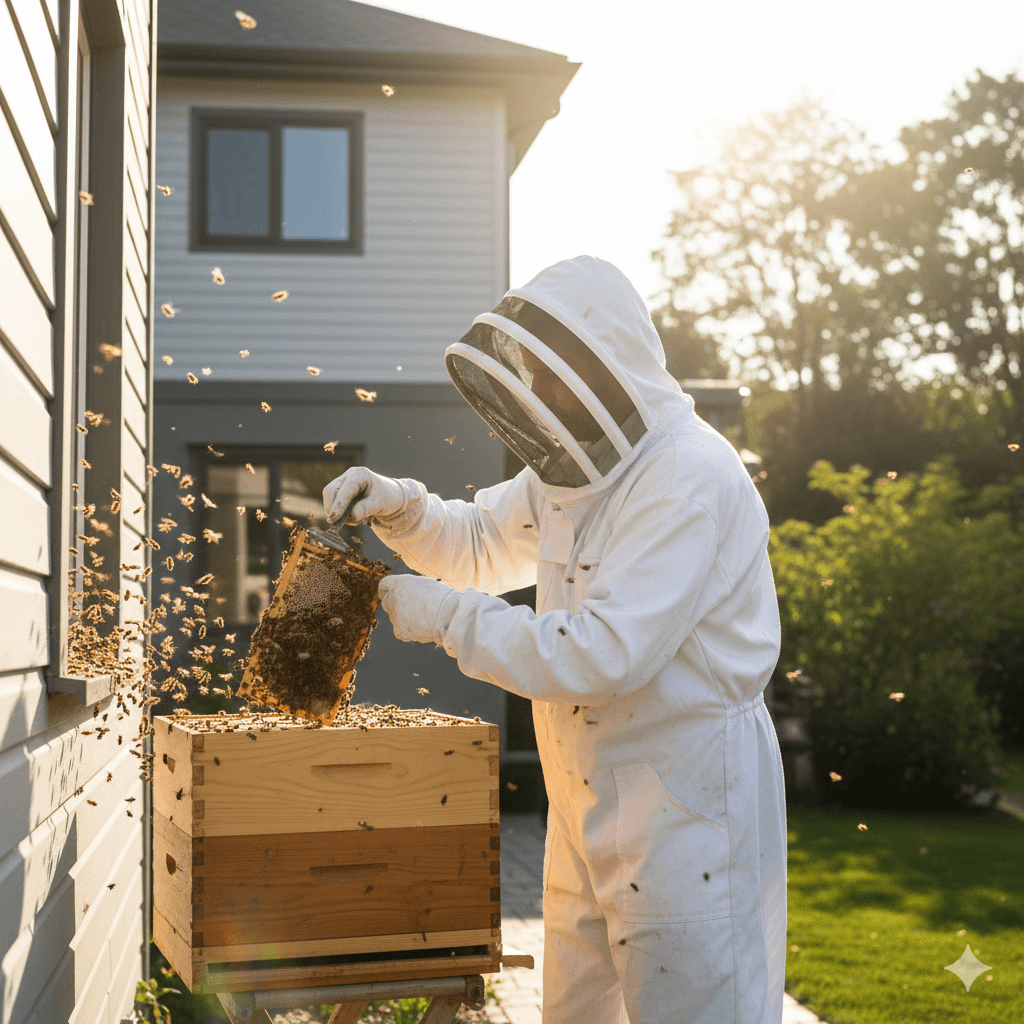
Professional bee handler safely extracting and removing honeybee colony

Bee Extraction

Safe bee removal by professional bee handlers using specialized equipment and techniques to carefully relocate colonies while protecting both property occupants and the bees.

Complete hive and honeycomb removal from wall cavity

Hive Removal

Safe extraction of honeybee colonies, including removal of honeycomb and hive materials to prevent reinfestation and secondary pest problems.

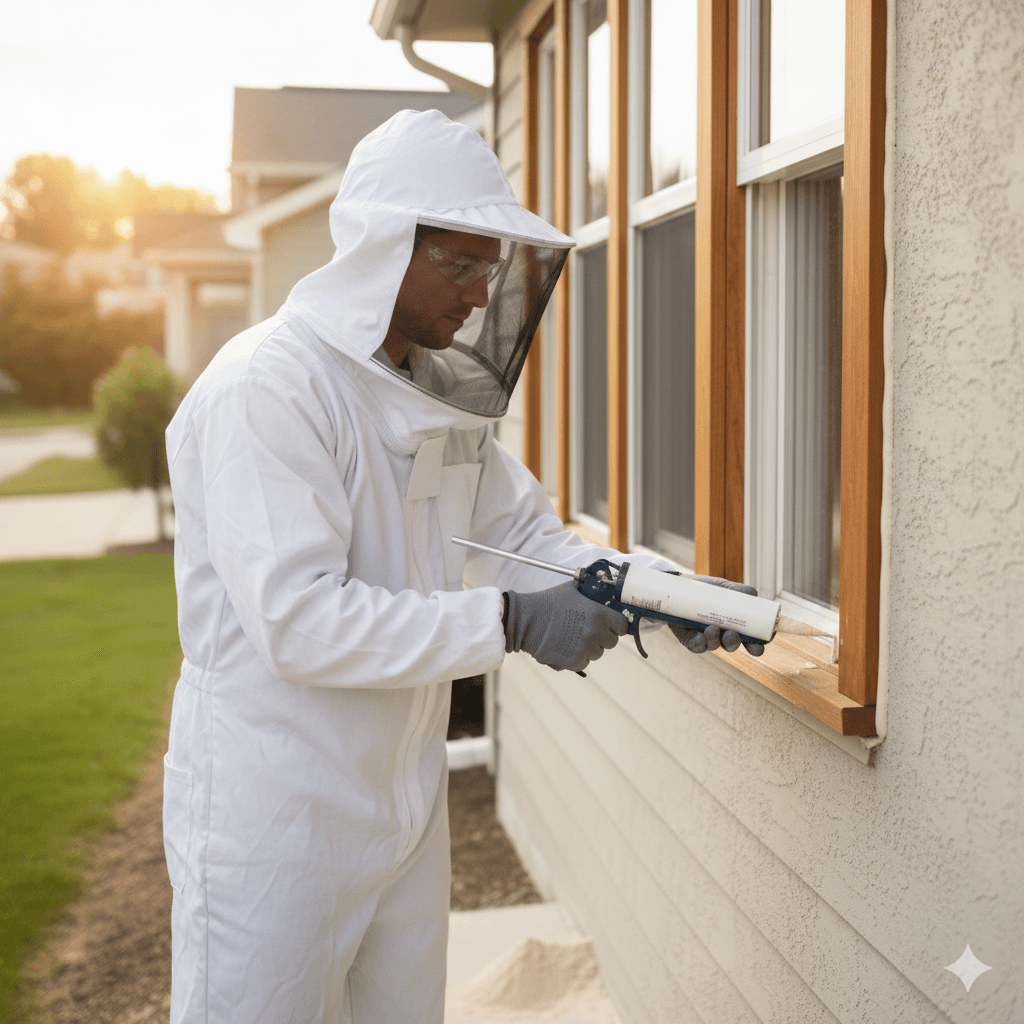
Technician sealing entry points to prevent future bee infestations

Bee Exclusion

Sealing entry points and potential nesting sites using appropriate materials that prevent future bee colonies from establishing.

What Causes Bees?

Understanding what draws bees to your property helps prevent future colonies from establishing:
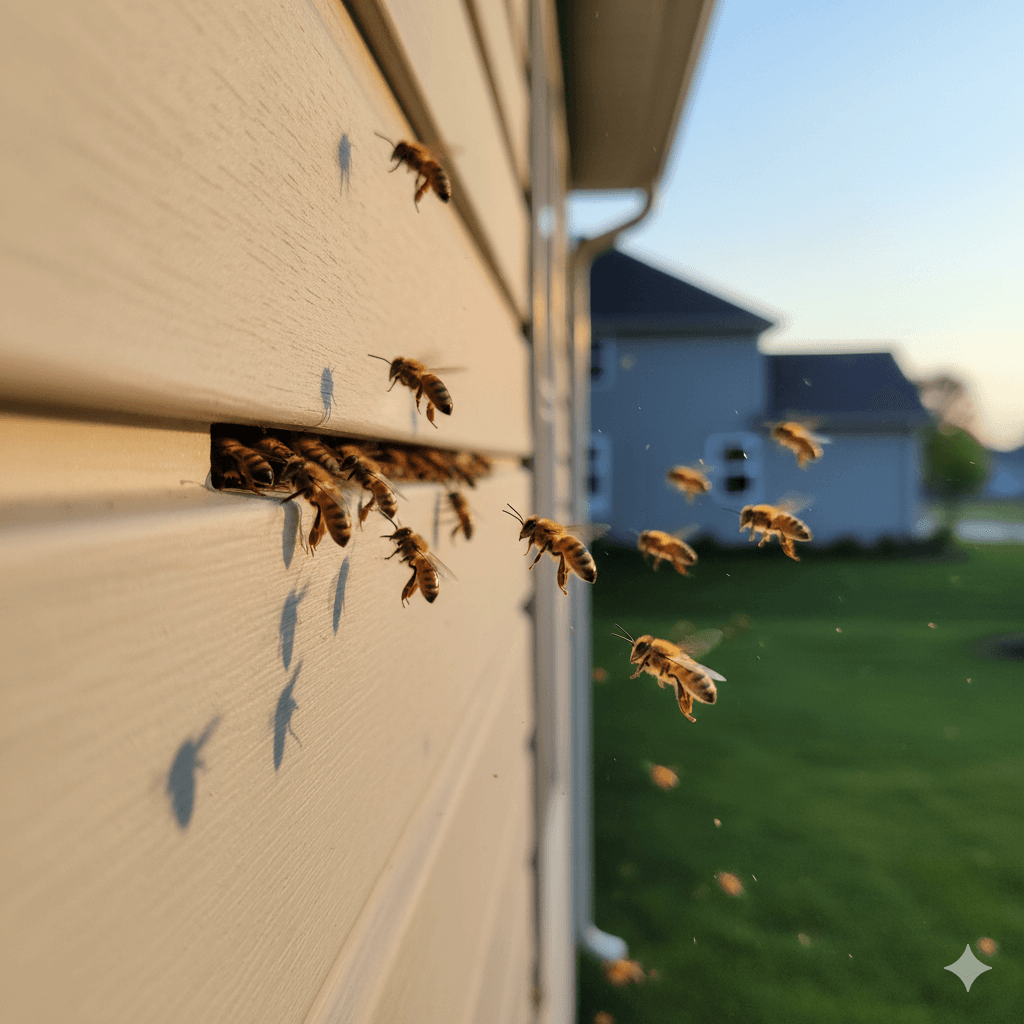
Gaps in home siding and utility penetrations providing bee entry points

🏠 Structure Access

Gaps in siding, weep holes, utility penetrations, and uncapped chimneys provide perfect entry points for colonies seeking protected nesting sites.

Flowering plants and gardens attracting bees to residential property

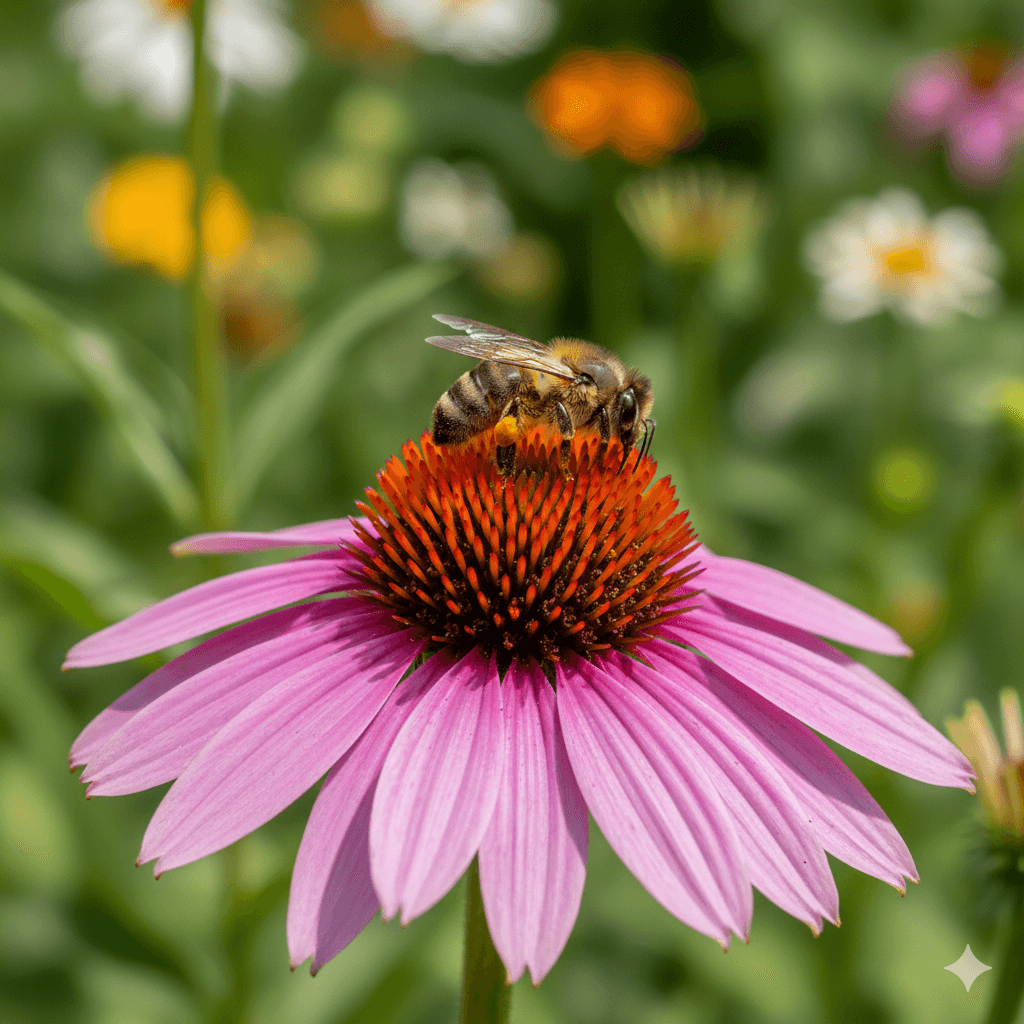
🌸 Attractive Plants

Flowering trees, gardens, and certain landscaping choices can initially attract bees, leading them to discover potential nesting sites in your structure.

Residual honeycomb remains attracting new bee swarms

🐝 Previous Colony Sites

Residual honeycomb scent and wax from previous infestations strongly attract new swarms looking to establish colonies.

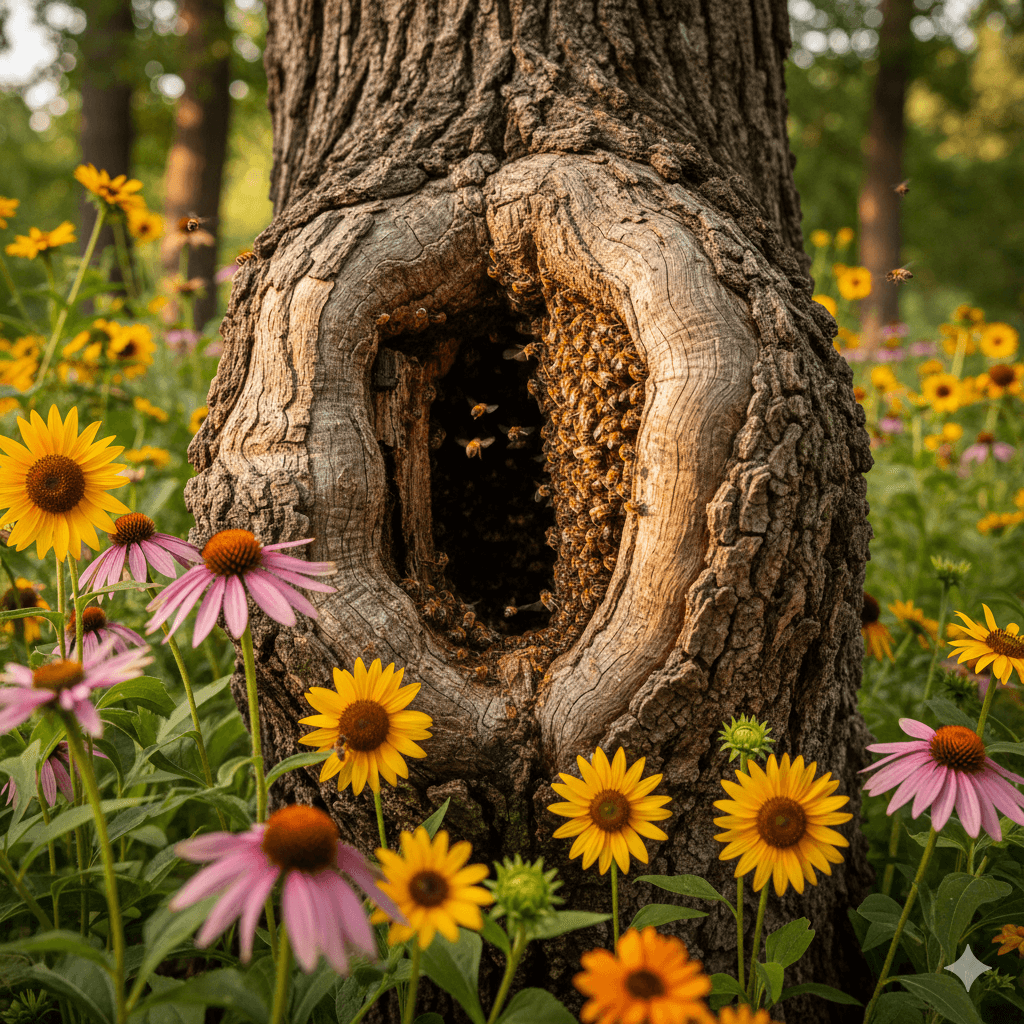
Protected wall voids and attic spaces ideal for bee hive establishment

🏚️ Protected Spaces

Undisturbed areas like wall voids, attic spaces, and hollow trees offer the shelter and stability bees seek for establishing hives.

Learn More About Bee Prevention →

What Are Signs of Bees in Your Home?

Watch for these distinctive indicators of bee activity:
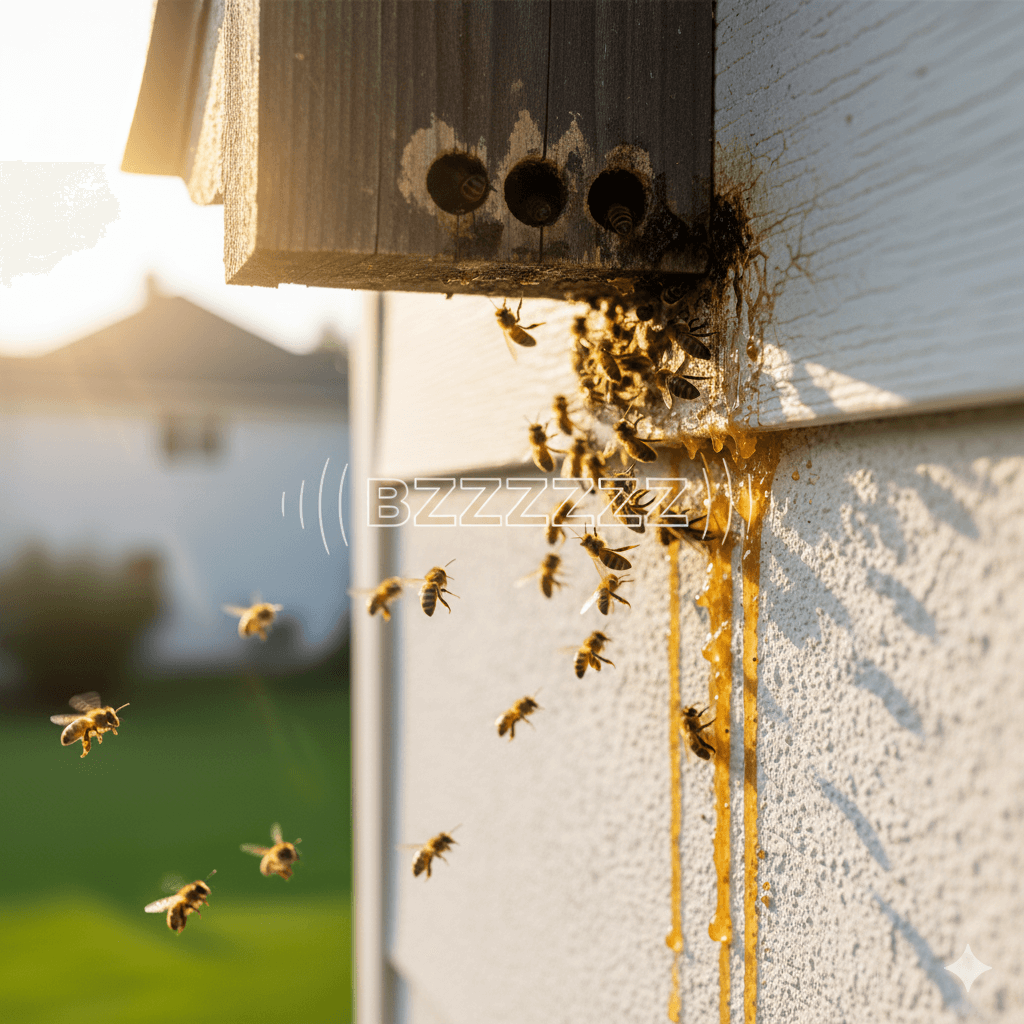
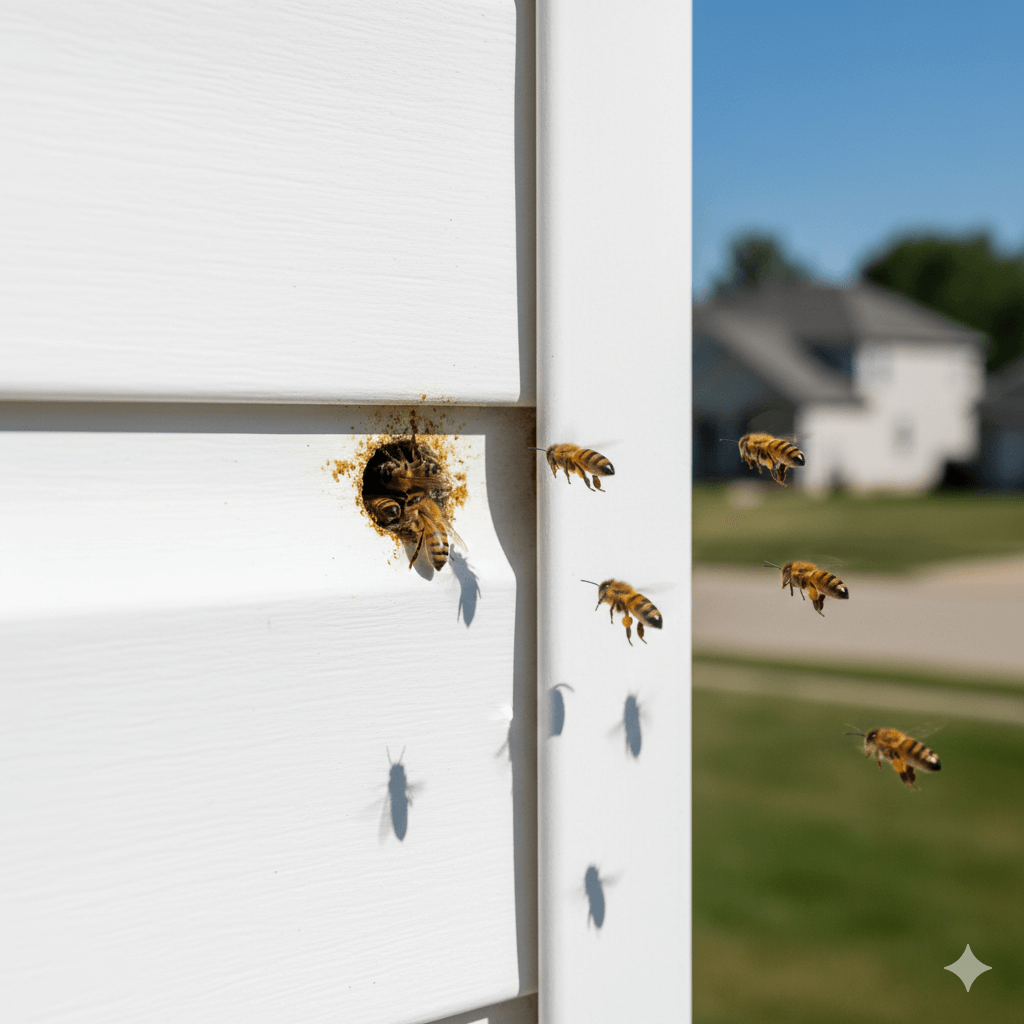
Multiple bees entering and exiting single point in building structure

Concentrated Flight Patterns

Large numbers of bees consistently flying in and out of a specific location in your structure

Dark staining around bee entrance hole in building exterior

Visible Entrance Holes

Visible entrance holes with dark staining around them from bee traffic

Homeowner detecting buzzing sounds coming from interior wall

Buzzing Sounds

Buzzing sounds within walls, particularly on warm days when colonies are most active

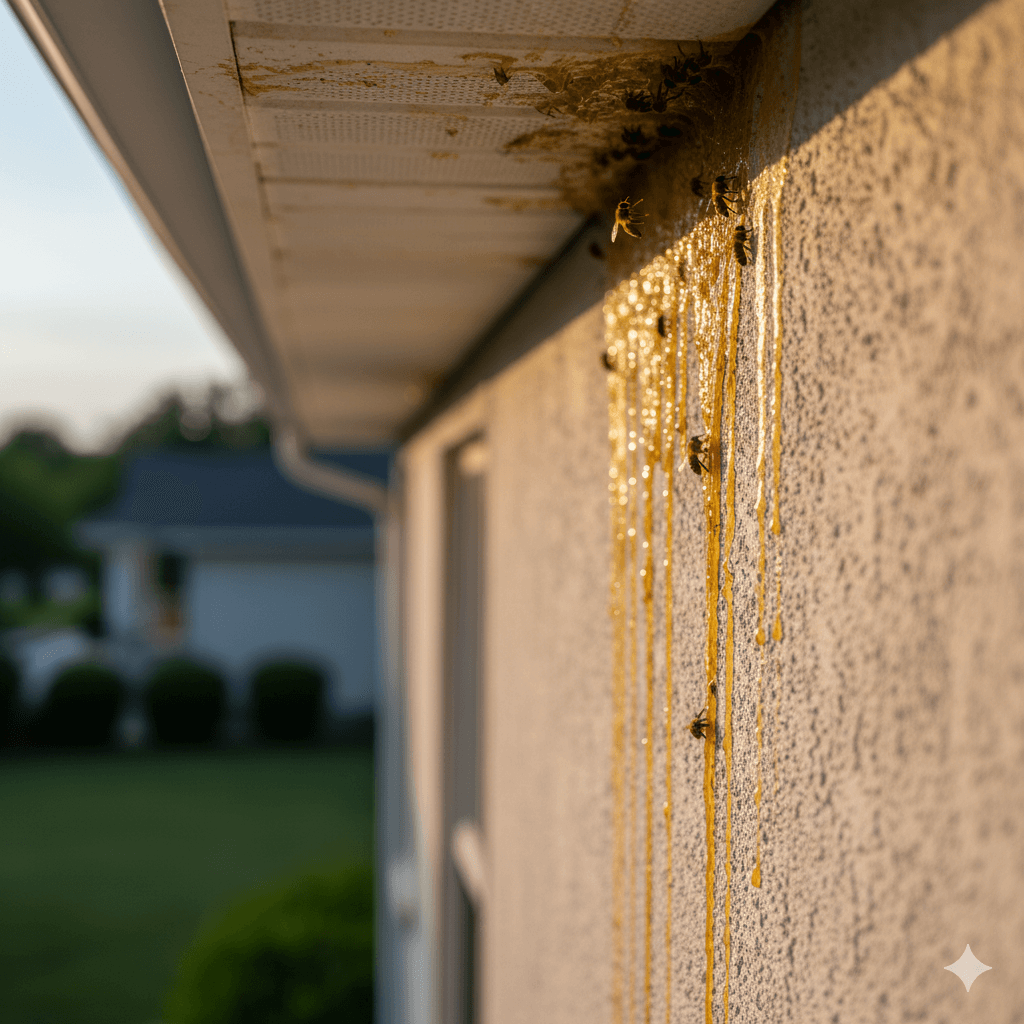
Yellow and brown stains on wall from honey seepage

Wall Staining

Brown or yellow staining on exterior walls from honeycomb seepage

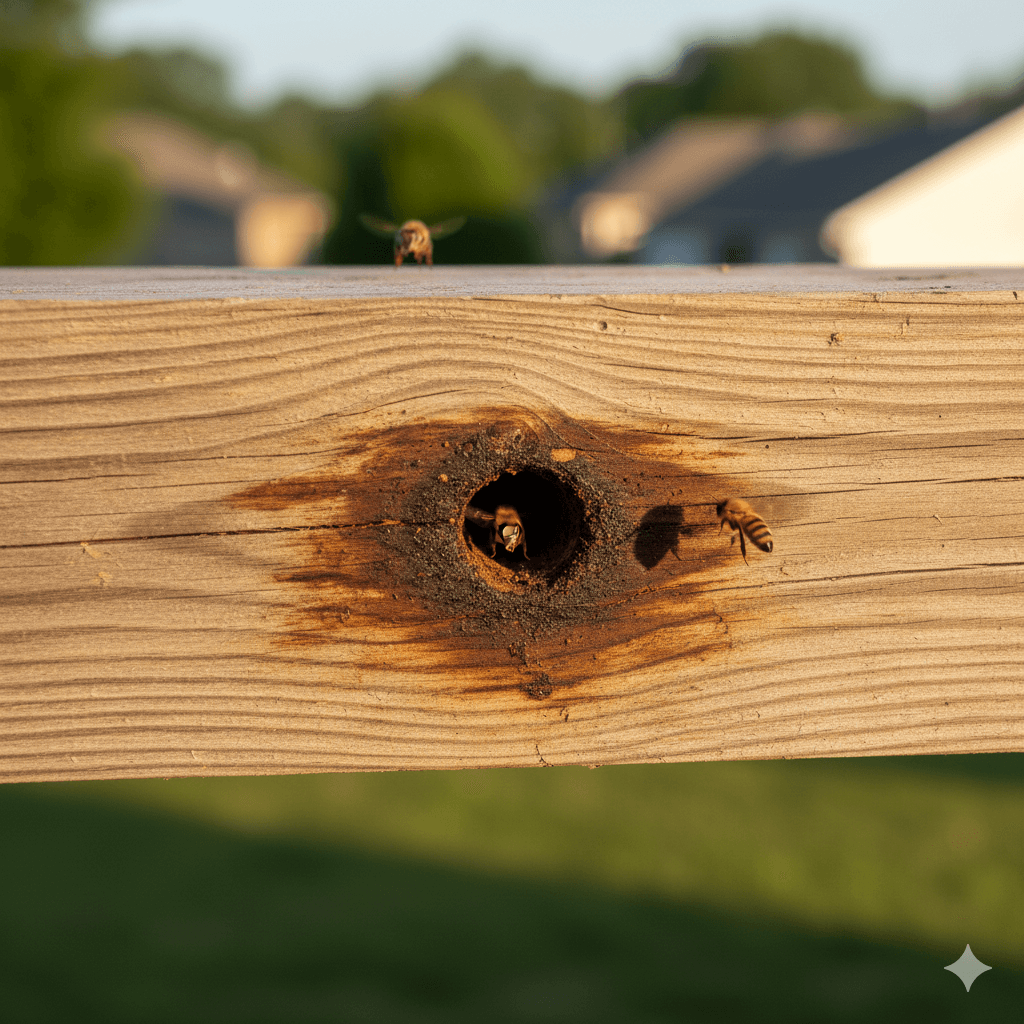
Perfect circular holes bored by carpenter bees in wooden structure

Carpenter Bee Holes

Carpenter bee holes are nearly perfect 1/2 inch circular openings in wood surfaces

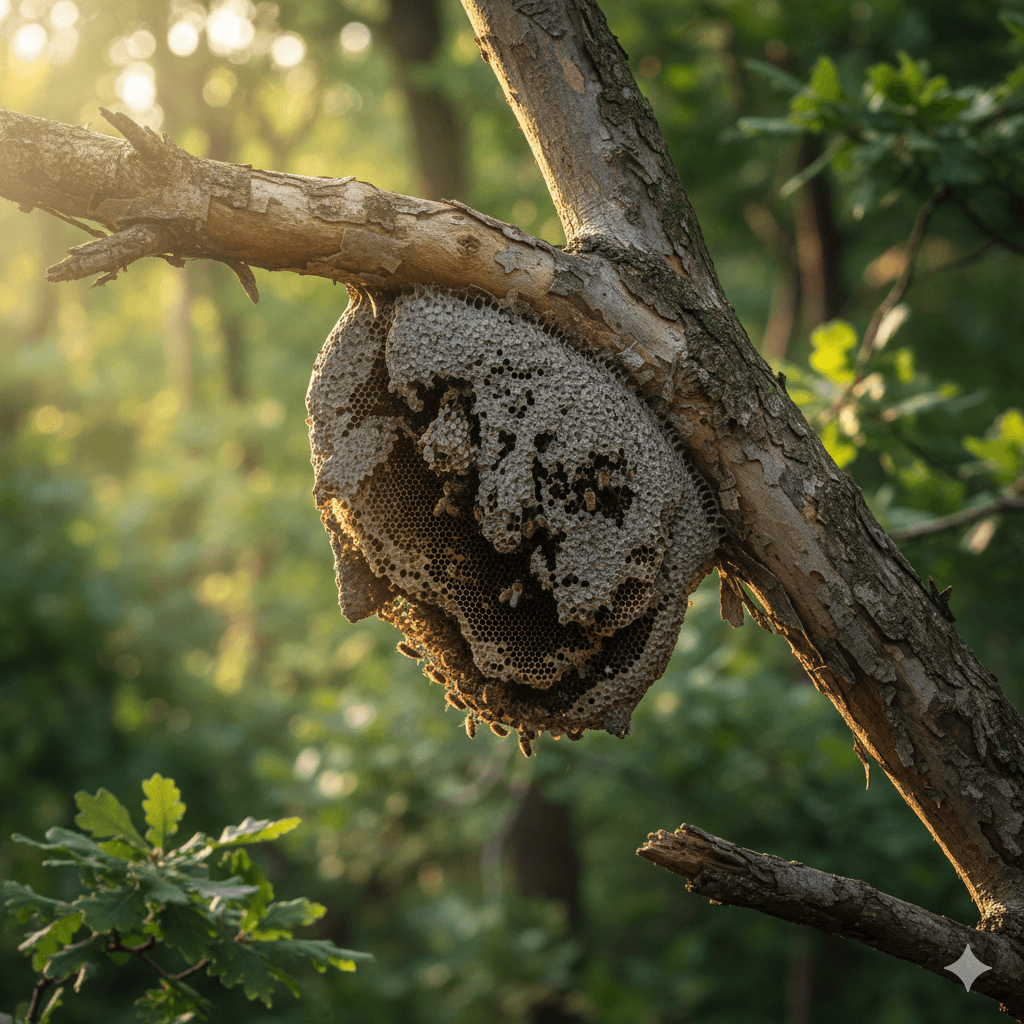
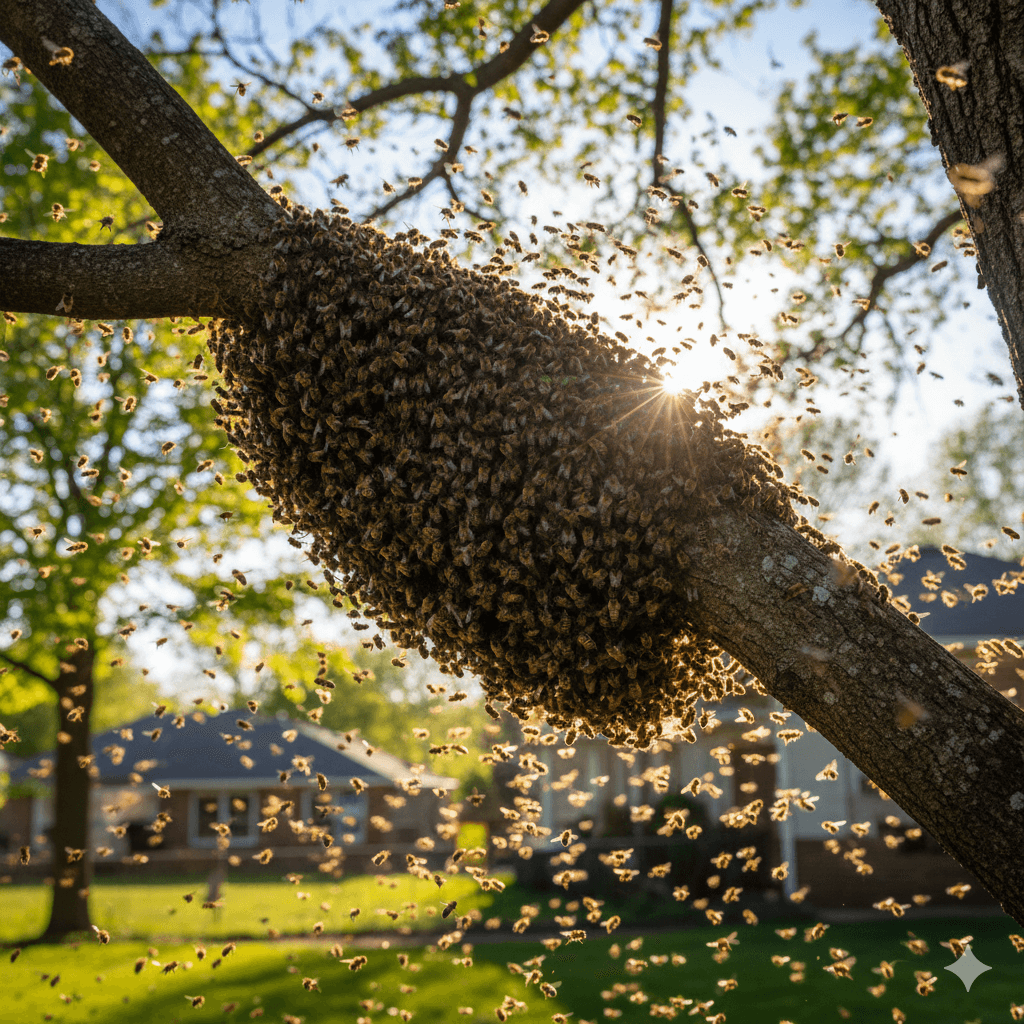
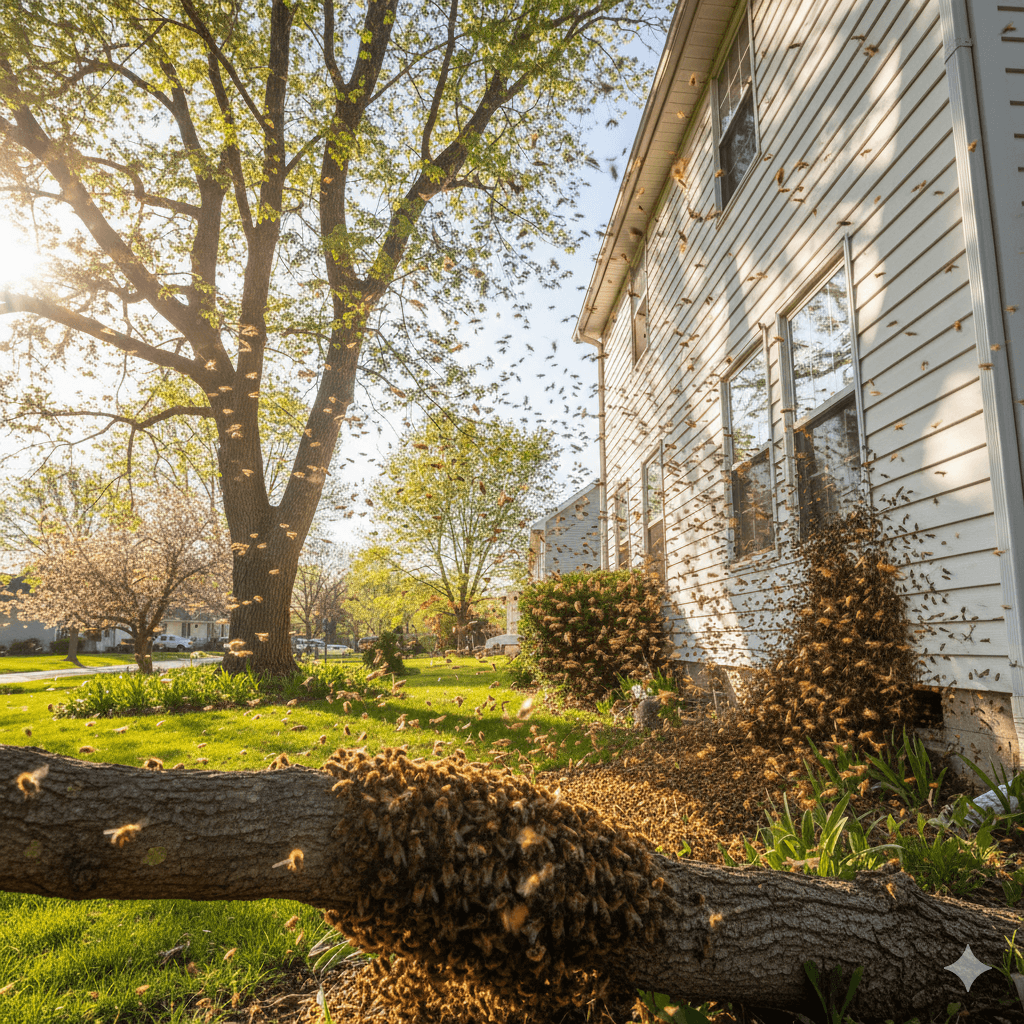
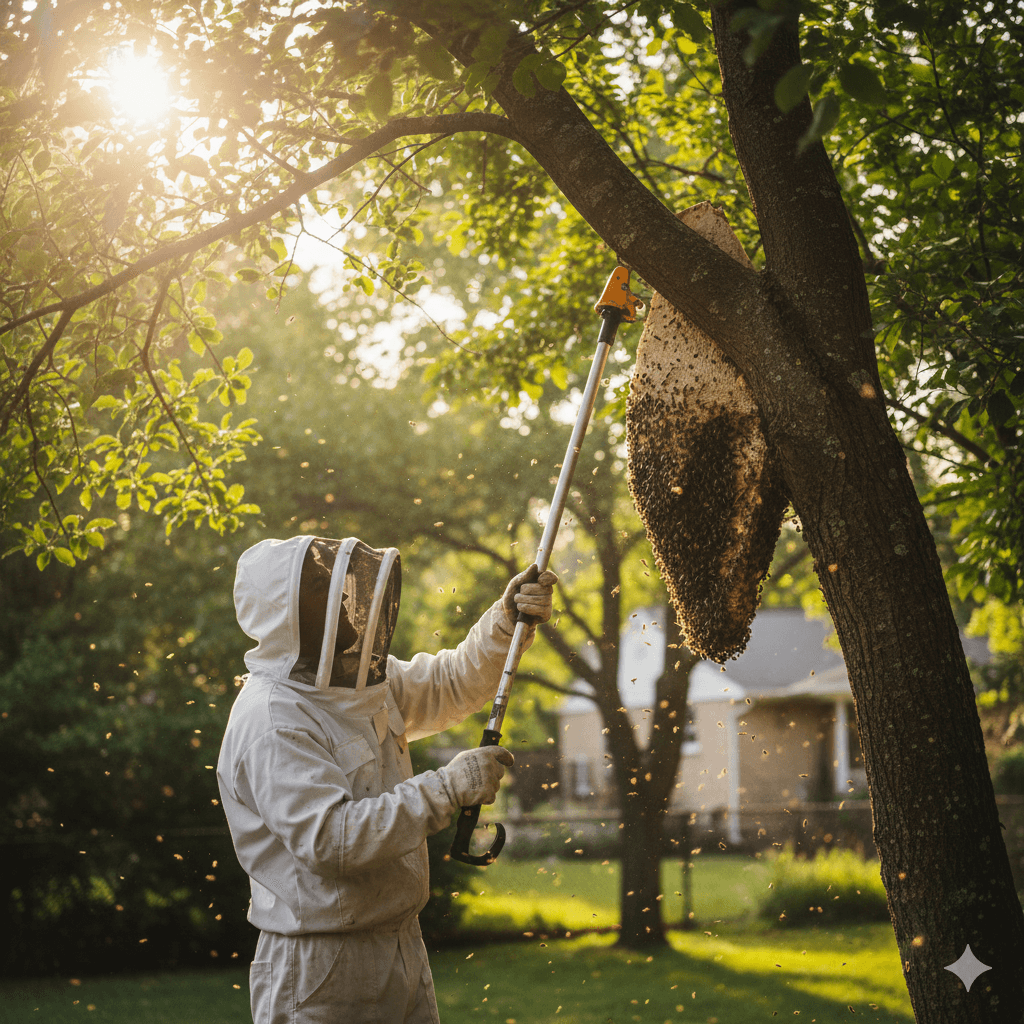
Large bee swarm clustered on tree branch near residential structure

Visible Swarms

Visible swarms temporarily gathering on structures or trees during spring and early summer

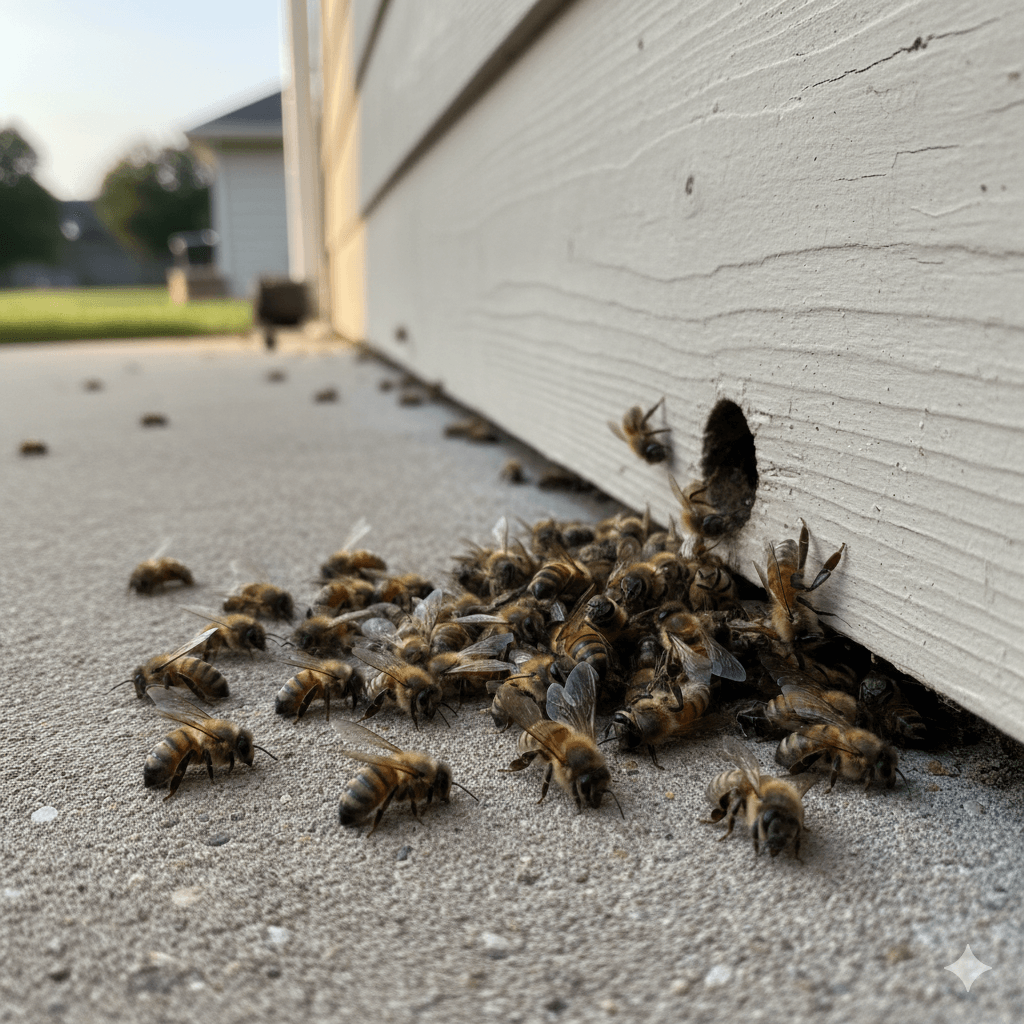
Accumulation of dead bees near colony entrance point

Dead Bees Accumulation

Collections of dead bees near entry points indicating active colony presence

Honey seepage dripping from ceiling due to overheated hive

Honey Dripping

Honey dripping from ceilings or walls during hot weather when hives overheat

Heightened bee activity around property during spring swarm season

Increased Activity

Sudden increase in bee activity around specific areas during spring swarm season

Learn More About Bee Detection →

DIY vs Professional Treatment

Attempting DIY bee removal creates serious risks to both personal safety and property. Over the counter sprays and removal attempts often agitate colonies, leading to aggressive defensive behavior while failing to address the underlying problem.

Professional bee removal provides crucial advantages through proper equipment, expertise, and methods that ensure complete colony removal while maximizing safety. Technicians assess each situation's unique challenges to determine the most appropriate removal strategy and ensure thorough removal of all hive materials to prevent future problems.

❌ DIY Treatment

  • Increased risk of multiple stings and allergic reactions
  • Incomplete removal leaving honeycomb to attract new colonies
  • Colony relocation to other parts of the structure
  • Property damage from improper extraction methods
  • Leftover honeycombs that can attract other pests
  • No proper protective equipment

✓ Professional Treatment

  • Specialized protective equipment and tools
  • Complete hive and honeycomb removal
  • Safe handling of aggressive colonies
  • Proper exclusion work to prevent returns
  • Thorough cleaning and sanitization
  • Species-specific removal methods

Commercial Bee Control

EcoGuard Pest Management implements customized bee control programs for commercial facilities that prioritize operational continuity while ensuring effective pest elimination. Our comprehensive commercial bee protection programs combine discrete treatment applications with flexible scheduling to maintain your business operations while ensuring complete elimination of bee problems.

We specialize in bee control solutions for:

  • Restaurants and food service establishments
  • Healthcare facilities
  • Hotels and hospitality venues
  • Educational institutions
  • Office complexes
  • Food processing facilities
  • Warehouses and storage facilities
  • Retail spaces
  • Manufacturing facilities
  • Multi-unit residential properties
Learn About Commercial Pest Control
100% SATISFACTION GUARANTEE

The EcoGuard Guarantee

EcoGuard offers a 100% satisfaction guarantee for all of our customers, and we stand by our promise to eradicate your bee problem until the very last bee is gone. That bee control guarantee comes with every service and if the bees come back, then so do we, at no additional cost. We are standing by to give you a free estimate and to help you set your first bee pest control service appointment.

📞 Call (866) 326-2847 Today

Our Bee Control Process

A systematic approach to safe bee removal and prevention

1

Initial Inspection

Our certified technicians begin with a comprehensive property inspection to identify bee species, assess colony size, and locate all entry points being used by the bees.

2

Professional Removal

Our team carefully removes the entire colony including all honeycomb and hive materials to prevent attracting new swarms. The removal process follows strict safety protocols to ensure both property protection and safe handling of these important pollinators.

3

Exclusion Methods

We seal all entry points using durable materials that prevent future bee infestations while maintaining your structure's integrity. Our exclusion process includes thorough cleaning of affected areas to remove pheromone trails that could attract new colonies.

4

Ongoing Monitoring

We continue to monitor your property after the initial service, checking exclusion repairs and assessing for any signs of new bee activity. Regular inspections allow us to identify and address potential new entry points before they become problems.

Seasonal Plan for Bee Control

Year-round protection adapted to seasonal bee behavior patterns

Spring Bee Control

Spring

This season marks the beginning of intense bee activity as overwintered colonies become active and new swarms seek nesting sites. We focus on early intervention during this critical period, inspecting properties for signs of swarming activity and addressing potential entry points.

Summer Bee Control

Summer

Peak bee season requires vigilant monitoring as established colonies reach maximum size and activity levels. We concentrate on managing colonies near high traffic areas while implementing preventive measures around structures.

Fall Bee Control

Fall

As temperatures begin to drop, honeybee colonies prepare for winter by sealing their hives and storing resources. Our focus shifts to removing colonies before they overwinter in structures, which could lead to significant damage from honey seepage and comb expansion.

Winter Bee Control

Winter

Though bee activity decreases, this season provides crucial opportunities for prevention. We concentrate on thorough structural inspections, identifying and sealing potential entry points before spring swarm season begins.

Bee Control FAQs

Everything you need to know about bee control and treatment

Honeybees are robust, hairy pollinators that build intricate wax combs and can only sting once. Wasps are sleeker, more aggressive insects that build paper nests, can sting multiple times, and don't produce honey or wax structures.

Honeybees are essential pollinators experiencing worldwide population decline, making their preservation crucial for agricultural sustainability and ecosystem health. When possible, professional relocation allows these beneficial insects to continue their vital role while still resolving the property owner's immediate safety concerns.

Honeybees are social insects that live in large colonies, with workers constantly entering and exiting a single hive entrance. Carpenter bees are solitary insects that create perfectly round holes in wood surfaces, with individual bees rather than colonies, and males often hovering near these holes to defend territory.

Bee stings can trigger severe allergic reactions ranging from localized swelling to life threatening anaphylaxis, with multiple stings dangerous even to non-allergic individuals. Indoor colonies also create risks through honey seepage and mold growth, while carpenter bees cause structural damage that can compromise building integrity.

A typical live bee removal service takes 2-4 hours, depending on colony size, location, and accessibility. More complex situations, such as colonies inside walls requiring structural modification, may take several days to complete proper removal and repairs.

All honeycomb must be completely removed to prevent structural damage and discourage future colonization, as remaining honeycomb can attract new honeybee swarms and cause damage through honey seepage. Professional removal includes extraction of all comb material, followed by thorough cleaning and sanitization of the affected area.

Properly relocated colonies typically don't return to their original location if all honeycomb and hive materials are removed, and entry points are sealed. However, a new swarm of bees may attempt to colonize the same area if attractive conditions persist, making proper exclusion work essential.

Professional bee removal technicians use specialized protective equipment, tools, and techniques developed specifically for safe colony extraction and hive removal. Their expertise allows them to properly assess colony size and behavior, determine the safest removal method, and execute the removal without risking injury or incomplete extraction.

Bees seek protected spaces that offer stable temperatures, shelter from elements, and easy access to the outside world. They're particularly attracted to dark cavities like wall voids, chimneys, and attic spaces that resemble their natural nesting sites.

A complete service includes species identification, colony assessment, safe removal of bees and all hive materials, structural repair recommendations, and exclusion work to prevent future infestations. The service also includes cleanup of affected areas and guidance on preventing future bee problems.

A mature honeybee colony can contain up to 60,000 bees and produce over 100 pounds of honey and wax comb. These colonies can expand significantly within walls or other void spaces, leading to extensive structural damage if not addressed promptly.

Bee activity peaks during spring and summer, with spring bringing swarm season as colonies divide and seek new nesting sites. Fall sees reduced activity as colonies prepare for winter, though indoor colonies remain active year round due to stable structure temperatures.

Wall voids provide ideal nesting conditions with stable temperatures, protection from predators, and sufficient space for colony expansion. Existing holes, gaps, or previous colony sites make these areas particularly attractive to house hunting swarms.

Honeybee colonies can cause severe structural damage through honey seepage that leads to wood rot, drywall deterioration, and mold growth. Carpenter bees create extensive tunnel systems in wood structures, compromising structural integrity over time.

Professional removal from challenging locations involves specialized equipment like fiber optic cameras to locate colonies, custom extraction tools, and methods tailored to each situation. Technicians may need to carefully remove sections of walls or siding to access the colony while minimizing structural damage.

Our bee removal guarantee includes free return visits if bees return to treated areas during the warranty period and verification that all exclusion work remains effective. We document all work performed and provide recommendations for preventing future bee problems.

Bee removal is most effective during daylight hours and moderate temperatures when most of the colony is active and present in the bee nest. Severe weather can delay removal services, as rain and cold temperatures affect bee behavior and make removal more challenging.

Remaining honeycomb will attract new swarms, leak honey that causes structural damage, and potentially lead to secondary pest infestations. The honey can also seep through walls and ceilings, causing staining and creating ideal conditions for mold growth.

Technicians use protective coverings and specialized tools to minimize damage during the removal process. They take care to properly seal and repair any areas that must be opened for colony access, ensuring the structure is restored to its preremoval condition.

Prevention involves thorough inspection and sealing of potential entry points, particularly around utility penetrations, vents, and gaps in siding or eaves. Regular property maintenance and prompt repair of any new gaps or holes helps discourage future bee colonization.

Professional bee removal costs vary based on colony location, size, and complexity of the removal process. Typical services vary dramatically, with additional costs possible for extensive repair work or difficult to access colonies.

Permanent bee control requires a comprehensive approach including complete colony removal, thorough cleaning of the affected area, and proper exclusion work to seal all potential entry points. This three step process, combined with regular inspection and maintenance, provides long-term protection against future infestations.

The most effective approach combines careful colony removal with thorough exclusion work and preventive measures to discourage future colonization. Success depends on properly identifying the bee species, removing all hive materials, and implementing appropriate exclusion techniques for your specific situation.

While various home remedies claim to repel bees, these insects are primarily deterred by proper exclusion methods that prevent them from accessing suitable nesting sites. Rather than focusing on repellents, which are largely ineffective against established colonies, professional removal and exclusion provide the only reliable solution for bee problems.

Vinegar solutions are not an effective or reliable method for controlling bee problems, as they don't address the underlying attraction of suitable nesting sites. Professional removal and exclusion methods provide the only dependable solution for preventing bee colonies from establishing in your property.

Ready to Eliminate Your Bee Problem?

Get a free estimate for your bee problem today. Our experts will assess your property and provide a customized treatment plan.

Connect With Us

Follow EcoGuard Pest Management for tips, updates, and special offers

f𝕏yin