EcoGuard Pest Management
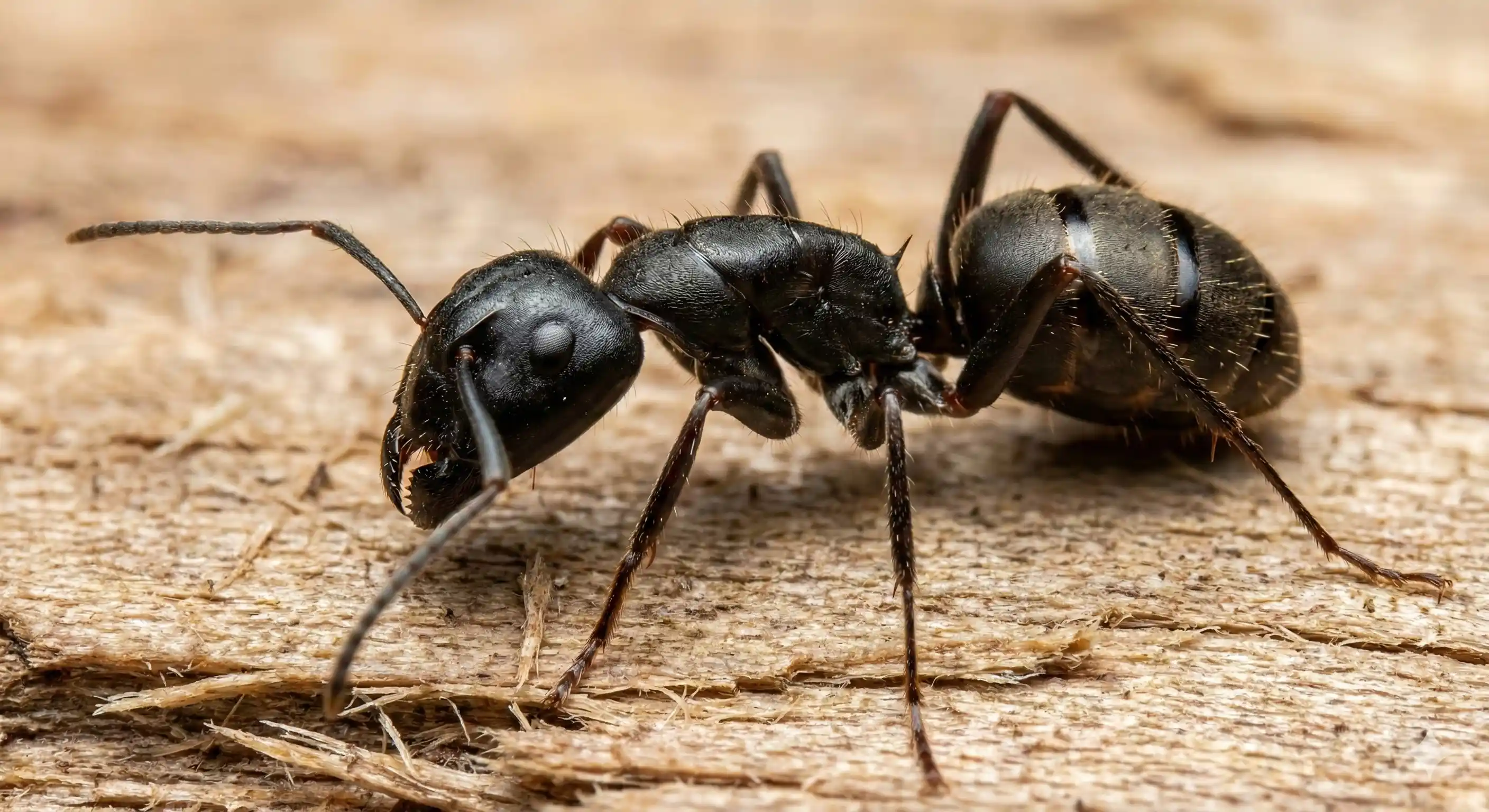
Professional carpenter ant control technician inspecting and treating wood structure for ant infestation

Professional Carpenter Ant Control & Extermination Services

Discovering large black ants trailing through your home or hearing faint rustling sounds within your walls could signal a carpenter ant infestation silently destroying your property's structural integrity. Unlike termites, carpenter ants don't eat wood—they excavate it to create elaborate nesting galleries, leaving behind sawdust-like frass as evidence of their destructive tunneling. EcoGuard Pest Management delivers expert carpenter ant elimination services that locate hidden colonies, eliminate satellite nests, and protect your home from costly structural damage.

Carpenter Ant Pest Control Experts

Carpenter ant control requires specialized knowledge of colony structure, nesting behavior, and the unique parent colony-satellite nest relationship these destructive insects establish. Our certified technicians are trained to identify carpenter ant species, locate hidden nesting sites within wall voids and structural timbers, and track foraging trails back to the source. This expertise allows us to eliminate entire colony networks—not just the visible worker ants—while addressing the moisture conditions that attracted them.

Why Carpenter Ants Are a Serious Problem

Carpenter ants pose unique threats that distinguish them from other ant species and require immediate professional attention:

  • Unlike termites that consume wood, carpenter ants excavate galleries through sound timber to create nesting space. This structural damage accumulates over years, potentially compromising load-bearing beams, floor joists, and wall framing
  • Mature colonies establish multiple satellite nests throughout structures, with workers traveling between the parent colony (often outside) and indoor satellites, making single-location treatments ineffective
  • Carpenter ant infestations indicate underlying moisture problems—these ants prefer water-damaged or decaying wood for initial nest sites, meaning their presence often reveals hidden leaks, condensation issues, or rot
  • A single colony can contain 10,000-50,000 workers, with queens living up to 25 years and producing thousands of offspring annually, allowing untreated infestations to cause extensive damage over time

Carpenter Ant Control Service Plans

Choose the protection level that's right for your property

One-Time Treatment
$249+
Starting price
  • Comprehensive property inspection
  • Species identification
  • Entry point identification
  • Targeted treatment application
  • Perimeter barrier application
  • Nest elimination
  • Treatment report & recommendations
  • 30-day guarantee
Get Started
MOST POPULAR
Annual Protection
Contact Us
For custom pricing
  • Everything in One-Time Treatment
  • Seasonal maintenance plan
  • Entry point treatments
  • Priority scheduling
  • Re-treatment guarantee
Get Started

* Prices vary based on property size, infestation severity, and treatment method. Contact us for an accurate quote.

Service Plan Comparison

FeatureOne-TimeAnnual
Comprehensive Inspection
Colony Elimination Treatment
Follow-Up InspectionsQuarterly
Moisture Assessment
Re-Treatment Guarantee
Ongoing Monitoring

Get Your Free Carpenter Ant Quote

Protect your property with a free carpenter ant quote from our licensed experts.

✓ Same-day service available
✓ Licensed & insured
✓ Detailed property assessment
✓ No-obligation estimates

Service Areas

We provide carpenter ant control services throughout:

  • California
  • Oregon
  • Washington
  • Texas
  • Tennessee
  • Nevada
View All Counties →

Ready to Eliminate Your Carpenter Ant Problem?

Schedule your carpenter ant inspection today. Our experts will assess your property and provide a customized treatment plan.

📞 Call (866) 326-2847Get Free Quote

Carpenter Ant Treatment Options

EcoGuard Pest Management employs a multi-faceted approach to carpenter ant control, targeting both parent colonies and satellite nests while addressing the conditions that support infestations.
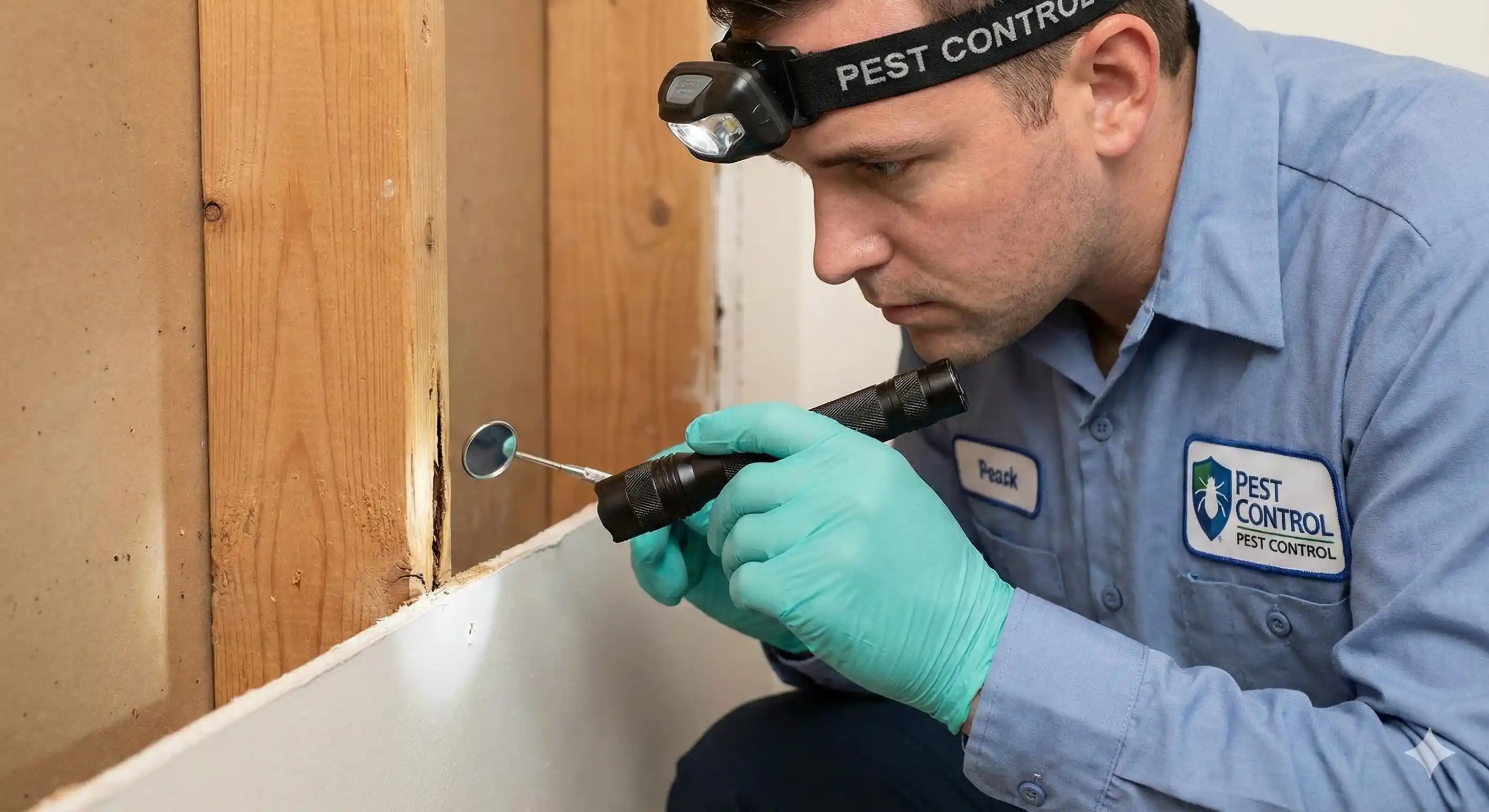
Technician inspecting wall void for carpenter ant colony activity

Comprehensive Colony Inspection

Thorough examination of your property to locate parent colonies, satellite nests, and foraging trails. Our technicians inspect wall voids, attic spaces, crawl spaces, and exterior areas to map the complete colony network before treatment.

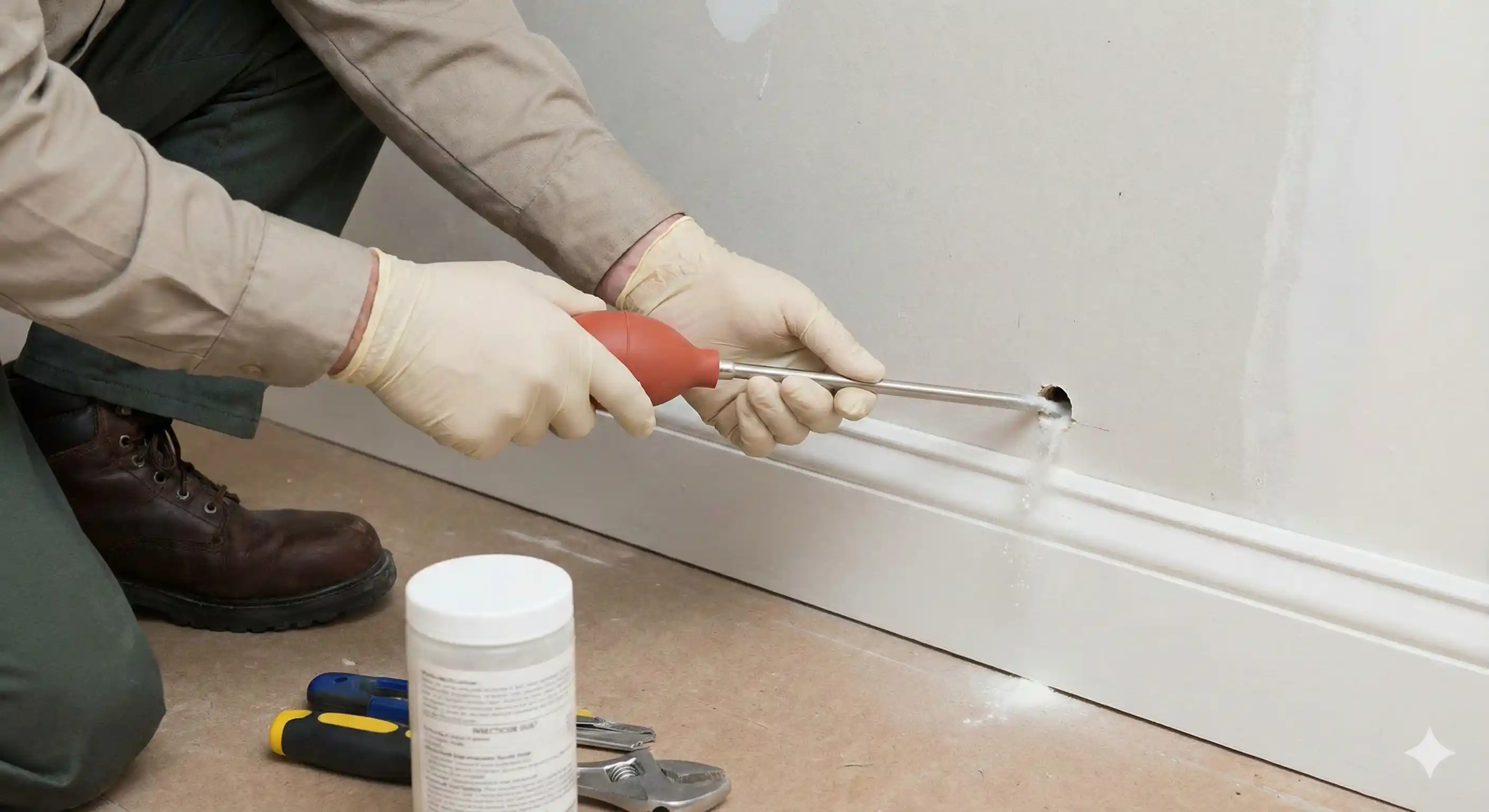
Professional treating wall void with insecticide dust for carpenter ant control

Wall Void & Gallery Treatment

Precision application of insecticide dust and residual products directly into wall voids, structural cavities, and active galleries where carpenter ants nest. This targets ants in their hidden harborage areas for complete elimination.

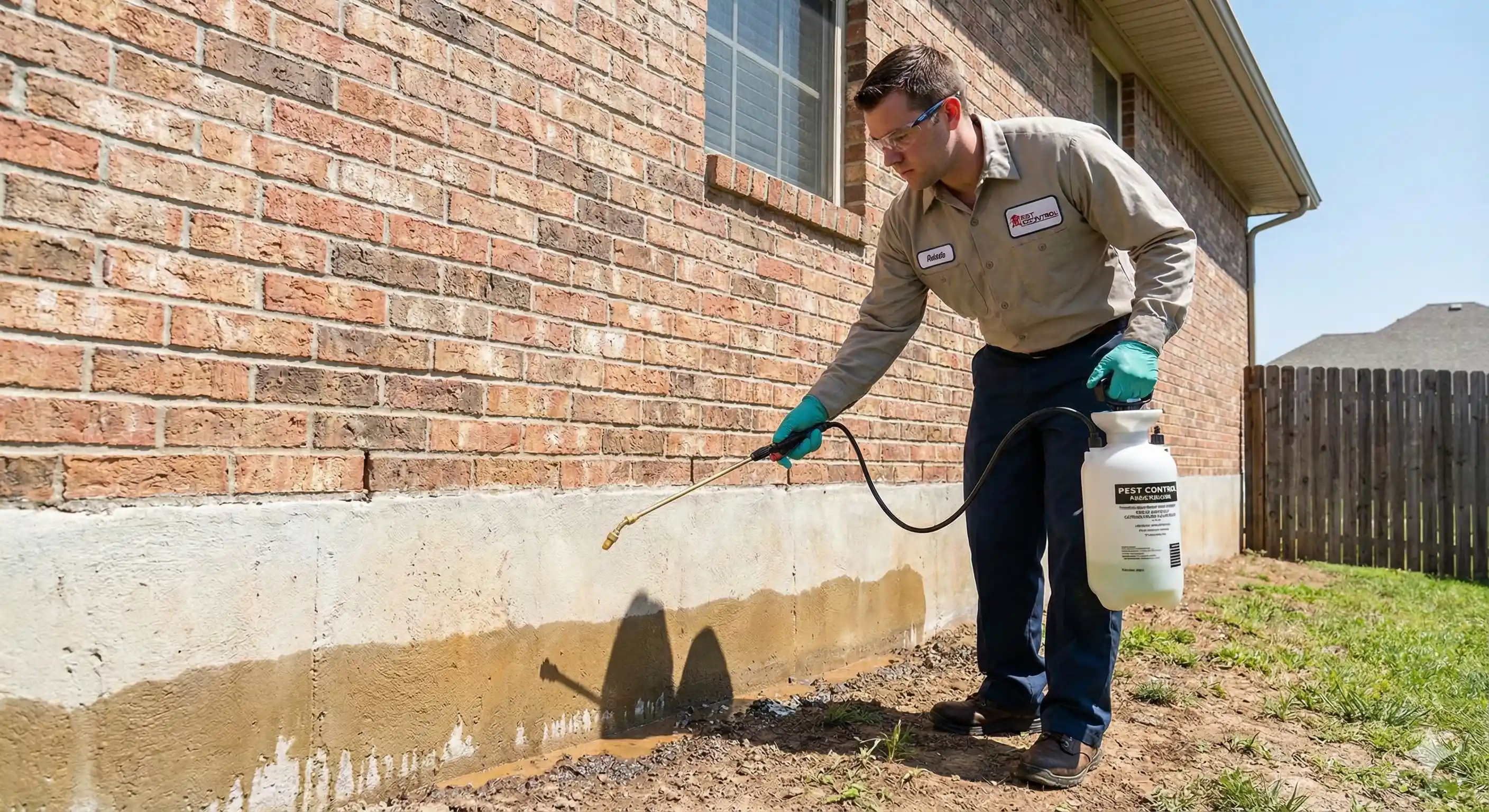
Applying non-repellent liquid treatment for carpenter ant colony transfer

Non-Repellent Liquid Treatment

Application of non-repellent insecticides that carpenter ants cannot detect, allowing workers to contact treated surfaces and transfer the product back to the colony. This creates a cascading effect that eliminates the entire nest.

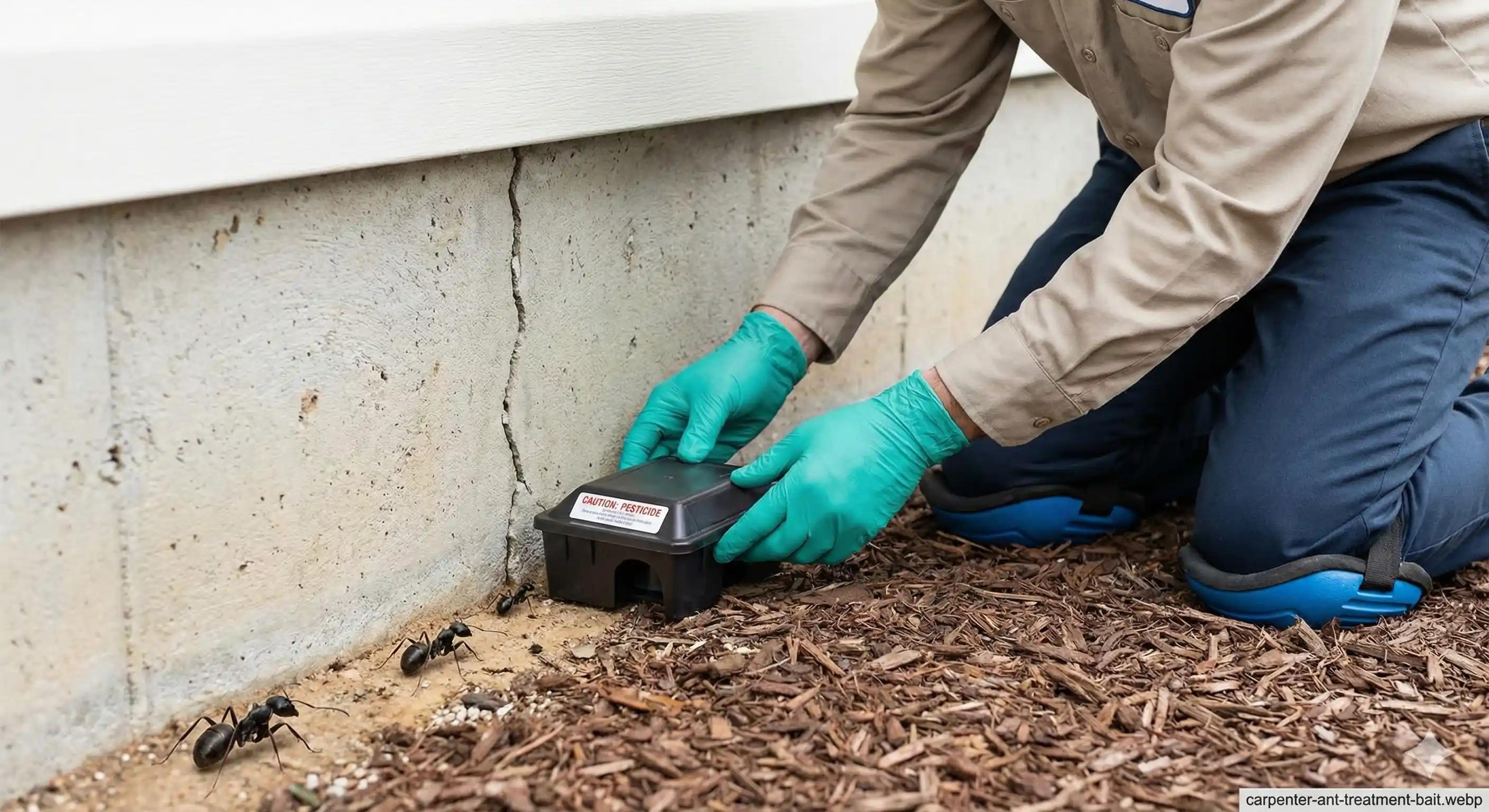
Installing professional carpenter ant bait station near foraging trail

Professional Bait Systems

Strategic placement of protein and sugar-based baits that worker ants carry back to feed the queen and colony members. These slow-acting baits ensure complete colony elimination including the reproductive queen.

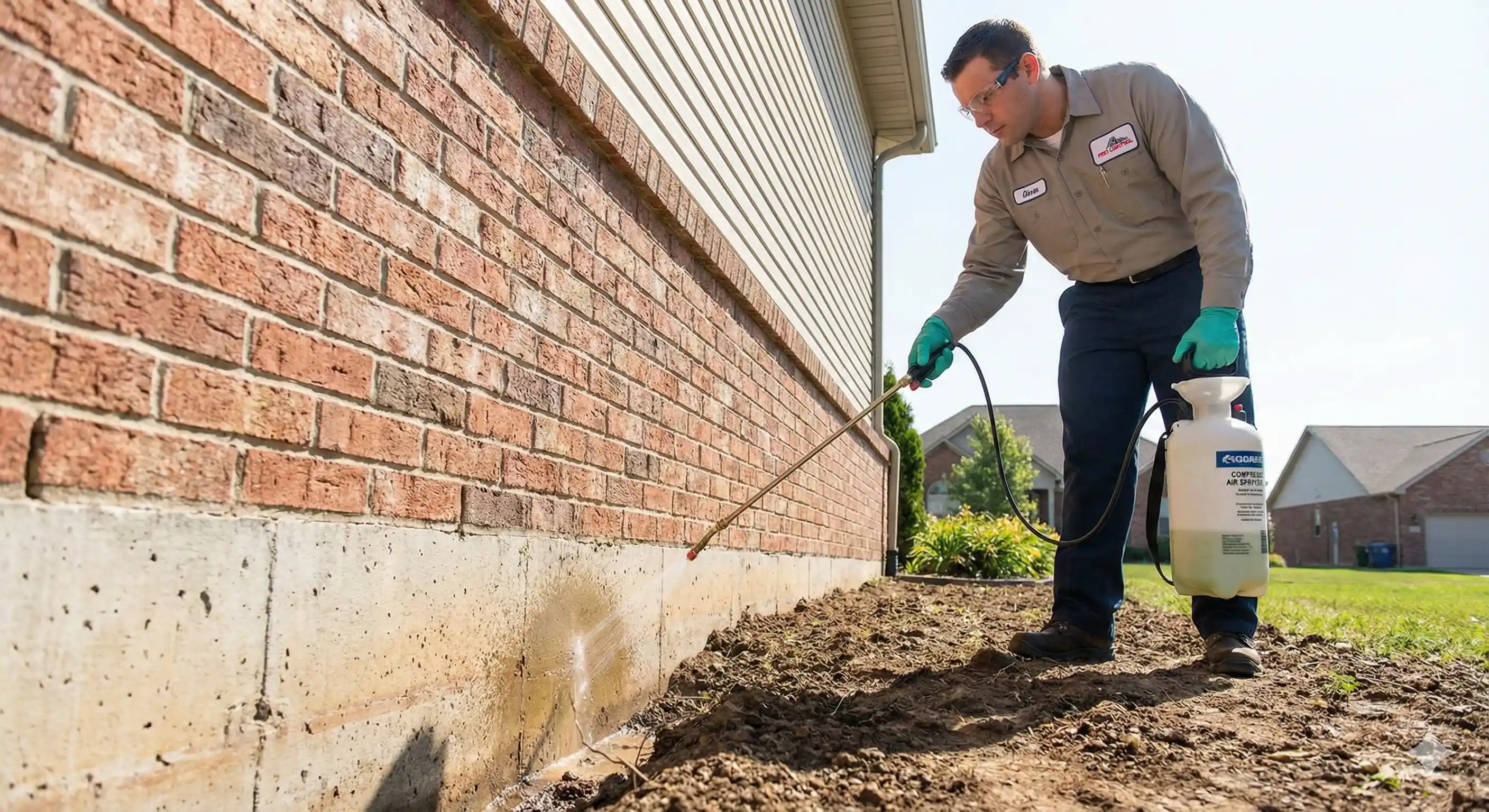
Technician applying perimeter barrier treatment around foundation

Perimeter Barrier Protection

Exterior treatment creating a protective barrier around your home's foundation, preventing carpenter ants from establishing new colonies or reconnecting satellite nests with outdoor parent colonies.

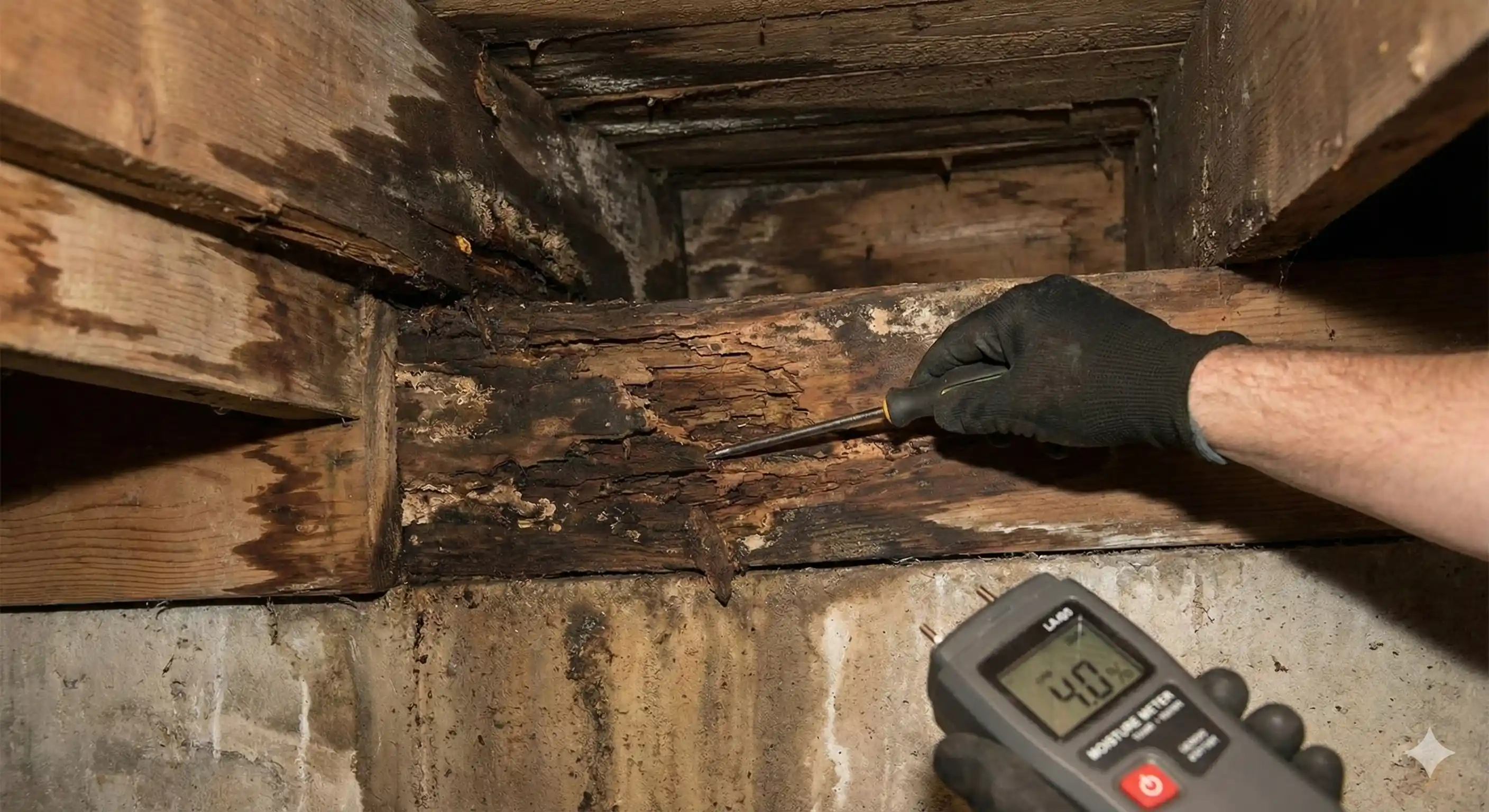
Identifying moisture damage that attracts carpenter ant colonies

Moisture Source Remediation

Identification and recommendations for addressing moisture issues that attract carpenter ants and support colony development. Eliminating water-damaged wood and fixing leaks removes the conditions these ants require.

What Causes Carpenter Ants?

Understanding what attracts carpenter ants to your property helps prevent infestations and identify conditions requiring attention.
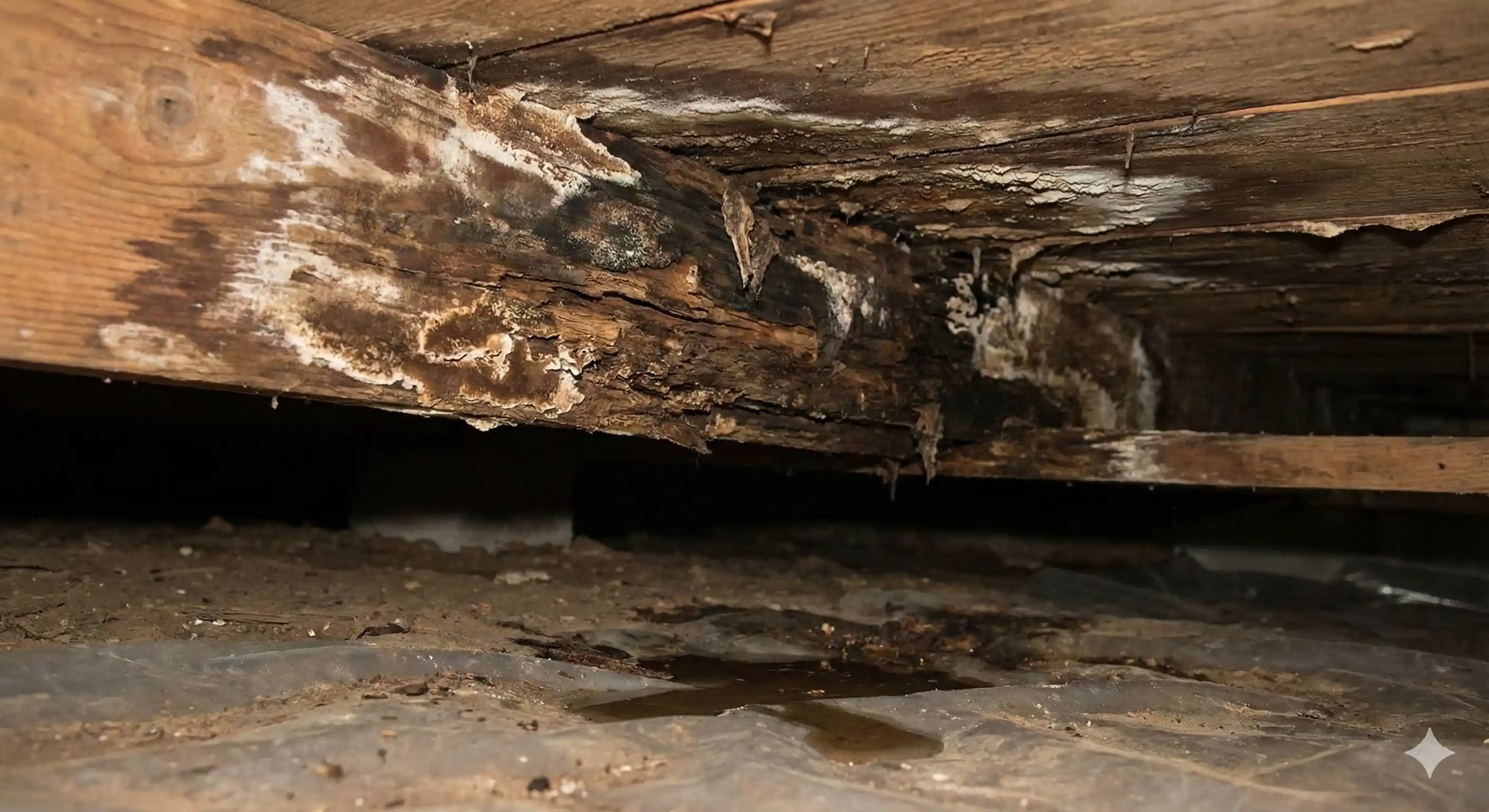
Water-damaged wood providing ideal carpenter ant nesting conditions

🪵 Moisture-Damaged Wood

Carpenter ants prefer to establish initial nests in wood softened by moisture, decay, or fungal damage. Leaky roofs, plumbing problems, condensation, and poor drainage create the ideal conditions these ants seek for colony establishment.

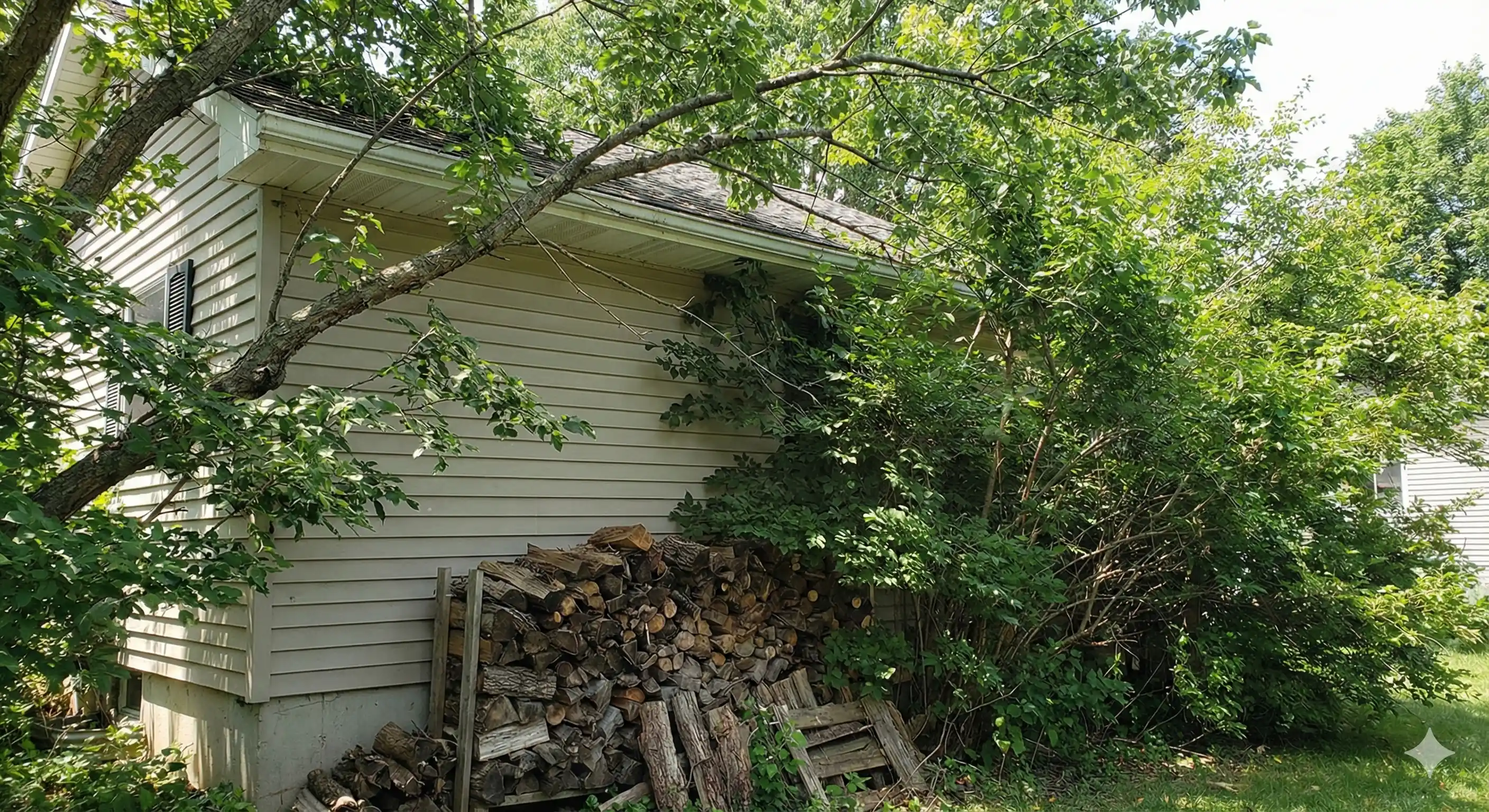
Tree branches and vegetation contacting home structure

💧 Wood-to-Structure Contact

Trees, shrubs, and woodpiles touching your home provide direct pathways for carpenter ants to access structures. Dead trees, stumps, and landscape timbers near foundations often harbor parent colonies that spawn indoor satellites.

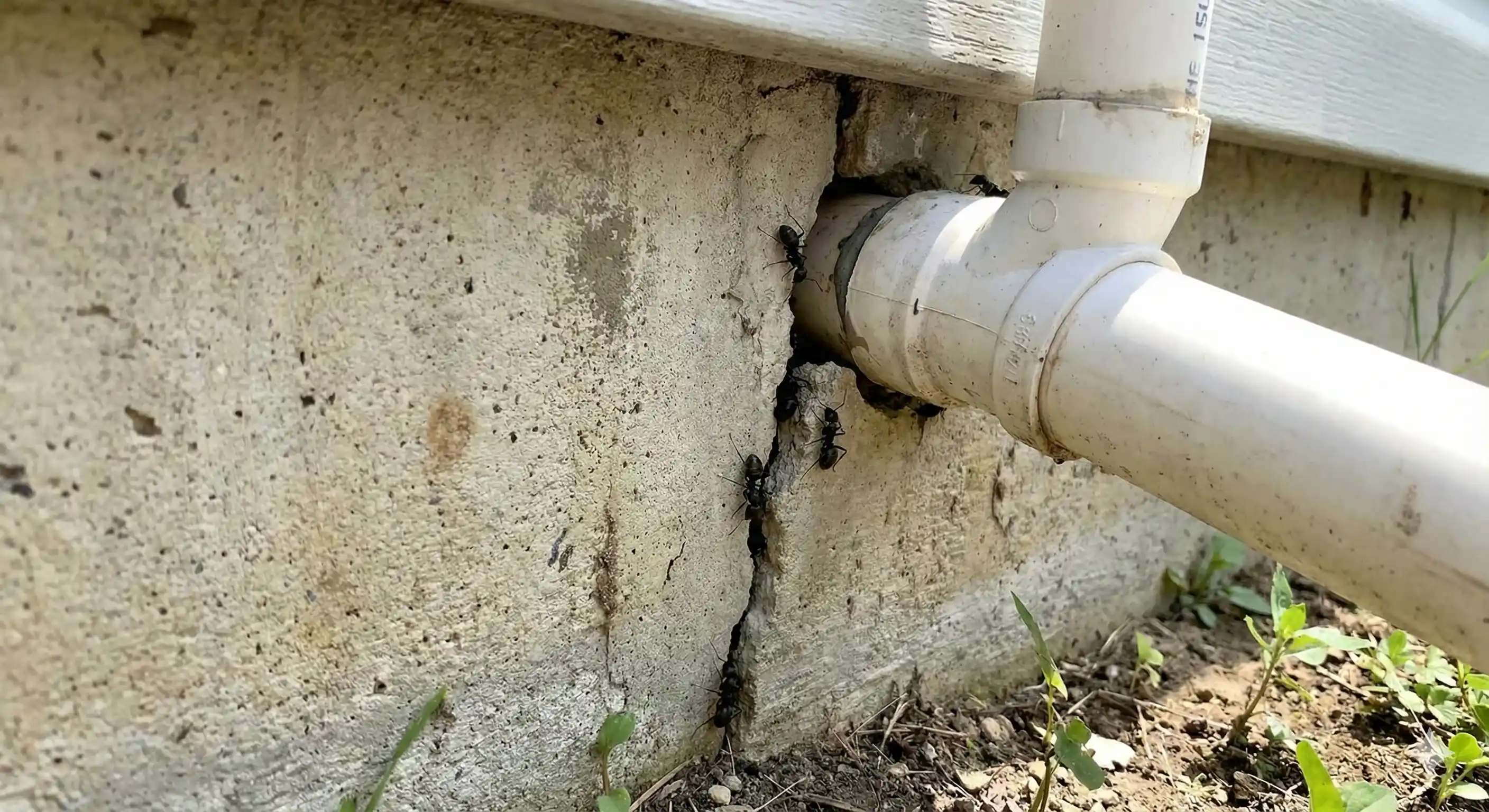
Foundation crack and utility penetration providing carpenter ant entry

🏠 Structural Entry Points

Gaps around utility penetrations, cracks in foundations, poorly sealed windows and doors, and openings where wires or pipes enter structures allow carpenter ant scouts to access and evaluate potential nesting sites.

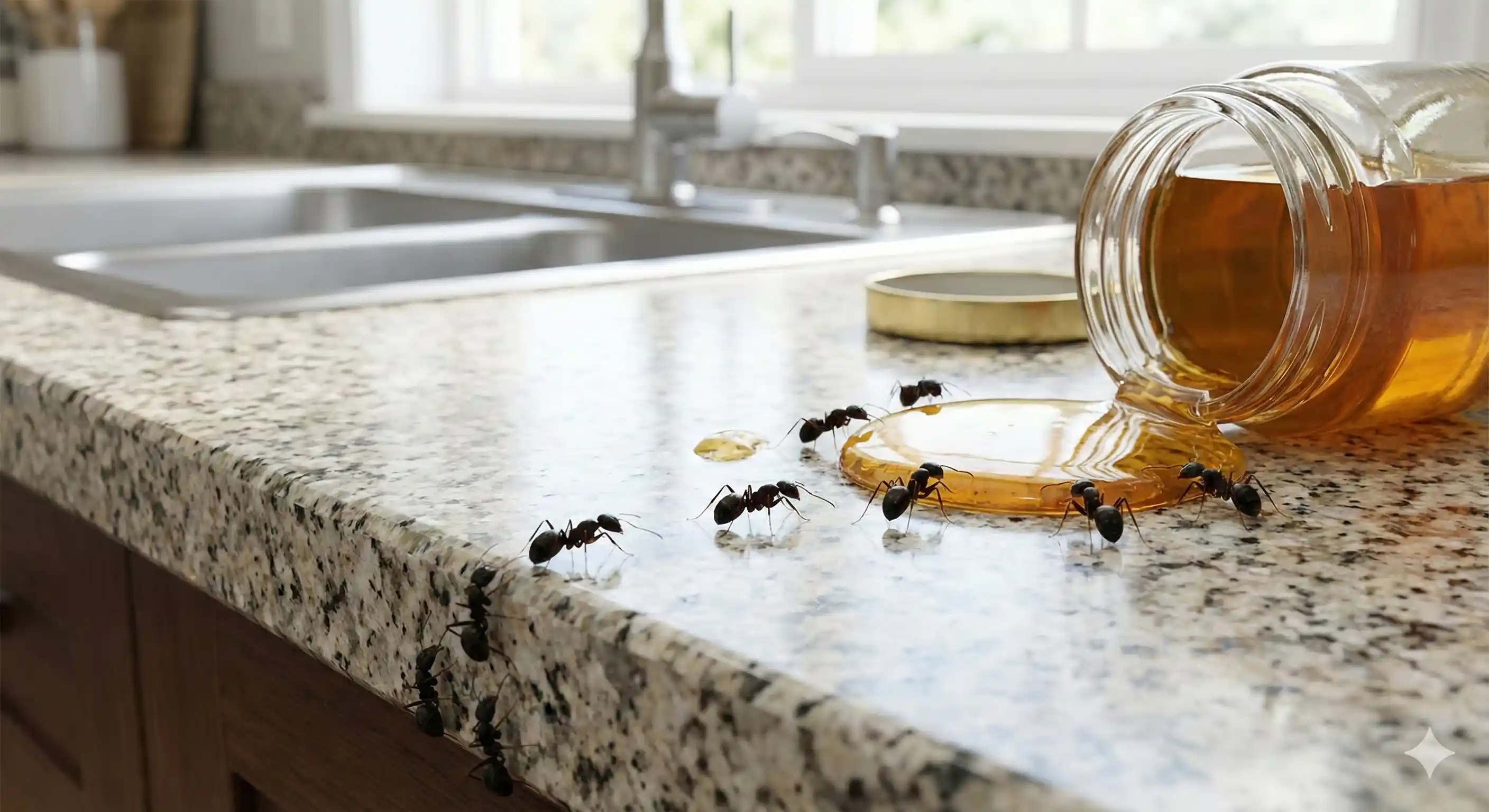
Kitchen area with food sources attracting carpenter ant foragers

🔨 Indoor Food Sources

While carpenter ants nest in wood, they forage for protein and sugary foods. Pet food, honeydew from indoor plant pests, food debris, and accessible garbage attract foraging workers that may establish satellite colonies nearby.

Learn More About Carpenter Ant Prevention →

What Are Signs of Carpenter Ants in Your Home?

Early detection of carpenter ant activity prevents extensive structural damage. Watch for these warning signs throughout your property.
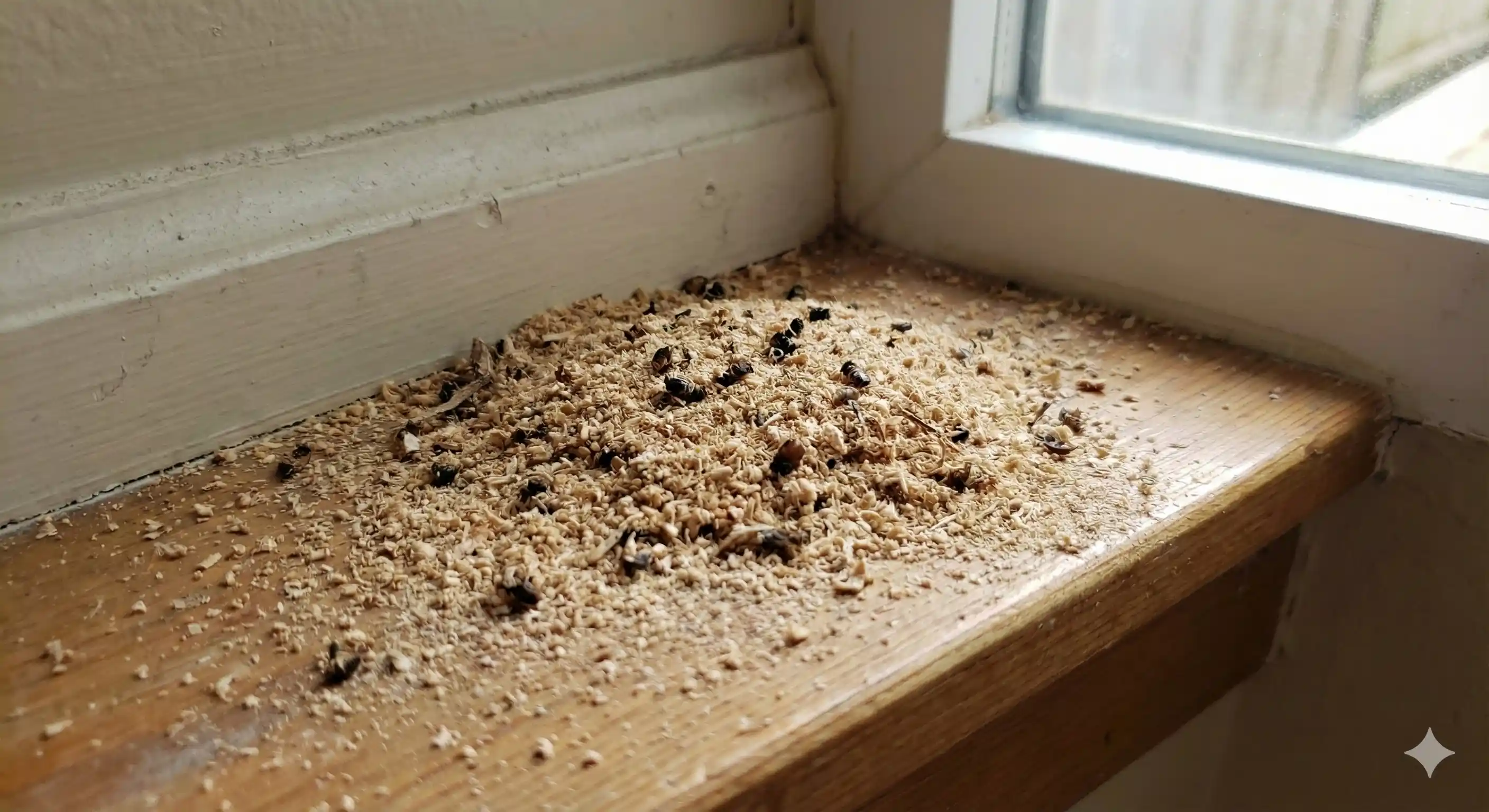
Sawdust-like frass pile indicating carpenter ant gallery excavation

Sawdust-Like Frass Piles

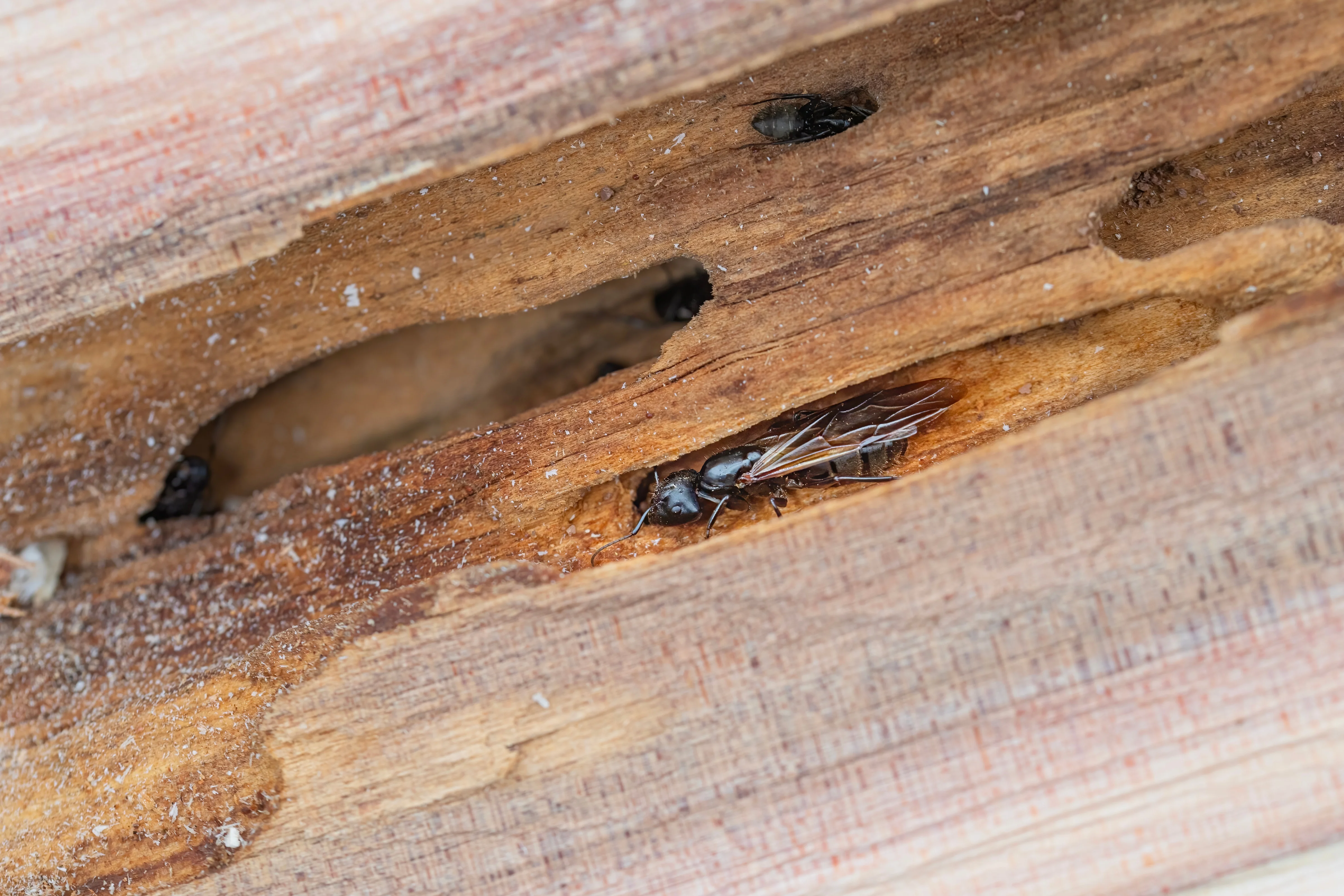
Small piles of wood shavings mixed with insect body parts accumulating below nest openings. This frass is expelled as carpenter ants excavate galleries and is the most distinctive sign of active infestation.

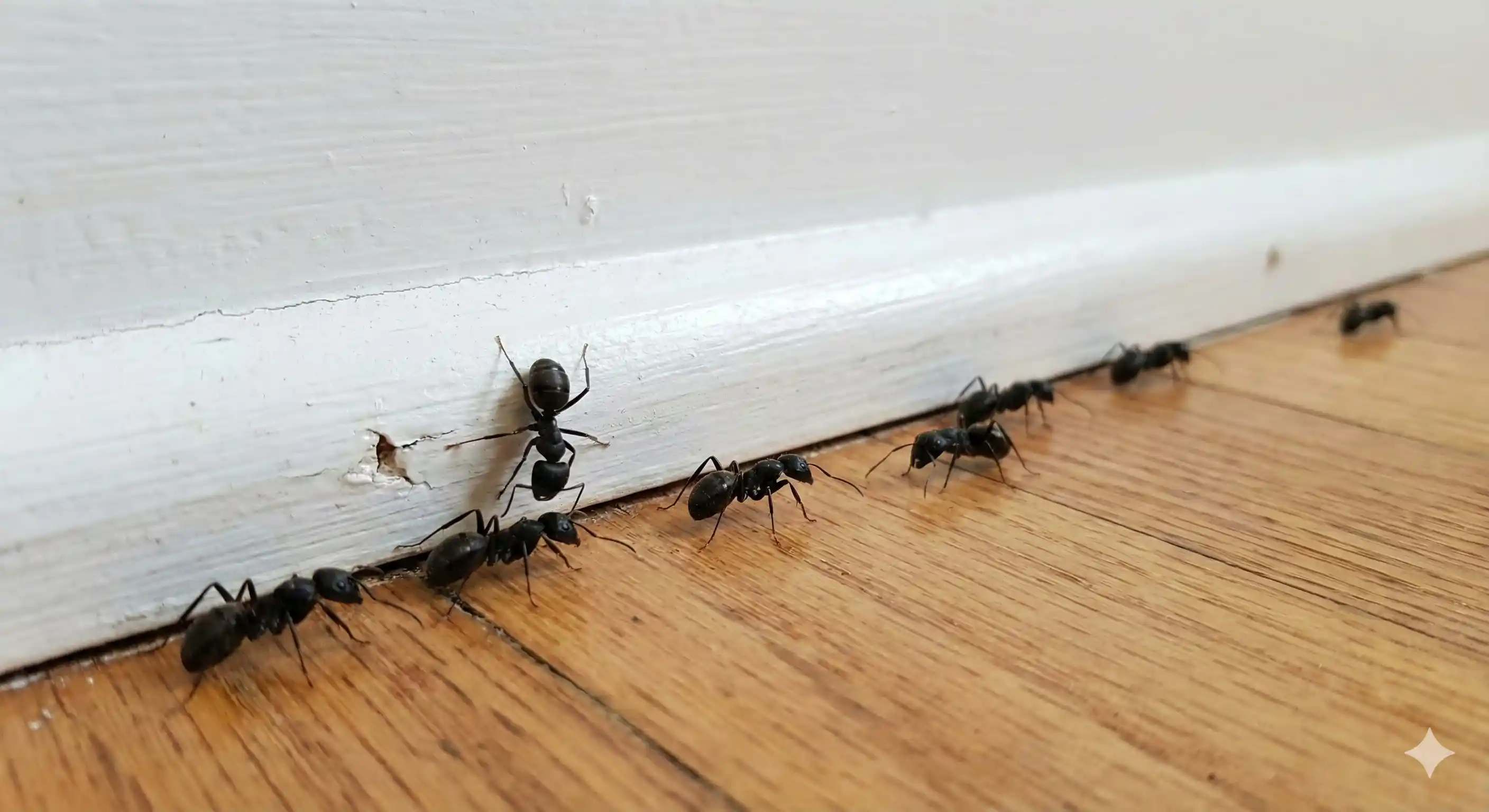
Large black carpenter ant workers foraging indoors

Large Black Ants Indoors

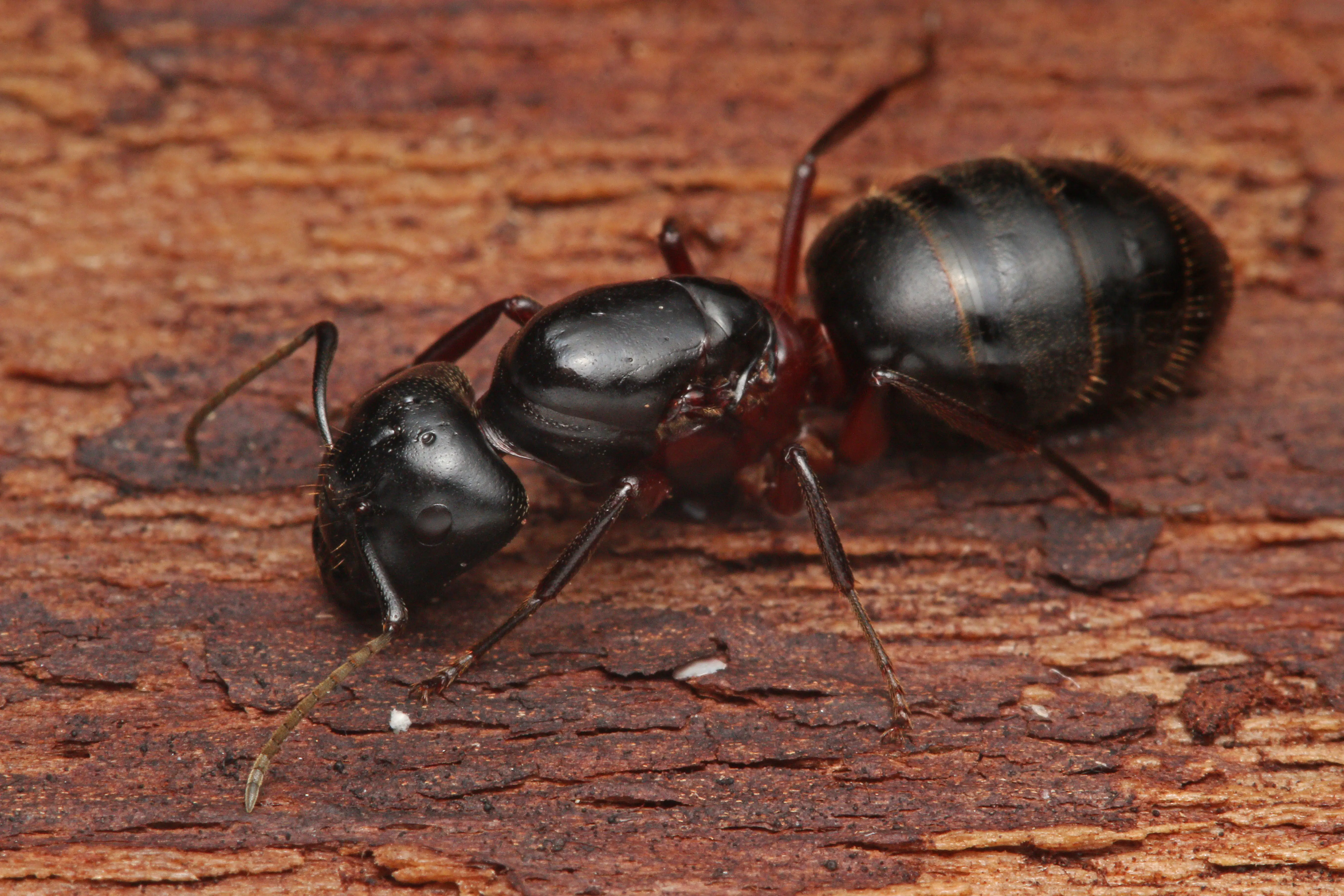
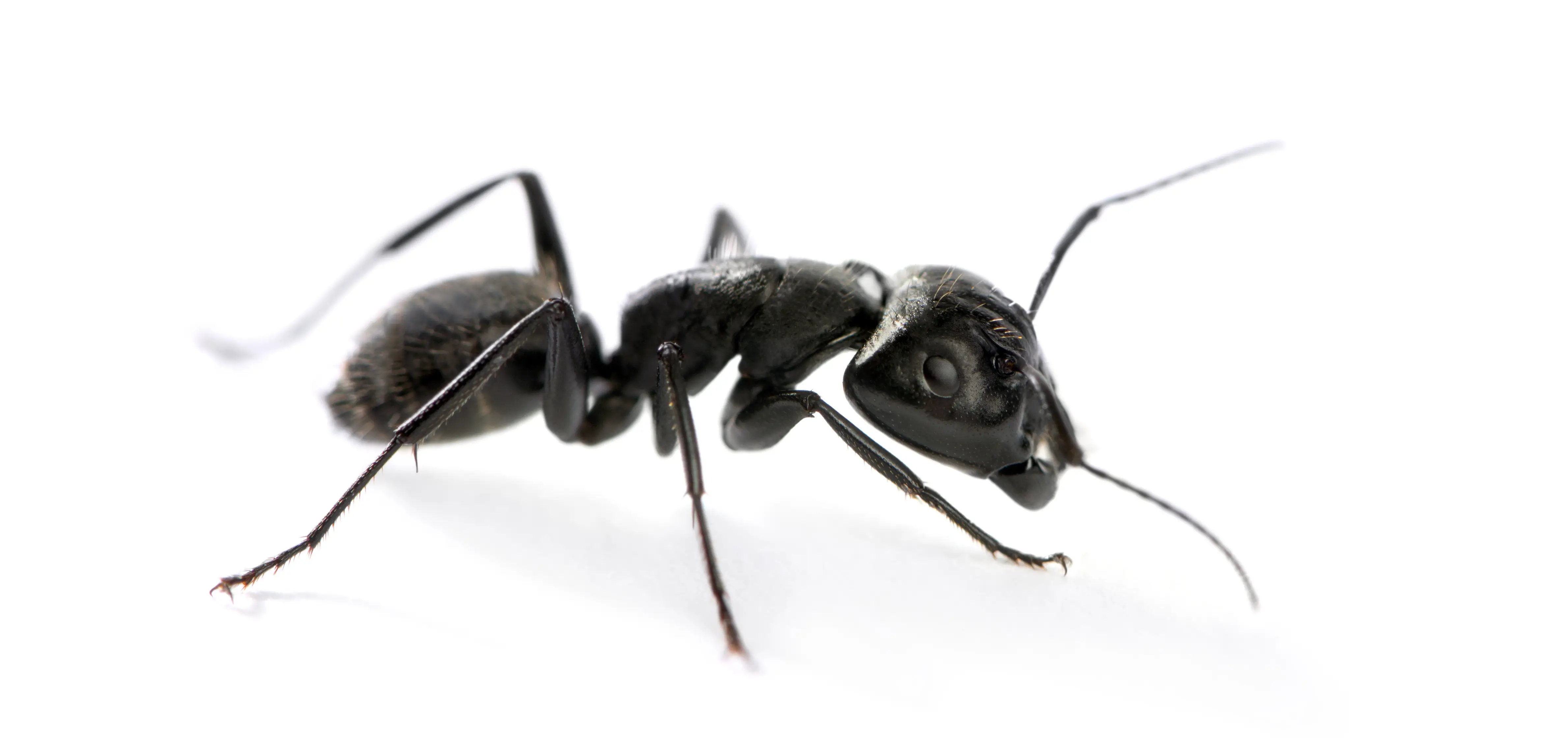
Worker carpenter ants are among the largest ants in North America, measuring 1/4 to 1/2 inch long. Seeing large black ants inside, especially at night when they're most active, indicates an established colony.

Wall area where carpenter ant activity sounds may be heard

Rustling Sounds in Walls

Faint rustling or crinkling sounds within wall voids, especially at night when the house is quiet. This noise is produced by thousands of worker ants moving through galleries and can be heard by pressing your ear to walls.

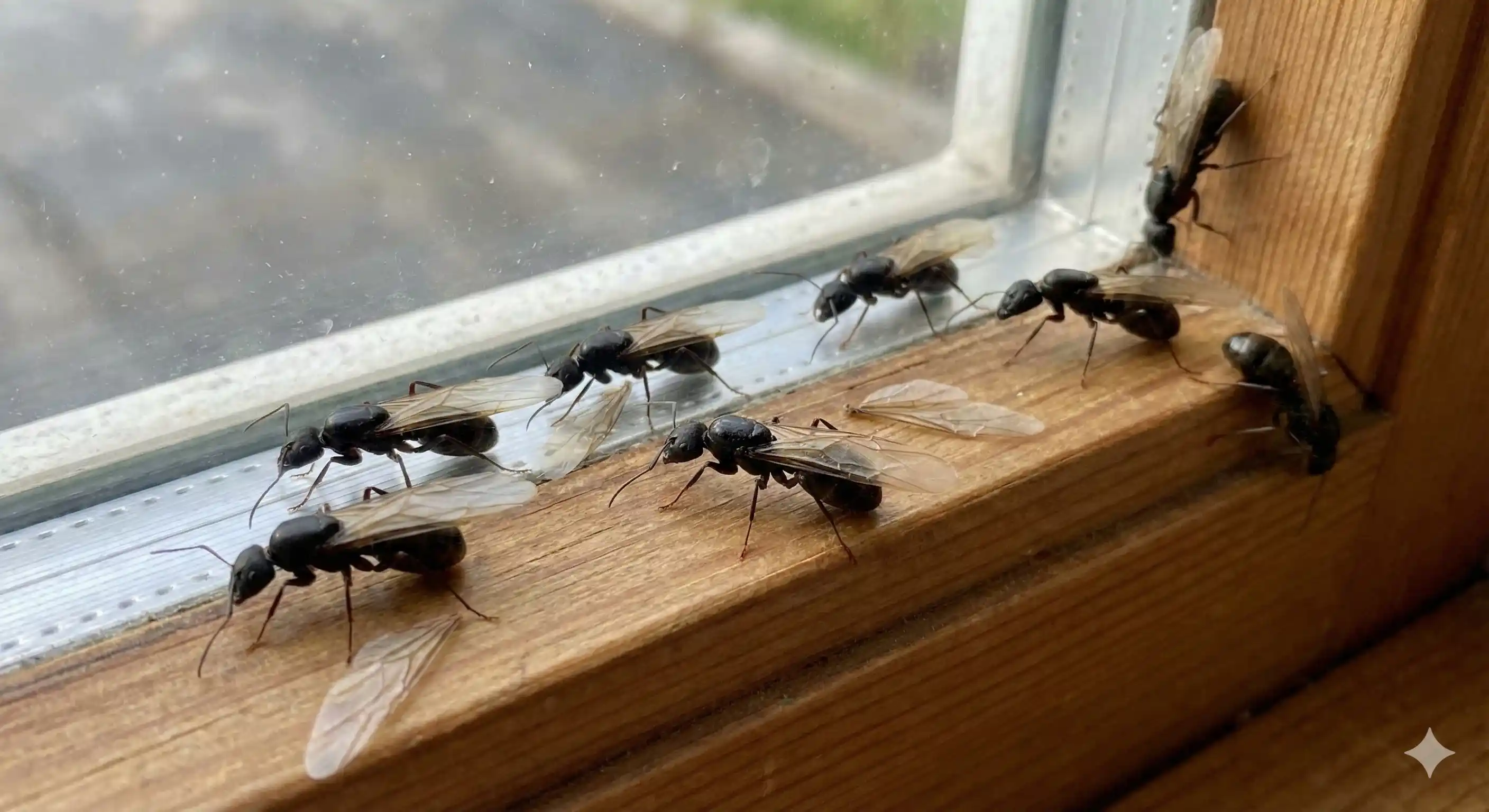
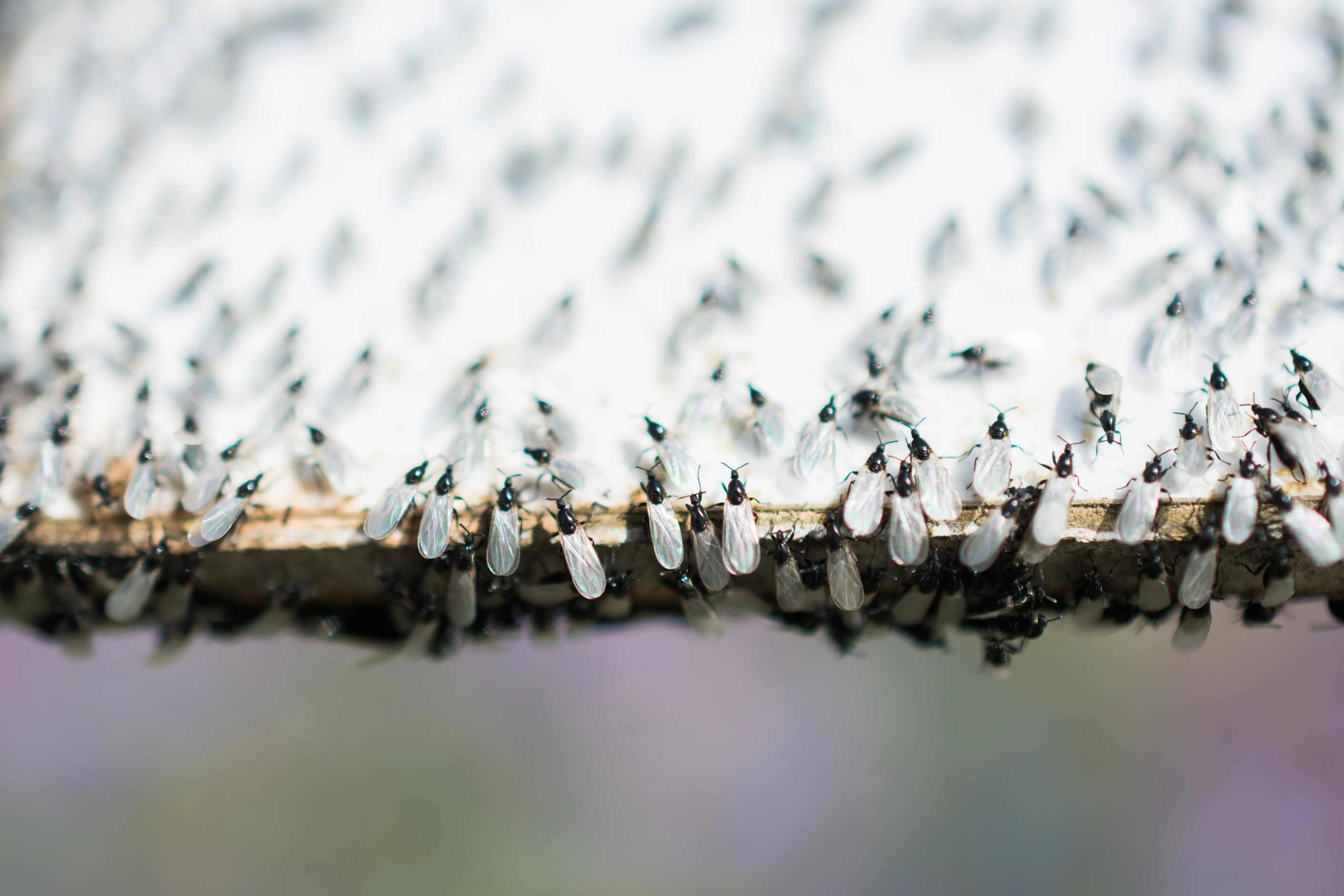
Winged carpenter ant swarmers indicating mature indoor colony

Winged Ants (Swarmers)

Large winged ants emerging indoors, particularly in spring, indicate a mature colony producing reproductive swarmers. Indoor swarmers strongly suggest a nest is established within the structure itself.

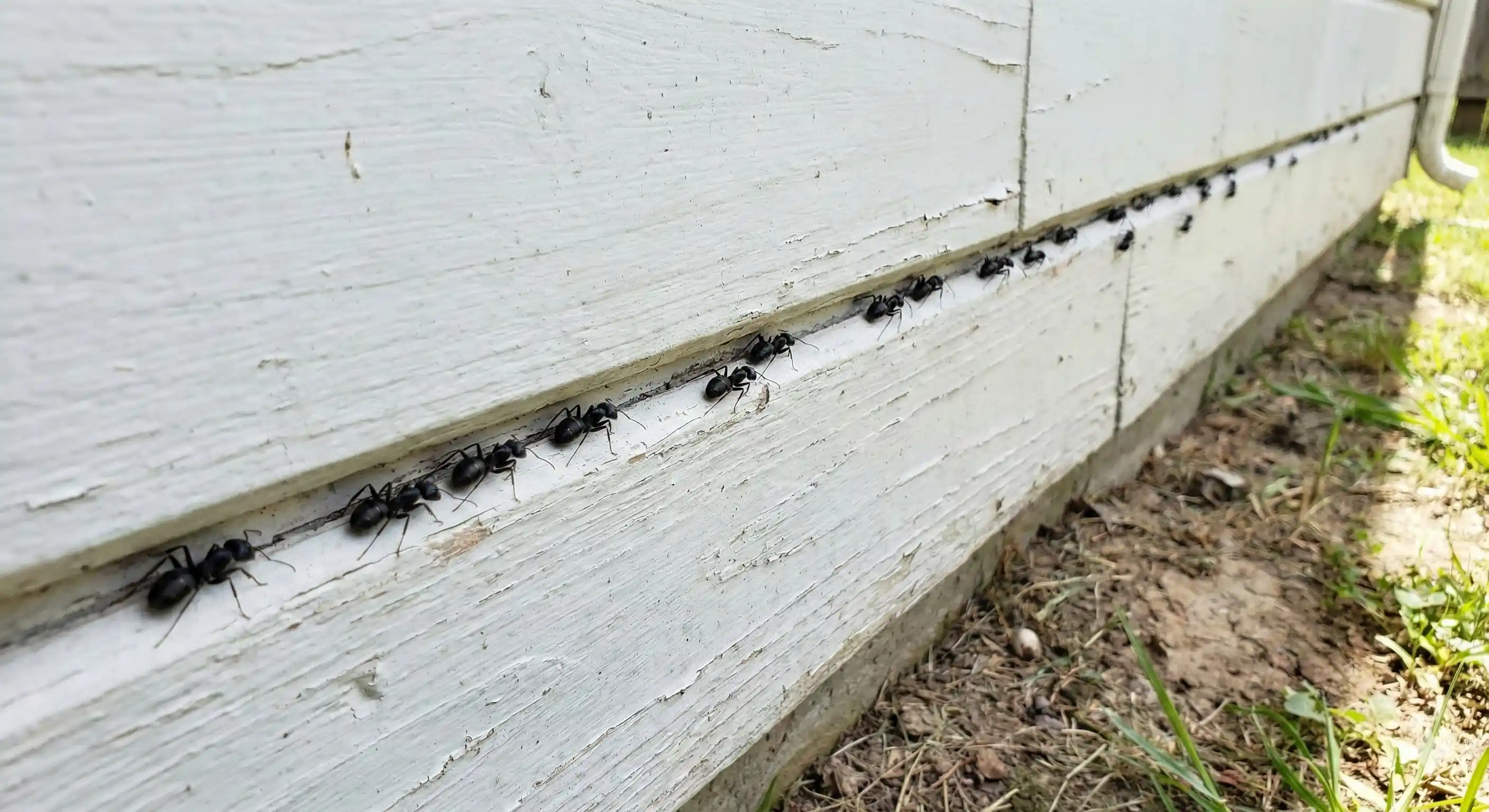
Carpenter ant foraging trail along baseboard at night

Ant Trails at Night

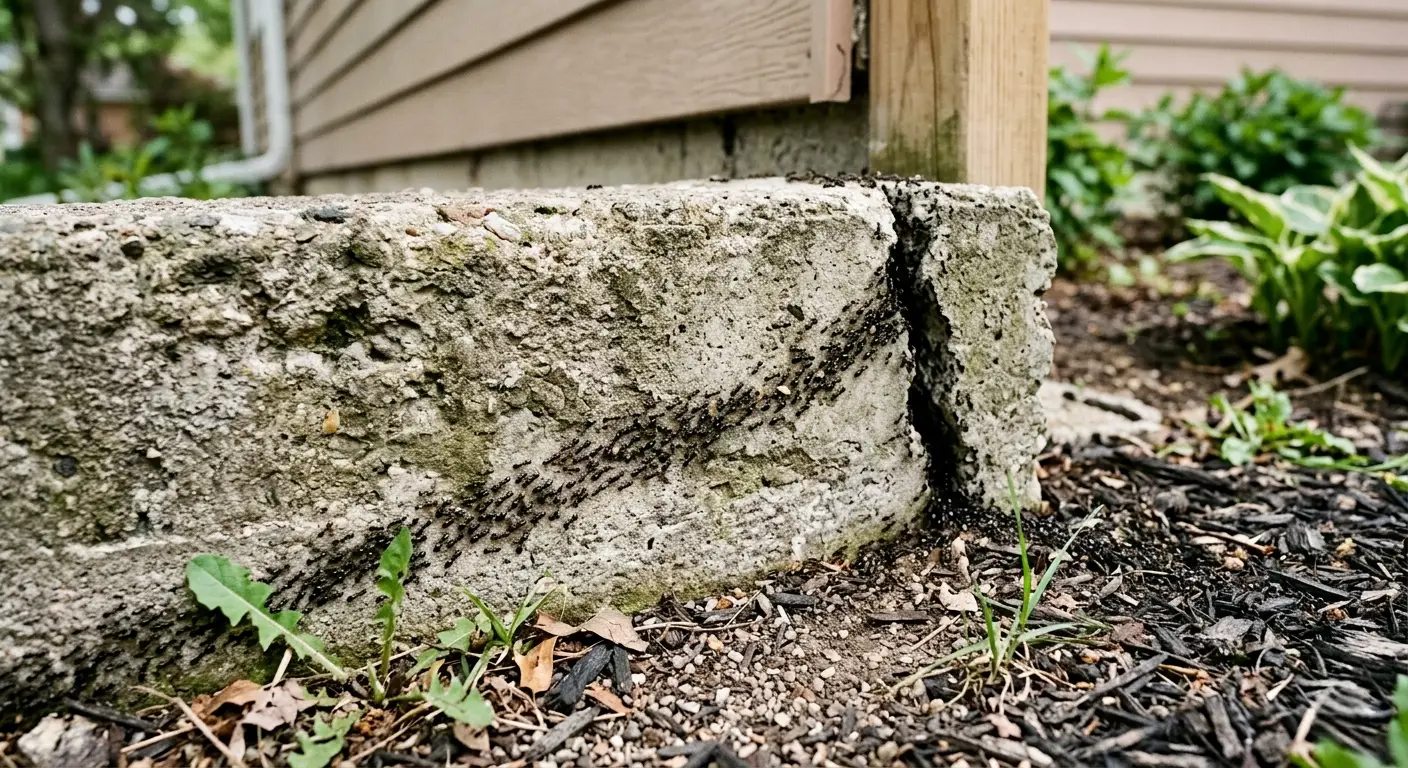
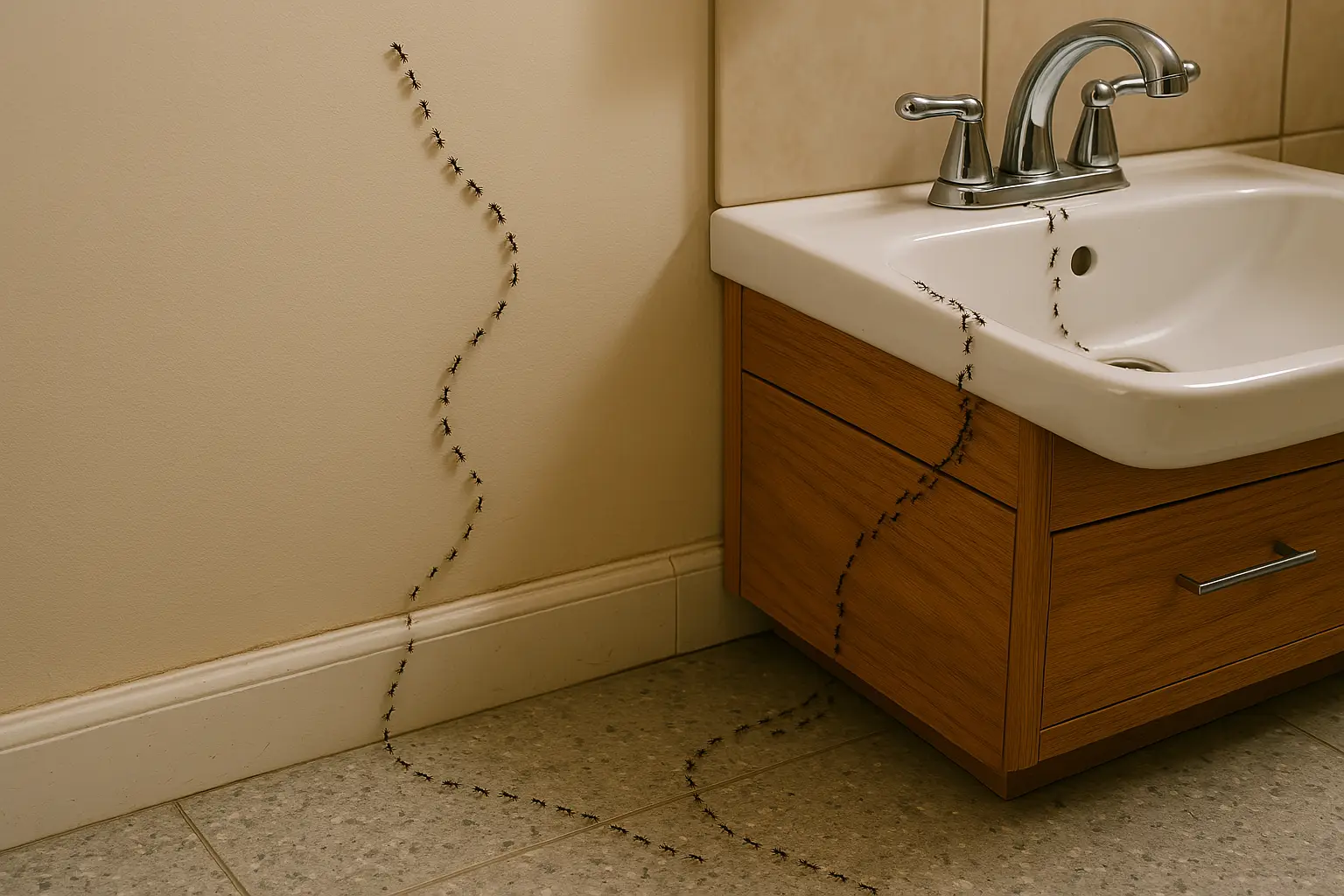
Carpenter ants are primarily nocturnal foragers. Trails of large black ants traveling along baseboards, counters, or exterior walls during evening hours indicate active colonies nearby.

Wood structural damage showing smooth carpenter ant galleries

Damaged or Hollow Wood

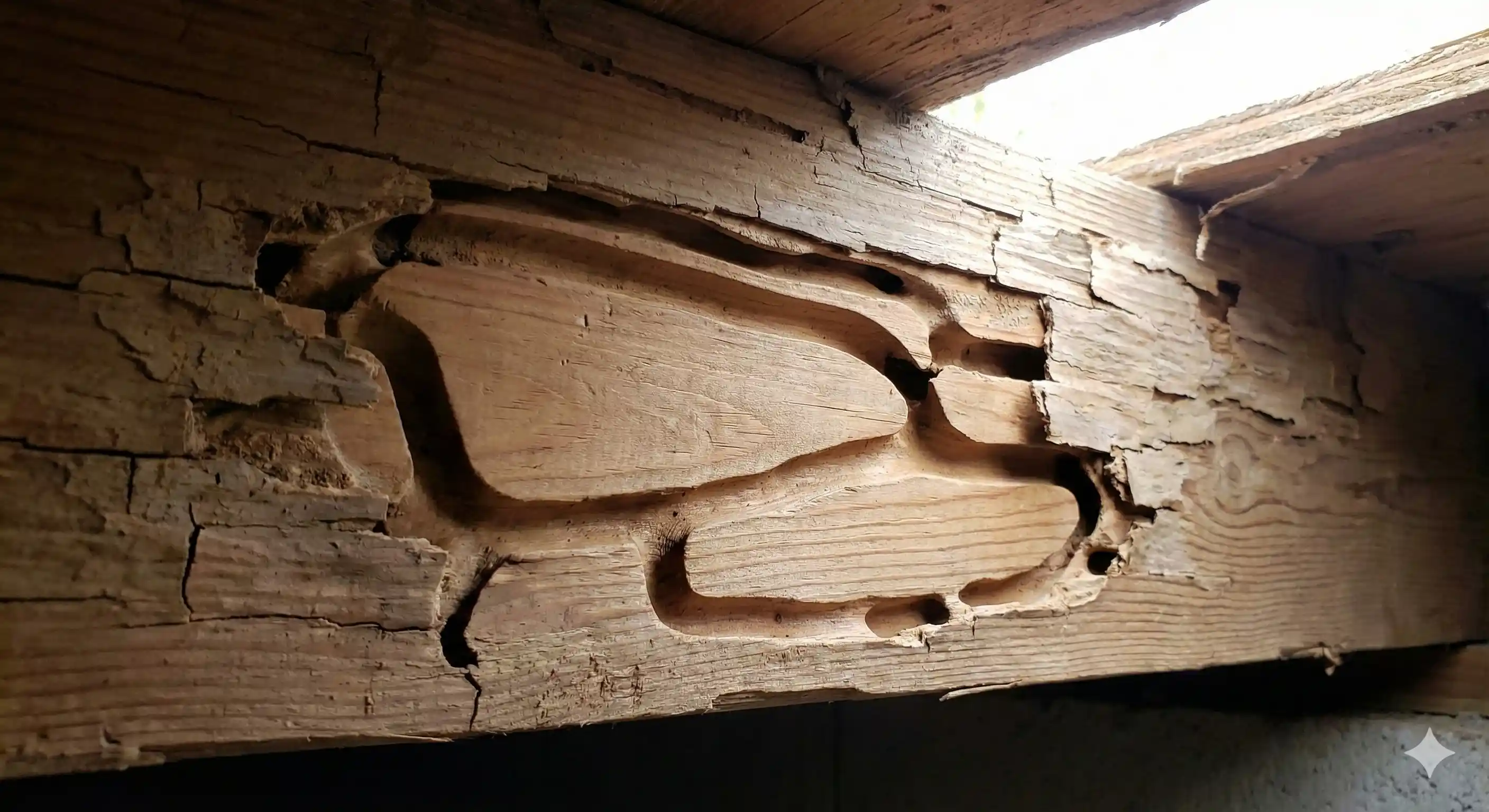
Wood that sounds hollow when tapped, shows smooth gallery openings, or crumbles easily may indicate carpenter ant damage. Unlike termite damage, carpenter ant galleries are clean and smooth with no mud.

Learn More About Carpenter Ant Detection →

DIY vs Professional Treatment

Carpenter ant control presents unique challenges that make professional treatment essential for complete elimination. These ants establish complex colony networks with a parent colony (often located outdoors in a tree or stump) connected to multiple satellite nests inside structures. Killing visible workers with store-bought sprays does nothing to eliminate the queen, and repellent products actually cause colonies to split and spread to new locations. Without locating and treating all nesting sites, including hidden wall void colonies, infestations persist and structural damage continues.

Our comprehensive approach begins with thorough inspection to locate parent colonies, satellite nests, and foraging routes throughout your property. Using non-repellent products that workers unknowingly transfer back to colonies, we eliminate entire nest networks including the egg-laying queen. We access wall voids and structural cavities with professional equipment, apply targeted treatments to active galleries, and create perimeter barriers that prevent recolonization. Our technicians also identify the moisture conditions that attracted carpenter ants, providing recommendations to eliminate these underlying problems.

❌ DIY Treatment

  • Cannot locate hidden satellite colonies
  • Repellent sprays cause colony splitting
  • No access to wall voids and galleries
  • Kills workers but queen continues laying
  • Doesn't address moisture attractants
  • Allows continued structural damage

✓ Professional Treatment

  • Locates entire parent/satellite colony network
  • Non-repellent products eliminate whole colonies
  • Professional wall void access and treatment
  • Targets queen for complete elimination
  • Identifies and addresses moisture sources
  • Prevents costly structural damage

Commercial Carpenter Ant Control

EcoGuard Pest Management implements customized carpenter ant control programs for commercial facilities that prioritize operational continuity while ensuring effective pest elimination. Our comprehensive commercial carpenter ant protection programs combine discrete treatment applications with flexible scheduling to maintain your business operations while ensuring complete elimination of carpenter ant problems.

We specialize in carpenter ant control solutions for:

  • Restaurants and food service establishments
  • Healthcare facilities
  • Hotels and hospitality venues
  • Educational institutions
  • Office complexes
  • Food processing facilities
  • Warehouses and storage facilities
  • Retail spaces
  • Manufacturing facilities
  • Multi-unit residential properties
Learn About Commercial Pest Control
100% SATISFACTION GUARANTEE

The EcoGuard Guarantee

EcoGuard offers a 100% satisfaction guarantee for all of our customers, and we stand by our promise to eradicate your carpenter ant problem until the very last carpenter ant is gone. That carpenter ant control guarantee comes with every service and if the carpenter ants come back, then so do we, at no additional cost. We are standing by to give you a free estimate and to help you set your first carpenter ant pest control service appointment.

📞 Call (866) 326-2847 Today

Our Carpenter Ant Control Process

A systematic approach to complete carpenter ant colony elimination and structural protection

1

Colony Network Assessment

Our technicians conduct comprehensive inspections to locate parent colonies, satellite nests, and foraging trails. We examine wall voids, attic spaces, crawl spaces, and exterior areas including trees and stumps to map the complete infestation before treatment.

2

Targeted Colony Elimination

Using non-repellent products and professional bait systems, we target all identified nesting sites. Wall void treatments, gallery injections, and strategic bait placement ensure products reach the queen and eliminate entire colonies, not just visible workers.

3

Structural Protection

Perimeter barrier treatments prevent new colonies from establishing while protecting against reconnection between outdoor parent colonies and indoor areas. We seal accessible entry points and provide recommendations for addressing moisture conditions.

4

Ongoing Monitoring

Follow-up inspections verify complete elimination and detect any surviving colony activity. Our monitoring program catches new infestations early, before structural damage can occur, ensuring your property remains protected year-round.

Seasonal Plan for Carpenter Ant Control

Year-round protection adapted to seasonal carpenter ant behavior patterns

Spring Carpenter Ant Control

Spring

Peak activity season as colonies become active and produce swarmers; critical time for inspection and treatment before new satellite nests establish; watch for winged ants indoors indicating mature colonies; address winter moisture damage that creates new nesting opportunities

Summer Carpenter Ant Control

Summer

Maximum foraging activity with workers traveling between parent colonies and satellites; maintain barrier treatments; monitor for new trail activity especially at night; treat any newly discovered satellite nests; address irrigation and drainage issues

Fall Carpenter Ant Control

Fall

Colonies prepare for winter by expanding food stores; final opportunity for effective treatment before cold weather; inspect for new satellite colonies established during summer; seal entry points before ants seek protected overwintering sites

Winter Carpenter Ant Control

Winter

Reduced activity in unheated areas but indoor colonies remain active in heated wall voids; focus on interior monitoring; ideal time for structural repairs and moisture remediation without active ant interference; plan spring prevention strategy

What Our Customers Say

Trusted by homeowners for professional carpenter ant elimination and structural protection

★★★★★

"We had carpenter ants for years and tried everything ourselves. EcoGuard found the parent colony in a dead tree we didn't even know was infested, plus three satellite nests in our walls. Finally ant-free after one treatment!"

Mark & Jennifer S.
Portland, OR
★★★★★

"The technician found significant water damage behind our shower that we had no idea about. He explained that's why the carpenter ants chose that wall. Fixed the leak and the ants—saved us from major structural repairs!"

Thomas R.
Seattle, WA
★★★★★

"Saw winged ants coming out of our wall in spring—terrifying! EcoGuard came out same day, treated the colony in our wall and found the main nest in our woodpile. So thorough and professional. Highly recommend!"

Angela M.
Sacramento, CA

Carpenter Ant Control FAQs

Everything you need to know about carpenter ant control and treatment

Carpenter ants excavate wood to create nesting galleries but don't eat it—they push out sawdust-like frass as they work. Their galleries are smooth and clean. Termites actually consume wood, leaving behind mud-lined tunnels and no sawdust. Carpenter ant damage accumulates slowly over years while termite damage can progress more rapidly.

Satellite colonies are secondary nests established away from the parent colony, often inside structures while the parent colony remains outdoors. Workers travel between colonies, which is why killing ants in one location doesn't solve the problem. Effective treatment must target all satellite nests and the parent colony simultaneously.

Carpenter ants strongly prefer moisture-damaged or decaying wood for initial nest establishment because it's easier to excavate. However, once established, they can expand into sound, dry wood. Their presence often indicates underlying moisture problems like leaky pipes, roof damage, or condensation issues that should be addressed.

Carpenter ants produce a distinctive rustling or crinkling sound within wall voids, especially noticeable at night when the house is quiet. This noise is created by thousands of workers moving through galleries and can often be heard by pressing your ear against the wall near suspected nesting areas.

Winged carpenter ants (swarmers) are reproductive individuals that emerge from mature colonies to mate and establish new nests. Finding them indoors, especially in spring, strongly indicates a well-established colony is located within your structure—these swarmers developed inside the wall, not outside.

Carpenter ants are most active from spring through fall, with peak activity during warm, humid months. They're primarily nocturnal foragers, so you're most likely to see them at night. Indoor colonies in heated wall voids may remain active year-round, while outdoor colonies become dormant in winter.

Carpenter ant galleries can extend several inches deep into structural timbers and may span many feet in length within wall voids, floor joists, and other wooden components. Mature colonies excavate extensive gallery systems that can significantly compromise structural integrity over time.

Scout ants are attracted by moisture conditions, wood-to-structure contact points, accessible food sources, and potential nesting sites. Properties with water-damaged wood, trees touching the structure, abundant insects for protein, and easy entry points are most attractive to scouting carpenter ants.

After mating flights, carpenter ant queens seek out moist, decaying wood that's easy to excavate for their initial nest chamber. They prefer protected locations like tree stumps, dead branches, or water-damaged structural wood. A newly mated queen can take years to build a mature colony.

As parent colonies mature and become crowded, workers establish satellite nests in nearby suitable locations, often inside structures near the parent colony. Workers and brood move between colonies, sharing resources. This is why indoor infestations often trace back to outdoor parent colonies in trees or stumps.

Carpenter ants initially prefer softwood that's been weakened by moisture, decay, or fungal damage because it's easier to excavate. Once established, they can tunnel through virtually any wood including hardwoods. Pressure-treated lumber provides some resistance but isn't immune to determined colonies.

Carpenter ant damage accumulates gradually over years rather than months. A mature colony with tens of thousands of workers continuously expands its galleries, but noticeable structural damage typically takes 3-6 years to develop. However, this means significant damage may exist before homeowners notice signs.

Signs of a mature colony (3+ years old) include the presence of winged swarmers indoors, large amounts of frass, audible sounds in walls, consistent ant trails year-round, and evidence of multiple satellite nesting sites. Mature colonies can contain 10,000-50,000 workers.

Professional technicians use a combination of visual inspection, frass analysis, listening devices, and following foraging trails to locate colonies. We examine typical nesting areas including wall voids, attics, and crawl spaces, and inspect exterior areas like trees, stumps, and woodpiles for parent colonies.

Treatment duration depends on colony size, number of satellite nests, accessibility of nesting sites, and property conditions. Most infestations show significant reduction within 2-3 weeks, with complete elimination taking 4-6 weeks as products transfer through the colony to reach the queen.

Carpenter ants are most active in temperatures between 70-90°F and reduce activity in cold weather. Outdoor colonies become dormant in winter, but indoor satellite colonies in heated wall voids may remain active year-round. Spring warming triggers increased activity and swarming behavior.

Treatment costs vary based on infestation severity, property size, number of colonies, and accessibility of nesting sites. Initial treatments typically range from $350-$650, with severe infestations or difficult access potentially higher. We provide detailed estimates after thorough inspection.

Permanent elimination requires locating and treating all parent and satellite colonies, eliminating the queen, creating perimeter barriers against recolonization, and addressing moisture conditions that attracted the ants. Our comprehensive approach targets the entire colony network for lasting results.

Professional exterminators conduct thorough inspections to locate all colonies, apply targeted treatments including wall void injections and non-repellent products that transfer through the colony, establish perimeter barriers, and identify moisture issues. We provide follow-up inspections to verify elimination.

Outdoor carpenter ant colonies survive winter by entering a dormant state, with workers clustering around the queen in protected galleries. Indoor satellite colonies in heated wall voids may remain active throughout winter, continuing to forage and potentially expand their galleries even in cold months.

Related Articles & Resources

Learn more about carpenter ant prevention, identification, and control
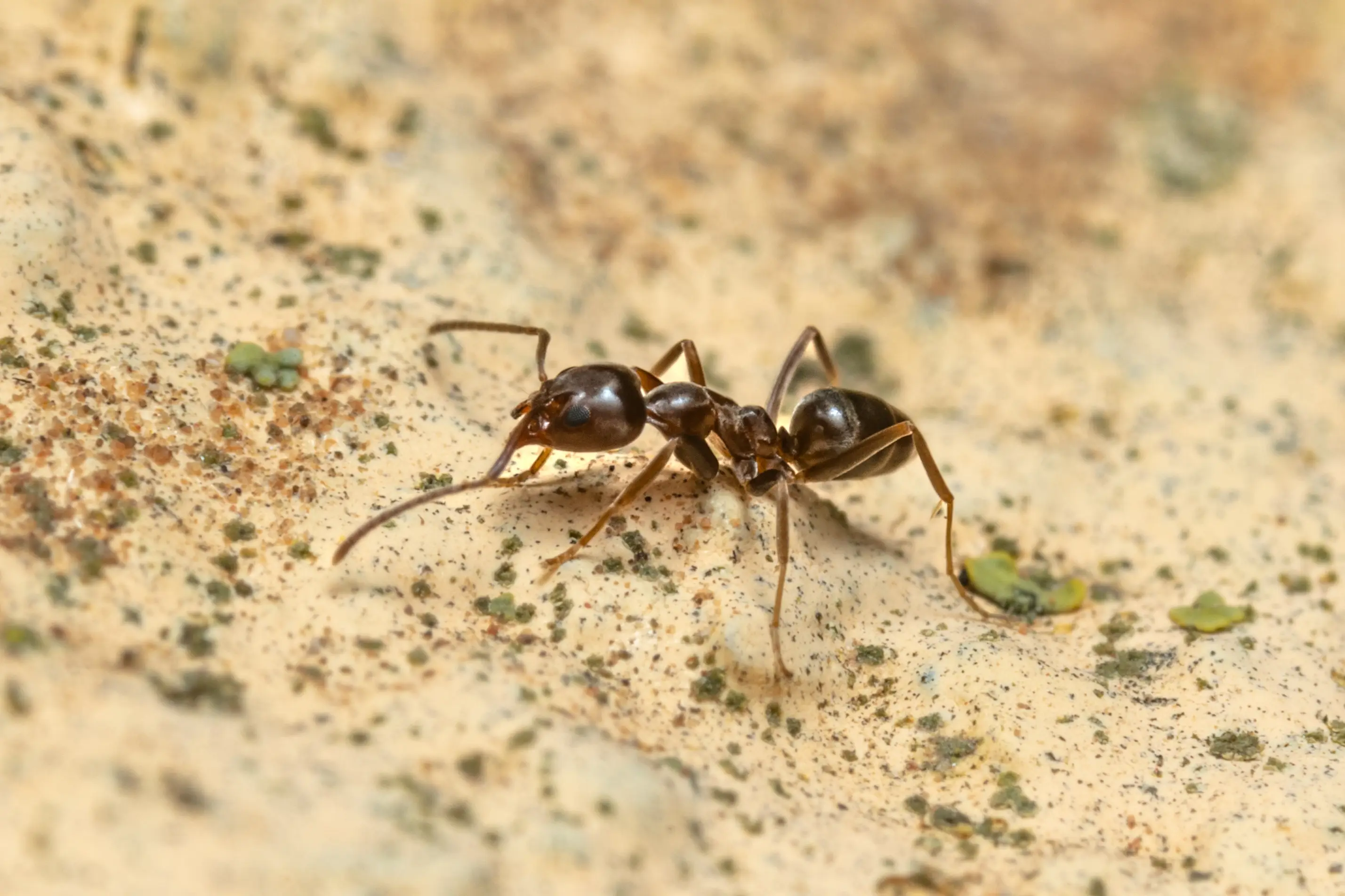
14 Natural Ant Repellent Strategies That Actually Work

14 Natural Ant Repellent Strategies That Actually Work

Discover effective natural ant repellents including mint, vinegar, cinnamon, and more. Learn how to keep ants out of your home using safe, natural methods.

Read Article →
16 Common Types of Ants in California | Identification & Treatment

16 Common Types of Ants in California | Identification & Treatment

Identify 16 common ant species in California including carpenter ants, fire ants, and Argentine ants. Learn their appearance, behavior, damage, and treatment methods.

Read Article →
Are Fire Ants Dangerous? Understanding Fire Ant Risks & Safety

Are Fire Ants Dangerous? Understanding Fire Ant Risks & Safety

Learn about fire ant dangers including painful stings, allergic reactions, and property damage. Comprehensive guide on fire ant venom, treatment, prevention, and when to call professionals.

Read Article →
Argentine Ants: Complete Identification, Control & Prevention Guide

Argentine Ants: Complete Identification, Control & Prevention Guide

Learn to identify Argentine ants, understand their supercolony behavior, and discover effective control strategies. Expert guide on eliminating these invasive ants from your property.

Read Article →
Common Signs of Carpenter Ant Damage

Common Signs of Carpenter Ant Damage

Learn to identify carpenter ant damage signs including frass, holes, tunnels, and how to distinguish carpenter ant damage from termite damage.

Read Article →
Do Ants Bite? Symptoms, Treatment & Prevention

Do Ants Bite? Symptoms, Treatment & Prevention

Learn about ant bites vs stings, which ants bite, symptoms, allergic reactions, treatment options, and how to prevent ant bites.

Read Article →
Do Ants Eat Aphids? The Ant-Aphid Relationship Explained

Do Ants Eat Aphids? The Ant-Aphid Relationship Explained

Learn about the fascinating relationship between ants and aphids, how ants farm aphids for honeydew, problems aphids cause, and how to control both pests.

Read Article →
Do Ants Ever Sleep? Ant Sleep Patterns Explained

Do Ants Ever Sleep? Ant Sleep Patterns Explained

Discover the fascinating sleep patterns of ants, how worker ants take 250 power naps daily, queen ant sleep habits, and when ants are most active.

Read Article →
Do Carpenter Ants Eat Wood? Understanding Carpenter Ant Damage

Do Carpenter Ants Eat Wood? Understanding Carpenter Ant Damage

Learn the truth about carpenter ants and wood. Unlike termites, carpenter ants don\

Read Article →
How Do Ant Baits and Traps Work? Complete Guide to Ant Bait Systems

How Do Ant Baits and Traps Work? Complete Guide to Ant Bait Systems

Learn how ant baits and traps work to eliminate entire colonies. Discover bait types, active ingredients, placement strategies, and why baits are more effective than sprays for long-term ant control.

Read Article →
How Do Ants Communicate With Each Other? Complete Guide to Ant Communication

How Do Ants Communicate With Each Other? Complete Guide to Ant Communication

Learn how ants communicate using pheromones, touch, sound, and body language. Discover why ant communication is key to colony survival and how it impacts pest control strategies.

Read Article →
How Do Ants Get in the House? Complete Entry Point Guide

How Do Ants Get in the House? Complete Entry Point Guide

Learn how ants get into your house through foundation cracks, windows, utility lines, and more. Discover entry points, prevention strategies, and sealing techniques to keep ants out.

Read Article →
How Do Ants Get Into Your House? Entry Points & Prevention

How Do Ants Get Into Your House? Entry Points & Prevention

Learn how ants enter your home through cracks, gaps, and openings. Discover where ants hide, what attracts them, and how to prevent ant infestations.

Read Article →
How Do Ants Mate and Reproduce? Ant Reproduction Explained

How Do Ants Mate and Reproduce? Ant Reproduction Explained

Learn how ants mate during nuptial flights, how queen ants reproduce, the role of drones, and unique reproductive strategies like parthenogenesis.

Read Article →
How Many Ants Are in a Colony? Complete Guide to Ant Colony Size

How Many Ants Are in a Colony? Complete Guide to Ant Colony Size

Learn how many ants live in a colony, from small carpenter ant nests to Argentine ant supercolonies with billions. Discover colony growth stages, queen numbers, and pest control implications.

Read Article →
How to Get Rid of Ants Inside and Outside Your Home

How to Get Rid of Ants Inside and Outside Your Home

Learn how to get rid of ants inside your home, repel them before they enter, and eliminate outdoor colonies. Complete guide to ant removal, prevention, and control.

Read Article →
How to Get Rid of Carpenter Ants in the House

How to Get Rid of Carpenter Ants in the House

Learn how to identify, eliminate, and prevent carpenter ants. Comprehensive guide to indoor and outdoor treatments, baiting methods, and professional solutions.

Read Article →
Understanding Ant Colony Structure and Hierarchy

Understanding Ant Colony Structure and Hierarchy

Learn about ant colony structure, hierarchy, and how ants work together. Discover the roles of queens, workers, drones, and how colonies form and grow.

Read Article →
What Are Ants? Complete Guide to Ant Biology, Behavior & Control

What Are Ants? Complete Guide to Ant Biology, Behavior & Control

Learn everything about ants including appearance, colony hierarchy, life cycle, diet, defenses, and how to get rid of them. Complete ant identification guide.

Read Article →
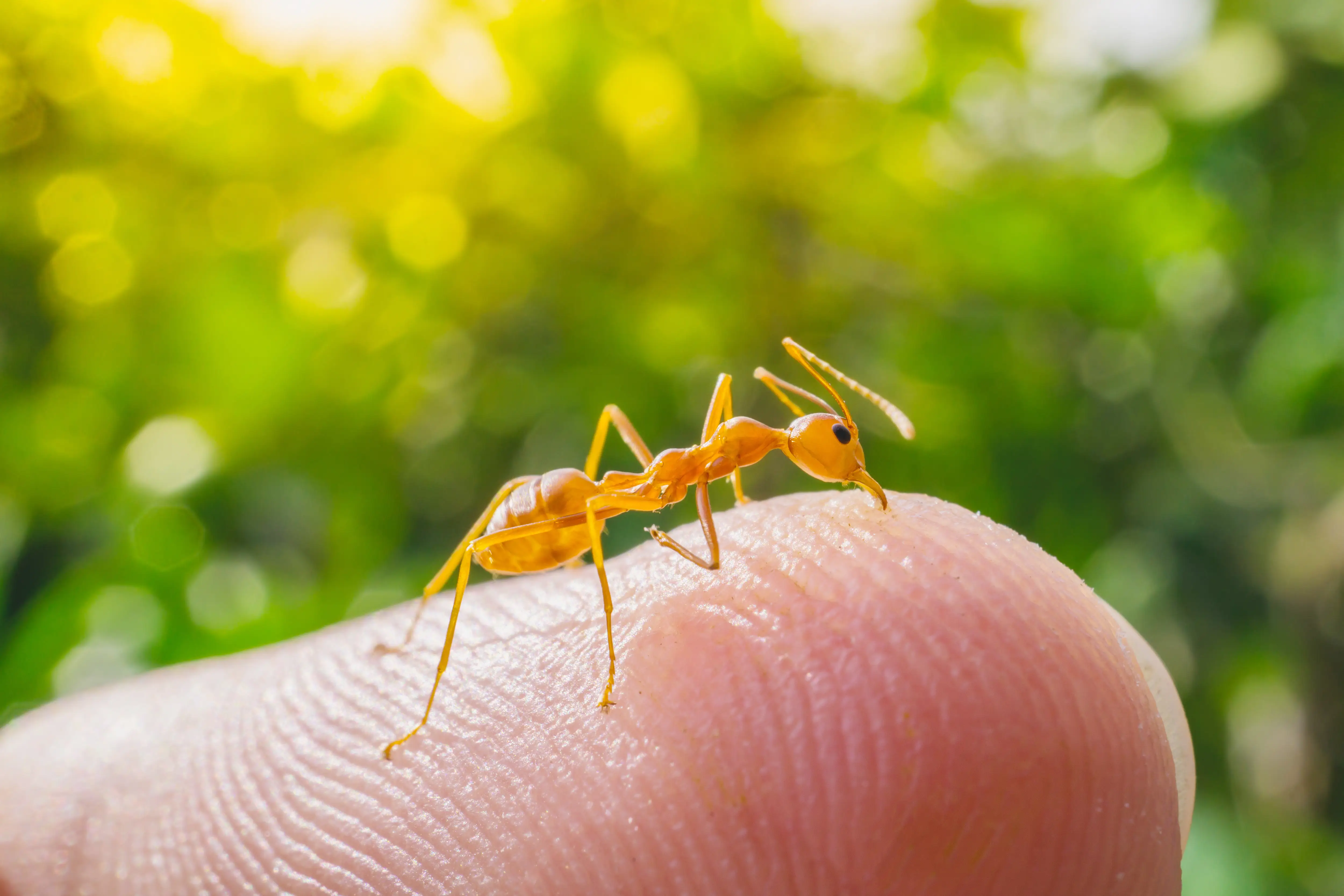
What Are Red Ants? Fire Ant Identification & Control

What Are Red Ants? Fire Ant Identification & Control

Learn about red ants and fire ants, how to identify them, their behavior, dangers of their stings, and effective prevention and control methods.
Read Article →
What Attracts Ants Inside the House? Prevention Tips

What Attracts Ants Inside the House? Prevention Tips

Learn what attracts ants to your home including food, water, and shelter. Discover prevention tips and how to get rid of ant infestations.

Read Article →
What Do Ants Eat and Drink in Your House?

What Do Ants Eat and Drink in Your House?

Learn what ants eat including sugars, proteins, seeds, fungus, and other insects. Discover how different ant species find food and what they eat in your home.

Read Article →
What Happens When the Queen Ant Dies?

What Happens When the Queen Ant Dies?

Learn what happens when a queen ant dies, how to identify a queen, the ant queen life cycle, and how to effectively eliminate ant colonies.

Read Article →
What's the Lifespan of an Ant? Guide to Ant's Life Cycle

What's the Lifespan of an Ant? Guide to Ant's Life Cycle

Learn how long ants live based on species, caste, and gender. Discover the ant life cycle from egg to adult and factors that impact ant lifespan.

Read Article →
When is Ant Season? Complete Guide to Ant Activity Patterns

When is Ant Season? Complete Guide to Ant Activity Patterns

Learn when ant season occurs in your region, peak activity times by species, and seasonal prevention strategies. Discover how temperature, moisture, and food availability affect ant behavior.

Read Article →
Where Do Ants Go in the Winter? Complete Winter Behavior Guide

Where Do Ants Go in the Winter? Complete Winter Behavior Guide

Discover where ants go in winter, how they survive freezing temperatures through diapause, and why they may invade your home during cold months. Learn prevention strategies.

Read Article →
Where Do Ants Live? Complete Guide to Ant Habitats

Where Do Ants Live? Complete Guide to Ant Habitats

Discover where ants live outdoors and indoors, from underground colonies to wall voids. Learn about species-specific habitats and how to prevent ant infestations in your home.

Read Article →
Why Are Flying Ants a Problem? Identification and Prevention

Why Are Flying Ants a Problem? Identification and Prevention

Learn why flying ants appear, how to identify them vs termites, which species swarm, and how to prevent and eliminate flying ant infestations.

Read Article →
Why Are There Ants in My Bathroom? Causes & Solutions

Why Are There Ants in My Bathroom? Causes & Solutions

Discover why ants invade bathrooms and learn effective solutions. Understanding moisture, food sources, and shelter attractions helps eliminate current infestations and prevent future invasions.

Read Article →
View All Pest Control Articles →

Ready to Eliminate Your Carpenter Ant Problem?

Get a free estimate for your carpenter ant problem today. Our experts will assess your property and provide a customized treatment plan.

Connect With Us

Follow EcoGuard Pest Management for tips, updates, and special offers

f𝕏yin