EcoGuard Pest Management
Professional yellow jacket control technician in protective gear treating a yellow jacket nest

Professional Yellow Jacket Control & Exterminator Services

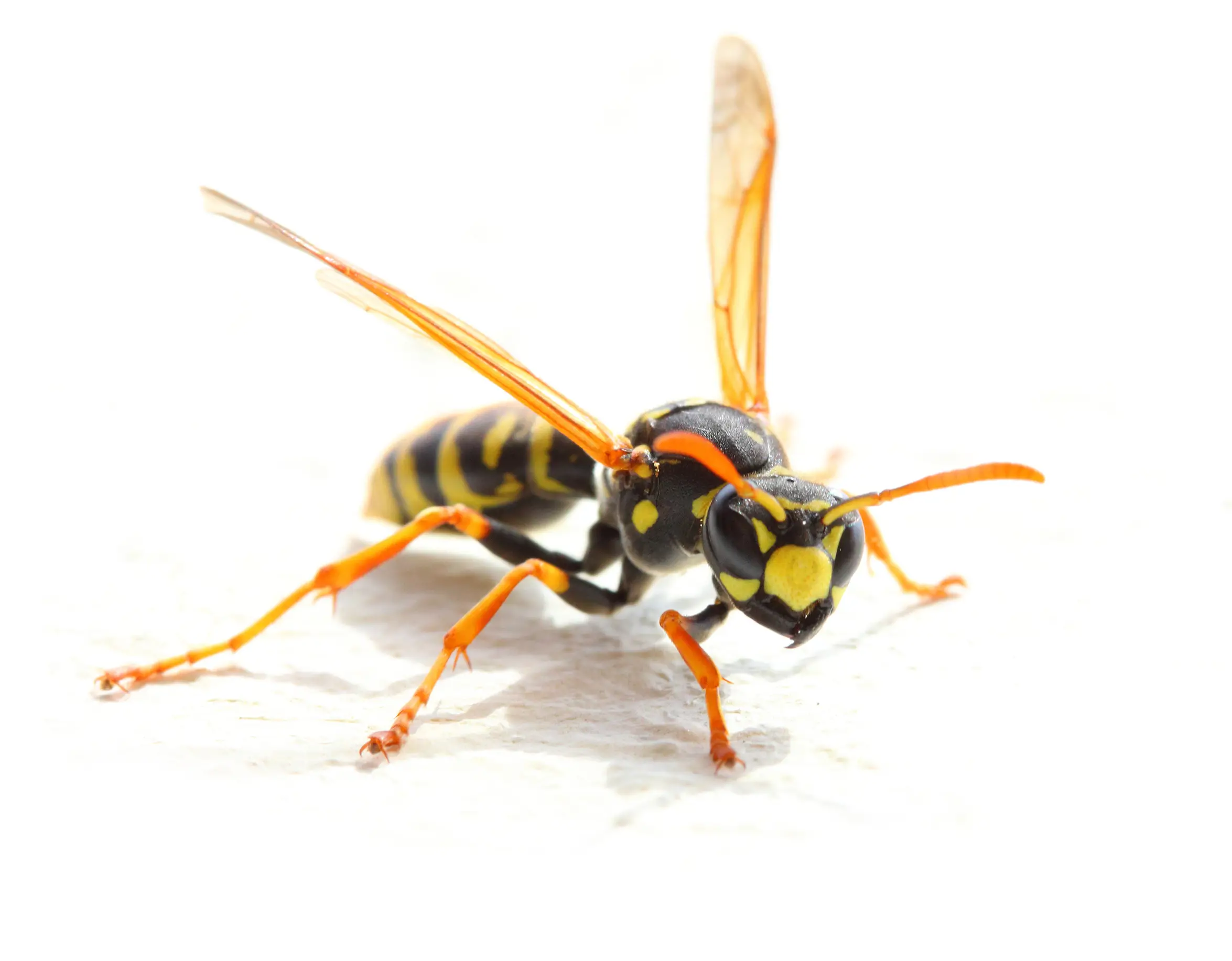
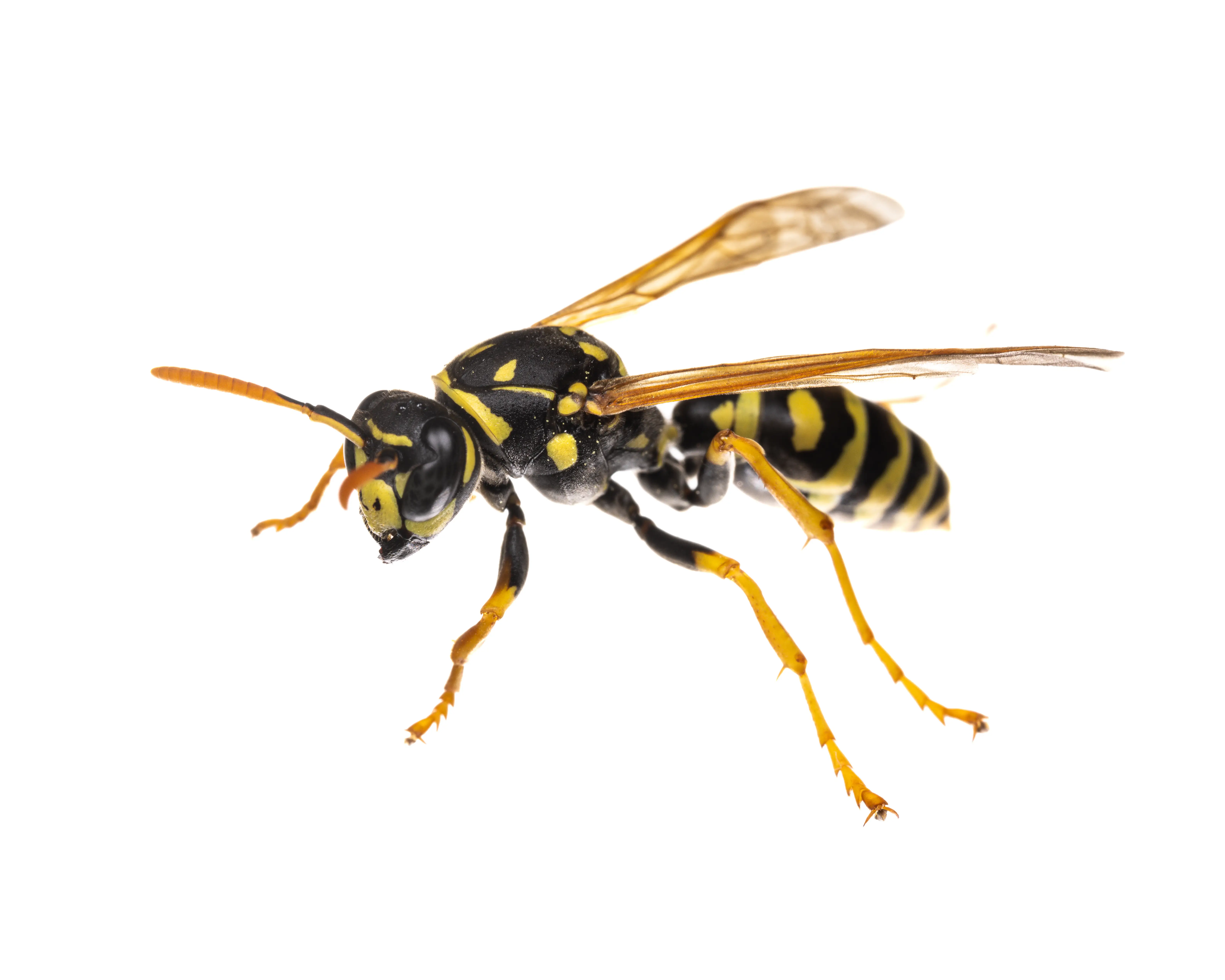
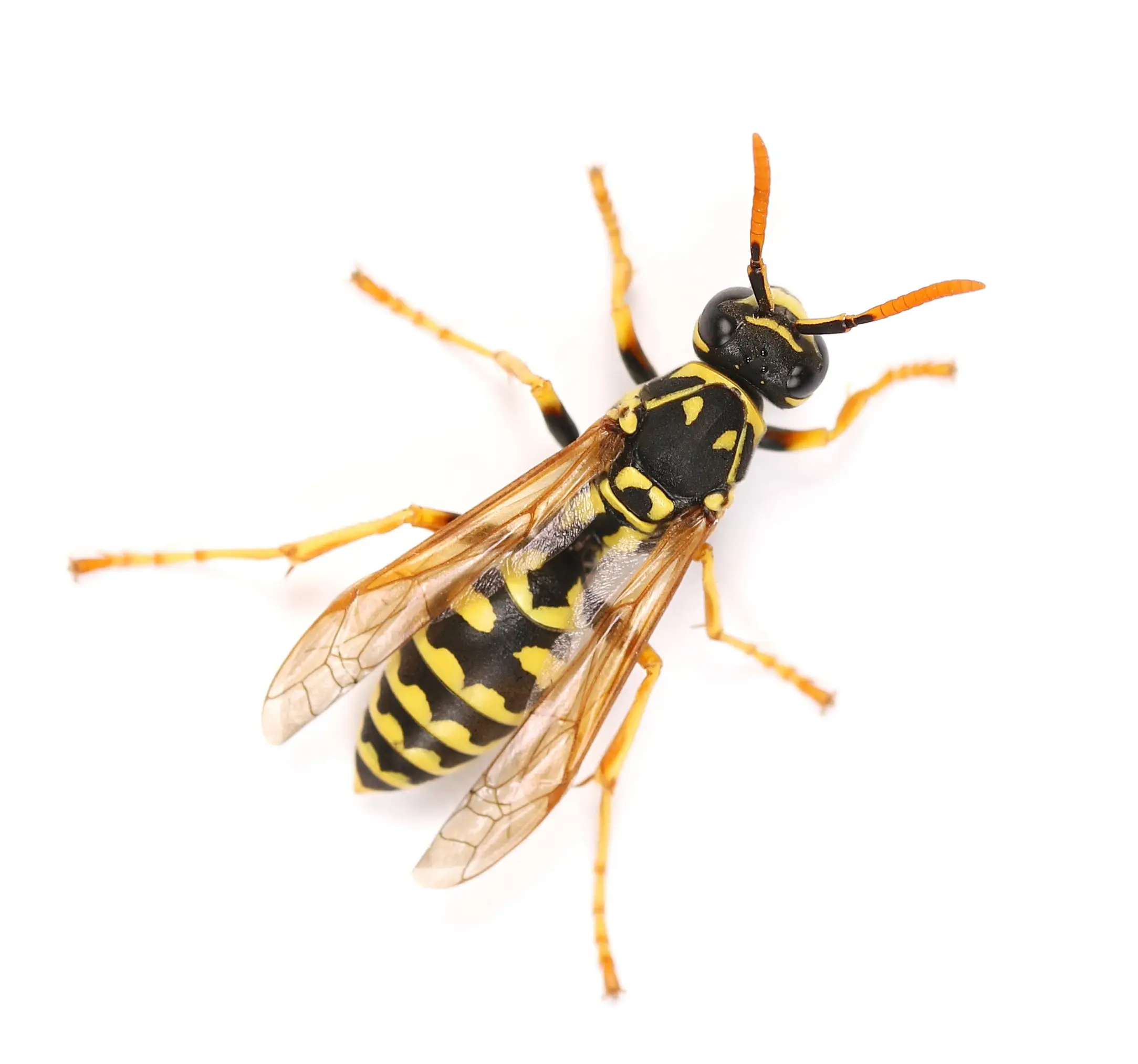
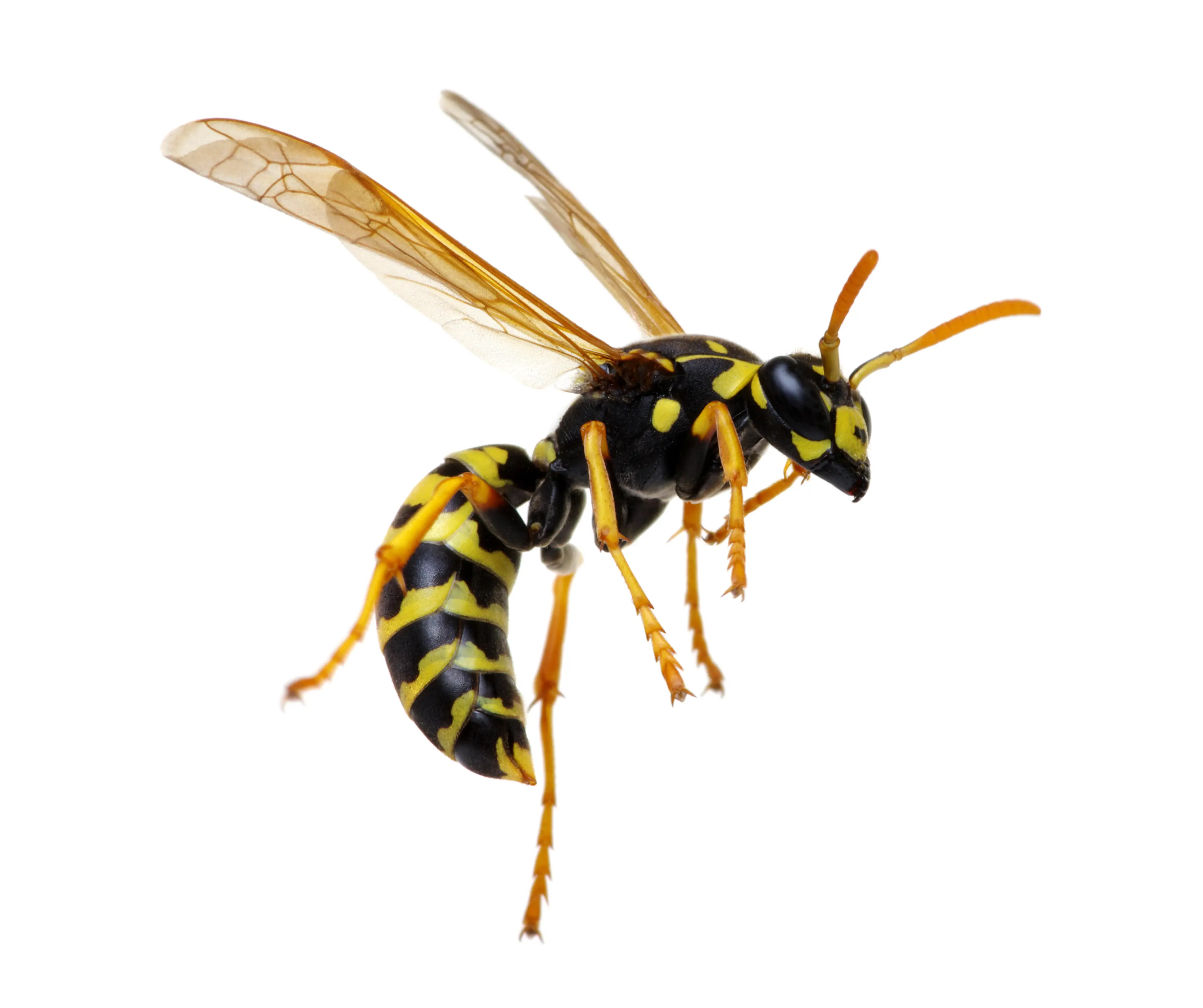
Yellow jackets are dangerous stinging insects commonly found buzzing around trash cans, picnics, and outdoor gatherings. Unlike bees, yellow jackets can sting multiple times without losing their stinger, and when one stings, it releases an alarm pheromone that marks the target and alerts other yellow jackets to attack. With colonies containing up to a thousand aggressive workers and nests often hidden underground, dealing with yellow jackets without professional help is extremely dangerous. EcoGuard Pest Management provides guaranteed yellow jacket services with licensed exterminators experienced in safely locating and eliminating yellow jacket colonies.

Yellow Jacket Pest Control Experts

EcoGuard Pest Management has been providing yellow jacket control services since 2008, and we understand how dangerous these pests are and what makes them difficult to control. Yellow jackets are a serious threat because they are aggressive and can sting multiple times—they don't lose their stinger like bees do. Our licensed technicians are trained to safely locate nests, implement effective treatments, and ensure complete colony elimination while minimizing the risk of painful stings to your family and pets.

Why Yellow Jackets Are a Serious Problem

Yellow jackets present unique dangers that demand professional attention:

  • Yellow jackets are extremely aggressive and territorial, attacking without provocation when they perceive threats to their colony—and unlike bees, their smooth stingers allow them to sting repeatedly in rapid succession, delivering multiple painful venomous stings
  • When a yellow jacket stings, it releases an alarm pheromone that marks the victim as a threat and alerts other colony members to attack. This chemical signal can trigger a dangerous swarm response from hundreds of aggressive workers
  • Yellow jacket nests are notoriously difficult to locate because, unlike other stinging insects, they often build colonies underground in abandoned rodent burrows, making them easy to accidentally disturb while mowing, gardening, or walking through your yard
  • Colonies can grow to contain nearly 1,000 workers by late summer, and yellow jackets become increasingly aggressive as the season progresses and food sources become scarce—making late summer and fall encounters particularly dangerous

Yellow Jacket Control Service Plans

Choose the protection level that's right for your property

One-Time Treatment
$249+
Starting price
  • Comprehensive property inspection
  • Species identification
  • Entry point identification
  • Targeted treatment application
  • Perimeter barrier application
  • Nest elimination
  • Treatment report & recommendations
  • 30-day guarantee
Get Started
MOST POPULAR
Annual Protection
Contact Us
For custom pricing
  • Everything in One-Time Treatment
  • Seasonal maintenance plan
  • Entry point treatments
  • Priority scheduling
  • Re-treatment guarantee
Get Started

* Prices vary based on property size, infestation severity, and treatment method. Contact us for an accurate quote.

Service Plan Comparison

FeatureOne-TimeAnnual
Property Inspection
Nest TreatmentSingle nestUnlimited
Follow-Up VisitsMonthly
Emergency ResponseStandardPriority
Re-Treatment Guarantee30 daysSeason-long

Get Your Free Yellow Jacket Quote

Protect your property with a free yellow jacket quote from our licensed experts.

✓ Same-day service available
✓ Licensed & insured
✓ Detailed property assessment
✓ No-obligation estimates

Service Areas

We provide yellow jacket control services throughout:

  • California
  • Oregon
  • Washington
  • Texas
  • Tennessee
  • Nevada
View All Counties →

Ready to Eliminate Your Yellow Jacket Problem?

Schedule your yellow jacket inspection today. Our experts will assess your property and provide a customized treatment plan.

📞 Call (866) 326-2847Get Free Quote

Yellow Jacket Treatment Options

EcoGuard Pest Management employs a comprehensive approach to yellow jacket control, prioritizing safety while ensuring complete colony elimination. Our methods are designed to minimize the risk of stings while effectively removing these dangerous pests from your property.

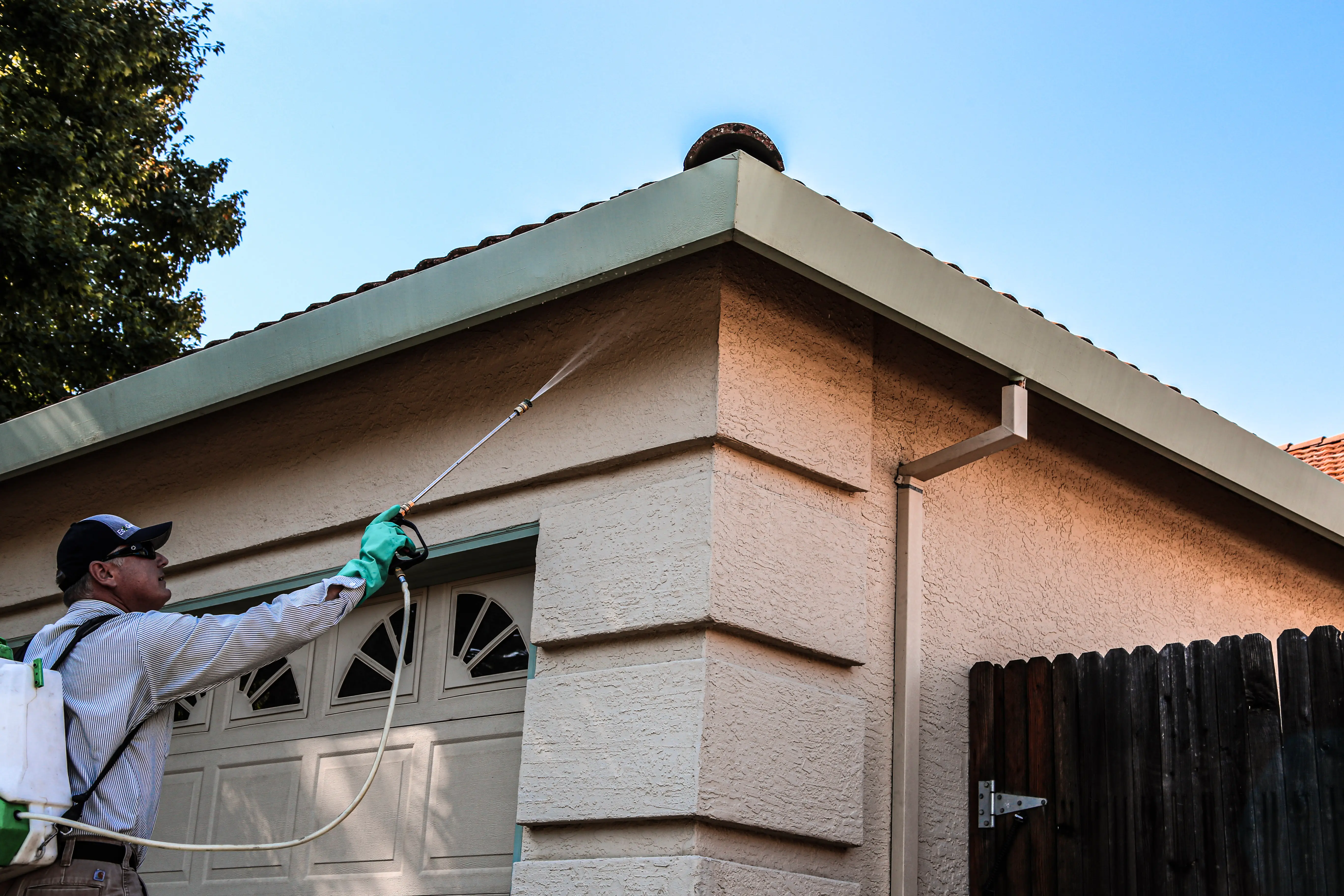
Technician inspecting property for yellow jacket nest locations

Professional Nest Inspection

Our licensed technicians conduct thorough property inspections to locate yellow jacket nests, which are often hidden underground or in wall voids. We identify all nest entrances, assess colony size, and develop a customized treatment strategy to safely eliminate the colony while minimizing risk.

Applying insecticide treatment to yellow jacket nest entrance

Insecticide Nest Treatment

We apply professional-grade insecticides directly into nest cavities using specialized application equipment. These treatments are designed to infect foraging yellow jackets when they return, spreading throughout the colony to ensure complete elimination even when not all workers are present during treatment.

Applying dust treatment to underground yellow jacket nest

Dust Application Treatments

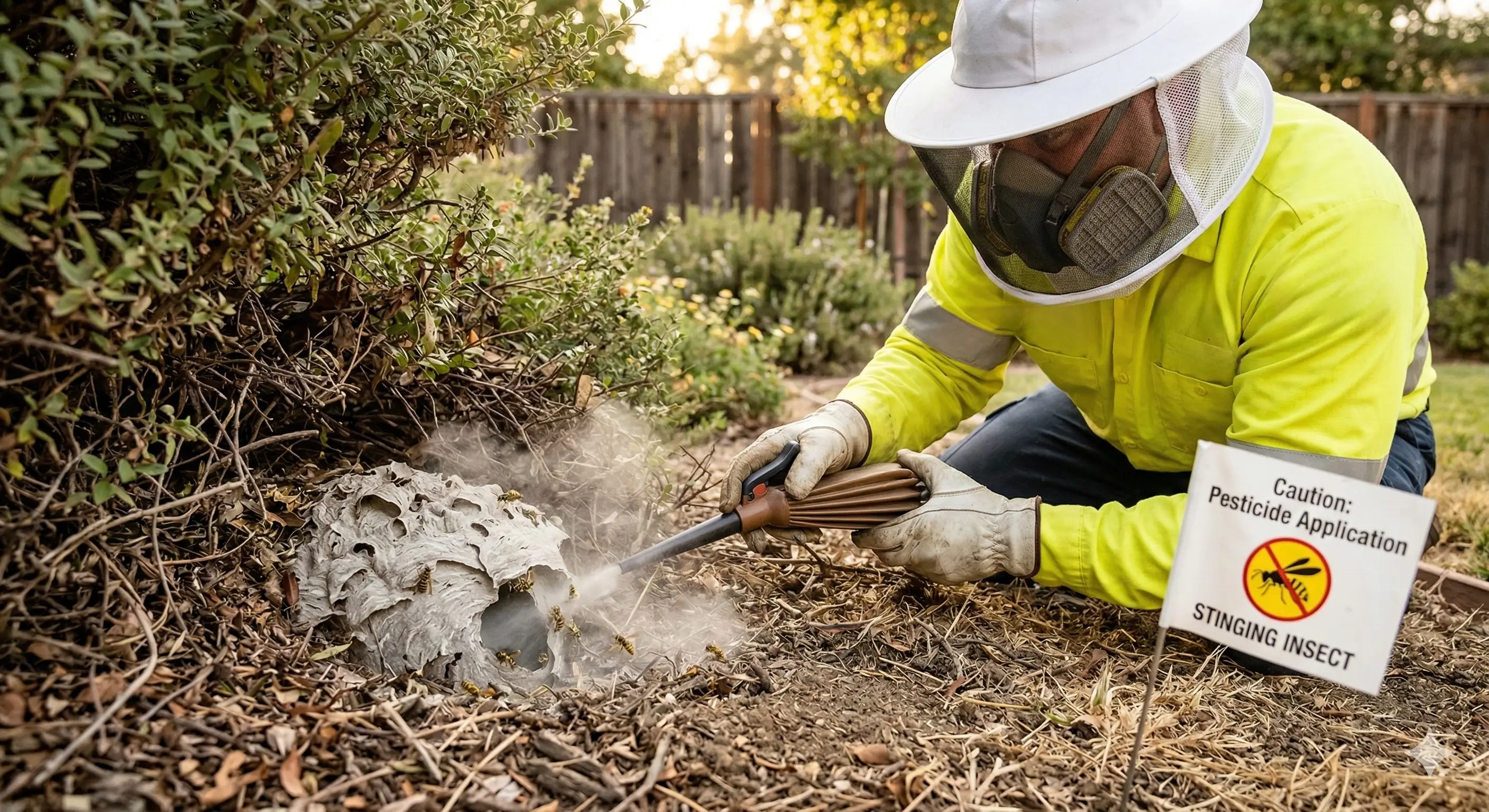
For underground nests and wall void colonies, we apply insecticidal dusts that coat yellow jackets as they enter and exit. These long-lasting treatments continue working for extended periods, ensuring returning foragers carry the product deep into the colony to eliminate the queen and workers.

Applying foam treatment to aerial yellow jacket nest

Foam & Aerosol Applications

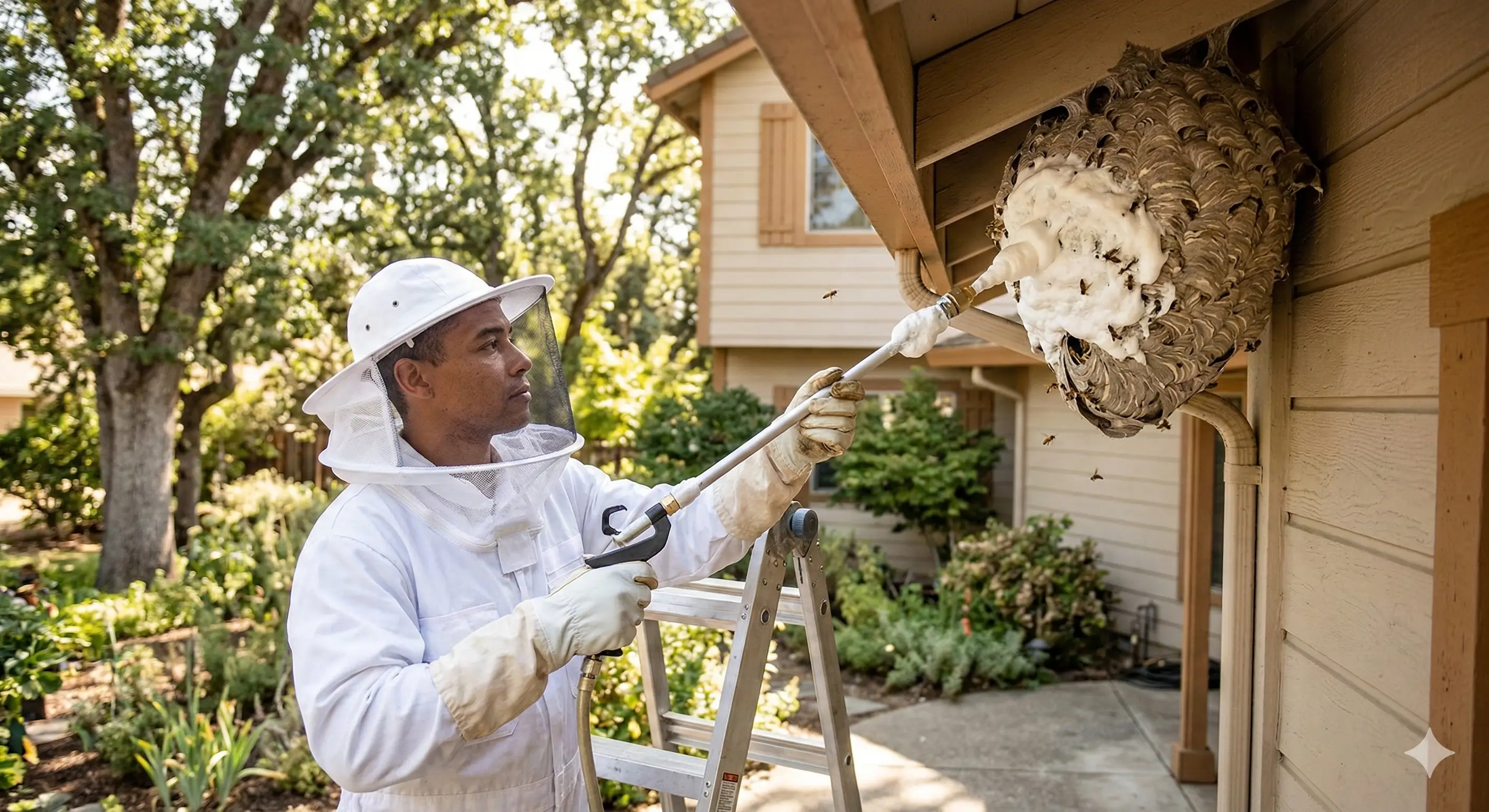
For aerial nests and exposed colonies, we use expanding foam and aerosol treatments that quickly incapacitate aggressive workers while penetrating deep into nest structures. These fast-acting formulations provide immediate knockdown while maintaining residual effectiveness.

Professional yellow jacket trap installed for population control

Yellow Jacket Trapping

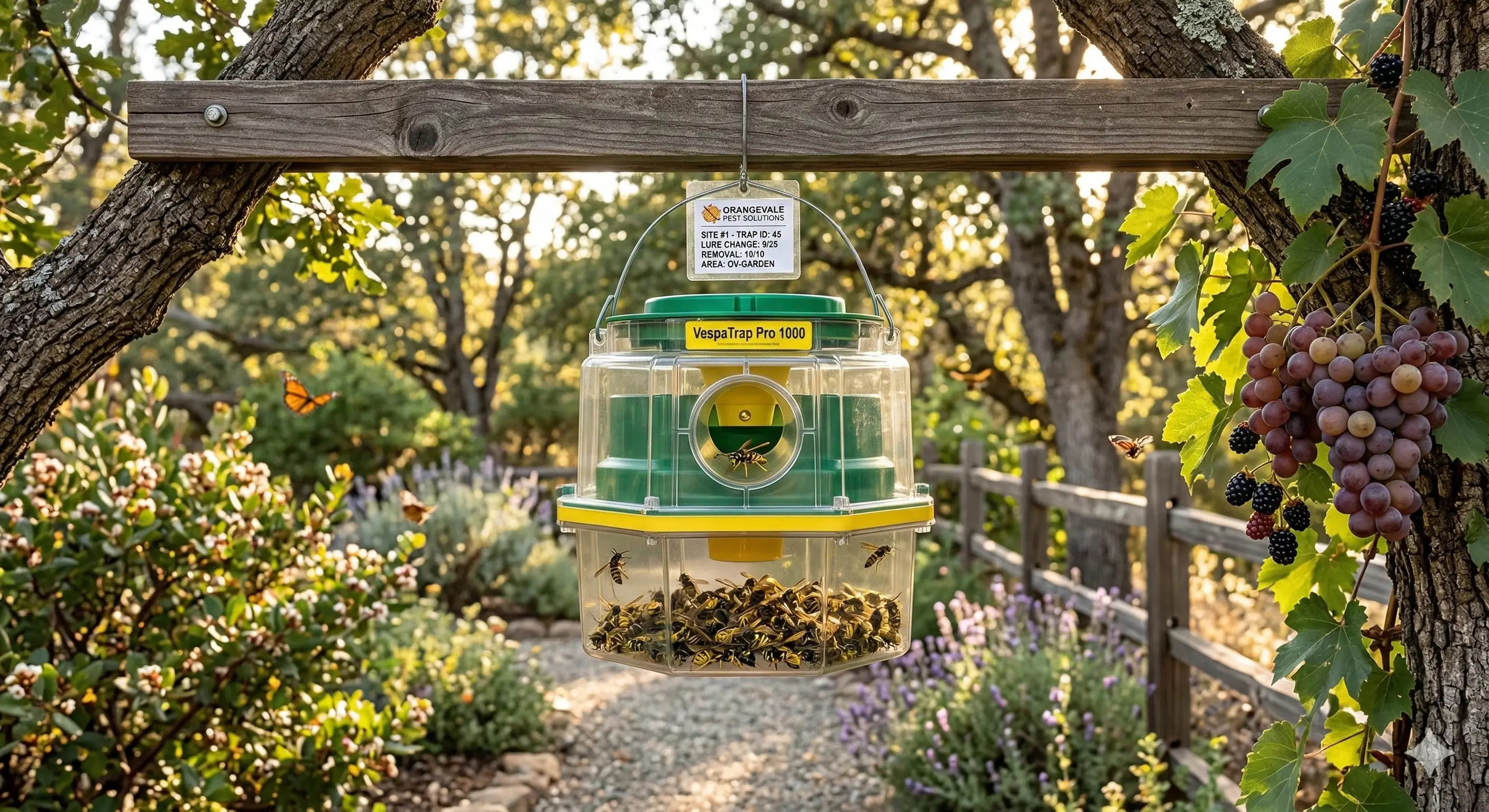
When nests are located off-property or cannot be immediately located, we deploy professional-grade yellow jacket traps strategically positioned to intercept foraging workers. These traps reduce population pressure and help identify flight patterns leading to nest locations.

Removing eliminated yellow jacket nest from structure

Safe Nest Removal & Exclusion

After colony elimination is confirmed, we safely remove accessible nests and seal entry points to prevent future colonization. We also identify and address conditions that attracted yellow jackets, including sealing gaps in structures and recommending habitat modifications.

What Causes Yellow Jackets?

Understanding what attracts yellow jackets to your property helps prevent colonies from establishing and reduces dangerous encounters with these aggressive insects.
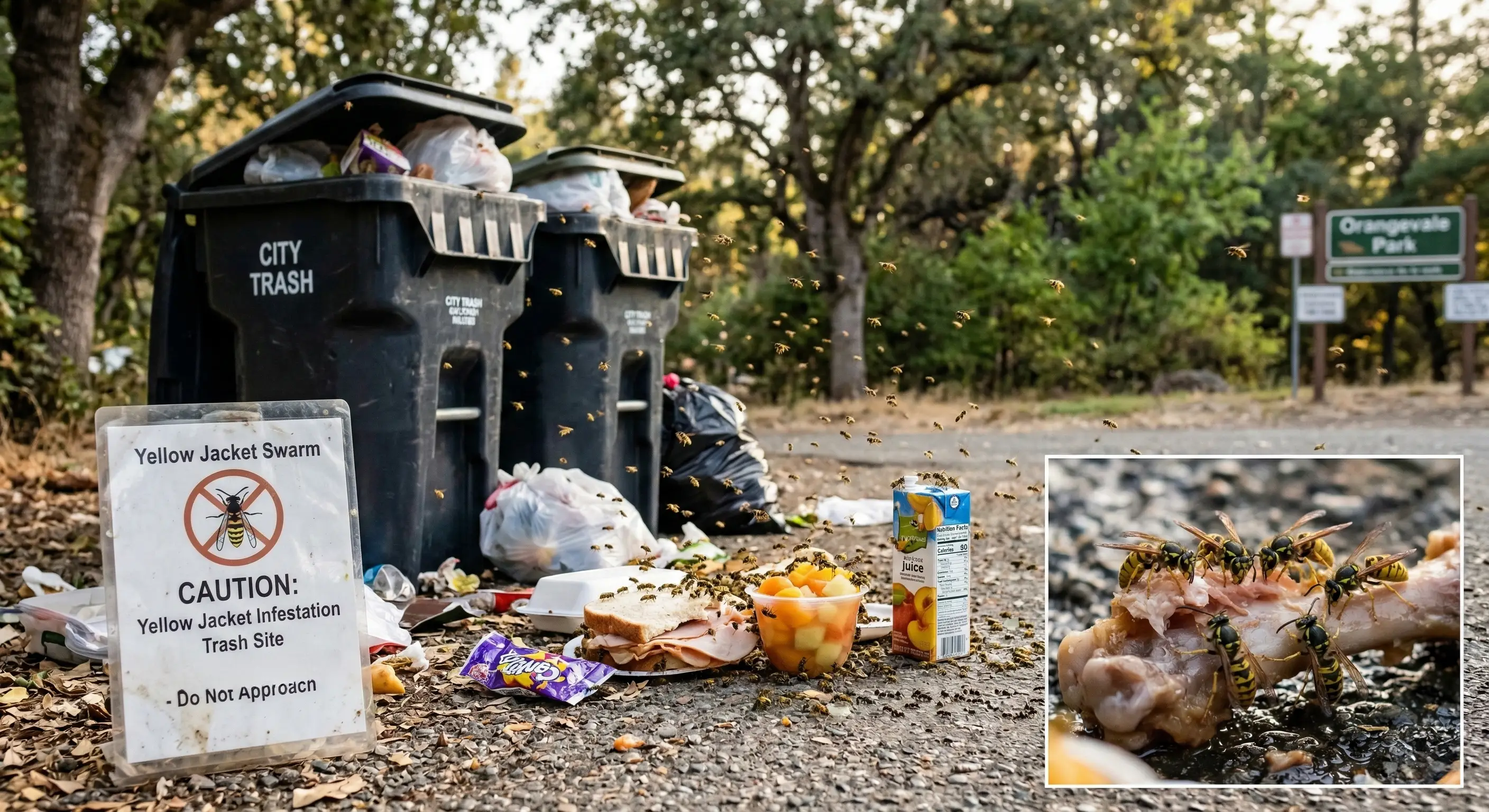
Trash and food sources attracting yellow jackets

🍎 Food Sources & Trash

Yellow jackets are attracted to proteins and sweets, foraging for insects, nectar, sugary drinks, and food scraps. Unsealed trash cans, outdoor dining areas, fallen fruit, and pet food left outside create ideal foraging grounds that draw yellow jackets to your property.

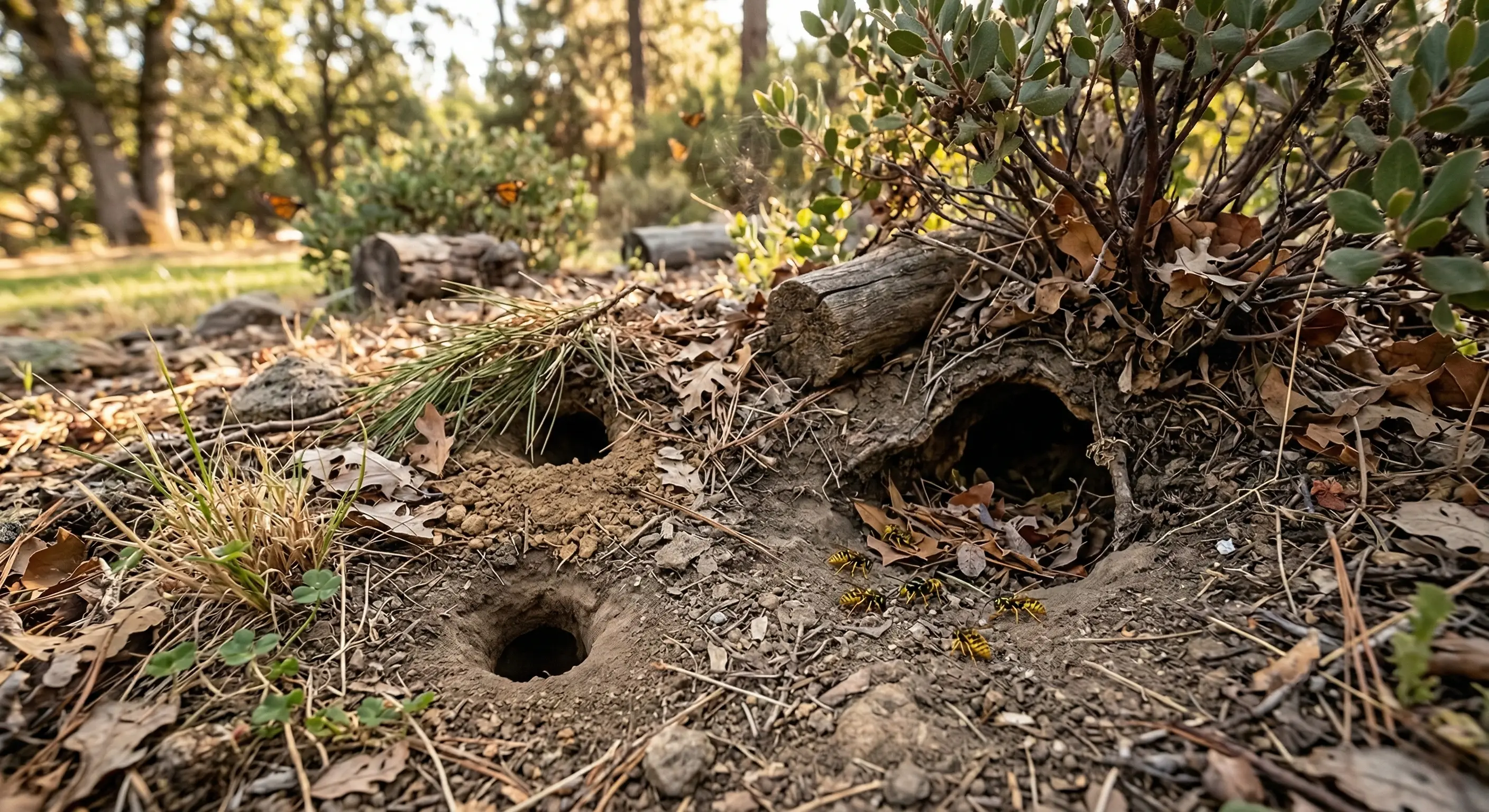
Ground holes and cavities suitable for yellow jacket nesting

🏠 Nesting Sites

Yellow jackets seek protected cavities for nest construction—abandoned rodent burrows, hollow trees, wall voids, attic spaces, and gaps in siding or foundations. Properties with these sheltered spaces provide ideal colony locations close to human activity.

Garden landscaping that attracts yellow jackets

💧 Landscaping & Gardens

Gardens attract yellow jackets with flowering plants providing nectar and abundant insect prey. Dense vegetation, mulched beds, and ground cover create humid microclimates yellow jackets favor for underground nest entrances.

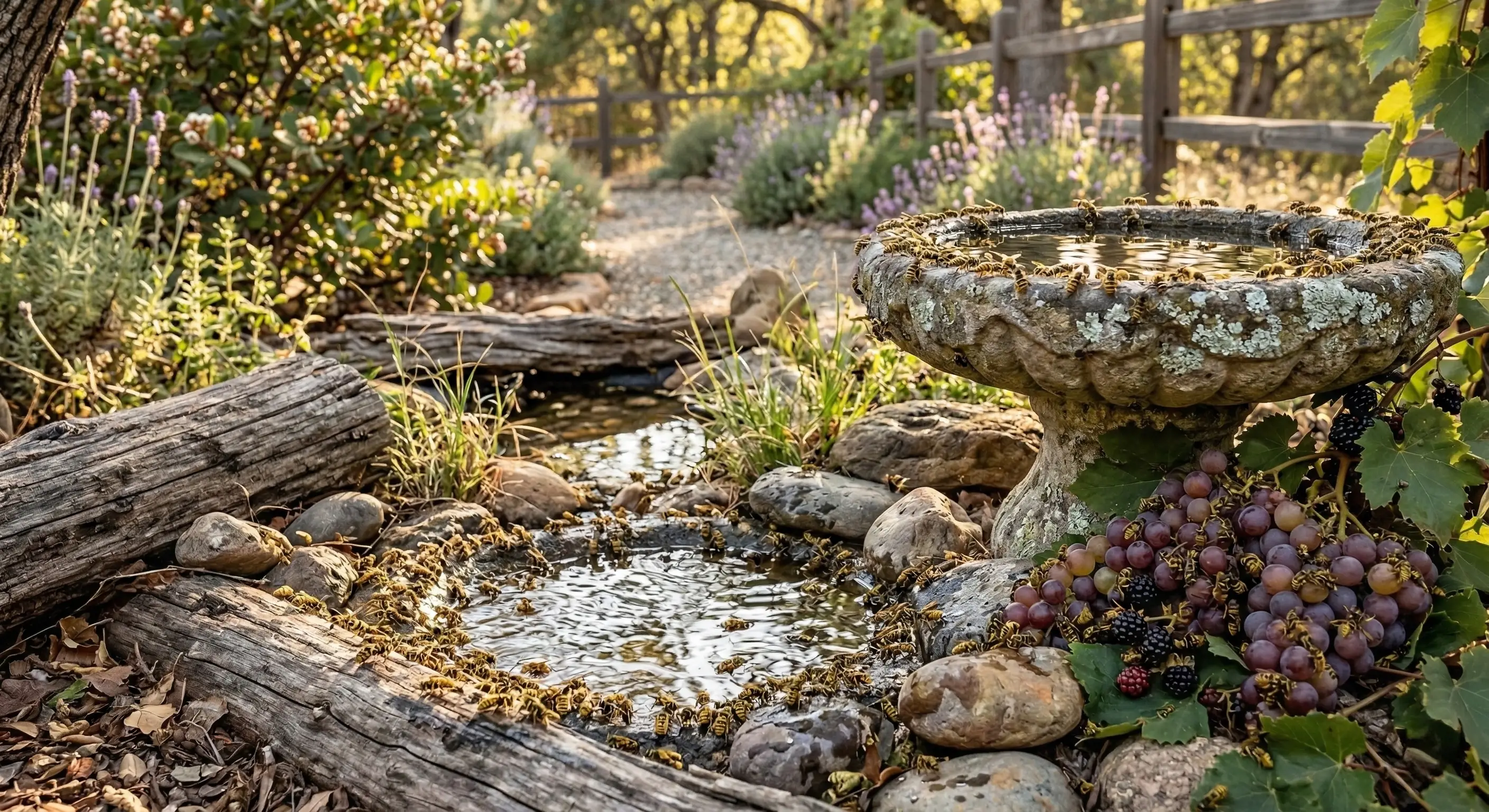
Water sources attracting yellow jackets

☀️ Water Sources

Yellow jackets need water for nest construction and cooling their colonies during hot weather. Bird baths, pet water bowls, leaky hoses, swimming pools, and areas with standing water attract foraging workers seeking moisture.

Learn More About Yellow Jacket Prevention →

What Are Signs of Yellow Jackets in Your Home?

Recognizing yellow jacket activity early helps prevent dangerous encounters and allows for professional treatment before colonies reach peak aggressive populations.
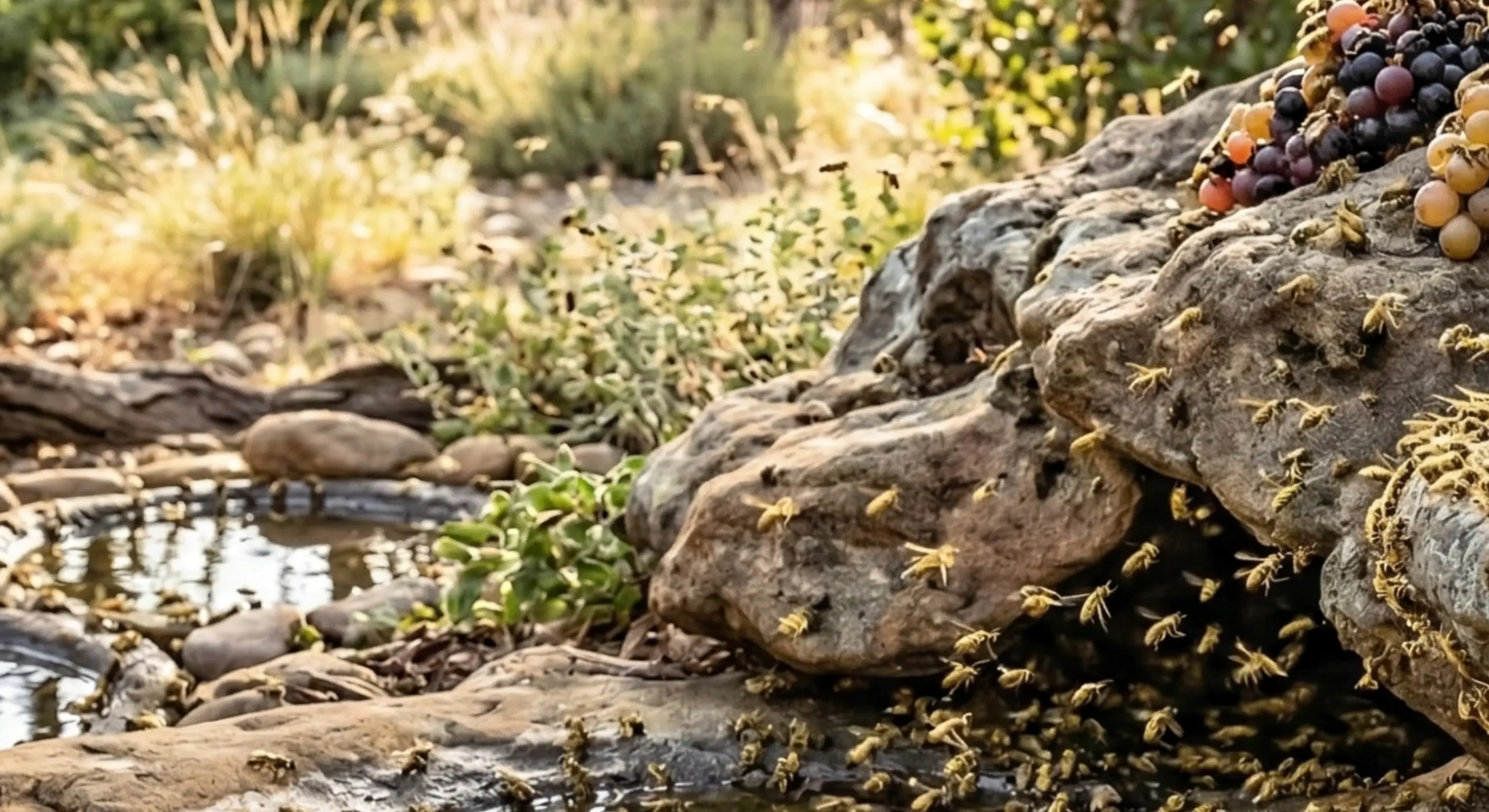
Yellow jackets flying in patterns indicating nest location

Yellow Jackets Flying in Patterns

Observing yellow jackets repeatedly flying to and from a specific location indicates a nest nearby. Workers follow consistent flight paths between their nest and food sources, and watching these patterns can help identify nest entrances.

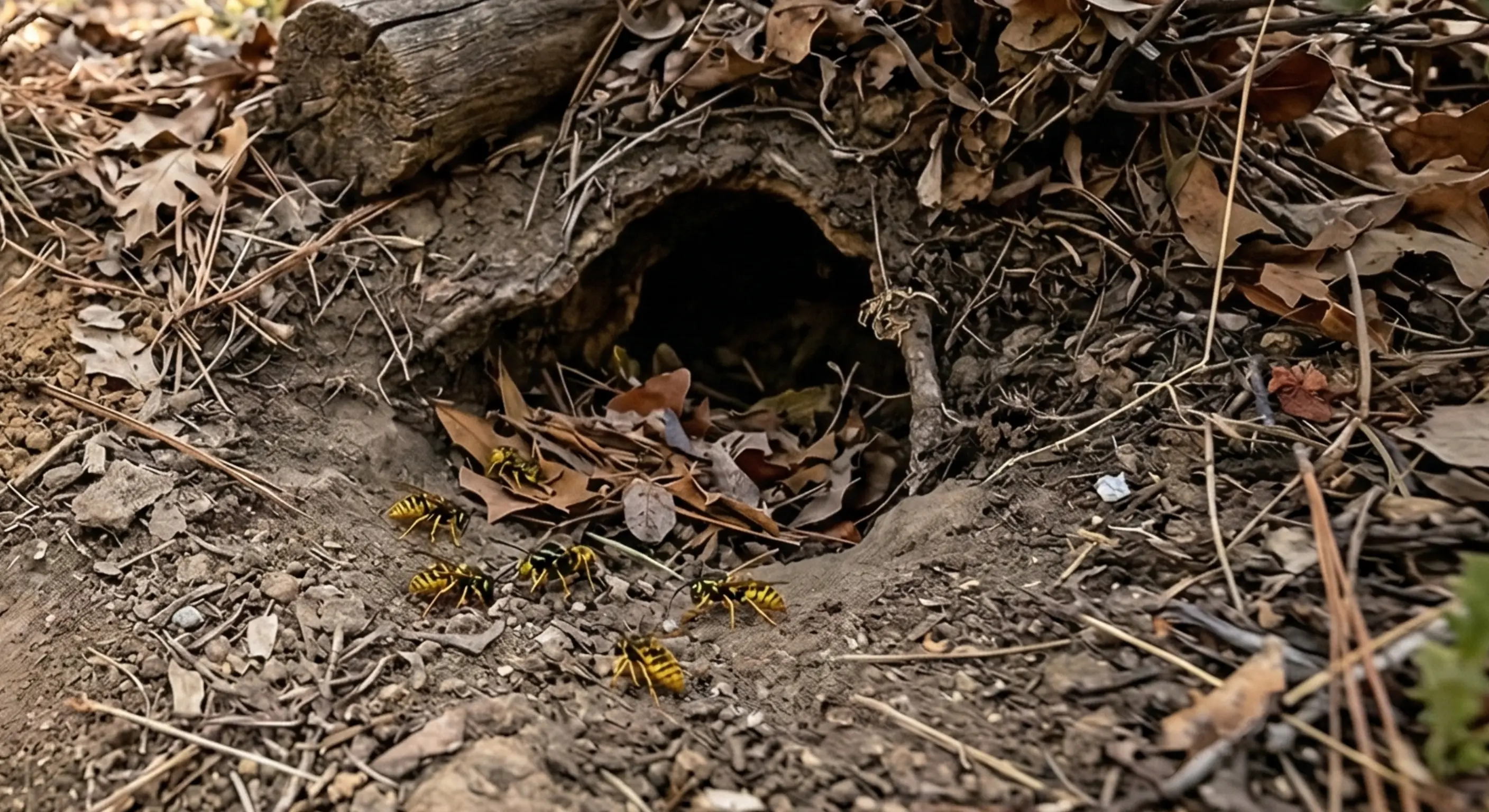
Ground-level yellow jacket nest entrance

Ground Nest Entrances

Small holes in the ground with yellow jackets entering and exiting indicate underground colonies—the most common and dangerous yellow jacket nest type. These entrances are often in lawns, garden beds, or along foundations and are easily disturbed accidentally.

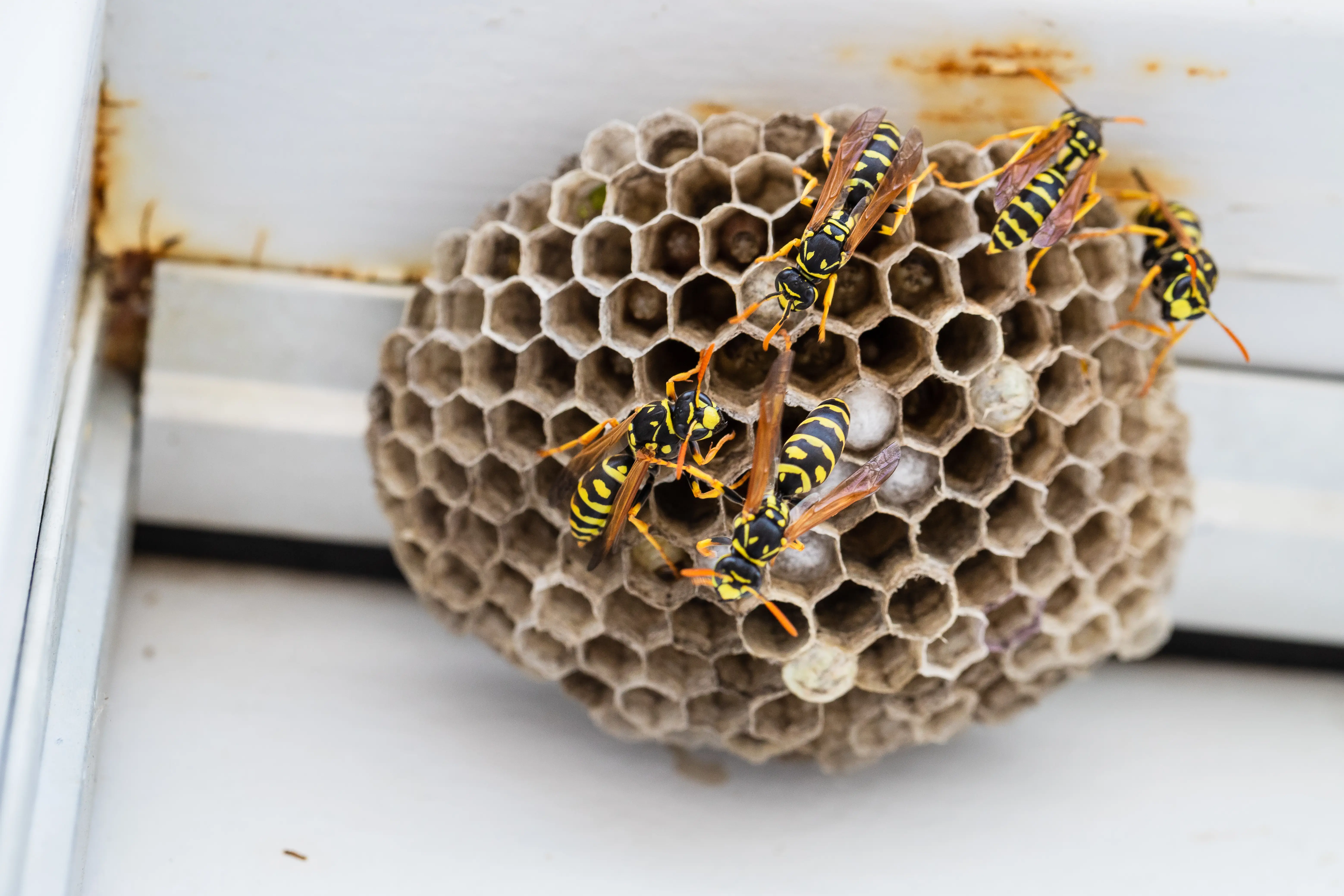
Visible paper yellow jacket nest on structure

Visible Paper Nests

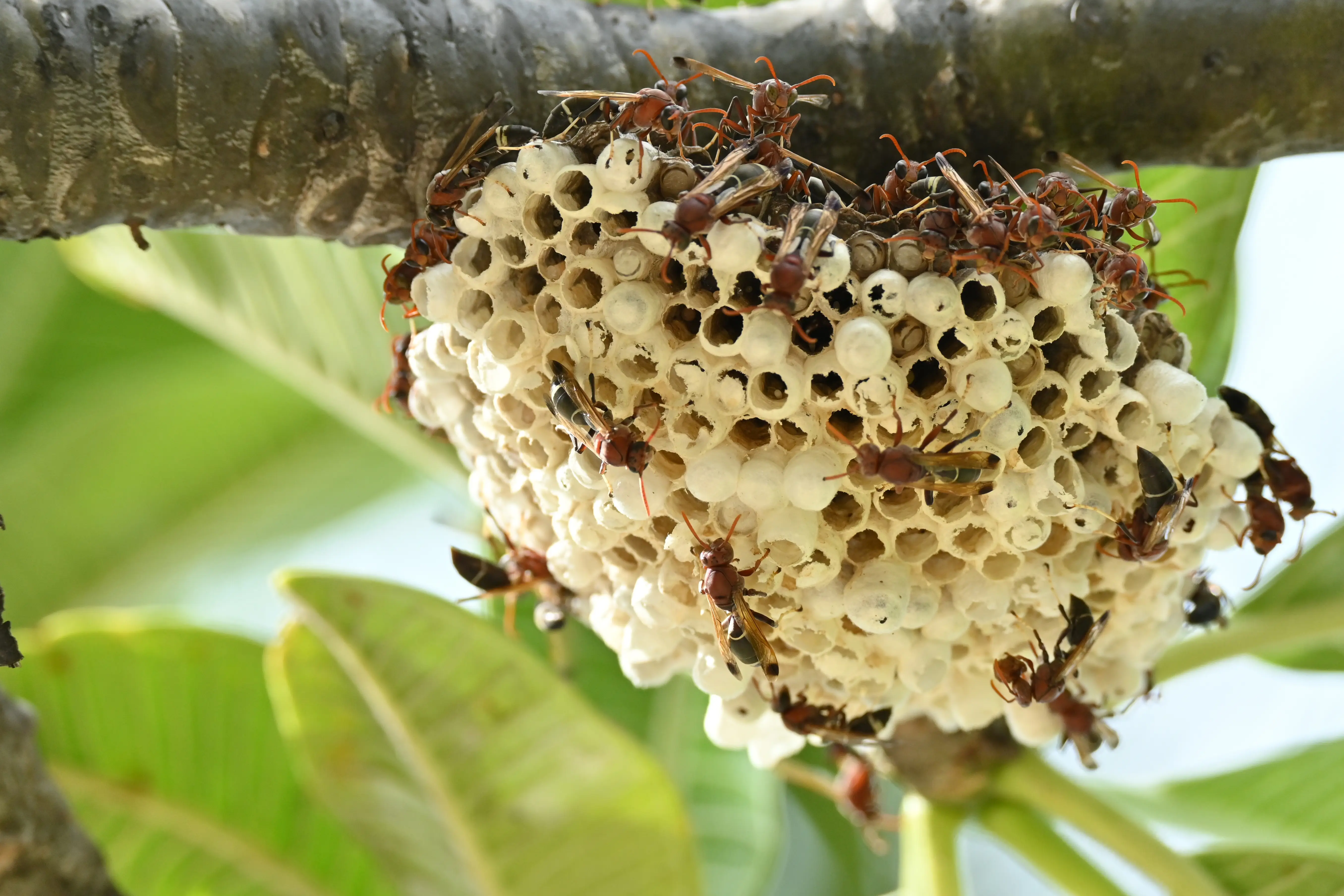
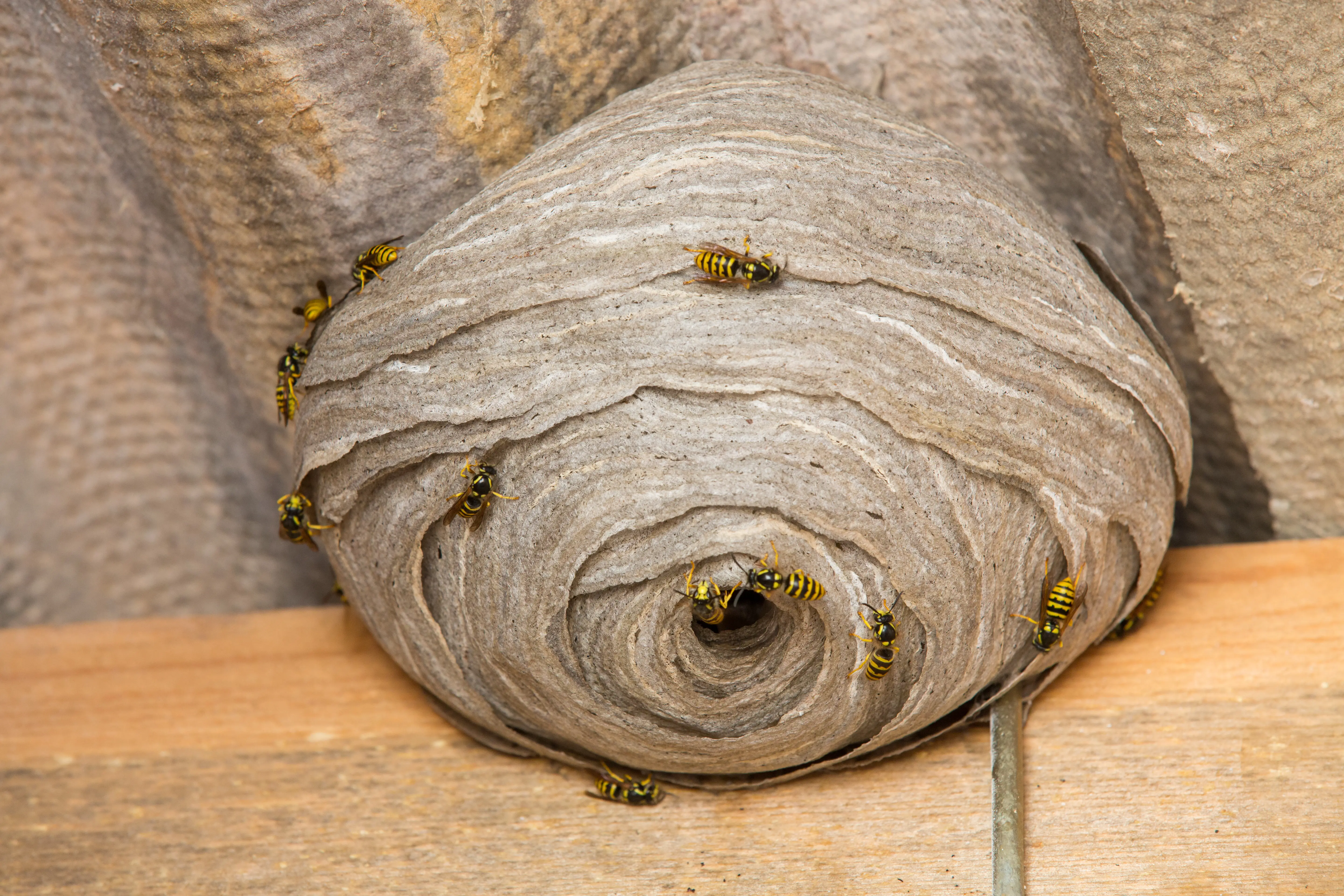
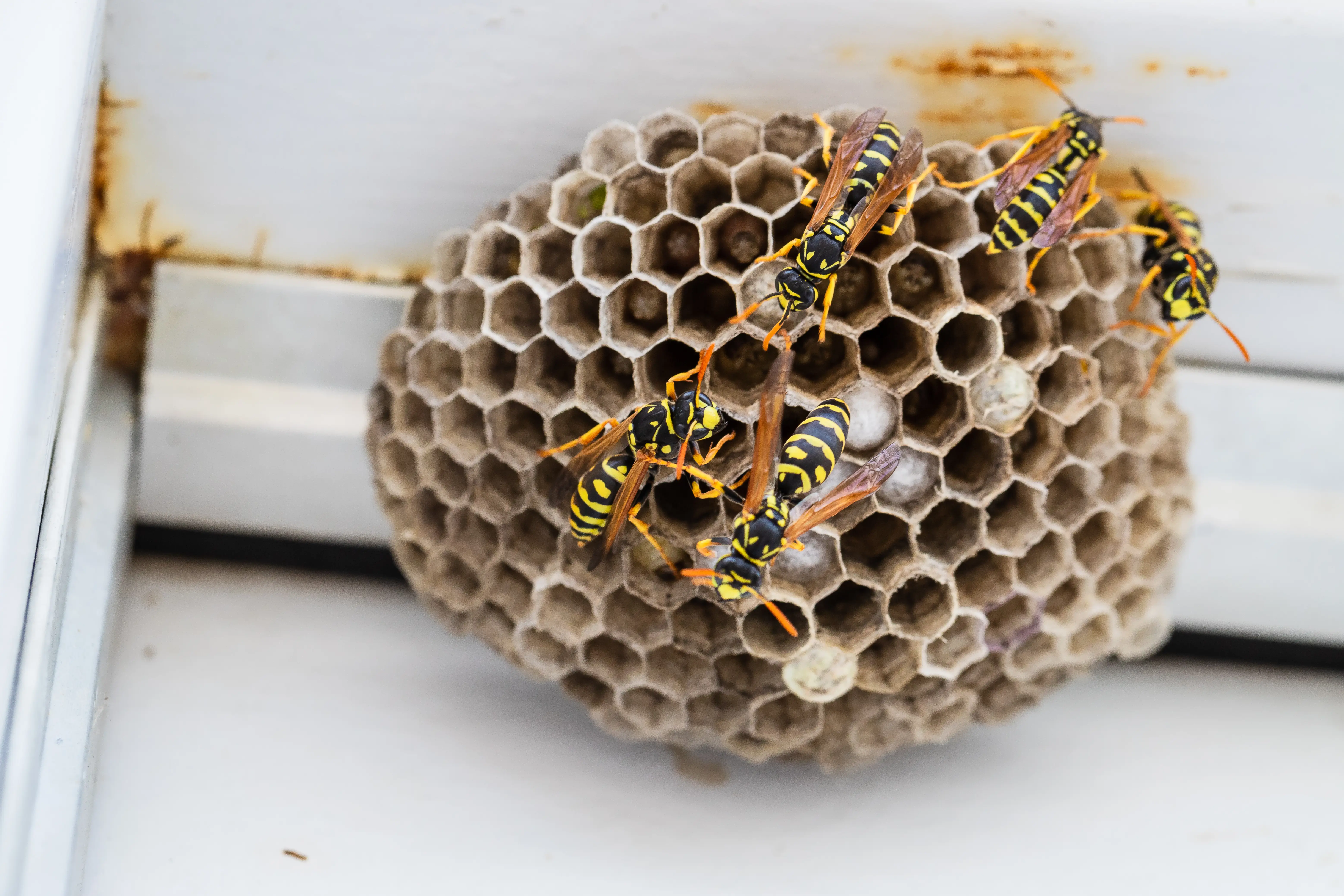
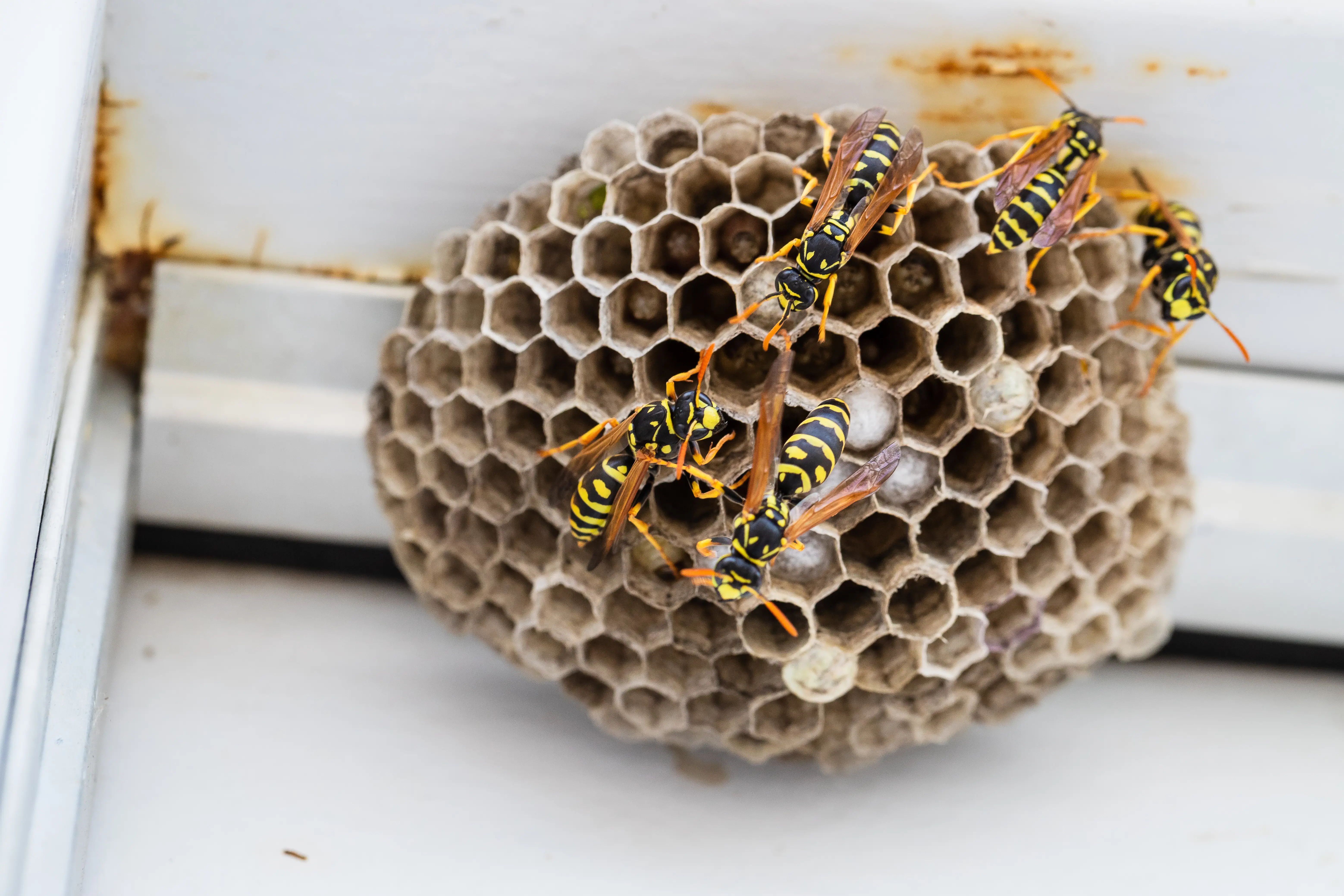
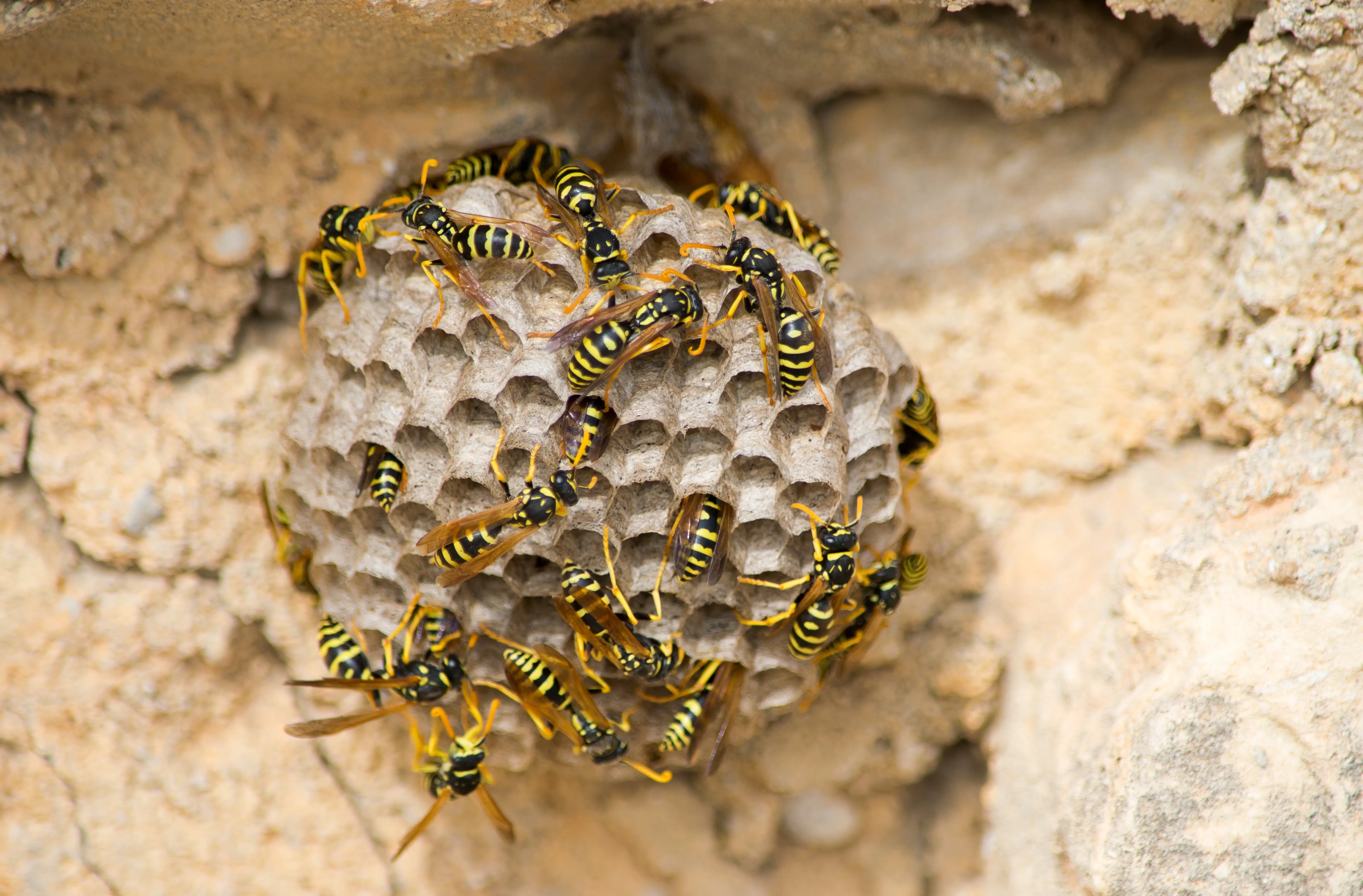
Gray, papery nests attached to eaves, tree branches, shrubs, or inside structures indicate aerial yellow jacket colonies. These nests are constructed from chewed cellulose and can grow to basketball size or larger by late summer.

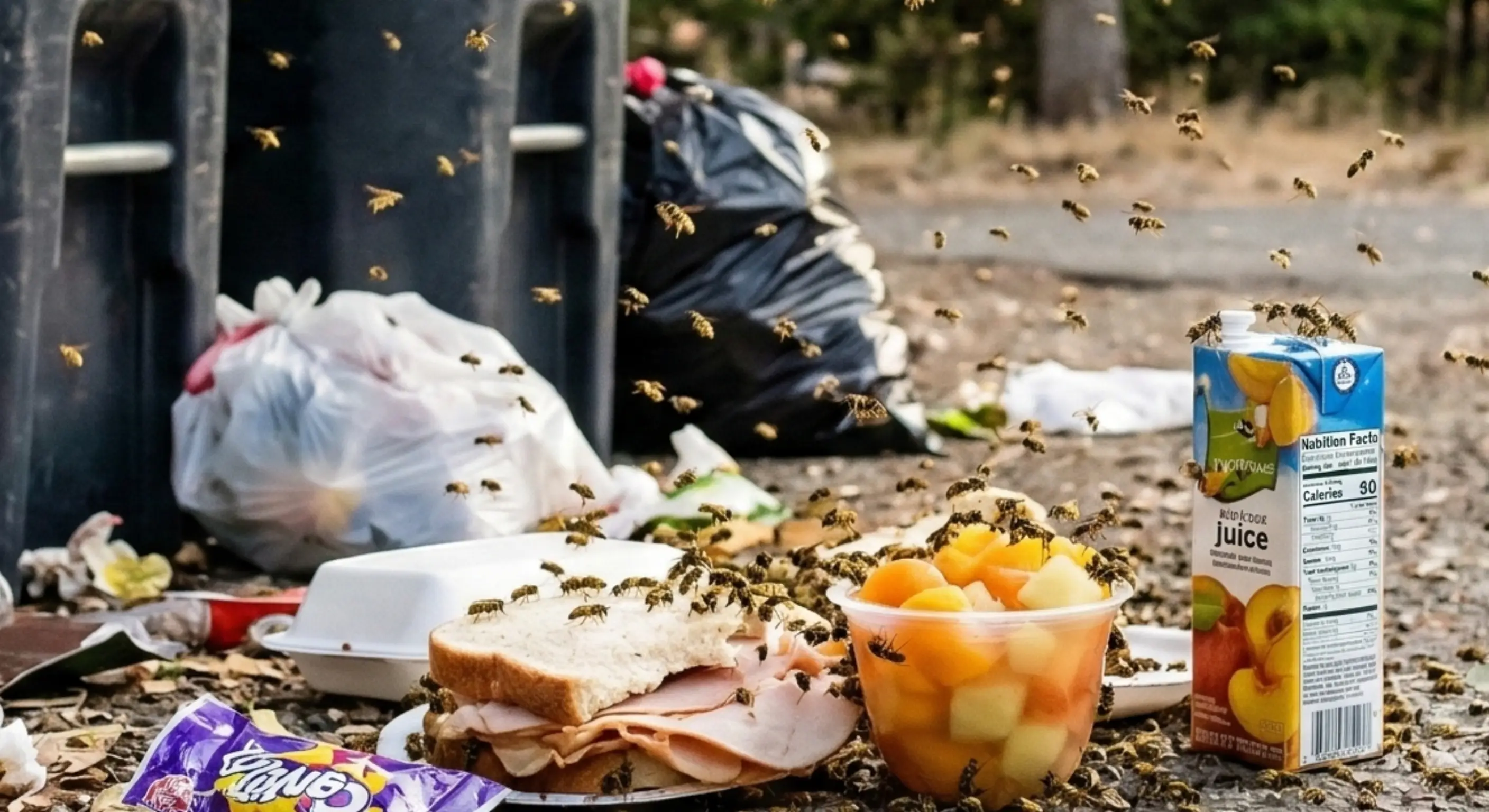
Yellow jackets swarming around food and drinks

Increased Activity Near Food

Multiple yellow jackets hovering around trash cans, outdoor eating areas, fallen fruit, or sweet beverages indicates a colony foraging nearby. This activity intensifies in late summer when natural food sources decline.

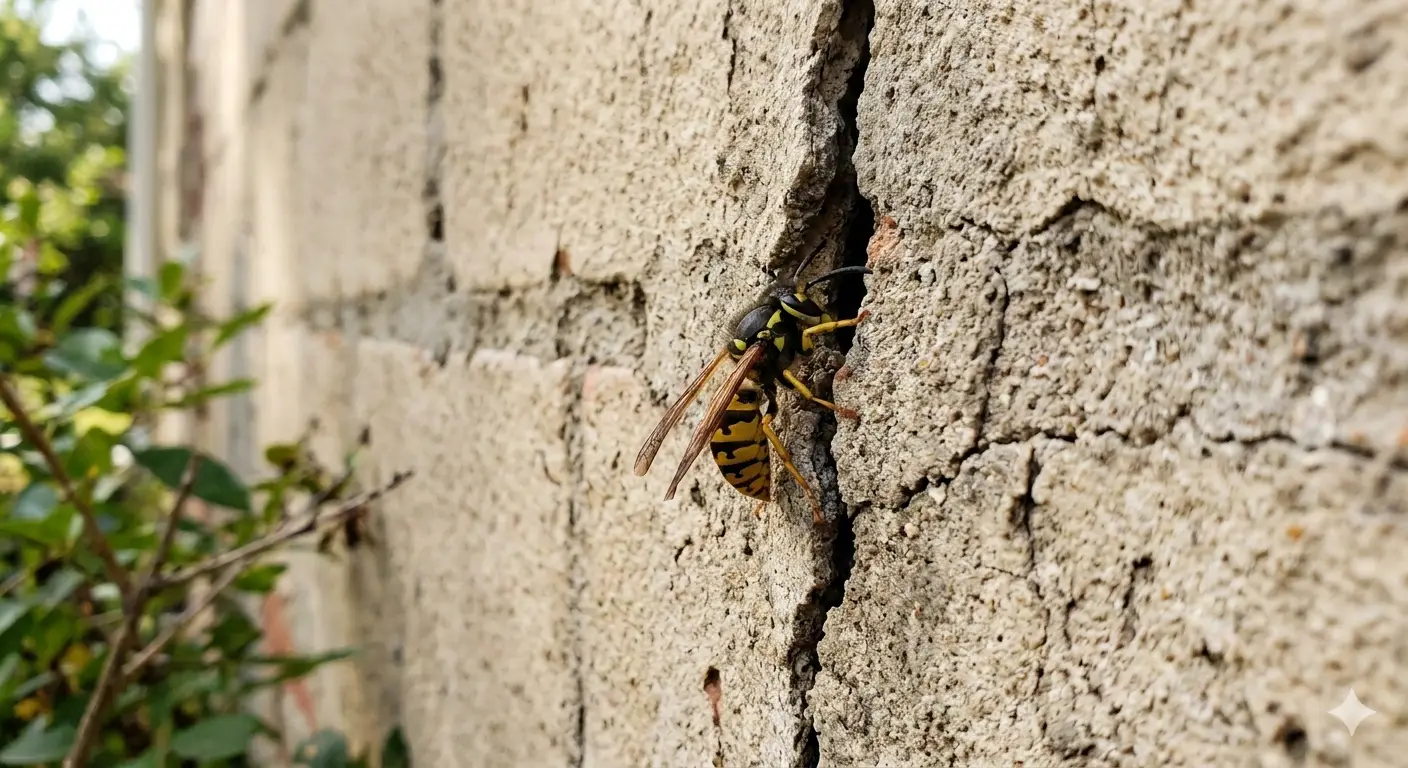
Yellow jacket entering gap in building structure

Yellow Jackets Entering Structures

Seeing yellow jackets repeatedly entering gaps in siding, soffits, wall vents, or foundation cracks suggests a colony has established inside a wall void or attic space. These hidden nests are particularly dangerous and difficult to treat.

Aggressive yellow jacket in defensive posture

Aggressive Behavior

Yellow jackets acting aggressively—buzzing closely, following you, or attempting to sting without provocation—indicates you're near their nest. This defensive behavior intensifies as you approach colony territory and should prompt immediate retreat.

Learn More About Yellow Jacket Detection →

DIY vs Professional Treatment

Getting rid of yellow jackets is extremely dangerous without proper training and protective equipment. Yellow jackets are far more aggressive than other stinging insects and will swarm to defend their colony. DIY attempts using store-bought sprays often fail to eliminate the entire colony and provoke dangerous attacks. Without full protective gear, attempting to treat a nest containing hundreds or thousands of aggressive workers puts you at serious risk of multiple stings.

Our licensed technicians are trained in safe yellow jacket elimination techniques and equipped with professional protective gear that prevents stings during treatment. We use commercial-grade products unavailable to consumers that effectively eliminate entire colonies, including the queen. Our systematic approach—inspection, treatment, verification, and exclusion—ensures complete elimination while minimizing danger. We understand yellow jacket behavior and time treatments strategically to maximize effectiveness while minimizing defensive response.

❌ DIY Treatment

  • Extreme danger without protective gear
  • Store-bought sprays often ineffective
  • Risk of provoking swarm attacks
  • Cannot reach underground nests
  • May not eliminate queen
  • Incomplete treatment allows colony recovery

✓ Professional Treatment

  • Full protective equipment
  • Commercial-grade products
  • Safe treatment protocols
  • Complete colony elimination
  • Underground nest expertise
  • Guaranteed results

Commercial Yellow Jacket Control

EcoGuard Pest Management implements customized yellow jacket control programs for commercial facilities that prioritize operational continuity while ensuring effective pest elimination. Our comprehensive commercial yellow jacket protection programs combine discrete treatment applications with flexible scheduling to maintain your business operations while ensuring complete elimination of yellow jacket problems.

We specialize in yellow jacket control solutions for:

  • Restaurants and food service establishments
  • Healthcare facilities
  • Hotels and hospitality venues
  • Educational institutions
  • Office complexes
  • Food processing facilities
  • Warehouses and storage facilities
  • Retail spaces
  • Manufacturing facilities
  • Multi-unit residential properties
Learn About Commercial Pest Control
100% SATISFACTION GUARANTEE

The EcoGuard Guarantee

EcoGuard offers a 100% satisfaction guarantee for all of our customers, and we stand by our promise to eradicate your yellow jacket problem until the very last yellow jacket is gone. That yellow jacket control guarantee comes with every service and if the yellow jackets come back, then so do we, at no additional cost. We are standing by to give you a free estimate and to help you set your first yellow jacket pest control service appointment.

📞 Call (866) 326-2847 Today

Our Yellow Jacket Control Process

A comprehensive approach to safely eliminating yellow jackets and protecting your property

1

Thorough Inspection

Our licensed technicians conduct comprehensive property inspections to locate all yellow jacket nests, including hidden underground colonies and wall void nests. We identify nest entrances, assess colony size and aggression levels, and evaluate conditions attracting yellow jackets to your property.

2

Strategic Treatment

Using appropriate protective equipment, we apply professional-grade treatments directly to nest cavities using methods matched to nest location and type. Our insecticides are designed to spread throughout the colony, eliminating workers, larvae, and the queen for complete colony collapse.

3

Exclusion & Prevention

After colony elimination, we seal nest entry points and identify structural gaps that could harbor future colonies. We provide recommendations for reducing attractants including proper trash management, food storage, and landscape modifications that discourage yellow jacket activity.

4

Verification & Monitoring

We return to verify complete colony elimination and remove accessible nests once safe. Our follow-up inspections ensure no surviving yellow jackets remain and identify any new activity requiring attention, particularly during peak yellow jacket season.

Seasonal Plan for Yellow Jacket Control

Year-round protection adapted to seasonal yellow jacket behavior patterns

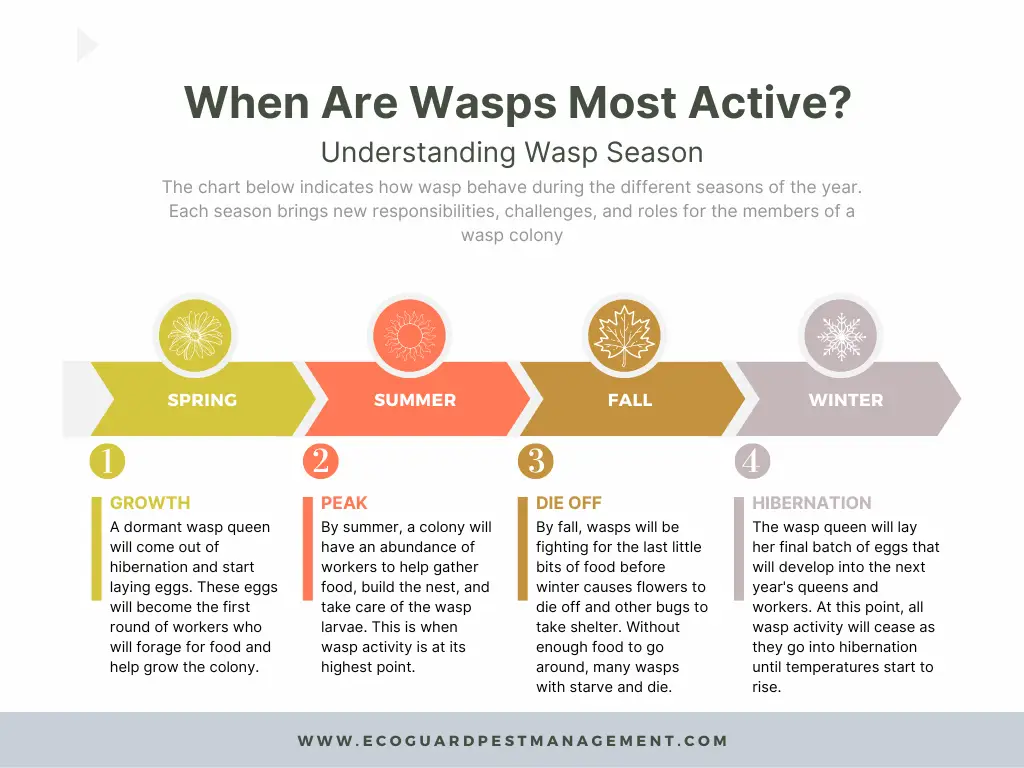
Spring Yellow Jacket Control

Spring

Queens emerge from hibernation and begin establishing new colonies; early detection and treatment of small, newly-founded nests is easiest and safest; preventative inspections identify potential nesting sites before colonies grow

Summer Yellow Jacket Control

Summer

Colonies grow rapidly with worker populations increasing; yellow jacket activity around food sources intensifies; nest treatments require full protective protocols as colonies reach hundreds of workers; peak treatment season

Fall Yellow Jacket Control

Fall

Maximum colony size and aggression as yellow jackets prepare for winter; competition for scarce food makes encounters most dangerous; critical treatment period before new queens disperse to hibernate; most stings occur during this season

Winter Yellow Jacket Control

Winter

Colonies die off except for hibernating queens; ideal time for nest removal and exclusion work; seal potential nesting sites before spring queen emergence; plan preventative strategies for upcoming season

What Our Customers Say

Trusted by families for safe, effective yellow jacket elimination

★★★★★

"My son got stung three times while mowing the lawn—we had no idea there was a nest underground. EcoGuard came out the same day, found the nest, and eliminated it safely. They were professional and thorough. Highly recommend!"

Jennifer & Mark T.
Sacramento, CA
★★★★★

"Yellow jackets built a huge nest in our wall. We could hear them buzzing inside! The technician was incredibly careful, treated the nest through a tiny gap, and came back to make sure they were all gone. Peace of mind restored!"

David L.
Portland, OR
★★★★★

"We own a restaurant with outdoor seating and yellow jackets were ruining our customers' experience. EcoGuard set up a prevention program that keeps them away. They respond quickly whenever we see any new activity. Great service!"

Maria S.
Austin, TX

Yellow Jacket Control FAQs

Everything you need to know about yellow jacket control and treatment

Professional exterminators use specialized protective equipment and commercial-grade insecticides to safely eliminate yellow jacket colonies. After locating all nest entrances, technicians apply treatments directly into nest cavities. The products spread throughout the colony as workers return, eventually eliminating all yellow jackets including the queen.

While yellow jackets provide some benefit by eating garden pests like caterpillars and flies, the danger they pose far outweighs these benefits when colonies establish near human activity. Their aggressive nature, ability to sting repeatedly, and tendency to swarm make them a serious safety hazard that should be professionally eliminated.

Dry ice can kill yellow jackets by releasing carbon dioxide into sealed nest cavities, suffocating the colony. However, this method is dangerous without proper training and equipment. Professional treatment remains the safest and most effective approach, as improper nest disturbance can trigger dangerous swarm attacks.

Yellow jackets are highly territorial and will aggressively defend their colony from perceived threats. When one yellow jacket stings, it releases an alarm pheromone that marks the target and signals other workers to attack. This defensive behavior intensifies in late summer and fall when colonies are largest and food becomes scarce.

Watch for yellow jackets flying in consistent patterns to and from a specific location. Follow their flight path from a safe distance to identify nest entrances. Underground nests appear as small holes in the ground with steady yellow jacket traffic. Never approach closely—instead, mark the general location and call a professional.

Professionals typically treat yellow jacket nests at dawn or dusk when most workers have returned to the colony and are less active. Cooler temperatures also reduce yellow jacket aggression. However, with proper protective equipment, trained technicians can safely treat nests at any time.

Most yellow jacket colonies are eliminated within 24-48 hours after professional treatment. The insecticides work as foraging workers return to the nest and spread the product throughout the colony. Complete elimination, including verification that no yellow jackets remain, typically takes 3-7 days.

Yes, yellow jackets commonly build nests inside wall voids, attic spaces, and other structural cavities. These hidden nests are particularly dangerous because the colony is close to living spaces and can sometimes chew through drywall to enter rooms. Professional treatment is essential for wall void colonies.

Yellow jacket colonies grow throughout the season, starting with just the queen in spring. By late summer, a mature colony can contain 1,000-4,000 workers, with some large nests housing even more. Colony size peaks in late summer and early fall before dying off with cold weather.

No, yellow jacket colonies die off each winter except for newly mated queens who hibernate elsewhere. Queens never reuse old nests—they establish completely new colonies each spring. However, if conditions remain favorable, new queens may build nests in similar locations the following year.

Yellow jackets are actually a type of wasp, but they differ from other wasps in several ways. Yellow jackets are stockier with bright yellow and black banding, nest underground or in enclosed spaces, and are more aggressive. Paper wasps are longer and thinner with longer legs and build open, umbrella-shaped nests.

Yellow jacket stings are painful for everyone and can be life-threatening for those with allergies. Because yellow jackets can sting repeatedly and often attack in swarms, victims may receive multiple stings. Seek immediate medical attention if you experience difficulty breathing, swelling beyond the sting site, or other allergic symptoms.

Reduce attractants by keeping trash sealed, cleaning up fallen fruit, covering food and drinks outdoors, and eliminating standing water. Seal gaps in siding, foundations, and soffits where yellow jackets could enter. Remove potential nesting sites like abandoned rodent burrows. Regular professional inspections can identify and address early-stage nests.

Yellow jacket colonies reach maximum size in late summer and fall, with the most workers competing for declining natural food sources. This makes them more aggressive and more likely to scavenge human food. Additionally, the colony is preparing to produce new queens, making workers more defensive of the nest.

Never seal a yellow jacket nest entrance without professional treatment first. Trapped yellow jackets will find or create alternate exits, potentially chewing through walls into living spaces. They become extremely aggressive when their nest is blocked and may attack anyone nearby when they eventually escape.

Yellow jacket traps can help reduce the number of foraging workers but won't eliminate an established colony. Traps are most effective in early spring to catch queens before they establish nests, or as a supplementary measure when nests are located off-property. For colonies on your property, direct nest treatment is required.

Yellow jackets typically forage within 1,000-1,500 feet of their nest, though they can travel further when food is scarce. If you're seeing yellow jackets regularly, there's likely a nest within a few hundred yards of your location. Watching flight patterns can help identify the direction of the nest.

Move away from the area immediately to avoid additional stings. Remove any stinger if present (though yellow jackets usually retain theirs), clean the area, and apply ice to reduce swelling. Take antihistamines for minor reactions. Seek emergency medical care immediately if you experience difficulty breathing, facial swelling, or other signs of anaphylaxis.

Professional treatments are safe for pets when applied correctly. Technicians apply products directly into nest cavities where pets cannot access them. We provide guidance on keeping pets away from treatment areas until products have dried or been absorbed. Most treatments pose no risk to pets once the immediate application area is clear.

Yellow jacket treatment costs vary based on nest location, accessibility, colony size, and number of nests. Simple accessible nests may cost $150-250, while difficult-to-reach wall void or underground colonies can cost $250-400 or more. We provide inspections and estimates before any work begins.

Related Articles & Resources

Learn more about yellow jacket prevention, identification, and control
Are Murder Hornets Dangerous? Facts and Safety Guide

Are Murder Hornets Dangerous? Facts and Safety Guide

Learn about Asian giant hornets (murder hornets), their dangers to humans and honeybees, identification tips, and what insects are commonly mistaken for them.

Read Article →
Are Wasps Dangerous? Stings, Swarms & When to Seek Help

Are Wasps Dangerous? Stings, Swarms & When to Seek Help

Learn why wasps are dangerous, how they differ from bees, sting treatment, when to seek medical attention, and how to prevent wasp stings.

Read Article →
Are Wasps Pollinators? Their Role in Pollination & Benefits

Are Wasps Pollinators? Their Role in Pollination & Benefits

Learn how wasps act as pollinators, their specialized role with orchids and figs, diet and energy needs, and other benefits they provide to ecosystems.

Read Article →
How Long Do Wasps Live? Lifespan, Life Cycle & Seasonal Activity

How Long Do Wasps Live? Lifespan, Life Cycle & Seasonal Activity

Learn how long wasps live by role (workers vs queens), the wasp life cycle from egg to adult, seasonal nest activity, and when wasps die off.

Read Article →
How to Get Rid of Wasps: Safe Removal, Treatment & Prevention

How to Get Rid of Wasps: Safe Removal, Treatment & Prevention

Learn how to safely get rid of wasps including nest removal, treatment strategies, protective gear, wasp identification, and when to call professionals.

Read Article →
How to Repel Wasps: Natural and Effective Methods for Wasp Control

How to Repel Wasps: Natural and Effective Methods for Wasp Control

Learn how to repel wasps naturally with scientifically proven essential oils, DIY sprays, and prevention strategies. Discover which methods actually work and how to keep wasps away from your home.

Read Article →
What Are Wasps? Appearance, Lifespan, Diet & Behavior

What Are Wasps? Appearance, Lifespan, Diet & Behavior

Learn about wasps including appearance, lifespan, social vs solitary behavior, diet, purpose in ecosystems, why they sting, and how they compare to bees.

Read Article →
What Do Yellow Jackets Eat? Diet and Feeding Habits

What Do Yellow Jackets Eat? Diet and Feeding Habits

Learn what yellow jackets eat, their seasonal diet changes, why they invade picnics, and how to prevent them from your property.

Read Article →
When Is Wasp Season? Seasonal Activity & Peak Months

When Is Wasp Season? Seasonal Activity & Peak Months

Learn when wasps are most active by season, when wasp season starts and ends, best time to spray nests, and how climate change affects wasp populations.

Read Article →
View All Pest Control Articles →

Ready to Eliminate Your Yellow Jacket Problem?

Get a free estimate for your yellow jacket problem today. Our experts will assess your property and provide a customized treatment plan.

Connect With Us

Follow EcoGuard Pest Management for tips, updates, and special offers

f𝕏yin