EcoGuard Pest Management
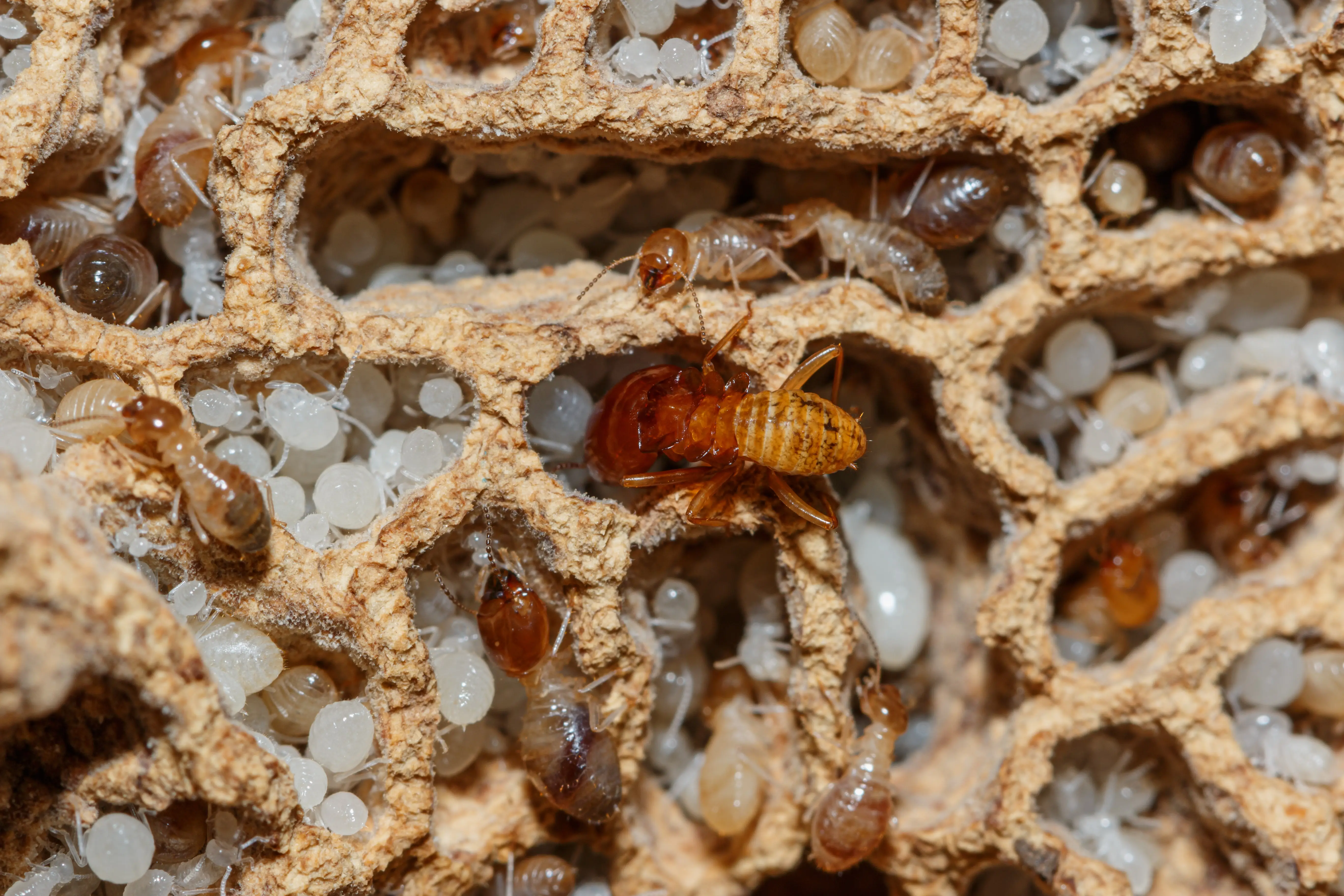
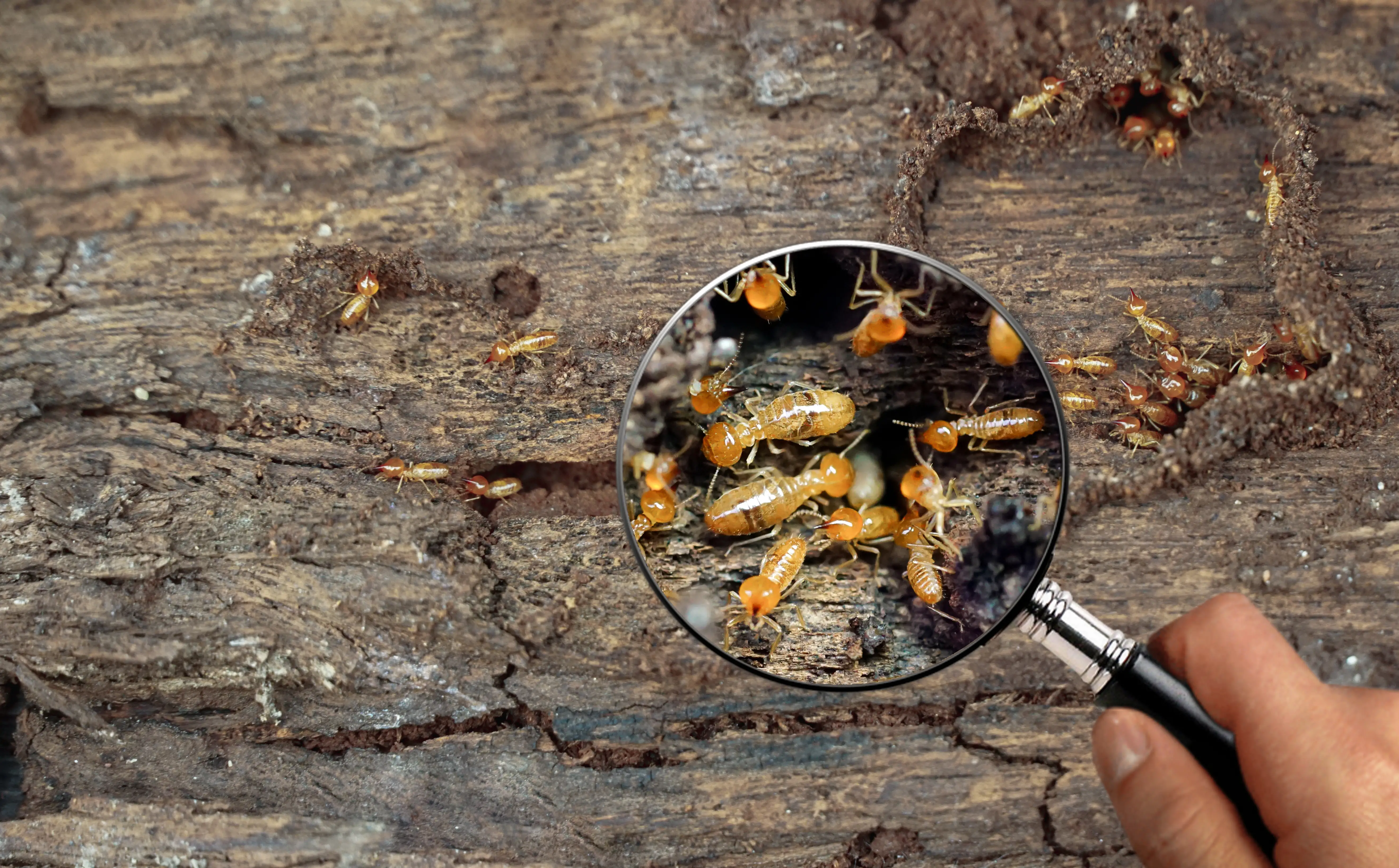
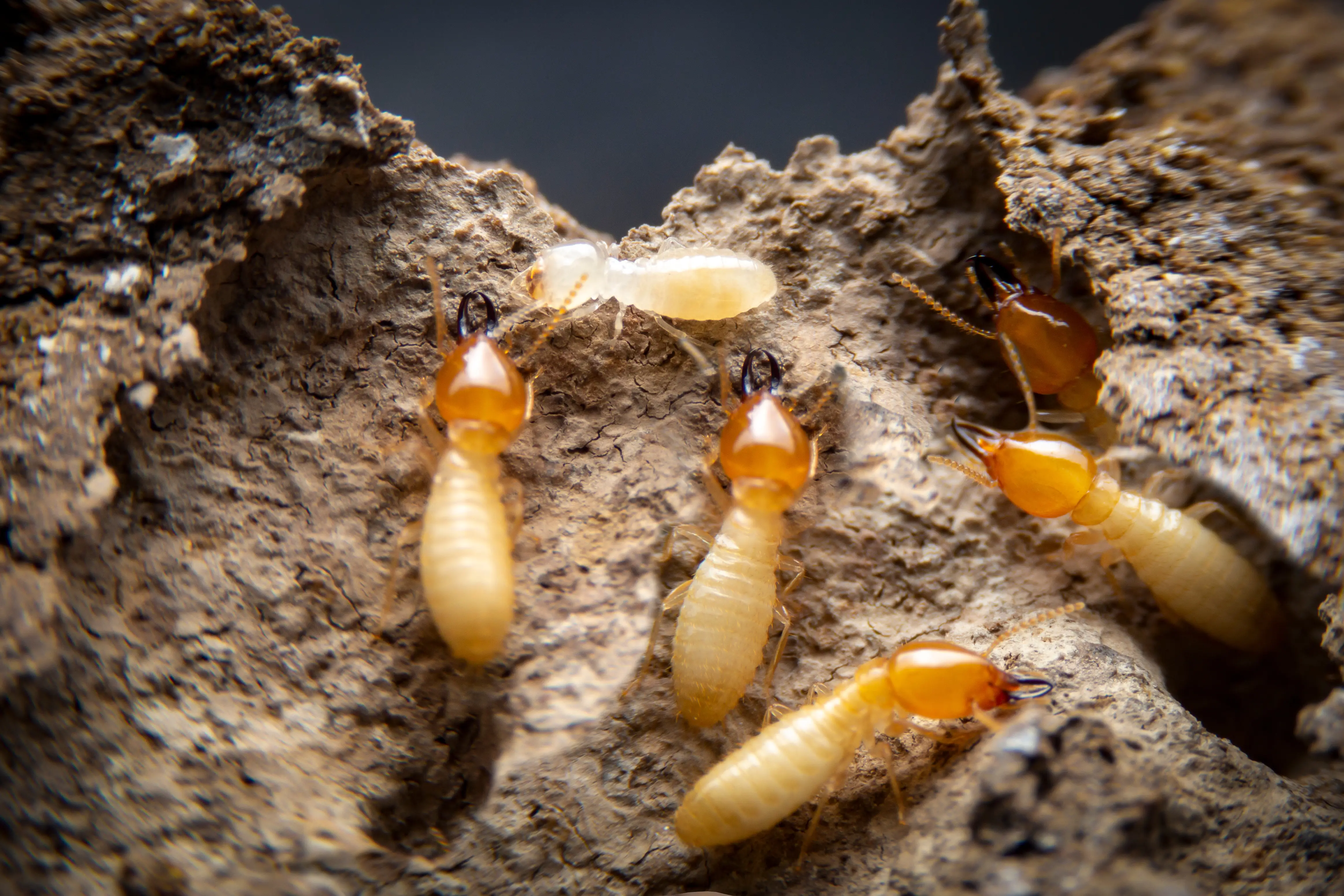
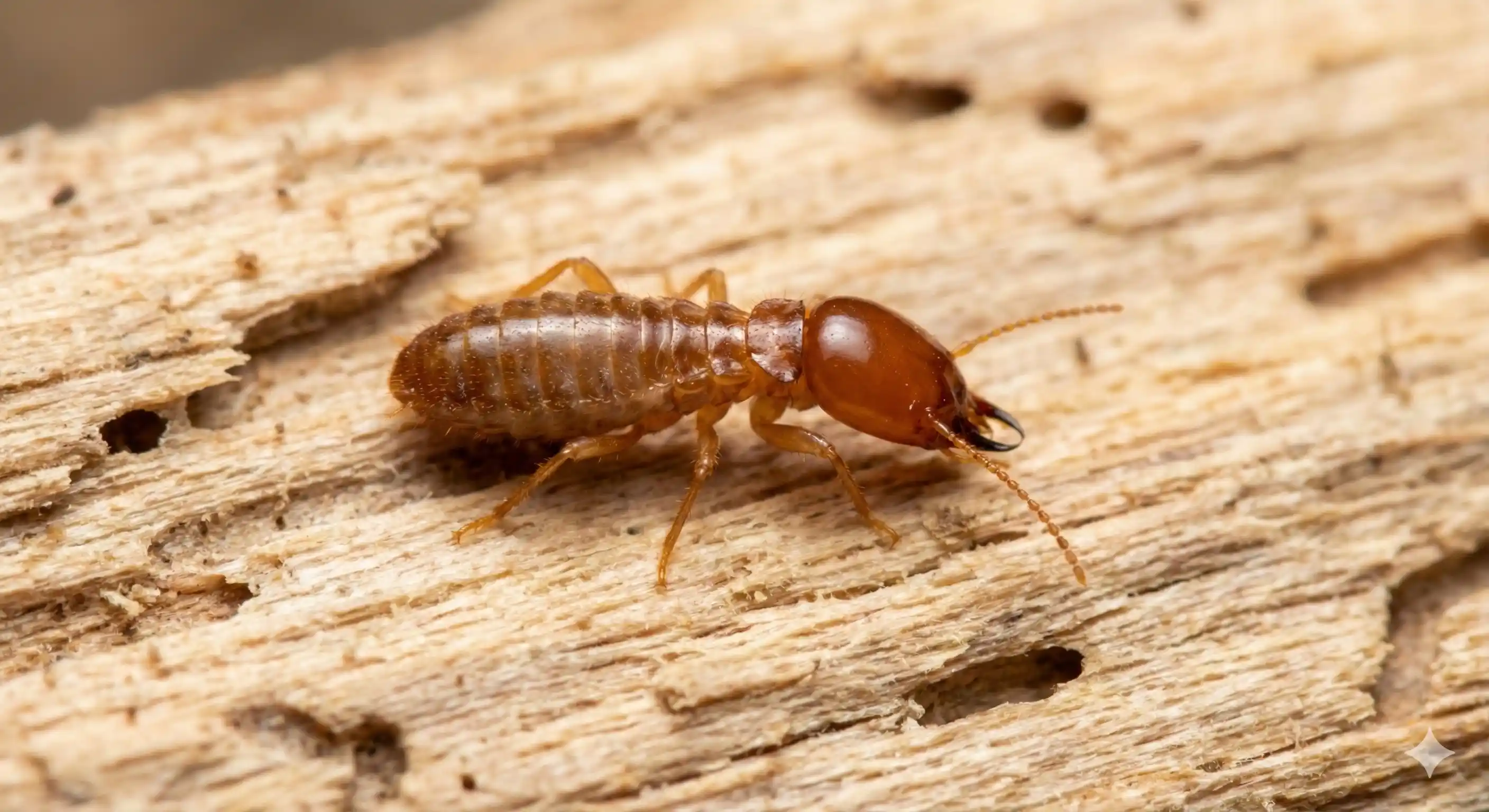
Professional drywood termite control technician inspecting and treating wood structure for termite infestation

Professional Drywood Termite Treatment & Control Services

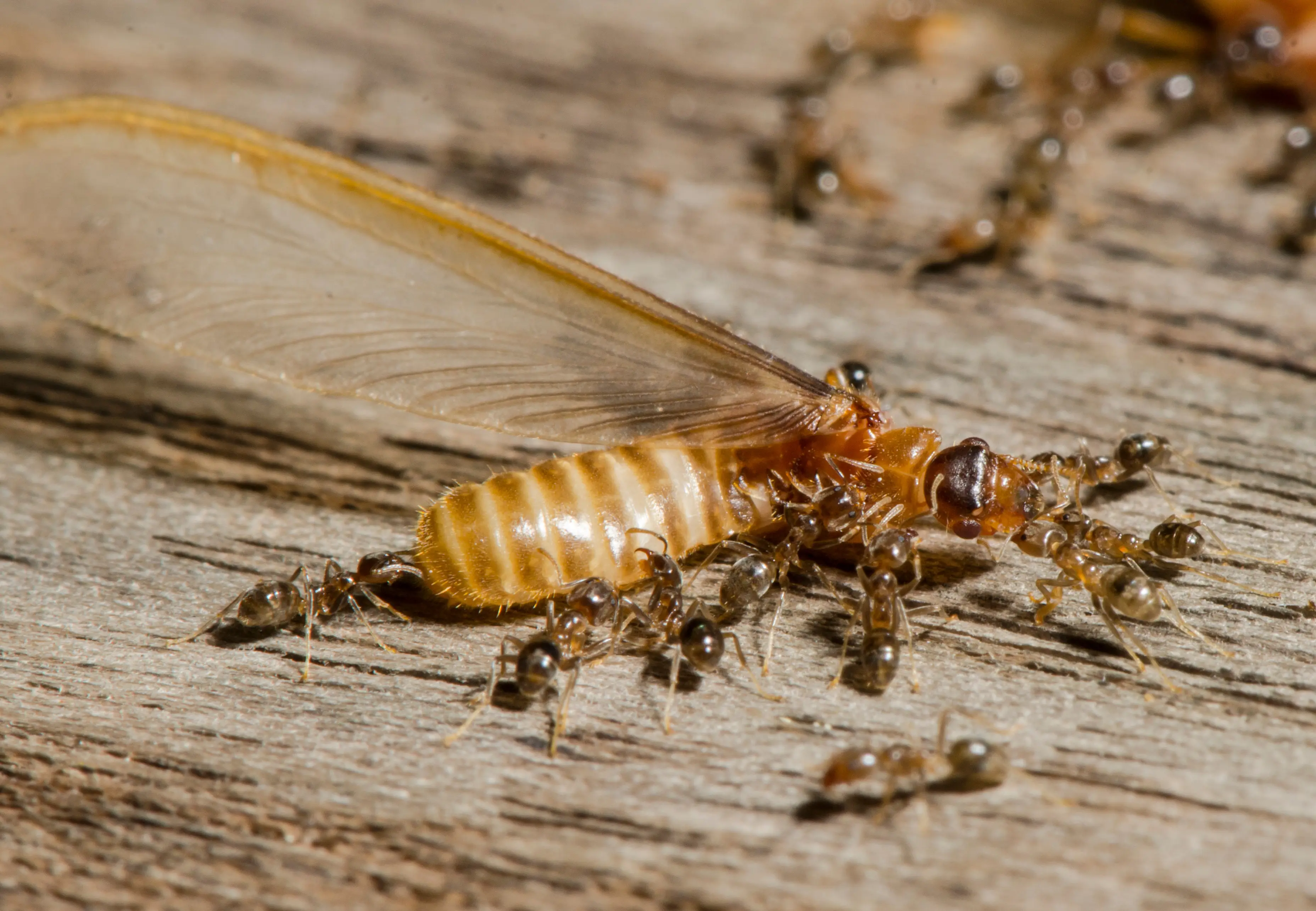
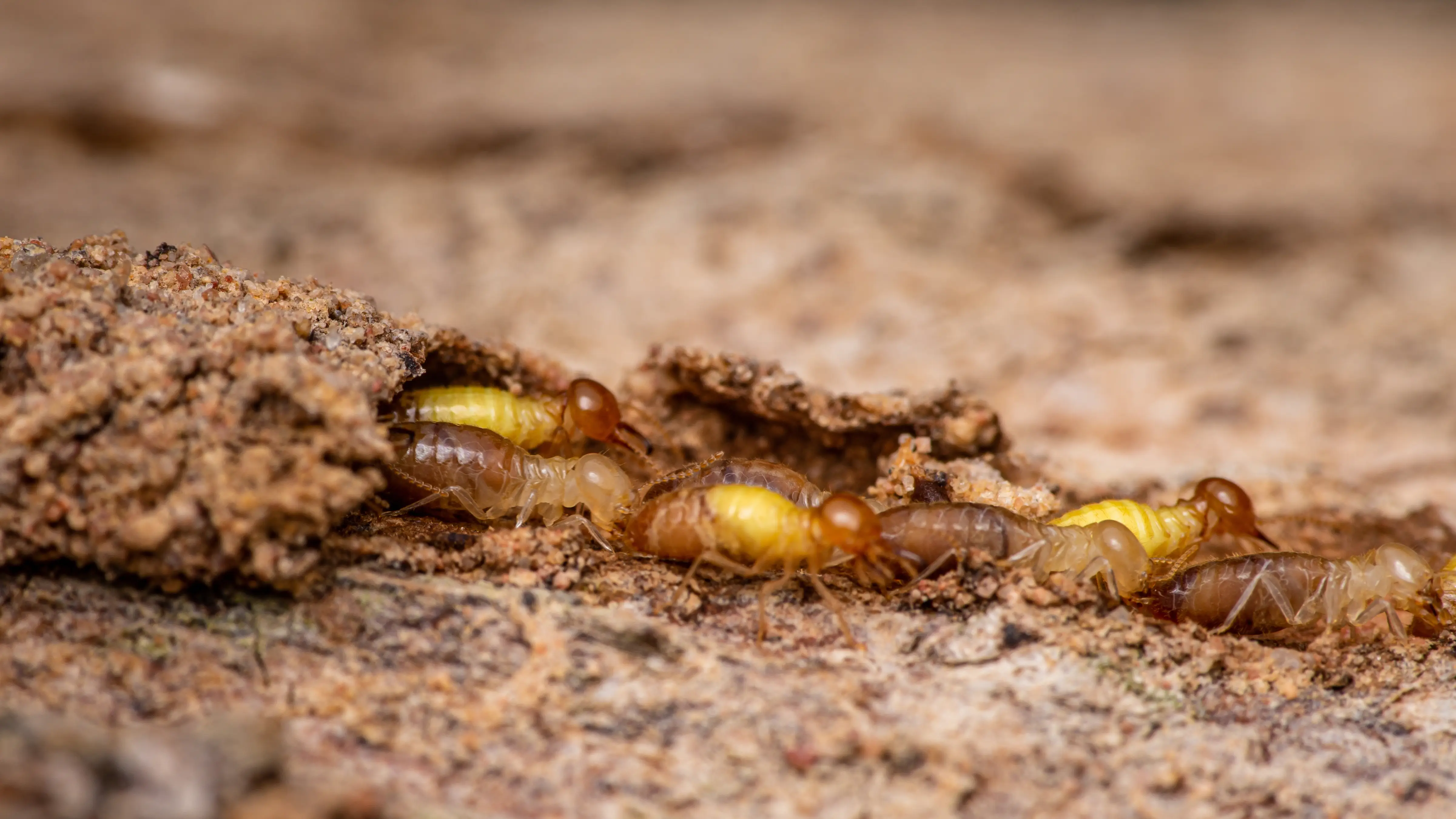
These silent invaders don't need moisture, soil, or even the slightest hint of dampness. Drywood termites live entirely within the dry wood they consume, tunneling through structural beams, furniture, and decorative elements for years before you spot the first signs of trouble. When swarmers finally emerge or tiny pellets begin accumulating on your windowsills, the internal damage may already be substantial. EcoGuard Pest Management delivers specialized detection and elimination systems that target these elusive pests at their source, providing comprehensive protection for your greatest investment.

Drywood Termite Pest Control Experts

What sets our termite specialists apart isn't just their certification—it's their sixth sense for detecting drywood termite activity where others see nothing but intact wood. Our technicians have honed their skills through thousands of inspections, learning to read the subtle signs that indicate these secretive insects. Every kick-out hole, every pattern of gallery formation, and every seasonal swarming tendency informs our approach to your unique situation. When you're facing an opponent that's evolved to hide in plain sight, you need professionals who can transform your termite problem into a termite solution.

Why Drywood Termites Are a Serious Problem

Forget what you think you know about termites. Drywood variants play by different rules:

  • They're completely self-contained—no mud tubes, no soil contact, no external signs until damage is well underway. A single reproductive pair can establish a thriving colony inside your structural beams without ever revealing their presence
  • Unlike termites that require specific environments, drywood colonies happily consume structural elements, furniture, subfloors, and decorative woodwork with equal enthusiasm, threatening every wooden component in your home
  • Drywood colonies may develop slower than their subterranean cousins, but their persistence makes them formidable opponents—over 3-7 years, they steadily hollow out wooden elements while leaving thin, deceptive veneers intact
  • New infestations often arrive in furniture, picture frames, or decorative items, bypassing your home's external defenses entirely. That vintage bookshelf could be harboring more than just classic literature

Drywood Termite Control Service Plans

Choose the protection level that's right for your property

One-Time Treatment
Contact Us
For custom pricing
  • Comprehensive property inspection
  • Species identification
  • Entry point identification
  • Targeted treatment application
  • Perimeter barrier application
  • Nest elimination
  • Treatment report & recommendations
  • 30-day guarantee
Get Started
MOST POPULAR
Annual Protection
Contact Us
For custom pricing
  • Everything in One-Time Treatment
  • Seasonal maintenance plan
  • Entry point treatments
  • Priority scheduling
  • Re-treatment guarantee
Get Started

* Prices vary based on property size, infestation severity, and treatment method. Contact us for an accurate quote.

Service Plan Comparison

FeatureOne-TimeAnnual
Comprehensive Inspection
Colony EliminationLocalizedComplete
Hidden Colony AccessLimited100%
Evacuation RequiredHours2-3 Days
Follow-Up InspectionIncluded
Warranty CoverageLimitedComprehensive

Get Your Free Drywood Termite Quote

Protect your property with a free drywood termite quote from our licensed experts.

✓ Same-day service available
✓ Licensed & insured
✓ Detailed property assessment
✓ No-obligation estimates

Service Areas

We provide drywood termite control services throughout:

  • California
  • Oregon
  • Washington
  • Texas
  • Tennessee
  • Nevada
View All Counties →

Ready to Eliminate Your Drywood Termite Problem?

Schedule your drywood termite inspection today. Our experts will assess your property and provide a customized treatment plan.

📞 Call (866) 326-2847Get Free Quote

Drywood Termite Treatment Options

Every battle requires the right weapons. EcoGuard employs multiple treatment strategies tailored to your specific infestation pattern and property characteristics for complete drywood termite elimination.
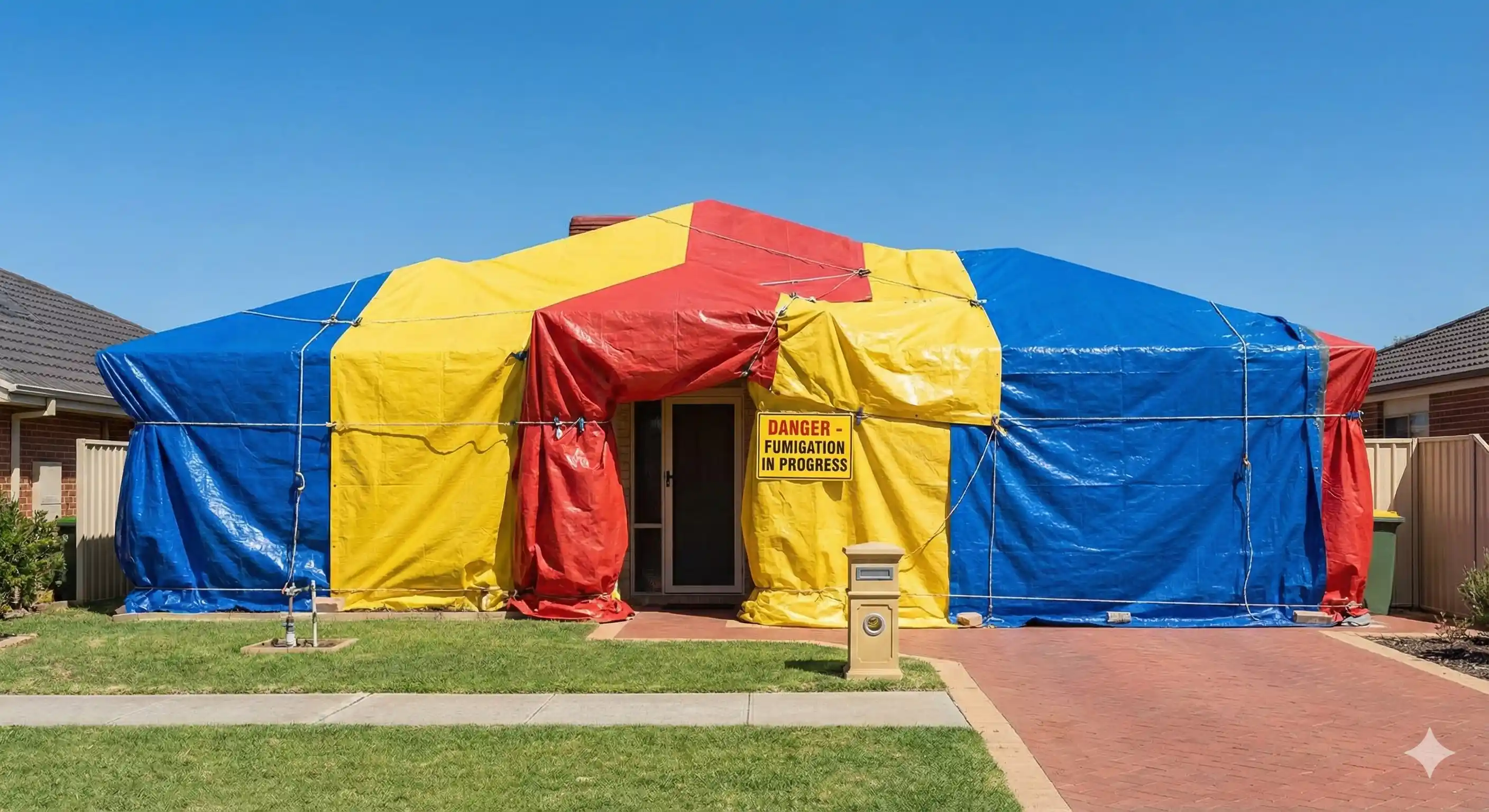
Home tented for structural fumigation treatment of drywood termites

Structural Fumigation

The gold standard for complete elimination. We seal your entire home under specialized tenting and introduce a controlled gas treatment that penetrates every nook and cranny where termites hide, reaching colonies in even the most inaccessible areas with no survivors.

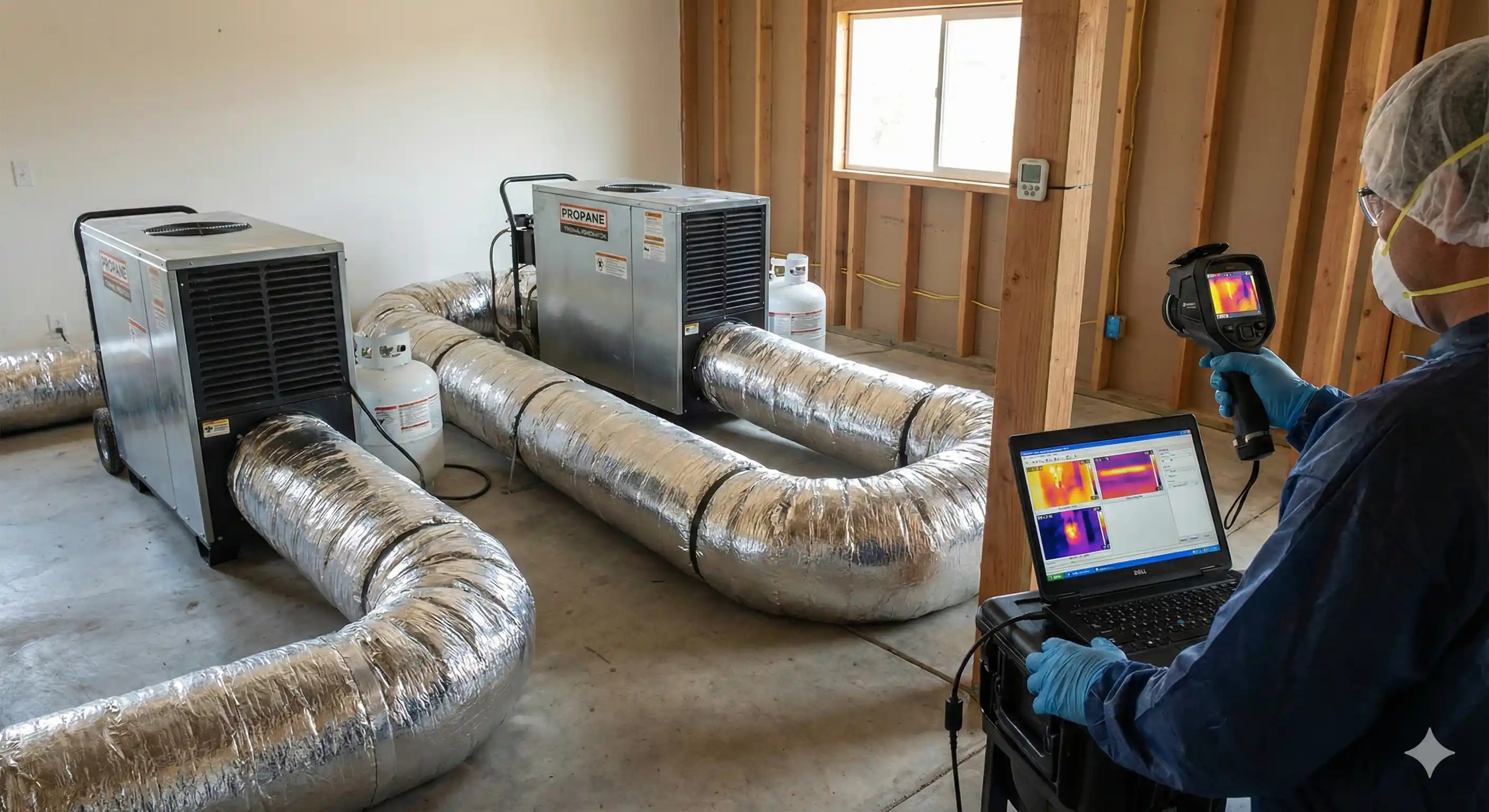
Heat treatment equipment for drywood termite thermal remediation

Heat Remediation Treatment

Our thermal remediation system brings precision-controlled heat to termite-infested areas, raising temperatures to levels deadly for insects while remaining safe for your home's structure. This chemical-free alternative eliminates entire colonies without residues or lingering odors.

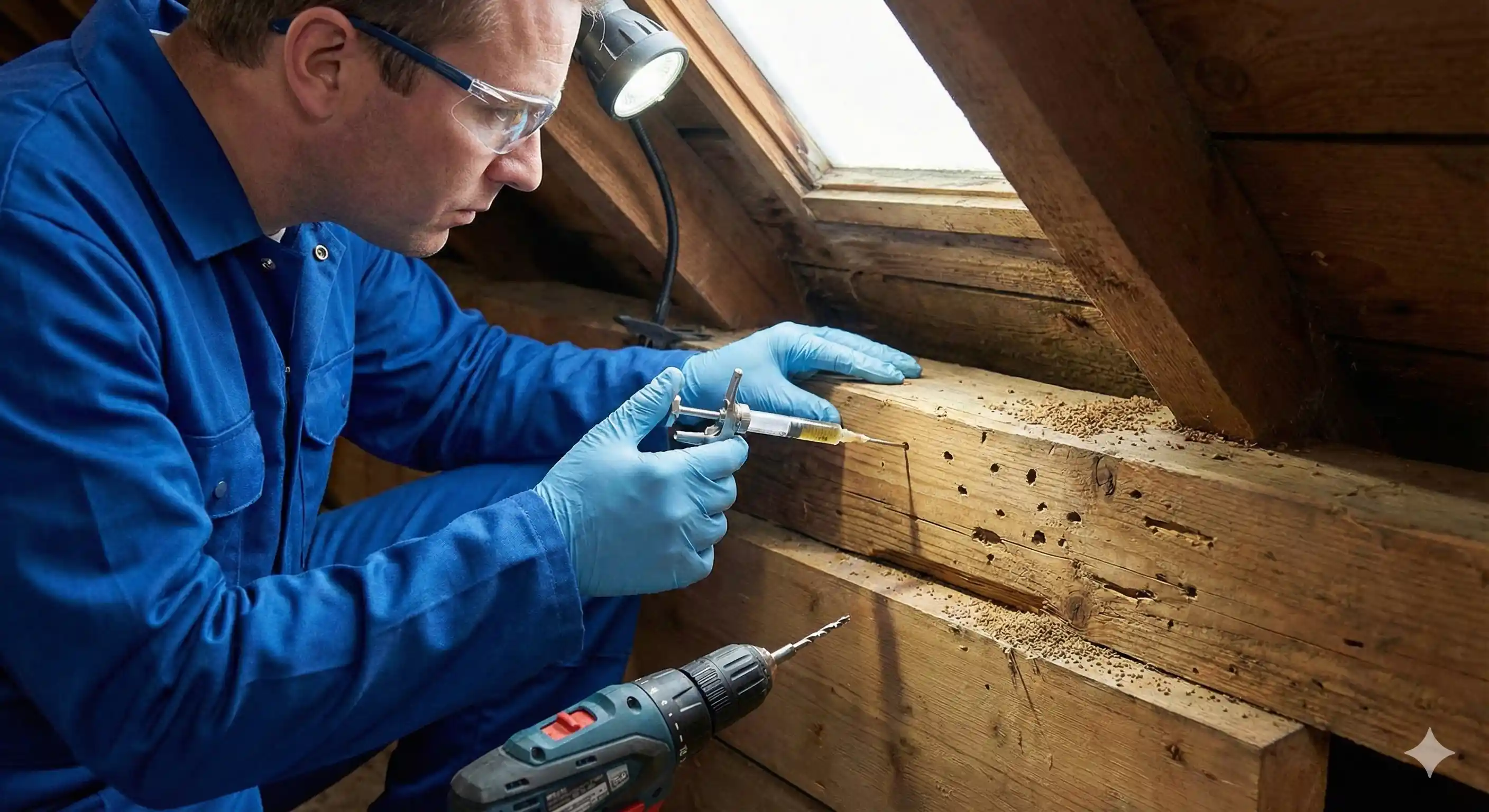
Technician performing precision termiticide injection into drywood termite galleries

Precision Termiticide Injection

Using state-of-the-art micro-drilling technology, we deliver powerful termiticides directly into gallery systems with minimal structural impact. Our specialized formulations remain active within the wood to eliminate current colonies and prevent reinfestation.

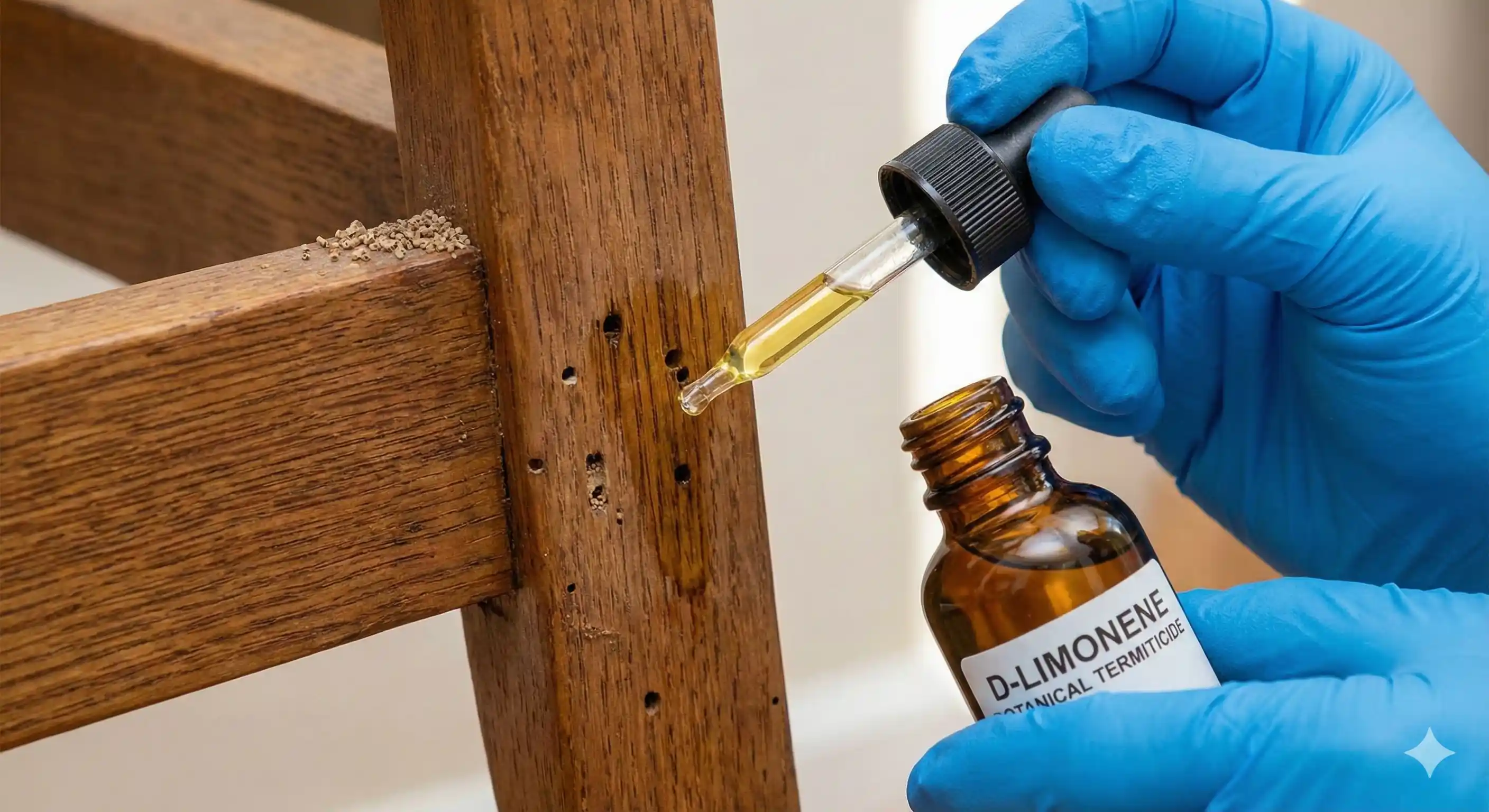
Applying botanical orange oil treatment for drywood termite control

Botanical Oil Treatments

When appropriate, we deploy naturally derived oil treatments containing d-limonene extracted from orange peels that penetrate wood fibers to eliminate drywood termites on contact. This lower-toxicity option works well for localized infestations in furniture and decorative items.

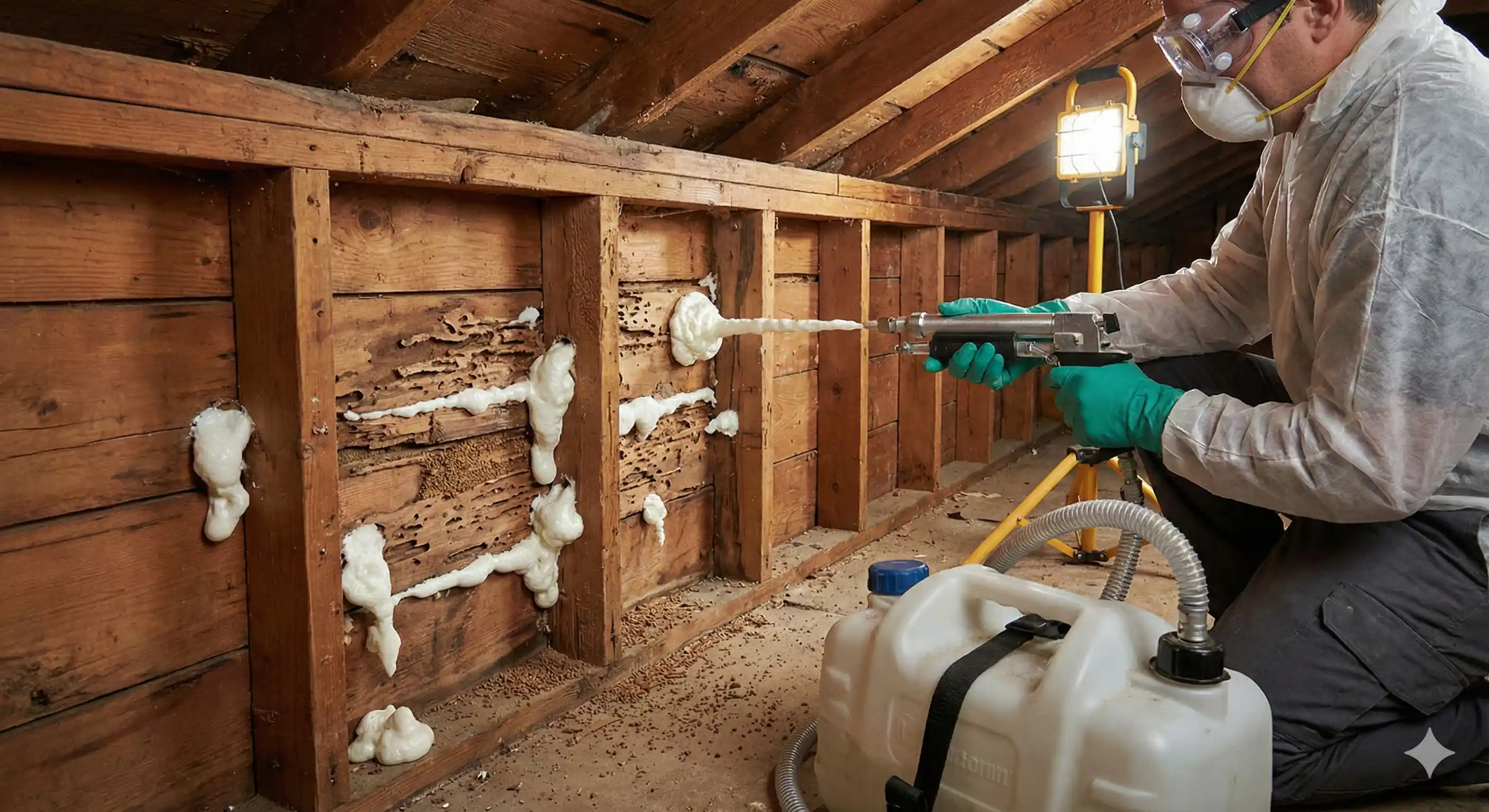
Foam expansion treatment filling drywood termite gallery systems

Foam Expansion Technology

Our specialized foam carriers push termiticides deep into wood cavities, expanding to fill galleries and reaching termites that liquid treatments might miss. This advanced delivery system ensures complete coverage in internal spaces created by termite activity.

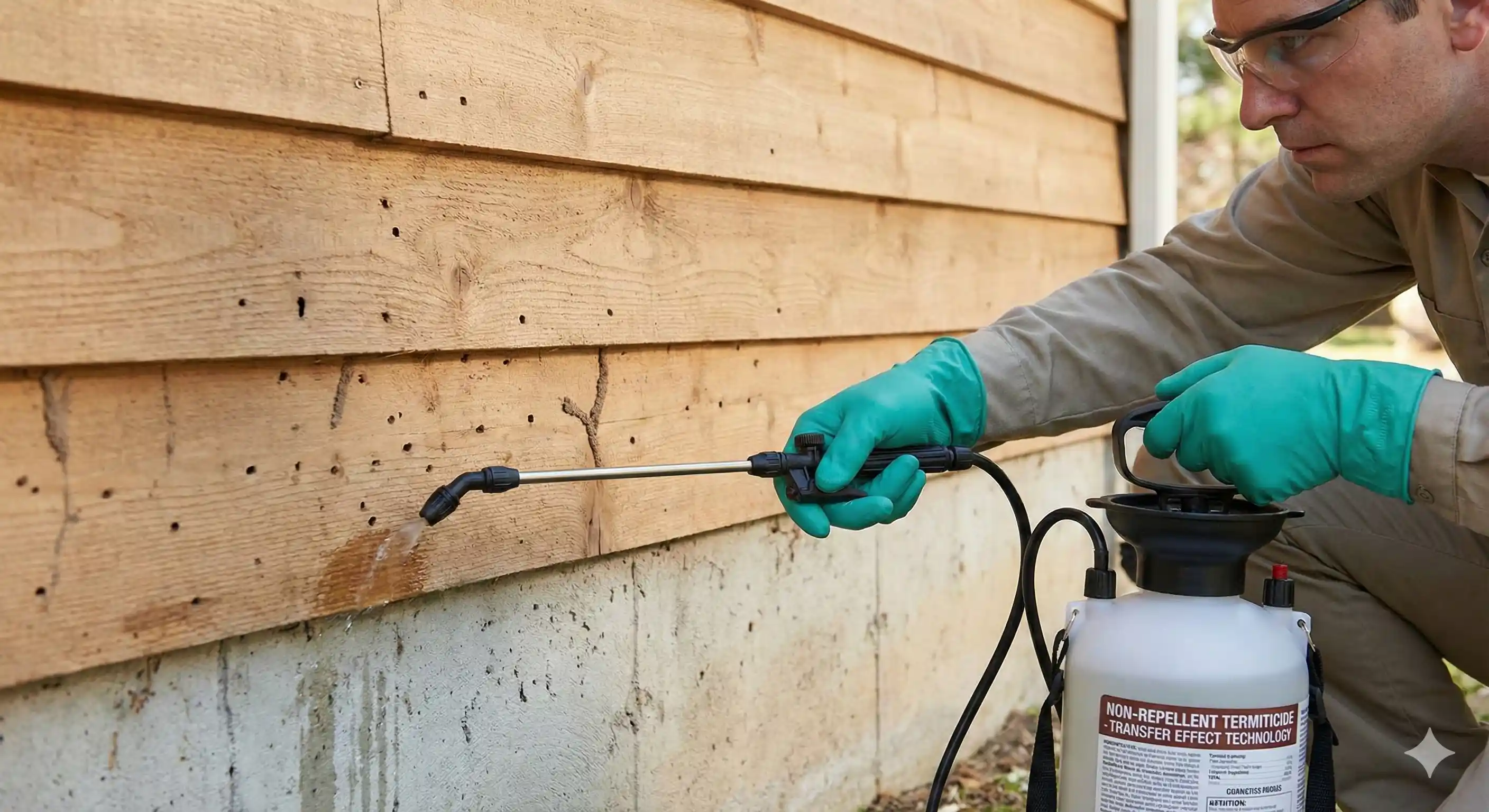
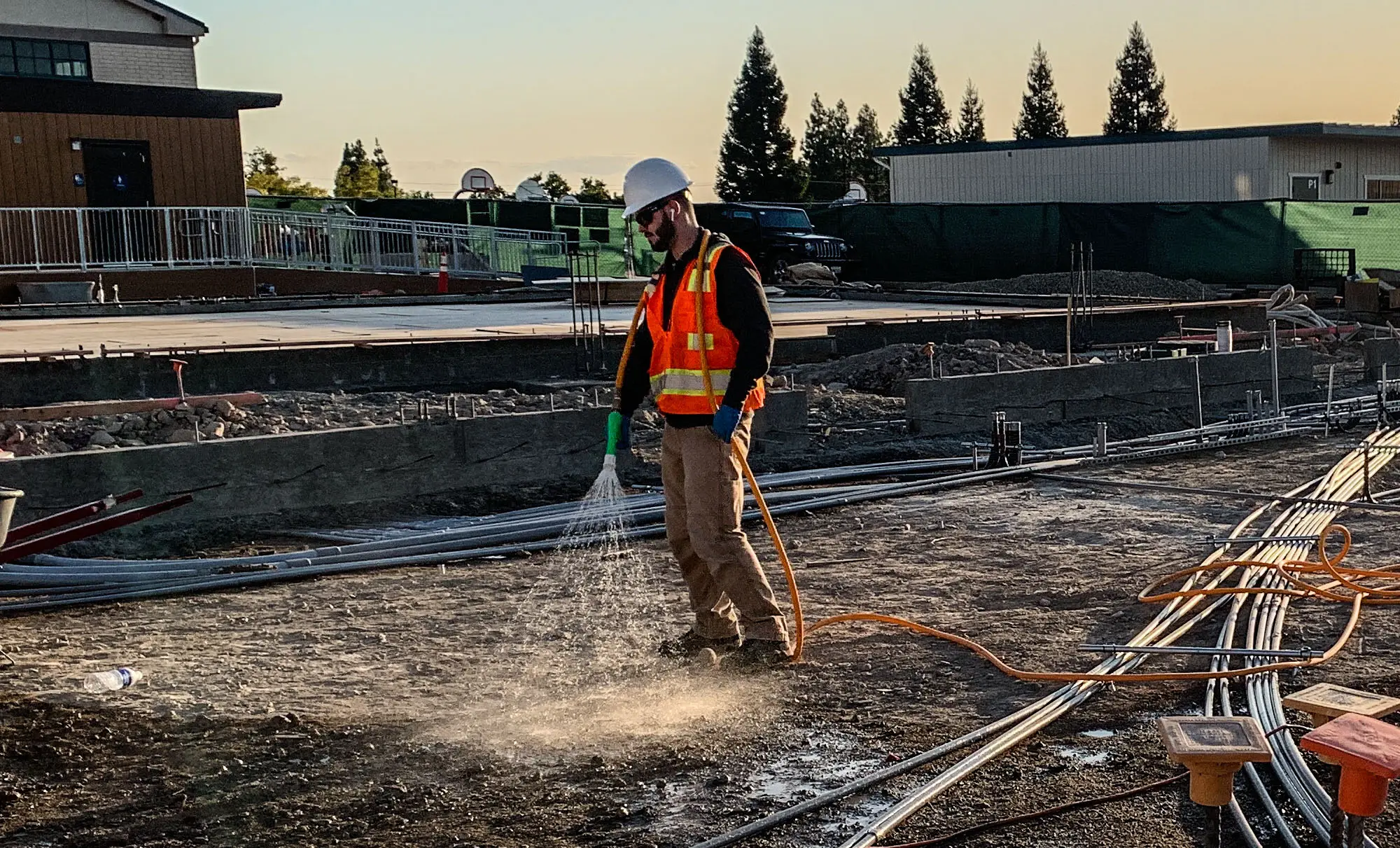
Applying non-repellent termiticide treatment for colony transfer effect

Non-Repellent Termiticide Application

Our targeted application of non-repellent termiticides creates a powerful protective zone around infestation sites. Undetectable to drywood termites, this allows them to contact, ingest, and share the treatment throughout the colony for complete elimination.

What Causes Drywood Termites?

Understanding these pests' pathways into your home is the first step toward keeping them out and preventing future infestations.
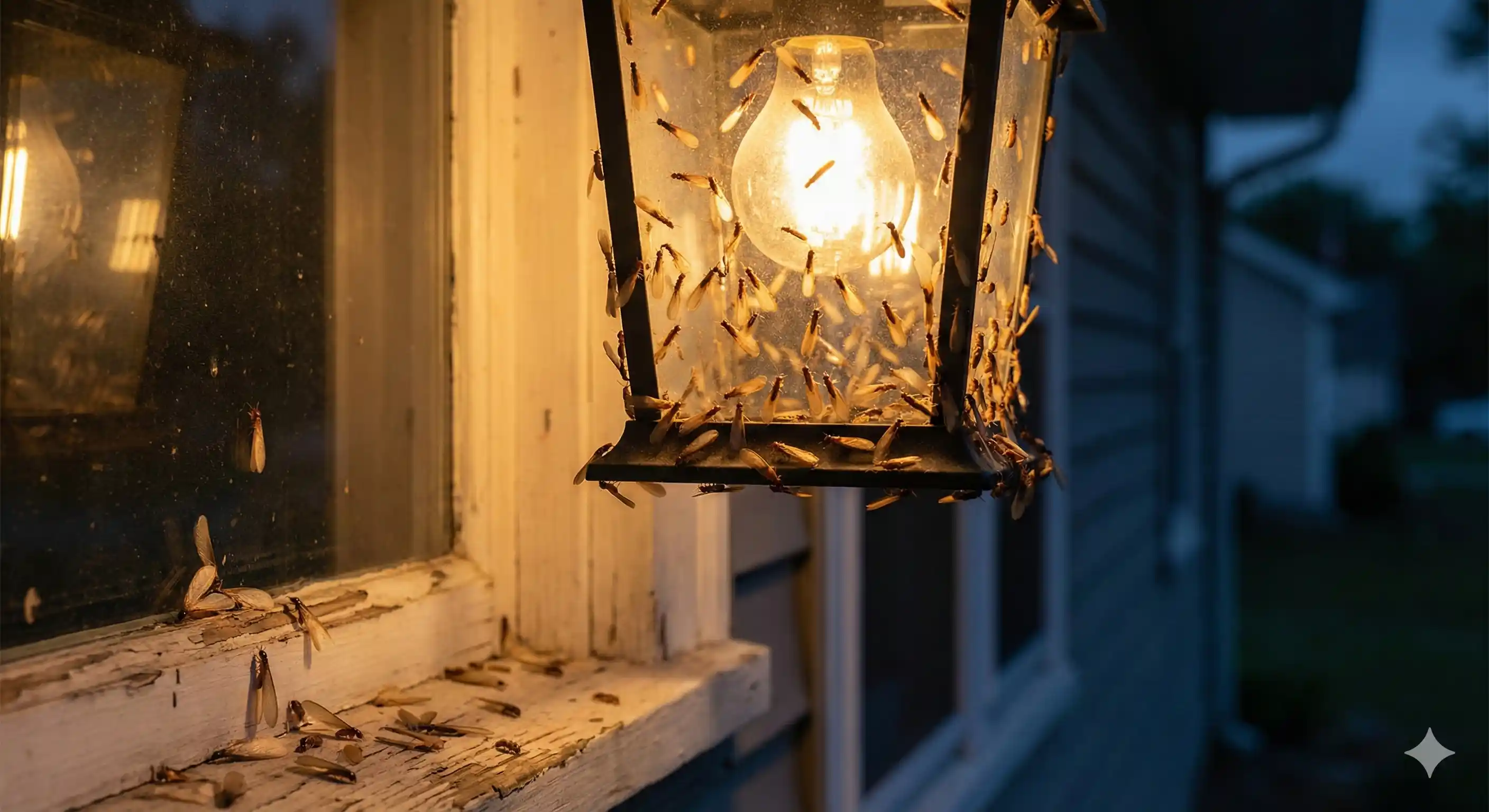
Drywood termite swarmers attracted to light during swarming season

🪵 Swarm Season Vulnerability

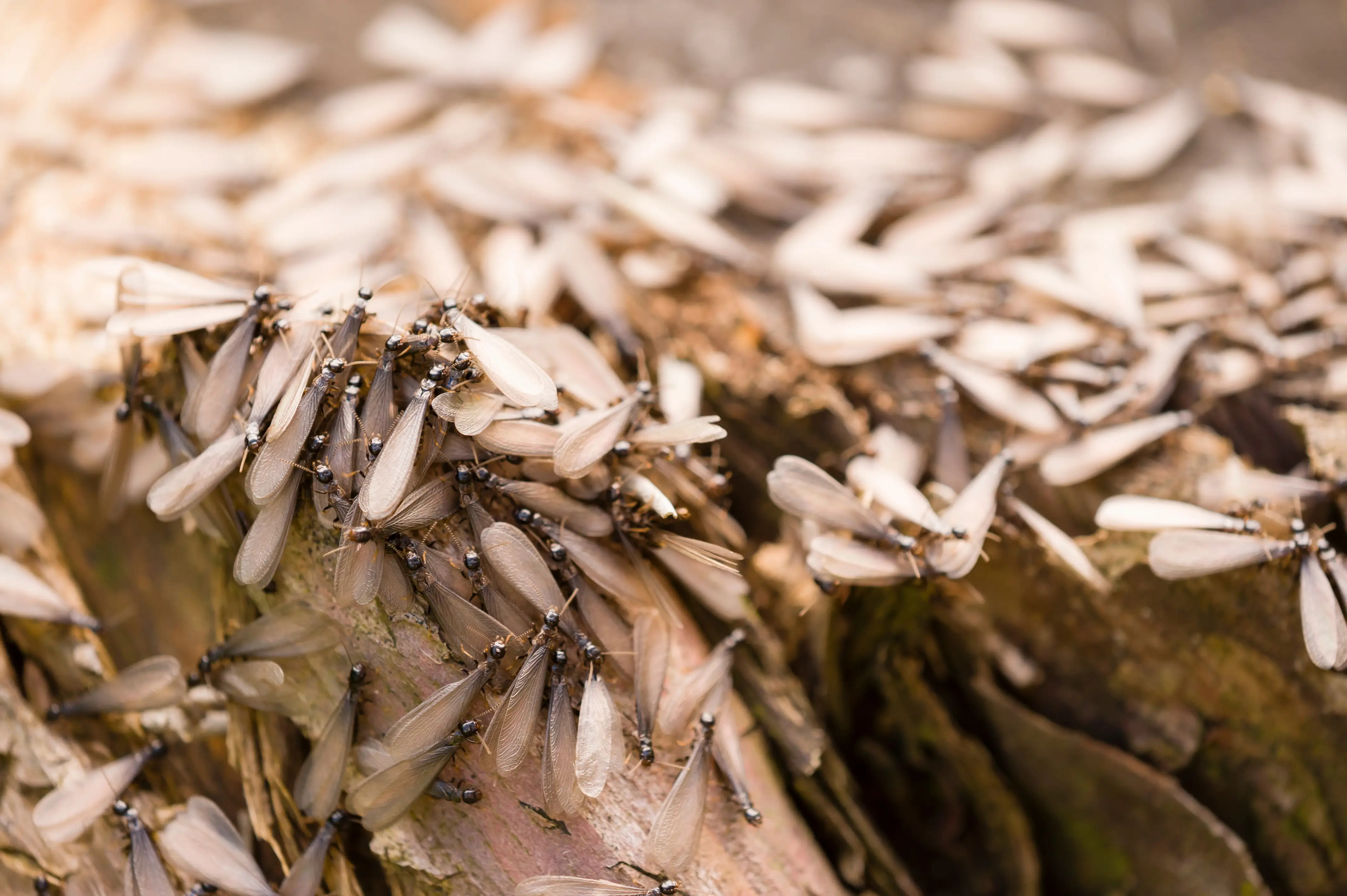
When reproductive termites take flight during warm, humid evenings in late summer and early fall, they're drawn to light sources and tiny openings around your home. These swarming events create your home's highest exposure risk, as a single successful reproductive pair can establish an entirely new colony.

Wooden door frame and window casing vulnerable to drywood termite entry

🏠 Wooden Doors & Windows

The exposed end grain of wooden door frames and window casings creates ideal entry points for drywood termites, especially where weather sealing has deteriorated. These areas provide direct access to wooden structural components, allowing termites to bypass exterior defenses.

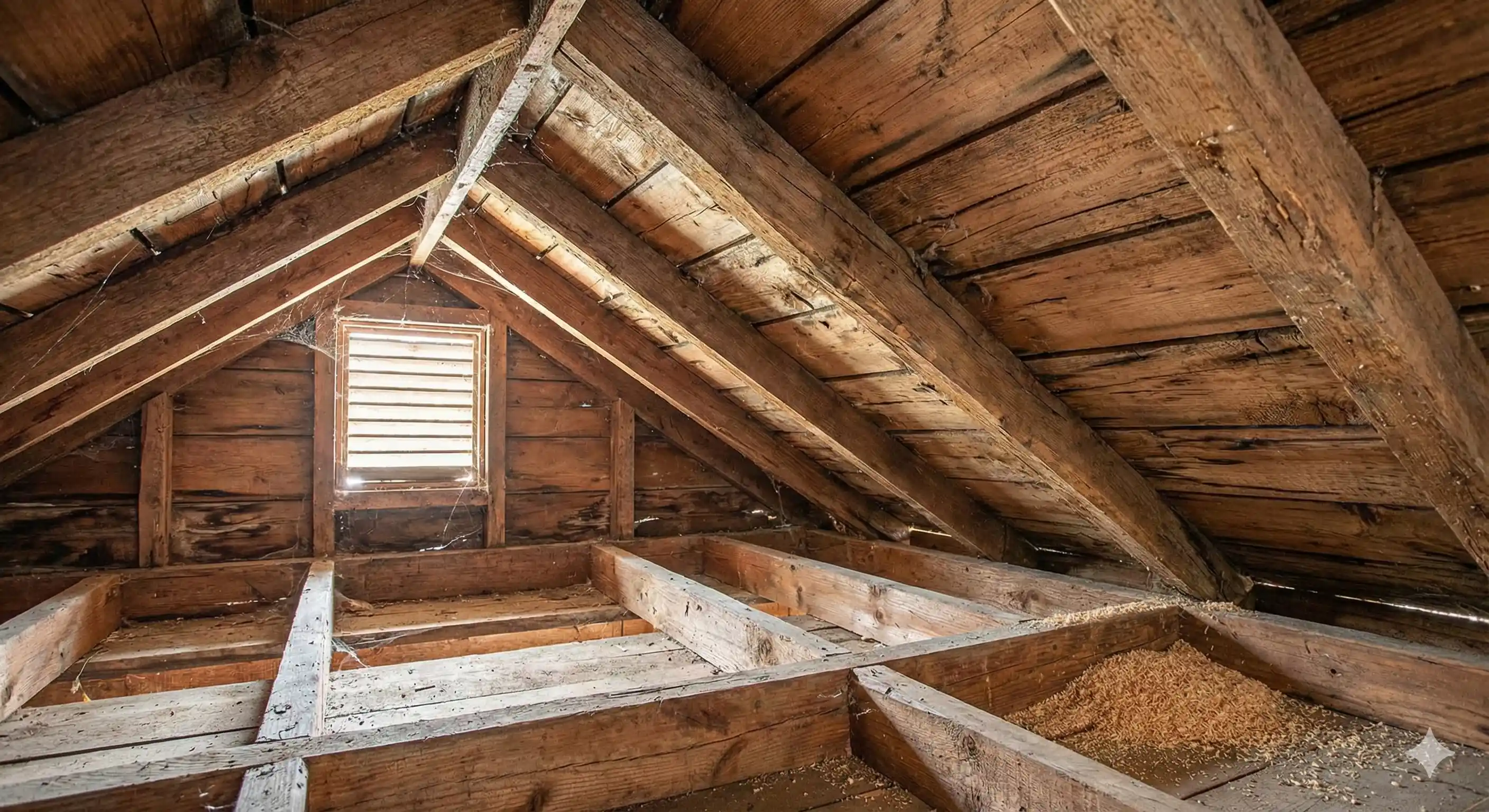
Exposed wooden eaves and attic area vulnerable to drywood termite infestation

☀️ Attic & Eave Exposures

Unprotected wooden eaves, exposed rafters, and attic vents with damaged or missing screens offer drywood termites a direct highway into the structural heart of your home. Once established in attic spaces, colonies can remain undetected for years while steadily expanding.

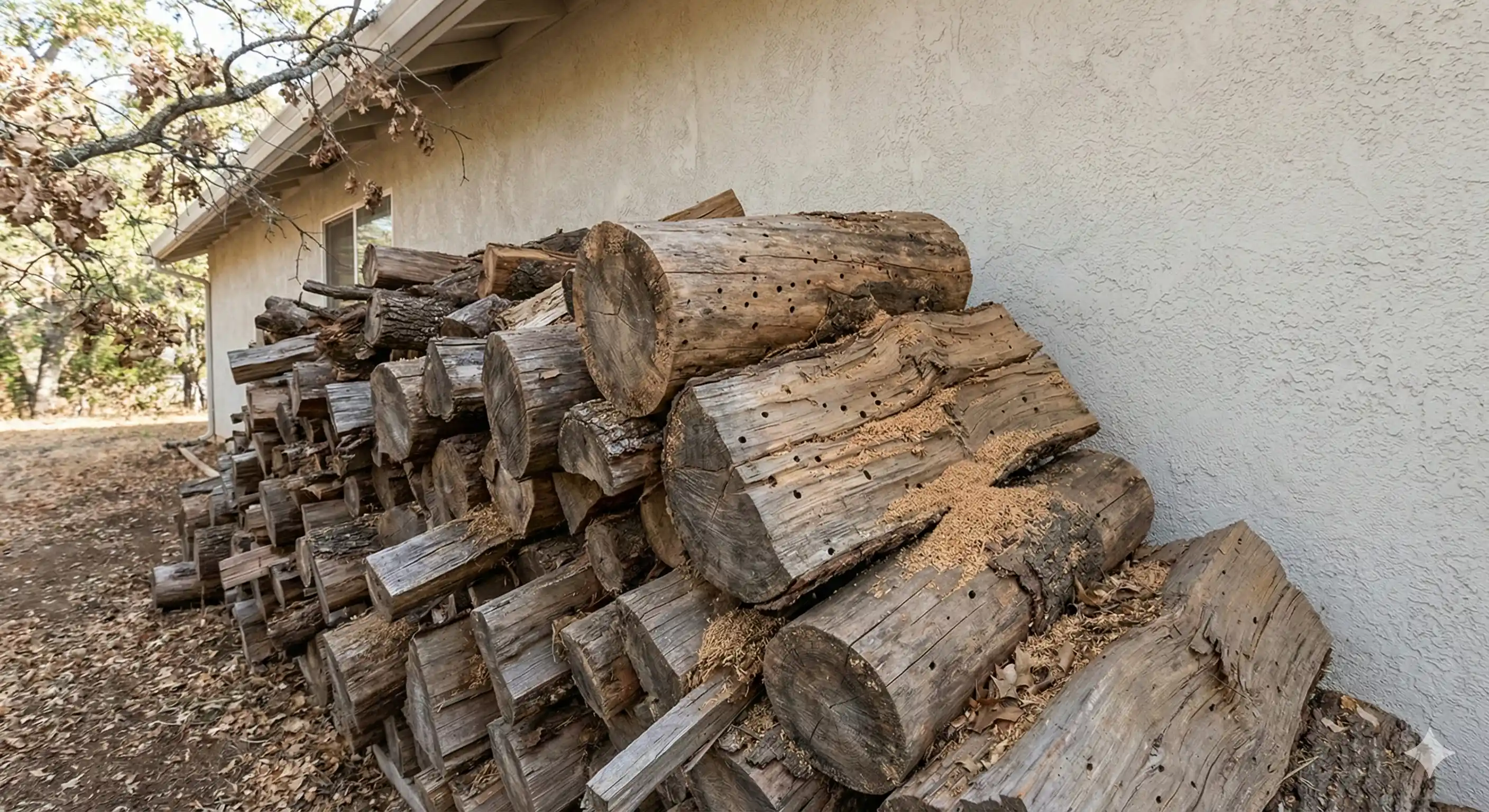
Woodpile and branches near home providing drywood termite access

🌡️ Nearby Wood Sources

Woodpiles, overhanging branches, untreated decks and patios, and other sources of wood connected to your home can act as bridges that give drywood termites the access they need to expand their colony into your structure.

Learn More About Drywood Termite Prevention →

What Are Signs of Drywood Termites in Your Home?

Learn to recognize these telltale signs before damage becomes severe. Early detection is critical for minimizing structural damage and treatment costs.
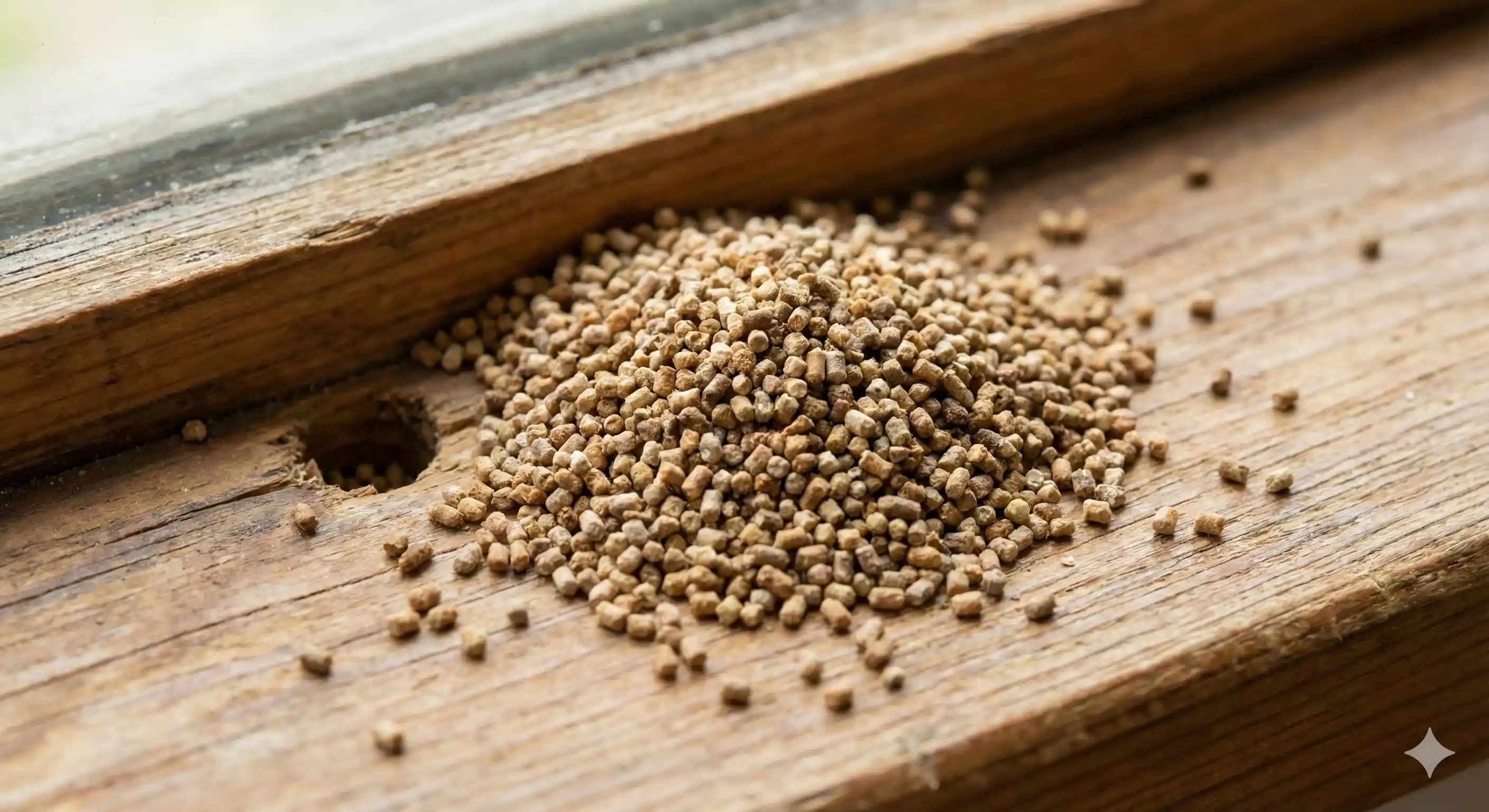
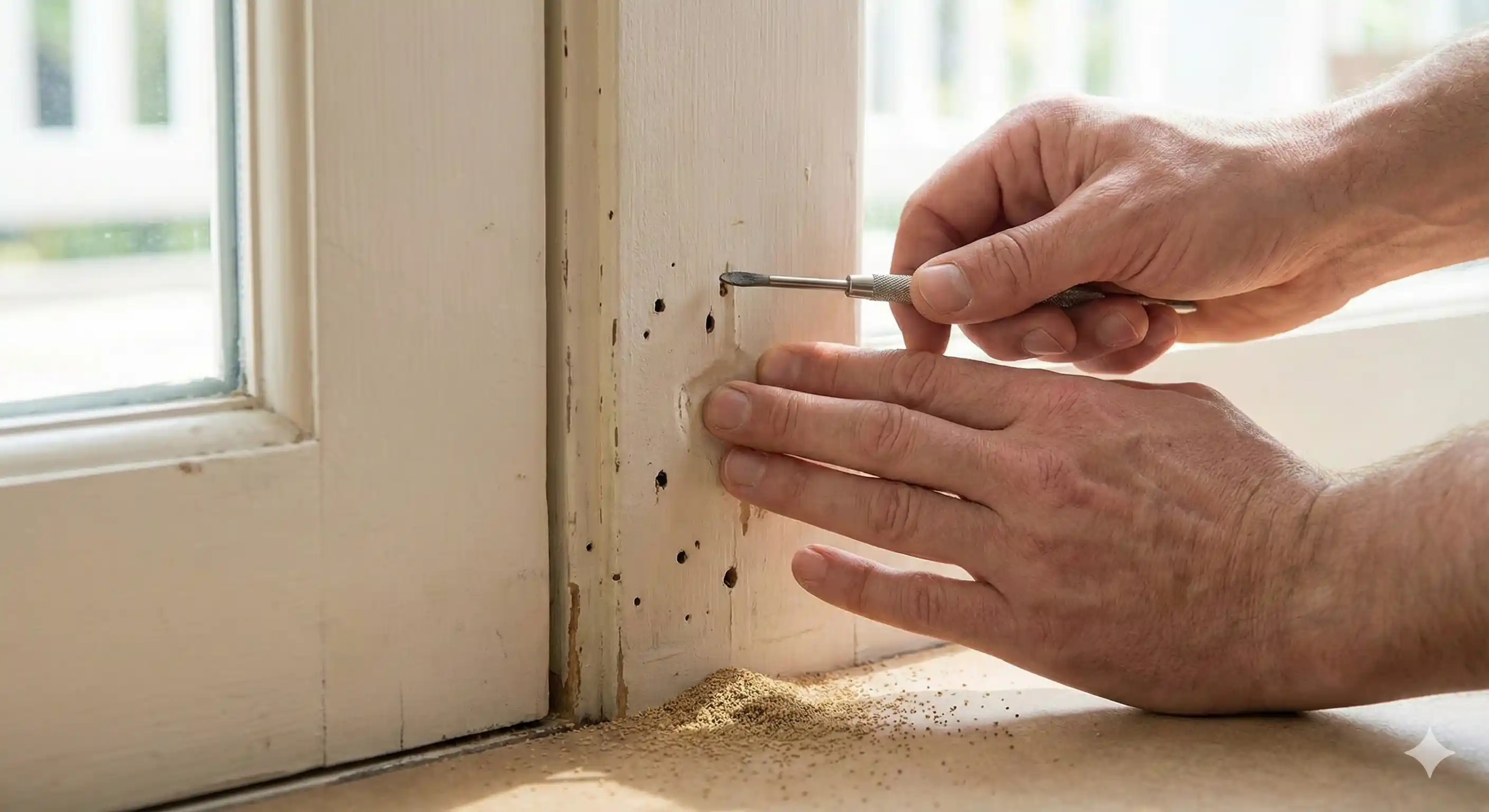
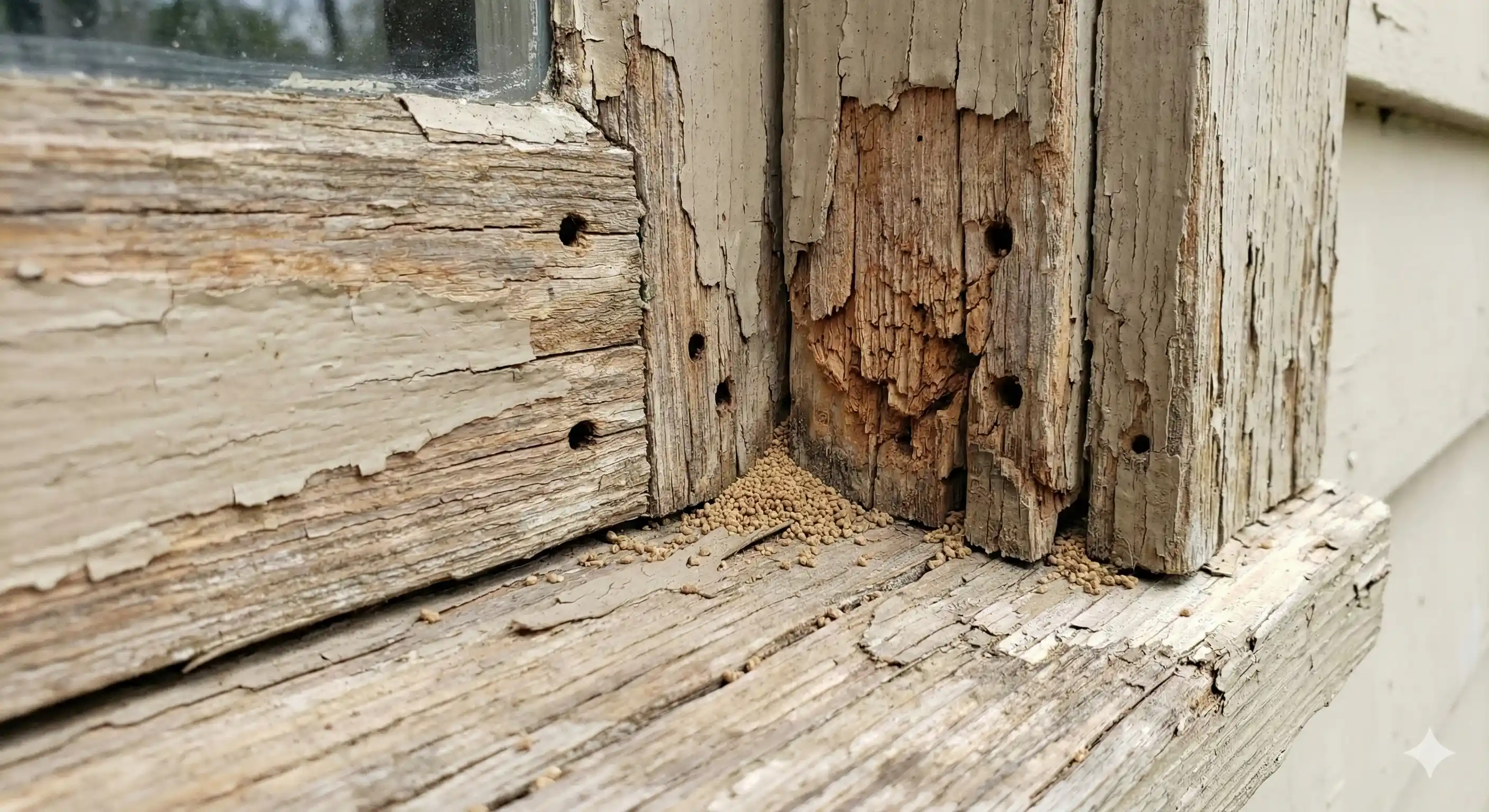
Six-sided drywood termite frass pellets accumulated beneath kick-out hole

Six-Sided Frass Pellets

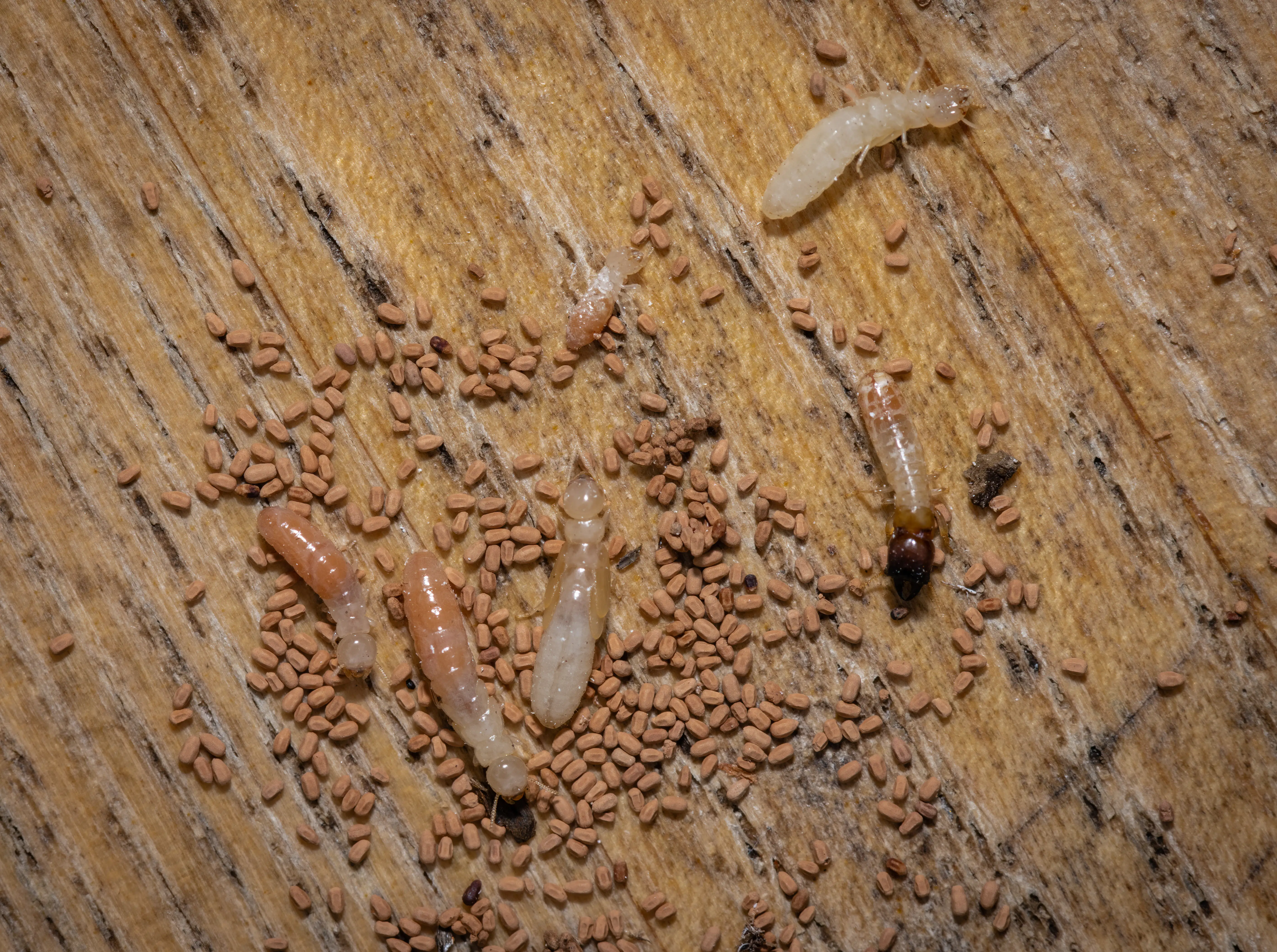
Unlike the mud-like waste of other termite species, drywood termites produce distinctive six-sided pellets about the size of table salt grains, often found in small piles beneath kick-out holes or along windowsills.

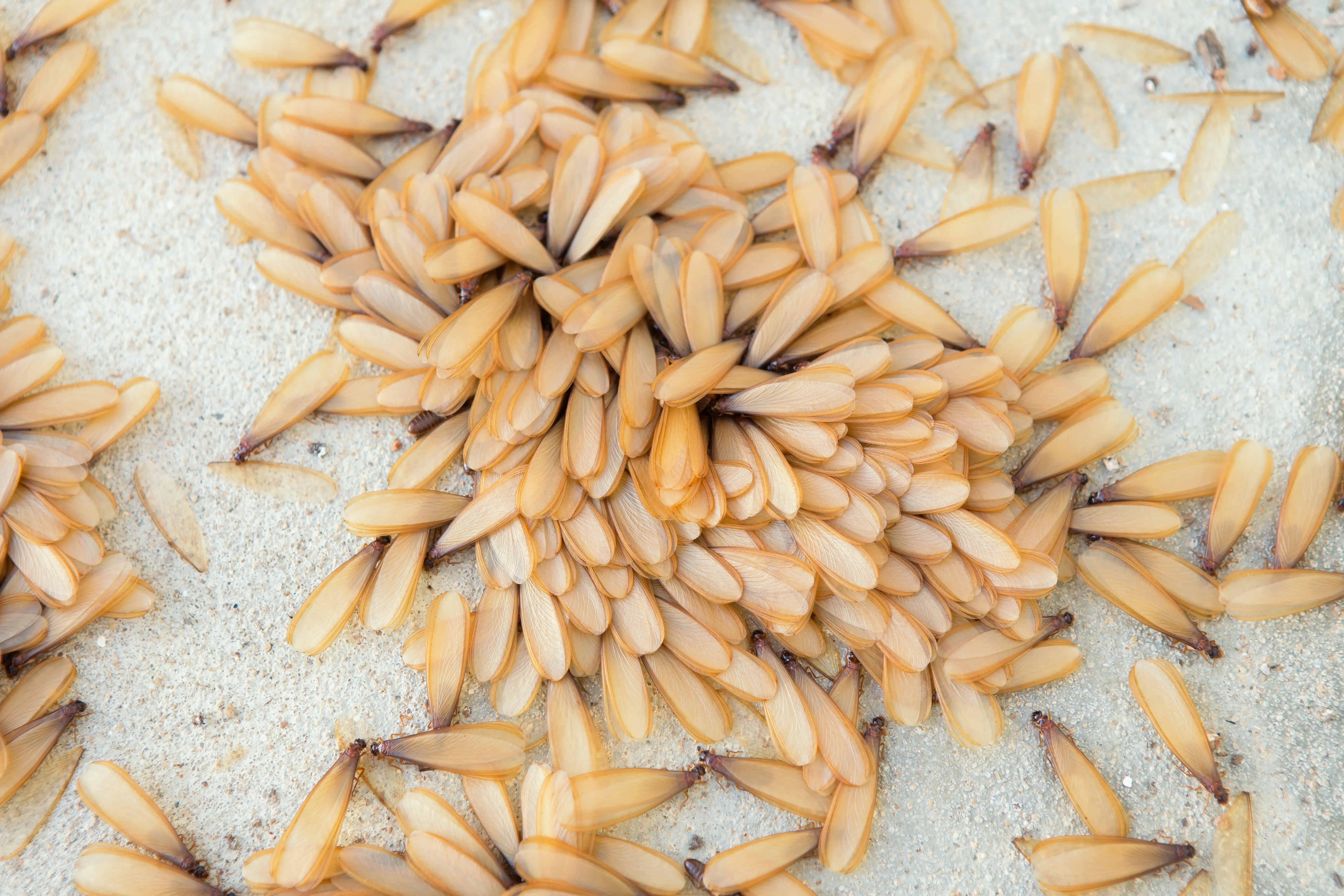
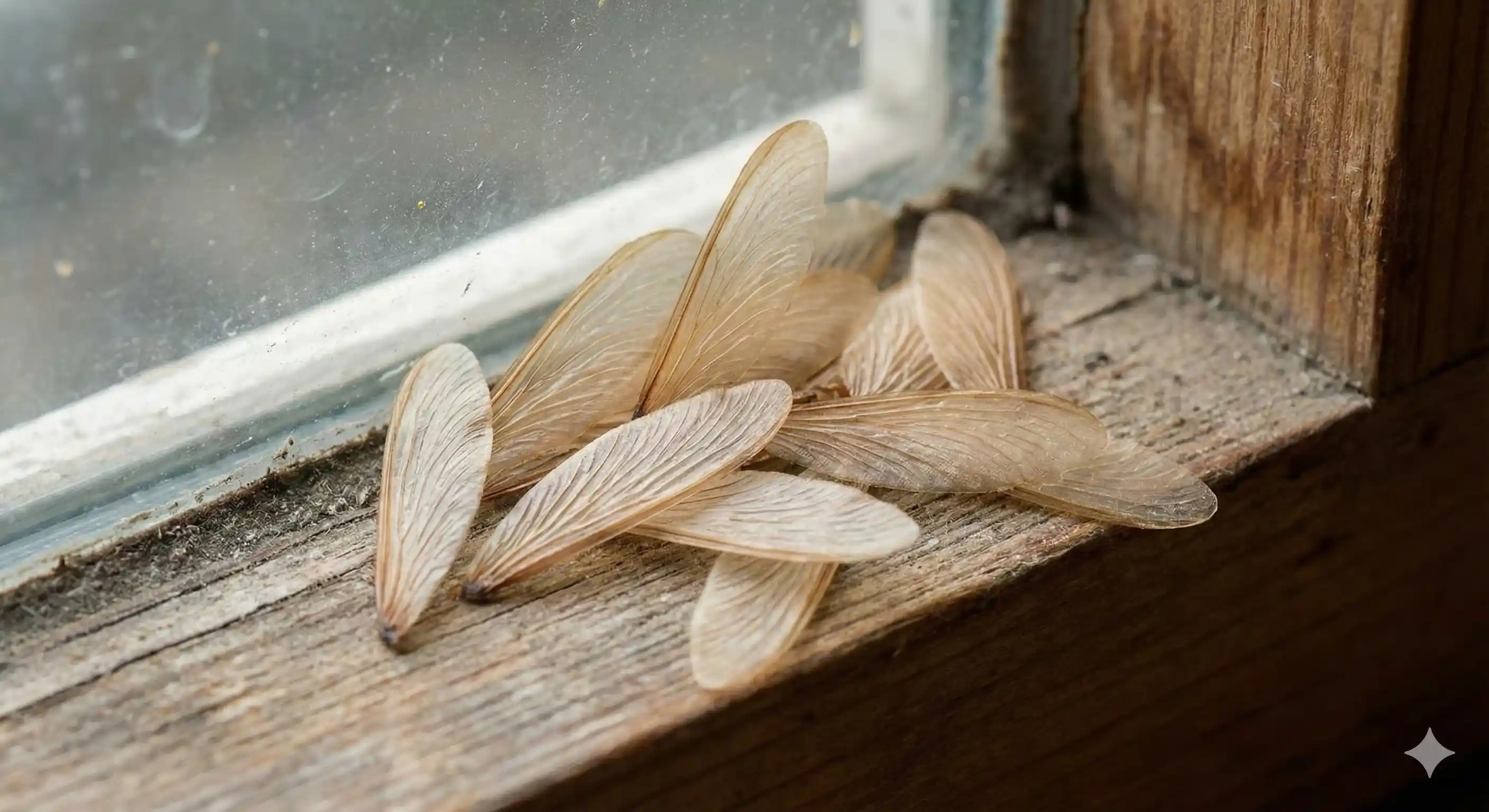
Discarded drywood termite wings near window indicating swarmer entry

Discarded Wings

After mating flights, reproductive drywood termites shed their wings, which often accumulate near windowsills, door frames, or light fixtures. These delicate, translucent wings provide clear evidence that termites have entered your home.

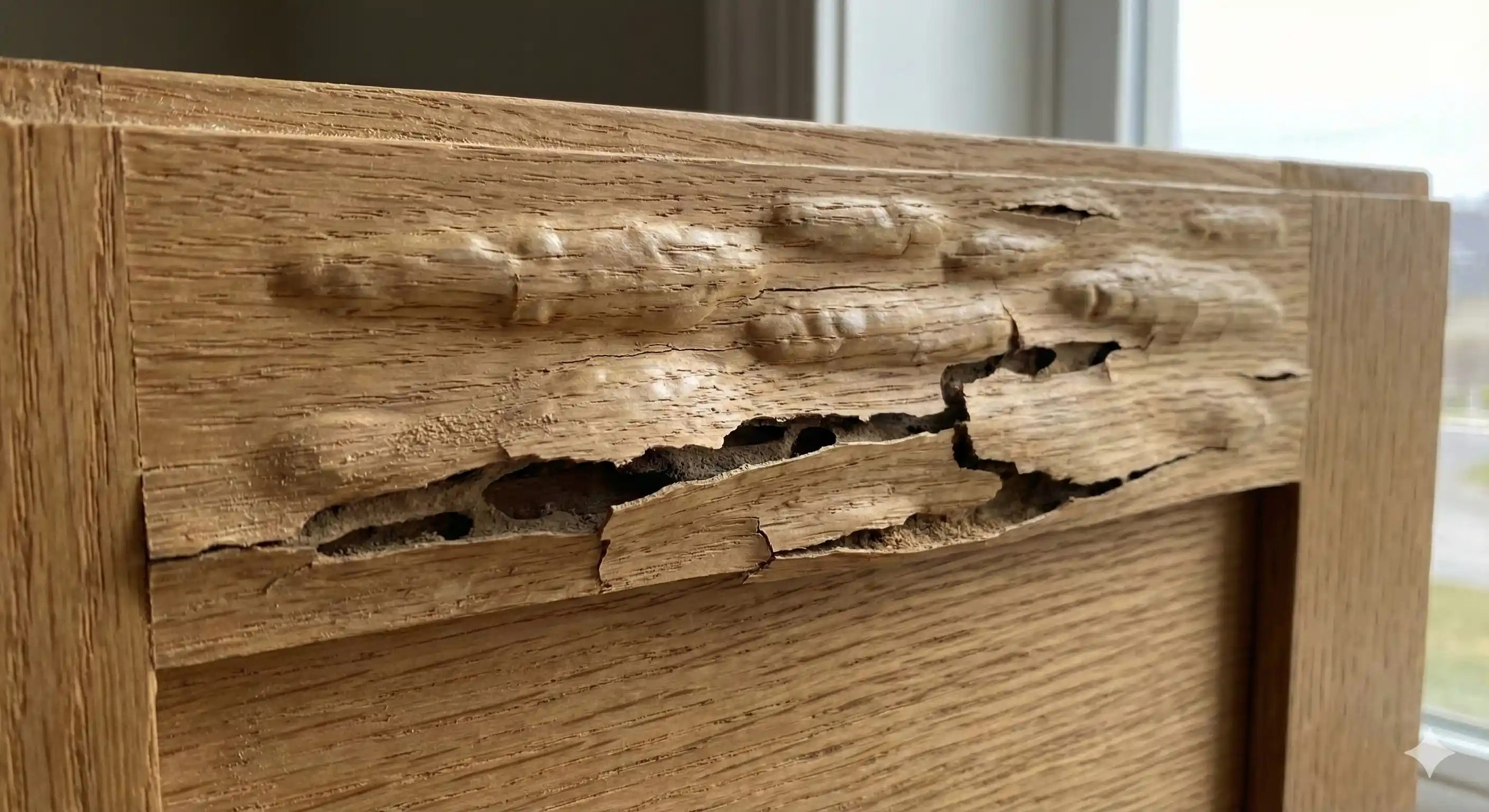
Blistered wood veneer caused by drywood termite galleries beneath surface

Blistered Wood Veneer

As termites hollow out the interior of wooden elements, the thin outer layer may develop small blisters or raised areas. This surface distortion occurs when gallery systems extend close to the surface of wooden structures.

Testing wood for hollow sound indicating drywood termite damage

Hollow-Sounding Timbers

Infested areas produce a distinctive hollow sound compared to solid wood when tapped. This non-invasive test helps identify potential problem areas, particularly in beams, window frames, and door jambs where colonies often establish.

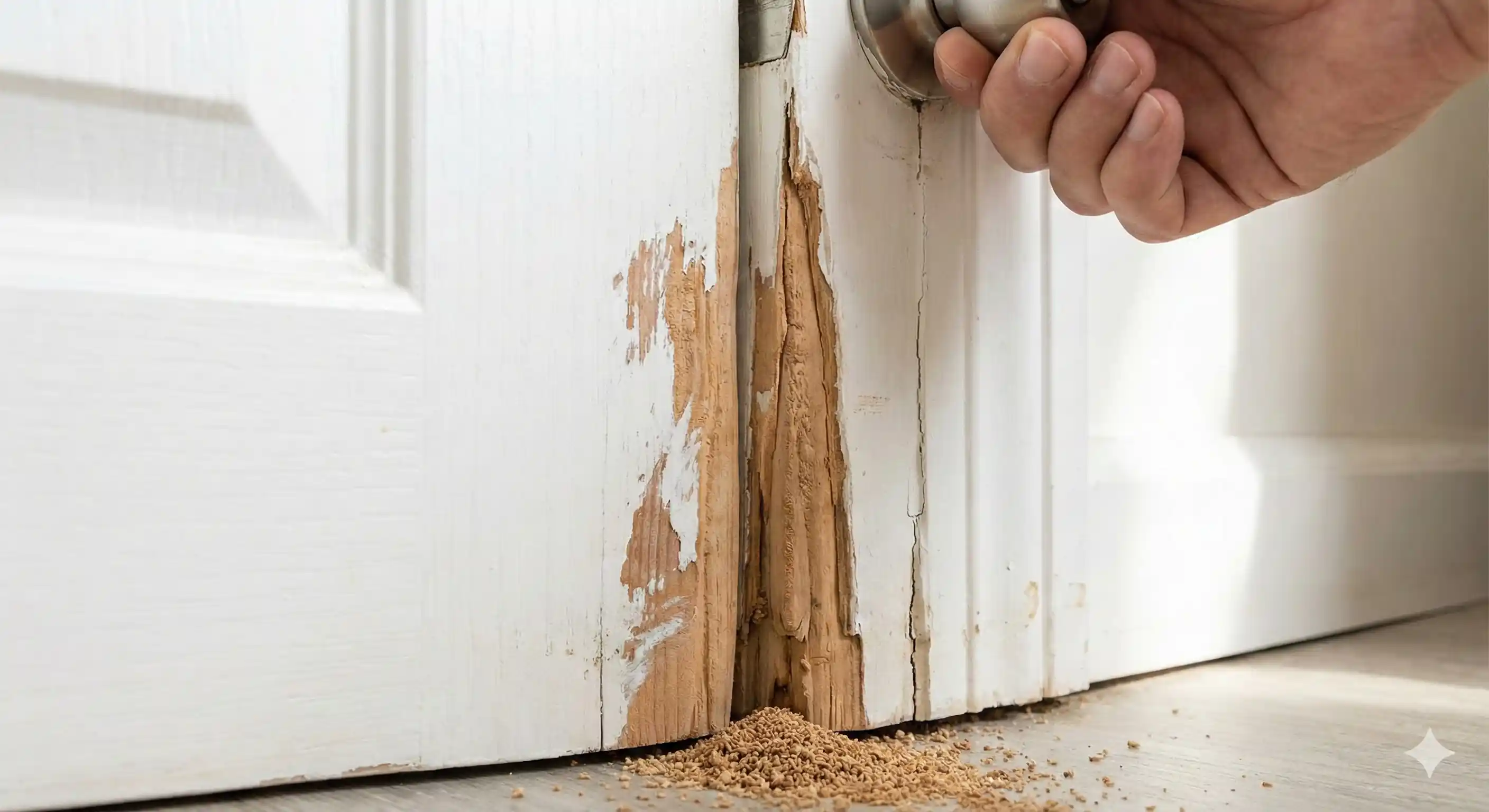
Door sticking due to drywood termite damage in frame

Sticking Doors & Windows

As termites consume the wooden elements of door frames and window casings, subtle warping occurs that causes doors to suddenly stick or windows to become difficult to open, often mistaken for humidity or settling issues.

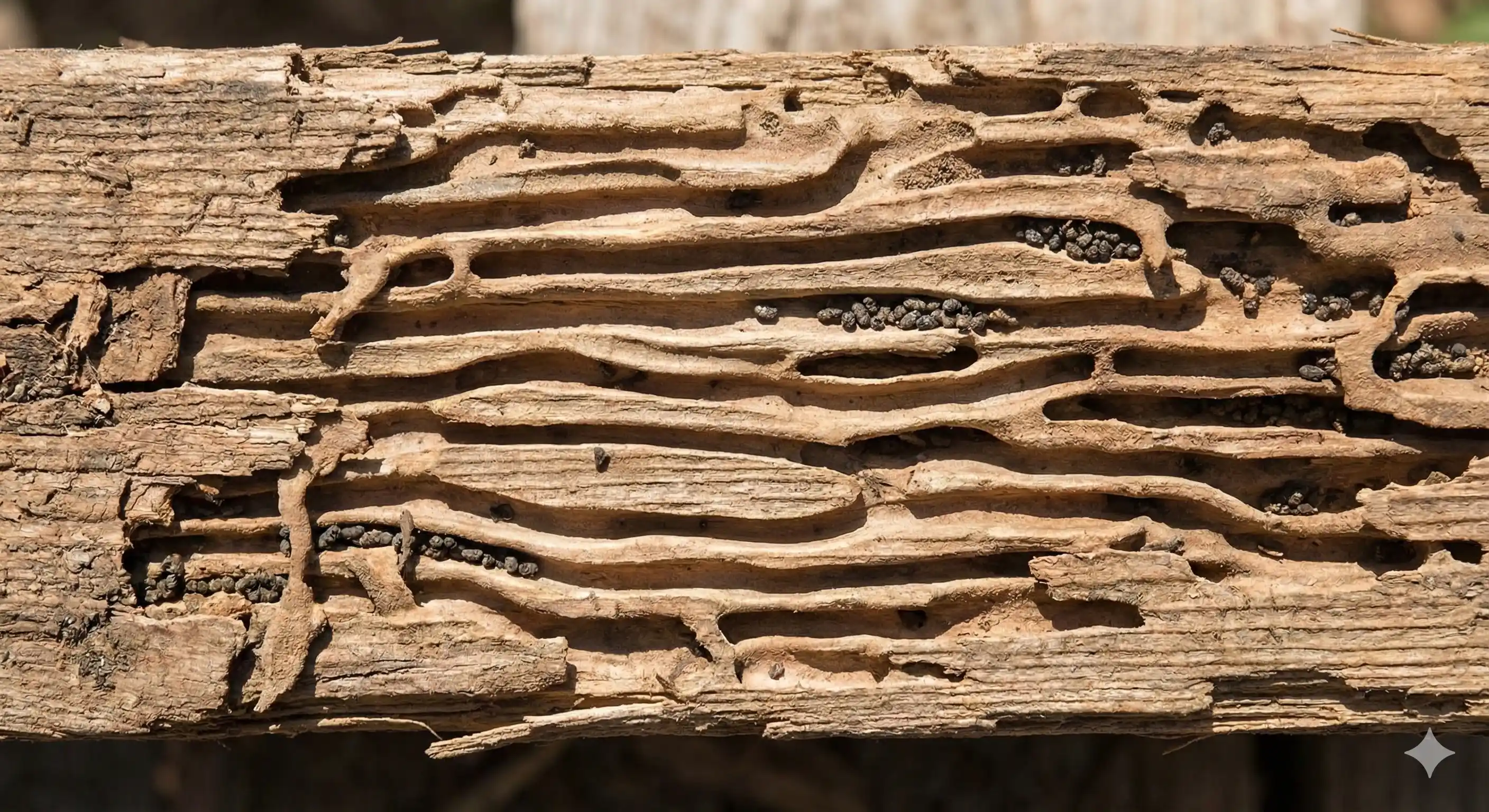
Clean smooth-walled drywood termite galleries exposed in damaged wood

Clean-Edged Galleries

If damaged wood becomes exposed through renovation or repair, look for smooth-walled tunnels running with the grain. Unlike the rough, soil-filled galleries of subterranean termites, drywood tunnels are clean, precisely formed, and free of mud.

Learn More About Drywood Termite Detection →

DIY vs Professional Treatment

Those termite sprays at the hardware store might seem tempting, but there's a reason they rarely solve drywood termite problems. Consumer products simply can't penetrate the complex gallery systems these insects create deep within wooden structures. Even if you eliminate the termites you can see or reach, colonies extend far beyond visible evidence, allowing them to safely continue their destruction beyond the reach of retail products. DIY treatments often create a false sense of security while damage continues unchecked.

EcoGuard's professional approach starts with what DIY methods can't provide—specialized equipment to map the true extent of infestation throughout your structure. Based on this complete picture, we deploy treatment protocols calibrated to your specific situation, whether that means whole-structure fumigation, targeted injections, or heat remediation. Each approach reaches termites where they live and feed, eliminating entire colonies rather than just treating symptoms. We follow every treatment with verification procedures to ensure complete elimination.

❌ DIY Treatment

  • Cannot penetrate complex gallery systems
  • Reaches only visible termites (minority)
  • No way to map true infestation extent
  • Creates false sense of security
  • Allows hidden damage to continue
  • No verification of elimination

✓ Professional Treatment

  • Advanced detection maps full infestation
  • Treatments reach all colony locations
  • Multiple elimination methods available
  • Penetrates inaccessible areas completely
  • Verification confirms elimination
  • Warranty protection included

Commercial Drywood Termite Control

EcoGuard Pest Management implements customized drywood termite control programs for commercial facilities that prioritize operational continuity while ensuring effective pest elimination. Our comprehensive commercial drywood termite protection programs combine discrete treatment applications with flexible scheduling to maintain your business operations while ensuring complete elimination of drywood termite problems.

We specialize in drywood termite control solutions for:

  • Restaurants and food service establishments
  • Healthcare facilities
  • Hotels and hospitality venues
  • Educational institutions
  • Office complexes
  • Food processing facilities
  • Warehouses and storage facilities
  • Retail spaces
  • Manufacturing facilities
  • Multi-unit residential properties
Learn About Commercial Pest Control
100% SATISFACTION GUARANTEE

The EcoGuard Guarantee

EcoGuard offers a 100% satisfaction guarantee for all of our customers, and we stand by our promise to eradicate your drywood termite problem until the very last drywood termite is gone. That drywood termite control guarantee comes with every service and if the drywood termites come back, then so do we, at no additional cost. We are standing by to give you a free estimate and to help you set your first drywood termite pest control service appointment.

📞 Call (866) 326-2847 Today

Our Drywood Termite Control Process

A comprehensive approach to complete drywood termite elimination and lasting protection

1

Advanced Detection Inspection

We deploy our multi-tool detection system to create a comprehensive map of termite activity throughout your property. This detective work reveals not just obvious infestations, but hidden colonies that would otherwise continue destroying wood beyond your awareness.

2

Custom Treatment Protocol

Based on your unique infestation pattern, property characteristics, and preferences, we design a custom treatment protocol. Our specialists explain each option's advantages, process, and expected outcomes so you can make informed decisions about your home's treatment.

3

Prevention & Entry Point Sealing

Alongside active termite elimination, we identify and address the conditions that made your property attractive to termites. This includes sealing entry points, installing protective screens, applying preventative treatments to high-risk areas, and recommending modifications that reduce future risk.

4

Verification & Ongoing Monitoring

Following treatment, we conduct thorough post-elimination inspections to verify complete colony eradication. Your protection continues with scheduled follow-up inspections that catch any new activity before significant damage occurs.

Seasonal Plan for Drywood Termite Control

Year-round protection adapted to seasonal drywood termite behavior patterns

Spring Drywood Termite Control

Spring

As temperatures warm, overwintered drywood termite colonies resume active feeding and begin preparing for reproductive cycles; focus on comprehensive property inspections to identify colonies emerging from winter dormancy before they expand; ideal time for preventive treatments

Summer Drywood Termite Control

Summer

Peak reproductive activity as mature colonies produce alates (winged reproductives) that emerge to establish new infestations; emphasize monitoring for swarm events; implement treatments to eliminate parent colonies before they produce reproductives; create protective barriers

Fall Drywood Termite Control

Fall

Autumn brings a second, often smaller swarming period as colonies take advantage of mild temperatures before winter; focus on eliminating active colonies before they enter slower winter feeding patterns; seal potential entry points against late-season swarmers

Winter Drywood Termite Control

Winter

Though feeding activity slows, drywood termites remain active within the climate-controlled environment of your home; take advantage of this slow period for thorough inspections and treatment planning; ideal time for fumigation with minimal disruption

What Our Customers Say

Trusted by homeowners for professional drywood termite elimination and structural protection

★★★★★

"We kept finding tiny pellets on our windowsills but had no idea what they were. EcoGuard identified drywood termites and found colonies in three different areas of our home. The fumigation was seamless and we haven't seen a single pellet since!"

Richard & Karen M.
San Diego, CA
★★★★★

"Found winged termites in our living room during a dinner party—terrifying! EcoGuard came out the next morning, explained exactly what was happening, and treated the localized infestation. Their expertise and professionalism were outstanding."

Jennifer L.
Phoenix, AZ
★★★★★

"Our real estate inspection found drywood termites right before closing. EcoGuard handled the fumigation quickly and provided all the documentation we needed. The buyers were satisfied and the sale went through. Lifesavers!"

Thomas B.
Sacramento, CA

Drywood Termite Control FAQs

Everything you need to know about drywood termite control and treatment

Whole-structure fumigation provides the highest success rate for widespread infestations by penetrating all wooden elements simultaneously and eliminating entire colonies regardless of their location. For localized infestations, techniques like targeted heat treatment or precision injection systems can deliver excellent results with less disruption. The optimal approach depends on infestation extent and your property's specific characteristics.

Yes, several effective non-tenting options exist, including localized heat treatments, borate applications, and targeted termiticide injections for well-defined local infestations. These alternatives work best when colonies are isolated to specific areas rather than distributed throughout multiple structural elements. Professional inspection is crucial for determining whether non-tenting methods will provide complete elimination.

Drywood termites typically require 3-8 years to cause significant structural damage, with the timeline varying based on colony size, wood type, and environmental conditions. The damage progression accelerates as colonies mature, with multiple colonies potentially reducing load-bearing capacity in critical elements by 30-40% before obvious signs appear.

Drywood termites leave distinctive hexagonal frass pellets resembling small grains of salt or pepper near kick-out holes, while subterranean species don't produce visible pellets. Their galleries are clean, smooth-walled tunnels without mud tubes or soil. Drywood swarmers are typically larger (approximately 1/2 inch with wings), often appearing during daylight in late summer or early fall.

Finding multiple frass accumulations throughout your home suggests widespread gallery systems beyond DIY reach. Evidence of termites in structural elements like support beams or floor joists indicates potential structural compromise. When swarmers or discarded wings appear inside your home, this signals a mature colony requiring comprehensive professional intervention.

Most infestations have been established for 2-5 years before homeowners notice signs, with colonies typically containing 2,500-3,000 termites across extensive gallery networks. Professional inspection often reveals that visible evidence represents only about 30% of the actual infestation, with significant portions remaining hidden within walls and structural elements.

Postponing treatment allows colonies to grow exponentially, with mature queens producing up to 100 eggs weekly, dramatically accelerating damage rates. Reproductive swarmers will emerge from established colonies during appropriate seasons, potentially creating new satellite infestations throughout your home and multiplying the damage footprint.

Professionals use specialized tools to map colony distribution throughout the structure, often revealing infestations not visible through conventional inspection. They evaluate species, colony maturity, and infestation location relative to structural elements. Your home's construction, sensitive materials, and household needs are considered to recommend the most effective approach.

Spot treatments target specific, localized areas through drilling, injection, or heat application, offering minimal disruption but potentially missing hidden colonies. Whole-house fumigation seals the entire structure and introduces gas that penetrates all wooden elements simultaneously, eliminating all colonies regardless of location. Fumigation requires 2-3 days relocation but provides significantly higher success rates.

The complete process typically spans 1-2 weeks from initial inspection through final verification. Inspection takes 1-3 days depending on property size. Treatment varies from several hours for localized approaches to 2-3 days for fumigation including preparation and clearance testing. Follow-up verification is scheduled 30-90 days after treatment.

For whole-structure fumigation, complete evacuation is mandatory for 2-3 days while the building is sealed, treated, and cleared to safe re-entry levels. With localized treatments like spot applications or heat, evacuation ranges from a few hours to one day. For preventative treatments, no evacuation is typically necessary.

Modern professional termite management employs targeted solutions and application methods designed with safety as priority, following strict protocols that minimize exposure risks. Treatment areas are secured until products have dried or dissipated to verified safe levels. For fumigation, specialized monitoring confirms complete gas removal before reentry.

For the first year after treatment, quarterly inspections are optimal to verify continued elimination and detect any new activity. After this initial period, annual professional inspections provide preventative maintenance to identify new infestations before significant damage occurs. Additional inspections should follow nearby construction or major landscaping changes.

New colonies can establish if reproductives enter through unsealed entry points or arrive in infested furniture brought into the home. Fumigation and heat provide complete elimination but no residual protection, while some liquid treatments create lasting barriers. Comprehensive programs include preventative measures and monitoring to prevent reinfestation.

Professional companies apply borate treatments to vulnerable wood surfaces creating lasting barriers. They install termite-resistant screens over vents and openings to prevent swarmer entry while maintaining proper ventilation. Scheduled inspection services using advanced detection identify early signs of new activity, allowing immediate intervention before colonies establish.

Technicians use fiber optic borescopes inserted through minimal access points to visually inspect wall voids without significant disruption. Specialized injection equipment with extended applicators delivers treatments deep into gallery systems through strategic access points. For some treatments, a precise grid of micro-injection sites allows penetration throughout wooden elements.

Untreated colonies can reduce load-bearing capacity of structural beams by 30-40% within 5-7 years, creating risk of sudden failures during storms or earthquakes. Multiple colonies hollow out supports, floor joists, and roof trusses while leaving thin veneers intact. Extensive infestations can require tens of thousands of dollars in structural repairs.

Most standard homeowner's insurance policies specifically exclude termite damage and treatment costs, considering this damage preventable through routine maintenance. Some premium policies offer limited coverage for sudden damage from termite activity but rarely cover treatment itself. This makes regular professional inspections essential for early detection.

Select providers whose technicians hold industry-recognized certifications in termite management along with required state licensing. Look for companies with substantial specialized experience in drywood termite treatment specifically, not just general pest control. Verify they offer comprehensive warranties and use current treatment technologies.

Drywood termites live entirely within the wood they consume without soil contact, producing distinctive hexagonal pellets and clean galleries. Subterranean termites require soil moisture, build mud tubes, and produce no visible frass. Drywood colonies are smaller but can exist in multiple locations throughout a structure. Treatment approaches differ significantly between species.

Related Articles & Resources

Learn more about drywood termite prevention, identification, and control
Do Termites Bite People? Risks, Symptoms & What to Do

Do Termites Bite People? Risks, Symptoms & What to Do

Learn if termites bite humans, what termite bites look like, the real risks of termites, and how to prevent and get rid of termite infestations.

Read Article →
Does Mulch Attract Termites? Complete Guide to Safe Mulching

Does Mulch Attract Termites? Complete Guide to Safe Mulching

Learn the truth about mulch and termites. Discover which mulch types are termite-resistant, proper installation techniques, and prevention strategies.

Read Article →
How Long Does Termite Treatment Last? Duration by Type

How Long Does Termite Treatment Last? Duration by Type

Learn how long different termite treatments last including baits, liquid treatments, fumigation, and Termidor. Factors affecting treatment effectiveness.

Read Article →
Signs of Termites: How to Detect Termite Activity in Your Home

Signs of Termites: How to Detect Termite Activity in Your Home

Learn the common signs of termite activity including swarmers, mud tubes, wood damage, droppings, and more. Early detection prevents costly damage.

Read Article →
Termite Droppings (Frass): Identification, Location & What to Do

Termite Droppings (Frass): Identification, Location & What to Do

Learn how to identify termite droppings (frass), where to find them, drywood vs subterranean termite waste, and what to do if you find termite frass.

Read Article →
Termite Eggs: Identification, Location & What Finding Eggs Means

Termite Eggs: Identification, Location & What Finding Eggs Means

Learn what termite eggs look like, where to find them, how many queens lay, hatching time, and what to do if you discover termite eggs in your home.

Read Article →
Termite Life Cycle: Stages, Castes, Reproduction & Lifespan

Termite Life Cycle: Stages, Castes, Reproduction & Lifespan

Learn about the termite life cycle including egg, nymph, and adult stages, castes (workers, soldiers, reproductives), swarming, and how long termites live.

Read Article →
Termite Queen: Appearance, Role, Lifespan & How to Eliminate

Termite Queen: Appearance, Role, Lifespan & How to Eliminate

Learn about termite queens including appearance, size, role in the colony, egg production, lifespan, and what happens when a queen dies.

Read Article →
Termites vs Ants: How to Tell the Difference

Termites vs Ants: How to Tell the Difference

Learn how to identify termites vs ants by appearance, antennae, wings, body shape, behavior, diet, and damage caused. Proper identification is critical.

Read Article →
Termites with Wings: What Flying Termites Mean & What to Do

Termites with Wings: What Flying Termites Mean & What to Do

Learn what flying termites (alates) mean, how to identify them vs flying ants, when they swarm, and what to do if you see them in or around your home.

Read Article →
What Are Termite Mud Tubes? Identification & Treatment

What Are Termite Mud Tubes? Identification & Treatment

Learn what termite mud tubes are, how to identify them, the different types, what they mean for your home, and how to prevent and treat termite infestations.

Read Article →
What Are Termites? Facts, Signs, Damage, and Control

What Are Termites? Facts, Signs, Damage, and Control

Learn what termites are, how to identify them, the 3 main types, 15 signs of infestation, structural damage they cause, life cycle, castes, and how to get rid of them.

Read Article →
What Do Termite Larvae Look Like? Identification Guide

What Do Termite Larvae Look Like? Identification Guide

Learn how to identify termite larvae by their shape, color, and size. Discover the differences between termite larvae and other insects, plus signs of infestation.

Read Article →
What Do Termites Look Like? Identification Guide

What Do Termites Look Like? Identification Guide

Learn how to identify termites by appearance, size, and color. Compare different termite species and distinguish them from carpenter ants and other wood-destroying insects.

Read Article →
View All Pest Control Articles →

Ready to Eliminate Your Drywood Termite Problem?

Get a free estimate for your drywood termite problem today. Our experts will assess your property and provide a customized treatment plan.

Connect With Us

Follow EcoGuard Pest Management for tips, updates, and special offers

f𝕏yin