EcoGuard Pest Management
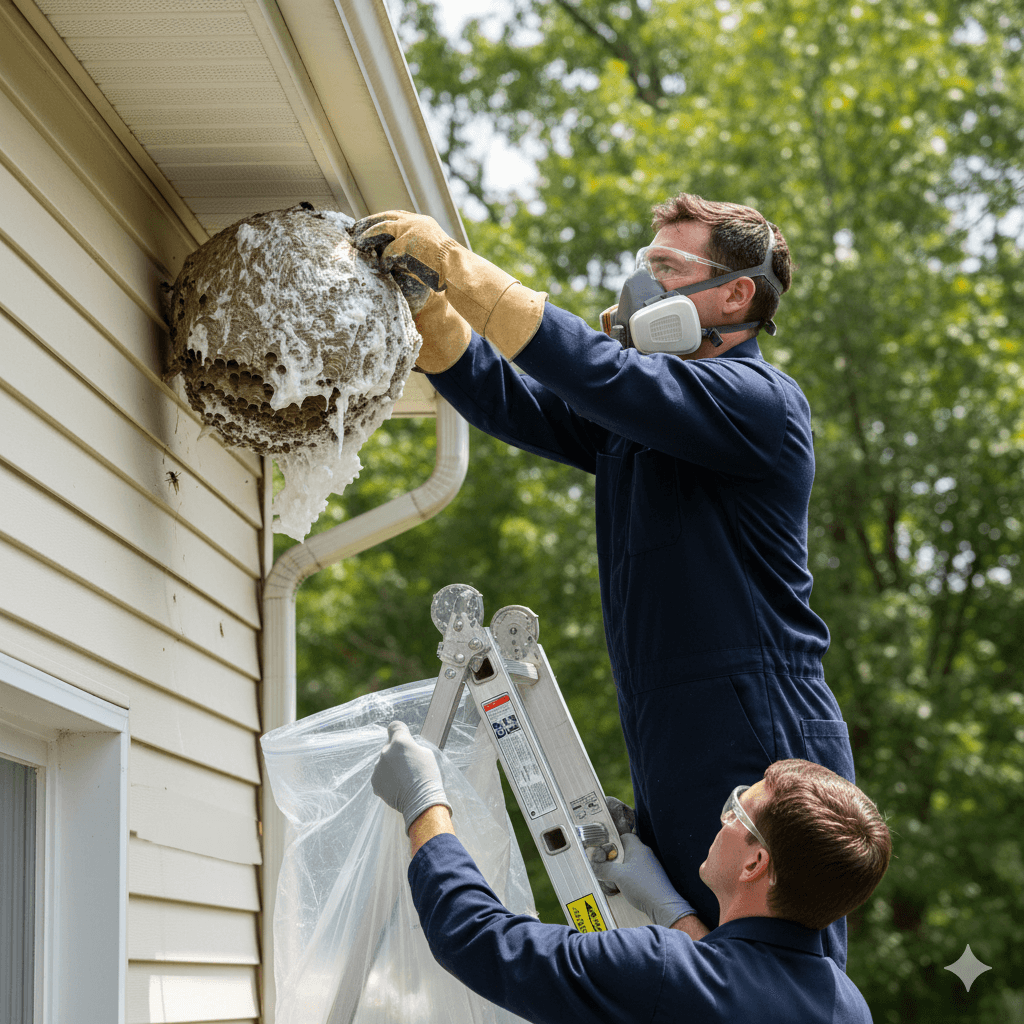
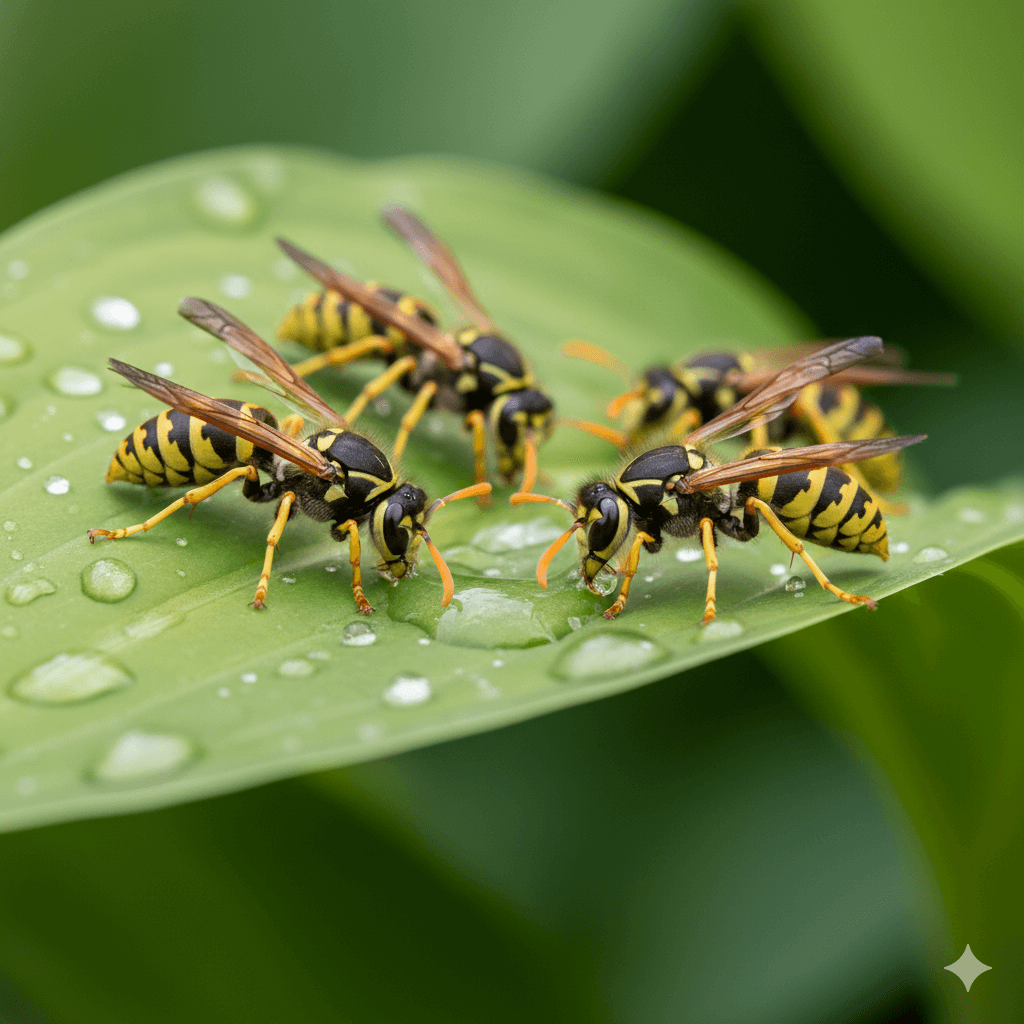
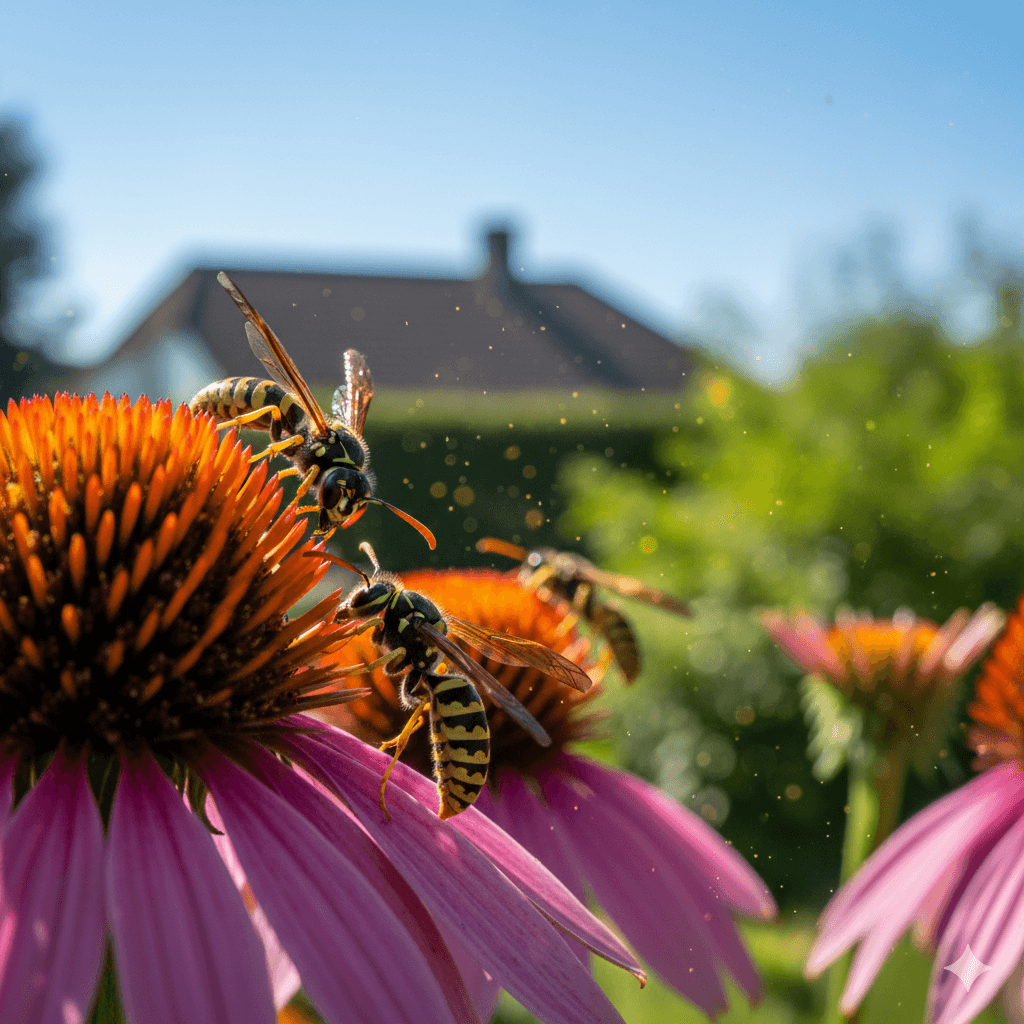
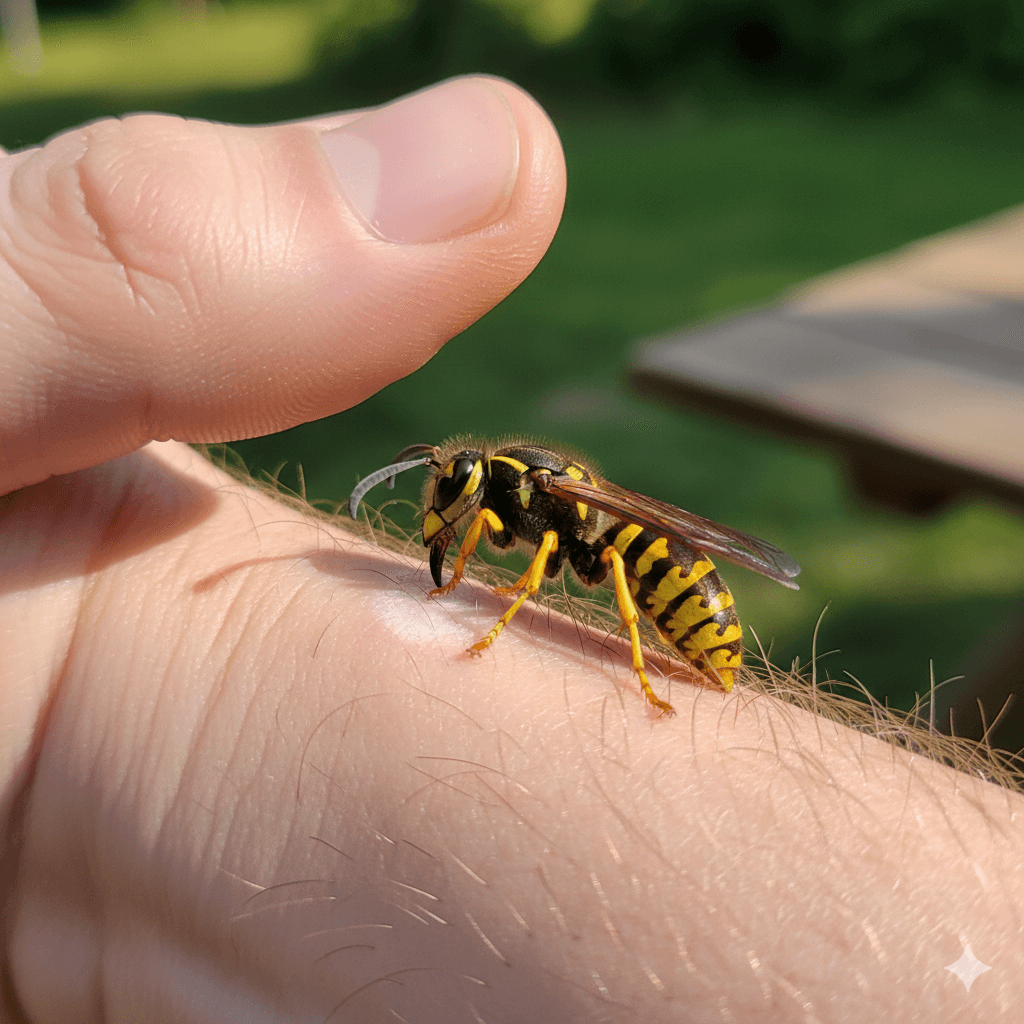
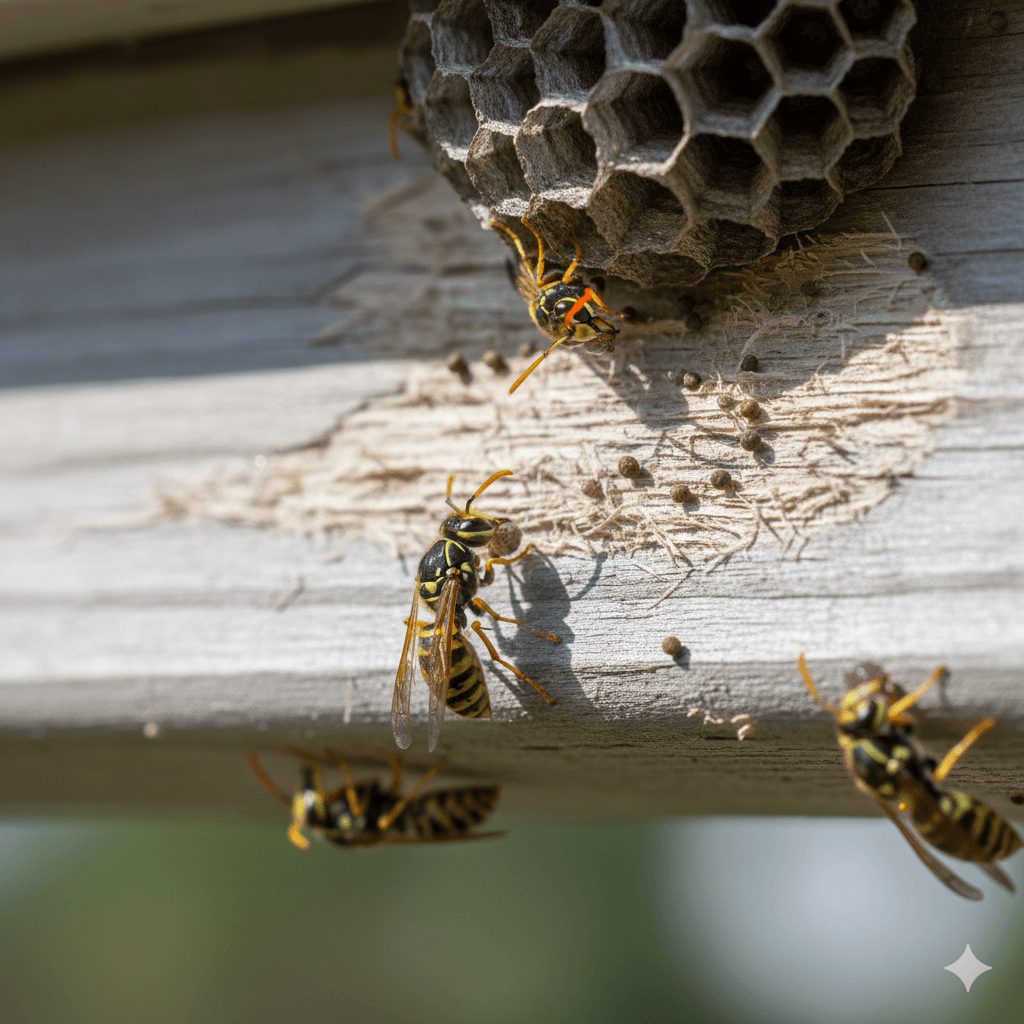
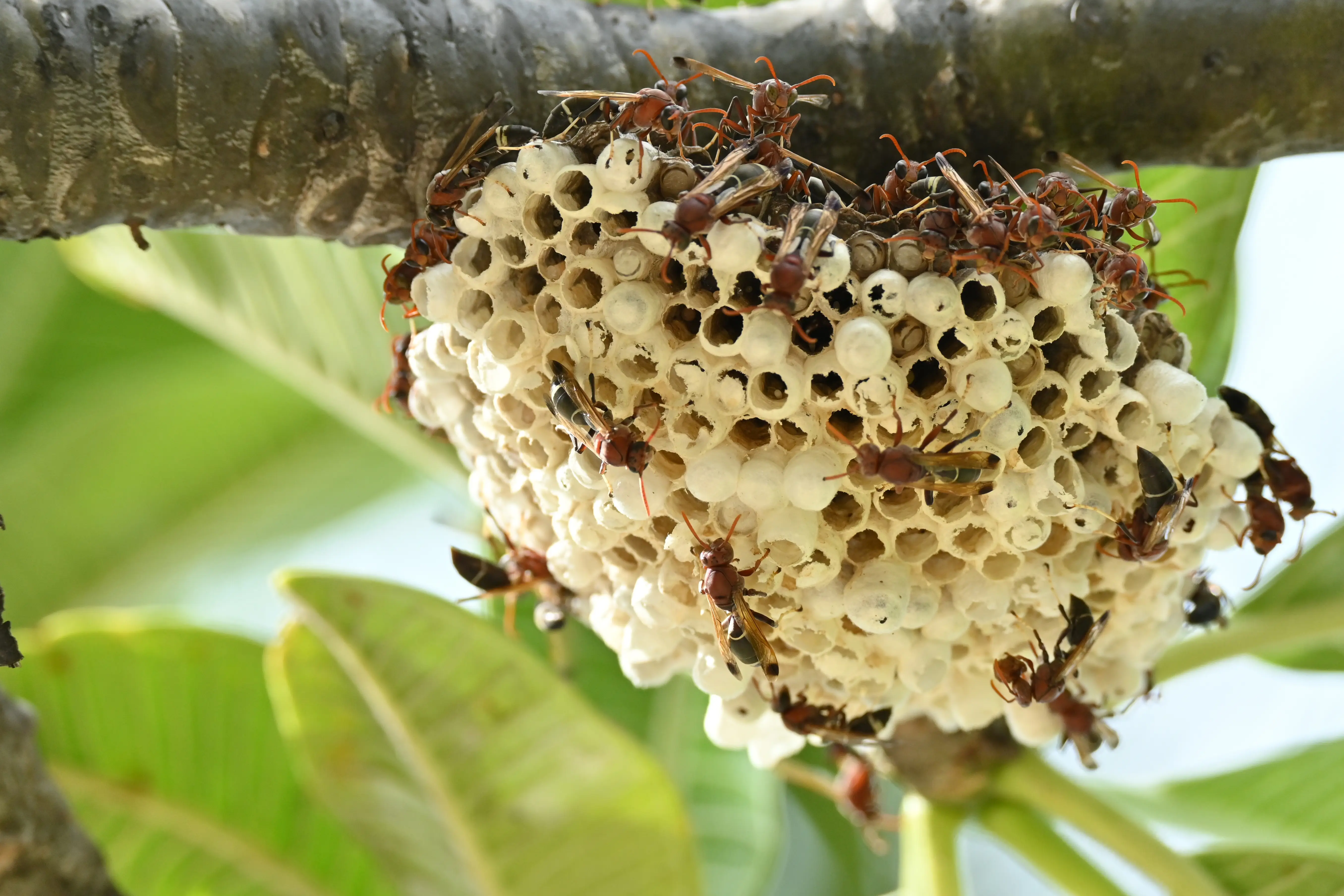
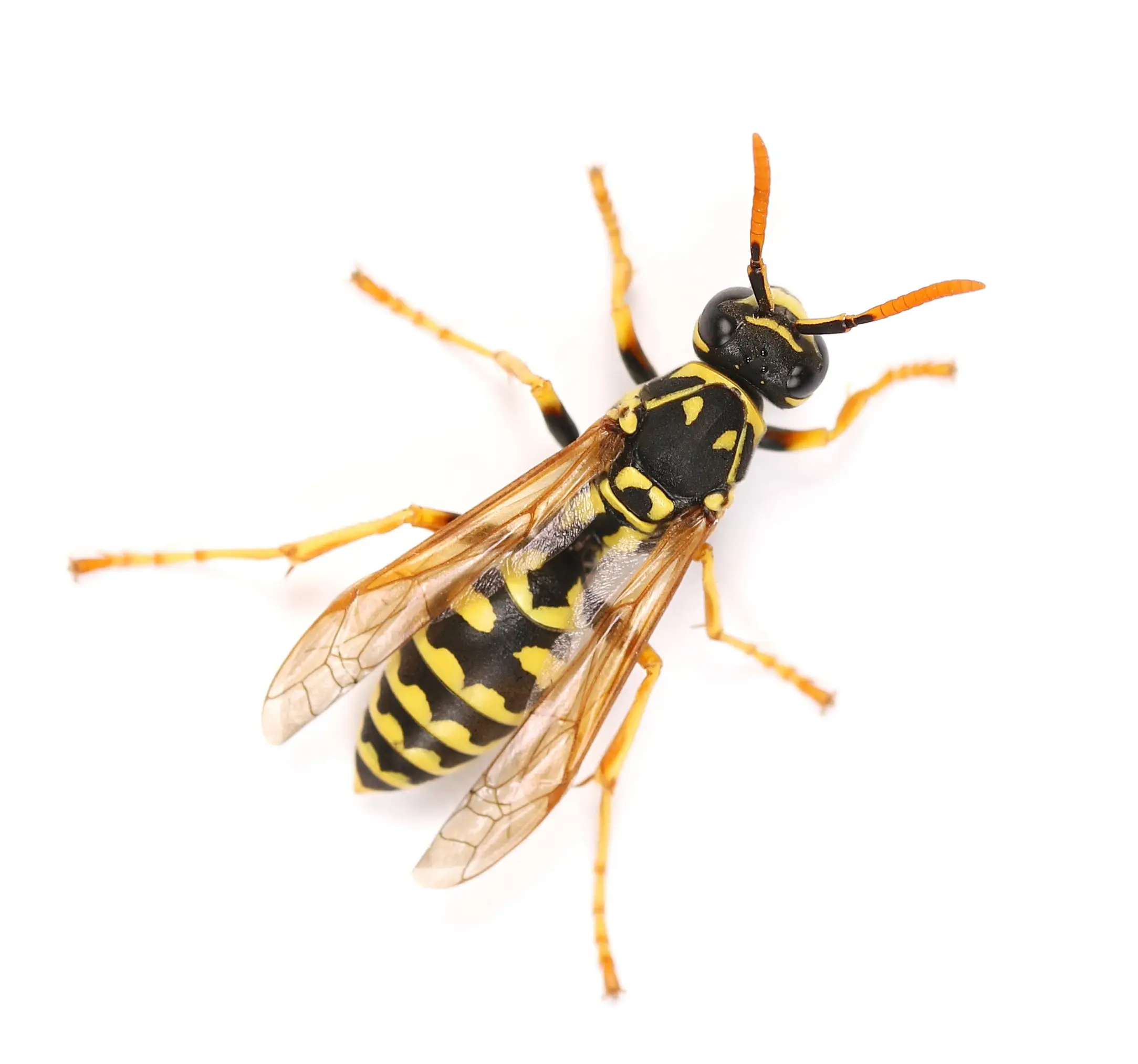
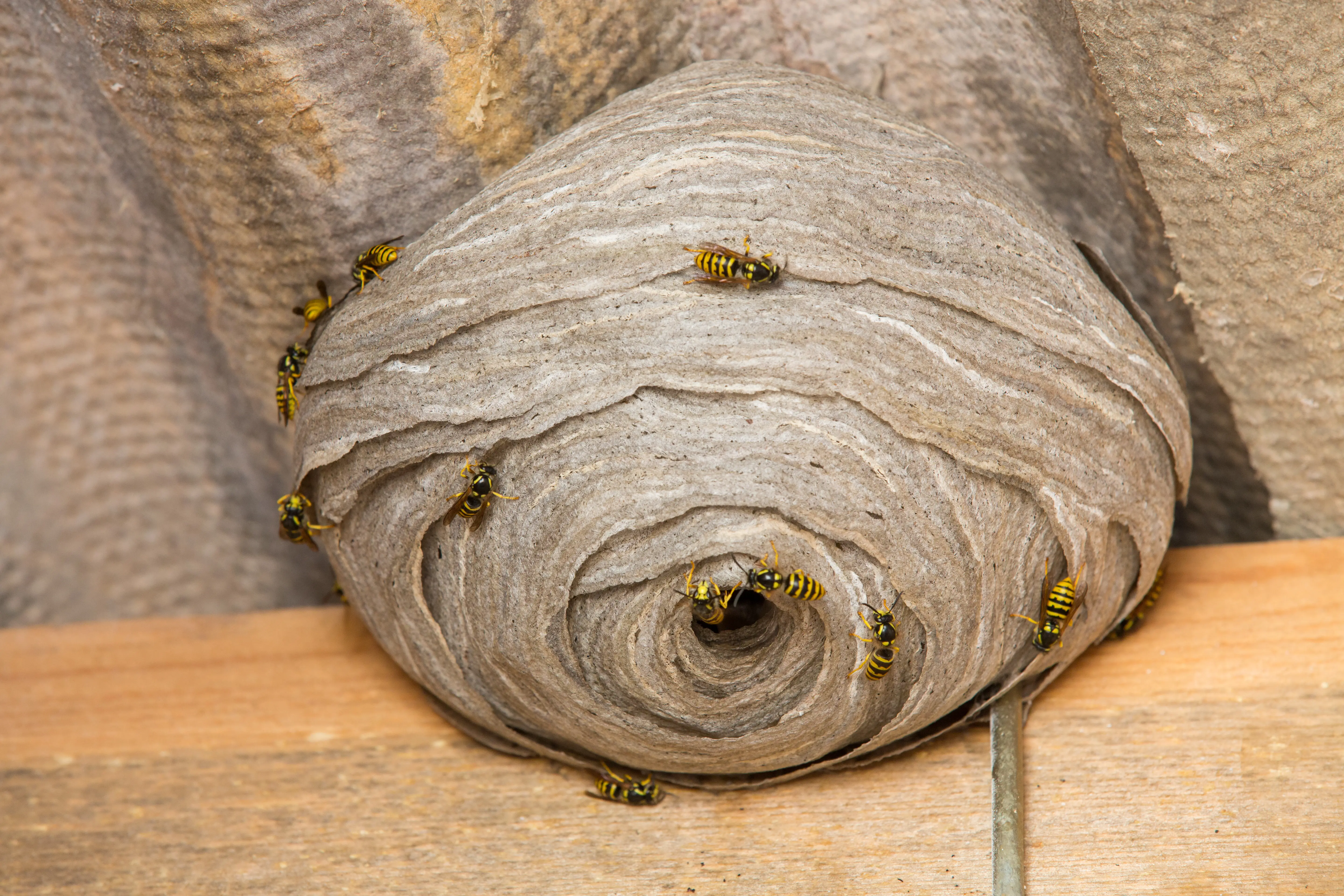
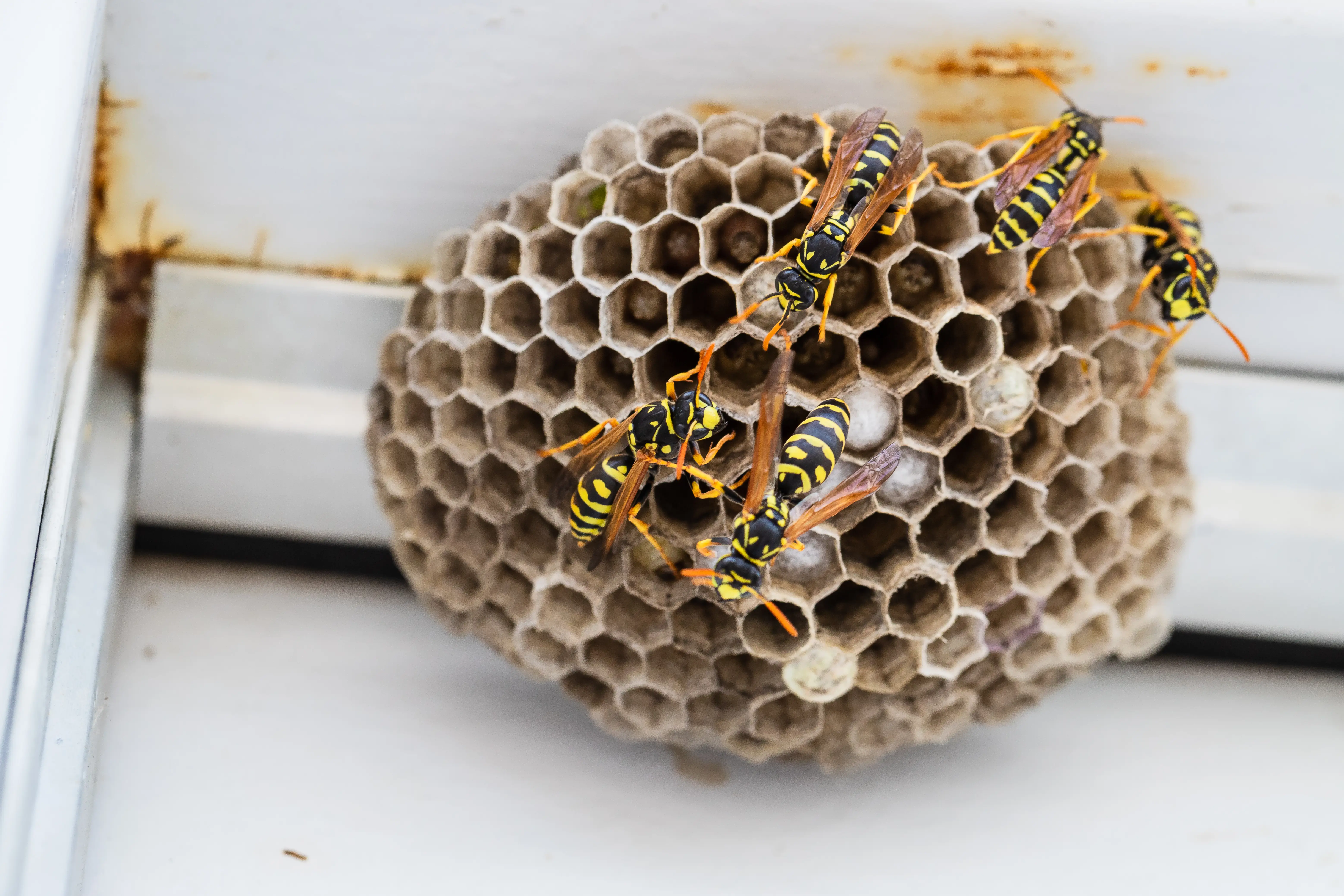
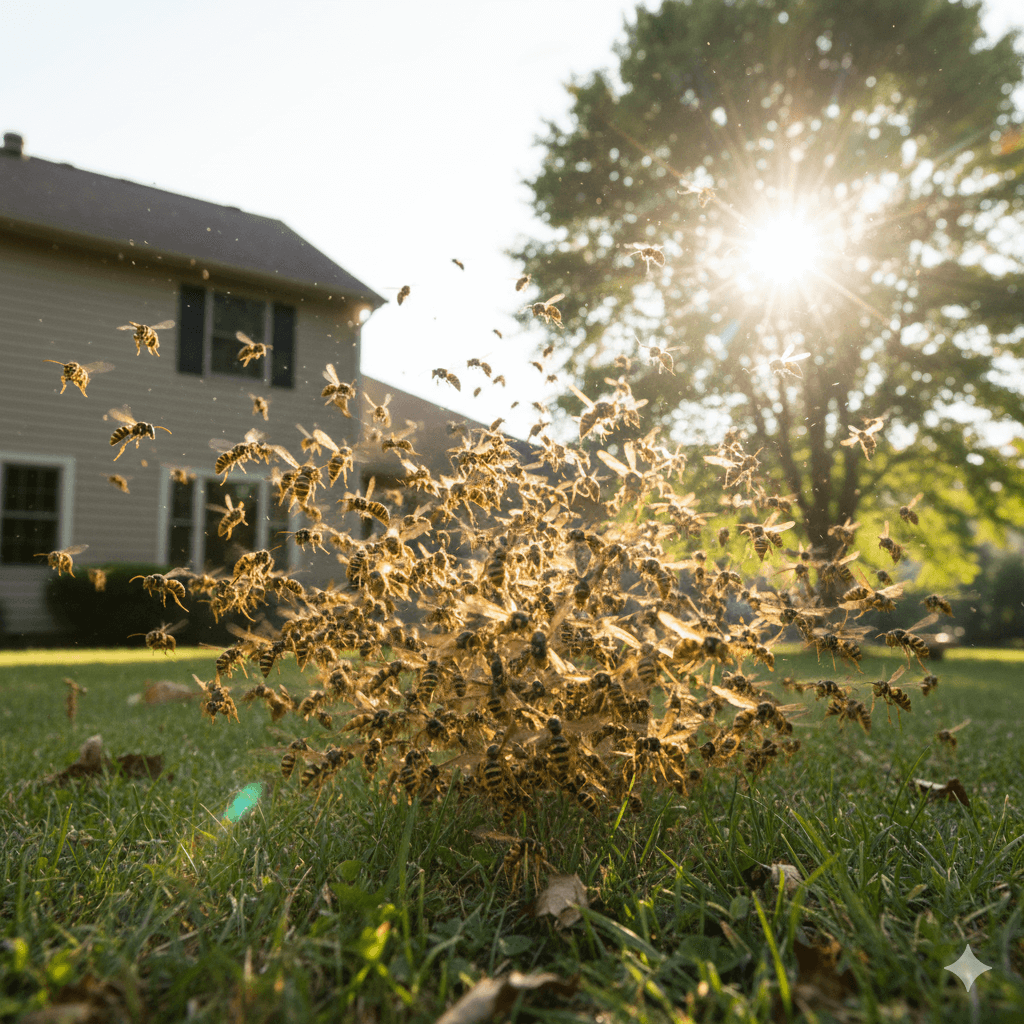
Paper wasp nest and wasp activity showing aggressive territorial behavior

Professional Wasp Control Services

EcoGuard Pest Management offers reliable wasp control services for both residential and commercial properties. Our state licensed exterminators are extensively trained in managing these potentially aggressive pests. Given that wasps can become hostile if their nests are disturbed, it's crucial to have a trained technician handle the situation to safely address and remove the hive.

Wasp Pest Control Experts

We understand how dangerous wasps can be and where they are most likely to establish a nest. Regardless of the nest location, our technicians are equipped to safely remove it and secure your property against future infestations. At EcoGuard Pest Management, our integrated pest management plan effectively identifies and targets wasp nests, allowing us to eliminate the problem at its source while implementing preventative measures to ensure wasps do not return.

Why Professional Wasp Control is Necessary

Wasps can pose significant risks to homes and businesses, especially when they perceive their nests to be threatened:

  • Many wasp species are capable of stinging multiple times without losing their stingers and will aggressively defend their territory
  • Unlike honeybees, wasps do not die after one sting which makes them a far bigger threat if they are not properly managed
  • One sting will alert the rest of the hive to come attack the perceived threat which makes wasp swarms extremely dangerous
  • Wasps can release pheromones that signal danger to the colony, prompting defensive swarm attacks that can result in multiple stings
  • Nests can grow to contain hundreds or thousands of wasps, especially if left unmanaged through the summer season

Wasp Control Service Plans

Choose the protection level that's right for your property

One-Time Treatment
$249+
Starting price
  • Comprehensive property inspection
  • Species identification
  • Entry point identification
  • Targeted treatment application
  • Perimeter barrier application
  • Nest elimination
  • Treatment report & recommendations
  • 30-day guarantee
Get Started
MOST POPULAR
Annual Protection
Contact Us
For custom pricing
  • Everything in One-Time Treatment
  • Seasonal maintenance plan
  • Entry point treatments
  • Priority scheduling
  • Re-treatment guarantee
Get Started

* Prices vary based on property size, infestation severity, and treatment method. Contact us for an accurate quote.

Service Plan Comparison

FeatureOne-TimeAnnual
Property Inspection
Nest TreatmentSingle nestMultiple nests
Follow-Up VisitsQuarterly
Emergency ServiceStandardPriority
Satisfaction Guarantee

Get Your Free Wasp Quote

Protect your property with a free wasp quote from our licensed experts.

✓ Same-day service available
✓ Licensed & insured
✓ Detailed property assessment
✓ No-obligation estimates

Service Areas

We provide wasp control services throughout:

  • California
  • Oregon
  • Washington
  • Texas
  • Tennessee
  • Nevada
View All Counties →

Ready to Eliminate Your Wasp Problem?

Schedule your wasp inspection today. Our experts will assess your property and provide a customized treatment plan.

📞 Call (866) 326-2847Get Free Quote

Wasp Treatment Options

Our comprehensive approach to wasp control combines multiple strategies tailored to your specific situation. Each treatment method is designed to eliminate active colonies while preventing future nest establishment on your property.
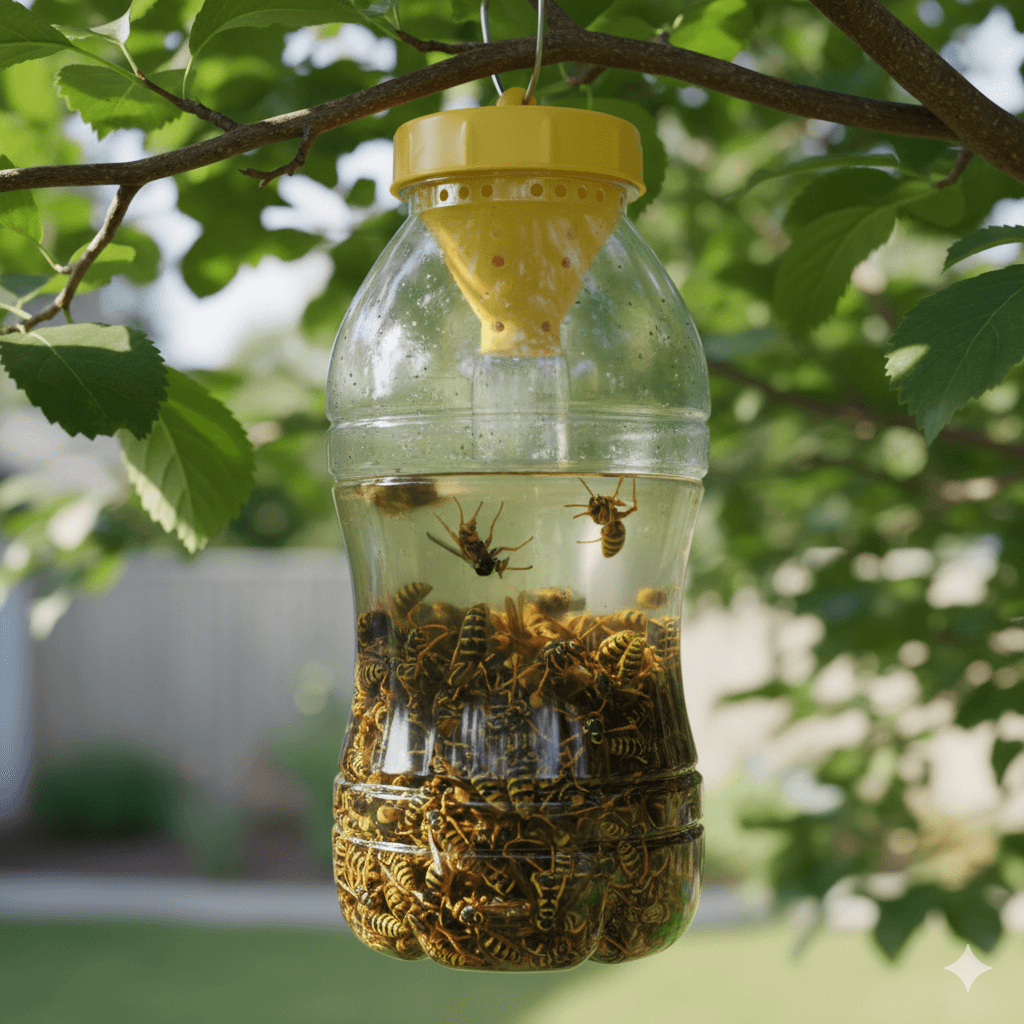
Professional wasp trap strategically placed near property to capture foraging wasps

Wasp Traps

In cases where wasp nests are not immediately nearby, we can deploy traps to capture wasps. These traps are strategically placed to attract and securely contain wasps which reduces the threat they pose to your household.

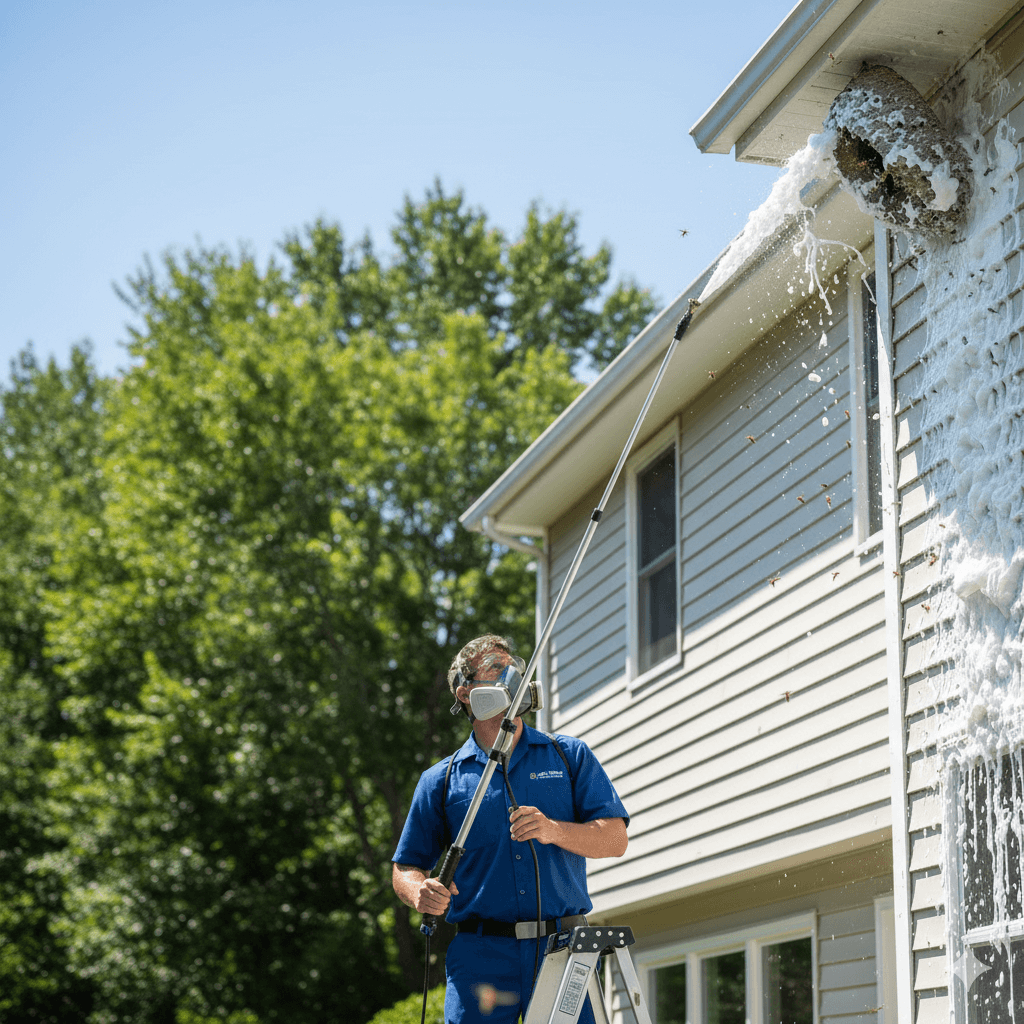
Technician applying professional grade insecticide treatment to active wasp nest

Wasp Nest Treatment

When a wasp nest is identified, we treat it with specialized insecticides in the form of chemicals, fog, or dust applications. These treatments are designed to effectively eliminate the wasps by infecting them upon their return from foraging.

Safe removal of treated wasp nest from residential property by certified technician

Nest Removal

After the wasp colony shows signs of collapse, our technicians can safely remove the wasp nest. This step is performed with great care to handle any remaining live wasps because disturbing the nest can provoke aggression from any survivors.

What Causes Wasps?

Understanding the factors that attract wasps to your property is essential for effective control and prevention. Wasps are drawn to specific environmental conditions that provide food, water, and suitable nesting sites.
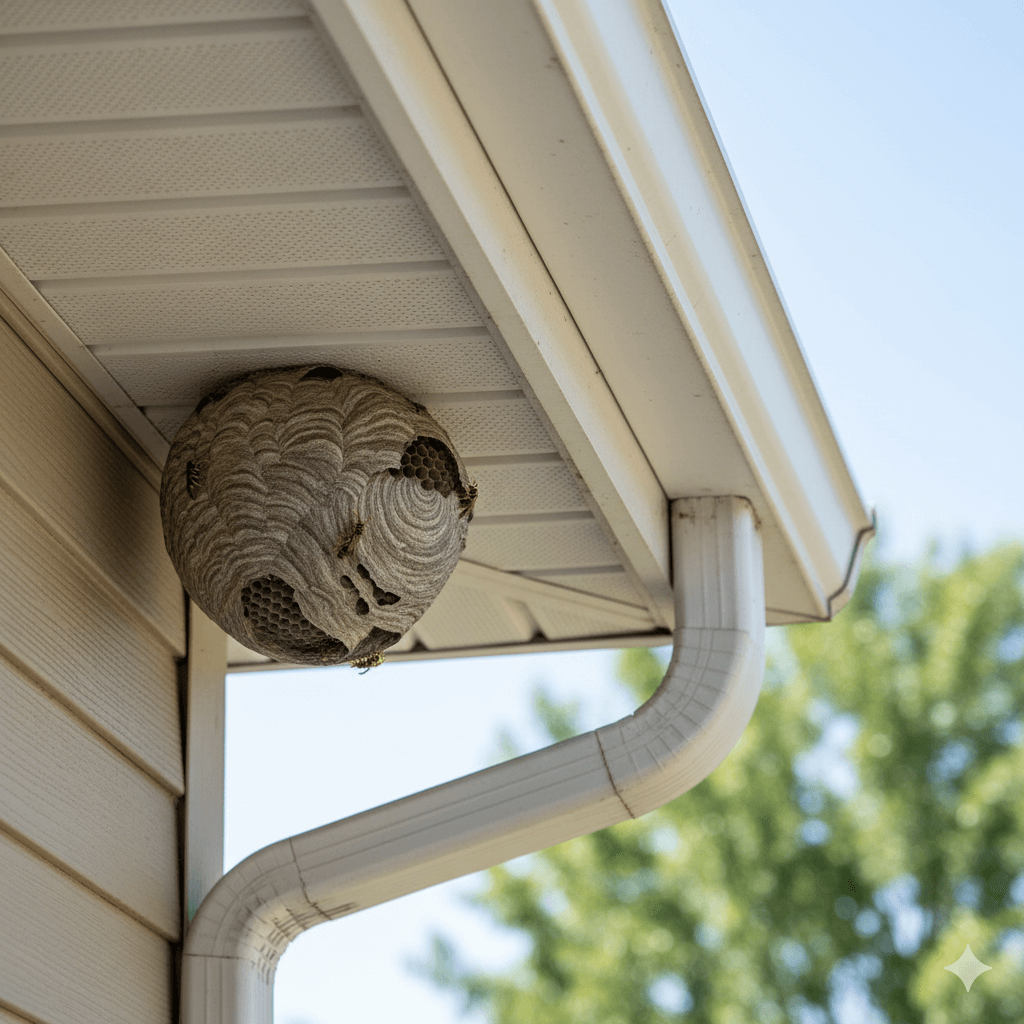
Protected sheltered locations under eaves and decks ideal for wasp nest construction

🏠 Sheltered Nesting Sites

Wasps seek protected locations to build their nests, particularly in spring when queens emerge from winter dormancy. Under eaves, decks, awnings, and in wall voids provide ideal shelter from weather while offering easy access to foraging areas.

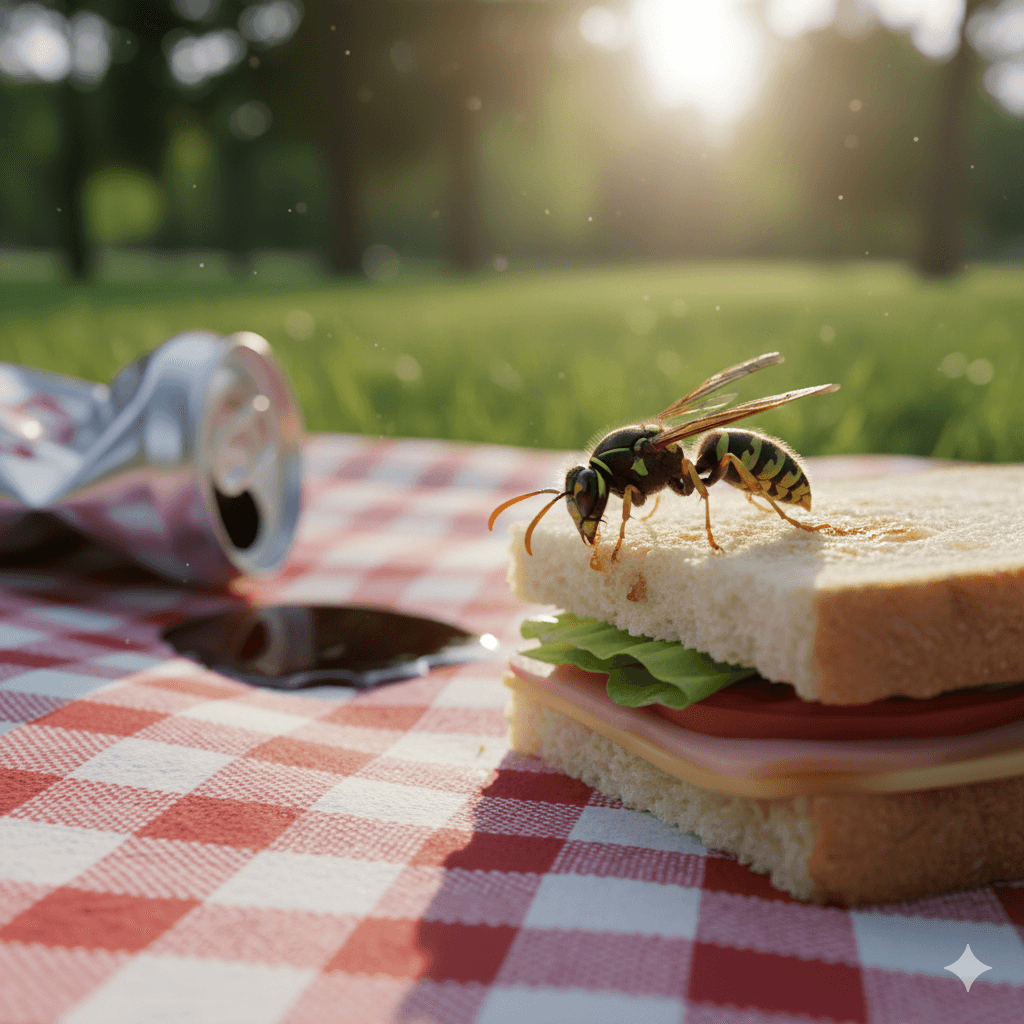
Exposed trash outdoor dining areas and fruit trees providing food sources for wasps

🍎 Available Food Sources

Wasps are attracted to properties with abundant food sources including exposed trash, outdoor dining areas, fruit trees, and flowering plants. They feed on sugary substances, proteins, and other insects, making yards with these resources particularly attractive.

Birdbaths pet water bowls and standing water providing moisture for wasp colonies

💧 Water Access

Like all insects, wasps require water for survival and nest construction. Properties with birdbaths, pet water bowls, leaky faucets, or standing water provide the moisture wasps need to support their colonies.

Extended warm summer season allowing wasp colony to grow to dangerous sizes

☀️ Favorable Climate

Warm temperatures and extended summers allow wasp colonies to grow significantly larger than in cooler climates. Properties in regions with long warm seasons may experience more severe wasp problems as colonies have more time to expand.

What Are Signs of Wasps in Your Home?

Learn to recognize these distinctive signs that indicate wasp activity on your property. Early detection allows for prompt intervention before colonies grow to dangerous sizes.
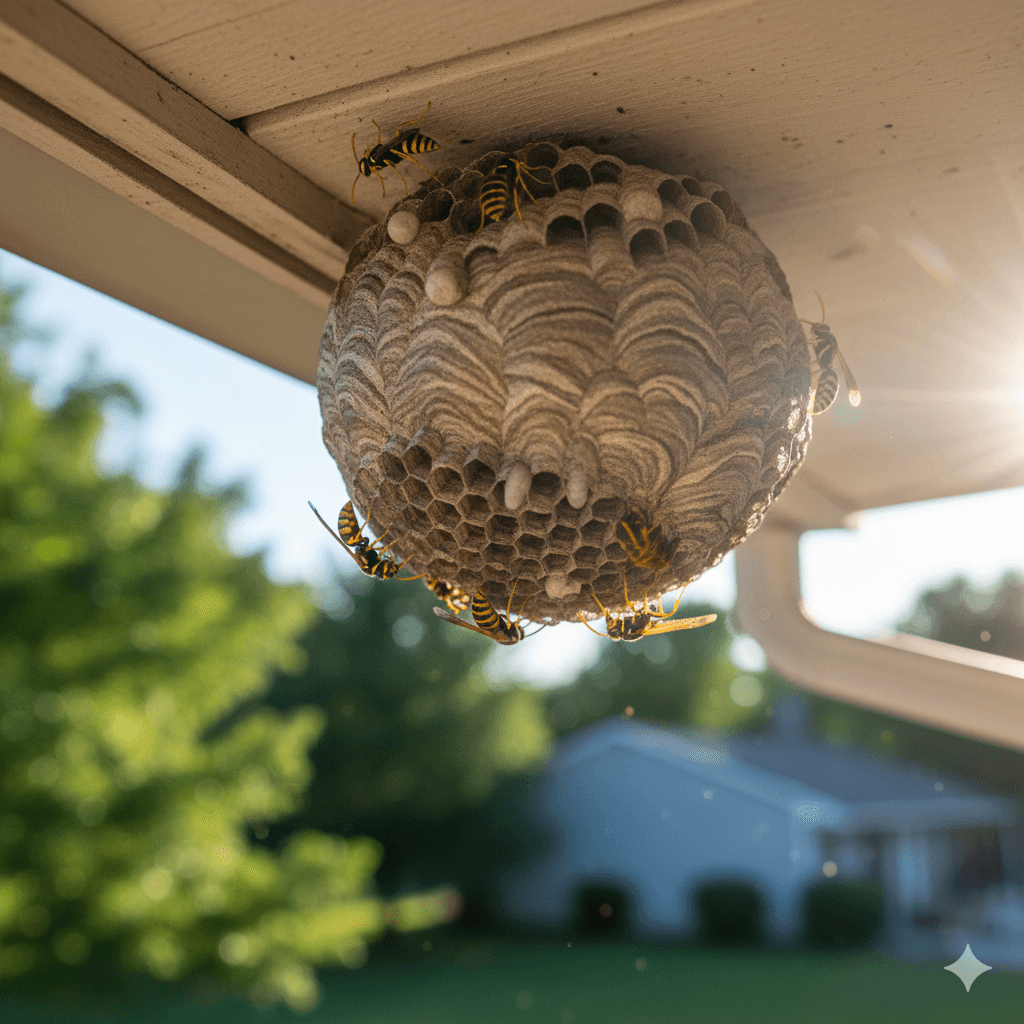
Visible paper wasp nest with umbrella shape hanging from protected eave location

Visible Wasp Nests

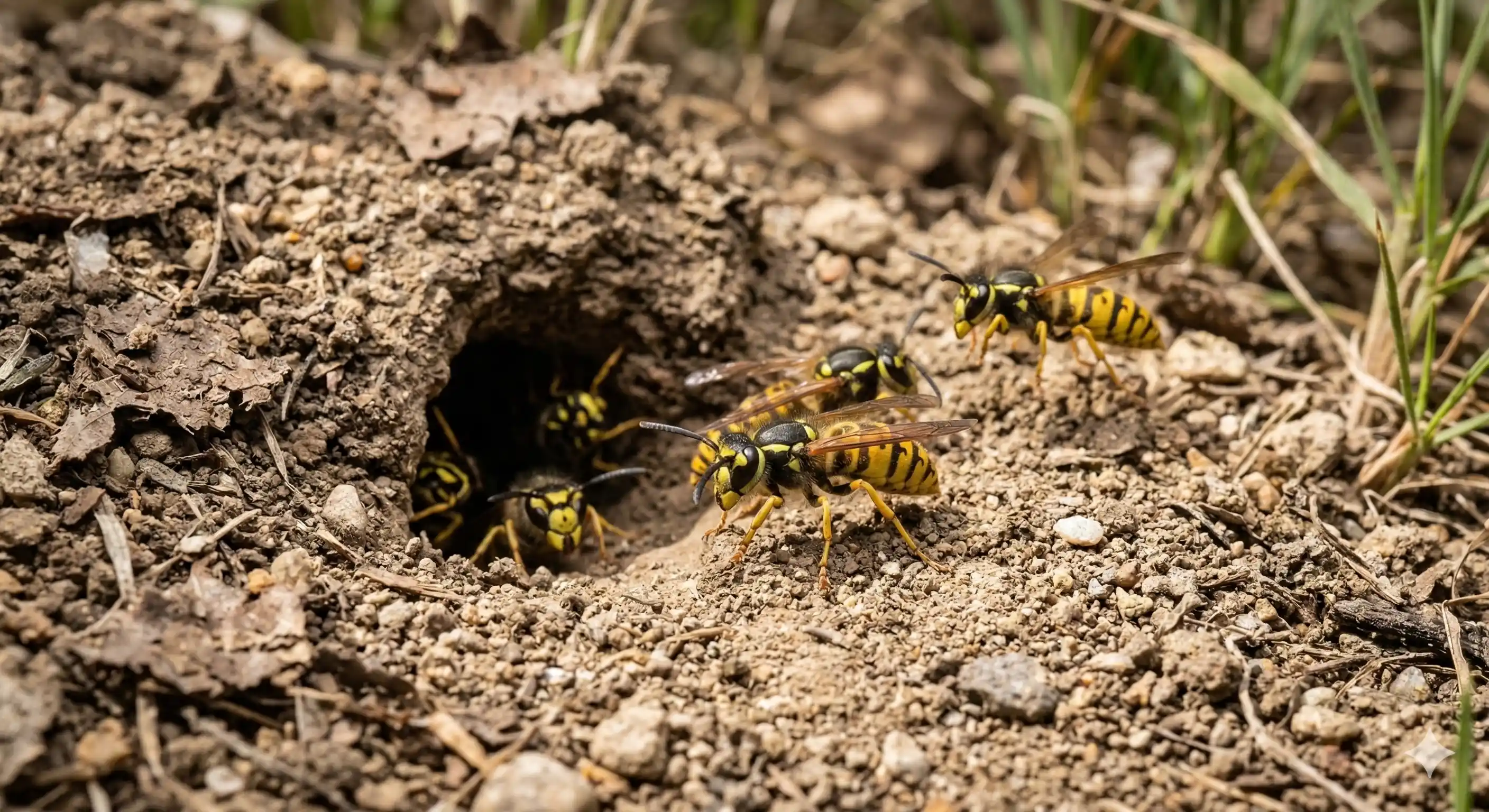
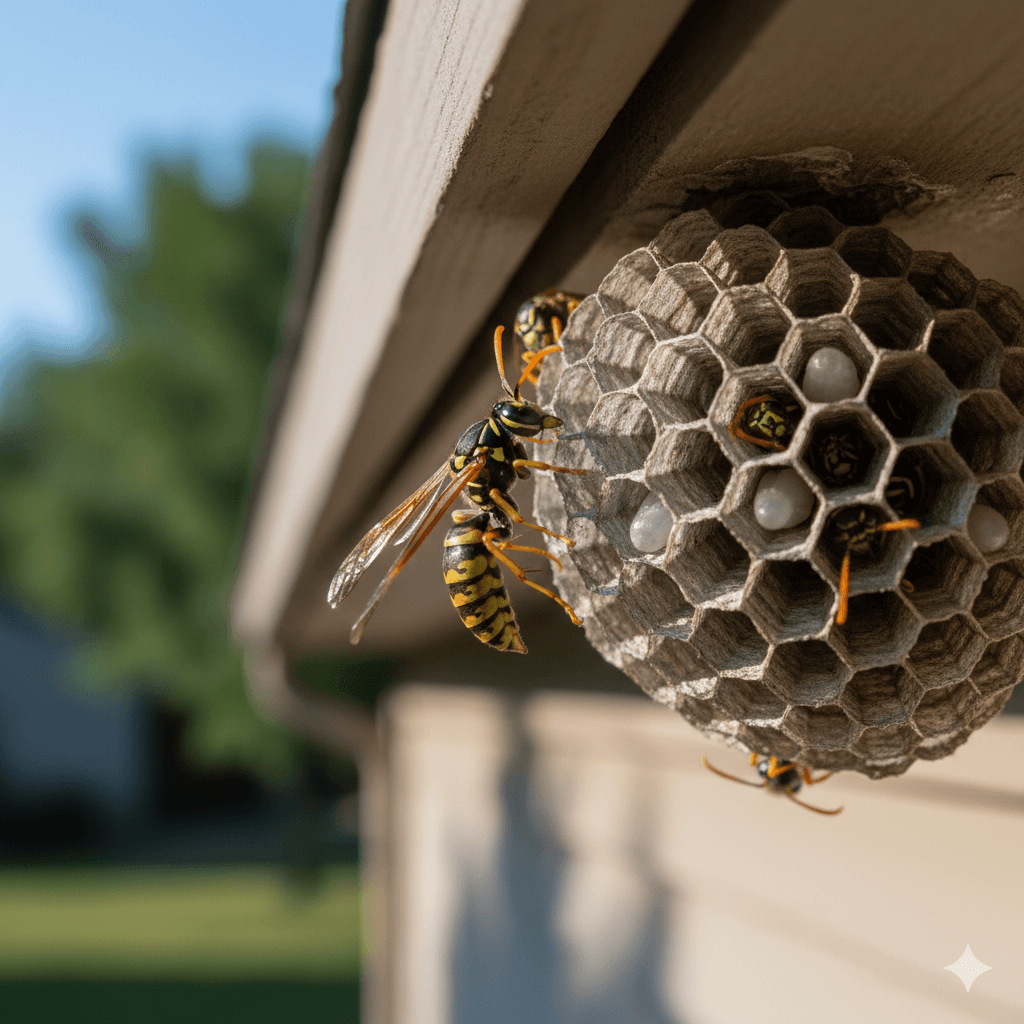
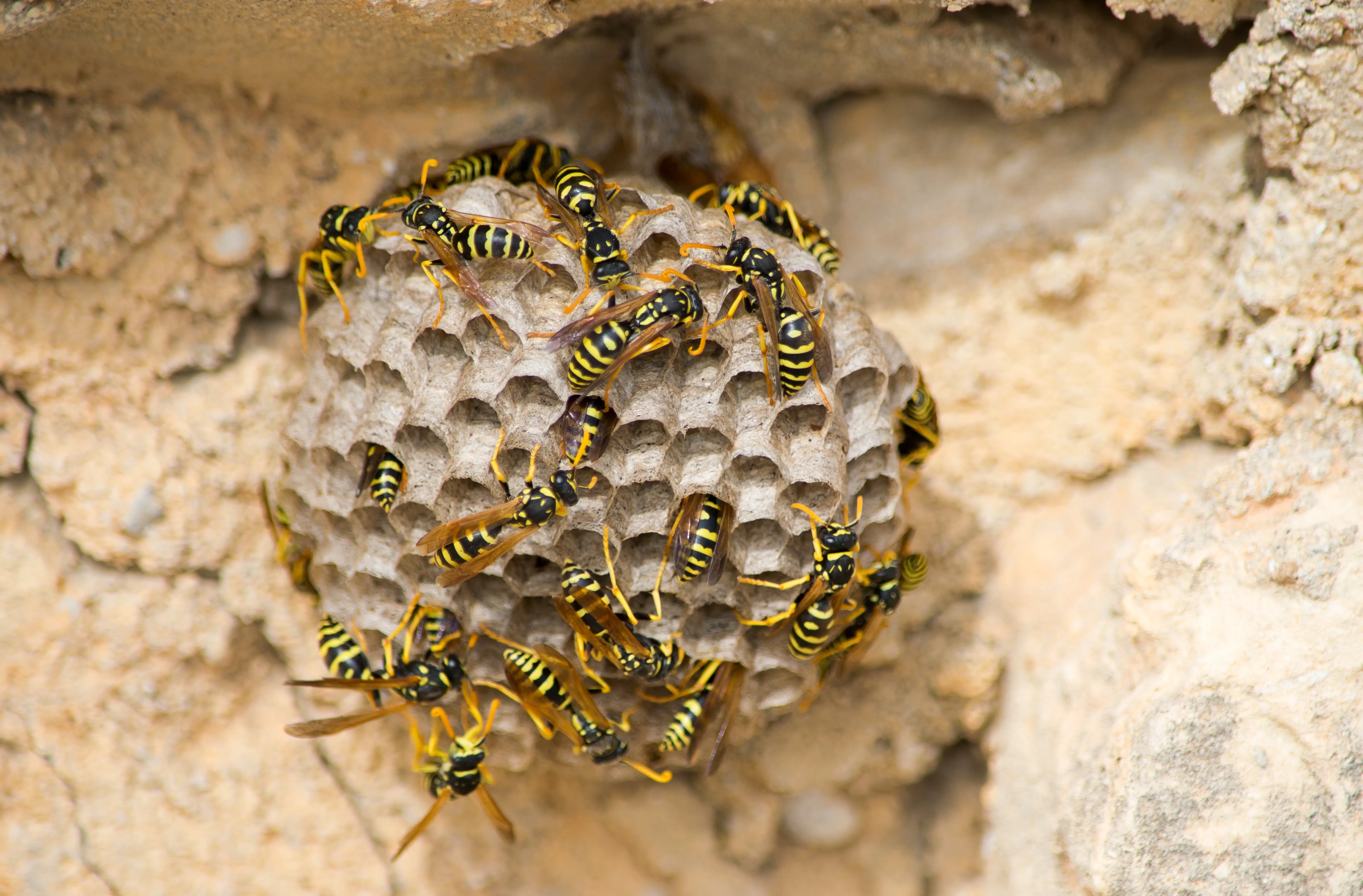
Paper wasp nests appear as umbrella-shaped structures hanging from eaves, branches, or other protected areas. Yellow jacket nests are often found in ground cavities or wall voids, with wasps entering and exiting through small openings.

Multiple wasps following consistent flight paths between nest and foraging areas

Increased Wasp Activity

Noticing multiple wasps flying around your property, particularly in specific areas, indicates an active nest nearby. Wasps follow consistent flight paths between their nest and foraging areas.

Aggressive defensive wasp behavior diving at people near protected nest territory

Aggressive Behavior

Wasps become increasingly defensive as their colony grows, especially in late summer. If wasps chase or dive at people approaching certain areas, an established nest is likely protecting its territory nearby.

Scraped weathered wood showing marks from wasps harvesting fibers for nest construction

Chewed Wood Fibers

Paper wasps create their nests by chewing wood fibers and mixing them with saliva. You may notice small areas of weathered wood or wooden structures that appear scraped, indicating wasps are harvesting material for nest construction.

Small holes and gaps in exterior walls serving as yellow jacket entry points

Wasp Entry Points

Small holes or gaps in exterior walls, fascia boards, or around vents may serve as entry points for yellow jackets building nests in wall voids or attics. Consistent wasp traffic at these locations indicates an interior nest.

Dead and dying wasps near windows and light fixtures indicating interior nest

Dead Wasps Indoors

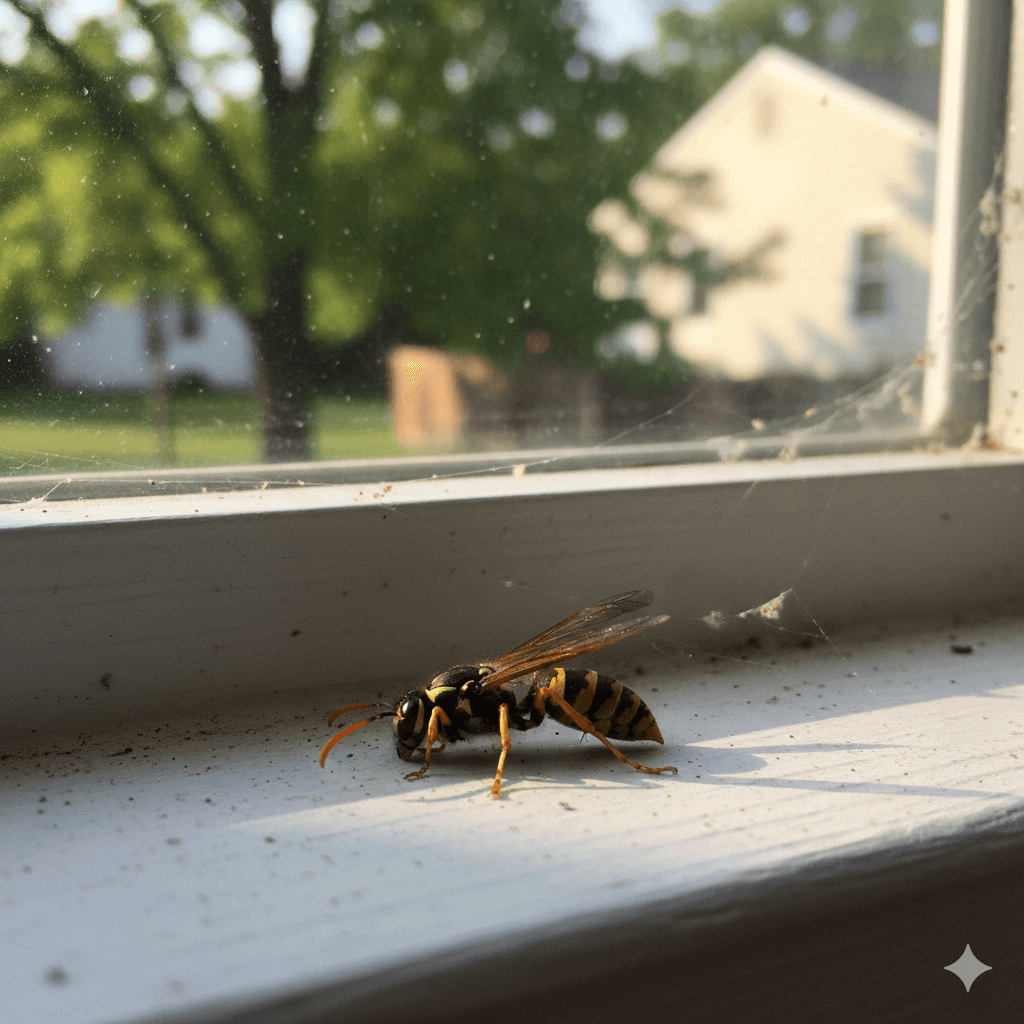
Finding dead or dying wasps inside your home, particularly near windows or light fixtures, often indicates a nest within the structure. Wasps may emerge inside when they become disoriented while trying to exit.

DIY vs Professional Treatment

While hardware stores sell various wasp control products, DIY approaches often fall short and can actually increase danger. Store-bought sprays may only reach a portion of the nest, and improper application can provoke defensive swarm attacks that put you and your family at serious risk.

Professional wasp control services provide comprehensive solutions with safety as the top priority. Our technicians have specialized training in wasp behavior, access to professional-grade treatments that eliminate entire colonies, proper protective equipment to handle aggressive nests safely, and proven techniques for complete nest removal. We implement strategic exclusion measures to prevent future colonies from establishing, while our satisfaction guarantee ensures lasting protection. The risks associated with DIY wasp control far outweigh the cost of professional service, especially when dealing with large or aggressively defended nests.

❌ DIY Treatment

  • Limited spray range may not reach entire nest
  • Inadequate protective equipment for defense
  • Partial treatment provokes defensive swarms
  • No expertise in wasp behavior patterns
  • Recurring nests without proper exclusion
  • Serious risk of multiple stings

✓ Professional Treatment

  • Complete colony elimination guaranteed
  • Proper protective equipment and training
  • Professional-grade treatments eliminate entire nests
  • Safe removal after colony collapse confirmed
  • Exclusion prevents future nest establishment
  • Emergency response for aggressive colonies

Common Types of Wasps

Common Species Found Locally
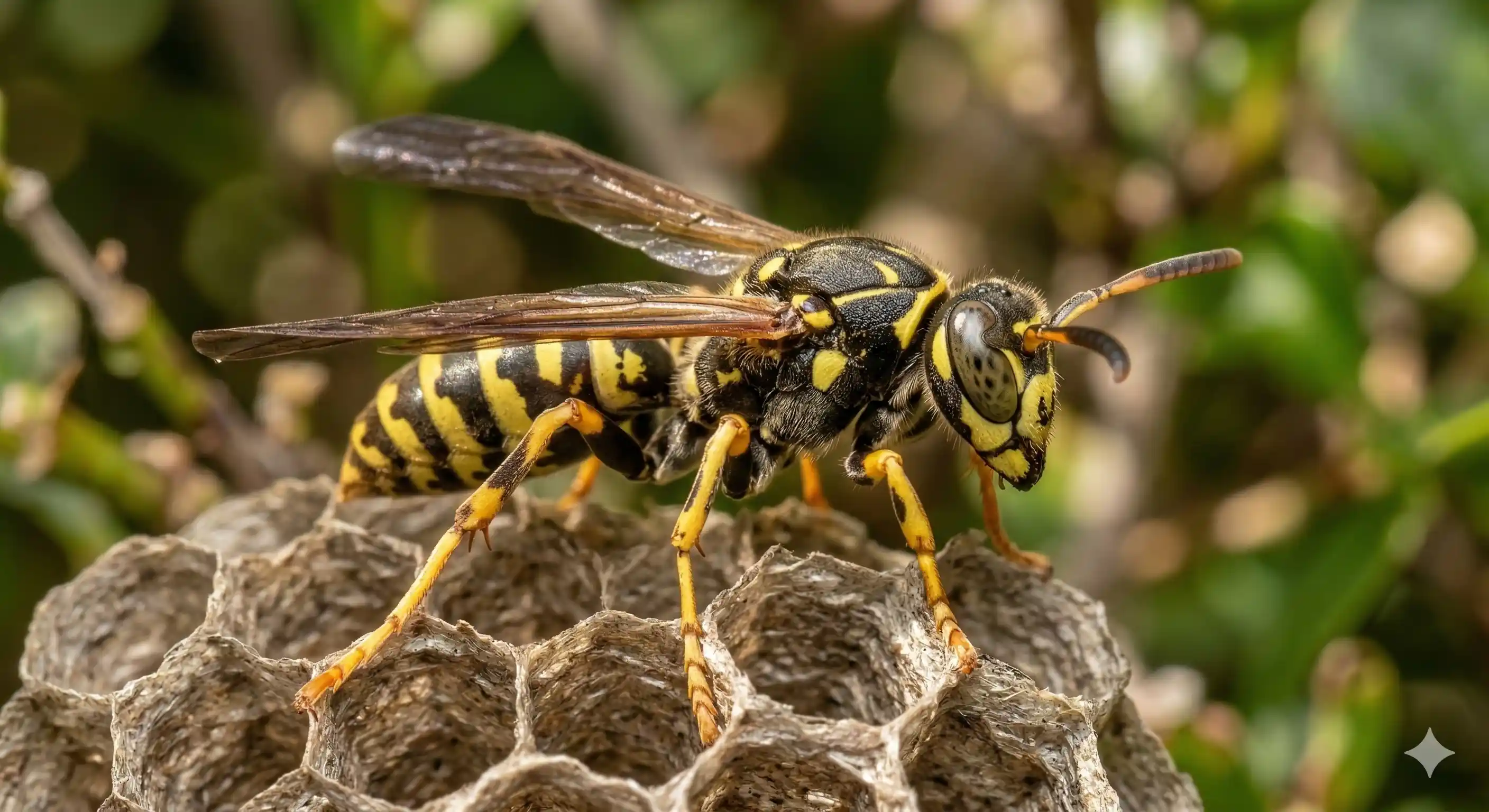
Paper wasp with dark brown body black wings and yellow markings on nest

Paper Wasps

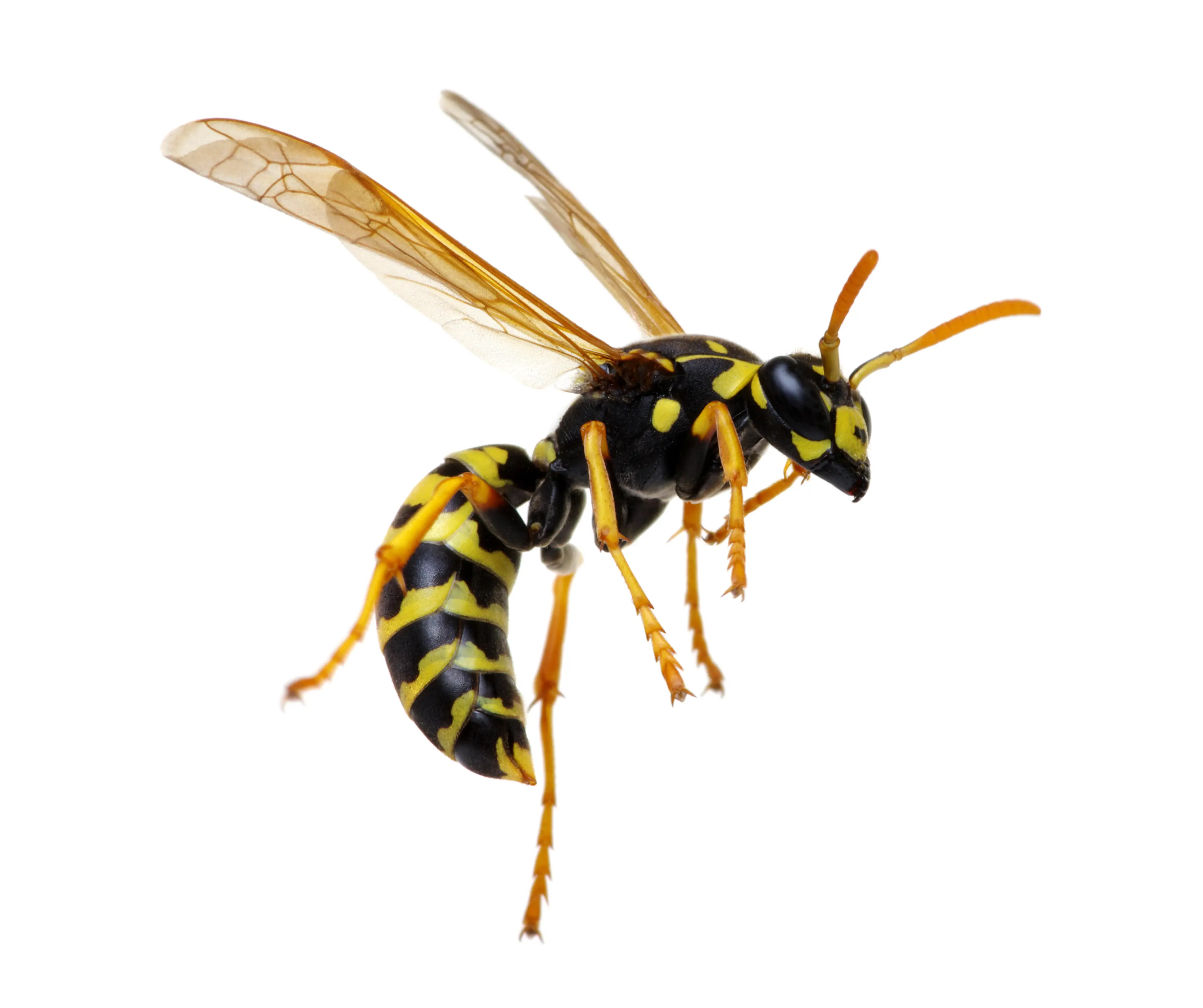
Paper wasps are typically dark brown with black wings and distinctive yellow markings. They build nests from a mixture of plant material and saliva which gives their nests a paper-like appearance. Paper wasp nests should not be allowed to develop near homes, as their stings are not only extremely painful but can also trigger severe allergic reactions in some individuals.

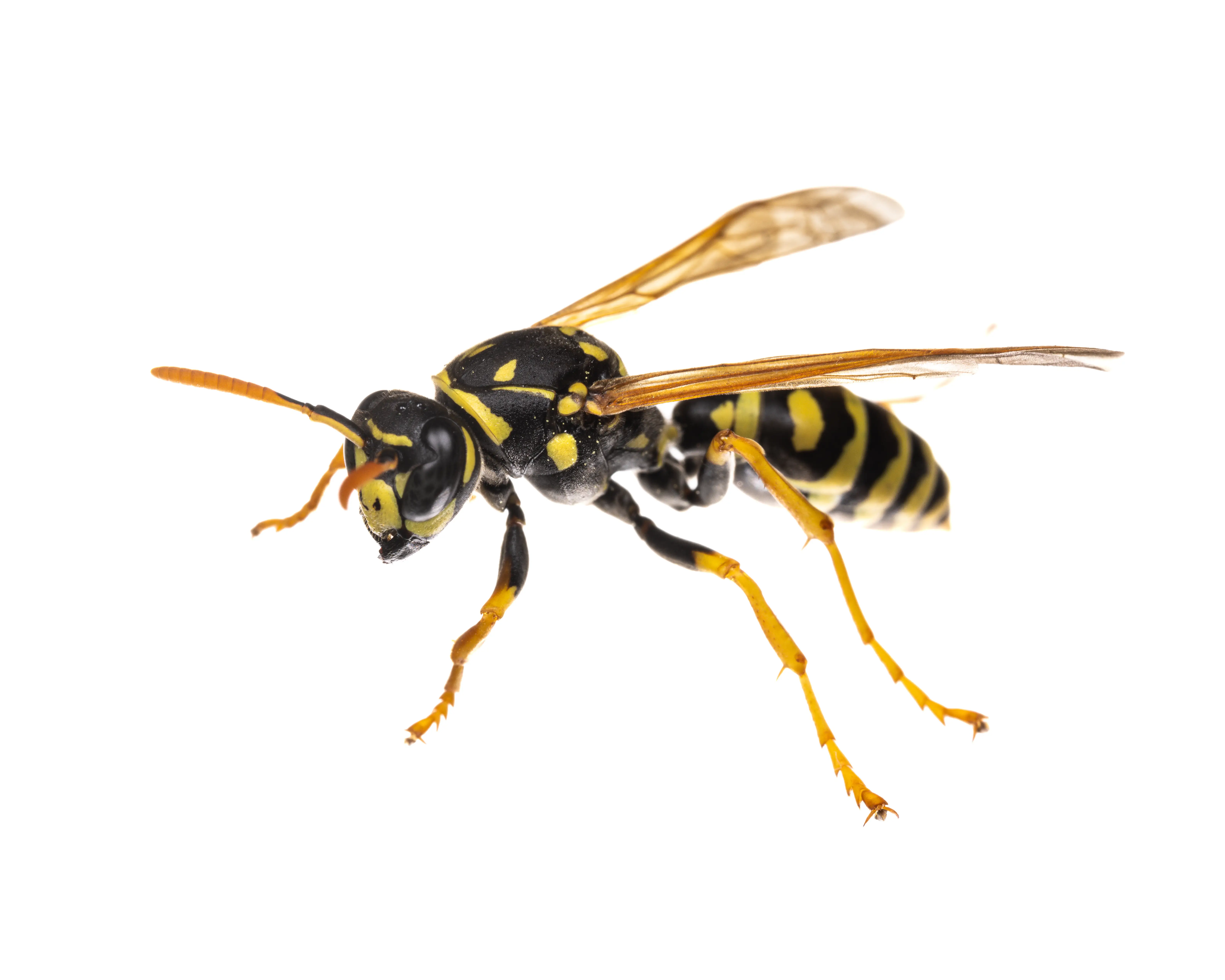
Yellow jacket wasp showing characteristic yellow and black striped pattern with narrow waist

Yellow Jackets

Yellow jackets are a common type of ground wasp that are recognized by their dual pairs of wings and a distinct narrowing of the waist. These wasps often build their nests underground, although they may also nest in sheltered, dark areas above ground such as crawl spaces, wall voids, fallen trees, or dense vegetation. Yellow jackets can be extremely aggressive, especially when their nests are disturbed.

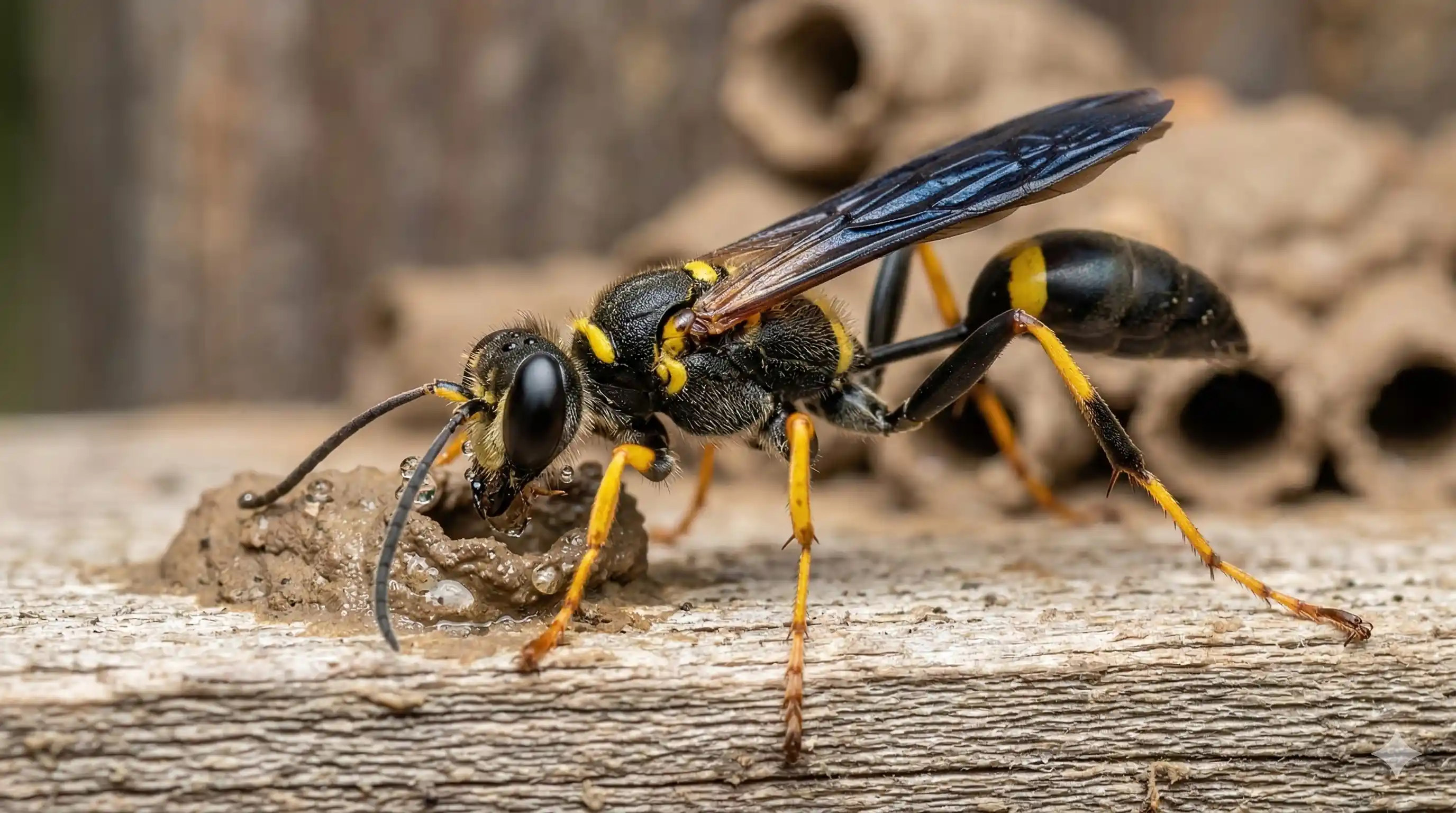
Mud dauber wasp with metallic blue coloring near mud nest structure

Mud Dauber Wasps

Mud daubers are a type of wasp known for constructing their nests from mud, which can often be found on home sidings or under eaves. These wasps may be entirely black or exhibit a metallic blue hue, with some species featuring yellow or greenish markings on their bodies. Mud daubers are generally less aggressive than other wasp species.

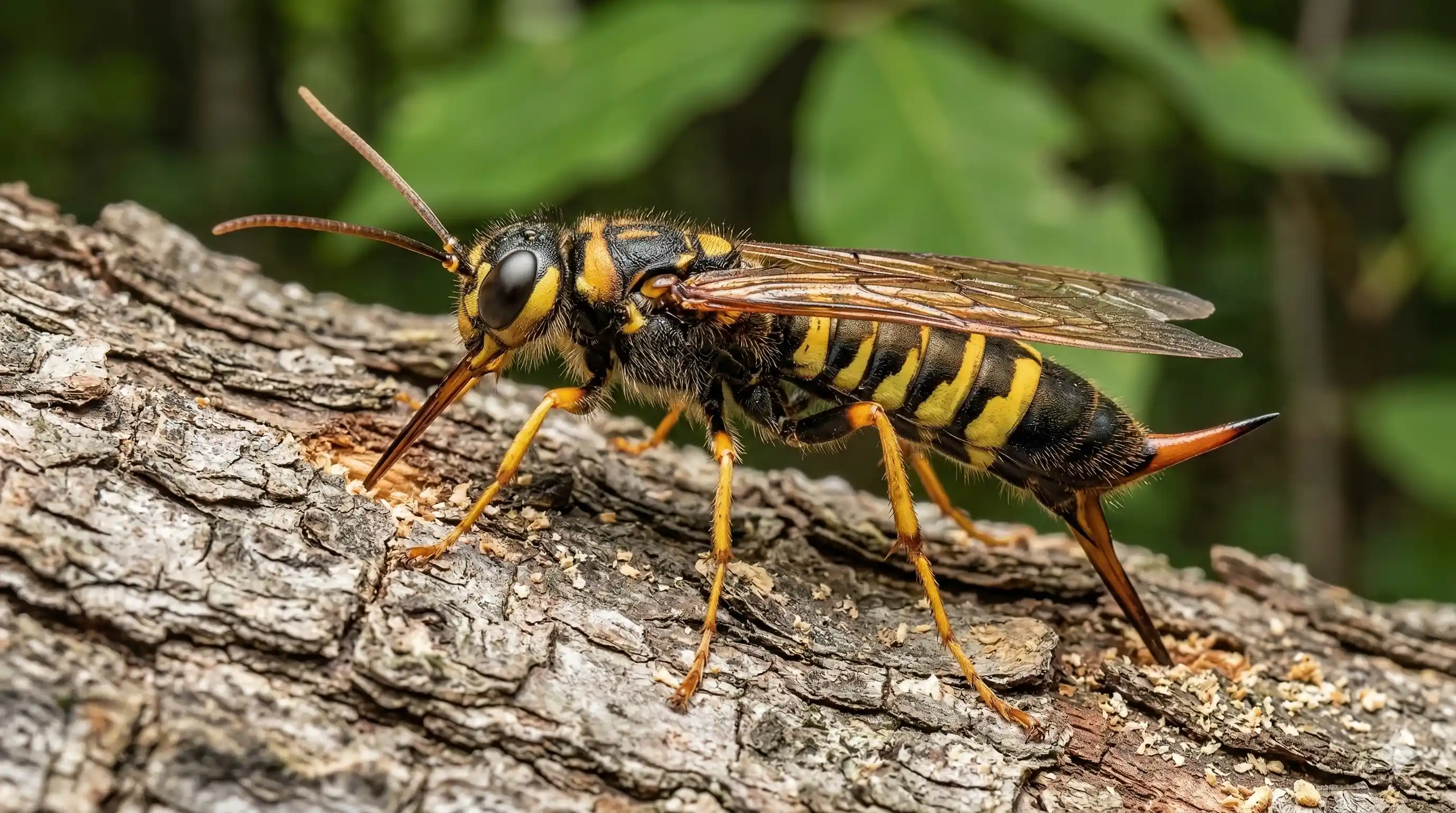
Horntail wood wasp with robust body and distinctive horn-like projection

Horntails (Wood Wasps)

Wood wasps are also known as horntails. Unlike the typical wasp, wood wasps do not have a stinger, but they can still be a nuisance. They lay their eggs in soft, decaying wood, which can lead to damage over time. Horntails are recognized by their robust bodies and the horn-like projection at the rear of their abdomen.

Commercial Wasp Control

EcoGuard Pest Management implements customized wasp control programs for commercial facilities that prioritize operational continuity while ensuring effective pest elimination. Our comprehensive commercial wasp protection programs combine discrete treatment applications with flexible scheduling to maintain your business operations while ensuring complete elimination of wasp problems.

We specialize in wasp control solutions for:

  • Restaurants and food service establishments
  • Healthcare facilities
  • Hotels and hospitality venues
  • Educational institutions
  • Office complexes
  • Food processing facilities
  • Warehouses and storage facilities
  • Retail spaces
  • Manufacturing facilities
  • Multi-unit residential properties
Learn About Commercial Pest Control
100% SATISFACTION GUARANTEE

The EcoGuard Guarantee

EcoGuard offers a 100% satisfaction guarantee for all of our customers, and we stand by our promise to eradicate your wasp problem until the very last wasp is gone. That wasp control guarantee comes with every service and if the wasps come back, then so do we, at no additional cost. We are standing by to give you a free estimate and to help you set your first wasp pest control service appointment.

📞 Call (866) 326-2847 Today

Our Wasp Control Process

A systematic approach to complete wasp elimination and prevention

1

Inspection

Our services start with a thorough inspection of the property. During this check, we will identify problematic areas with wasp activity, active nests, potential nesting sites, and entry points that wasps are using to access your property.

2

Treatment

After the location of nests has been identified, treatments will begin. EcoGuard uses professional-grade insecticides in the form of sprays, fogging, or dust applications to effectively eliminate the colony. We ensure treatments reach all areas of the nest.

3

Exclusion

Once treatment is completed, exclusion strategies will be implemented to seal any access points that wasps can use to establish future nests. We identify and address structural vulnerabilities that attract nest-building queens.

4

Maintain

Ongoing maintenance and monitoring are all part of a comprehensive wasp treatment strategy. This will help deter future wasp activity as well as inform the team if new nests begin to form, allowing for prompt intervention.

Seasonal Plan for Wasp Control

Year-round protection adapted to seasonal wasp behavior patterns

Spring Wasp Control

Spring

Focus on early detection as overwintered queens emerge to establish new nests. Implement preventative treatments in common nesting areas, seal potential entry points, and remove any developing nests before they grow large.

Summer Wasp Control

Summer

Peak wasp season requires active monitoring and treatment of established colonies. Address aggressive nests with professional-grade treatments, maintain exclusion barriers, and provide emergency response for defensive swarms during this period of maximum colony size.

Fall Wasp Control

Fall

As colonies reach their largest size, implement final nest removal before winter. Focus on eliminating nests near structures, treating aggressive colonies, and preparing properties for the next spring by addressing conducive conditions.

Winter Wasp Control

Winter

Conduct property assessments to identify and seal potential nesting sites before spring queens emerge. Remove old nests, repair structural vulnerabilities, and develop comprehensive prevention strategies for the upcoming season.

Wasp Control FAQs

Everything you need to know about wasp control and treatment

EcoGuard Pest Management utilizes professional-grade chemical sprayers or foggers to treat areas affected by wasp activity. Our licensed technicians apply insecticides that are designed to effectively saturate nests and kill wasps upon contact to ensure they no longer pose a threat to your home or business.

The cost of wasp treatment and nest removal varies widely based on factors such as the size of treatment area and location of the nest. EcoGuard Pest Management offers competitive pricing and backs our services with a satisfaction guarantee to provide our communities with value and peace of mind.

To deter wasps, ensure that your property is free of trash to remove potential wasp attractants. It's important to address wasp nests early, as they can grow quickly. Once a nest is established, it's advisable to seek professional pest control services to safely remove it and prevent the risk of a defensive swarm attack.

When a wasp is killed, it can release pheromones that signal danger to nearby wasps which can prompt them to investigate and potentially defend the area. This can lead to more wasps arriving and, in some cases, a swarm attack which makes it crucial to handle wasp issues with professional care to avoid escalating the problem.

Wasps generally become aggressive only if their colony is disturbed. They are capable of stinging multiple times and releasing toxins, along with pheromones that can alert and mobilize the colony to swarm and defend against perceived threats. Due to these risks, it is crucial that wasp nests are handled by qualified, licensed professionals to ensure safe and effective removal.

Wasps have smooth, slender bodies with a distinct narrow waist, while bees are typically rounder and fuzzy. Wasps can sting multiple times without dying, whereas honeybees die after stinging once. Wasps are more aggressive and predatory, feeding on other insects and proteins, while bees primarily collect pollen and nectar.

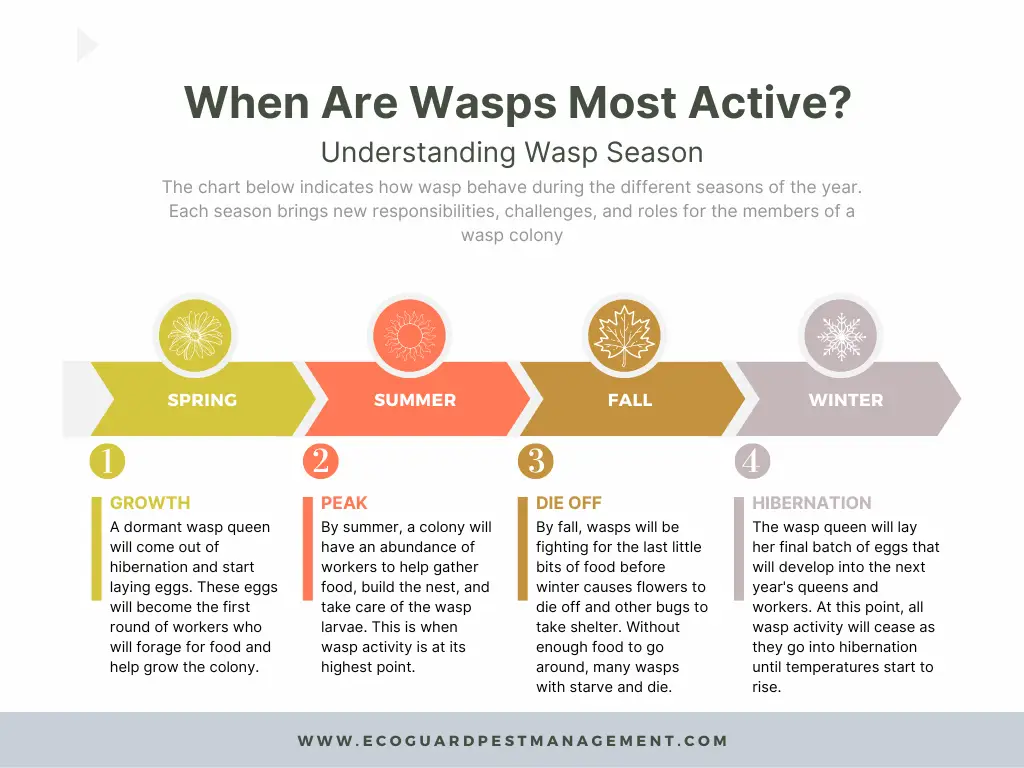
Wasp activity begins in spring when queens emerge from winter dormancy to establish new nests. Colonies grow throughout summer, reaching their largest and most aggressive size in late summer and early fall. Activity declines dramatically after the first hard freeze as the colony dies off, leaving only mated queens to overwinter.

Yes, yellow jackets and some other wasp species commonly build nests inside wall voids, attics, and other enclosed spaces. They access these areas through small cracks, gaps around utilities, or holes in exterior walls. Interior nests can be particularly dangerous as wasps may find their way into living spaces.

A single queen starts the nest in spring, and with favorable conditions, the colony can grow to several hundred wasps by midsummer. Some large yellow jacket colonies can contain thousands of individuals by fall. The nest grows continuously as the queen produces more workers throughout the season.

Wasps are attracted to food sources (including trash, outdoor dining areas, and fruit), water sources (birdbaths, pet bowls, puddles), and suitable nesting sites (eaves, attics, wall voids, and protected outdoor structures). Properties offering all three resources are most likely to experience wasp problems.

No, attempting to remove a wasp nest yourself is extremely dangerous and not recommended. Wasps defend their nests aggressively, and disturbing a nest can trigger a swarm attack resulting in multiple stings. Professional pest control technicians have the proper equipment, training, and products to eliminate nests safely.

No, wasps do not reuse old nests. Each spring, new queens establish entirely new colonies in new locations. However, if a site provided good conditions one year, a different queen may choose to build in the same or nearby location the following year, which is why exclusion is important.

Professional treatments typically begin working within hours. However, it's crucial to leave the treated nest in place initially to ensure that foraging wasps return and contact the treatment. Complete colony collapse usually occurs within 24-48 hours, after which the nest can be safely removed.

Remove any stingers if present, wash the area with soap and water, apply ice to reduce swelling, and take an antihistamine if needed for itching. Seek immediate medical attention if you experience signs of an allergic reaction such as difficulty breathing, swelling of the face or throat, dizziness, or rapid pulse.

While wasps require effective treatments for safety reasons, we use targeted application methods that minimize environmental impact. We focus treatments directly on nests rather than broad spraying, use products approved for residential use, and implement preventative measures to reduce the need for chemical treatments.

Related Articles & Resources

Learn more about wasp prevention, identification, and control
Are Murder Hornets Dangerous? Facts and Safety Guide

Are Murder Hornets Dangerous? Facts and Safety Guide

Learn about Asian giant hornets (murder hornets), their dangers to humans and honeybees, identification tips, and what insects are commonly mistaken for them.

Read Article →
Are Wasps Dangerous? Stings, Swarms & When to Seek Help

Are Wasps Dangerous? Stings, Swarms & When to Seek Help

Learn why wasps are dangerous, how they differ from bees, sting treatment, when to seek medical attention, and how to prevent wasp stings.

Read Article →
Are Wasps Pollinators? Their Role in Pollination & Benefits

Are Wasps Pollinators? Their Role in Pollination & Benefits

Learn how wasps act as pollinators, their specialized role with orchids and figs, diet and energy needs, and other benefits they provide to ecosystems.

Read Article →
How Long Do Wasps Live? Lifespan, Life Cycle & Seasonal Activity

How Long Do Wasps Live? Lifespan, Life Cycle & Seasonal Activity

Learn how long wasps live by role (workers vs queens), the wasp life cycle from egg to adult, seasonal nest activity, and when wasps die off.

Read Article →
How to Get Rid of Wasps: Safe Removal, Treatment & Prevention

How to Get Rid of Wasps: Safe Removal, Treatment & Prevention

Learn how to safely get rid of wasps including nest removal, treatment strategies, protective gear, wasp identification, and when to call professionals.

Read Article →
How to Repel Wasps: Natural and Effective Methods for Wasp Control

How to Repel Wasps: Natural and Effective Methods for Wasp Control

Learn how to repel wasps naturally with scientifically proven essential oils, DIY sprays, and prevention strategies. Discover which methods actually work and how to keep wasps away from your home.

Read Article →
What Are Wasps? Appearance, Lifespan, Diet & Behavior

What Are Wasps? Appearance, Lifespan, Diet & Behavior

Learn about wasps including appearance, lifespan, social vs solitary behavior, diet, purpose in ecosystems, why they sting, and how they compare to bees.

Read Article →
What Do Yellow Jackets Eat? Diet and Feeding Habits

What Do Yellow Jackets Eat? Diet and Feeding Habits

Learn what yellow jackets eat, their seasonal diet changes, why they invade picnics, and how to prevent them from your property.

Read Article →
When Is Wasp Season? Seasonal Activity & Peak Months

When Is Wasp Season? Seasonal Activity & Peak Months

Learn when wasps are most active by season, when wasp season starts and ends, best time to spray nests, and how climate change affects wasp populations.

Read Article →
View All Pest Control Articles →

Ready to Eliminate Your Wasp Problem?

Get a free estimate for your wasp problem today. Our experts will assess your property and provide a customized treatment plan.

Connect With Us

Follow EcoGuard Pest Management for tips, updates, and special offers

f𝕏yin