EcoGuard Pest Management
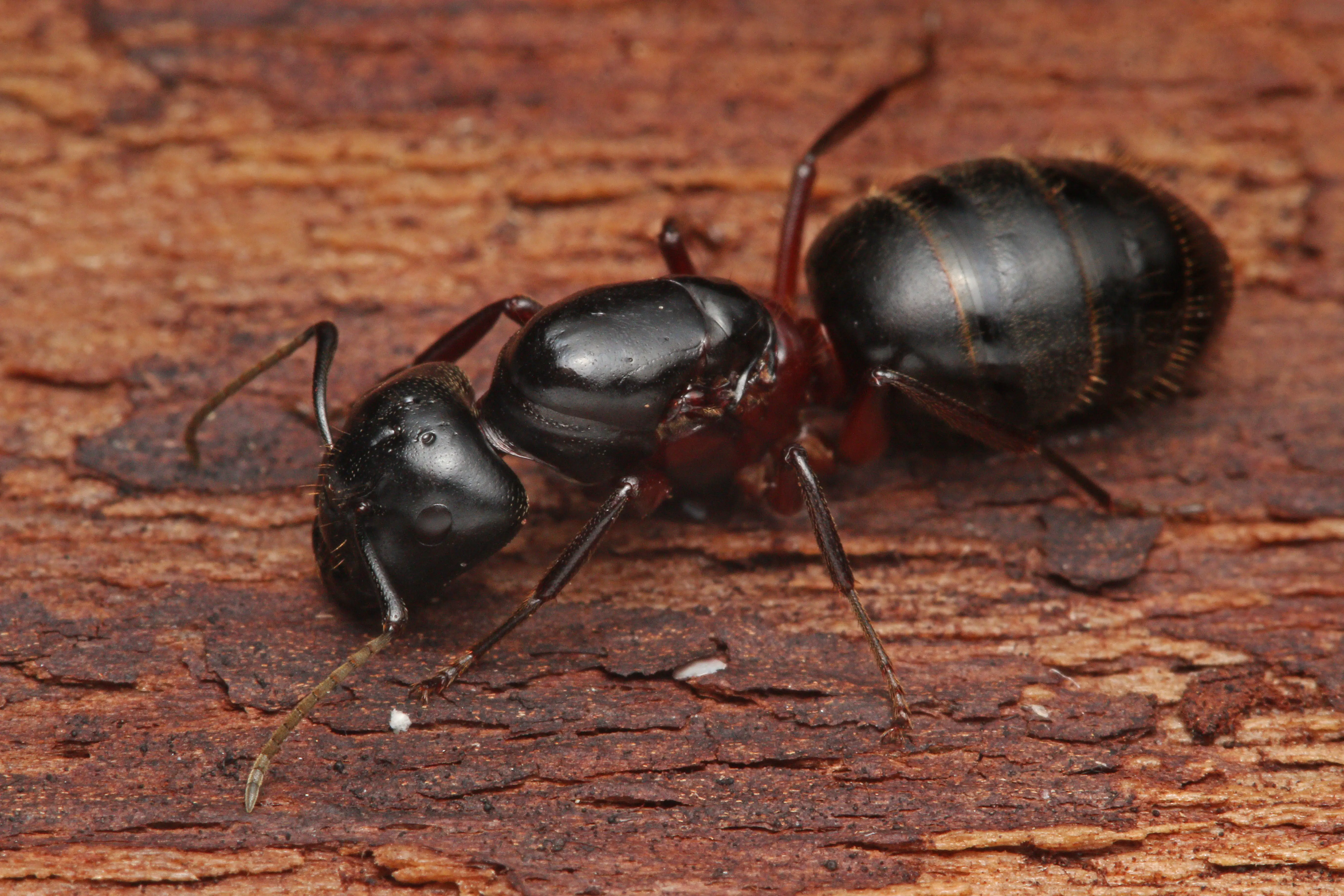
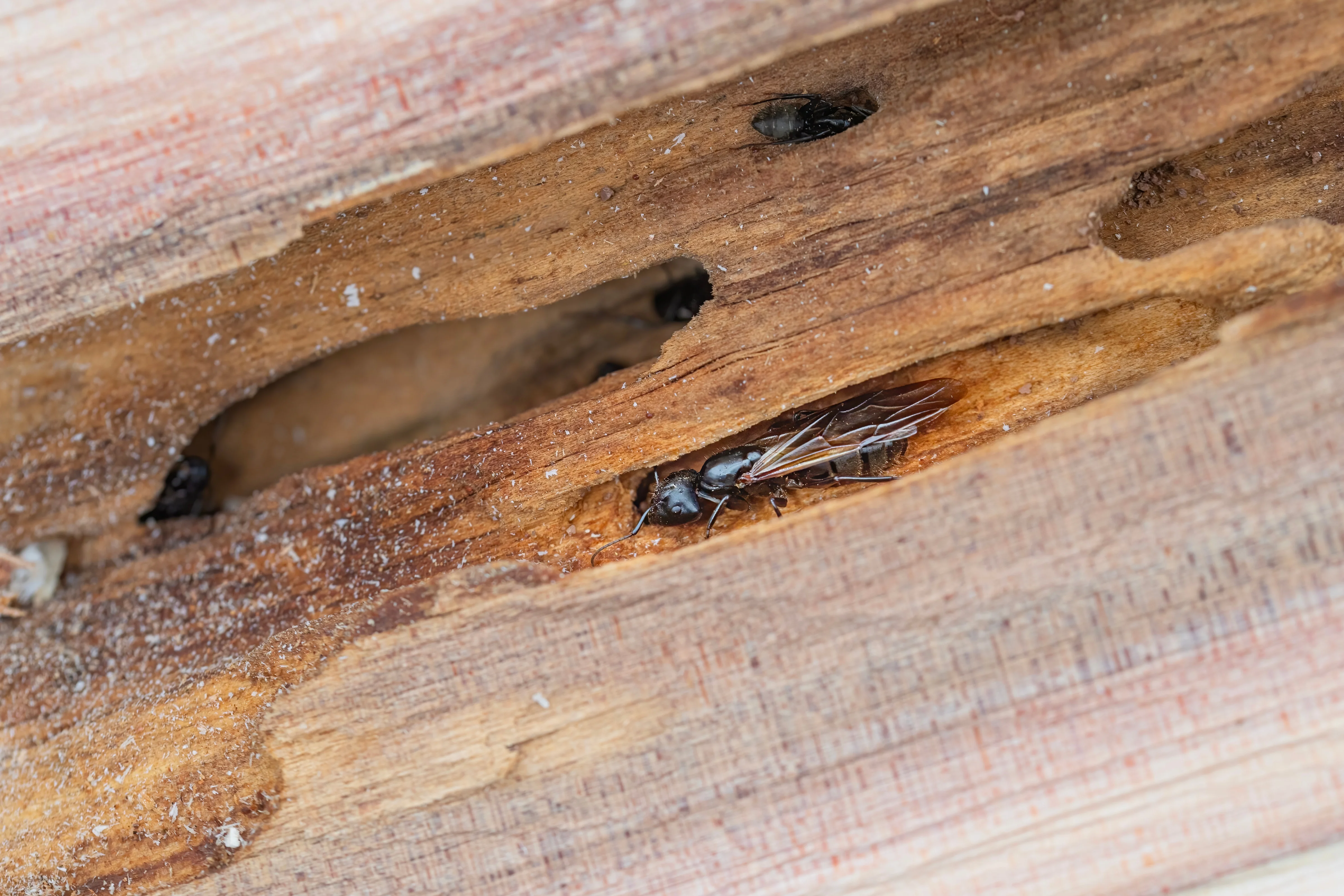
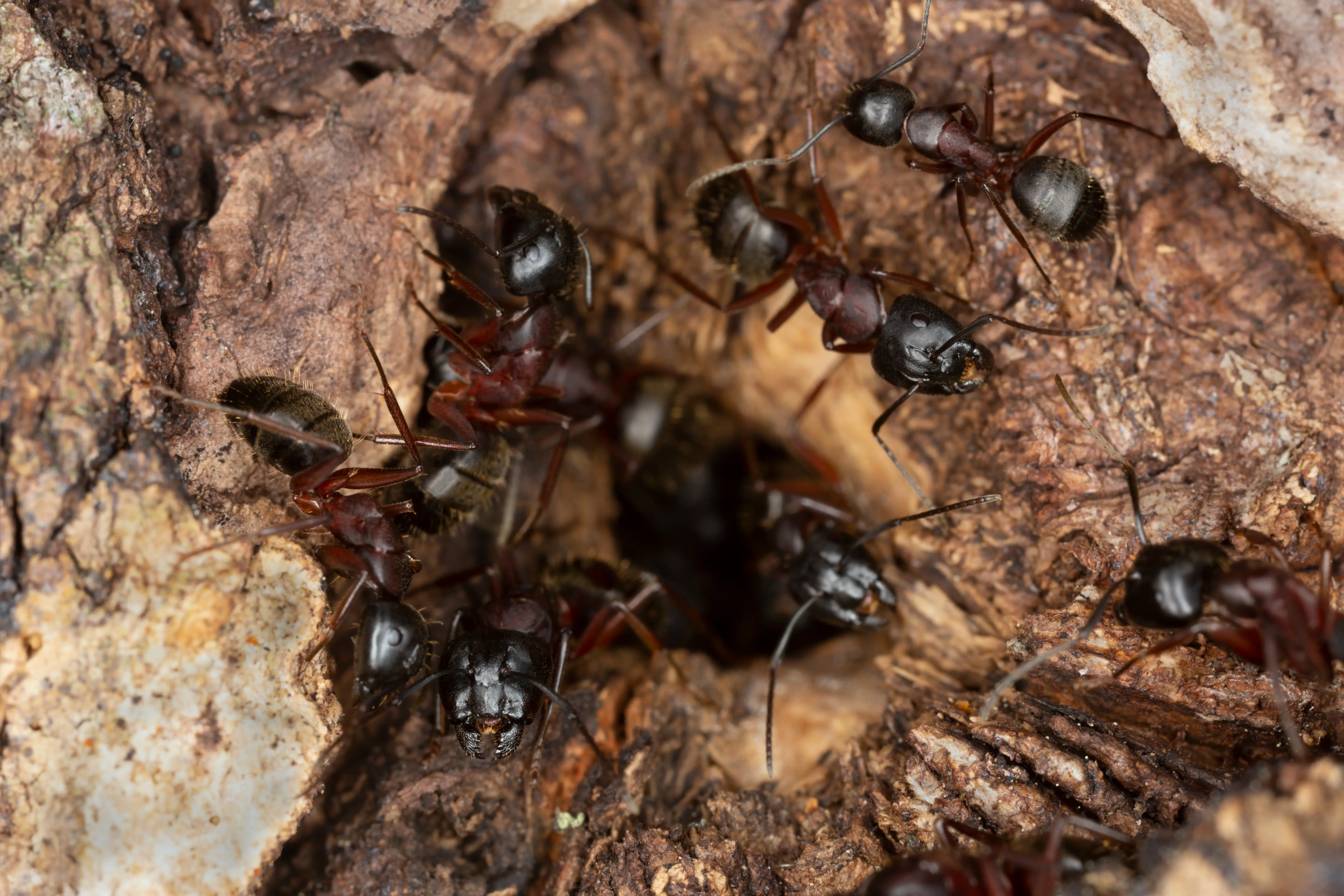
Carpenter ant on damaged wood
By Gary Anderson||9 min read

How to Get Rid of Carpenter Ants in the House

Complete guide to identifying, eliminating, and preventing carpenter ants before they cause structural damage to your home.

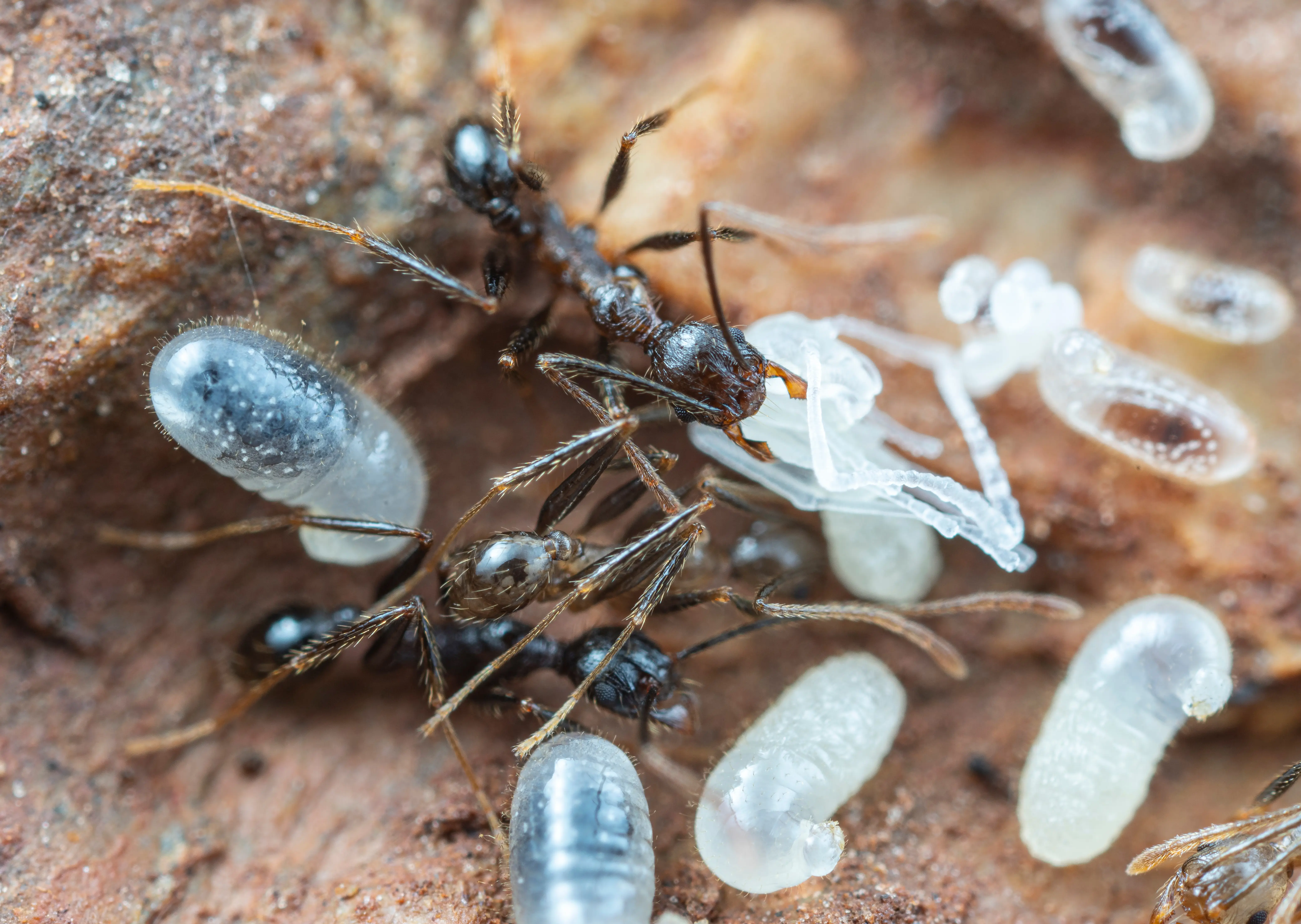
Carpenter ants are a significant pest problem capable of causing extensive damage to the wooden structures within your home. These relatively large ants create nests by hollowing out decaying wood, which can compromise the structural integrity of your house if left unchecked.

Unlike termites, carpenter ants do not eat wood. Instead, they remove decayed wood to establish their colonies by tearing little pieces away with their mandibles. This process can lead to serious and often hidden damage over time.

Important Distinction

Carpenter ants do NOT eat wood like termites do. They excavate wood to create nests, leaving behind fine sawdust-like debris called "frass." This makes their damage different but still serious.

How to Get Rid of Carpenter Ants Inside

Once you have identified a carpenter ant infestation inside your home, it is crucial to take immediate action. There are several effective methods to eliminate carpenter ants:

Indoor Baiting

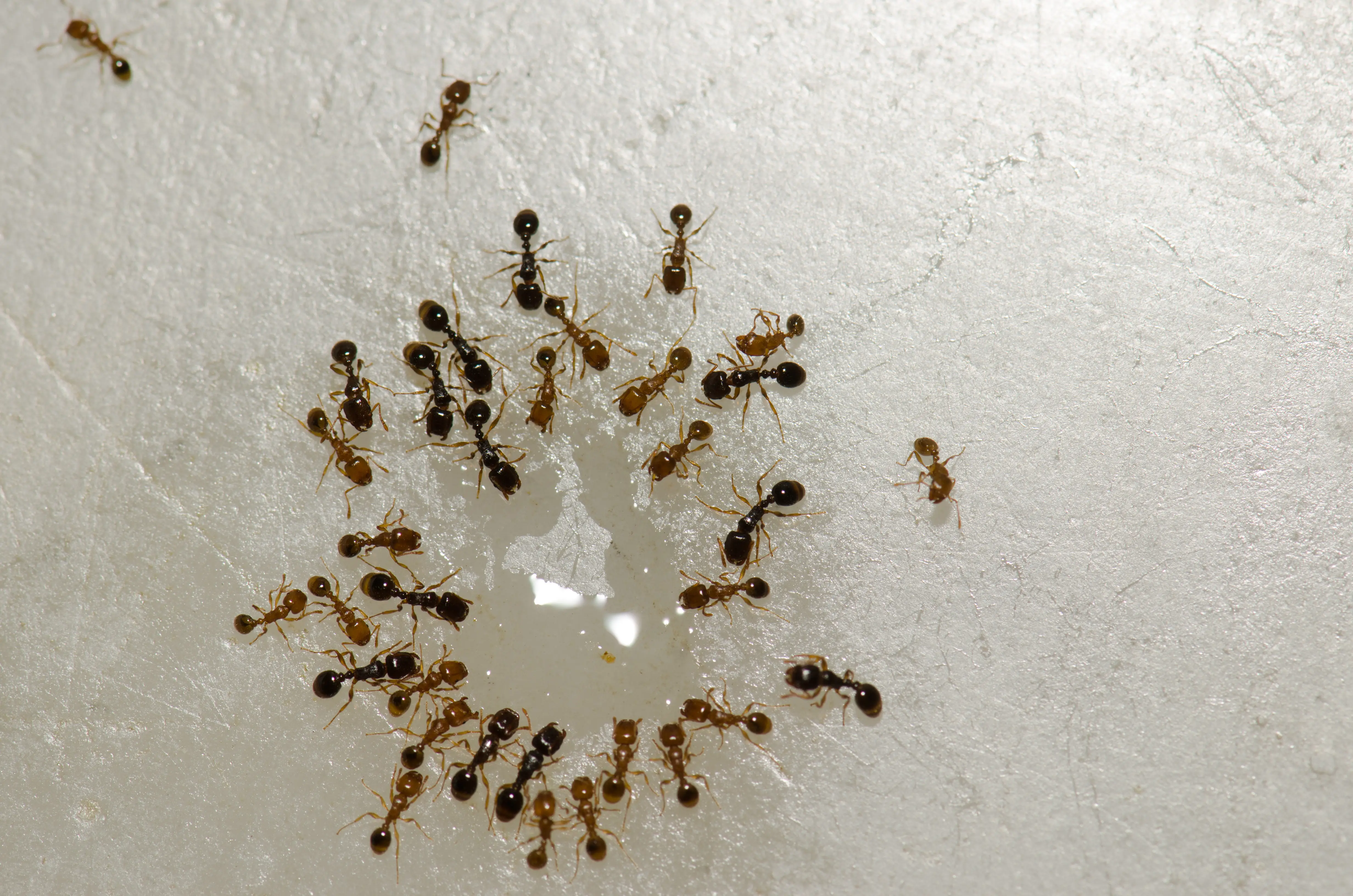
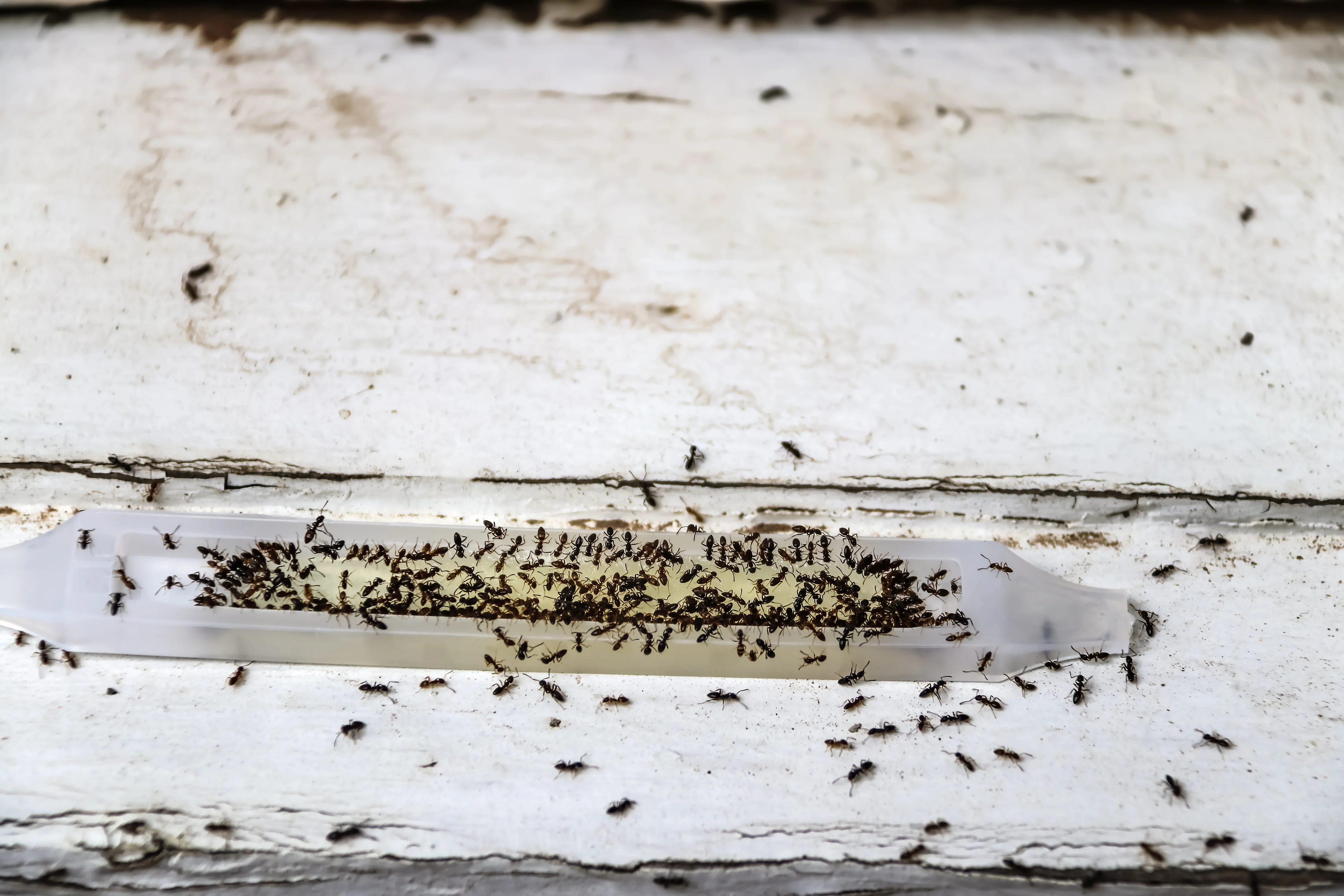
Baiting is one of the most effective strategies, especially when colonies are concealed or inaccessible. The toxic bait is carried back to the nest, spreading poison throughout the colony.

How to Apply:

Mix gel bait with a teaspoon of sugar and milk. Apply along ant trails. The slow-acting bait takes about 3 days to work, allowing distribution throughout the colony.

Pesticide Treatments

Pyrethrin-based pesticides are derived from chrysanthemum flowers and work by paralyzing and killing ants. Locate the nest, drill small holes, and inject spray directly into the colony.

Tip:

Use foaming products for hard-to-reach areas. Avoid spraying near electrical outlets; use insecticide dust instead.

Diatomaceous Earth

D.E. is a natural substance that dehydrates ants by breaking down their exoskeleton. It is completely organic and safe to use around the home.

Application:

Drill one-inch holes every six inches around affected areas. Use a bulb duster to blow D.E. into holes and wall voids. Handle with care to avoid inhaling dust.

How to Get Rid of Carpenter Ants Outside

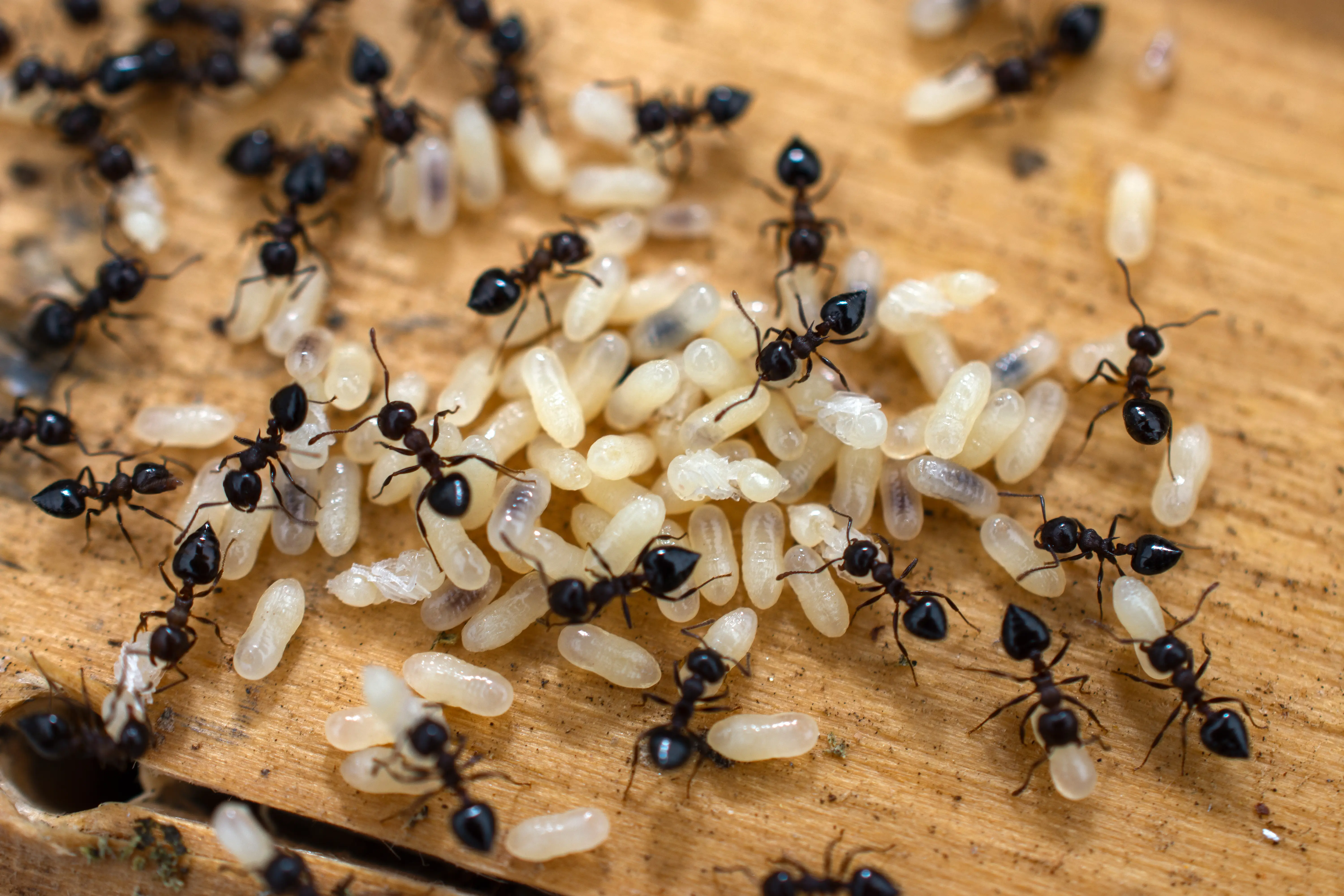
Treating carpenter ants inside does not always take care of the root problem if they have established a parent colony outside. To fully eradicate the problem, the entire colony needs to be located and treated.

Find and Remove the Nest

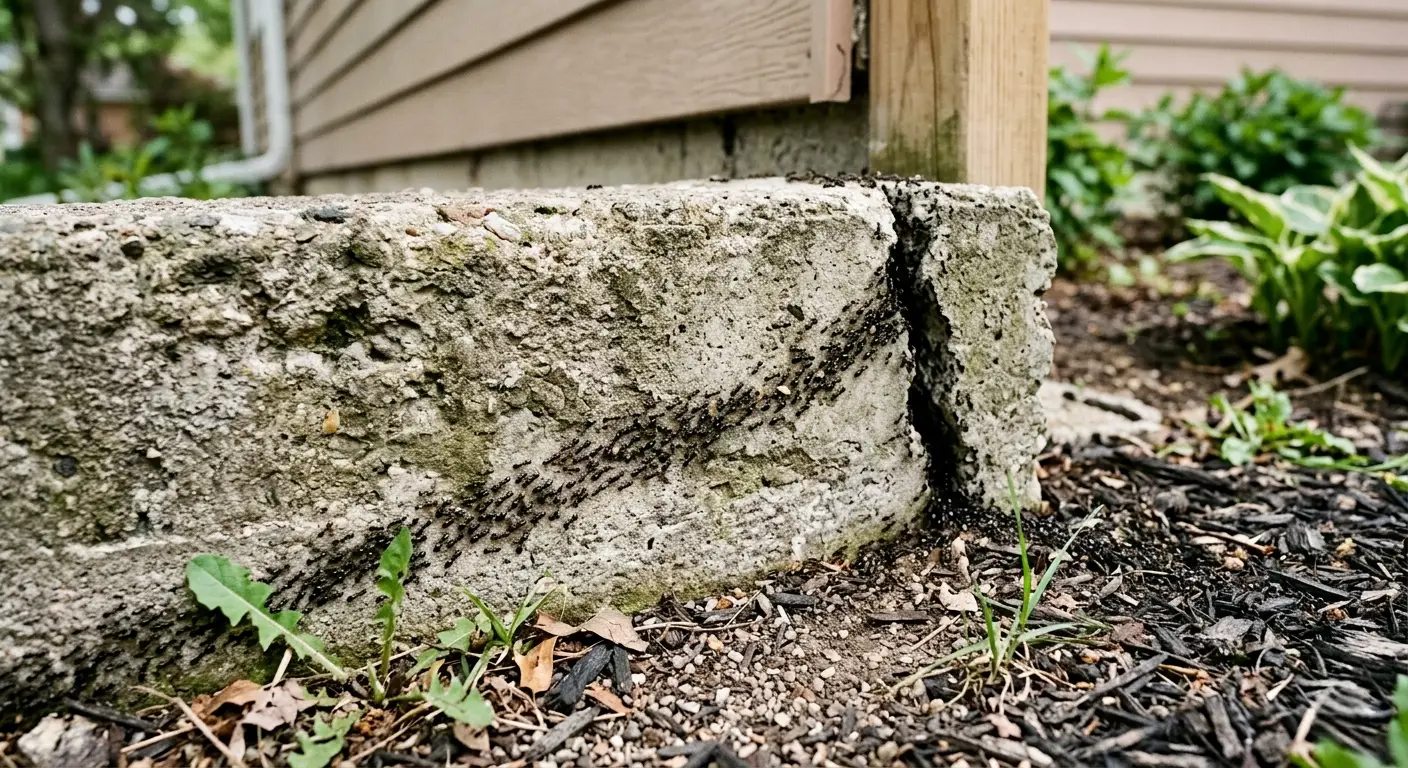
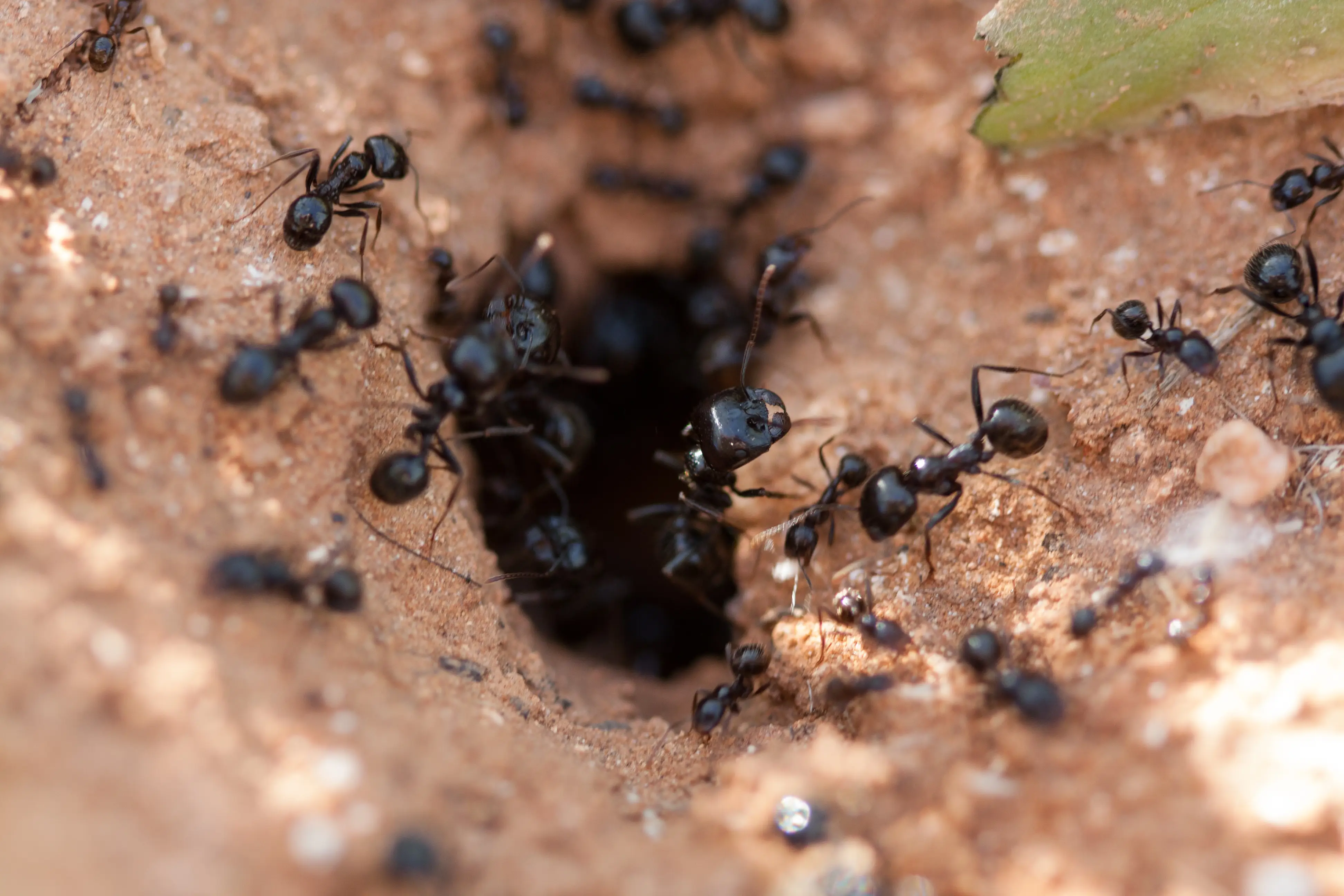
Carpenter ants nest in soft, decaying wood found in wood piles, dead tree stumps, lumber debris, sheds, patios, decks, and footings. Remove decaying wood and replace with sound material. Address moisture sources to prevent rot.

Outdoor Baiting

Use the same bait strategy around your home's perimeter and near potential nesting sites like tree bases, firewood piles, or stumps. Place bait heavily along identified ant paths. Use tamper-proof stations if you have pets or children.

Non-Repellent Sprays

Products like Termidor SC remain active for years. Apply around the foundation and suspected ant trails. Non-repellent sprays allow ants to carry insecticide back to the colony, affecting the entire nest.

Direct Dusting

When you have access to the nest, use specialized insecticide dust to target and kill carpenter ants rapidly. Use a duster to reach deep into the nest, contacting the queen and entire colony.

Boric Acid Treatments

Mix boric acid with powdered sugar (1/3 sugar to 2/3 boric acid). Place in bottle caps where ants are active. Workers carry bait back to the nest. Can take several weeks but is powerful. Borax is a natural, non-toxic alternative.

Professional Pest Control

If DIY methods are not resolving the problem, professional services offer tailored solutions, thorough treatment, and ongoing monitoring. Many companies offer year-round protection subscriptions.

Carpenter Ants Causing Structural Damage?

Our experts locate hidden nests and eliminate colonies before they compromise your home.

Call (866) 326-2847

How to Identify Carpenter Ants

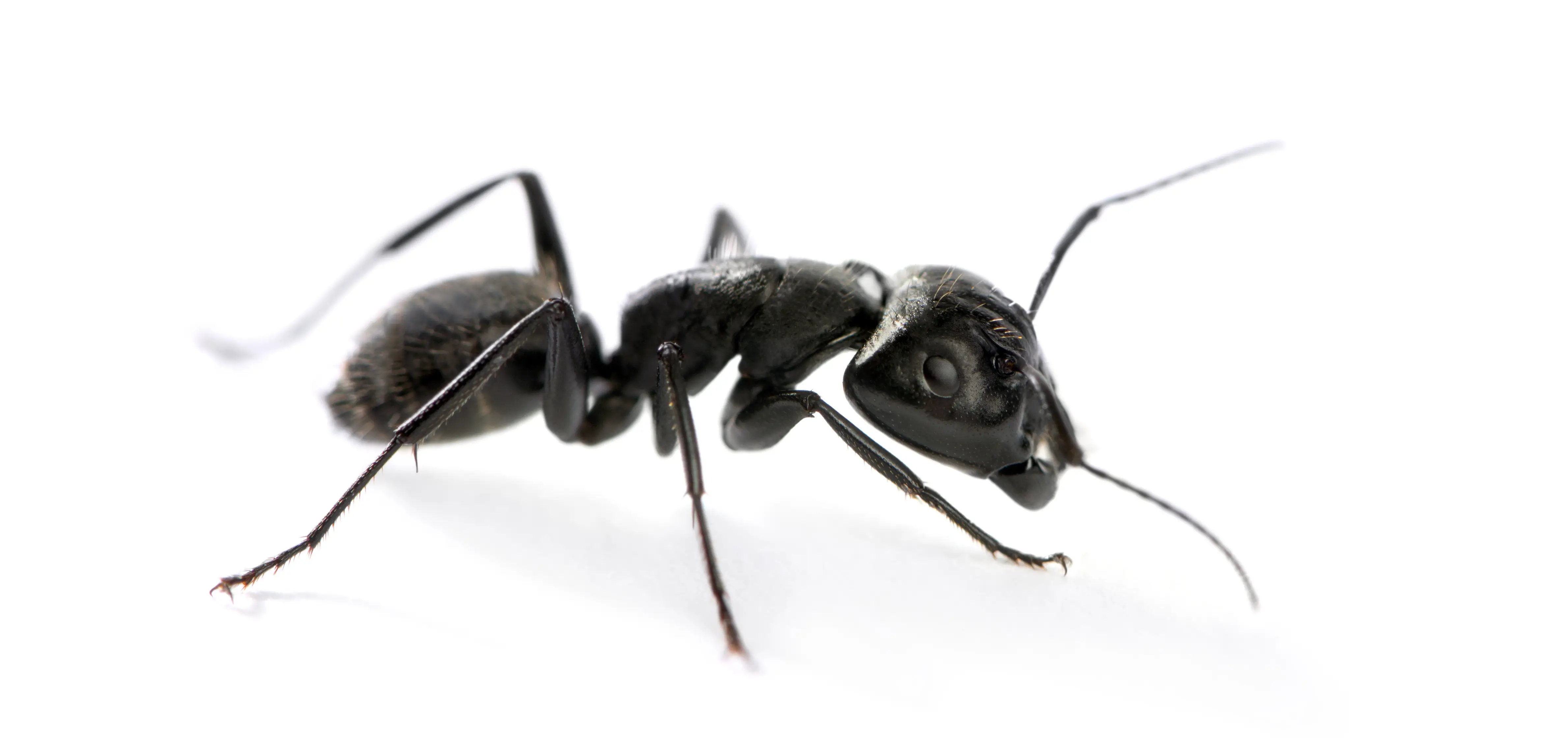
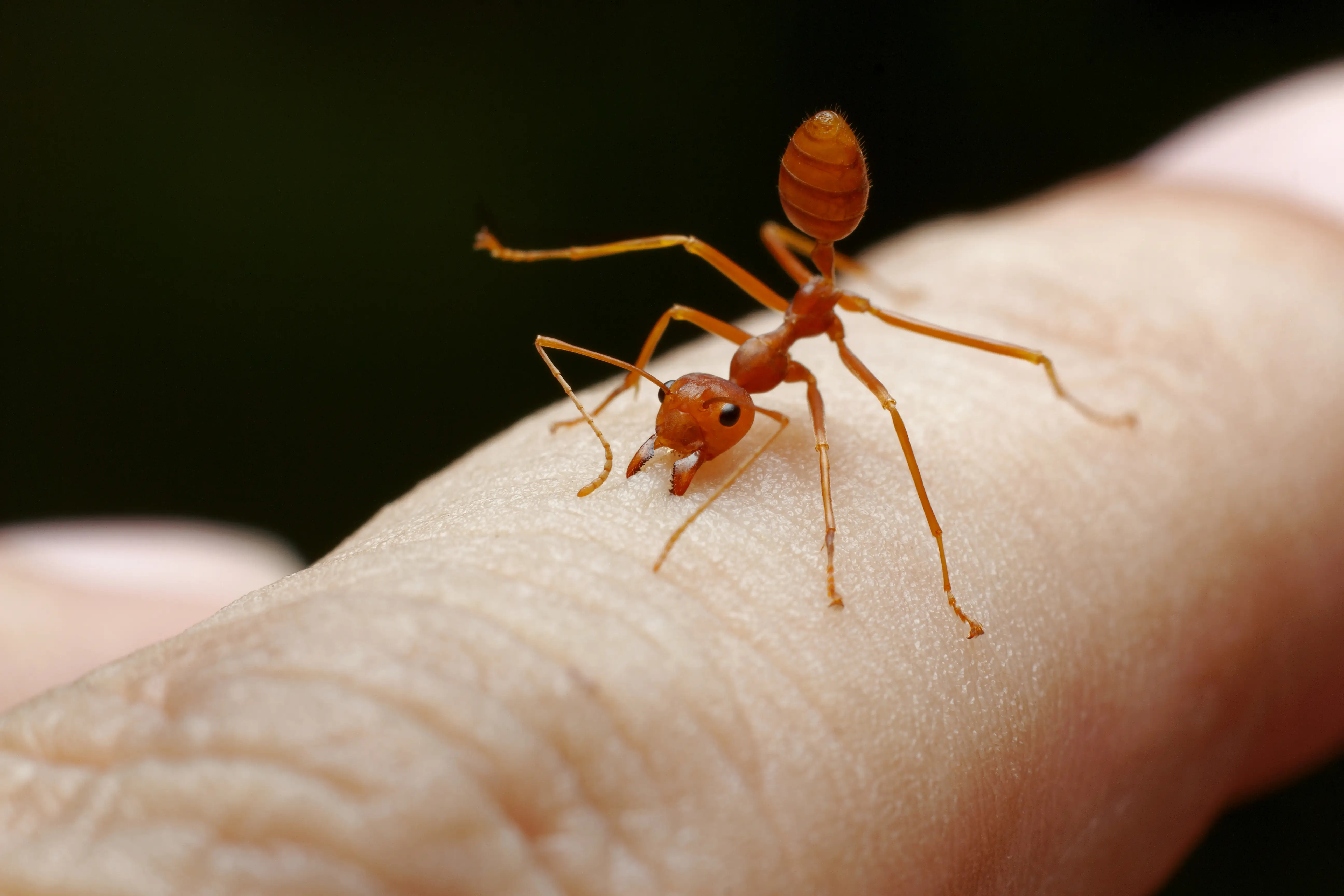
Identifying carpenter ants is crucial for effectively managing infestations. Carpenter ants can vary in size and color, even within a single species, typically ranging from 1/4 to 1 inch in length, making them one of the larger ant species.

1/4" - 1"
Body length
Black
Most common color
1 Node
Between thorax and abdomen

Key Identifying Features

  • Smooth, rounded back (evenly curved thorax)
  • Narrow pinched waist with a single bump (node)
  • Elbowed antennae
  • Large mandibles for excavating wood
  • Shiny black color (most common species: Camponotus pennsylvanicus)
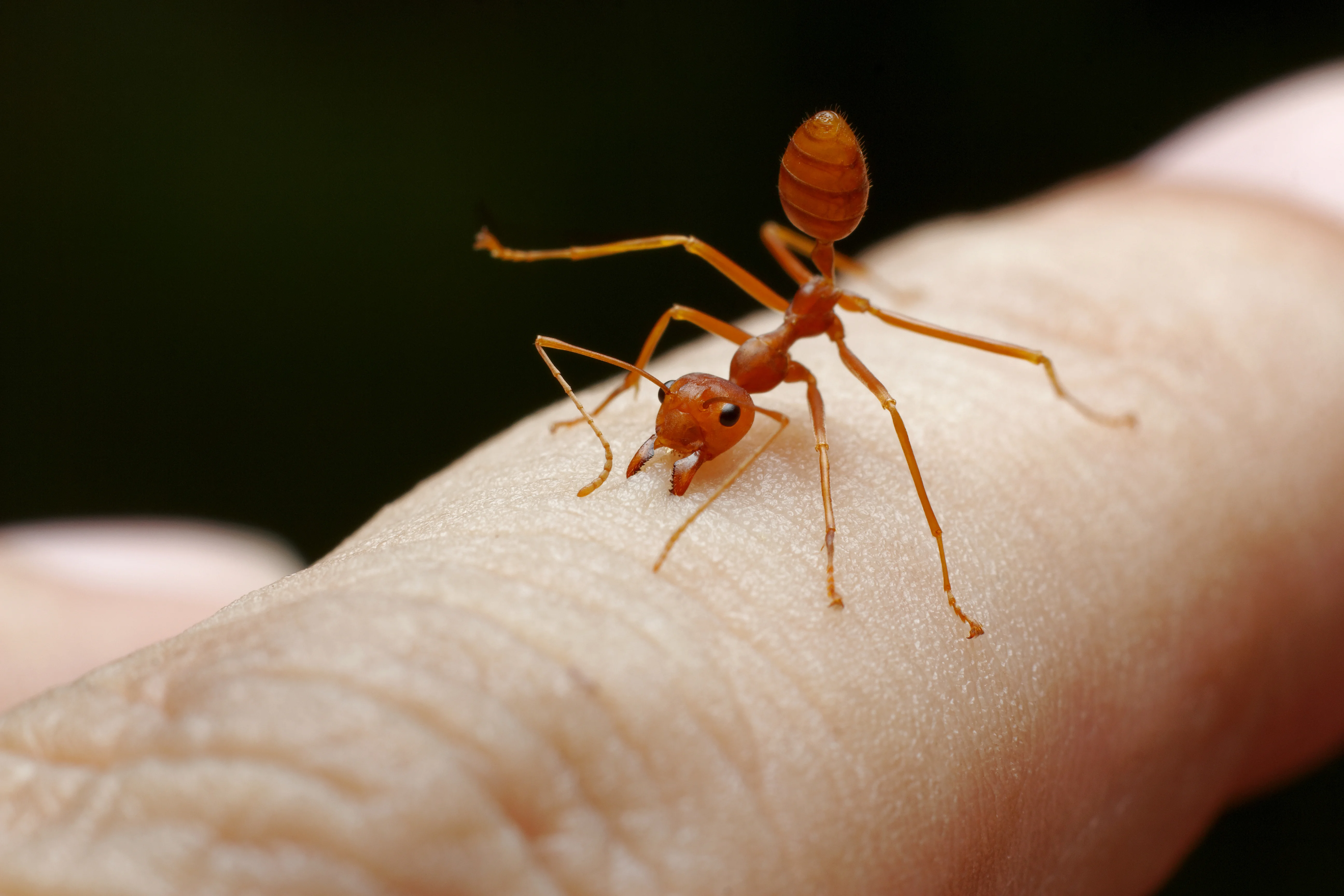
  • Can also be reddish-brown or yellowish depending on species

Carpenter Ants vs Termites

Homeowners often confuse carpenter ants with termites due to similar structural damage. However, these insects are fundamentally different:

Carpenter Ants

  • Do NOT eat wood
  • Tunnel through wood to create nests
  • Leave fine wood dust (frass)
  • Narrow, constricted waist
  • Jointed (elbowed) antennae
  • Wings shorter relative to body

Termites

  • Actually EAT wood
  • Cause far more extensive damage
  • Create rough, dirty tunnels
  • Cylindrical body shape
  • Straight antennae
  • Longer wings relative to body

Signs of Carpenter Ants

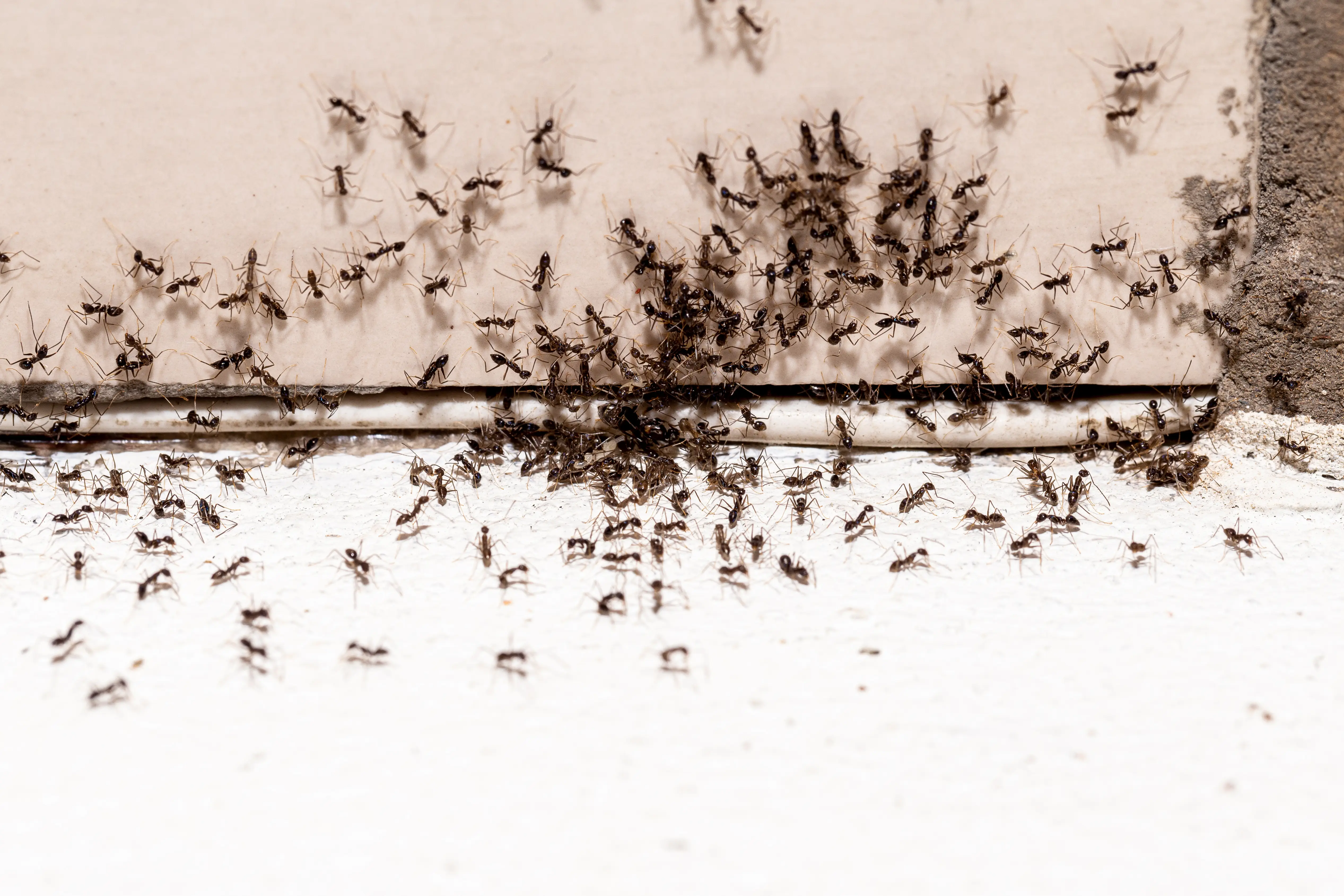
Inspecting for signs of carpenter ants is crucial to prevent significant damage. Here are key indicators that carpenter ants might have invaded your property:

Piles of Sawdust (Frass)

Carpenter ants excavate wood by shredding tiny pieces with their mandibles. This results in small piles of wood shavings near entry points or below wooden structures.

Wood Damage

Look for smooth, clean tunnels within wood. Unlike the ragged, dirty tunnels created by termites, carpenter ant galleries are polished and free of debris.

Rustling Sounds

At night, you might hear a faint rustling or crackling noise within the walls. This sound comes from carpenter ants gnawing on the wood.

Worker Ants

Seeing large, black or dark brown ants around moist or damp wood is a strong indication. These foraging ants can lead you back to their nest.

Swarmer Wings

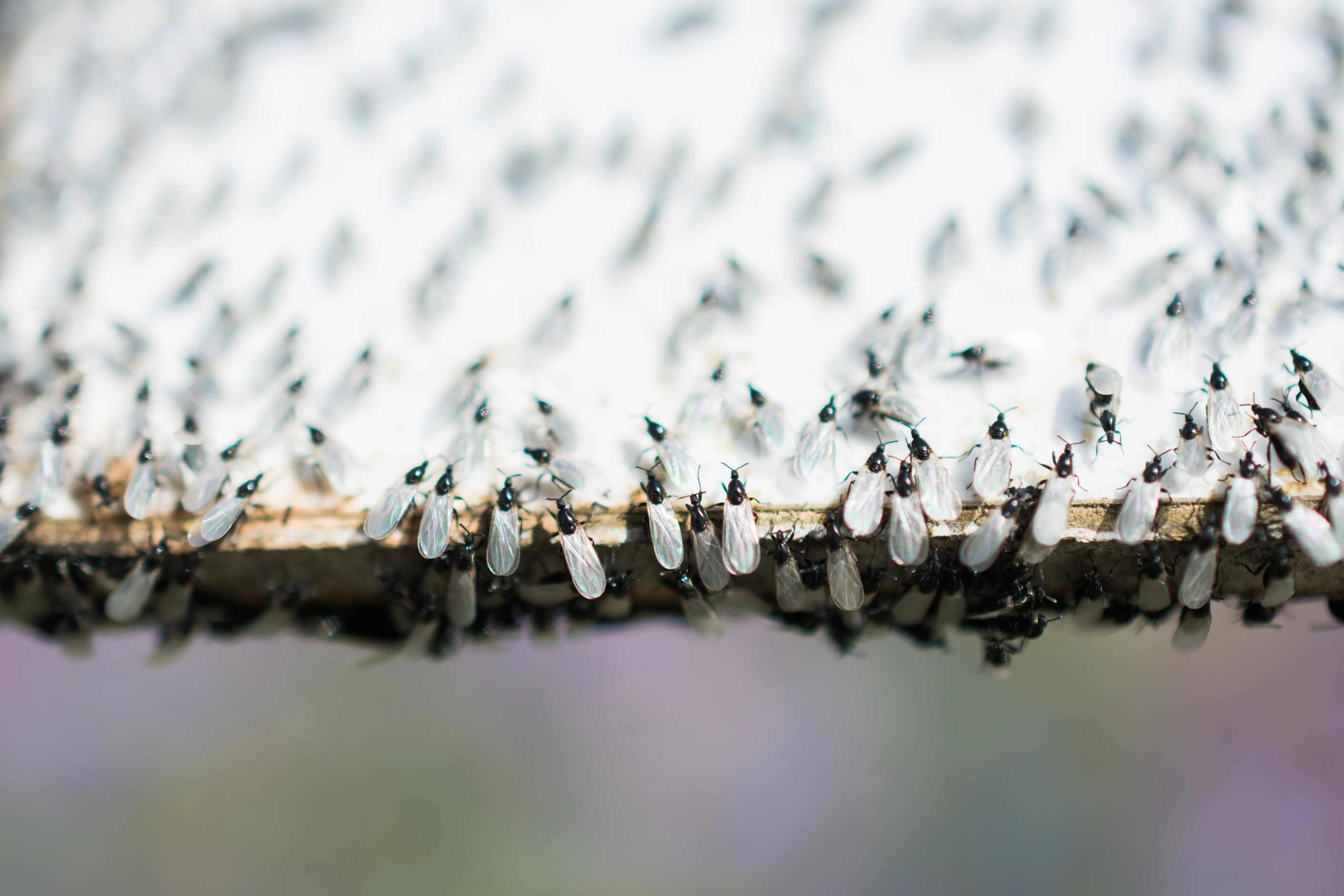
During spring and early summer, you might find discarded wings near windowsills, doors, or entry points. These belong to reproductive ants starting new colonies.

Small Holes in Wood

Discovering tiny, round holes in wooden structures can indicate carpenter ants. These holes are used to eject wood debris from their nests.

How to Find a Carpenter Ant Nest

Finding a carpenter ant nest requires a keen eye and attention to detail. Here is how you can identify and locate their nests effectively:

1. Inspect Damp Areas

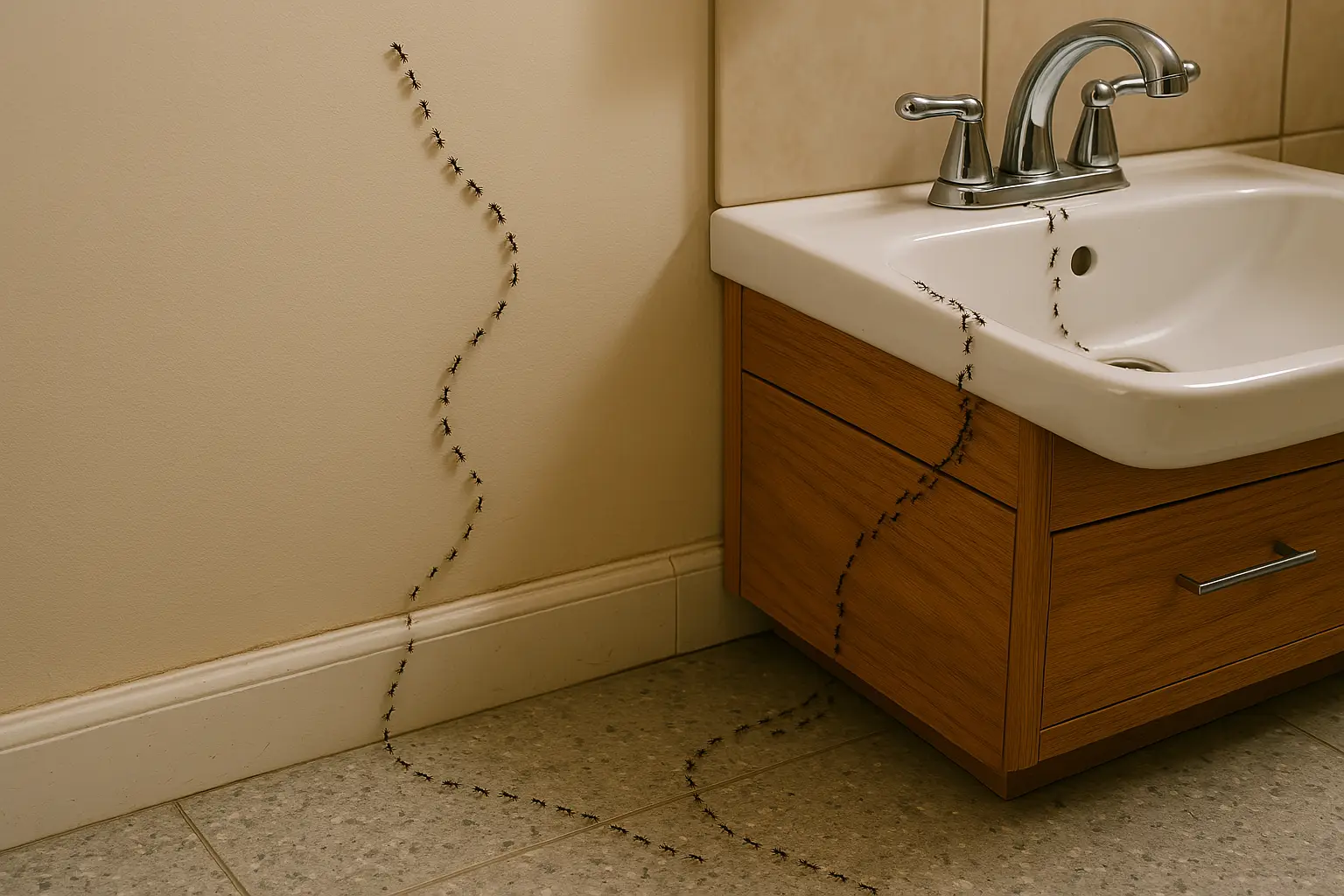
Carpenter ants are drawn to moist, decaying wood. Check areas with water leaks like bathrooms, under sinks, and around window and door frames.

2. Check Wood Damage Areas

Look for small holes in wood and piles of fine sawdust or frass. These are typically found near entry points to the nest and indicate tunneling activity.

3. Follow Ant Trails

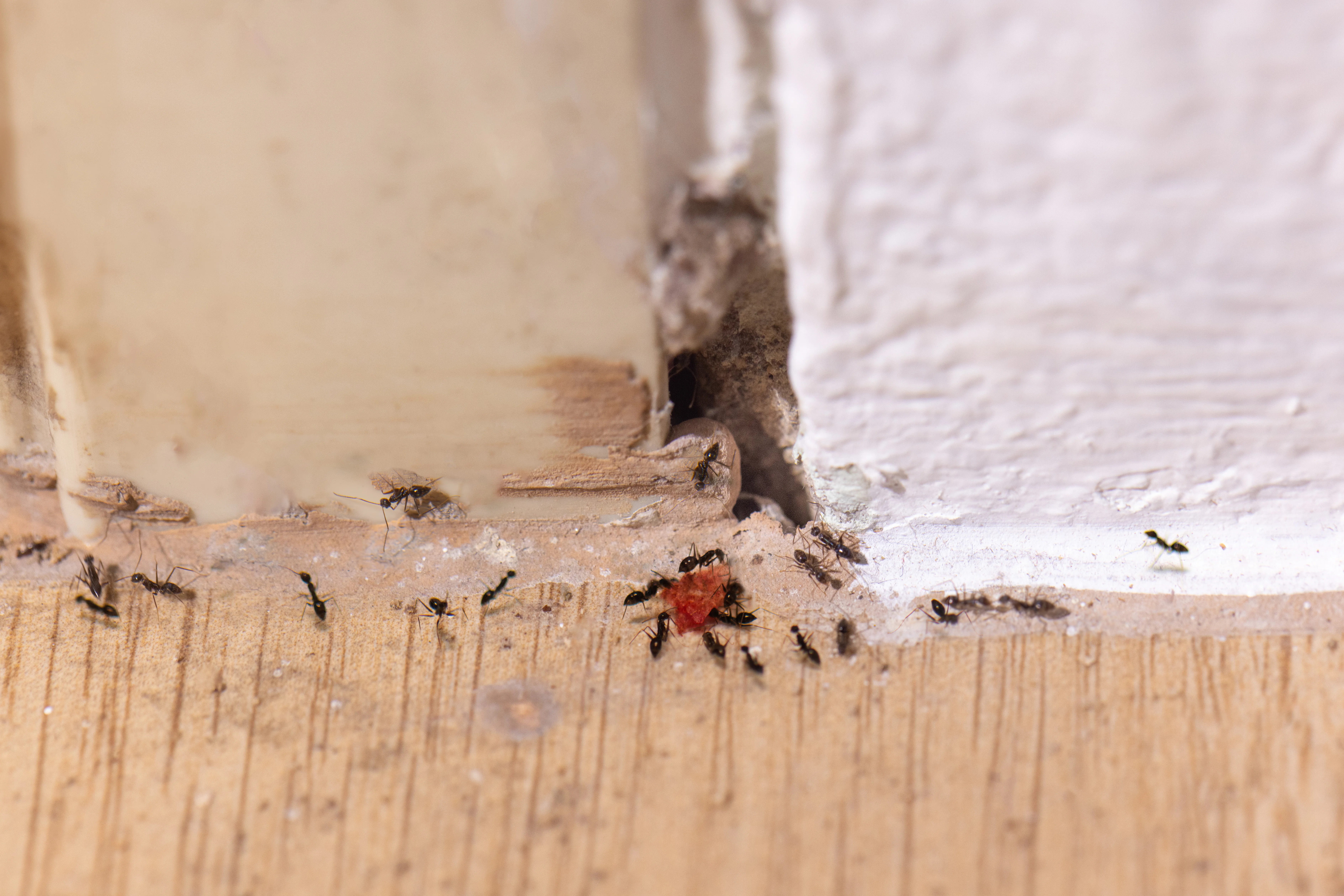
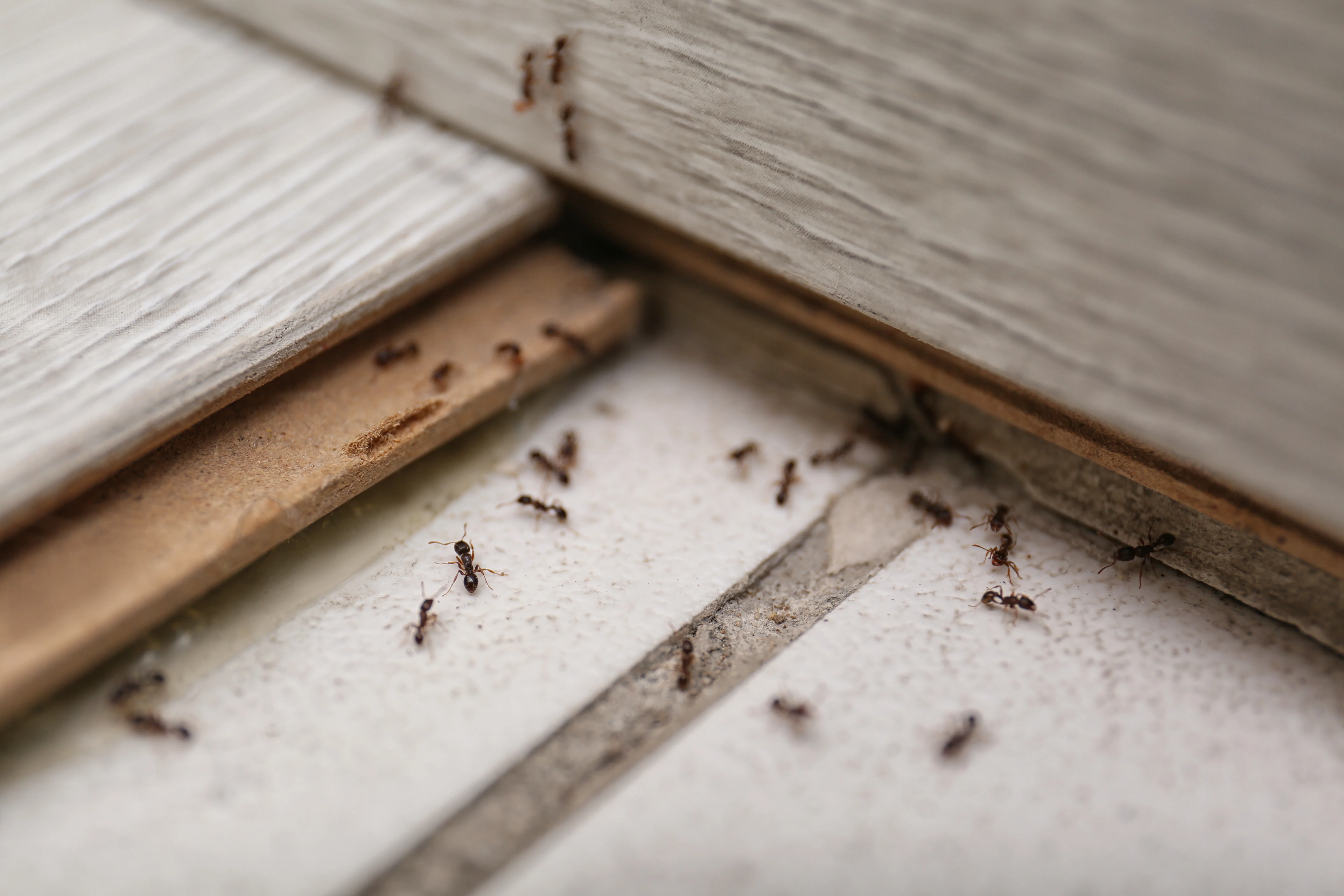
Carpenter ants leave pheromone trails. Track these along baseboards, cabinets, doors, and wooden structures back to their origin. Be patient; they may lead to hidden nests.

4. Listen for Sounds

Carpenter ants create rustling noises within walls. Tap your walls to identify hollow spots that may house a nest. This helps pinpoint the exact location.

5. Use Bait to Lure Them

If ants are elusive, set up bait stations with diluted honey or sugar milk. Since carpenter ants are most active at night, check traps after dark to discover their nest.

How to Prevent Carpenter Ants from Returning

Preventing carpenter ants from re-infesting your home involves several proactive measures to eliminate potential nesting sites and entry points:

Fix Moisture Issues

Carpenter ants are attracted to damp wood. Repair leaks in plumbing or roofing that cause moisture buildup. Ensure proper ventilation in crawl spaces, attics, and basements.

Seal Entry Points

Use silicone caulk to seal cracks and crevices around your home's foundation, doors, and windows. This blocks potential entry points for ants.

Remove Clutter and Wood

Dispose of old wood piles, dead tree stumps, and potential nesting materials. Store firewood away from your home and off the ground.

Maintain Cleanliness

Carpenter ants still seek food that normal ants eat. Clean up crumbs and spills immediately, store food in sealed containers, and take out trash regularly.

Prune Trees and Bushes

Trim branches and shrubs that touch your house to prevent ants from using them as bridges to enter your home.

Eliminate Scent Trails

Mix one part liquid dish soap with two parts water. Spray over pheromone trails to erase the ants' path and discourage them from coming back.

Contact EcoGuard if You Are Dealing with Carpenter Ants

If you are struggling to eliminate carpenter ants from your home, do not hesitate to seek professional help. EcoGuard Pest Management offers expert services to effectively address and prevent carpenter ant infestations. Our experienced technicians will identify the source of the problem and implement targeted treatments to ensure your home remains ant-free.

Call (866) 326-2847Get Free Quote

Get Rid of Carpenter Ant FAQs

What is the fastest way to get rid of carpenter ants?

The fastest way to get rid of carpenter ants is to locate and treat their nest directly using insecticidal dust or sprays. Combining this with baiting methods, which allows the ants to carry poison back to the colony, can ensure thorough eradication. For persistent infestations, contacting a professional pest control service is recommended for swift and effective removal.

What do carpenter ants hate the most?

Carpenter ants hate dry environments the most, as they prefer moist, decaying wood for nesting. They are also repelled by essential oils such as tea tree, cedarwood, and citrus, as well as by diatomaceous earth which dehydrates and kills them. Keeping your home dry and using these natural repellents can help deter carpenter ants.

What kills a carpenter ant colony?

To kill a carpenter ant colony, use slow-acting toxic baits that worker ants carry back to the nest to effectively poison the entire colony. Additionally, direct dusting with insecticidal dust or boric acid into the nest can eliminate the ants by targeting the queen and all colony members. Both methods ensure thorough eradication by reaching deep into the colony.

Do carpenter ants go away on their own?

Carpenter ants do not go away on their own. They continue to cause damage to wooden structures as they expand their nests, which makes it crucial to address the infestation promptly. Effective treatment and prevention measures are necessary to eliminate the colony and prevent further damage.

From Our Blog

Related Articles

14 Natural Ant Repellent Strategies That Actually Work

14 Natural Ant Repellent Strategies That Actually Work

Discover effective natural ant repellents including mint, vinegar, cinnamon, and more. Learn how to keep ants out of...

Read Article
16 Common Types of Ants in California | Identification & Treatment

16 Common Types of Ants in California | Identification & Treatment

Identify 16 common ant species in California including carpenter ants, fire ants, and Argentine ants. Learn their...

Read Article
Are Fire Ants Dangerous? Understanding Fire Ant Risks & Safety

Are Fire Ants Dangerous? Understanding Fire Ant Risks & Safety

Learn about fire ant dangers including painful stings, allergic reactions, and property damage. Comprehensive guide on...

Read Article
Argentine Ants: Complete Identification, Control & Prevention Guide

Argentine Ants: Complete Identification, Control & Prevention Guide

Learn to identify Argentine ants, understand their supercolony behavior, and discover effective control strategies....

Read Article
Common Signs of Carpenter Ant Damage

Common Signs of Carpenter Ant Damage

Learn to identify carpenter ant damage signs including frass, holes, tunnels, and how to distinguish carpenter ant...

Read Article
Do Ants Bite? Symptoms, Treatment & Prevention

Do Ants Bite? Symptoms, Treatment & Prevention

Learn about ant bites vs stings, which ants bite, symptoms, allergic reactions, treatment options, and how to prevent...

Read Article
Do Ants Eat Aphids? The Ant-Aphid Relationship Explained

Do Ants Eat Aphids? The Ant-Aphid Relationship Explained

Learn about the fascinating relationship between ants and aphids, how ants farm aphids for honeydew, problems aphids...

Read Article
Do Ants Ever Sleep? Ant Sleep Patterns Explained

Do Ants Ever Sleep? Ant Sleep Patterns Explained

Discover the fascinating sleep patterns of ants, how worker ants take 250 power naps daily, queen ant sleep habits, and...

Read Article
Do Carpenter Ants Eat Wood? Understanding Carpenter Ant Damage

Do Carpenter Ants Eat Wood? Understanding Carpenter Ant Damage

Learn the truth about carpenter ants and wood. Unlike termites, carpenter ants don\

Read Article
How Do Ant Baits and Traps Work? Complete Guide to Ant Bait Systems

How Do Ant Baits and Traps Work? Complete Guide to Ant Bait Systems

Learn how ant baits and traps work to eliminate entire colonies. Discover bait types, active ingredients, placement...

Read Article
How Do Ants Communicate With Each Other? Complete Guide to Ant Communication

How Do Ants Communicate With Each Other? Complete Guide to Ant Communication

Learn how ants communicate using pheromones, touch, sound, and body language. Discover why ant communication is key to...

Read Article
How Do Ants Get in the House? Complete Entry Point Guide

How Do Ants Get in the House? Complete Entry Point Guide

Learn how ants get into your house through foundation cracks, windows, utility lines, and more. Discover entry points,...

Read Article
How Do Ants Get Into Your House? Entry Points & Prevention

How Do Ants Get Into Your House? Entry Points & Prevention

Learn how ants enter your home through cracks, gaps, and openings. Discover where ants hide, what attracts them, and...

Read Article
How Do Ants Mate and Reproduce? Ant Reproduction Explained

How Do Ants Mate and Reproduce? Ant Reproduction Explained

Learn how ants mate during nuptial flights, how queen ants reproduce, the role of drones, and unique reproductive...

Read Article
How Many Ants Are in a Colony? Complete Guide to Ant Colony Size

How Many Ants Are in a Colony? Complete Guide to Ant Colony Size

Learn how many ants live in a colony, from small carpenter ant nests to Argentine ant supercolonies with billions....

Read Article
How to Get Rid of Ants Inside and Outside Your Home

How to Get Rid of Ants Inside and Outside Your Home

Learn how to get rid of ants inside your home, repel them before they enter, and eliminate outdoor colonies. Complete...

Read Article
Understanding Ant Colony Structure and Hierarchy

Understanding Ant Colony Structure and Hierarchy

Learn about ant colony structure, hierarchy, and how ants work together. Discover the roles of queens, workers, drones,...

Read Article
What Are Ants? Complete Guide to Ant Biology, Behavior & Control

What Are Ants? Complete Guide to Ant Biology, Behavior & Control

Learn everything about ants including appearance, colony hierarchy, life cycle, diet, defenses, and how to get rid of...

Read Article
What Are Red Ants? Fire Ant Identification & Control

What Are Red Ants? Fire Ant Identification & Control

Learn about red ants and fire ants, how to identify them, their behavior, dangers of their stings, and effective...

Read Article
What Attracts Ants Inside the House? Prevention Tips

What Attracts Ants Inside the House? Prevention Tips

Learn what attracts ants to your home including food, water, and shelter. Discover prevention tips and how to get rid...

Read Article
What Do Ants Eat and Drink in Your House?

What Do Ants Eat and Drink in Your House?

Learn what ants eat including sugars, proteins, seeds, fungus, and other insects. Discover how different ant species...

Read Article
What Happens When the Queen Ant Dies?

What Happens When the Queen Ant Dies?

Learn what happens when a queen ant dies, how to identify a queen, the ant queen life cycle, and how to effectively...

Read Article
What's the Lifespan of an Ant? Guide to Ant's Life Cycle

What's the Lifespan of an Ant? Guide to Ant's Life Cycle

Learn how long ants live based on species, caste, and gender. Discover the ant life cycle from egg to adult and factors...

Read Article
When is Ant Season? Complete Guide to Ant Activity Patterns

When is Ant Season? Complete Guide to Ant Activity Patterns

Learn when ant season occurs in your region, peak activity times by species, and seasonal prevention strategies....

Read Article
Where Do Ants Go in the Winter? Complete Winter Behavior Guide

Where Do Ants Go in the Winter? Complete Winter Behavior Guide

Discover where ants go in winter, how they survive freezing temperatures through diapause, and why they may invade your...

Read Article
Where Do Ants Live? Complete Guide to Ant Habitats

Where Do Ants Live? Complete Guide to Ant Habitats

Discover where ants live outdoors and indoors, from underground colonies to wall voids. Learn about species-specific...

Read Article
Why Are Flying Ants a Problem? Identification and Prevention

Why Are Flying Ants a Problem? Identification and Prevention

Learn why flying ants appear, how to identify them vs termites, which species swarm, and how to prevent and eliminate...

Read Article
Why Are There Ants in My Bathroom? Causes & Solutions

Why Are There Ants in My Bathroom? Causes & Solutions

Discover why ants invade bathrooms and learn effective solutions. Understanding moisture, food sources, and shelter...

Read Article