EcoGuard Pest Management
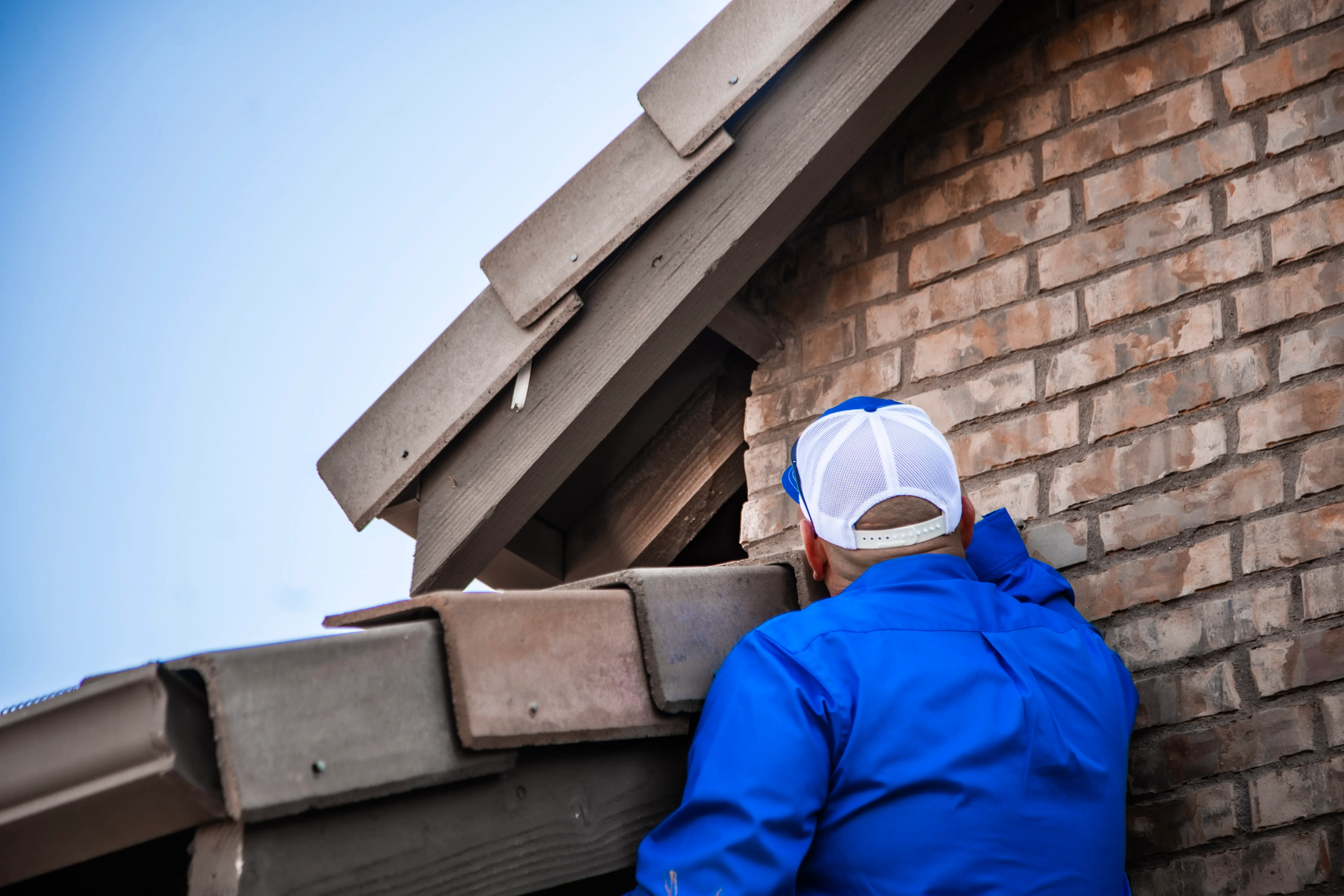
Professional pigeon control technician installing deterrent systems on commercial building

Professional Pigeon Control & Management Services

Pigeons, often called 'rats of the sky,' create serious problems for homes and businesses in urban and suburban settings. These prolific birds carry over 60 diseases transmissible to humans and pets, while their nests harbor parasites including mites, fleas, and ticks. Their highly acidic droppings corrode building materials, damage roofing, clog gutters, and create slip hazards. Because pigeons are non-migratory and reproduce year-round, infestations grow rapidly and become increasingly difficult to control. EcoGuard Pest Management specializes in comprehensive pigeon control using integrated pest management strategies that eliminate current populations and prevent future infestations.

Pigeon Pest Control Experts

EcoGuard Pest Management specializes in effective pigeon control and management for residential and commercial properties. We understand where pigeons tend to roost and nest, including gutters, chimney ledges, balconies, eaves, HVAC equipment, and roof vents, so our integrated pest management approach targets the areas where they're most likely to be found. Our services include thorough assessment of infestations, strategic implementation of exclusion and deterrent systems, humane removal when necessary, and ongoing monitoring to ensure lasting results.

Why Pigeons Are a Serious Problem

Pigeons create significant hazards that require professional attention:

  • Pigeon droppings are highly acidic and corrosive, capable of damaging building materials, roofing, HVAC equipment, signage, and vehicles. Accumulated droppings can cause structural deterioration requiring costly repairs and pose serious slip-and-fall hazards
  • Pigeons carry and transmit over 60 diseases including histoplasmosis, cryptococcosis, psittacosis, and salmonella. These diseases can become airborne when dried droppings are disturbed, posing serious respiratory health risks to building occupants
  • Pigeon nests and roosting areas harbor parasites including mites, fleas, ticks, and lice that can spread to humans and pets, potentially transmitting additional diseases like Lyme disease and causing secondary pest infestations
  • Pigeons are non-migratory and reproduce year-round, with each pair producing up to 12 offspring annually. Their droppings contain pheromones that attract more pigeons, causing infestations to grow rapidly into large, hard-to-control populations

Pigeon Control Service Plans

Choose the protection level that's right for your property

One-Time Treatment
$249+
Starting price
  • Comprehensive property inspection
  • Species identification
  • Entry point identification
  • Targeted treatment application
  • Perimeter barrier application
  • Nest elimination
  • Treatment report & recommendations
  • 30-day guarantee
Get Started
MOST POPULAR
Annual Protection
Contact Us
For custom pricing
  • Everything in One-Time Treatment
  • Seasonal maintenance plan
  • Entry point treatments
  • Priority scheduling
  • Re-treatment guarantee
Get Started

* Prices vary based on property size, infestation severity, and treatment method. Contact us for an accurate quote.

Service Plan Comparison

FeatureOne-TimeAnnual
Property Inspection
Deterrent InstallationIncluded + Maintenance
Follow-Up VisitsQuarterly
Nest RemovalInitial onlyUnlimited
Re-Treatment Guarantee30 daysYear-long

Get Your Free Pigeon Quote

Protect your property with a free pigeon quote from our licensed experts.

✓ Same-day service available
✓ Licensed & insured
✓ Detailed property assessment
✓ No-obligation estimates

Service Areas

We provide pigeon control services throughout:

  • California
  • Oregon
  • Washington
  • Texas
  • Tennessee
  • Nevada
View All Counties →

Ready to Eliminate Your Pigeon Problem?

Schedule your pigeon inspection today. Our experts will assess your property and provide a customized treatment plan.

📞 Call (866) 326-2847Get Free Quote

Pigeon Treatment Options

EcoGuard Pest Management employs a comprehensive range of pigeon control strategies combining preventive measures, physical exclusion, and humane removal techniques. Our integrated approach addresses current infestations while creating long-term protection against these persistent birds.
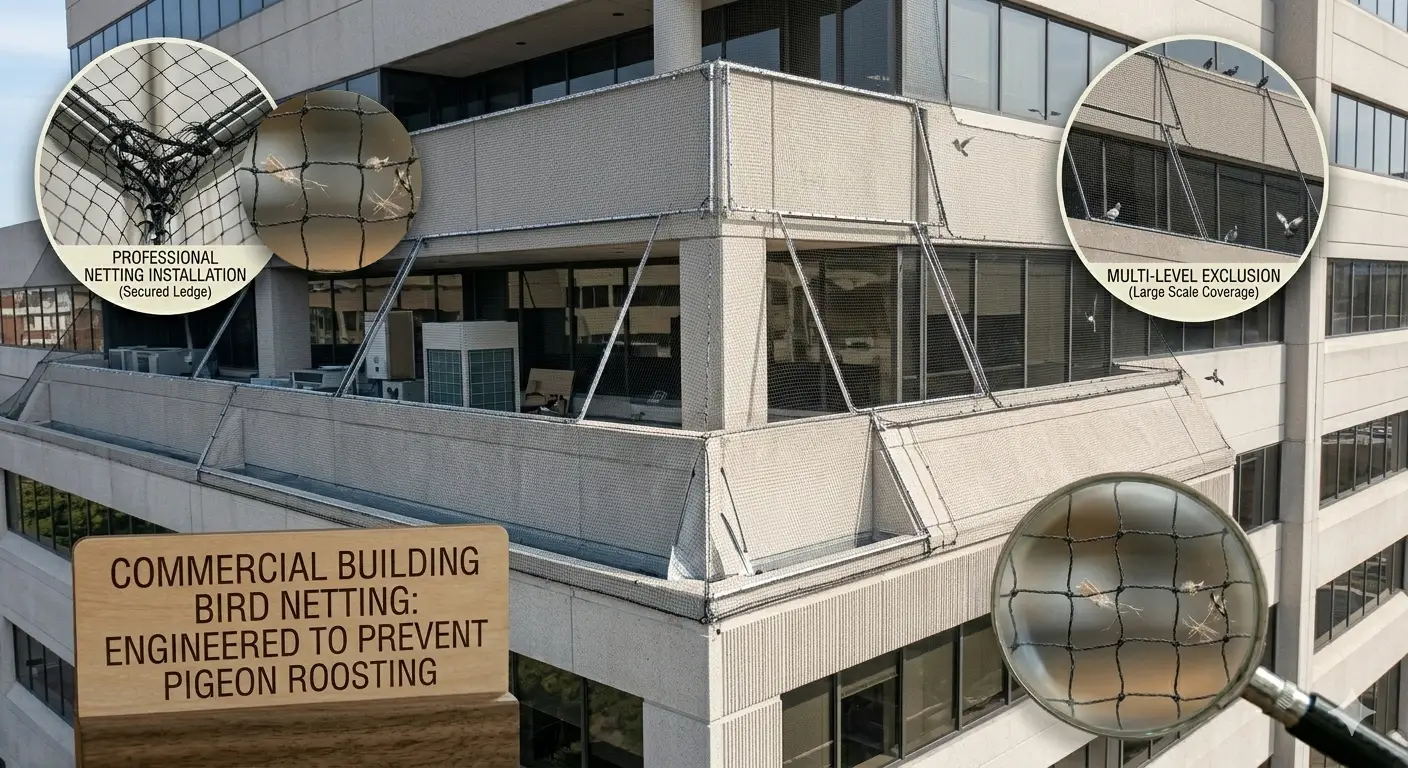
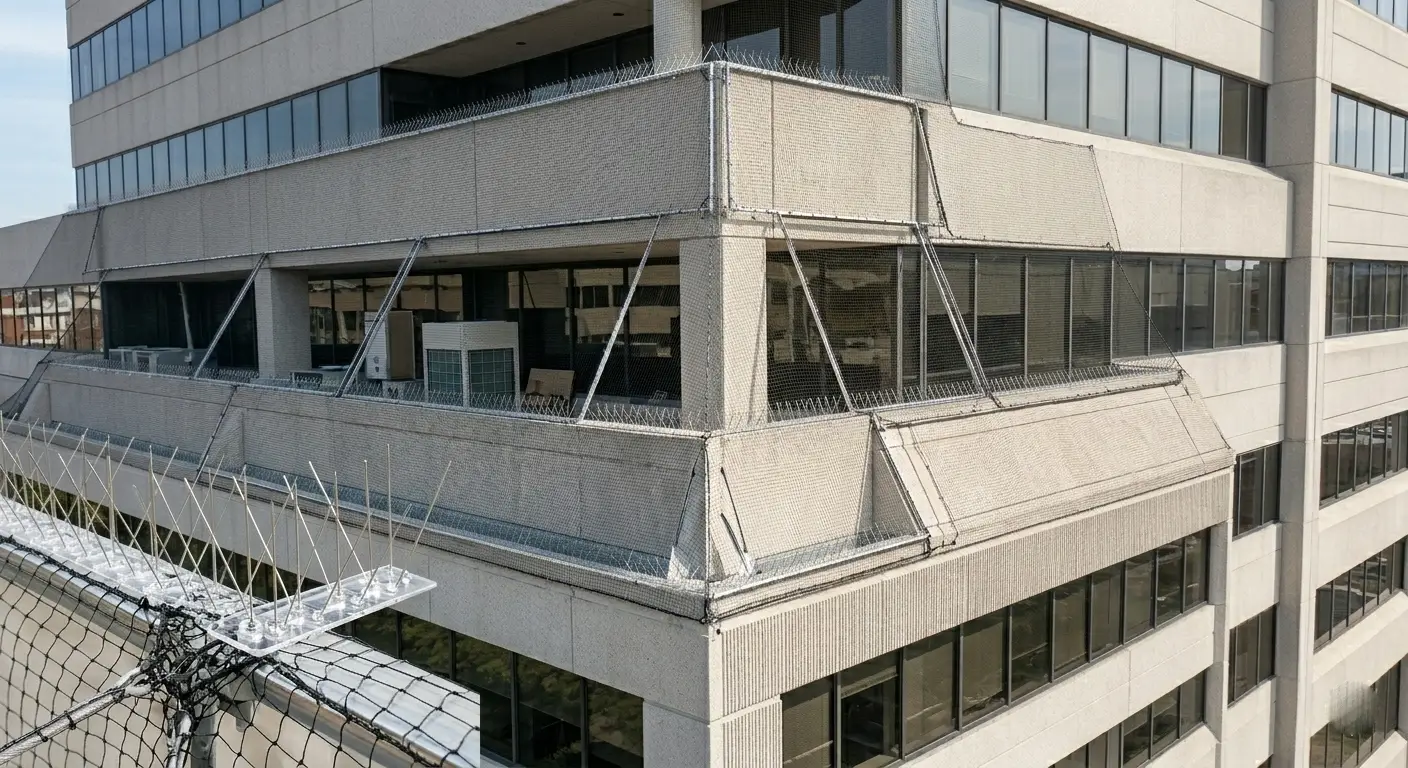
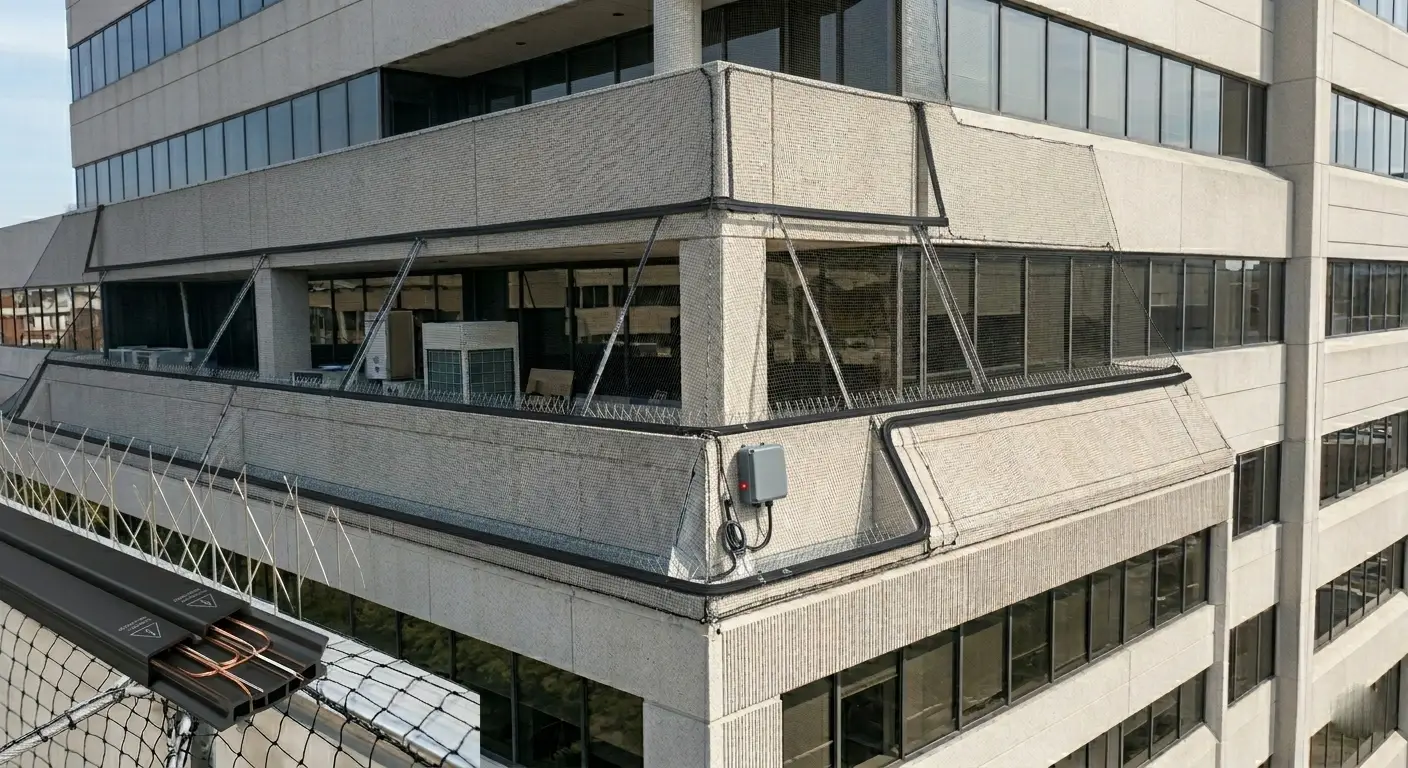
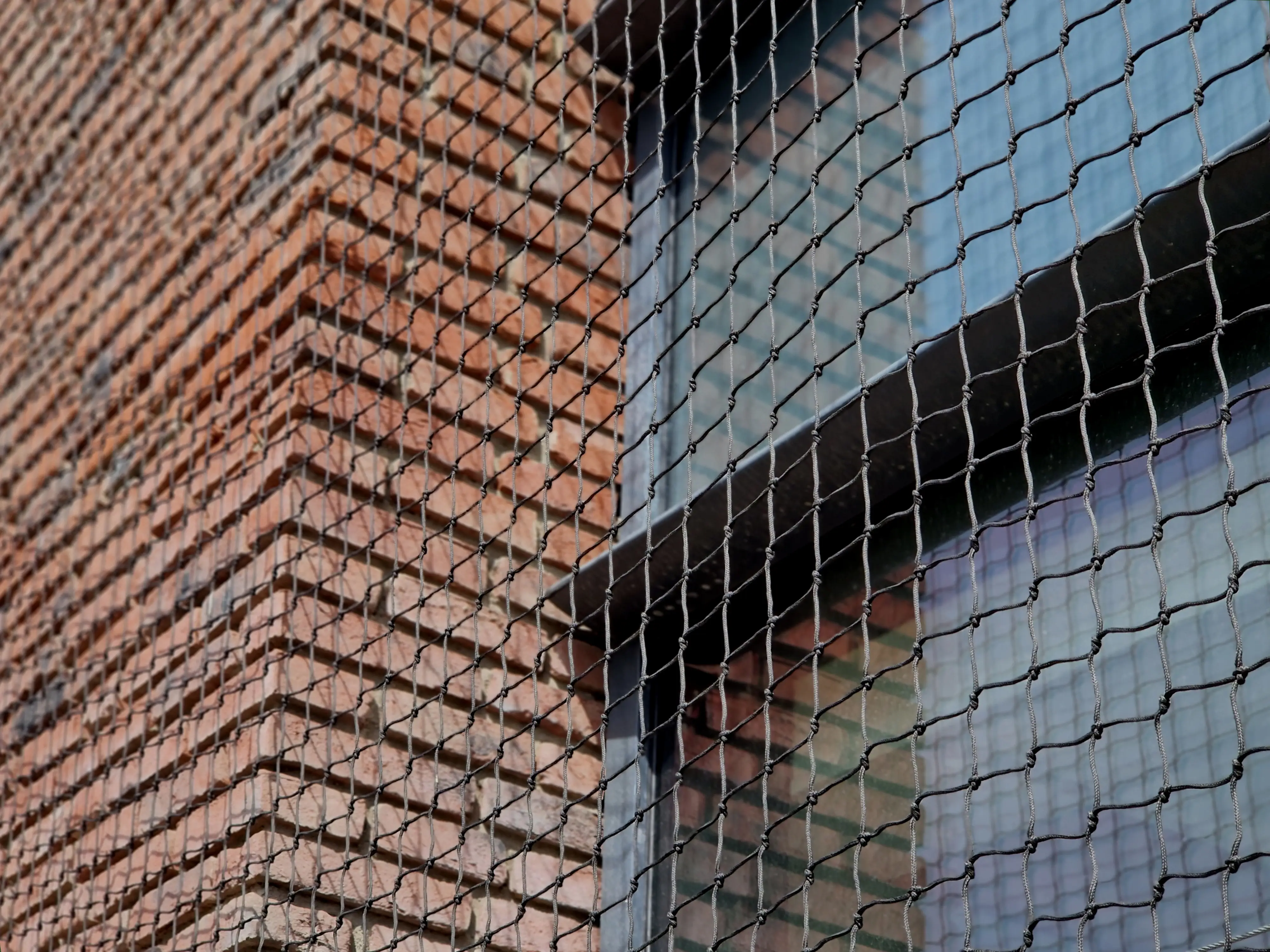
Professional pigeon netting installed on commercial building

Bird Netting Systems

Professional-grade netting creates impenetrable barriers that exclude pigeons from roosting and nesting areas. Custom-fitted to building architecture, netting protects loading docks, courtyards, rooftop equipment, and building facades while remaining virtually invisible from ground level.

Pigeon spikes installed on building ledge

Pigeon Spike Installation

Stainless steel or polycarbonate spikes installed on ledges, signs, rooflines, window sills, and other flat surfaces prevent pigeons from landing and roosting. These humane deterrents don't harm birds; they simply make surfaces uncomfortable, redirecting pigeons elsewhere.

Electric track pigeon deterrent system on building ledge

Electric Track Deterrents

Low-profile electric track systems deliver a mild, harmless shock that conditions pigeons to avoid treated surfaces. Ideal for historic buildings and areas where aesthetics matter, these virtually invisible systems provide effective long-term deterrence without visible hardware.

Wire grid system preventing pigeon access to roof

Wire & Grid Systems

Tensioned stainless steel wire systems and grid networks create physical barriers preventing pigeons from landing on ledges, rooflines, and architectural features. These nearly invisible solutions are ideal for buildings where appearance is paramount.

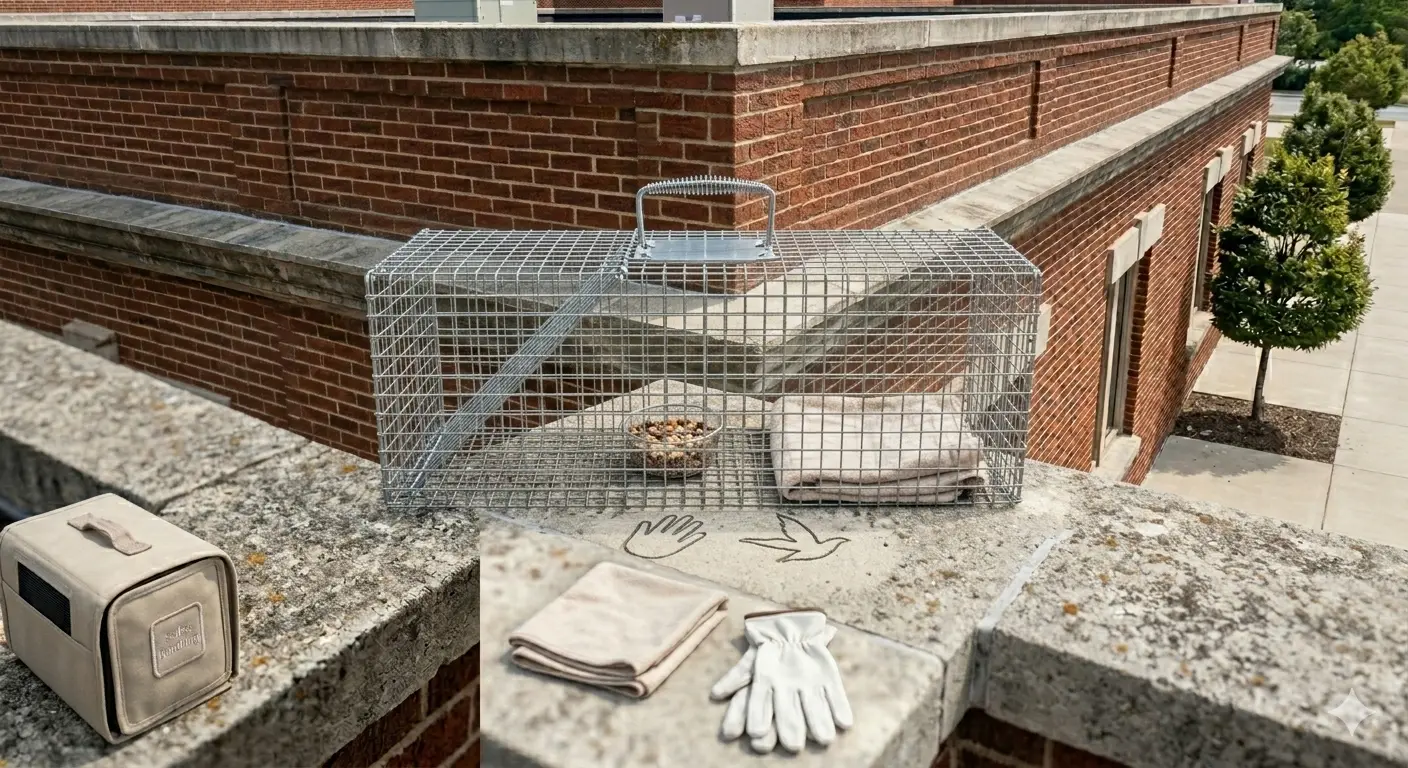
Humane pigeon trap for capture and relocation

Humane Trapping & Removal

When exclusion alone isn't sufficient, we deploy humane live traps to capture and relocate pigeons. Our trapping programs include routine monitoring, safe bird handling, and release far from your property to reduce local populations effectively and humanely.

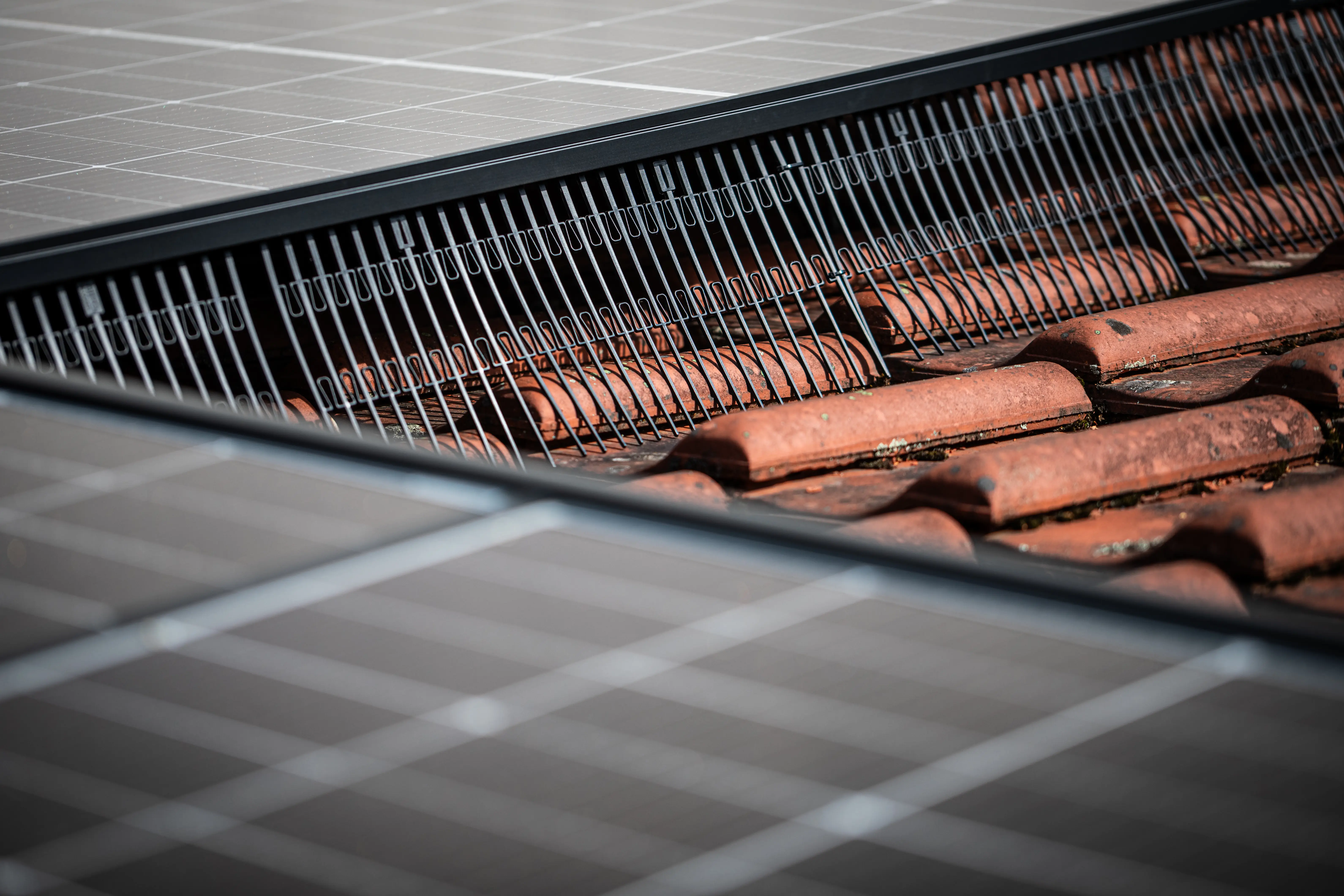
Solar panel bird guard mesh preventing pigeon nesting

Solar Panel Protection

Pigeons frequently nest under solar panels, damaging wiring and reducing system efficiency with their droppings. Our specialized solar panel mesh systems seal the gap between panels and roofing, preventing pigeon access while maintaining proper panel ventilation.

What Causes Pigeons?

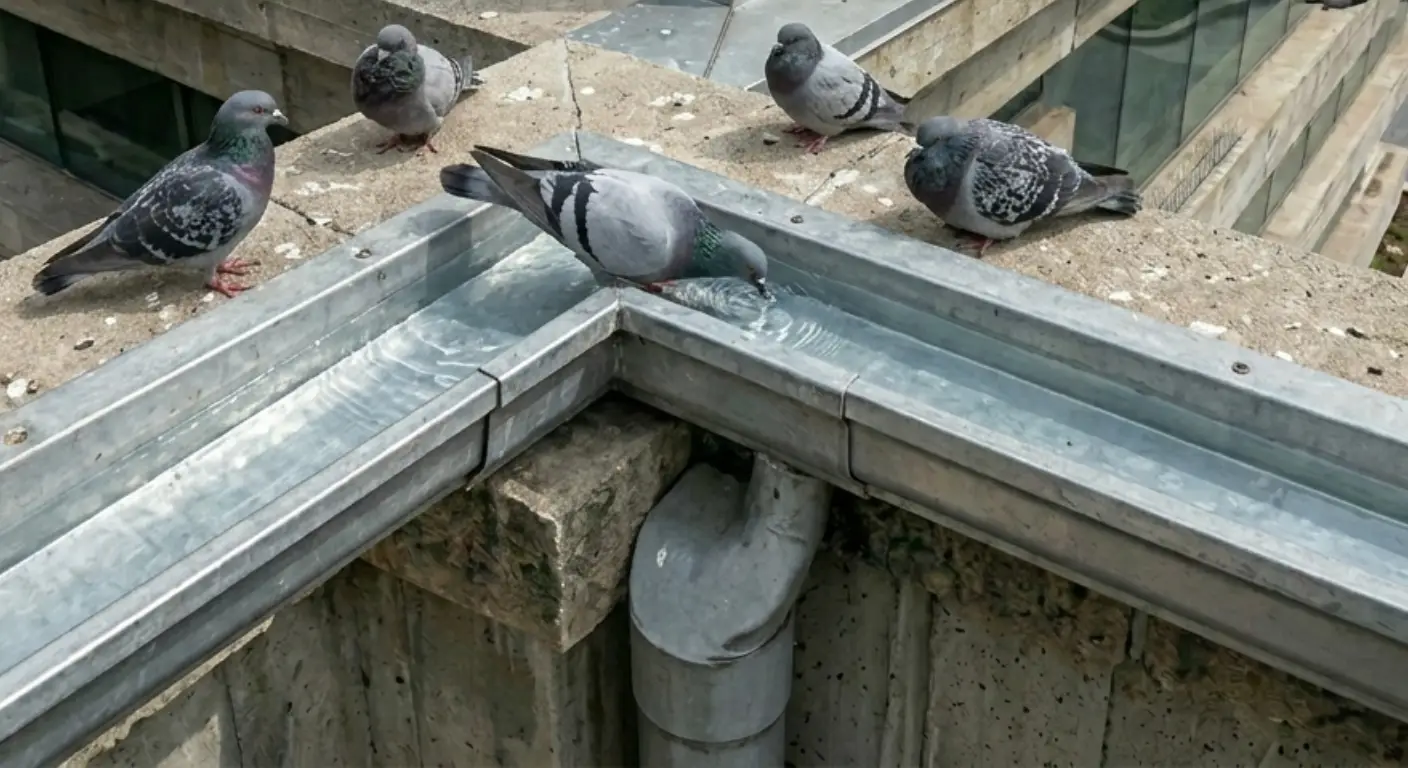
Understanding what attracts pigeons to your property is essential for effective control. Pigeons seek locations that provide food, water, and protected nesting sites. Addressing these attractants is critical to any successful management program.

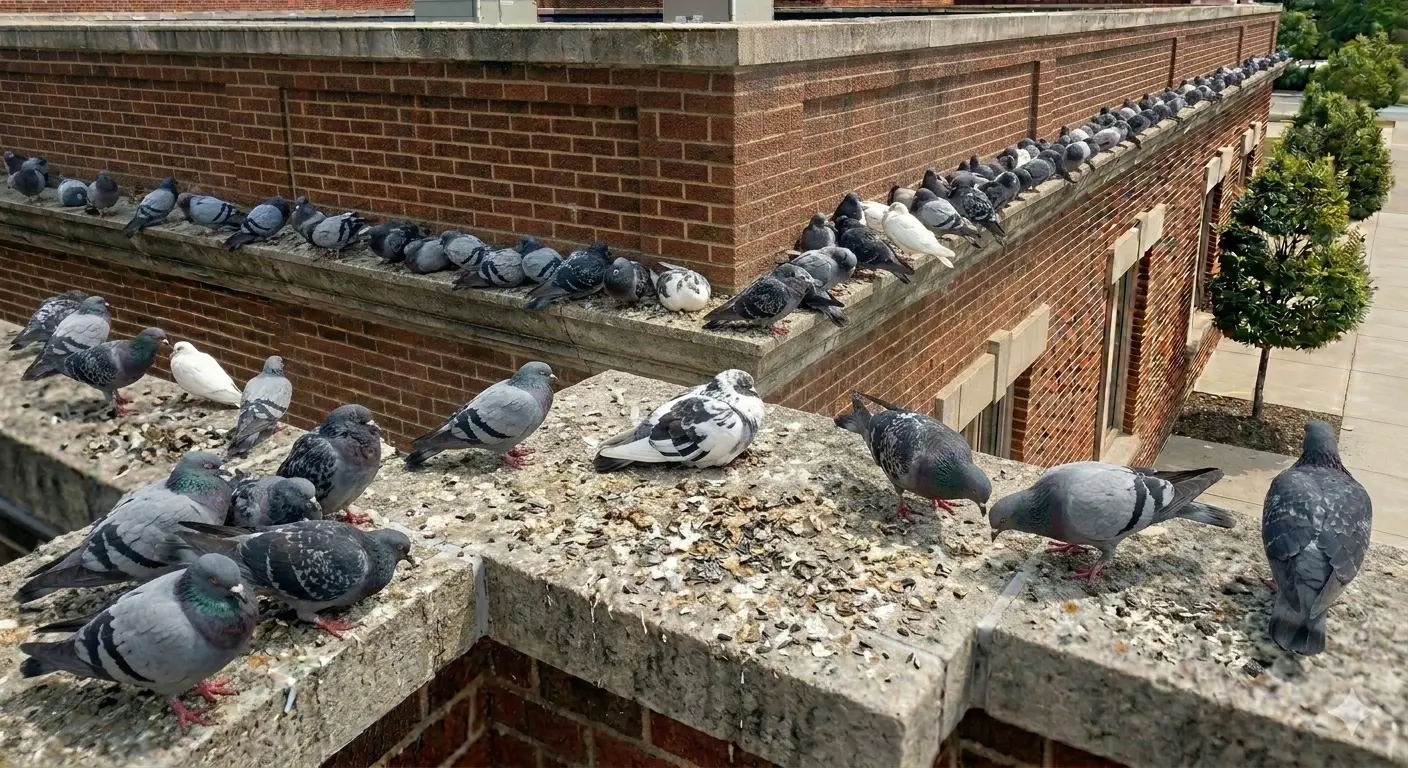
Food sources attracting pigeons to property

🏢 Food Sources

Pigeons are opportunistic feeders attracted to any accessible food, including outdoor dining areas, uncovered trash, spilled grain, pet food, bird feeders, and people who intentionally feed them. Food processing facilities, restaurants, and warehouses are particularly vulnerable to persistent pigeon populations.

Building ledges providing pigeon roosting habitat

🗑️ Roosting & Nesting Sites

Pigeons evolved as cliff-dwellers and are drawn to buildings that mimic their natural habitat. Ledges, rooftops, HVAC equipment, signage, bridges, and covered areas provide ideal roosting spots. Attics, vents, gutters, and building cavities offer protected nesting sites.

Water sources attracting pigeons

🏠 Water Sources

Pigeons need reliable water for drinking and cooling. Bird baths, fountains, air conditioning condensation, leaky pipes, pooling water on flat roofs, and irrigation systems attract and sustain pigeon populations on properties where water is accessible.

Sheltered areas providing pigeon protection

🌆 Shelter & Protection

Pigeons seek areas protected from weather and predators. Covered parking structures, loading docks, under bridges, building overhangs, and areas beneath solar panels provide the shelter pigeons need to establish permanent roosting and nesting sites.

Learn More About Pigeon Prevention →

What Are Signs of Pigeons in Your Home?

Identifying pigeon activity early is crucial for effective management before populations grow and damage accumulates. Watch for these indicators of pigeon presence on your property.
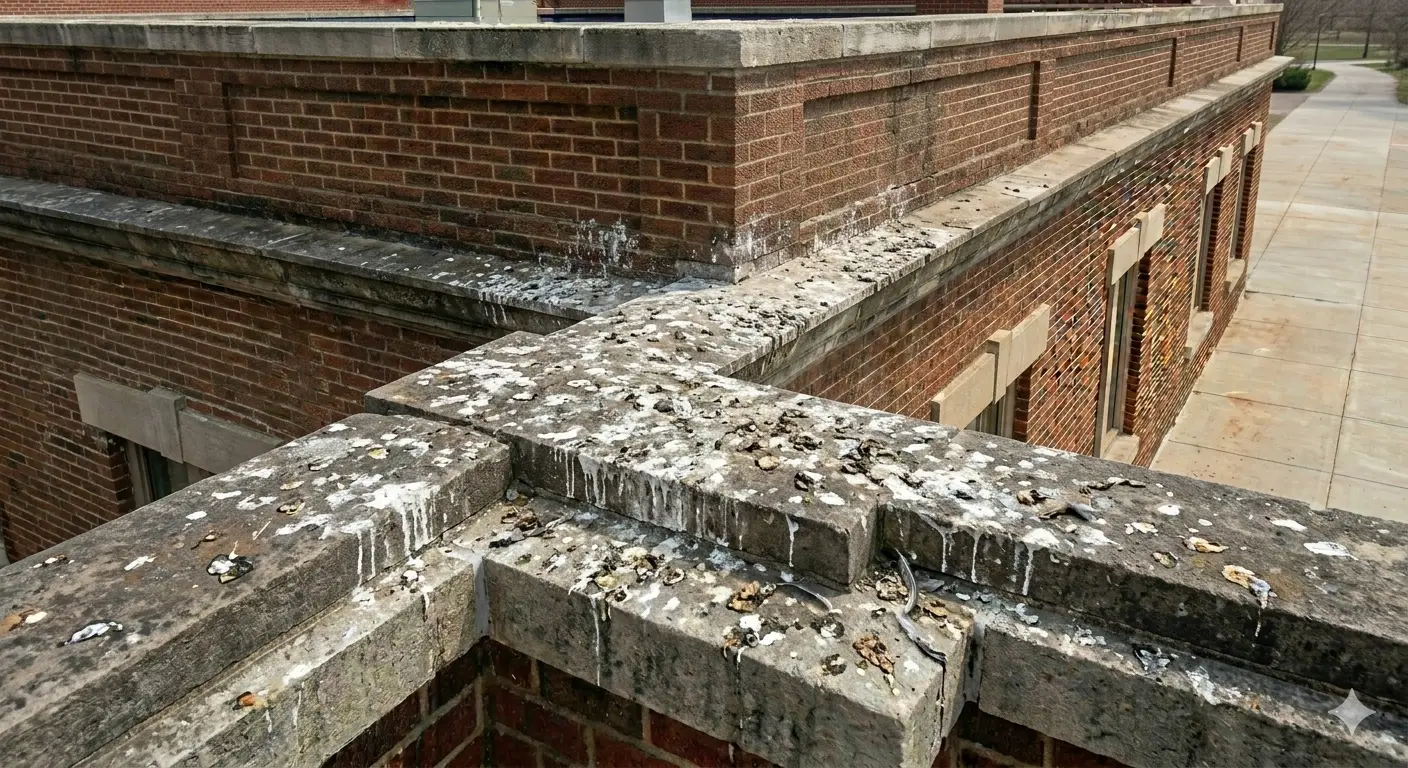
Accumulated pigeon droppings on building ledge

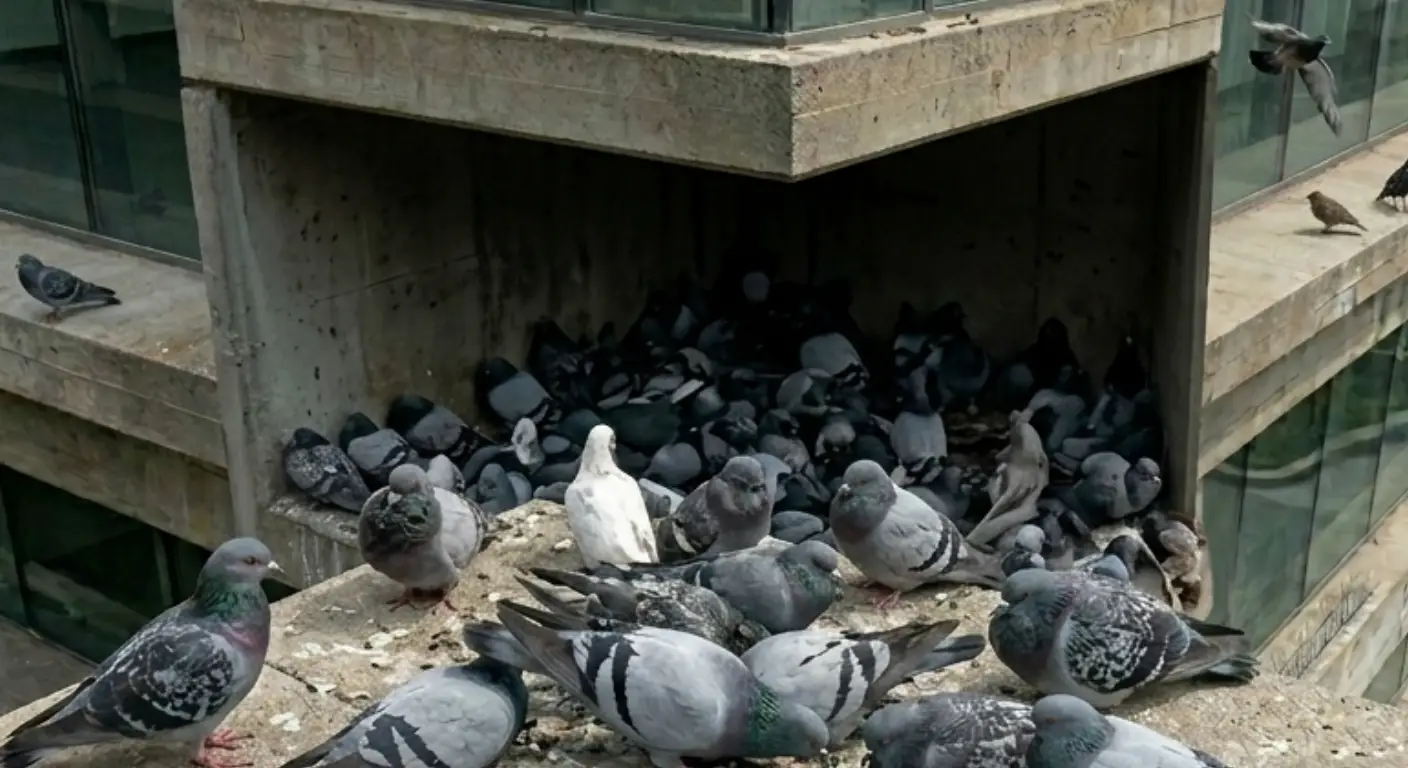
Accumulated Droppings

Pigeon droppings are the most obvious sign of infestation, typically concentrated directly below roosting spots. Large accumulations appear on ledges, walkways, vehicles, and rooftops. Beyond being unsightly, droppings signal established populations and ongoing health and property damage risks.

Pigeon nest with eggs on building ledge

Nesting Materials & Debris

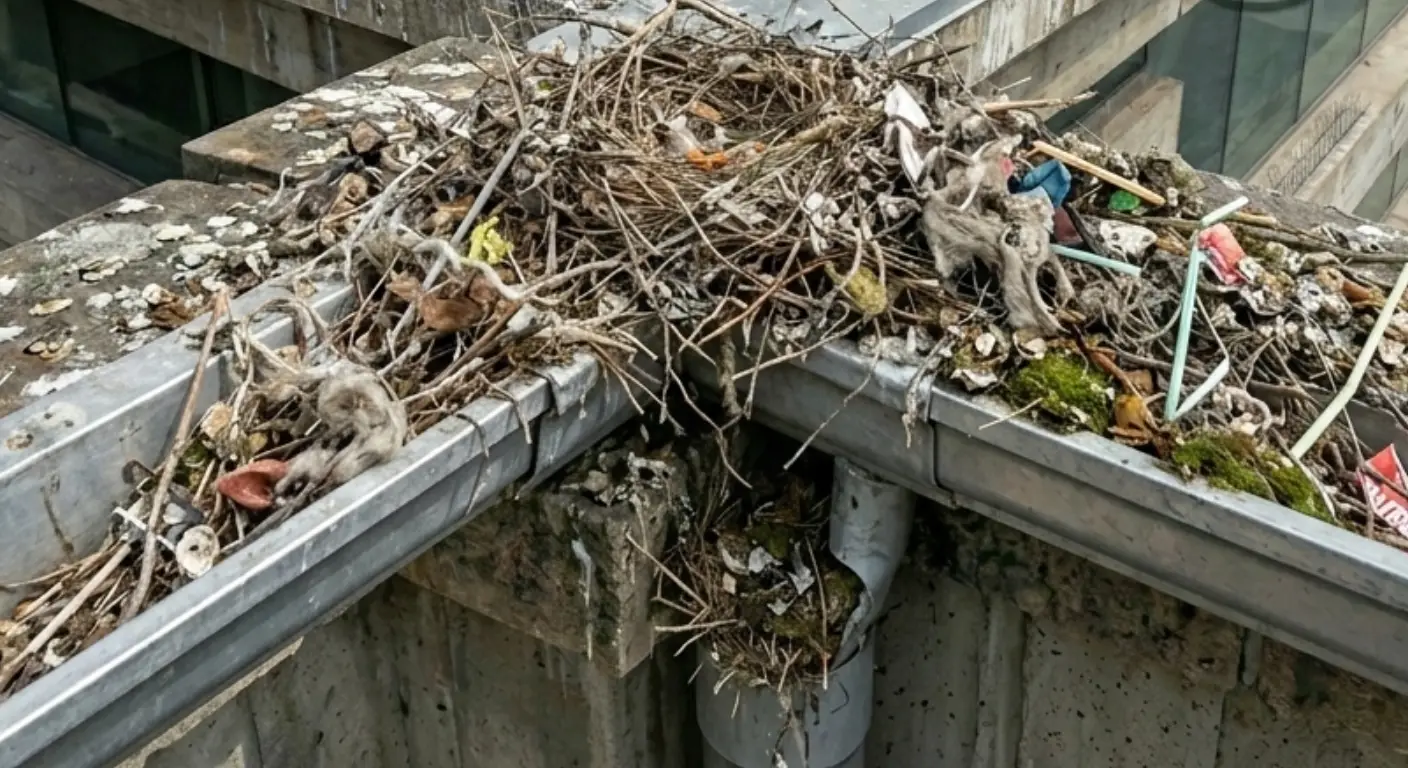
Pigeons construct loose nests from twigs, sticks, leaves, feathers, and debris. Finding nesting materials in gutters, on ledges, near vents, or scattered around your property indicates active nesting. Nests are often reused and can accumulate significant debris over time.

Pigeons roosting on building roofline

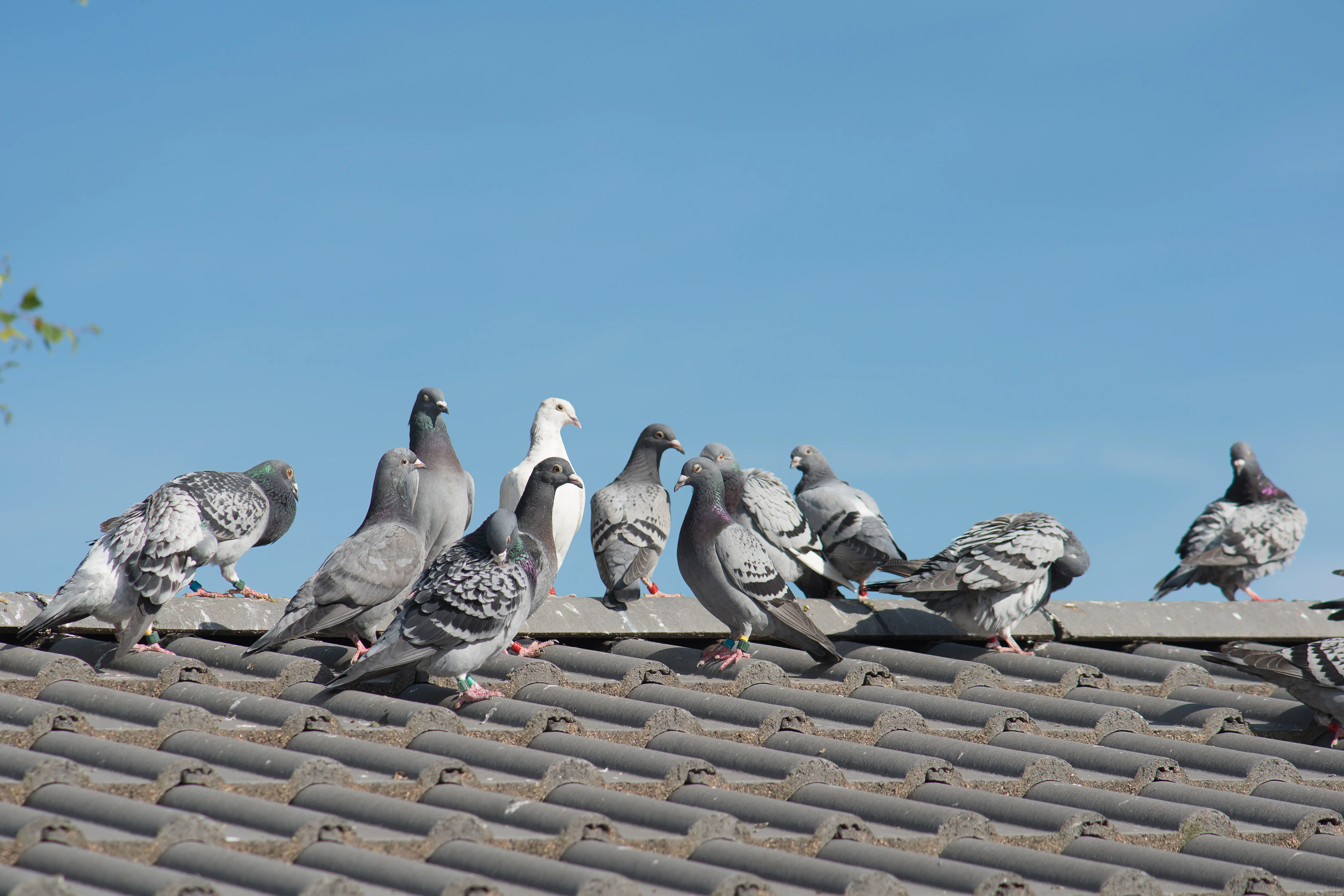
Pigeons Roosting on Structures

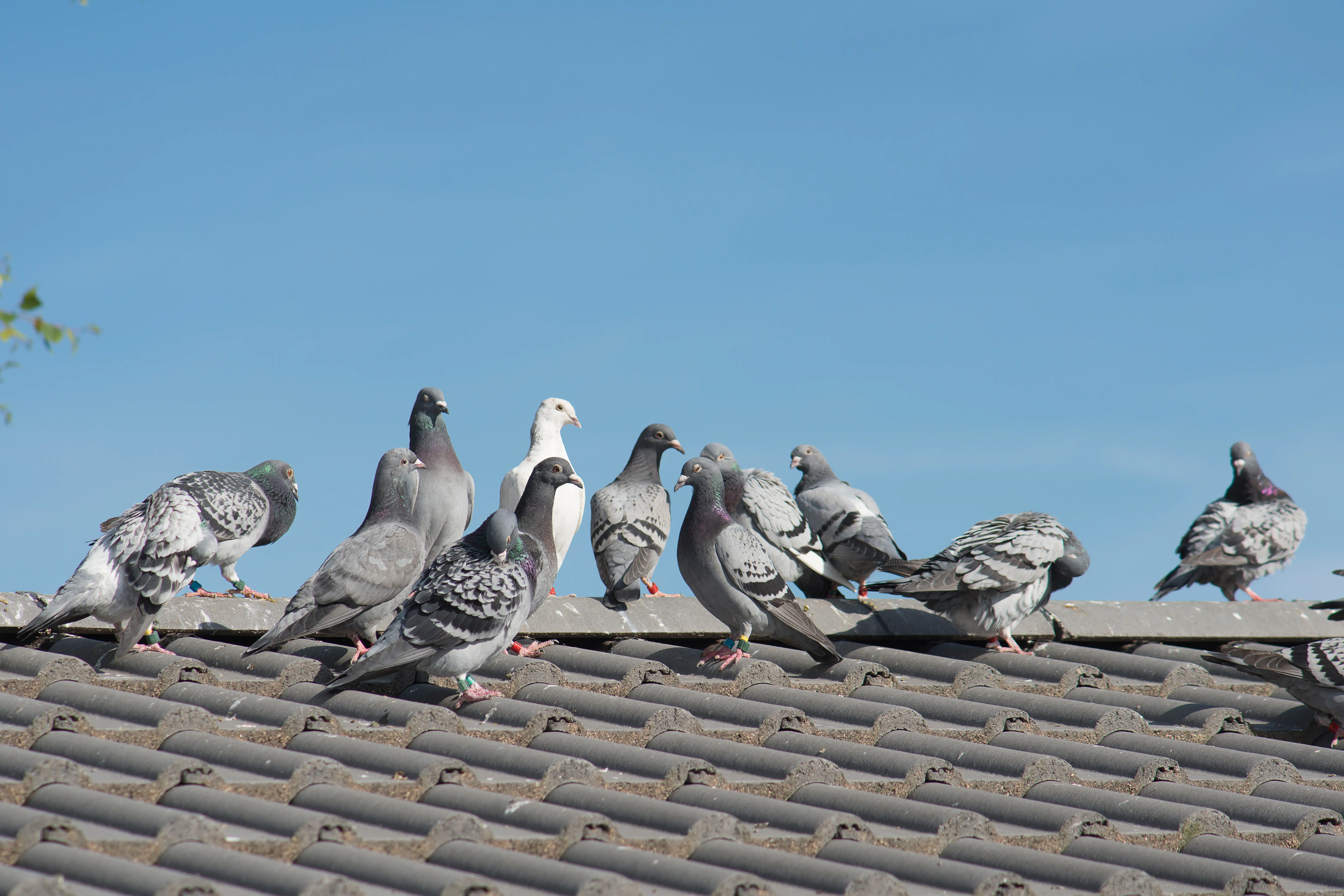
Observing pigeons regularly perching on rooflines, ledges, signage, or HVAC equipment, especially in the same locations day after day, this indicates your property provides favorable roosting habitat. Groups of pigeons congregating consistently suggests an established population.

Gutter blocked by pigeon nesting materials

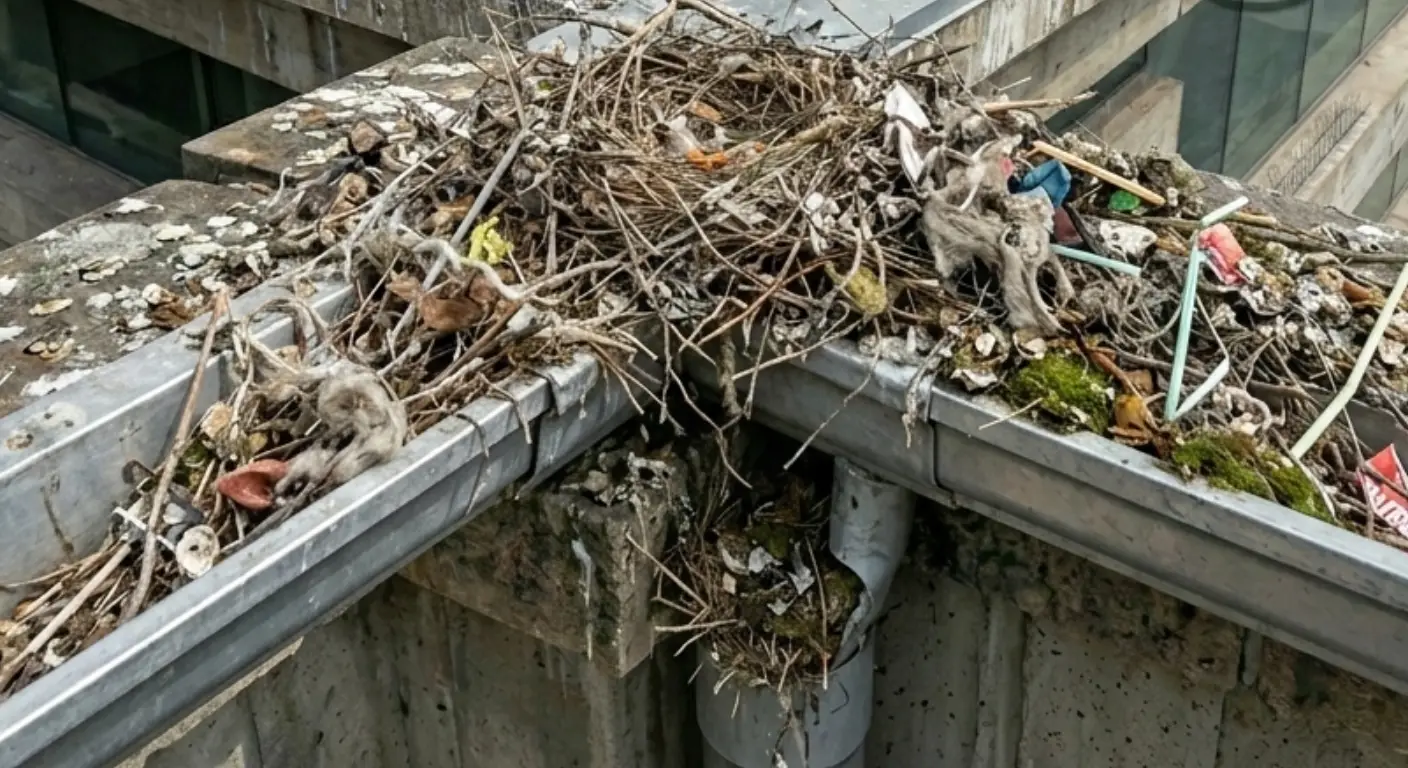
Blocked Gutters & Drains

Pigeon nesting materials and accumulated droppings can clog gutters, downspouts, and roof drains, causing water damage, overflow, and potential structural issues. Unexplained drainage problems often indicate pigeon activity in these areas.

Vegetation damaged by pigeon droppings

Damaged Vegetation

The highly acidic nature of pigeon droppings kills grass, shrubs, and other vegetation. Dead or dying plants beneath roosting areas, along with dropping-covered landscaping, indicates significant pigeon activity directly above.

Building area where pigeon sounds indicate nesting

Cooing Sounds & Activity

Persistent cooing sounds, especially from attics, vents, or wall voids, indicates pigeons have established nesting sites within your structure. Frequent pigeon activity around specific entry points suggests interior infestations requiring immediate attention.

Learn More About Pigeon Detection →

DIY vs Professional Treatment

While hardware stores sell various pigeon deterrent products, DIY approaches rarely provide lasting solutions. Consumer-grade spikes and netting are often lower quality, improperly sized, or incorrectly installed, allowing pigeons to find gaps or simply roost nearby. Without understanding pigeon behavior and biology, homeowners often waste money on ineffective products while pigeons continue causing damage. Additionally, pigeon droppings pose serious health risks that require proper safety equipment and disposal methods during cleanup.

EcoGuard's professional pigeon control combines expert knowledge of pigeon behavior with commercial-grade exclusion systems designed for lasting effectiveness. We conduct comprehensive inspections to identify all roosting sites, nesting areas, and access points. Our technicians design customized solutions using the most effective deterrent combination for your specific property. Professional installation ensures systems function properly, with proper coverage and secure mounting that withstands weather and pigeon pressure. We also safely handle dropping cleanup with appropriate protective equipment.

❌ DIY Treatment

  • Consumer-grade products less effective
  • Improper installation common
  • Incomplete coverage allows access
  • No expertise in pigeon behavior
  • Health risks during cleanup
  • Temporary results at best

✓ Professional Treatment

  • Commercial-grade systems
  • Expert installation techniques
  • Complete site coverage
  • Behavior-based strategies
  • Safe, proper cleanup
  • Long-lasting solutions

Commercial Pigeon Control

EcoGuard Pest Management implements customized pigeon control programs for commercial facilities that prioritize operational continuity while ensuring effective pest elimination. Our comprehensive commercial pigeon protection programs combine discrete treatment applications with flexible scheduling to maintain your business operations while ensuring complete elimination of pigeon problems.

We specialize in pigeon control solutions for:

  • Restaurants and food service establishments
  • Healthcare facilities
  • Hotels and hospitality venues
  • Educational institutions
  • Office complexes
  • Food processing facilities
  • Warehouses and storage facilities
  • Retail spaces
  • Manufacturing facilities
  • Multi-unit residential properties
Learn About Commercial Pest Control
100% SATISFACTION GUARANTEE

The EcoGuard Guarantee

EcoGuard offers a 100% satisfaction guarantee for all of our customers, and we stand by our promise to eradicate your pigeon problem until the very last pigeon is gone. That pigeon control guarantee comes with every service and if the pigeons come back, then so do we, at no additional cost. We are standing by to give you a free estimate and to help you set your first pigeon pest control service appointment.

📞 Call (866) 326-2847 Today

Our Pigeon Control Process

A comprehensive approach to eliminating pigeons and protecting your property

1

Comprehensive Inspection

Our team conducts a thorough inspection of your property, examining all areas where pigeons roost, nest, and access your building. We assess population size, identify all roosting and nesting sites, document damage, locate entry points, and evaluate attractants like food and water sources.

2

Strategic Treatment

Based on inspection findings, we implement a customized combination of deterrent systems, including netting, spikes, electric tracks, wire systems, or gel repellents, matched to your specific building type, pigeon pressure, and aesthetic requirements. When necessary, we deploy humane trapping to reduce populations.

3

Cleanup & Sanitation

We safely remove accumulated droppings, nesting materials, and debris using appropriate protective equipment. Proper sanitation is critical because pigeon droppings harbor disease-causing organisms. We also remove nests to eliminate pheromones that attract additional pigeons.

4

Ongoing Monitoring

Regular follow-up inspections verify system effectiveness and identify any new pigeon activity. Our monitoring programs include maintenance of installed deterrents, assessment of previously treated areas, and rapid response to new activity before populations re-establish.

Seasonal Plan for Pigeon Control

Year-round protection adapted to seasonal pigeon behavior patterns

Spring Pigeon Control

Spring

Peak breeding season begins as pigeons increase nesting activity; ideal time for exclusion installation before eggs are laid; inspect and repair winter damage to existing deterrent systems; remove early nests before eggs are present

Summer Pigeon Control

Summer

Breeding continues with multiple broods; monitor for new nesting in previously clear areas; maintain deterrent systems; address fledgling pigeons exploring new roosting sites; peak activity at food and water sources

Fall Pigeon Control

Fall

Excellent time for deterrent installation as pigeons seek winter roosting sites; clean up accumulated droppings before wet weather creates sanitation issues; prepare buildings for increased winter pressure

Winter Pigeon Control

Winter

Pigeons remain active year-round (non-migratory); monitor for increased roosting on buildings seeking warmth and shelter; maintain deterrent systems through harsh weather; plan spring exclusion and cleanup work

What Our Customers Say

Trusted by homes and businesses for professional pigeon control solutions

★★★★★

"Pigeons were destroying our warehouse. Droppings everywhere, nests in the rafters, health inspector concerns. EcoGuard installed netting throughout and the difference is incredible. No more pigeons, no more mess, and we passed our inspection!"

Robert M., Warehouse Manager
Sacramento, CA
★★★★★

"Our condo balcony was unusable because of pigeons. They tried everything: fake owls, shiny tape, nothing worked. EcoGuard installed spikes and netting that blend right in. Finally we can enjoy our balcony again. Should have called them first!"

Lisa & Kevin P.
San Diego, CA
★★★★★

"Pigeons were nesting under our solar panels, making a huge mess and we were worried about damage. EcoGuard installed mesh guards around all the panels. Clean installation, reasonable price, and no more pigeon problems. Highly recommend!"

David & Maria S.
Phoenix, AZ

Pigeon Control FAQs

Everything you need to know about pigeon control and treatment

Permanently eliminating pigeons requires a combination of exclusion techniques, habitat modification, and deterrents. Installing physical barriers like professional-grade spikes, netting, or wire systems prevents pigeons from roosting and nesting. Simultaneously removing food and water sources makes the environment less hospitable. Professional installation ensures complete coverage without gaps pigeons can exploit.

Effective pigeon prevention includes installing deterrents on roosting surfaces (spikes, netting, electric tracks), securing food sources by covering garbage and avoiding outdoor feeding, eliminating standing water, and maintaining a clean environment free of nesting materials. These measures create an unwelcoming habitat that encourages pigeons to relocate.

Pigeons are persistent because they're non-migratory and form strong attachments to nesting sites. Their droppings contain pheromones that attract other pigeons. They reproduce year-round, producing up to 12 offspring annually per pair. Without addressing all roosting areas and attractants comprehensively, remaining pigeons continue breeding and repopulating treated areas.

Yes, pigeon droppings pose serious health risks. They can carry over 60 diseases including histoplasmosis, cryptococcosis, and psittacosis. When dried droppings are disturbed, disease-causing spores become airborne and can be inhaled. Droppings also harbor parasites. Professional cleanup with proper safety equipment is recommended for significant accumulations.

Yes, properly installed commercial-grade pigeon spikes are highly effective. They create an uncomfortable surface that prevents pigeons from landing without harming them. However, effectiveness depends on complete coverage of all roosting surfaces, since gaps allow pigeons to find unprotected areas. Professional installation ensures proper spike selection and placement.

Pigeon control costs vary based on property size, infestation severity, deterrent methods required, and accessibility of roosting areas. Residential projects typically range from $350-$1,500, while commercial projects can range from several hundred to several thousand dollars depending on scope. We provide inspections and customized quotes.

With proper exclusion systems professionally installed, pigeons cannot return to treated areas. However, without ongoing maintenance and monitoring, deterrent systems can degrade, and pigeons may attempt to colonize nearby unprotected areas. Our annual protection programs include regular inspections and maintenance to ensure lasting results.

Feral pigeons (rock doves) are not protected by federal law in the United States and can be controlled without permits. However, some municipalities may have local ordinances regarding bird control methods. Our technicians are familiar with applicable regulations and ensure all control measures comply with local requirements.

Pigeons enter buildings through gaps in siding, broken windows, uncovered vents, open loading doors, damaged soffits, and any opening large enough to squeeze through (approximately 2 inches). They're also attracted to covered areas like parking structures, loading docks, and areas beneath rooftop equipment where entry isn't required.

Pigeons are attracted to buildings offering food sources (outdoor dining, trash, spilled grain), water (AC condensation, bird baths, pooling water), and sheltered roosting sites (ledges, rooftops, covered areas). Buildings with architectural features mimicking their natural cliff habitat, such as ledges, flat surfaces, and covered areas, are particularly attractive.

Installation time varies based on project scope and building accessibility. Simple residential installations may take a few hours, while comprehensive commercial projects can take several days. We schedule work to minimize disruption to your operations and provide time estimates during our initial assessment.

Yes, pigeons cause significant roof damage. Their acidic droppings corrode roofing materials, nesting debris clogs drains and gutters causing water damage, and their activity can dislodge tiles and damage flashing. Solar panels are particularly vulnerable to nesting and droppings that reduce efficiency. Regular pigeon control protects your roof investment.

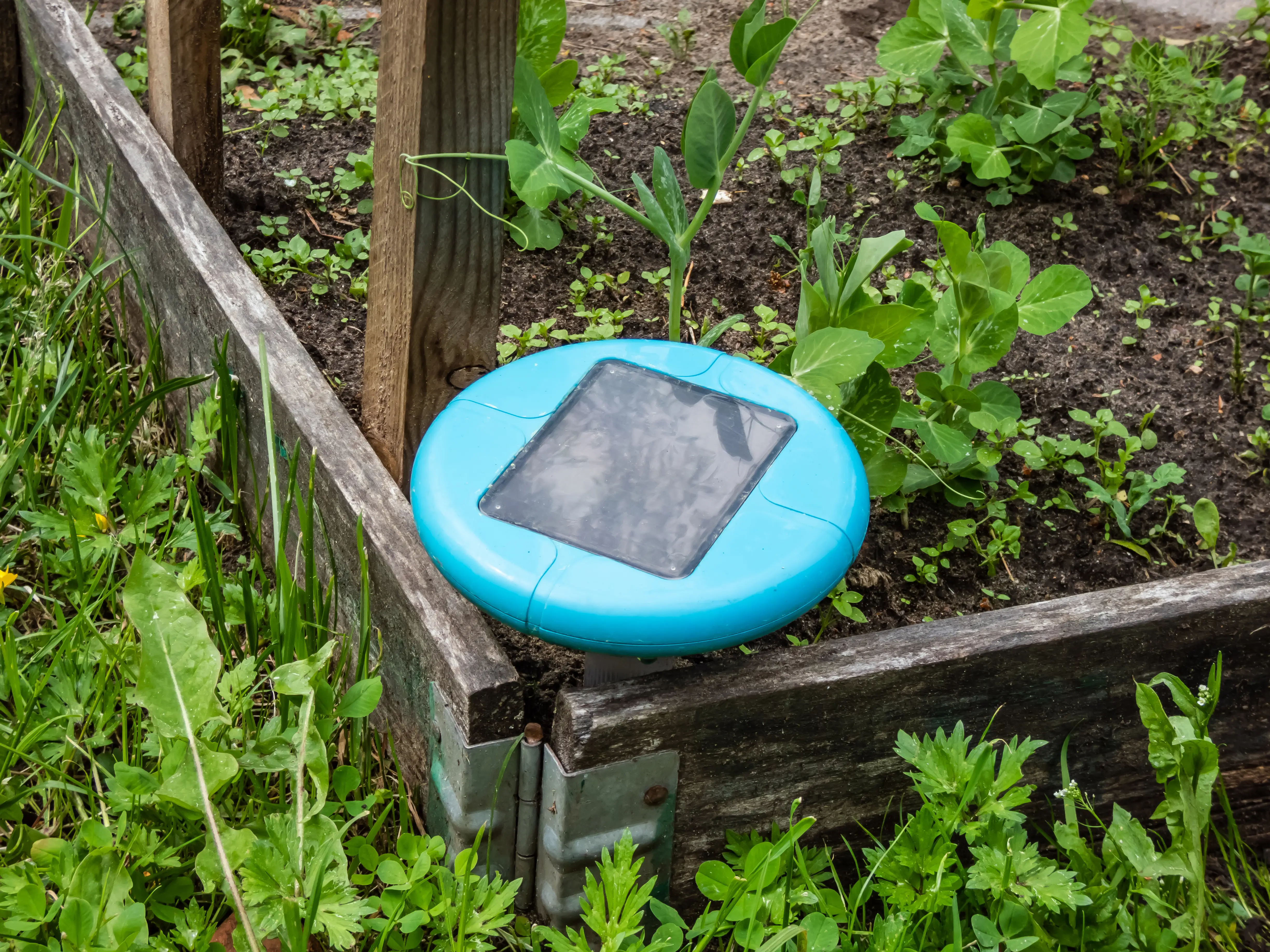
Ultrasonic devices have shown limited effectiveness against pigeons. While pigeons can hear ultrasonic frequencies, they quickly habituate to the sounds and learn to ignore them. Physical deterrents like netting, spikes, and electric tracks provide much more reliable, proven long-term results than sonic or ultrasonic devices.

Balcony pigeon control typically involves installing spikes on railings and ledges, netting across open areas if needed, and removing food and water sources. For severe problems, temporary trapping may help reduce populations. Professional assessment ensures the right combination of deterrents for your specific balcony layout.

Pigeons can transmit numerous diseases including histoplasmosis (fungal lung infection from droppings), cryptococcosis (fungal infection from pigeon intestinal yeast), psittacosis (bacterial respiratory infection), salmonellosis, and E. coli. Their parasites, including mites, fleas, and ticks, can transmit additional diseases. These health risks make professional control important.

Pigeons breed year-round and are prolific reproducers. A mated pair can produce 8-12 offspring per year across multiple broods. Young pigeons reach sexual maturity in about 6 months and begin breeding themselves. This rapid reproduction rate explains why pigeon populations grow quickly without intervention.

You can remove pigeon nests (they're not protected), but we recommend professional handling for safety reasons. Nests harbor parasites and accumulated droppings contain disease-causing organisms. Proper protective equipment, including respirators, gloves, and protective clothing, should be used. After removal, exclusion should be installed to prevent re-nesting.

Pigeons have excellent homing instincts and form strong attachments to nesting and roosting sites. They return to familiar locations where they've successfully nested before. Their droppings also contain pheromones that attract other pigeons to established sites. Complete exclusion is necessary to break this pattern.

Solar panel protection involves installing specialized mesh or critter guard systems that seal the gap between panels and the roof, preventing pigeons from accessing the space beneath. This must be done carefully to maintain proper panel ventilation and avoid voiding warranties. Professional installation ensures proper fit and function.

Yes, comprehensive pigeon control includes removal of nests and accumulated droppings. Proper cleanup is important because droppings harbor disease-causing organisms and contain pheromones attracting more pigeons. We use appropriate safety equipment and disposal methods. For extensive accumulations, specialized cleanup may be quoted separately.

Related Articles & Resources

Learn more about pigeon prevention, identification, and control
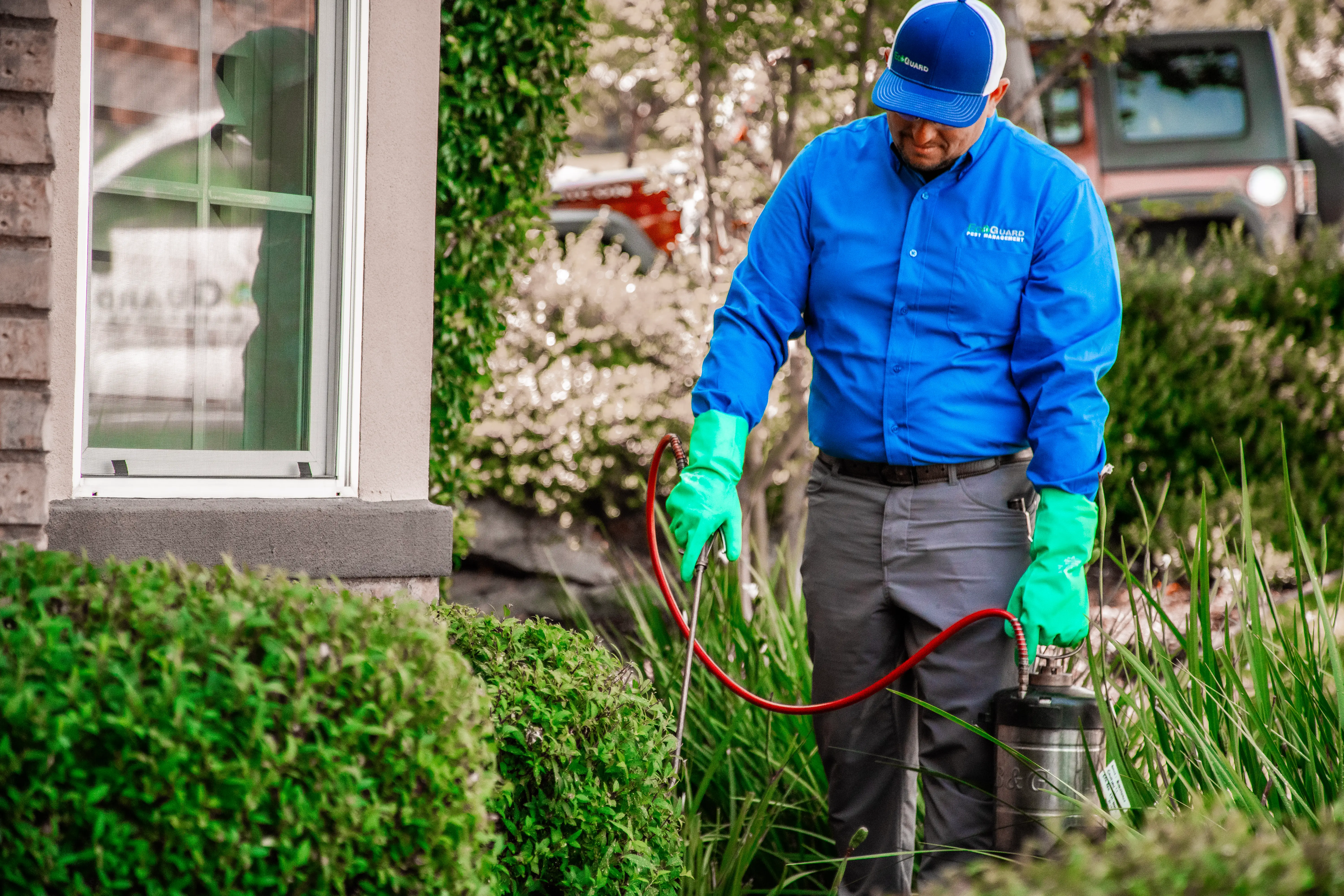
Best Time to Spray Insecticides Around the House

Best Time to Spray Insecticides Around the House

Learn the optimal timing for spraying insecticides including best seasons, time of day, and locations. Maximize pest control effectiveness with proper timing.

Read Article →
Common Insects with a Stinger: Identification Guide

Common Insects with a Stinger: Identification Guide

Learn about common stinging insects including bees, wasps, hornets, ants, and scorpions. Identification tips, danger levels, and what to do if stung.

Read Article →
Common Wood Eating Insects: Identification & Prevention

Common Wood Eating Insects: Identification & Prevention

Learn about wood destroying insects including termites, carpenter ants, carpenter bees, and wood boring beetles. Identify signs of infestation and prevention tips.

Read Article →
Do Ultrasonic Pest Repellers Work? The Truth About These Devices

Do Ultrasonic Pest Repellers Work? The Truth About These Devices

Do ultrasonic pest repellers really work? Learn what science says about these devices, their limitations, and more effective pest control alternatives.

Read Article →
How Long After Pest Control Should I Wait to Go Inside?

How Long After Pest Control Should I Wait to Go Inside?

Learn how long to wait after pest control treatment before going inside. Typical wait time is 2-4 hours plus 30 minutes to air out. Safety tips and what to expect.

Read Article →
How Much Does It Cost to Fumigate a House? 2025 Price Guide

How Much Does It Cost to Fumigate a House? 2025 Price Guide

Learn fumigation costs by square footage ($1-$4/sq ft). Average home costs $2,000-$8,000. Factors affecting price, preparation steps, and alternatives explained.

Read Article →
How Often Should Pest Control Be Done? Frequency Guide

How Often Should Pest Control Be Done? Frequency Guide

Learn how often pest control should be done. Homes need quarterly treatments, commercial buildings monthly. How long treatments last by pest type explained.

Read Article →
How to Bug Proof Your Home or Apartment: Complete Guide

How to Bug Proof Your Home or Apartment: Complete Guide

Learn how to bug proof your home with our indoor and outdoor checklists. Seal entry points, remove attractants, and prevent pest infestations effectively.

Read Article →
How To Choose a Pest Control Company | Complete Guide

How To Choose a Pest Control Company | Complete Guide

Learn how to choose the right pest control company. Check licenses, reviews, qualifications, methods, guarantees, and insurance before hiring.

Read Article →
How to Do Pest Control at Home by Yourself: DIY Guide

How to Do Pest Control at Home by Yourself: DIY Guide

Learn DIY pest control methods for your home. Prevention tips, exclusion tactics, treatment options, and when to call professionals for best results.

Read Article →
How to Prepare for an Exterminator: Complete Checklist

How to Prepare for an Exterminator: Complete Checklist

Learn how to prepare for an exterminator visit. Complete checklist for general pest control plus specific prep for termites, bed bugs, fleas, rodents, ants, and cockroaches.

Read Article →
Is a Landlord Responsible for Pest Control? Rights & Duties

Is a Landlord Responsible for Pest Control? Rights & Duties

Learn who is responsible for pest control in rentals. Landlord duties, tenant responsibilities, lease clauses, and what to do when pests are found explained.

Read Article →
Top 12 Benefits of Eco-Friendly Pest Control

Top 12 Benefits of Eco-Friendly Pest Control

Discover the benefits of eco-friendly pest control including safety for humans, pets, and the environment. Learn about sustainable pest management strategies.

Read Article →
View All Pest Control Articles →

Ready to Eliminate Your Pigeon Problem?

Get a free estimate for your pigeon problem today. Our experts will assess your property and provide a customized treatment plan.

Connect With Us

Follow EcoGuard Pest Management for tips, updates, and special offers

f𝕏yin