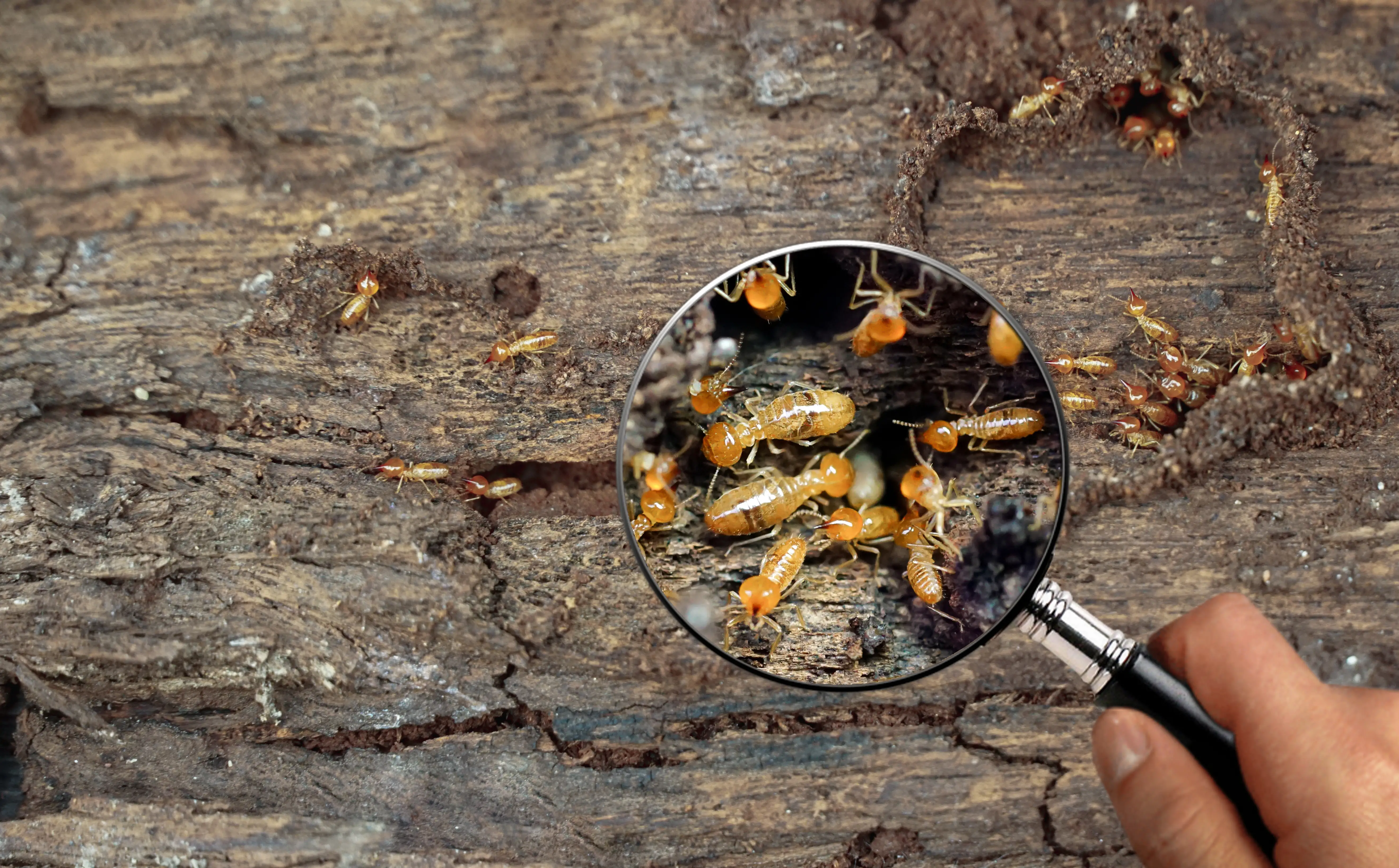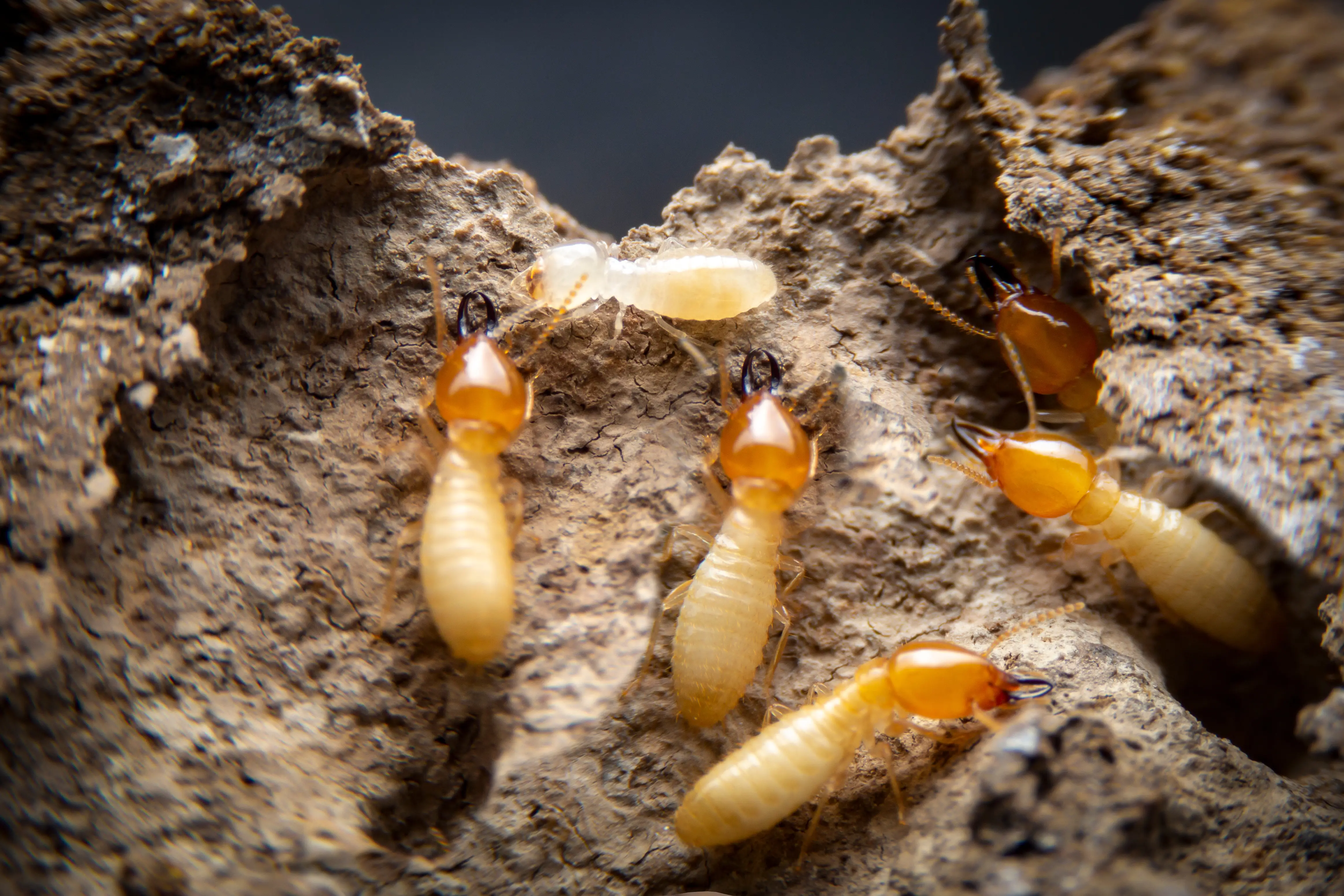
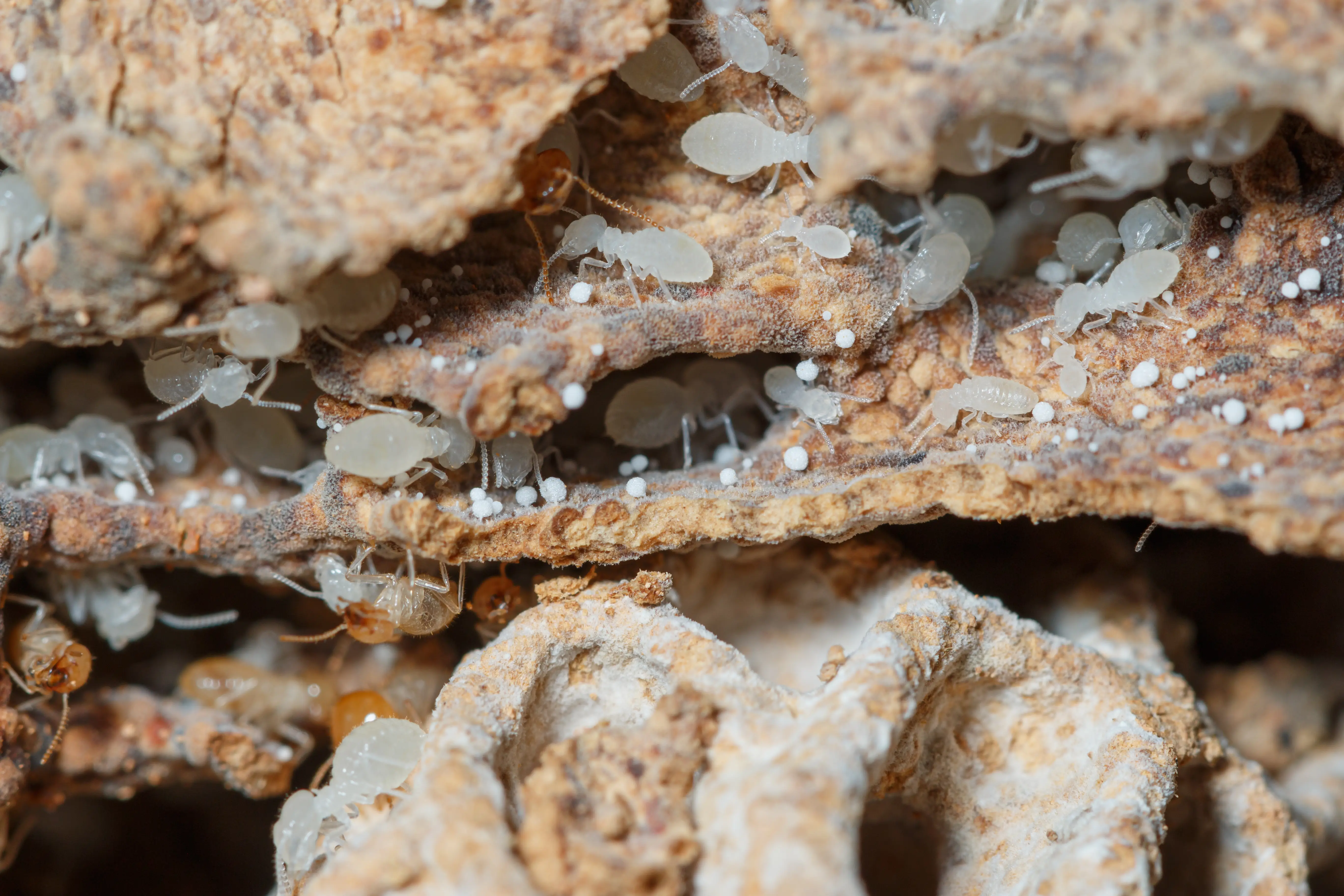
EcoGuard Pest Management
Licensed contractor repairing termite-damaged wood structure

Termite Wood Damage Repairs

EcoGuard Pest Management provides professional termite damage assessment and repair services for homes and businesses across California, Oregon, Washington, Texas, Tennessee, and Nevada. Restore your property's structural integrity.

Restore Your Home's Structural Integrity

Termites across the US cause several billion dollars in structural damage every year. These extensive damages are generally done to the wooden structures of your home, costing homeowners thousands of dollars in repairs. This is why regular termite inspections are critical—the earlier an infestation is found, the less severe the damage is likely to be.

If a termite infestation has become widespread, there's probably significant damage that needs to be repaired. Call EcoGuard Pest Management to schedule a termite damage inspection and determine if our licensed contractors need to help repair your home.

⚠️ Important: Insurance Coverage

Termite damages are not usually covered by standard homeowners' insurance policies. This makes early detection and prevention even more critical to protecting your investment. Regular inspections can save you thousands in out-of-pocket repair costs.

$1,000 - $5,000+

Typical repair cost (varies by damage extent)

  • Termite damage inspection
  • Licensed repair contractors
  • Structural & cosmetic repairs
  • Pressure-treated replacement wood
  • Termite treatment included
  • Prevention recommendations
Get Free Estimate

Get Your Free Termite Damage Repair Quote

Protect your property with a free termite damage repair quote from our licensed experts.

✓ Same-day service available
✓ Licensed & insured
✓ Detailed property assessment
✓ No-obligation estimates

Service Areas

We provide termite damage repair control services throughout:

  • California
  • Oregon
  • Washington
  • Texas
  • Tennessee
  • Nevada
View All Counties →

Schedule Your Termite Damage Assessment

Our licensed contractors will assess the extent of termite damage and provide an accurate repair estimate. Don't wait—damage can worsen over time.

📞 Call 866-942-0764Schedule Online

Can Termite Damage Be Repaired?

Yes, termite damage can usually be repaired if caught in time. Most drywood termite colonies remain small, so it would take over 20 years for enough structural damage to condemn a structure.

However, Formosan termites are much more problematic. These colonies explode with several satellite colonies and can cause extensive damage to a home in less than 2 years.

✅ Extensive termite damage to the point a building would be unsafe for habitation is rare—but still possible. This is why early detection is critical to minimizing repair costs.
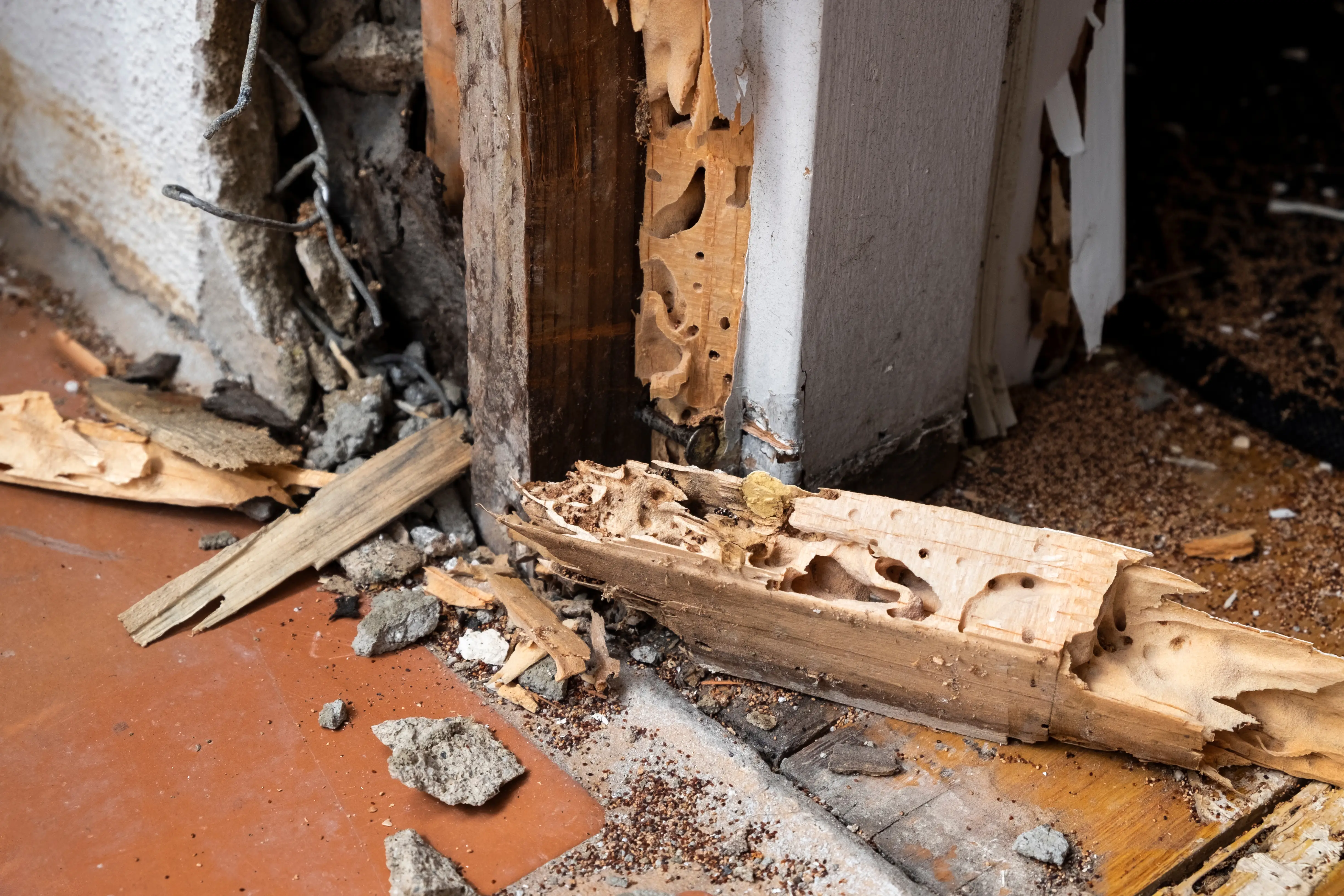
Close-up of wood showing termite damage galleries

How to Repair Termite Damage

There are several approaches to repairing termite damage, depending on the severity and location of the damage. Our contractors will recommend the best approach for your situation.
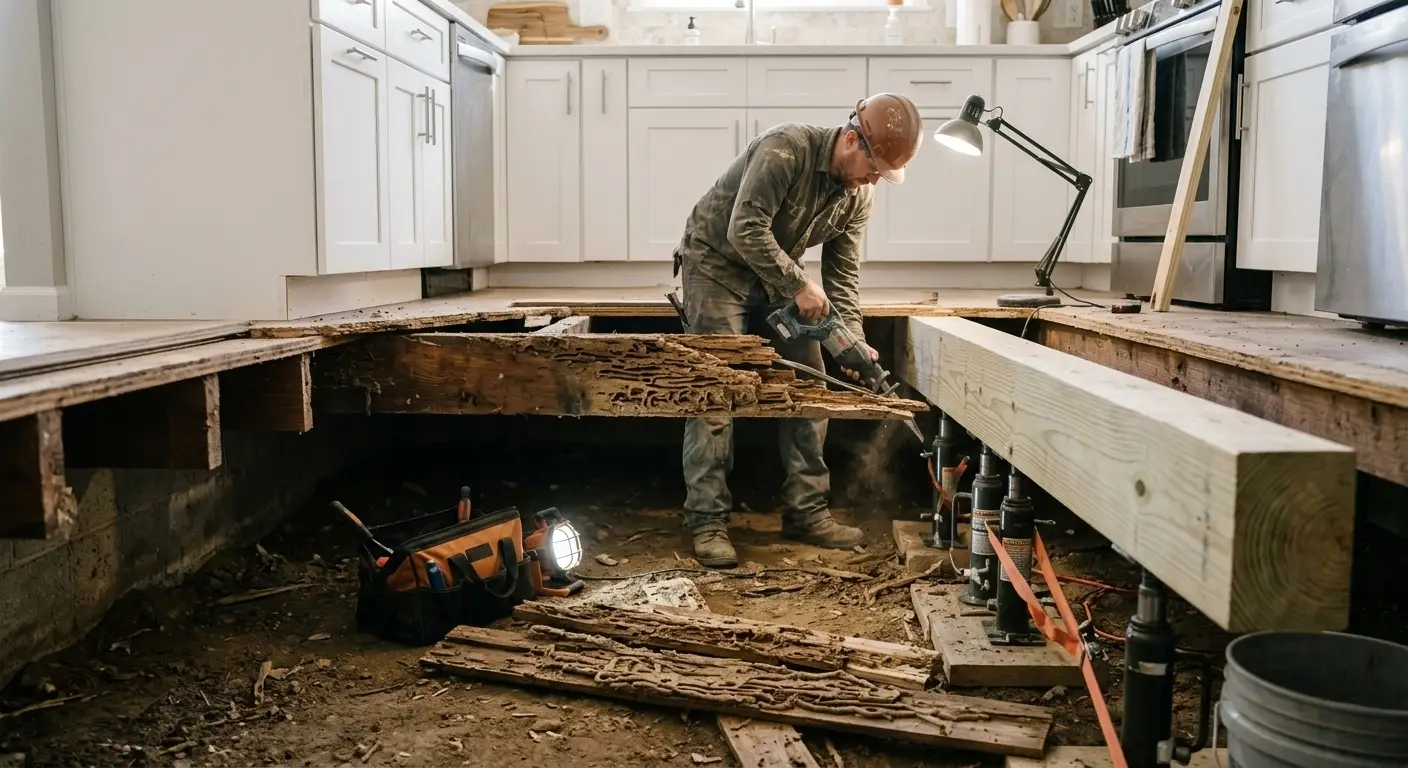
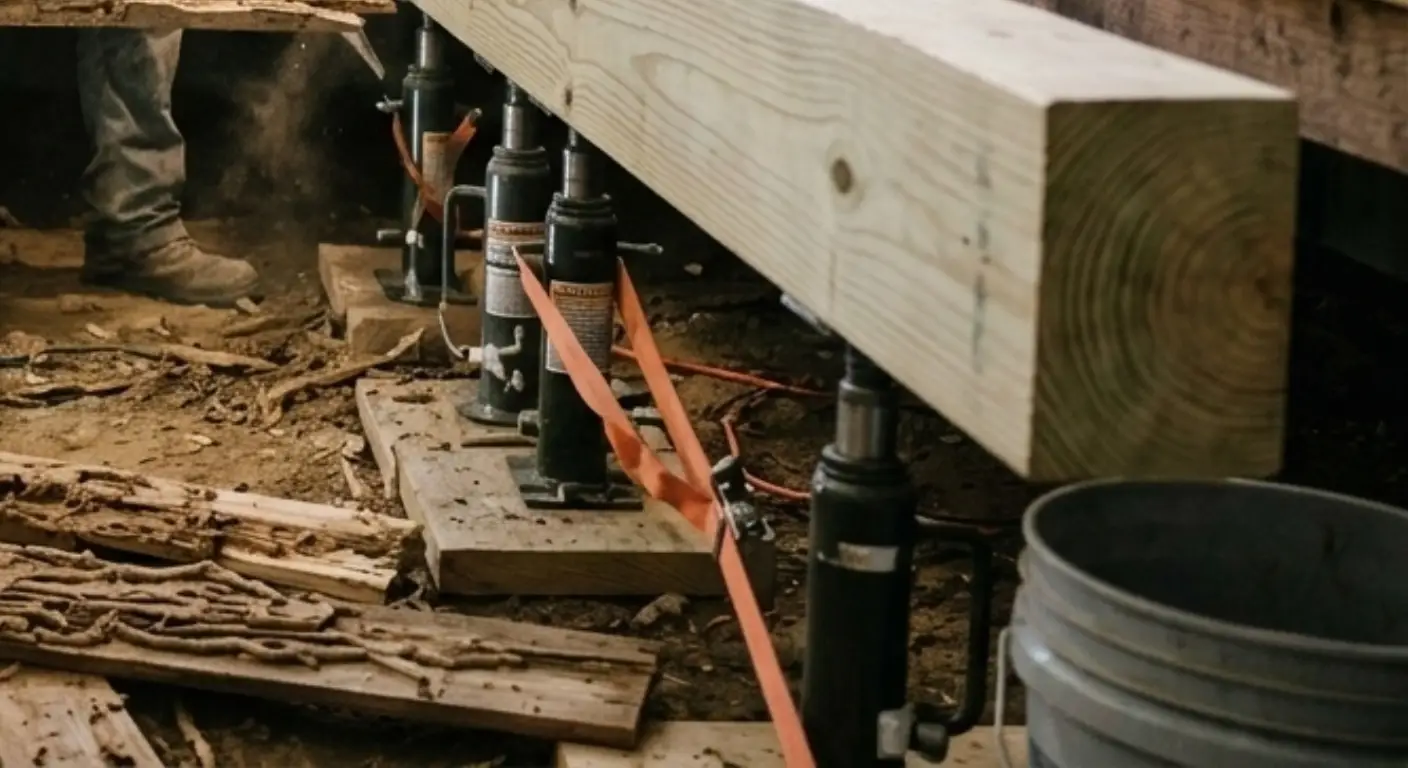
Contractor replacing termite-damaged wooden beam
SEVERE DAMAGE

Replace

Removes infested wooden structures and replaces them with new pressure-treated wood. Used when wood is too hollow for support attachment. May require temporary structural bracing during repairs.

Wooden support brace reinforcing damaged beam
MODERATE DAMAGE

Support

Utilizes existing wood and reinforces it by attaching a brace that maintains structural integrity. Less expensive and easier than replacement. Requires complete termite eradication first.

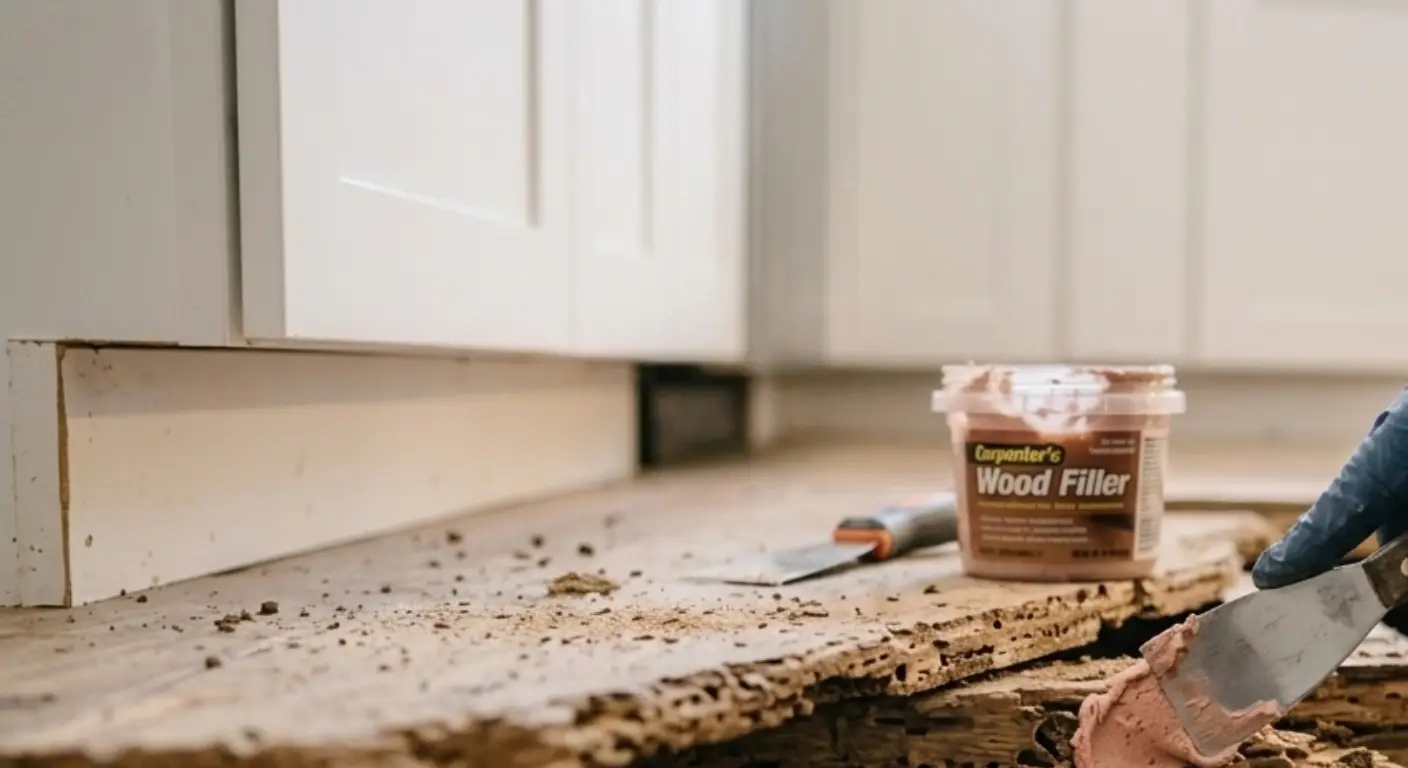
Wood filler being applied to minor termite damage
MINOR DAMAGE

Cosmetic

For early-caught damage that doesn't affect structural integrity. Uses wood fillers and hardeners to fill gaps left by termites. Simple, affordable fix after termites are completely exterminated.

⚠️ Important: All termites must be completely eradicated BEFORE any repairs are made. Otherwise, the new wood will eventually become infested too.

Preparing for Termite Damage Repairs

Before repairs can begin, a proper sequence of steps must be followed to ensure lasting results.

1

Inspection

EcoGuard termite expert inspects to identify termite type and extent of damage.

2

Treatment

All termites are completely eradicated using the appropriate treatment method.

3

Assessment

Damage is assessed and repair options are presented with accurate estimates.

4

Repair

Licensed contractors complete repairs using pressure-treated materials.

Signs of Termite Damage

Termite damage often goes unnoticed until severe levels of damage are done. This is because termites move through the interior of wood while the exterior maintains an undamaged appearance. Look for these warning signs:

🔍

Termite Galleries

Maze-like cavities within the interior of wooden supports and framing.

💧

Water Damage Appearance

What appears to be water damage to wood, drywall, and paint.

🪵

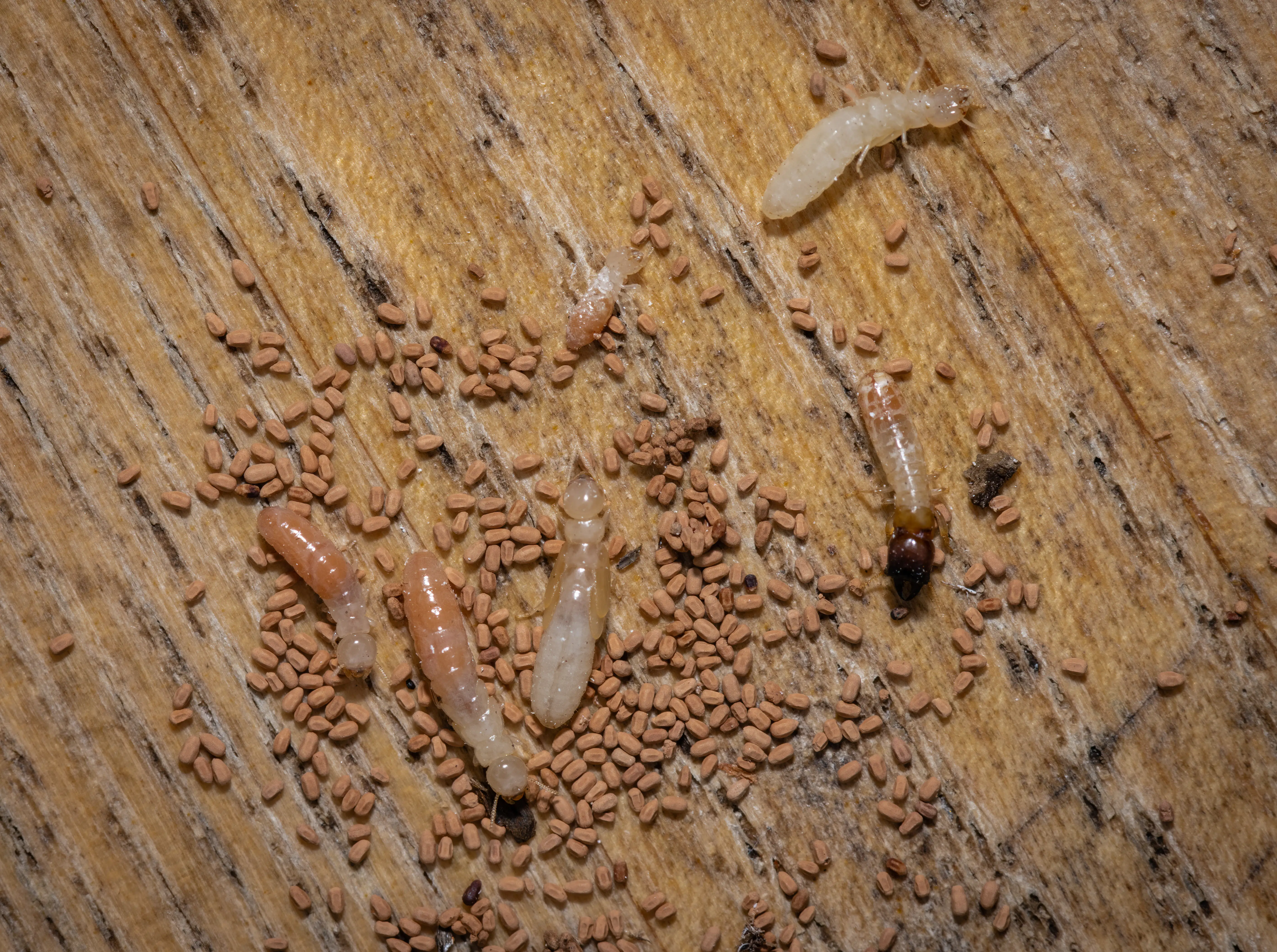
Termite Frass

Small pellets that look like sawdust near wooden structures.

🕳️

Mud-Covered Holes

Holes in wood covered in mud-like substance hiding termite access points.

📉

Collapsing Structures

Floors or ceilings that sag, buckle, or show signs of collapse.

🔨

Weak Wood

Splintering wood that breaks apart easily or sounds hollow when tapped.

🚪

Stuck Windows/Doors

Windows or doors that suddenly become difficult to open or close.

🎨

Bubbling Paint

Paint that bubbles, peels, or separates from the wall surface.

👂

Hollow Sound

Wood that sounds hollow or is easy to pierce with a sharp tool.

Where to Find Termite Activity

Knowing where to look for termite damage is critical to early detection. Termite damage can be found anywhere there is wood for them to feed on.
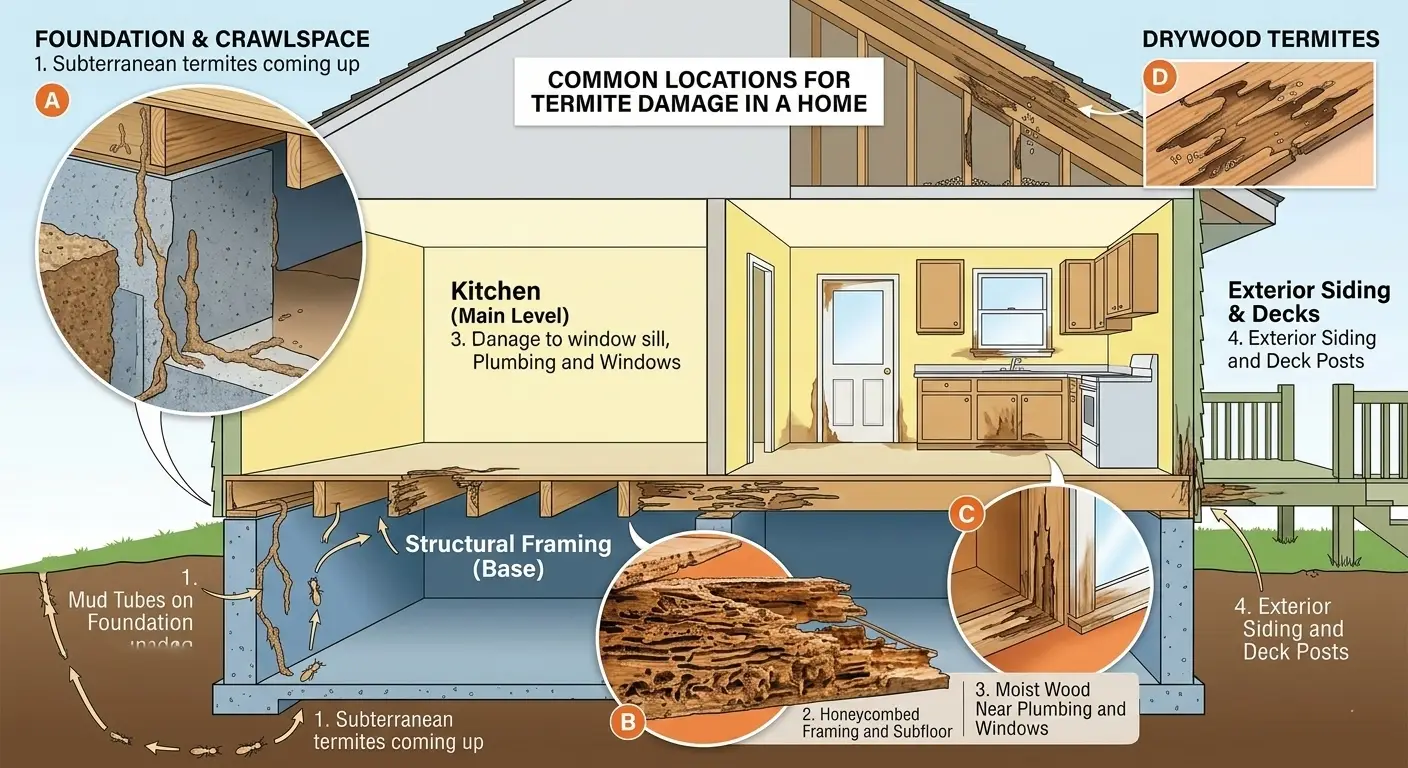
Diagram showing common locations for termite damage in a home
  • Foundations: First access point for subterranean termites to reach wooden structures.
  • Patios & Fences: Termite swarms often find food sources outside that connect to your home.
  • Garages & Workshops: Untreated lumber laying around can attract termites.
  • Hardwood Flooring: Subterranean termites feed on floors first before moving upward.
  • Trees: Swarms may make their home in trees with branches touching your home.
  • Firewood Piles: Store firewood away from home—swarms will colonize it.
  • Attics & Crawlspaces: Open access to rafters and framing provides abundant food.

Termite Repair Cost Guide

The cost of termite damage repairs largely depends on the extent of damage found. Here's what to expect:

🔧

Minor Repairs

$250 - $1,000

Cosmetic repairs, wood filler applications, small area treatments.

🏠

Typical Repairs

$1,000 - $5,000

Support bracing, partial wood replacement, moderate structural work.

🏗️

Major Repairs

$5,000+

Extensive roof/floor repairs, structural replacement, major overhauls.

⚠️ Remember: Termite damage is typically NOT covered by homeowners' insurance. Early detection through regular inspections is your best protection against costly repairs.

Preventing Future Termite Damage

Once termites have been treated and damage repaired, take these preventative measures to avoid future infestations:

🪤

Termite Bait Stations

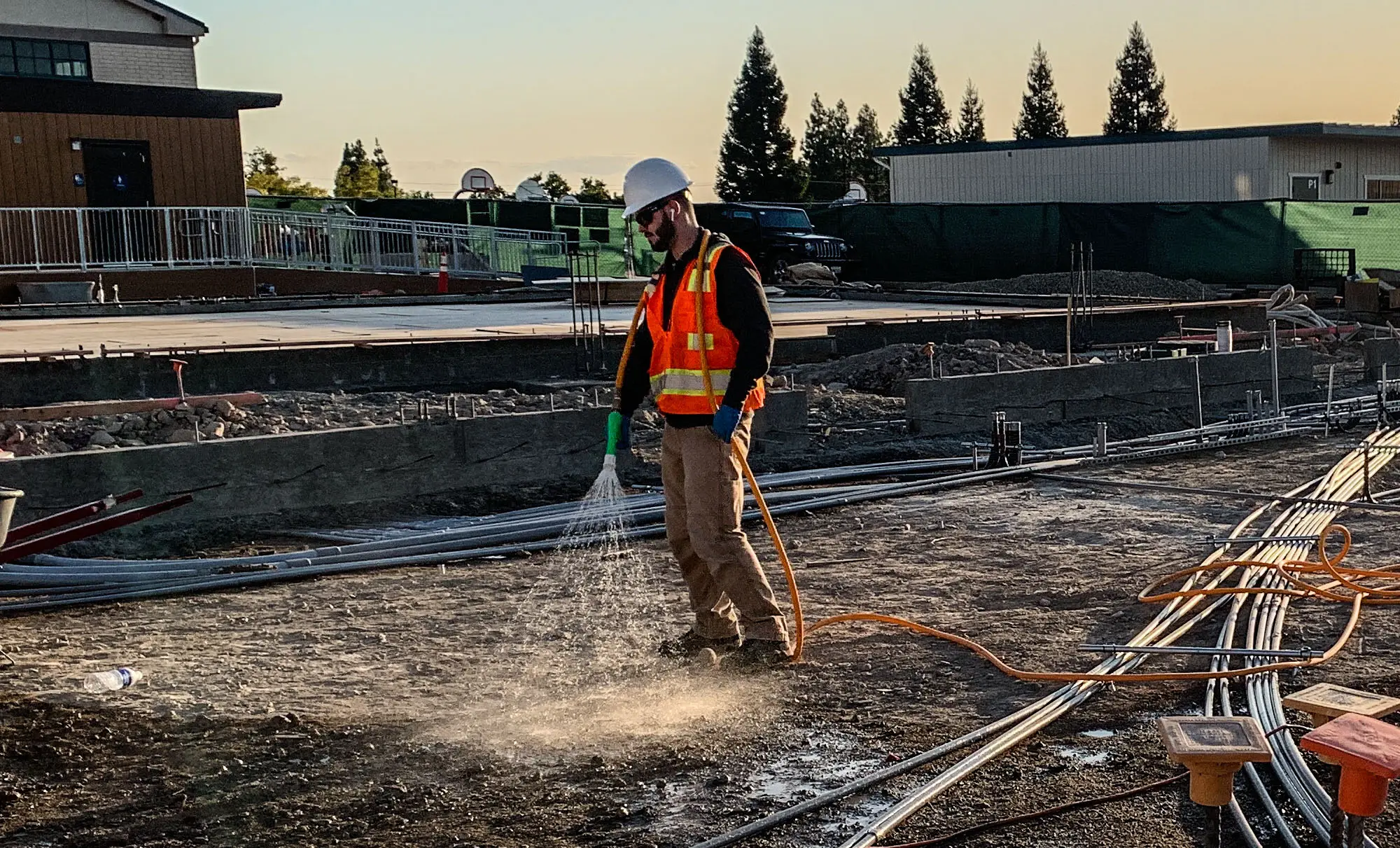
Install bait stations around your property to cause colony collapse before they reach your home.

🪱

Beneficial Nematodes

Apply beneficial nematodes to the soil to deter subterranean termites naturally.

🧪

Boric Acid & Diatomaceous Earth

Sprinkle around your foundation as a natural termite deterrent.

🪵

Create Wood Gaps

Maintain distance between your home and firewood, tree branches, and other wood sources.

🏗️

Pressure-Treated Wood

Use pressure-treated wood for all repairs and new construction.

🔍

Regular Inspections

Schedule annual termite inspections to catch activity early.

🧱

Foundation Barriers

Lay cement, brick, or stone barriers around your home's exterior.

🌲

Termite-Resistant Materials

Consider vinyl siding and naturally resistant hardwoods like redwood or cypress.

💨

Spray Termiticides

Apply termiticides to any untreated wood around your home.

100% SATISFACTION GUARANTEE

The EcoGuard Guarantee

EcoGuard offers a 100% satisfaction guarantee for all of our customers, and we stand by our promise to eradicate your termite damage repair problem until the very last termite damage repair is gone. That termite damage repair control guarantee comes with every service and if the termite damage repairs come back, then so do we, at no additional cost. We are standing by to give you a free estimate and to help you set your first termite damage repair pest control service appointment.

📞 Call (866) 326-2847 Today

What Our Customers Say

Trusted by homeowners across 6 states for professional termite damage repair services

★★★★★

"Curtis came to the rescue! He came out on short notice, explained everything he was going to do in advance. The repair work was professional and our home feels solid again."

Steph A.
Homeowner, CA
★★★★★

"We had a great experience with EcoGuard. Jarvon called about 15 minutes before arriving and was extremely professional. They identified damage we didn't even know we had."

Willie G.
Property Owner, OR
★★★★★

"Daniel takes good care of our house and is always responsive and flexible. He found termite damage during a routine inspection and the repair team fixed it quickly. Highly recommend!"

Joshua C.
Homeowner, TX

Termite Damage Repair Control FAQs

Everything you need to know about termite damage repair control and treatment

Yes, termite-damaged wood can often be repaired depending on the extent of damage. Minor damage can be fixed with wood fillers and hardeners. Moderate damage may require support bracing. Severe damage requires complete replacement of the affected wood. Our contractors will assess the damage and recommend the most appropriate and cost-effective repair method.

Not necessarily. Minor cosmetic damage that doesn't affect structural integrity may not require immediate repair. However, any damage to load-bearing structures, supports, or framing should be addressed promptly to prevent safety issues. Our inspection will identify which damage is critical and which is cosmetic, helping you prioritize repairs.

Unfortunately, most standard homeowners' insurance policies do NOT cover termite damage. Insurance companies typically consider termite damage preventable through regular maintenance and inspections. This makes early detection and prevention even more important. Some specialty policies may offer coverage, so check with your insurance provider.

It depends on the termite species. Most drywood termite colonies remain small and would take 20+ years to cause severe structural damage. However, Formosan termites are much more aggressive—their colonies can cause extensive damage in less than 2 years due to their large populations and satellite colonies. Early detection is critical regardless of species.

Typical termite damage repairs range from $1,000-$5,000, but costs can vary significantly based on damage extent. Minor cosmetic repairs may cost $250-$1,000. Major structural repairs involving roof or floor damage can exceed $5,000. In rare cases of extreme damage, costs can be much higher. We provide assessments with accurate estimates.

Minor cosmetic damage (wood filler, surface repairs) can be DIY projects if you're handy. However, structural repairs should always be done by licensed contractors who understand load-bearing requirements and building codes. Additionally, termites must be completely eradicated before any repairs—attempting repairs with active termites will result in the new wood becoming infested.

Signs of structural damage include sagging floors or ceilings, doors/windows that won't close properly, visible cracks in walls, and wood that sounds completely hollow. If you can easily push a screwdriver into wood, there's likely significant damage. A professional inspection is the only way to accurately assess whether damage affects structural integrity.

Absolutely yes. All termites must be completely eradicated before any repair work begins. If you repair wood while termites are still present, they will simply infest the new wood. This is why EcoGuard handles both treatment and repair—we ensure the infestation is eliminated before our contractors begin repairs.

We recommend pressure-treated wood for all termite damage repairs. This wood has been treated with preservatives that deter termites and resist decay. For visible areas, you can also consider naturally termite-resistant hardwoods like redwood, cedar, or cypress, though these are more expensive.

Repair time depends on damage extent. Minor cosmetic repairs may take just a few hours. Moderate repairs involving support bracing typically take 1-2 days. Major structural repairs can take several days to a week or more. We'll provide a timeline estimate after assessing your specific damage.

It depends on the repair type. Support bracing is typically done in hidden areas like crawlspaces or attics. Wood replacement can be finished to match existing wood with paint or stain. Cosmetic repairs using wood filler can be sanded and painted to blend seamlessly. Our contractors work to minimize visible signs of repair.

Prevention includes: installing termite bait stations, applying termiticides to vulnerable areas, maintaining gaps between wood and soil, using pressure-treated wood, scheduling regular inspections, removing wood debris from your property, fixing moisture issues, and considering termite-resistant building materials for future projects.

Getting multiple estimates is always wise for major repairs. However, ensure you're comparing similar scopes of work. Some contractors may not include termite treatment in their estimates, which is essential before repairs. EcoGuard provides comprehensive estimates that include treatment, repair, and prevention recommendations.

Yes, untreated termite damage can significantly affect home value and may need to be disclosed when selling. However, properly repaired and documented termite damage typically has minimal impact on value. We provide documentation of treatment and repairs that can be shared with potential buyers or home inspectors.

Unrepaired termite damage can worsen over time, even after termites are eliminated. Weakened wood continues to deteriorate from moisture and stress. What starts as minor damage can become a major structural issue. Additionally, damaged areas may allow water intrusion, leading to rot, mold, and additional problems.

Related Articles & Resources

Learn more about termite damage repair prevention, identification, and control
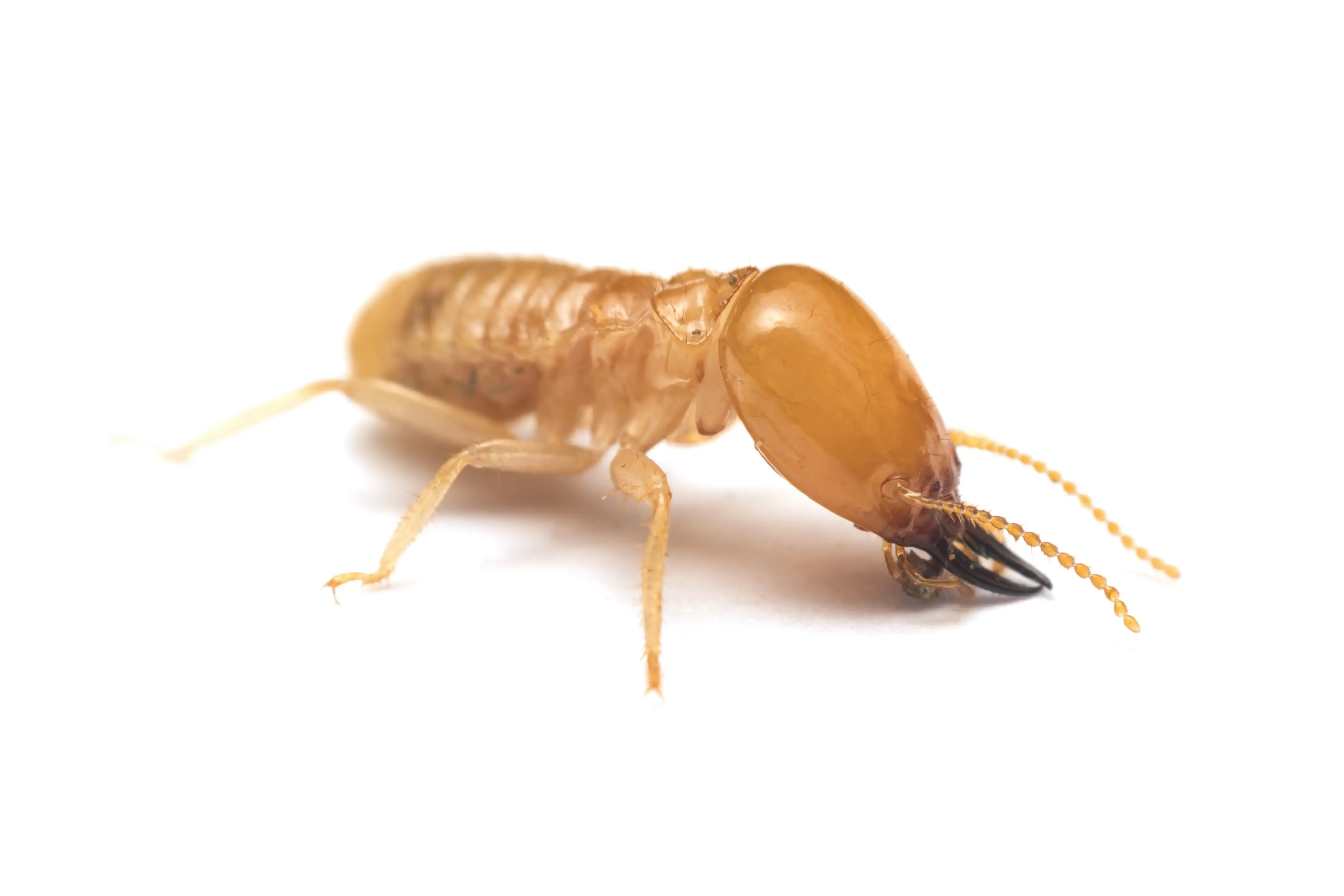
Do Termites Bite People? Risks, Symptoms & What to Do

Do Termites Bite People? Risks, Symptoms & What to Do

Learn if termites bite humans, what termite bites look like, the real risks of termites, and how to prevent and get rid of termite infestations.

Read Article →
Does Mulch Attract Termites? Complete Guide to Safe Mulching

Does Mulch Attract Termites? Complete Guide to Safe Mulching

Learn the truth about mulch and termites. Discover which mulch types are termite-resistant, proper installation techniques, and prevention strategies.

Read Article →
How Long Does Termite Treatment Last? Duration by Type

How Long Does Termite Treatment Last? Duration by Type

Learn how long different termite treatments last including baits, liquid treatments, fumigation, and Termidor. Factors affecting treatment effectiveness.

Read Article →
Signs of Termites: How to Detect Termite Activity in Your Home

Signs of Termites: How to Detect Termite Activity in Your Home

Learn the common signs of termite activity including swarmers, mud tubes, wood damage, droppings, and more. Early detection prevents costly damage.

Read Article →
Termite Droppings (Frass): Identification, Location & What to Do

Termite Droppings (Frass): Identification, Location & What to Do

Learn how to identify termite droppings (frass), where to find them, drywood vs subterranean termite waste, and what to do if you find termite frass.

Read Article →
Termite Eggs: Identification, Location & What Finding Eggs Means

Termite Eggs: Identification, Location & What Finding Eggs Means

Learn what termite eggs look like, where to find them, how many queens lay, hatching time, and what to do if you discover termite eggs in your home.

Read Article →
Termite Life Cycle: Stages, Castes, Reproduction & Lifespan

Termite Life Cycle: Stages, Castes, Reproduction & Lifespan

Learn about the termite life cycle including egg, nymph, and adult stages, castes (workers, soldiers, reproductives), swarming, and how long termites live.

Read Article →
Termite Queen: Appearance, Role, Lifespan & How to Eliminate

Termite Queen: Appearance, Role, Lifespan & How to Eliminate

Learn about termite queens including appearance, size, role in the colony, egg production, lifespan, and what happens when a queen dies.

Read Article →
Termites vs Ants: How to Tell the Difference

Termites vs Ants: How to Tell the Difference

Learn how to identify termites vs ants by appearance, antennae, wings, body shape, behavior, diet, and damage caused. Proper identification is critical.

Read Article →
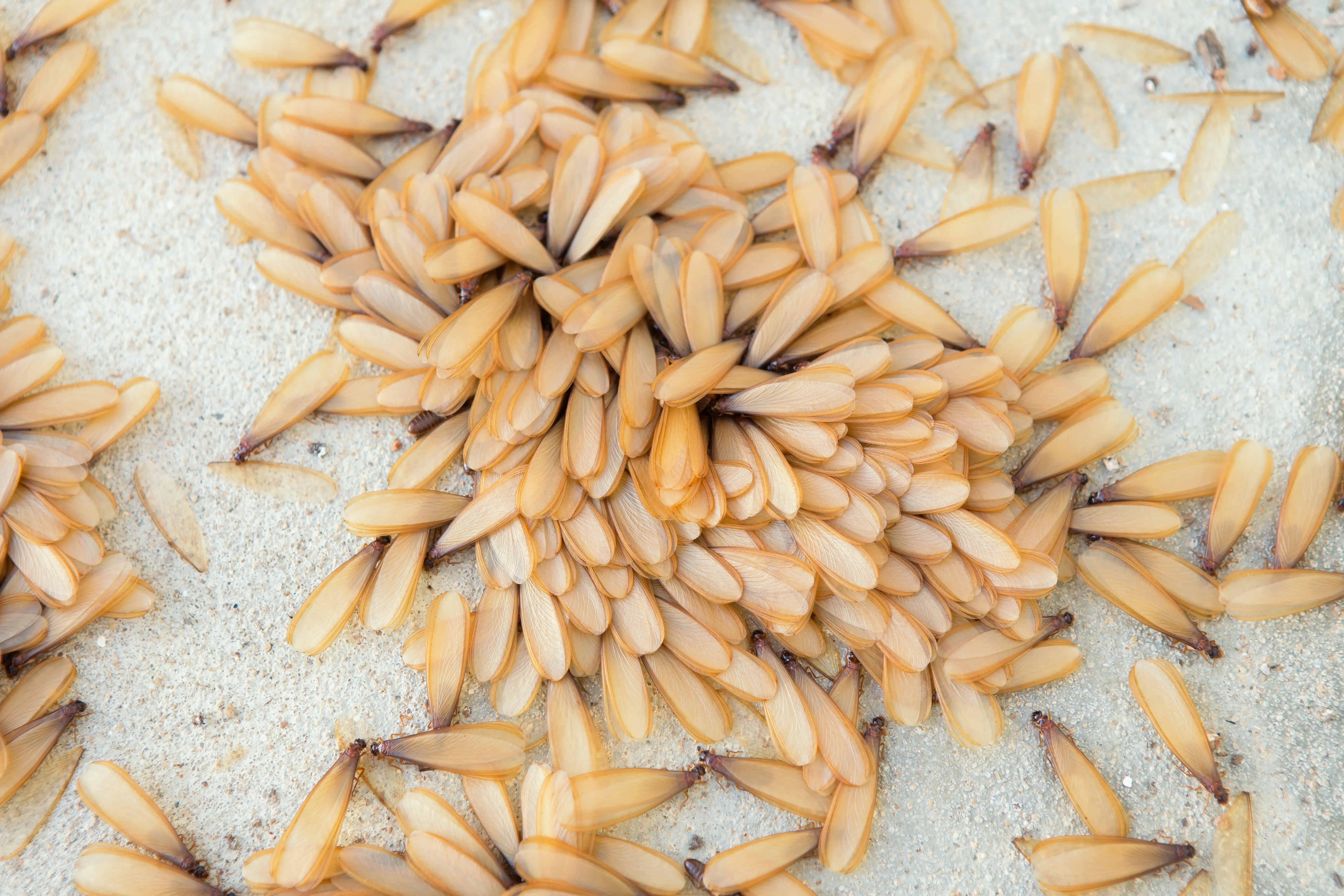
Termites with Wings: What Flying Termites Mean & What to Do

Termites with Wings: What Flying Termites Mean & What to Do

Learn what flying termites (alates) mean, how to identify them vs flying ants, when they swarm, and what to do if you see them in or around your home.

Read Article →
What Are Termite Mud Tubes? Identification & Treatment

What Are Termite Mud Tubes? Identification & Treatment

Learn what termite mud tubes are, how to identify them, the different types, what they mean for your home, and how to prevent and treat termite infestations.

Read Article →
What Are Termites? Facts, Signs, Damage, and Control

What Are Termites? Facts, Signs, Damage, and Control

Learn what termites are, how to identify them, the 3 main types, 15 signs of infestation, structural damage they cause, life cycle, castes, and how to get rid of them.

Read Article →
What Do Termite Larvae Look Like? Identification Guide

What Do Termite Larvae Look Like? Identification Guide

Learn how to identify termite larvae by their shape, color, and size. Discover the differences between termite larvae and other insects, plus signs of infestation.

Read Article →
What Do Termites Look Like? Identification Guide

What Do Termites Look Like? Identification Guide

Learn how to identify termites by appearance, size, and color. Compare different termite species and distinguish them from carpenter ants and other wood-destroying insects.

Read Article →
View All Pest Control Articles →

Ready to Eliminate Your Termite Damage Repair Problem?

Get a free estimate for your termite damage repair problem today. Our experts will assess your property and provide a customized treatment plan.

Connect With Us

Follow EcoGuard Pest Management for tips, updates, and special offers

f𝕏yin