EcoGuard Pest Management
Professional Japanese beetle control technician treating landscape plants for beetle infestation

Japanese Beetle Pest Control and Exterminator Services

Japanese beetles are deceptively beautiful invaders that launch coordinated attacks that can transform lush gardens into skeletal remains in mere days. Their two-stage assault strategy creates year-round vulnerability—first as grubs feeding silently beneath your lawn, then emerging as adults to skeletonize prized roses, fruit trees, and over 300 different plant species. EcoGuard's comprehensive Japanese beetle management system targets both lifecycle phases, combining advanced detection methods with synchronized treatment protocols that break the cycle of destruction.

Japanese Beetle Pest Control Experts

Fighting Japanese beetles requires specialized knowledge that goes well beyond general pest management. Our certified technicians bring together entomological expertise, horticultural understanding, and advanced application technology to create customized protection strategies for your property. The EcoGuard difference lies in our lifecycle-based approach—we don't just treat visible adults during summer feeding frenzies, we also implement systematic soil treatments that target developing grubs before they emerge. This dual-phase methodology allows us to break the reproductive cycle while providing immediate relief from active infestations.

Why Japanese Beetles Are a Serious Problem

Japanese beetles pose multifaceted challenges that extend far beyond unsightly plants:

  • Unlike selective pests, Japanese beetles operate in congregations that can completely strip plants in days, leaving only skeletal leaf veins behind. This rapid defoliation severely weakens plants, making them vulnerable to disease and secondary pest infestations
  • The unique two-stage lifecycle creates a devastating one-two punch as grubs damage lawns by feeding on grass roots during spring and fall, while adults emerge to attack ornamental plants and trees throughout summer
  • Japanese beetles cause substantial financial losses by damaging high-value landscape investments like mature trees, ornamental shrubs, and food-producing plants—replacement costs can reach thousands of dollars per property
  • Female beetles lay up to 60 eggs each season in preferred lawn areas, creating exponentially growing populations year over year if left untreated

Japanese Beetle Control Service Plans

Choose the protection level that's right for your property

One-Time Treatment
$249+
Starting price
  • Comprehensive property inspection
  • Species identification
  • Entry point identification
  • Targeted treatment application
  • Perimeter barrier application
  • Nest elimination
  • Treatment report & recommendations
  • 30-day guarantee
Get Started
MOST POPULAR
Annual Protection
Contact Us
For custom pricing
  • Everything in One-Time Treatment
  • Seasonal maintenance plan
  • Entry point treatments
  • Priority scheduling
  • Re-treatment guarantee
Get Started

* Prices vary based on property size, infestation severity, and treatment method. Contact us for an accurate quote.

Service Plan Comparison

FeatureOne-TimeAnnual
Comprehensive Inspection
Adult Beetle Treatment
Follow-Up InspectionsSeasonal
Preventive Grub Treatment
Year-Round Lifecycle Management
Re-Treatment Guarantee

Get Your Free Japanese Beetle Quote

Protect your property with a free japanese beetle quote from our licensed experts.

✓ Same-day service available
✓ Licensed & insured
✓ Detailed property assessment
✓ No-obligation estimates

Service Areas

We provide japanese beetle control services throughout:

  • California
  • Oregon
  • Washington
  • Texas
  • Tennessee
  • Nevada
View All Counties →

Ready to Eliminate Your Japanese Beetle Problem?

Schedule your japanese beetle inspection today. Our experts will assess your property and provide a customized treatment plan.

📞 Call (866) 326-2847Get Free Quote

Japanese Beetle Treatment Options

EcoGuard's comprehensive approach combines multiple strategies for complete Japanese beetle management, targeting both the destructive adult stage and the lawn-damaging grub stage for year-round protection.
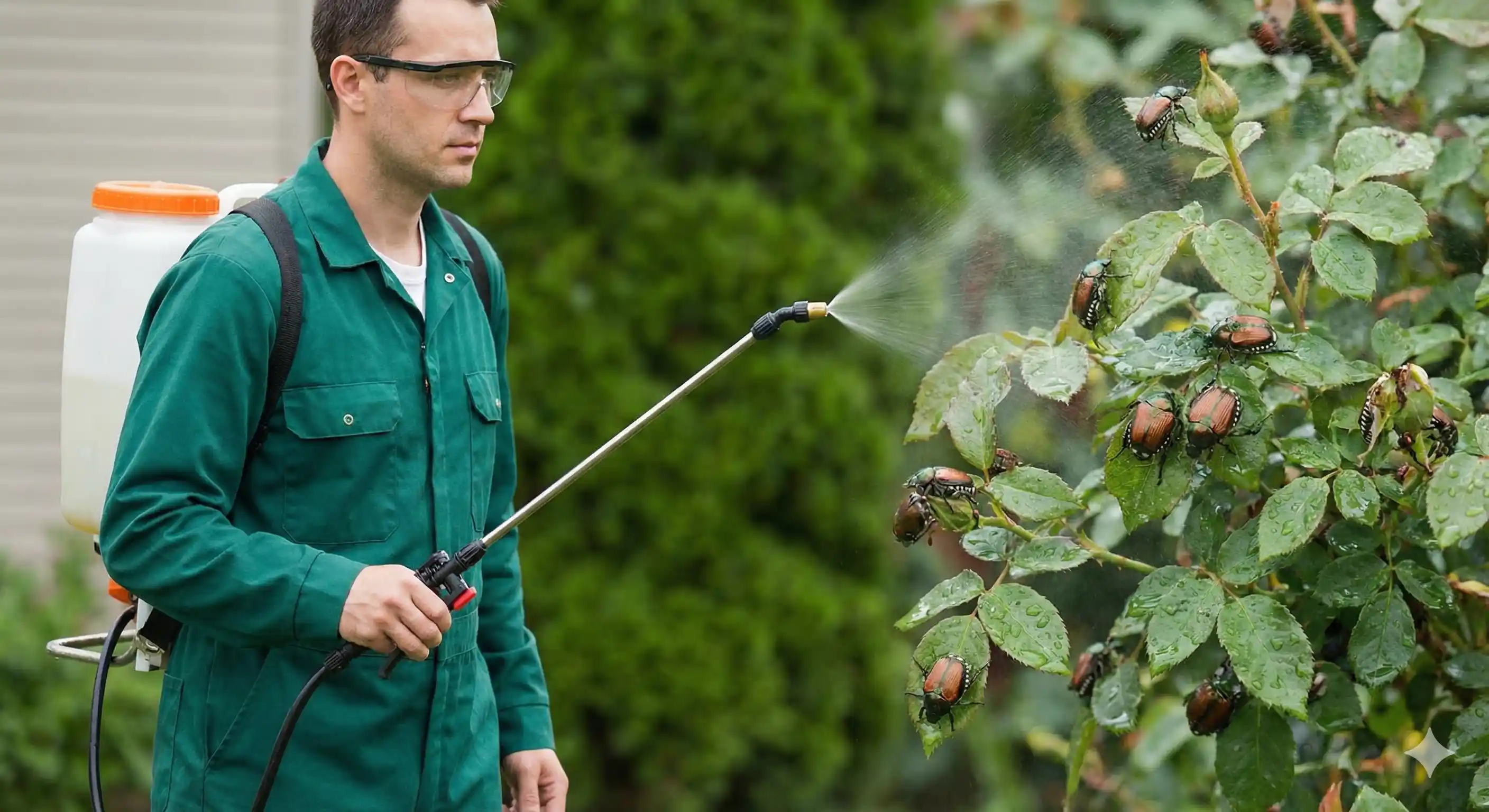
Technician applying foliar treatment to plants under Japanese beetle attack

Curative Foliar Applications

Our specialized contact insecticides provide immediate rescue for plants under active beetle attack. These targeted applications eliminate feeding adults within hours while creating protective barriers that deter new arrivals.

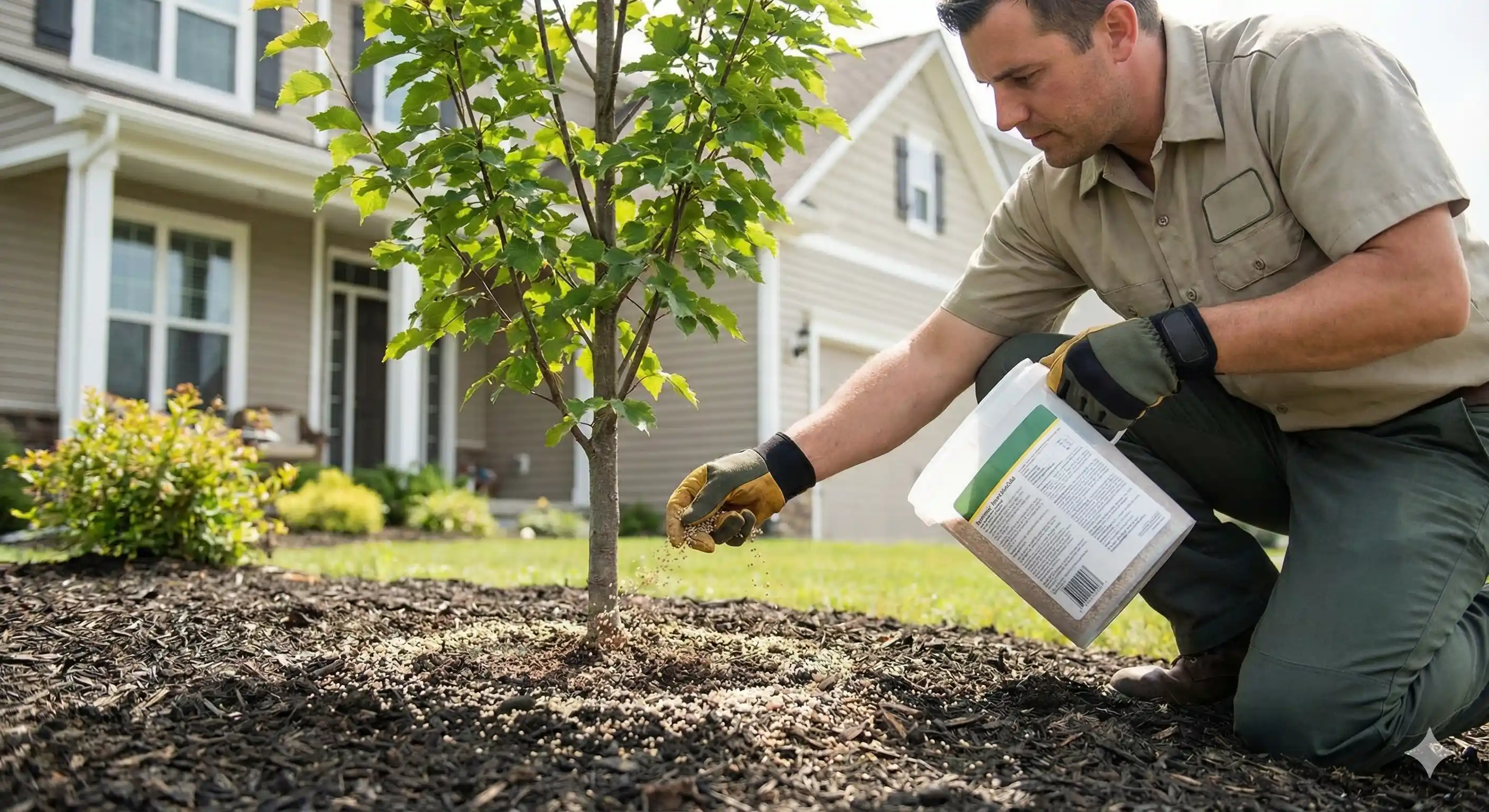
Applying soil-applied systemic treatment to protect plants from Japanese beetles

Soil-Applied Systemic Treatments

Advanced formulations absorbed by plant roots and transported throughout the entire plant structure, making all tissue toxic to feeding beetles. When beetles consume treated foliage, they receive a lethal dose before significant damage occurs.

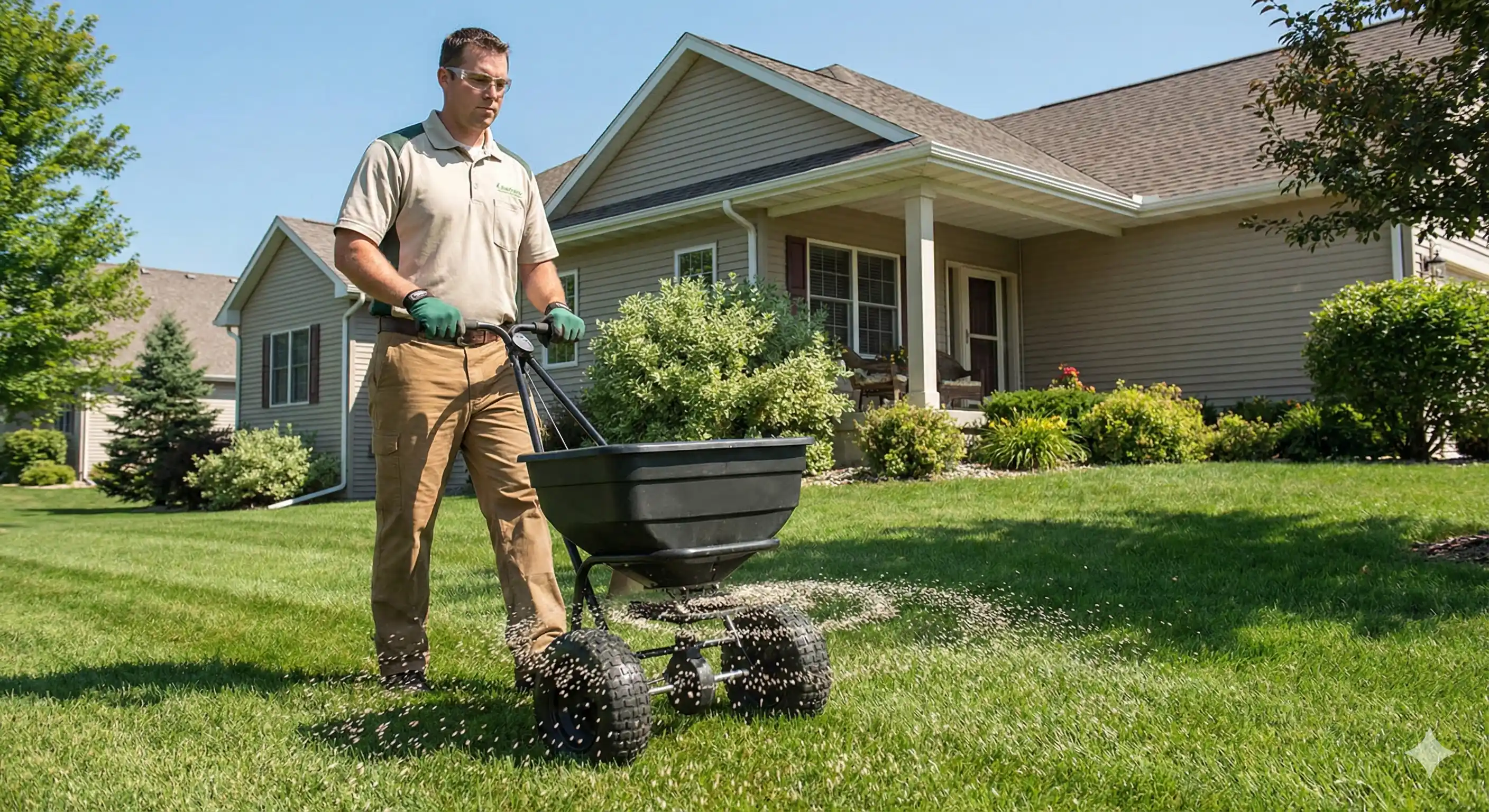
Professional applying preventive grub treatment to lawn soil

Preventive Grub Treatments

Our preventative soil treatments target developing grubs before they cause lawn damage or mature into destructive adults. Applied during key development windows, these treatments penetrate the soil profile to reach feeding grubs.

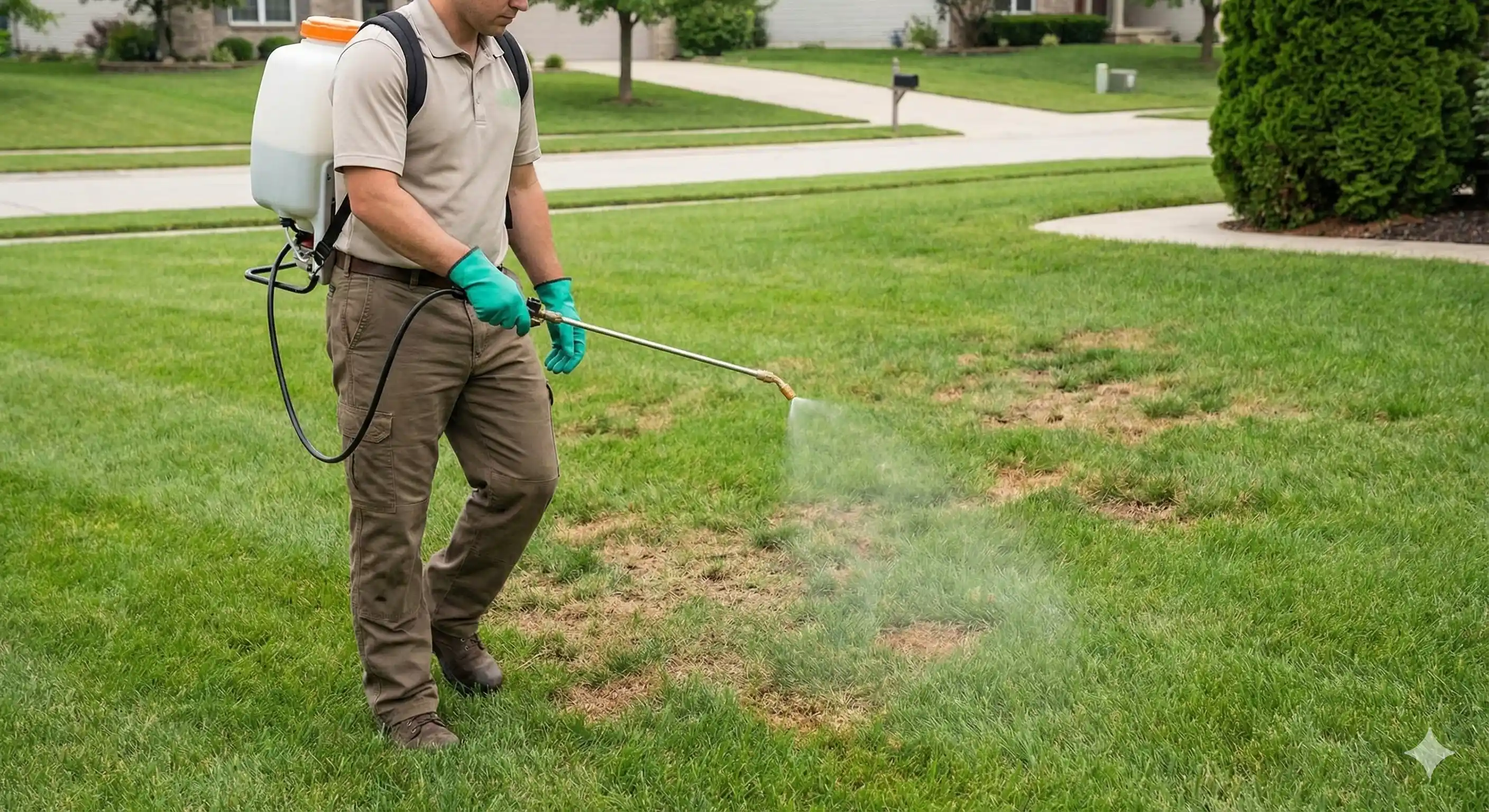
Technician treating lawn with curative grub control application

Curative Grub Treatments

When lawns show signs of existing grub activity, our rapid-response treatments eliminate active grubs before they cause extensive root damage. These specialized formulations penetrate turf and thatch layers to reach feeding grubs.

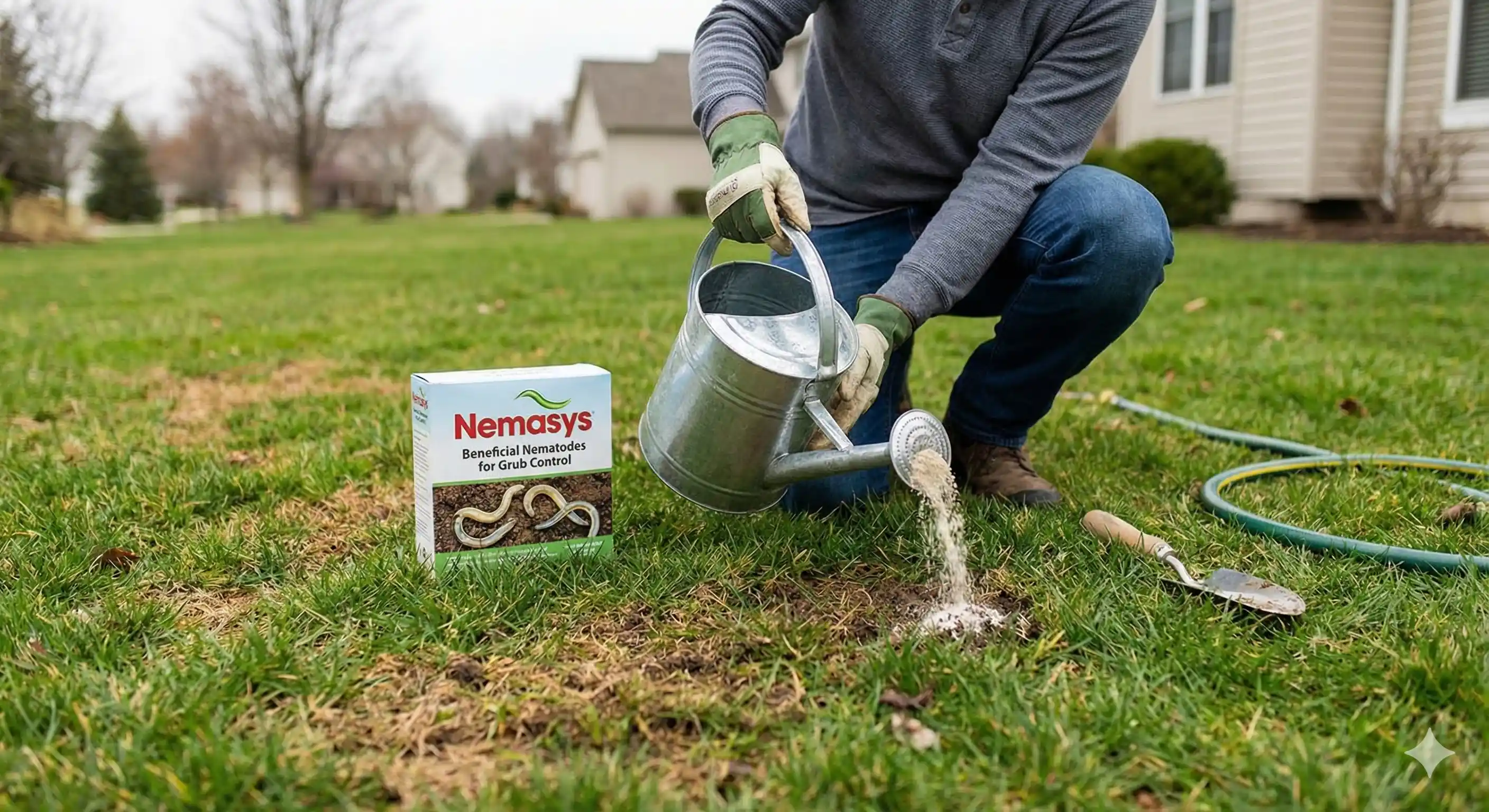
Applying biological control agents for natural Japanese beetle grub elimination

Biological Control Integration

For environmentally sensitive areas, we incorporate beneficial parasitic nematodes and milky spore-based treatments that target grubs through natural predation—completely harmless to plants, people, and pets.

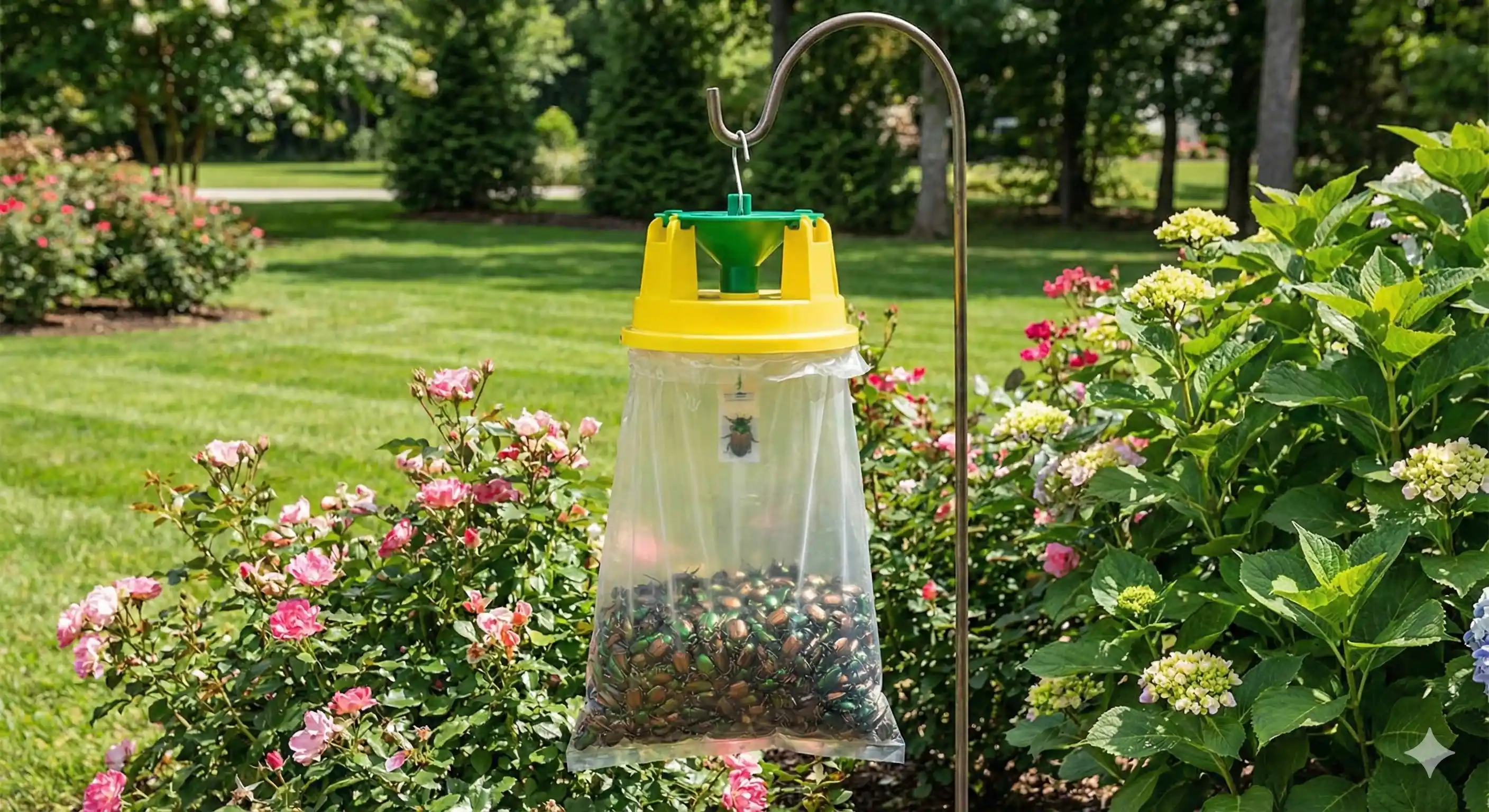
Professional pheromone trap system for Japanese beetle monitoring and capture

Targeted Trapping Systems

Strategic deployment of specialized pheromone lure traps intercepts beetles before they reach valuable plants. Our experts position these systems to maximize capture rates while avoiding attracting additional beetles to protected areas.

What Causes Japanese Beetles?

Recognizing what makes your property a prime target helps prevent serious infestations.

Rose bushes and ornamental plants that attract Japanese beetles

🌿 Prime Plant Buffet

Japanese beetles show strong preferences for specific plants, with roses, grapes, lindens, birch, maple, and fruit trees topping their menu. Properties featuring multiple preferred host plants naturally attract larger beetle populations through released aggregation pheromones.

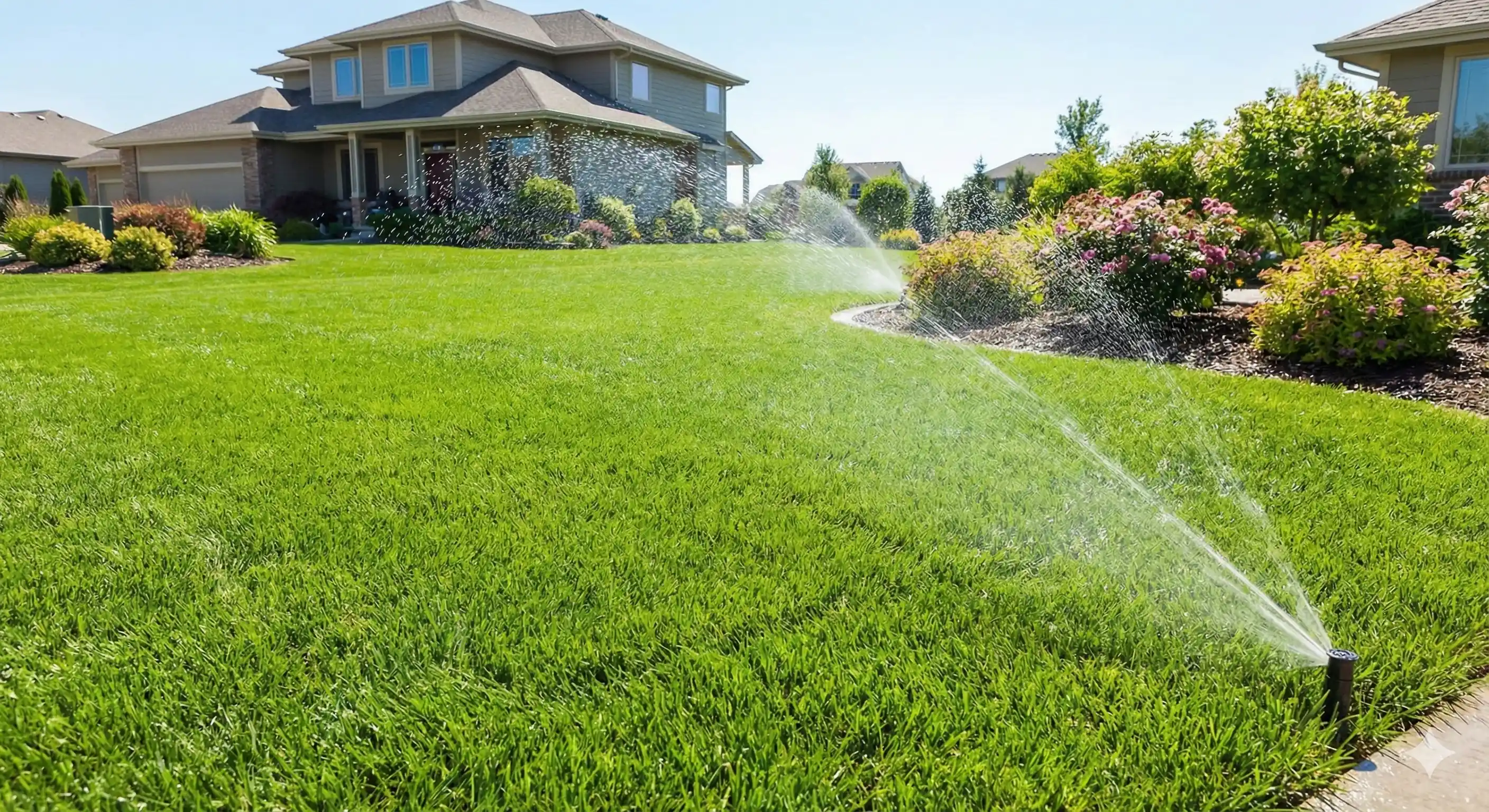
Well-maintained irrigated lawn providing ideal Japanese beetle egg-laying habitat

🌸 Ideal Egg-Laying Conditions

Female beetles seek specific soil conditions for egg laying, preferring moist, well-irrigated lawns with full sun exposure. Regularly watered turf, especially during the June-July egg-laying period, becomes a magnet for reproductive females.

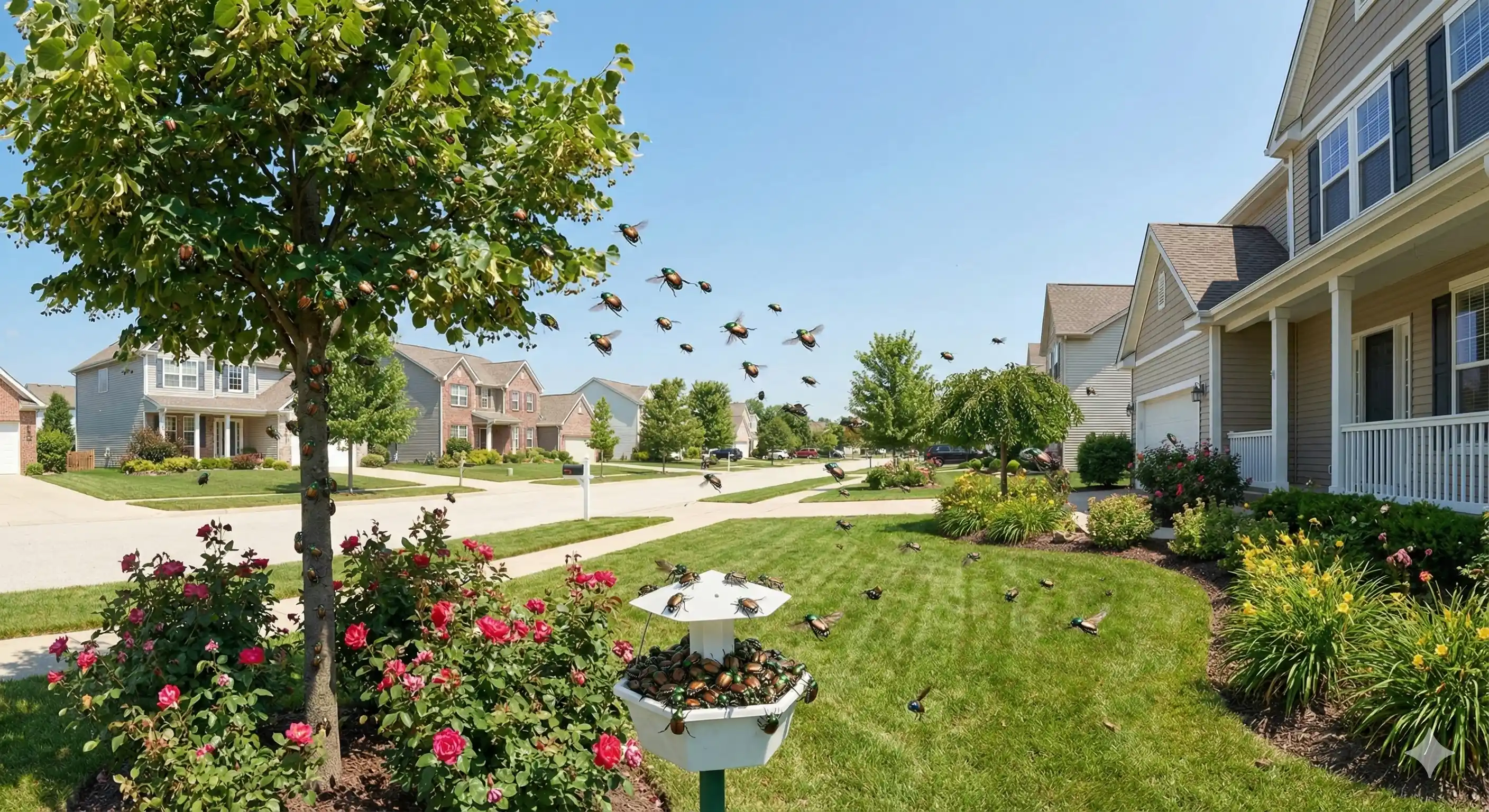
Residential neighborhood where Japanese beetles spread between properties

🏡 Neighborhood Infestations

Japanese beetles are highly mobile and can readily travel up to five miles from emergence sites to find food and mates. Existing infestations in neighboring properties create high-risk conditions as beetles naturally spread throughout an area.

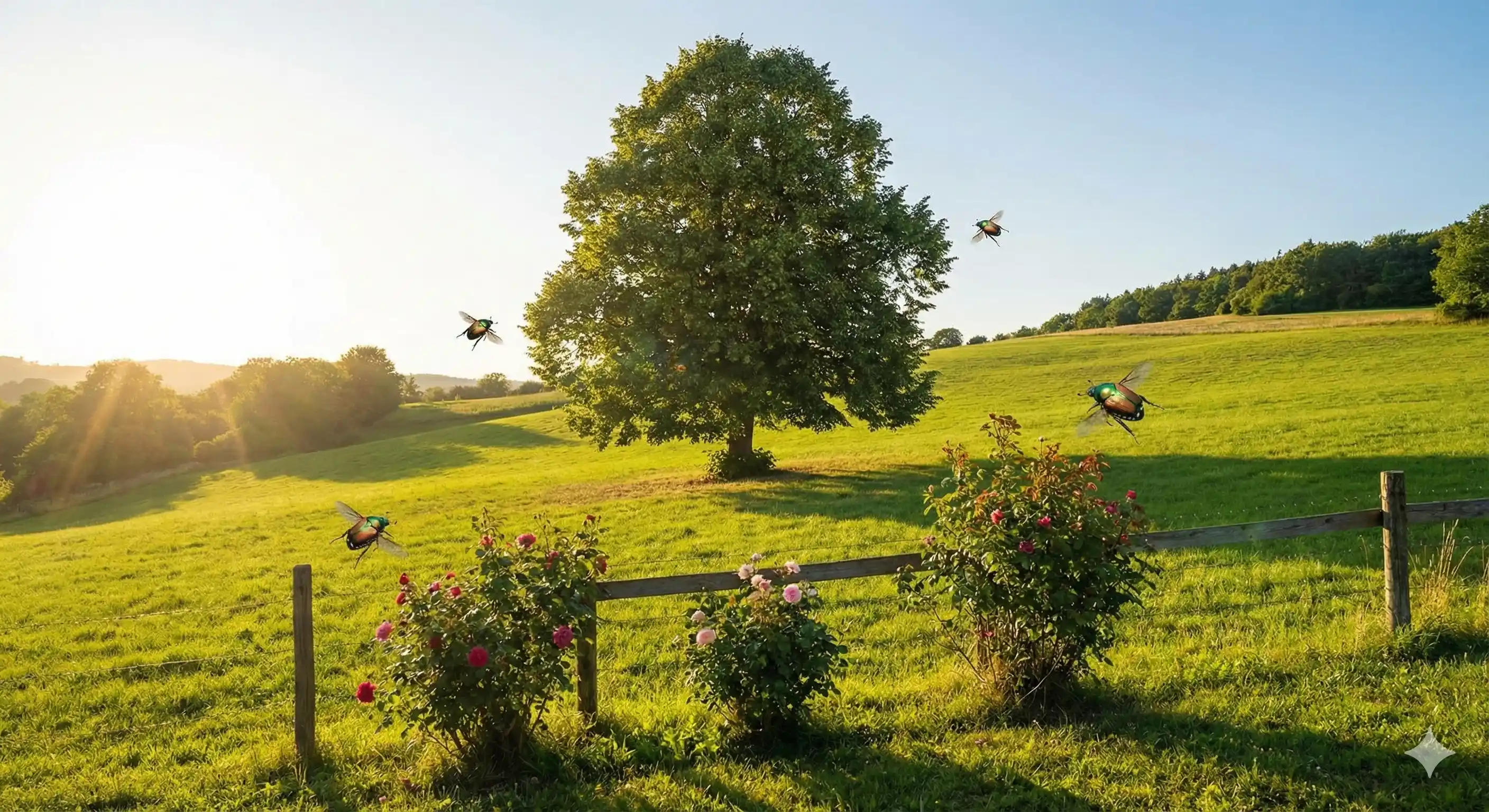
Sun-exposed landscape features that attract Japanese beetle activity

☀️ Physical Property Features

Landscapes with southern and eastern exposures typically experience earlier and heavier beetle activity due to soil warming patterns that accelerate grub development. Properties with isolated trees receive concentrated feeding pressure.

Learn More About Japanese Beetle Prevention →

What Are Signs of Japanese Beetles in Your Home?

Learn to identify these telltale indicators before damage becomes severe.
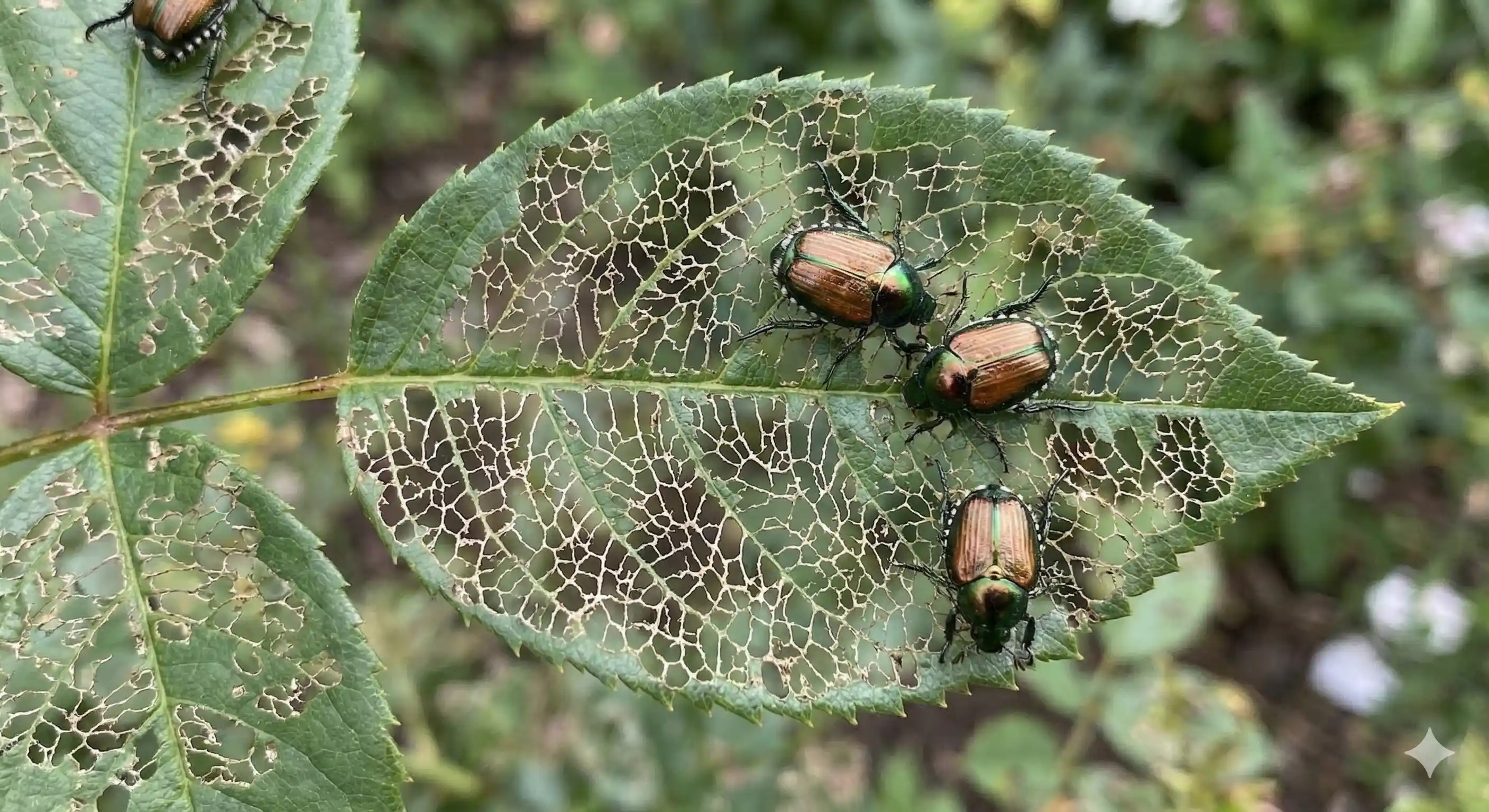
Skeletonized leaf showing characteristic Japanese beetle feeding damage

Skeletonized Leaves

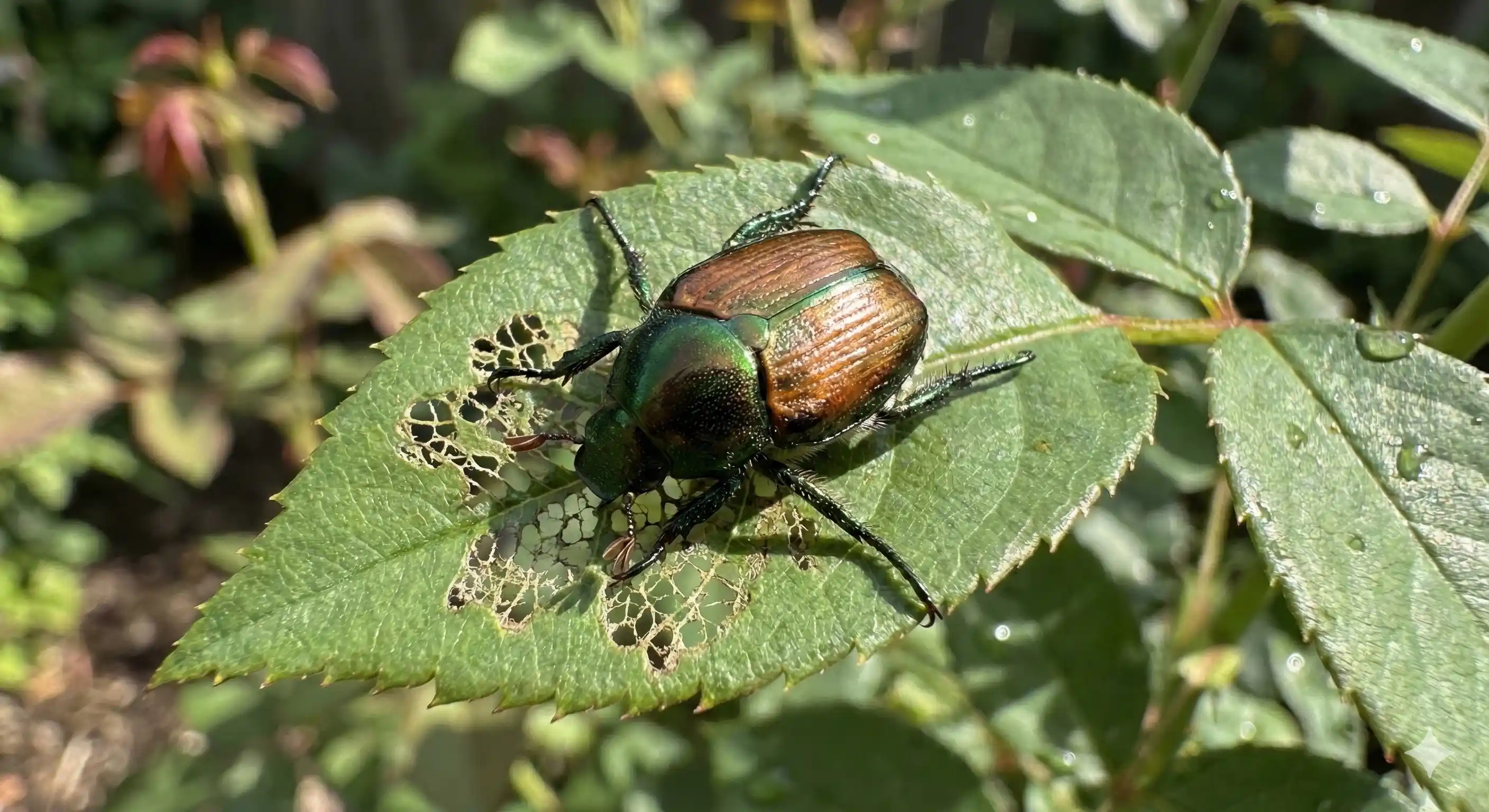
The most distinctive feeding pattern shows leaves with tissue completely removed between veins, creating a lace-like or skeletal appearance. This damage typically begins at the top of plants and progresses downward.

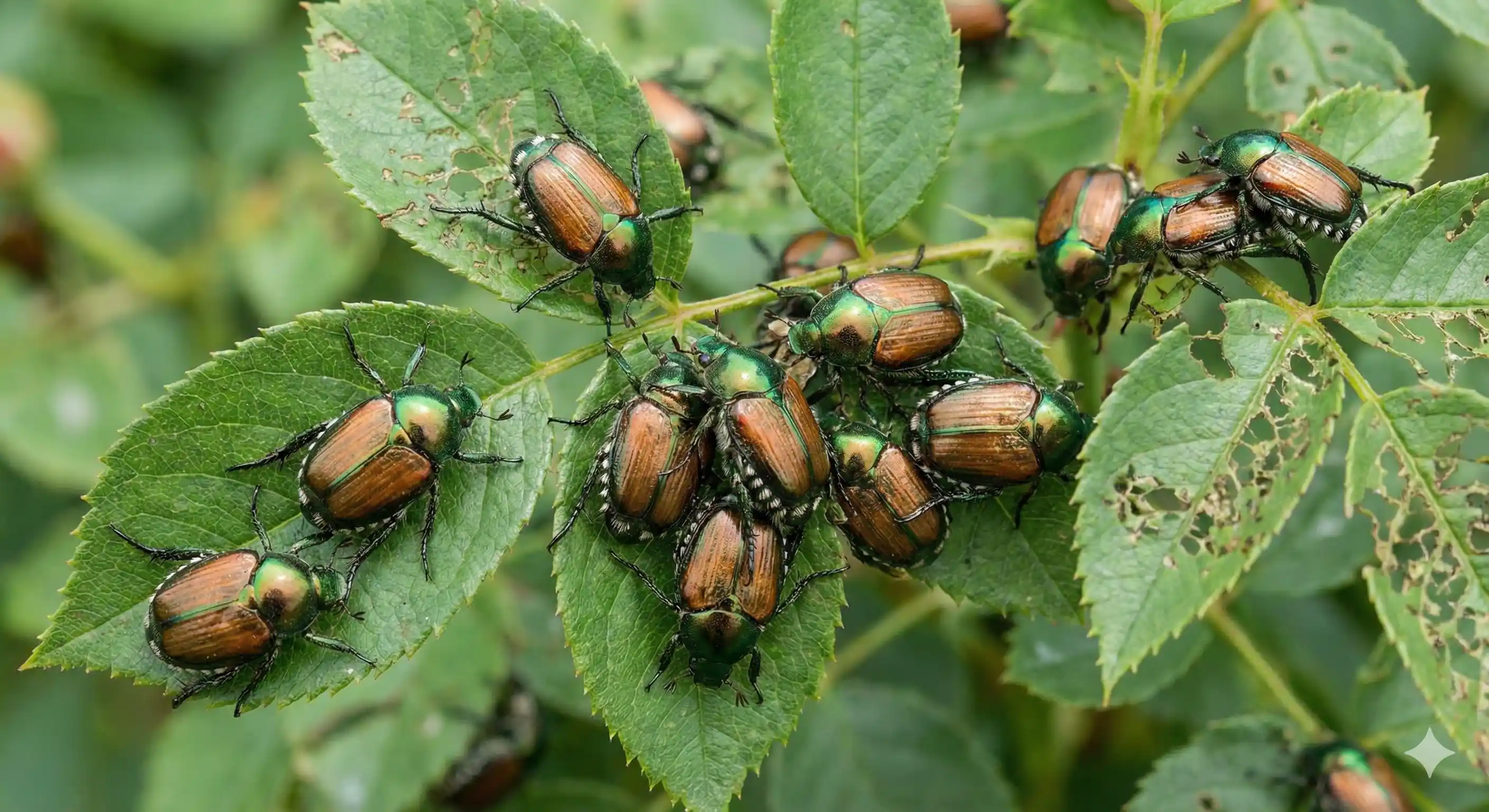
Group of adult Japanese beetles congregating on plant foliage

Congregating Adult Beetles

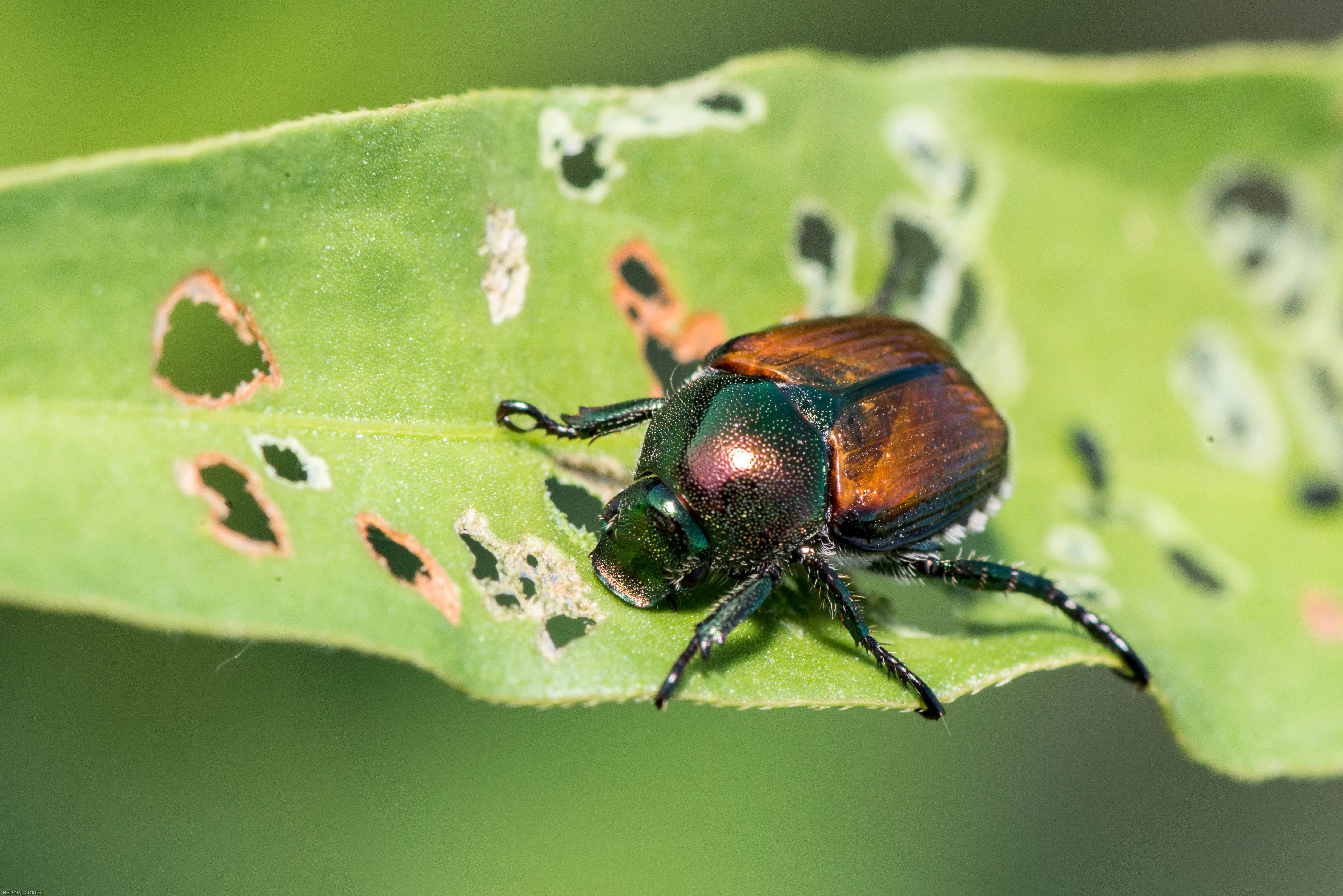
Adult Japanese beetles feed in groups, with initial beetles attracting others through released pheromones. Look for clusters of metallic green beetles with copper-brown wing covers, approximately ½ inch long.

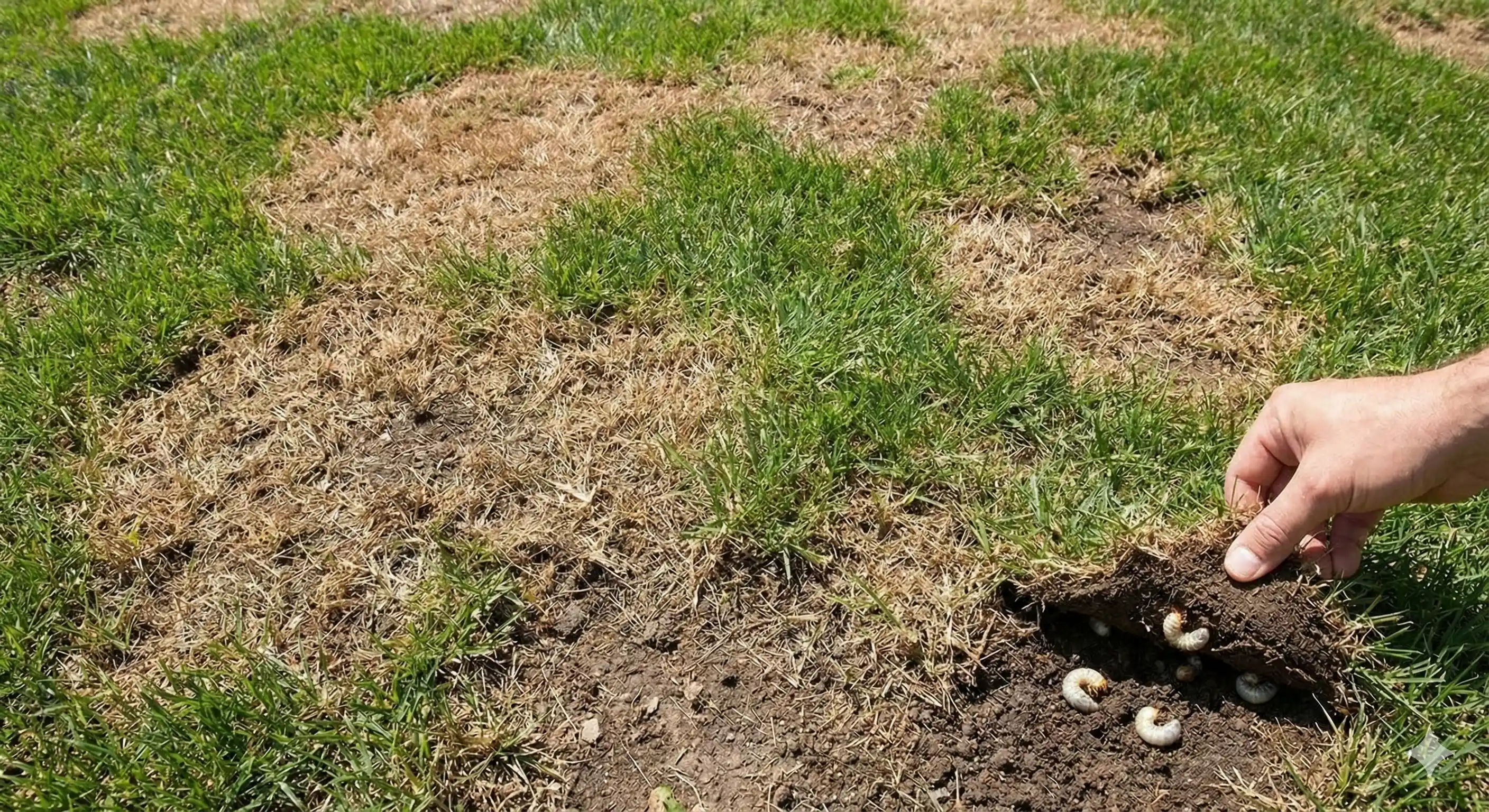
Brown patches in lawn caused by Japanese beetle grub root feeding

Brown Lawn Patches

Grub feeding on grass roots creates irregular brown patches during late summer, fall, or spring. Damaged turf feels spongy underfoot and can be easily pulled up like loose carpet due to severed root systems.

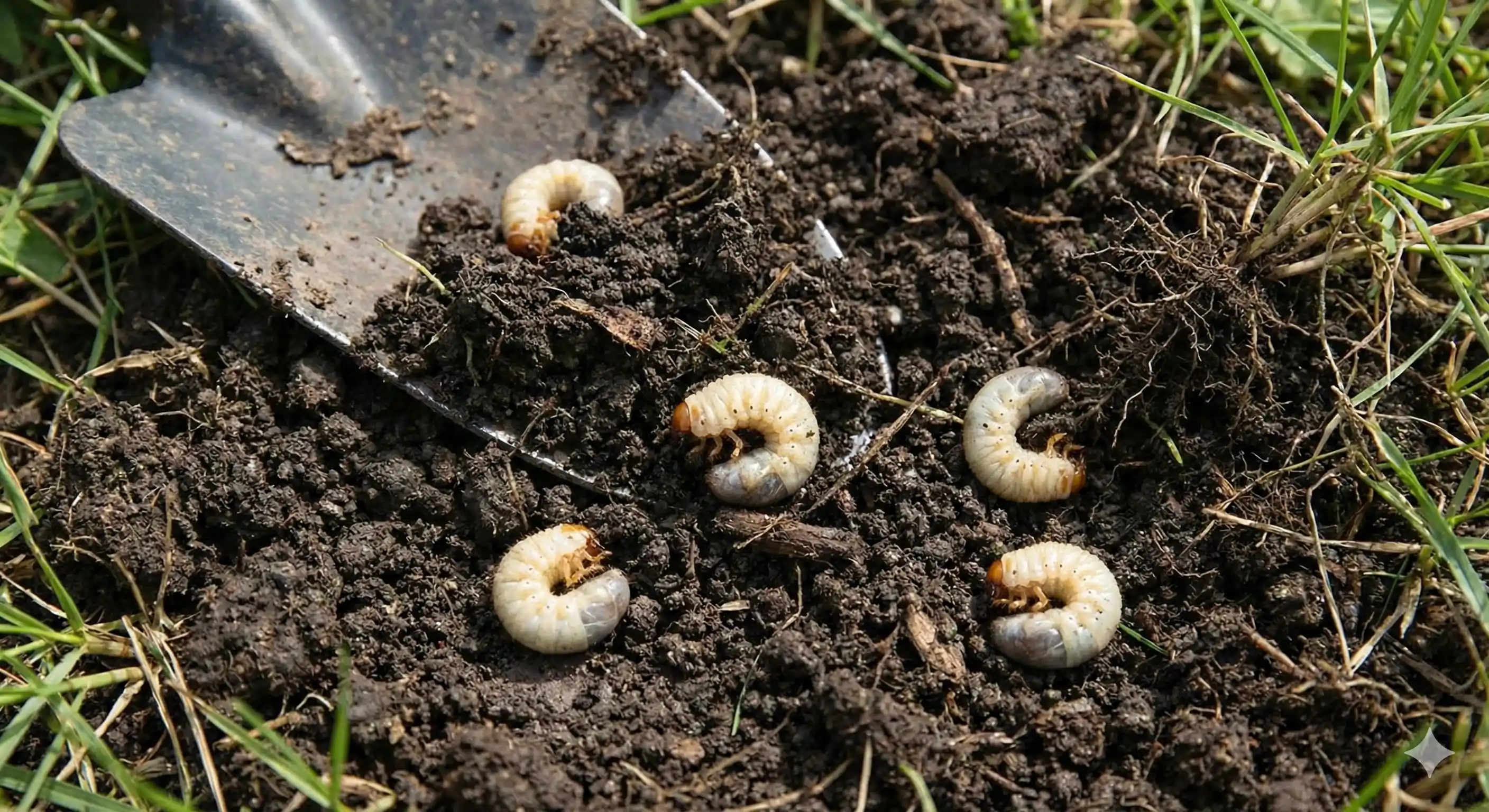
White C-shaped Japanese beetle grubs visible in soil

Visible Soil Grubs

White, C-shaped grubs approximately ½ inch long found in soil beneath damaged turf, typically within 1-3 inches of the surface. Ten or more grubs per square foot indicates an active infestation.

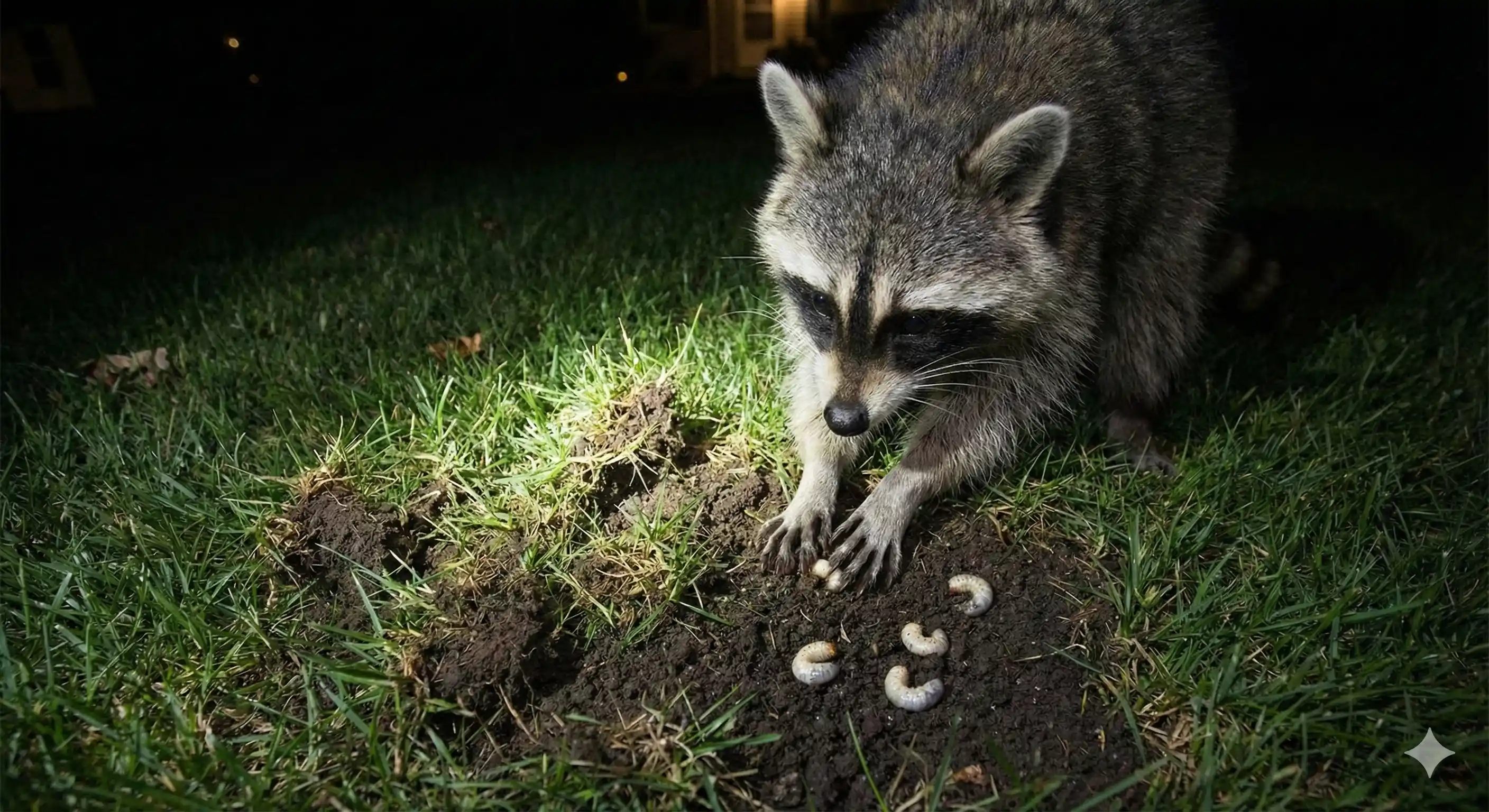
Lawn damage from wildlife digging for Japanese beetle grubs

Increased Wildlife Activity

Unusual digging patterns from skunks, raccoons, or birds indicates they're hunting for protein-rich grubs in your lawn. These predators create distinctive torn or flipped turf sections as they forage.

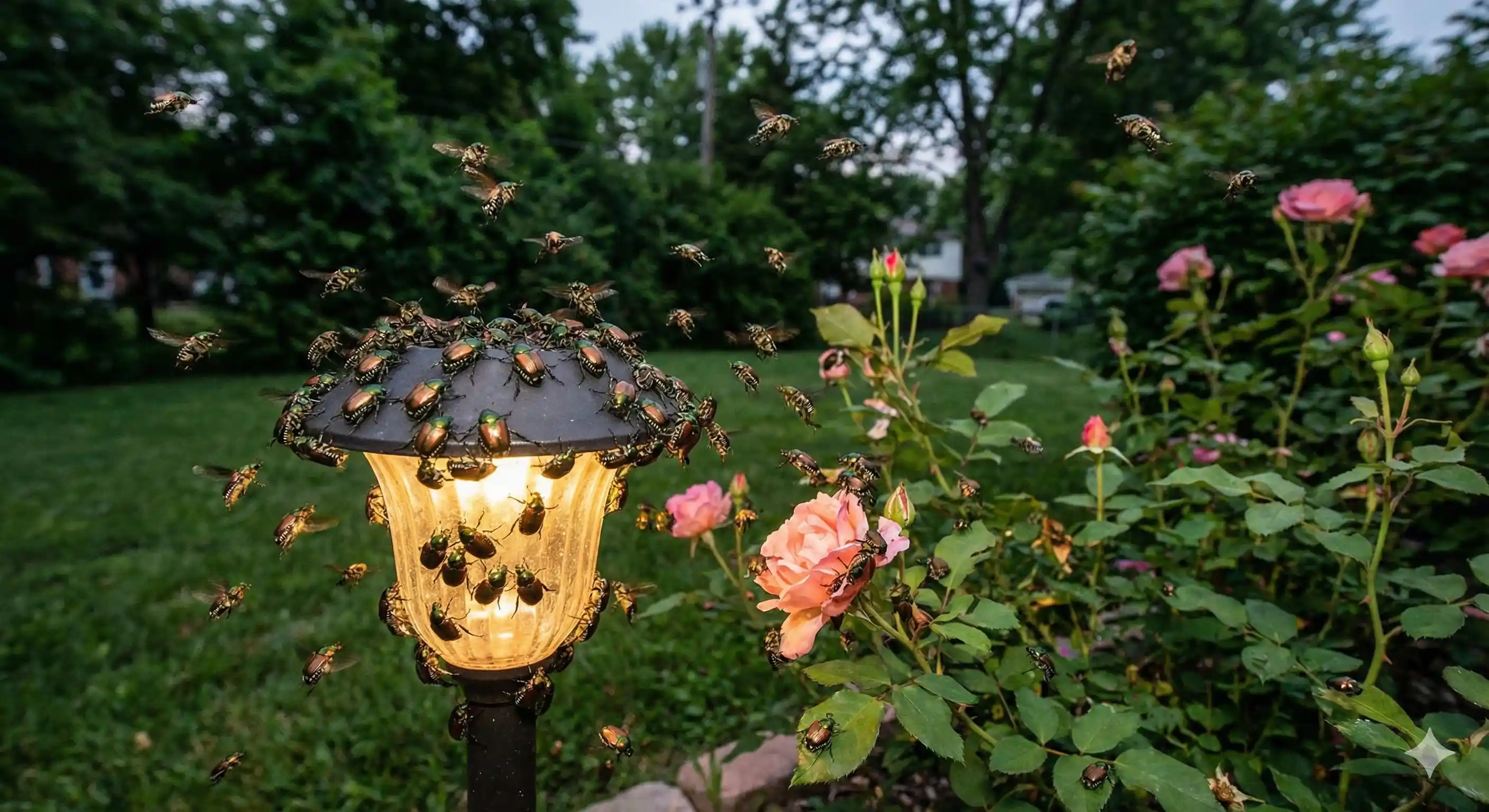
Japanese beetles swarming near lights during evening emergence period

Evening Swarming Activity

During peak emergence (typically June-July), adults may be observed flying in large numbers around landscape lights or reflective surfaces at dusk. These mating swarms indicate active adult emergence in your area.

Learn More About Japanese Beetle Detection →

DIY vs Professional Treatment

Hardware store shelves offer numerous Japanese beetle products that promise quick results, but most deliver incomplete protection at best. Consumer treatments typically address only visible adults or surface-feeding grubs without reaching the deeper soil layers where many grubs develop. Without professional-grade application equipment, coverage is often inconsistent, creating protection gaps that beetles quickly exploit. Most importantly, effective management requires precise timing based on beetle lifecycle stages—knowledge that most homeowners lack.

EcoGuard's approach begins with comprehensive property assessment to identify primary risk factors, existing damage patterns, and specific plant varieties requiring priority protection. Our treatment protocols employ commercial-grade products unavailable to consumers, delivered through calibrated equipment that ensures complete coverage and optimal soil penetration. We implement precisely timed applications that align with critical vulnerability points in the beetle lifecycle, including preventative grub treatments during egg hatch, systemic plant protections before adult emergence, and rescue treatments during active feeding periods.

❌ DIY Treatment

  • Addresses only visible adults or surface grubs
  • Cannot reach deeper soil layers
  • Inconsistent coverage creates protection gaps
  • Poor timing reduces effectiveness
  • No lifecycle-based management
  • Requires frequent reapplication

✓ Professional Treatment

  • Commercial-grade products with longer residual
  • Calibrated equipment for complete coverage
  • Precisely timed lifecycle-based treatments
  • Dual-phase adult and grub management
  • Soil penetration for deep grub control
  • Season-long protection strategies

Commercial Japanese Beetle Control

EcoGuard Pest Management implements customized japanese beetle control programs for commercial facilities that prioritize operational continuity while ensuring effective pest elimination. Our comprehensive commercial japanese beetle protection programs combine discrete treatment applications with flexible scheduling to maintain your business operations while ensuring complete elimination of japanese beetle problems.

We specialize in japanese beetle control solutions for:

  • Restaurants and food service establishments
  • Healthcare facilities
  • Hotels and hospitality venues
  • Educational institutions
  • Office complexes
  • Food processing facilities
  • Warehouses and storage facilities
  • Retail spaces
  • Manufacturing facilities
  • Multi-unit residential properties
Learn About Commercial Pest Control
100% SATISFACTION GUARANTEE

The EcoGuard Guarantee

EcoGuard offers a 100% satisfaction guarantee for all of our customers, and we stand by our promise to eradicate your japanese beetle problem until the very last japanese beetle is gone. That japanese beetle control guarantee comes with every service and if the japanese beetles come back, then so do we, at no additional cost. We are standing by to give you a free estimate and to help you set your first japanese beetle pest control service appointment.

📞 Call (866) 326-2847 Today

Our Japanese Beetle Control Process

A lifecycle-based approach to complete Japanese beetle elimination and landscape protection

1

Comprehensive Inspection

Our process begins with thorough property evaluation by certified technicians who identify existing damage patterns, susceptible plant varieties, and soil conditions conducive to beetle development. This detailed inspection reveals both active infestations and potential vulnerability points throughout your landscape.

2

Targeted Treatment

Based on our inspection findings, we implement targeted solutions using advanced application technology and professional-grade products. Our treatments address both lifecycle phases—eliminating active adult beetles for immediate relief while applying soil treatments that prevent grub development and future emergence.

3

Prevention Strategy

Beyond direct elimination, we establish protective barriers against future infestations through preventative soil treatments, plant-specific protections, and habitat modification. Our prevention strategies include systemic plant treatments that deter feeding and strategic applications targeting egg-laying sites.

4

Ongoing Monitoring

Following treatment implementation, we conduct follow-up assessments to verify effectiveness and make necessary adjustments to your protection strategy. Our systematic monitoring approach tracks both adult activity reduction and grub population changes for complete lifecycle management.

Seasonal Plan for Japanese Beetle Control

Year-round protection adapted to seasonal japanese beetle behavior patterns

Spring Japanese Beetle Control

Spring

Grubs dormant during winter become active and feed on grass roots to prepare for pupation; our spring protocols focus on preventative grub treatments that eliminate developing larvae before they mature into destructive adults; apply preventative systemic treatments to high-value plants before adult emergence

Summer Japanese Beetle Control

Summer

Peak adult beetle activity requires foliar protectants that shield valuable plants, contact treatments that eliminate active feeding beetles, and egg-laying deterrents in prime turf areas during the critical months when females lay eggs

Fall Japanese Beetle Control

Fall

Newly hatched grubs feed actively in the root zone, making this an optimal window for curative treatments; target developing grubs while they're still near the soil surface and most vulnerable; evaluate treatment results through systematic soil sampling

Winter Japanese Beetle Control

Winter

While beetle activity pauses during colder months, this period is crucial for evaluating past season results and developing next-year strategies; detailed treatment planning, property risk assessments based on previous activity patterns, and early scheduling of preventative applications

What Our Customers Say

Trusted by homeowners across 6 states for professional Japanese beetle control

★★★★★

"Japanese beetles destroyed my rose garden two years in a row. EcoGuard's dual approach treating both the adults AND the grubs in my lawn finally broke the cycle. My roses have never looked better!"

Margaret H.
Nashville, TN
★★★★★

"Had brown patches all over my lawn from grub damage and beetles eating my linden tree. The EcoGuard technician explained the whole lifecycle and treated both problems. Lawn is recovering and far fewer beetles this year."

David & Karen P.
Sacramento, CA
★★★★★

"Our fruit trees were being destroyed every summer. EcoGuard's systemic treatment protected our apple and peach trees all season. Finally got a real harvest instead of skeletonized leaves!"

Tom R.
Portland, OR

Japanese Beetle Control FAQs

Everything you need to know about japanese beetle control and treatment

Professional-grade pyrethrin-based and carbamate-based contact insecticides provide the fastest elimination of actively feeding adult beetles, often working within hours. For preventative control, soil-applied products containing chlorantraniliprole, imidacloprid, or thiamethoxam deliver superior grub elimination when properly timed. The most effective approach combines multiple treatment methods targeting both lifecycle stages through an integrated pest management program.

Complete elimination is challenging due to beetles' mobility and widespread distribution, but substantial population reduction is achievable through consistent multi-year management programs. The most effective approach combines preventative soil treatments targeting grubs before they emerge with protective plant treatments during active feeding periods, addressing both lifecycle phases to dramatically reduce property damage year after year.

Dawn and other dish soaps create a surfactant solution that can kill Japanese beetles through respiratory interference when applied directly. The soap breaks down the beetles' waxy protective coating, causing dehydration and death. While this provides quick knockdown of directly contacted beetles, it offers no residual protection, requires frequent reapplication, and doesn't address grubs in soil.

Japanese beetles create distinctive 'skeletonized' feeding patterns that consume leaf tissue between veins, leaving a lace-like network intact—unlike caterpillars that create irregular holes. The presence of metallic green and copper beetles feeding in groups during daylight confirms Japanese beetle activity. Damage typically concentrates on upper, sun-exposed foliage first before progressing downward.

Preventative grub treatments are most effective when applied in late spring (May-early June) before eggs hatch. For plant protection, systemic treatments should be scheduled 2-3 weeks before expected adult emergence (typically early June). Combining proactive approaches with responsive treatments during active feeding (June-August) creates comprehensive season-long protection.

Professional services employ dual-phase strategies using foliar applications to eliminate actively feeding adults while simultaneously implementing soil treatments targeting developing grubs in the root zone. This comprehensive approach addresses the complete lifecycle using commercial-grade products and application equipment that ensure thorough coverage and proper soil penetration.

Professional treatments utilize restricted-use products with greater efficacy and longer residual activity, often providing 2-3 times longer protection. Certified applicators employ calibrated equipment ensuring complete coverage and proper soil penetration depths. Professionals also implement precisely timed treatments based on lifecycle monitoring rather than calendar dates.

Contact treatments targeting adult beetles show visible results within hours, with significant feeding reduction noticeable within 24 hours. Preventative grub treatments work below ground, with effectiveness measured by absence of emerging adults the following season. Systemic plant treatments require 3-7 days to distribute throughout plant tissues.

Most Japanese beetle treatments require minimal access restrictions, with reentry typically permitted once spray applications have dried (usually 1-2 hours). Granular soil treatments generally require no evacuation—just avoid treated areas until irrigation has moved active ingredients into the soil. Your technician will provide specific reentry instructions.

Modern professional treatments utilize targeted application methods and selected formulations that minimize exposure risk. Liquid applications typically dry within hours, after which treated areas are safe for normal use. Granular soil treatments become safe once watered in properly, with active ingredients moving into the soil profile away from surface contact.

Most comprehensive programs include 2-4 treatments annually: one preventative grub application in spring, 1-2 adult beetle treatments during summer, and potentially one curative grub treatment in early fall. Properties with high beetle pressure or numerous susceptible plants may require additional targeted treatments.

Professional applications provide excellent protection for high-value plants by combining systemic treatments that work from within plant tissues with surface protectants that deter feeding. For edible plants, specialized timing and product selections ensure effectiveness while maintaining food safety. We develop plant-specific strategies for your most valuable landscape elements.

Professional evaluation begins with thorough inspection to identify current activity levels, visual assessment of feeding damage, and soil sampling to determine grub density. We evaluate site-specific risk factors including plant inventory, soil conditions, irrigation practices, and proximity to known infestation sources to create a customized treatment plan.

The most effective preventative approach combines properly timed soil applications targeting egg hatch and early-stage grubs (typically late spring) with extended-release formulations providing season-long protection. Programs include regular monitoring, plant-specific protection strategies, and landscape management recommendations to reduce habitat favorability.

Effective management typically requires treating the entire lawn area for grub control since females may lay eggs throughout suitable turf. Plant protection should include all susceptible varieties, particularly roses, grapes, lindens, and fruit trees. Comprehensive protection requires whole-property approaches addressing both beetles and developing populations.

Professional services utilize high-pressure spray systems with specialized nozzles ensuring complete foliage coverage including upper canopy areas homeowner equipment cannot reach. For soil applications, we employ calibrated granular spreaders and liquid injection systems delivering precise product amounts at correct soil depths for maximum grub control.

Our service guarantee promises additional treatments at no extra cost if Japanese beetle activity persists following properly applied treatments within the coverage period. The guarantee covers both lifecycle phases—persistent adult activity during summer and grub activity in treated soil areas—with detailed documentation and response protocols.

Modern professional approaches utilize selective treatment timing, targeted application methods, and careful product selection to minimize impact on beneficial insects. Techniques include applying treatments during early morning or evening when pollinators are less active, using granular soil applications for grub control, and selecting products with minimal bloom-time restrictions.

Rainfall within 24 hours of foliar applications may reduce effectiveness and require reapplication. Extreme heat can accelerate product breakdown, limiting application to cooler morning hours. Soil moisture significantly impacts grub treatment efficacy—moderately moist soil facilitates proper distribution while drought conditions may require irrigation before or after application.

During active season (June-August), monthly inspections provide optimal monitoring of adult activity and treatment effectiveness. Spring inspections (April-May) focus on soil sampling for grub populations. Fall evaluations (September-October) identify newly established grub populations while treatments remain highly effective.

Related Articles & Resources

Learn more about japanese beetle prevention, identification, and control
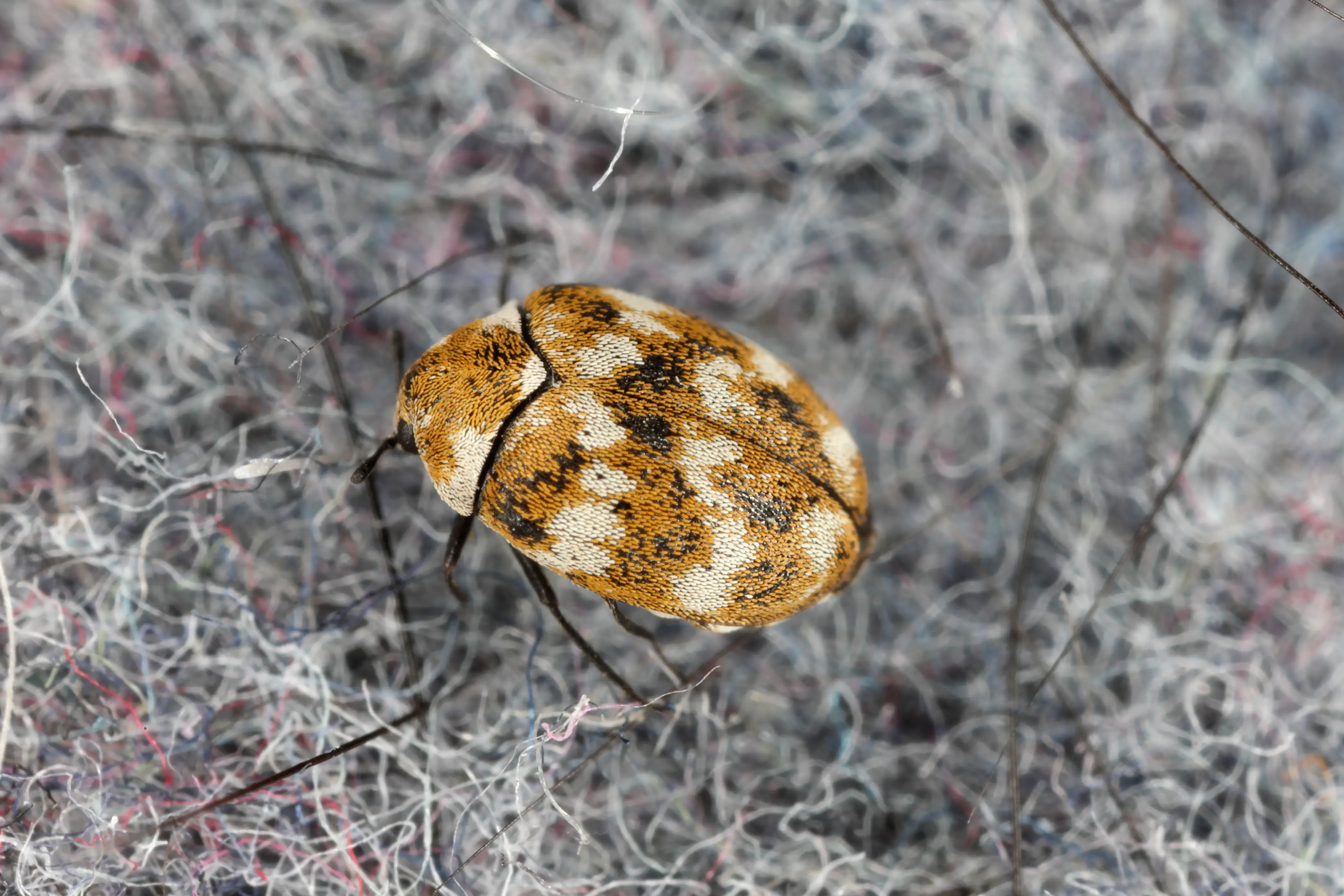
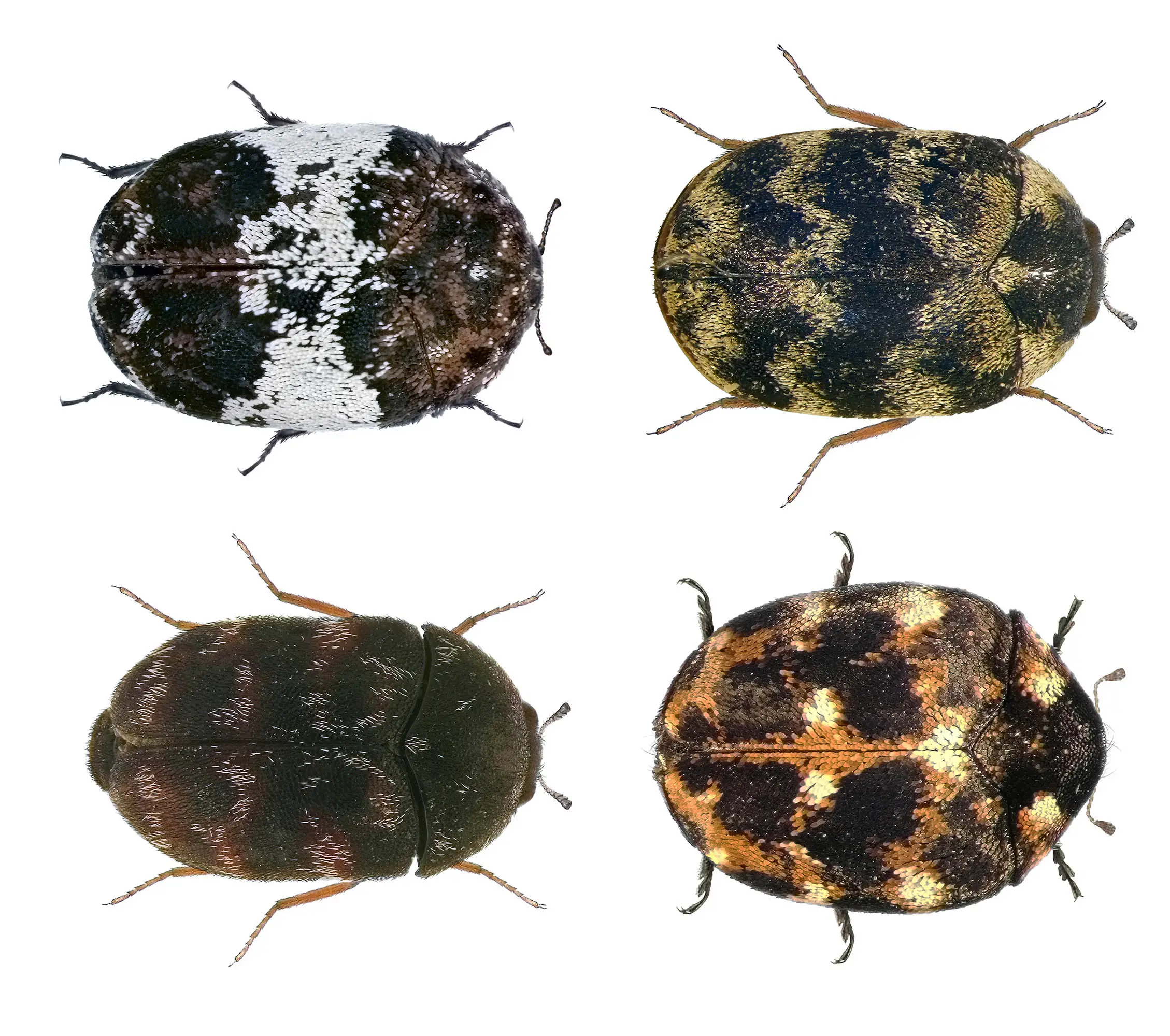
6 Common Signs of Carpet Beetles in Your Home

6 Common Signs of Carpet Beetles in Your Home

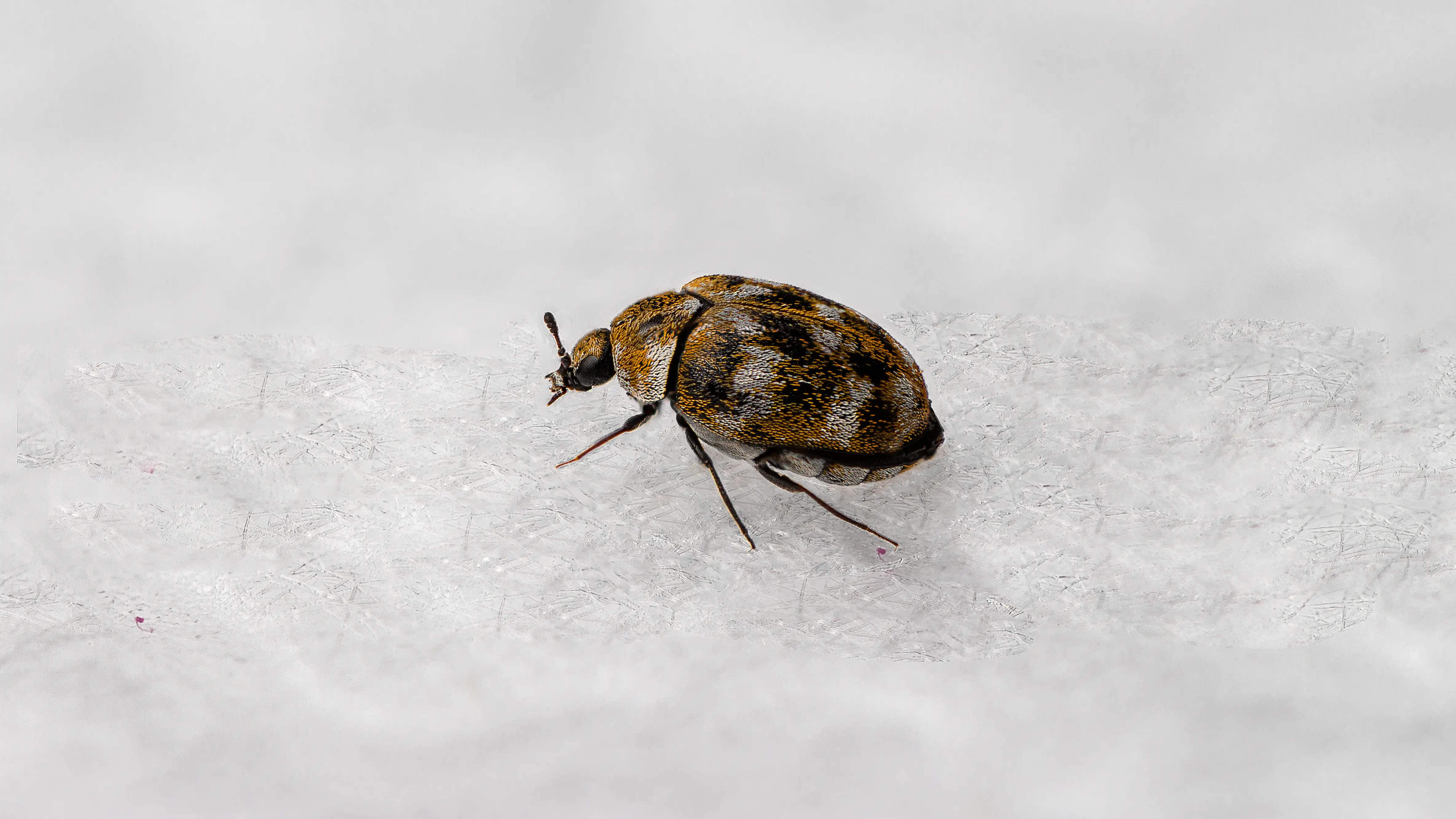
Learn the signs of carpet beetle infestation including damage to fabrics, shed skins, fecal pellets, and skin irritation. Find out where to look and how to prevent them.

Read Article →
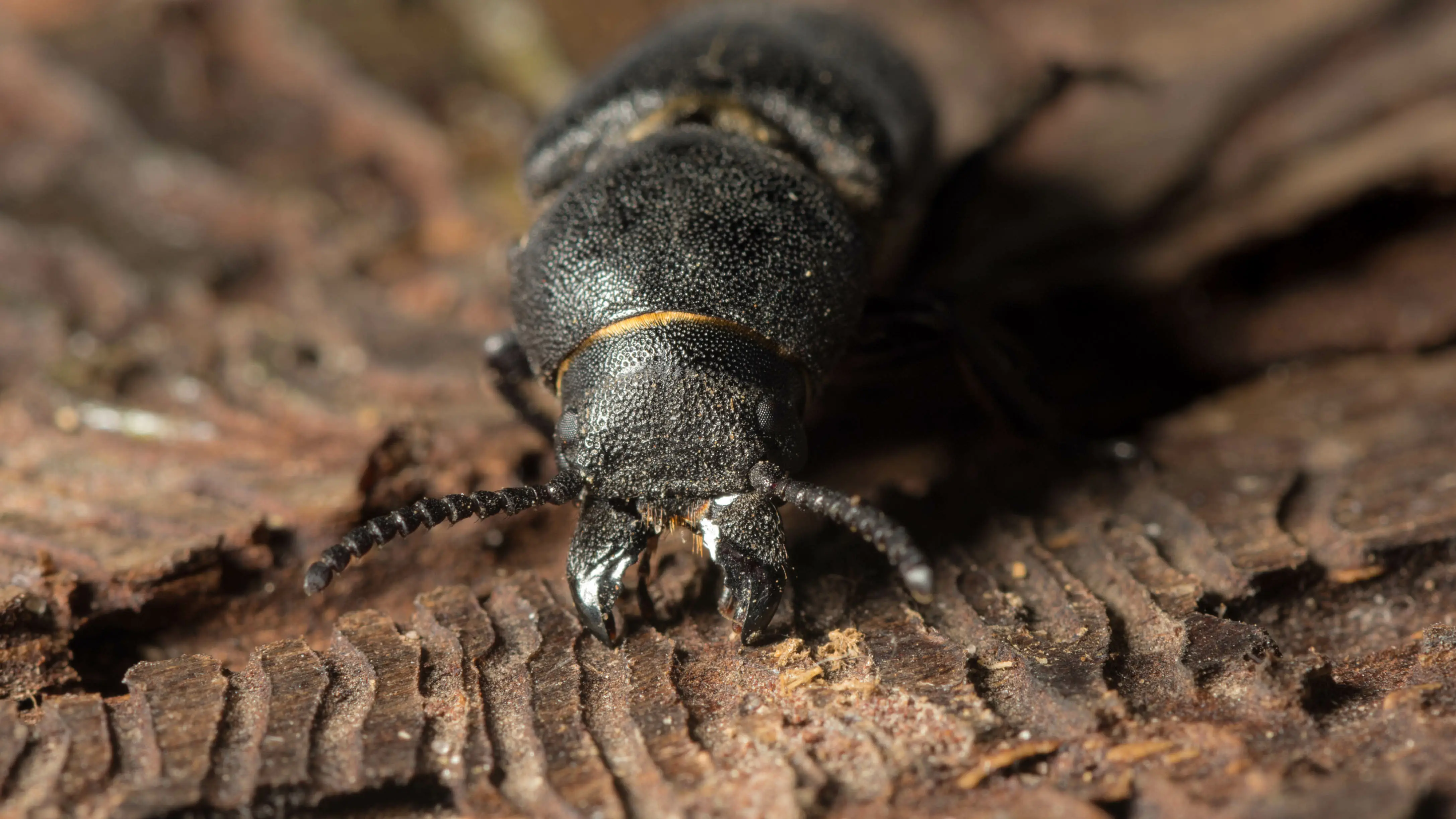
Are Beetles Dangerous to Humans? Risks & Safety Guide

Are Beetles Dangerous to Humans? Risks & Safety Guide

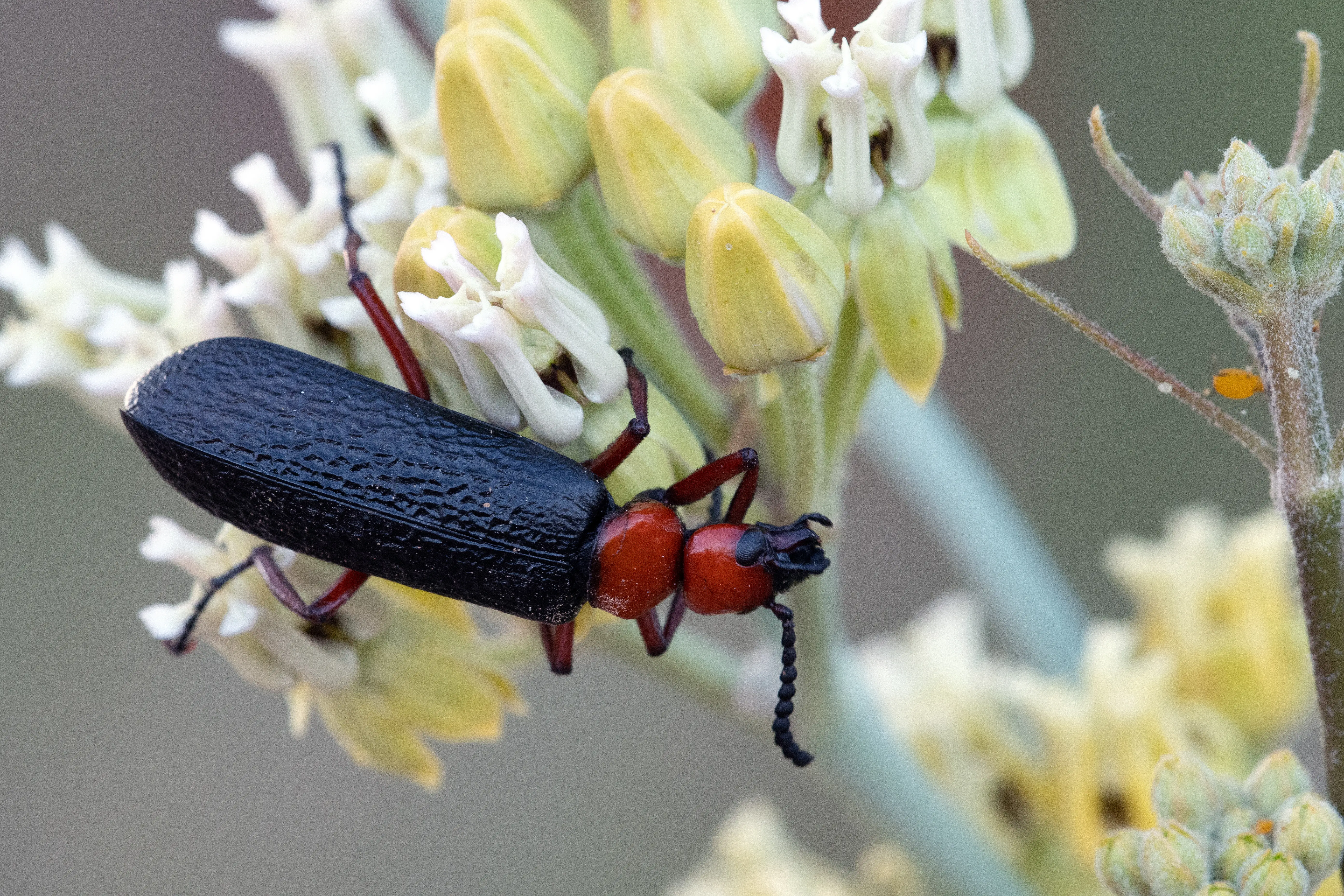
Learn which beetles can harm humans through bites, pinches, or chemical defenses. Discover blister beetles, stag beetles, and how to protect yourself.

Read Article →
Beetle Life Cycle and Lifespan: Complete Metamorphosis Guide

Beetle Life Cycle and Lifespan: Complete Metamorphosis Guide

Learn about beetle life cycle stages including eggs, larvae, pupae, and adult. Understand beetle lifespan, mating rituals, and complete metamorphosis.

Read Article →
Common Types of Beetles Found in North American Homes

Common Types of Beetles Found in North American Homes

Complete guide to beetle types including ladybugs, weevils, scarabs, carpet beetles, Japanese beetles, and more. Identification, diet, and characteristics.

Read Article →
How to Get Rid of Beetles: Complete Removal Guide

How to Get Rid of Beetles: Complete Removal Guide

Learn how to get rid of beetles including carpet beetles, pantry beetles, and Japanese beetles. Natural and professional beetle control methods.

Read Article →
How to Get Rid of Carpet Beetles: Complete Removal Guide

How to Get Rid of Carpet Beetles: Complete Removal Guide

Learn how to get rid of carpet beetles with natural and chemical treatments. Identify, eliminate, and prevent carpet beetle infestations in your home.

Read Article →
How to Get Rid of Japanese Beetles: Complete Control Guide

How to Get Rid of Japanese Beetles: Complete Control Guide

Learn how to eliminate Japanese beetles from your garden. Control adults and larvae with natural methods, pesticides, and prevention strategies.

Read Article →
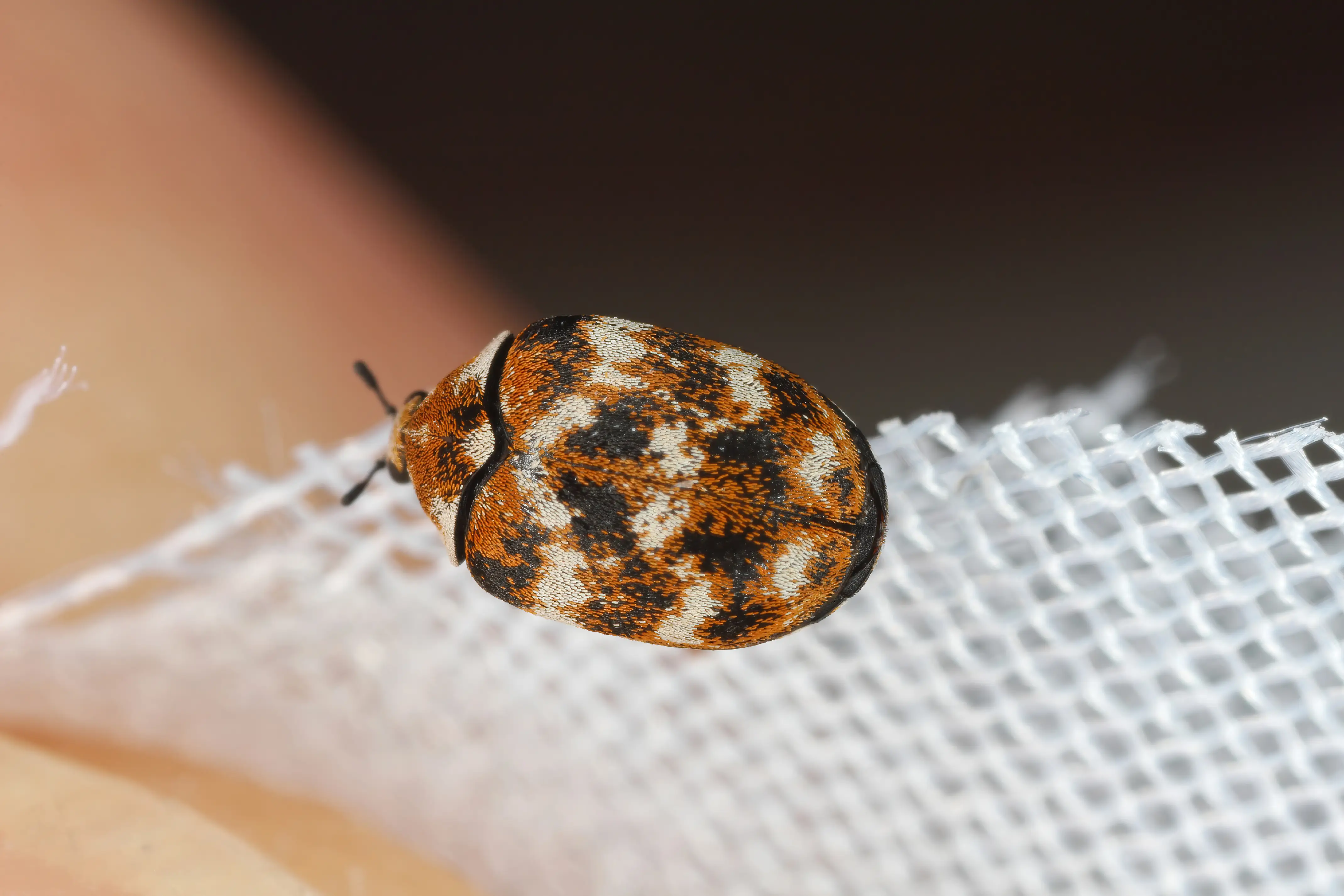
What Are Carpet Beetles? Identification, Life Cycle & Control

What Are Carpet Beetles? Identification, Life Cycle & Control

Learn what carpet beetles are, how to identify them, their life cycle, diet, and how to prevent and control infestations in your home.

Read Article →
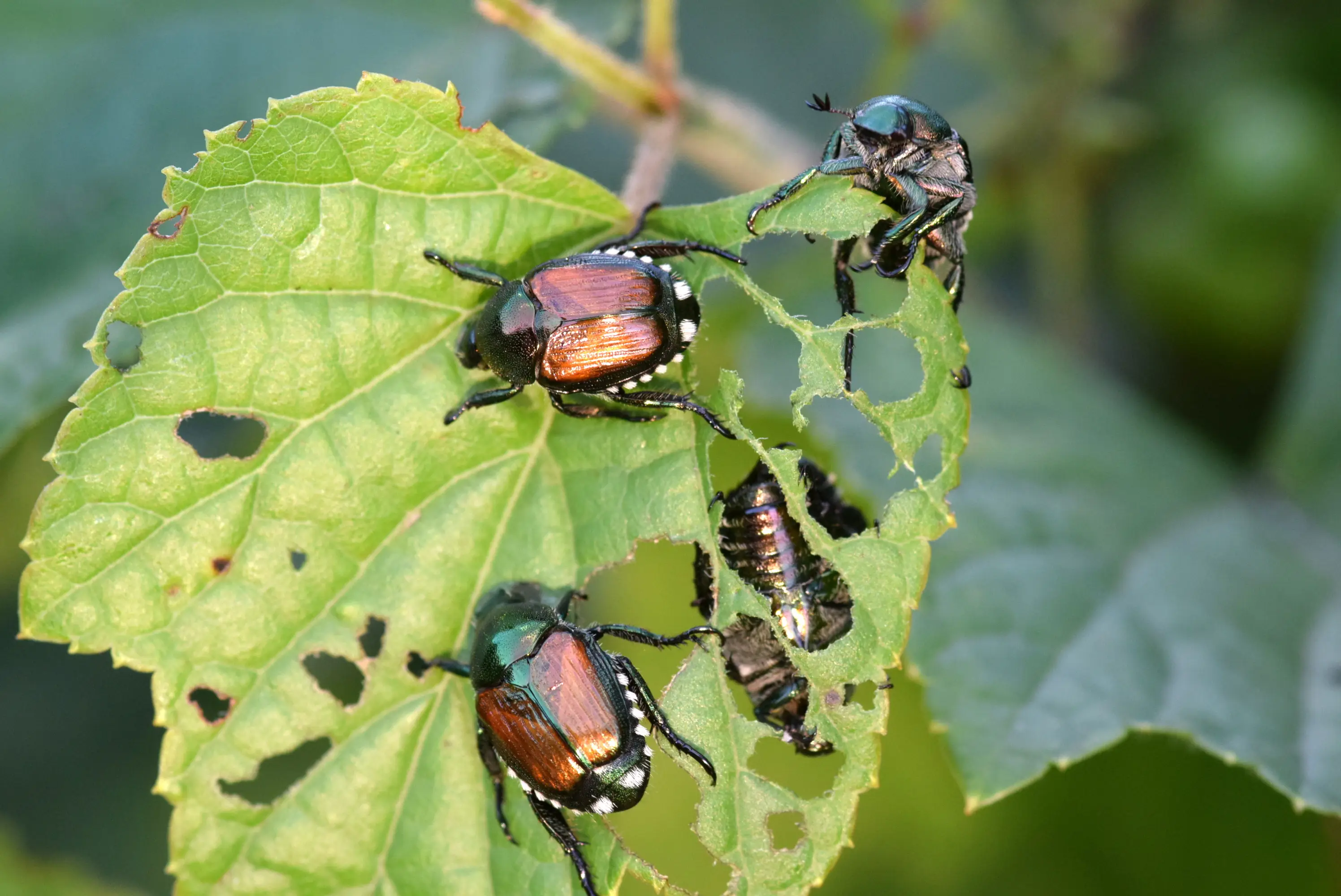
What Are Japanese Beetles? Identification, Life Cycle & Damage

What Are Japanese Beetles? Identification, Life Cycle & Damage

Learn about Japanese beetles: identification of adults, larvae, and pupae, their life cycle, the damage they cause, and effective control methods.

Read Article →
What Causes Carpet Beetles Inside Your Home?

What Causes Carpet Beetles Inside Your Home?

Learn what causes carpet beetles to infest your home, how they get inside, signs of infestation, and effective prevention and elimination strategies.

Read Article →
What Does a Beetle Eat? Diet by Species & Type

What Does a Beetle Eat? Diet by Species & Type

Learn what beetles eat including plants, other insects, decaying matter, wood, and household materials. Understand beetle diets by species and how to prevent infestations.

Read Article →
View All Pest Control Articles →

Ready to Eliminate Your Japanese Beetle Problem?

Get a free estimate for your japanese beetle problem today. Our experts will assess your property and provide a customized treatment plan.

Connect With Us

Follow EcoGuard Pest Management for tips, updates, and special offers

f𝕏yin