EcoGuard Pest Management
Professional fruit fly control technician inspecting and treating kitchen area for fruit fly infestation

Professional Fruit Fly Control & Exterminator Services

Fruit flies multiply with alarming efficiency in the hidden corners of your kitchen and food storage areas. They contaminate surfaces with bacteria while buzzing around your home or business, creating unsanitary conditions and potential health risks. These persistent pests can complete their entire lifecycle in just 8-10 days, making professional intervention essential for effective elimination. EcoGuard Pest Management brings precision to fruit fly control by deploying multi-layered treatment strategies that target breeding sites and disrupt reproductive cycles.

Fruit Fly Pest Control Experts

Effective fruit fly control requires specialized knowledge of these persistent pests' behavior patterns, breeding preferences, and reproductive cycles. Our highly trained fruit fly exterminators understand Drosophila biology and can identify primary infestation sources, hidden breeding sites, and conditions conducive to infestation that untrained observers often miss. This expertise allows us to implement targeted treatment strategies that eliminate existing populations while addressing the underlying environmental factors that support their development.

Why Fruit Flies Are a Serious Problem

Fruit flies create unique challenges that demand professional attention:

  • These pests reproduce faster than almost any other household insect, with females laying up to 500 eggs in their short lifetime—populations can explode from a few flies to hundreds within days
  • Fruit flies carry and transmit bacteria including E. coli, Listeria, and Salmonella as they travel between decaying matter and food preparation surfaces, creating serious health risks for your family
  • Unlike seasonal pests, fruit flies thrive year-round in indoor environments where they contaminate produce and food storage areas regardless of outdoor temperatures
  • Their tiny size (just 1/8 inch long) allows them to access spaces around drains, garbage disposals, and moisture-prone areas that are difficult to treat without specialized equipment

Fruit Fly Control Service Plans

Choose the protection level that's right for your property

One-Time Treatment
$249+
Starting price
  • Comprehensive property inspection
  • Species identification
  • Entry point identification
  • Targeted treatment application
  • Perimeter barrier application
  • Nest elimination
  • Treatment report & recommendations
  • 30-day guarantee
Get Started
MOST POPULAR
Annual Protection
Contact Us
For custom pricing
  • Everything in One-Time Treatment
  • Seasonal maintenance plan
  • Entry point treatments
  • Priority scheduling
  • Re-treatment guarantee
Get Started

* Prices vary based on property size, infestation severity, and treatment method. Contact us for an accurate quote.

Service Plan Comparison

FeatureOne-TimeAnnual
Comprehensive Inspection
Treatment Application
Follow-Up InspectionsMonthly
Drain TreatmentsOnceOngoing
Re-Treatment Guarantee
UV Trap Monitoring

Get Your Free Fruit Fly Quote

Protect your property with a free fruit fly quote from our licensed experts.

✓ Same-day service available
✓ Licensed & insured
✓ Detailed property assessment
✓ No-obligation estimates

Service Areas

We provide fruit fly control services throughout:

  • California
  • Oregon
  • Washington
  • Texas
  • Tennessee
  • Nevada
View All Counties →

Ready to Eliminate Your Fruit Fly Problem?

Schedule your fruit fly inspection today. Our experts will assess your property and provide a customized treatment plan.

📞 Call (866) 326-2847Get Free Quote

Fruit Fly Treatment Options

EcoGuard Pest Management employs a comprehensive approach to fruit fly control, combining multiple strategies tailored to your specific infestation to target all life stages simultaneously.
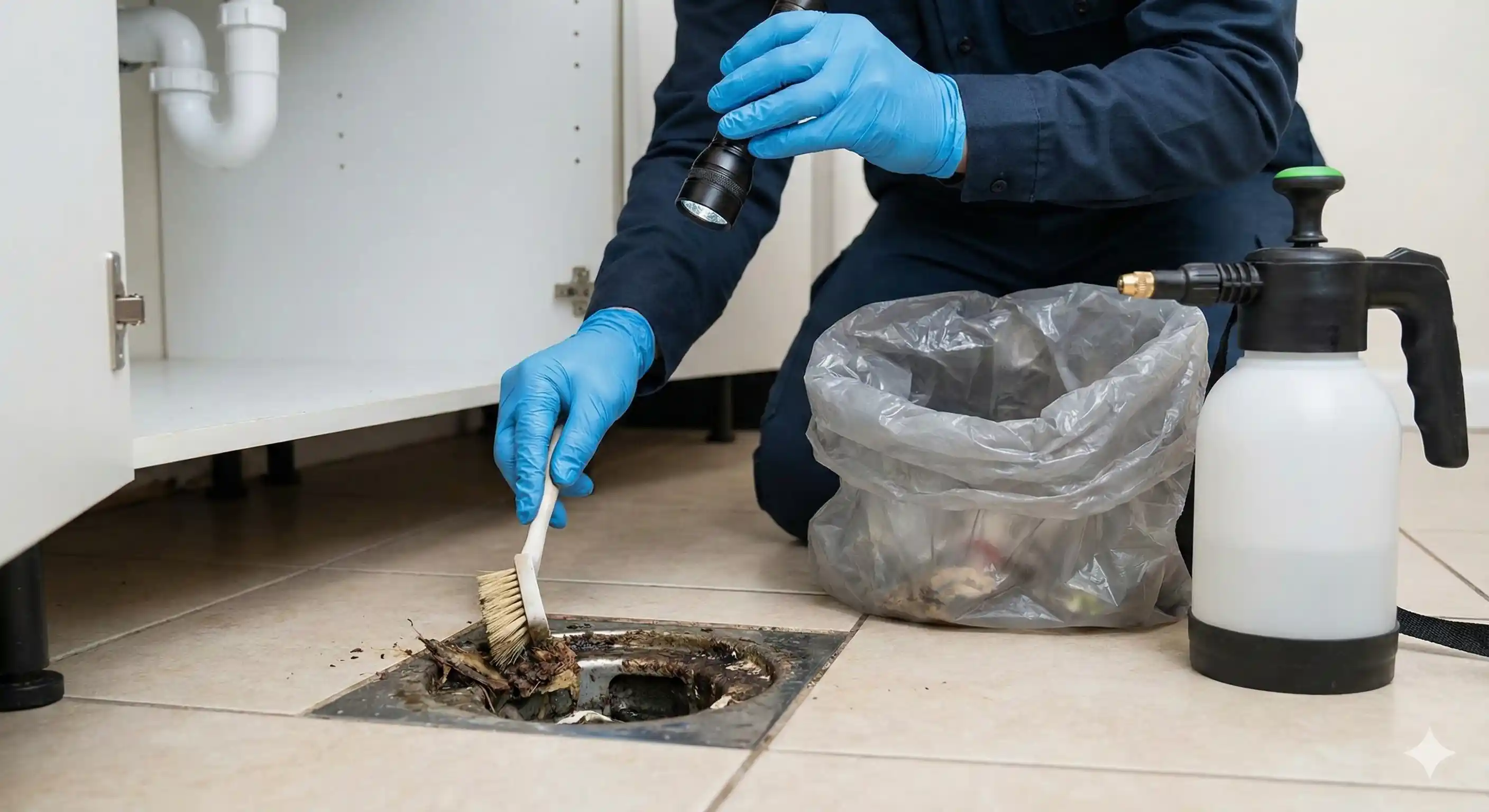
Technician identifying and eliminating fruit fly breeding sources in kitchen

Source Elimination Protocols

Comprehensive identification and removal of breeding materials including overripe produce, fermented liquids, and organic debris that attract fruit flies and support their reproductive cycle. Eliminating these sources is the foundation of effective control.

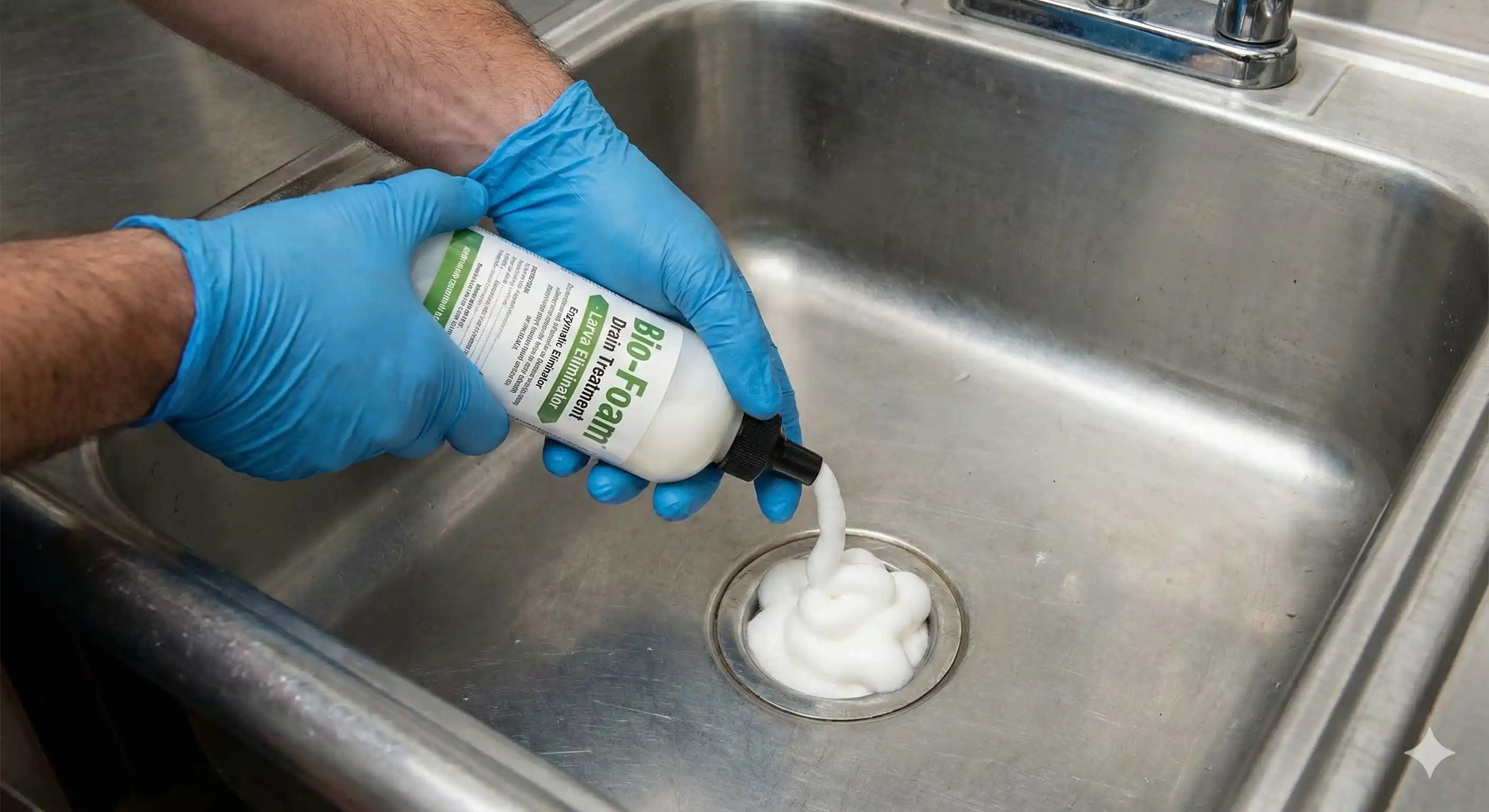
Professional applying enzymatic drain treatment for fruit fly larvae elimination

Advanced Drain Treatments

Enzymatic bio-foam applications that penetrate deep into drain systems to eliminate organic matter buildup where fruit fly larvae commonly develop. These treatments target this critical breeding site at its source where up to 80% of development may occur.

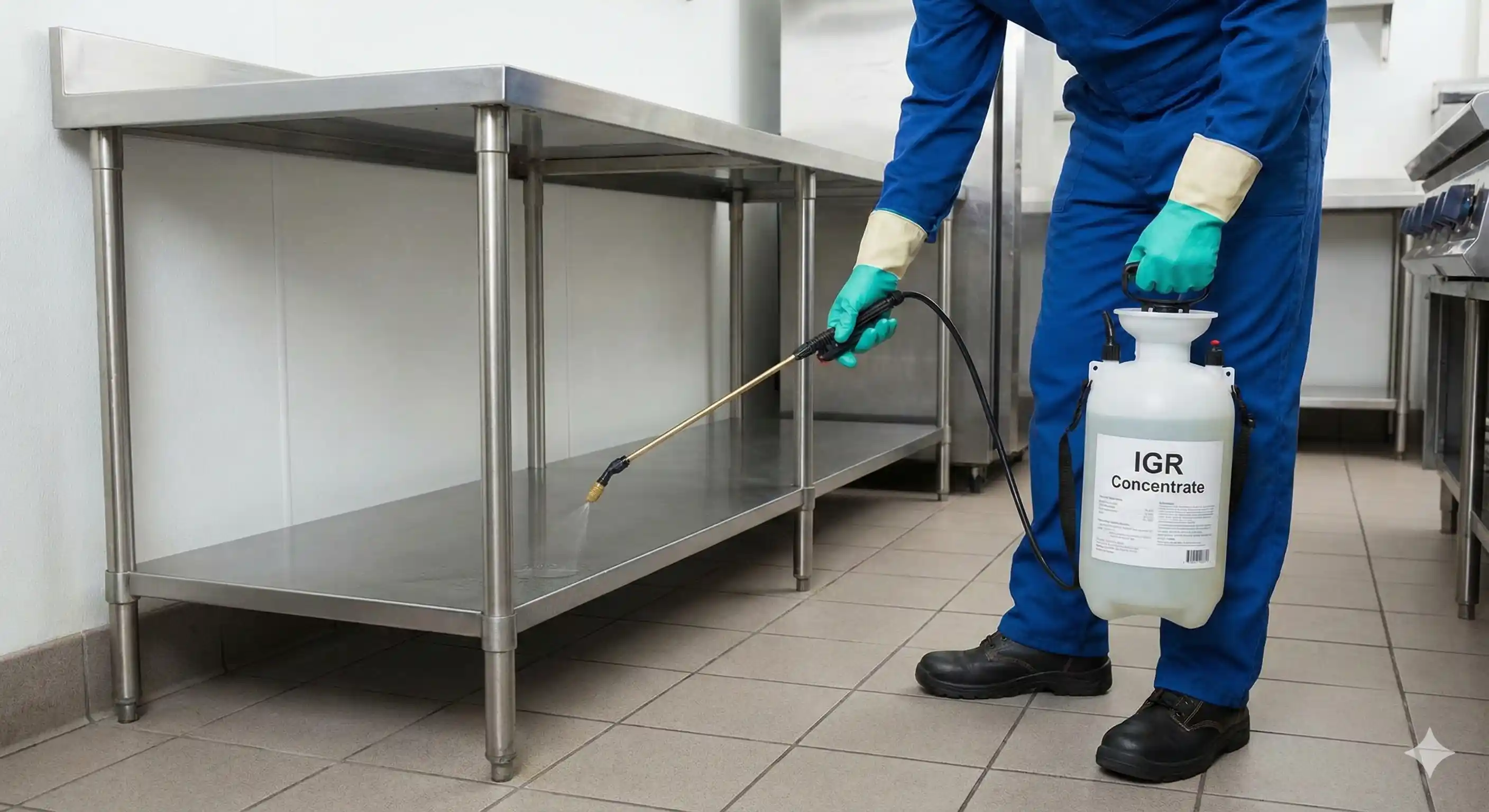
Applying insect growth regulator treatment to disrupt fruit fly reproduction

Insect Growth Regulators (IGRs)

Specialized hormone-mimicking compounds that prevent larvae from developing into reproductive adults, effectively breaking the breeding cycle and providing long-term population suppression even after adult flies have been eliminated.

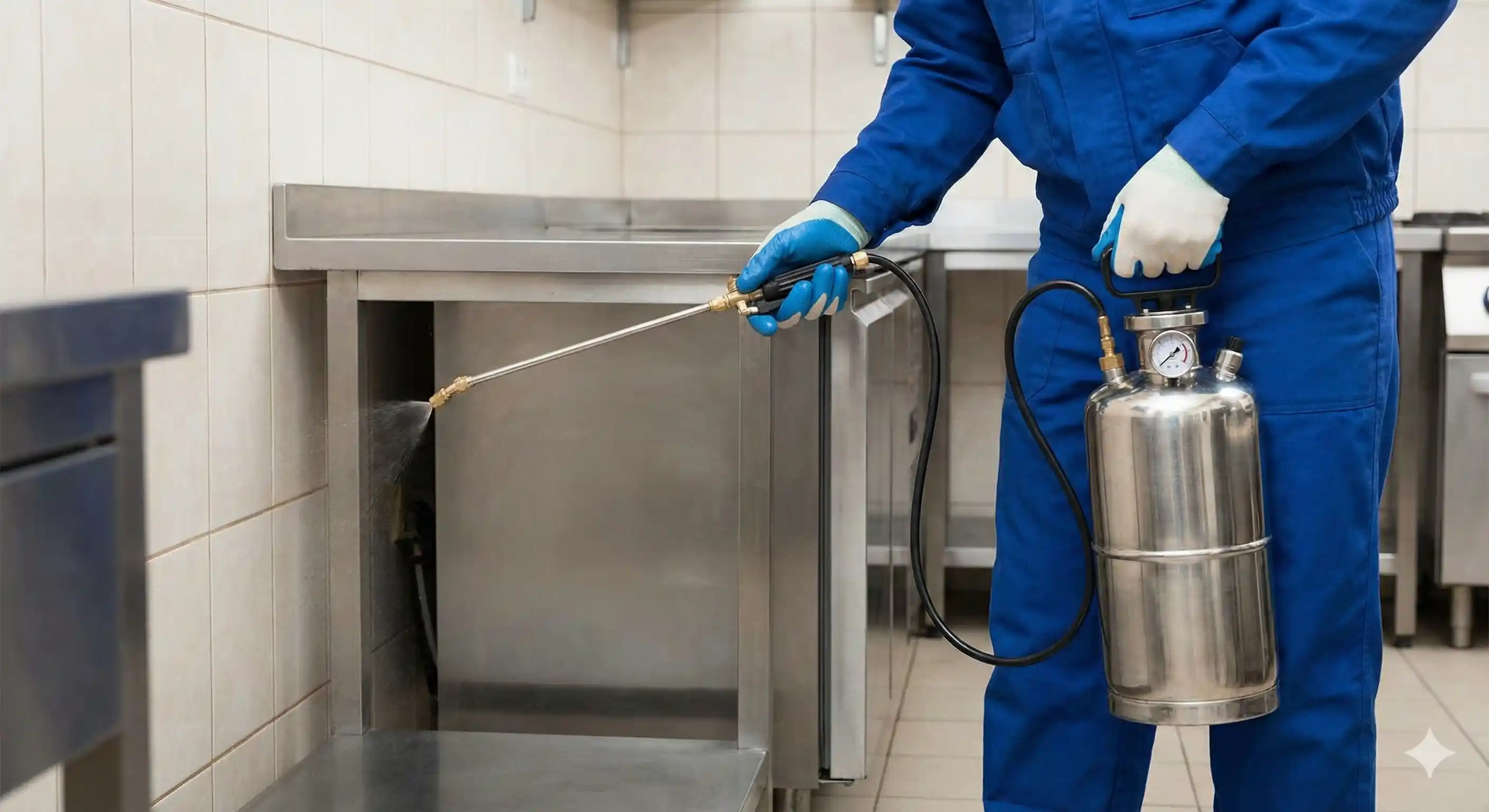
Technician applying targeted liquid treatment to fruit fly harborage areas

Targeted Liquid Applications

Professional-grade formulations applied to identified breeding areas using specialized equipment that delivers precise treatments to drains, cracks, and other harborage sites where fruit flies develop and rest.

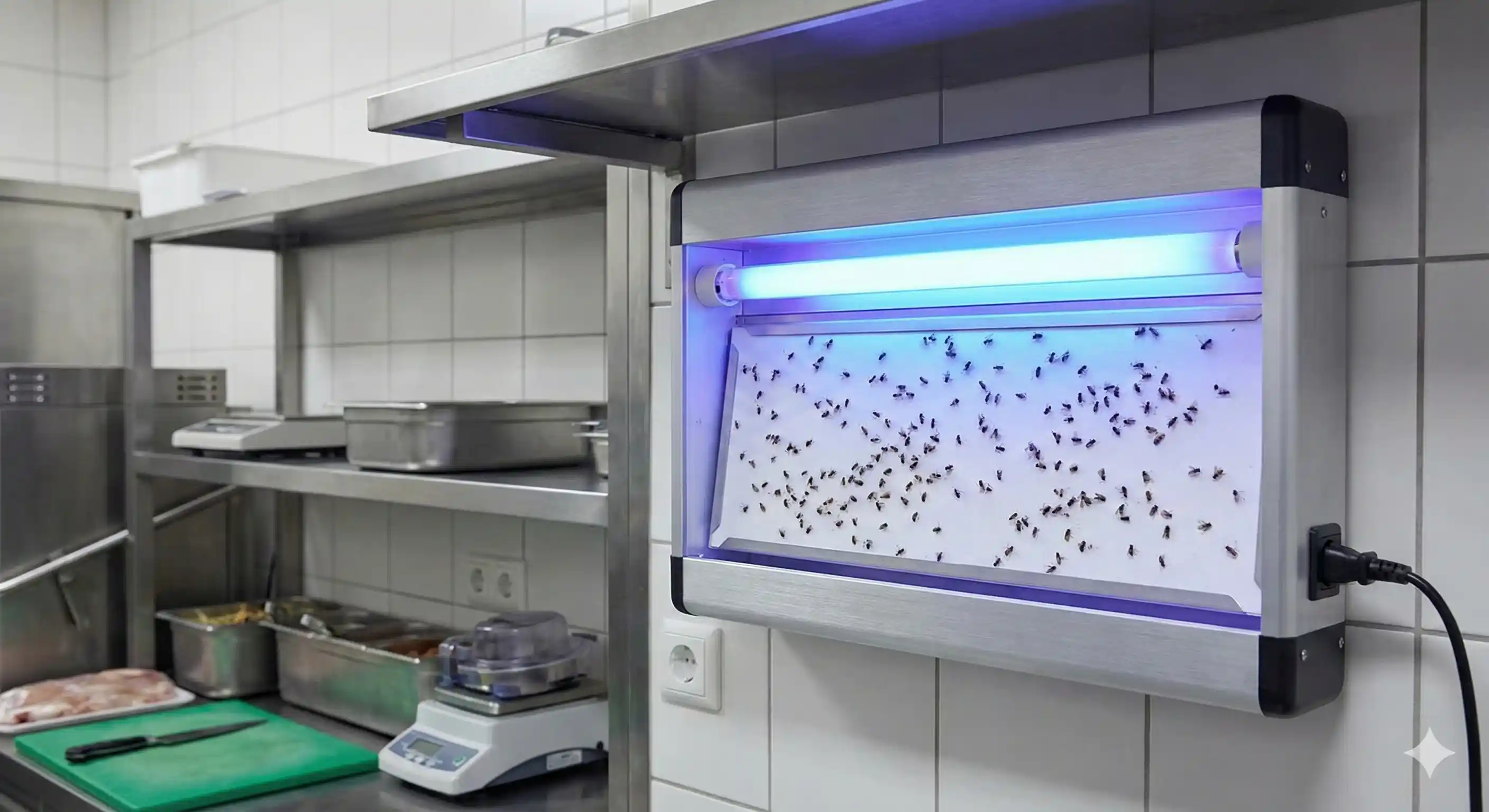
UV light trap system for fruit fly monitoring and population control

UV Light Trapping Systems

Strategically placed monitoring and control devices utilizing specific light wavelengths that attract adult fruit flies to adhesive surfaces, reducing active populations while providing ongoing assessment of treatment effectiveness.

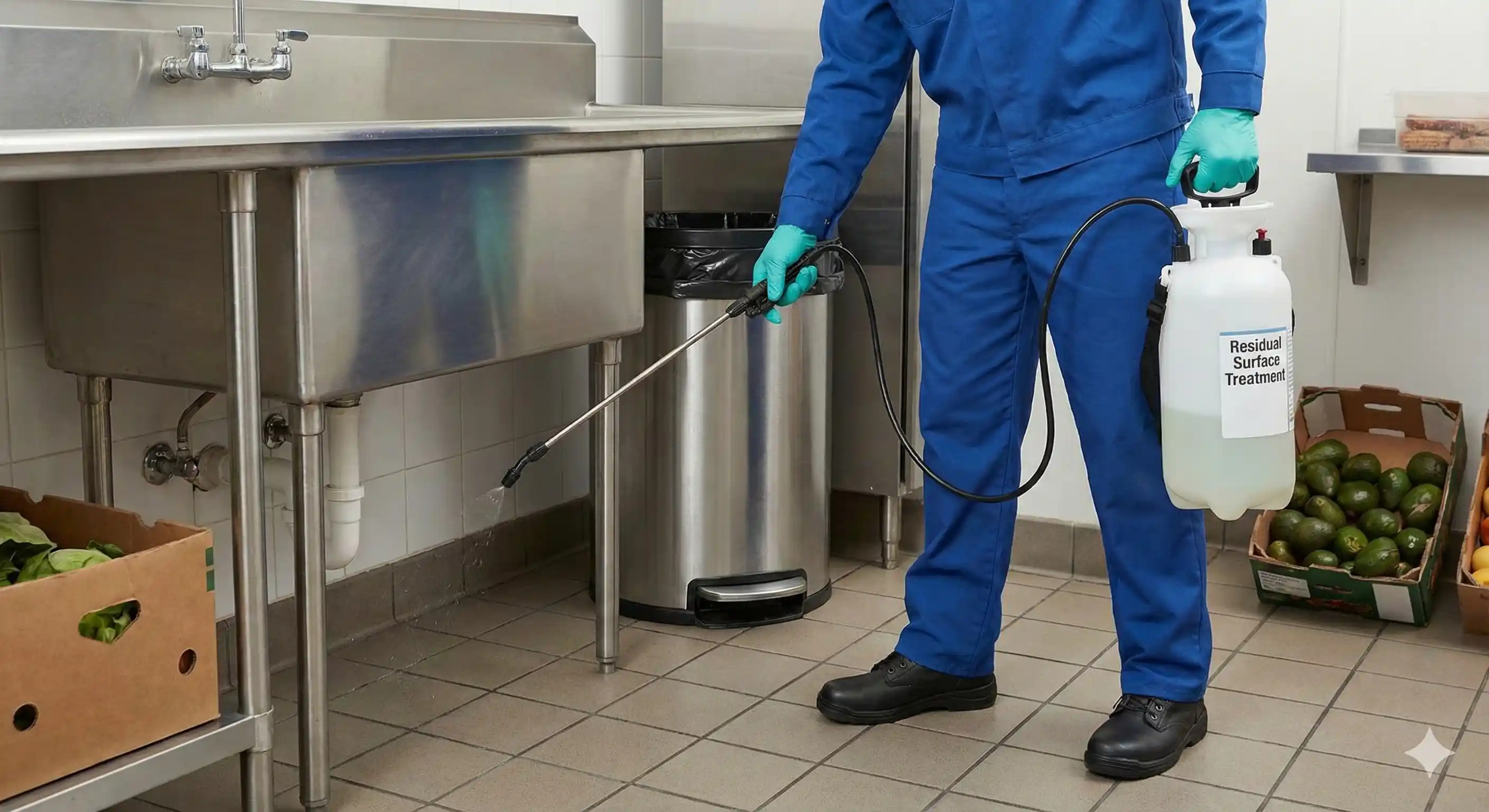
Applying residual surface treatment to fruit fly resting areas

Residual Surface Treatments

Micro-encapsulated insecticide applications to areas where adult fruit flies rest, creating long-lasting protection zones while minimizing human exposure. These treatments continue working between service visits.

What Causes Fruit Flys?

Understanding what attracts fruit flies to your property is essential for effective control and long-term prevention.
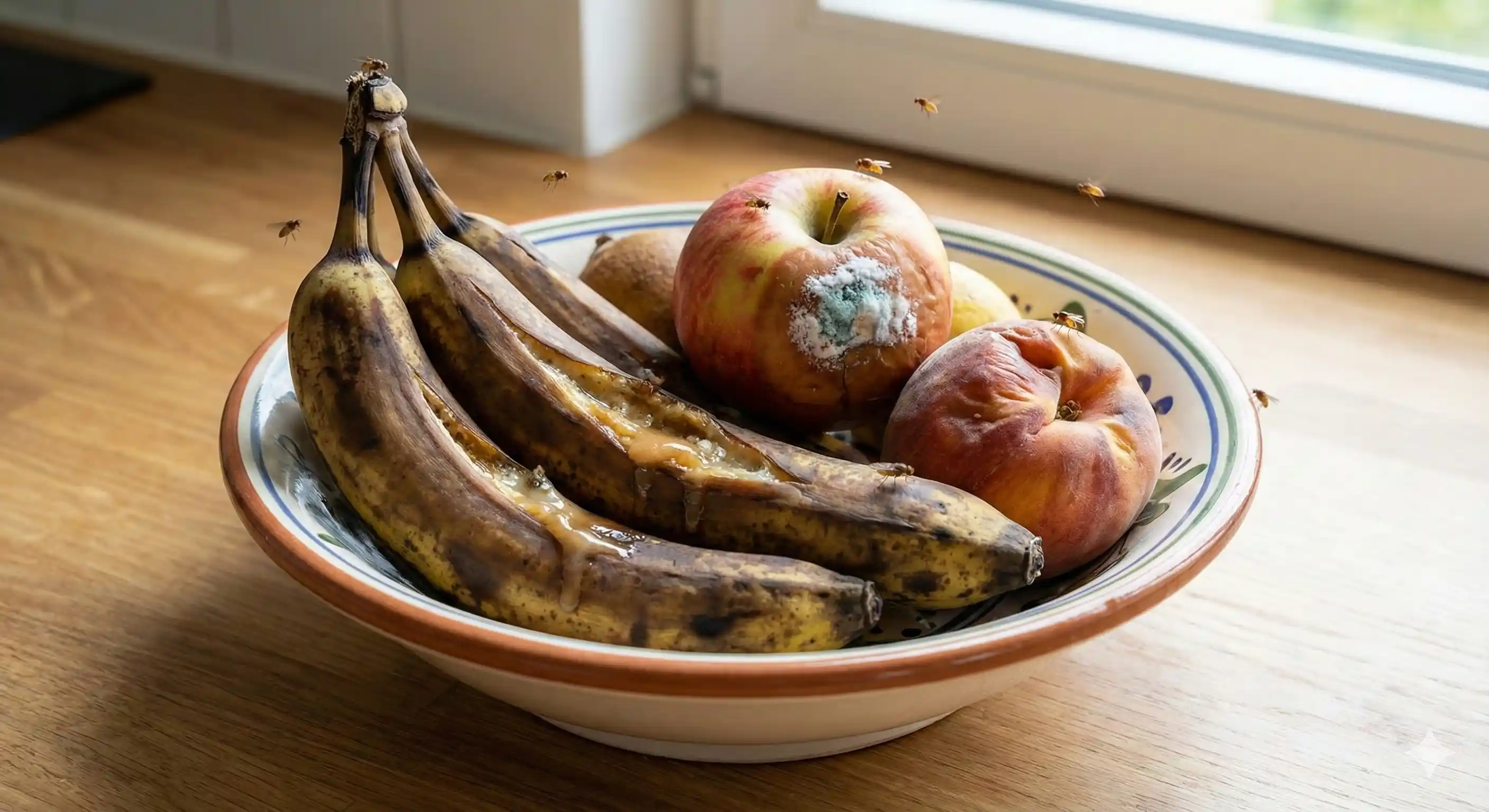
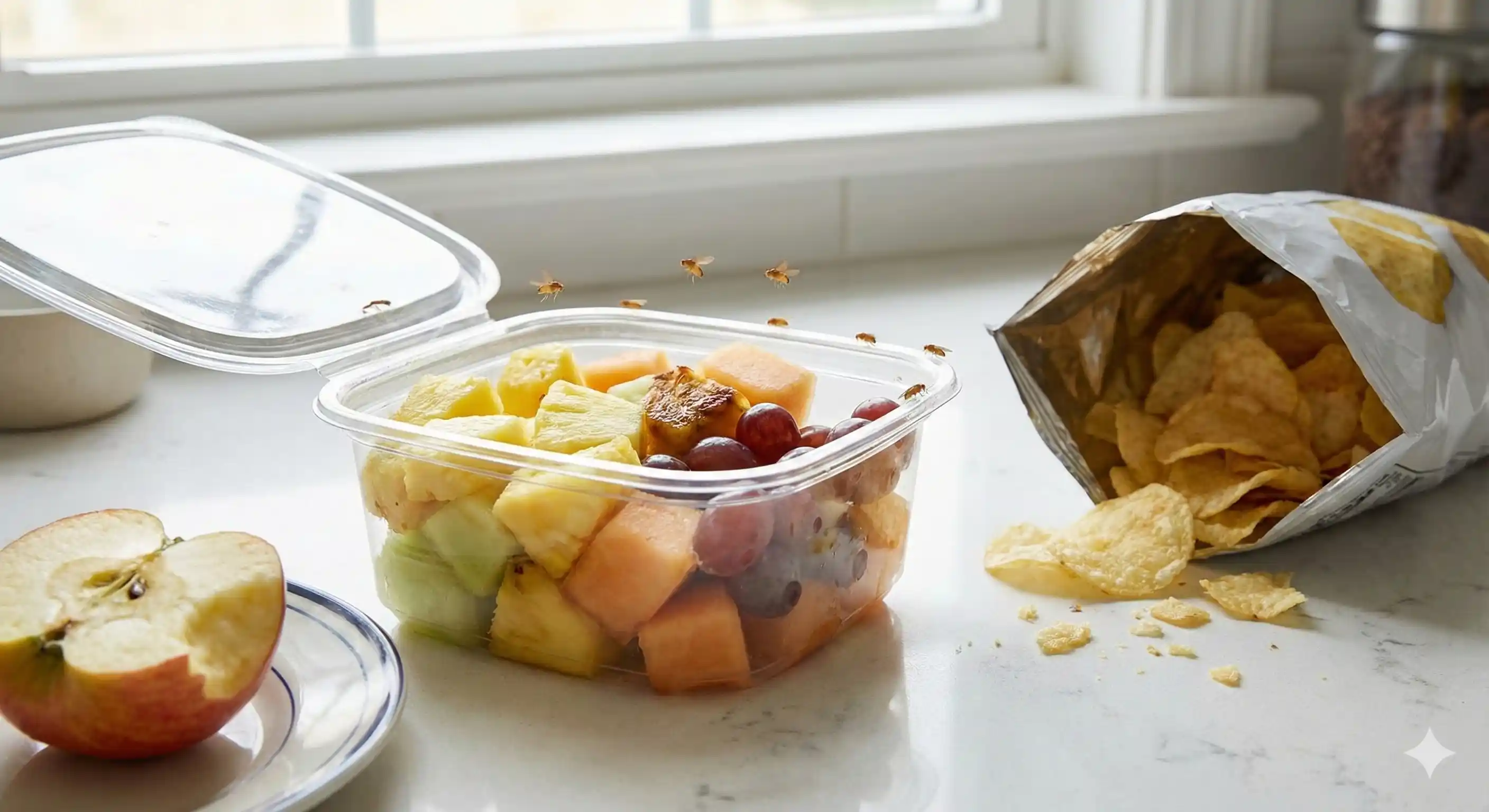
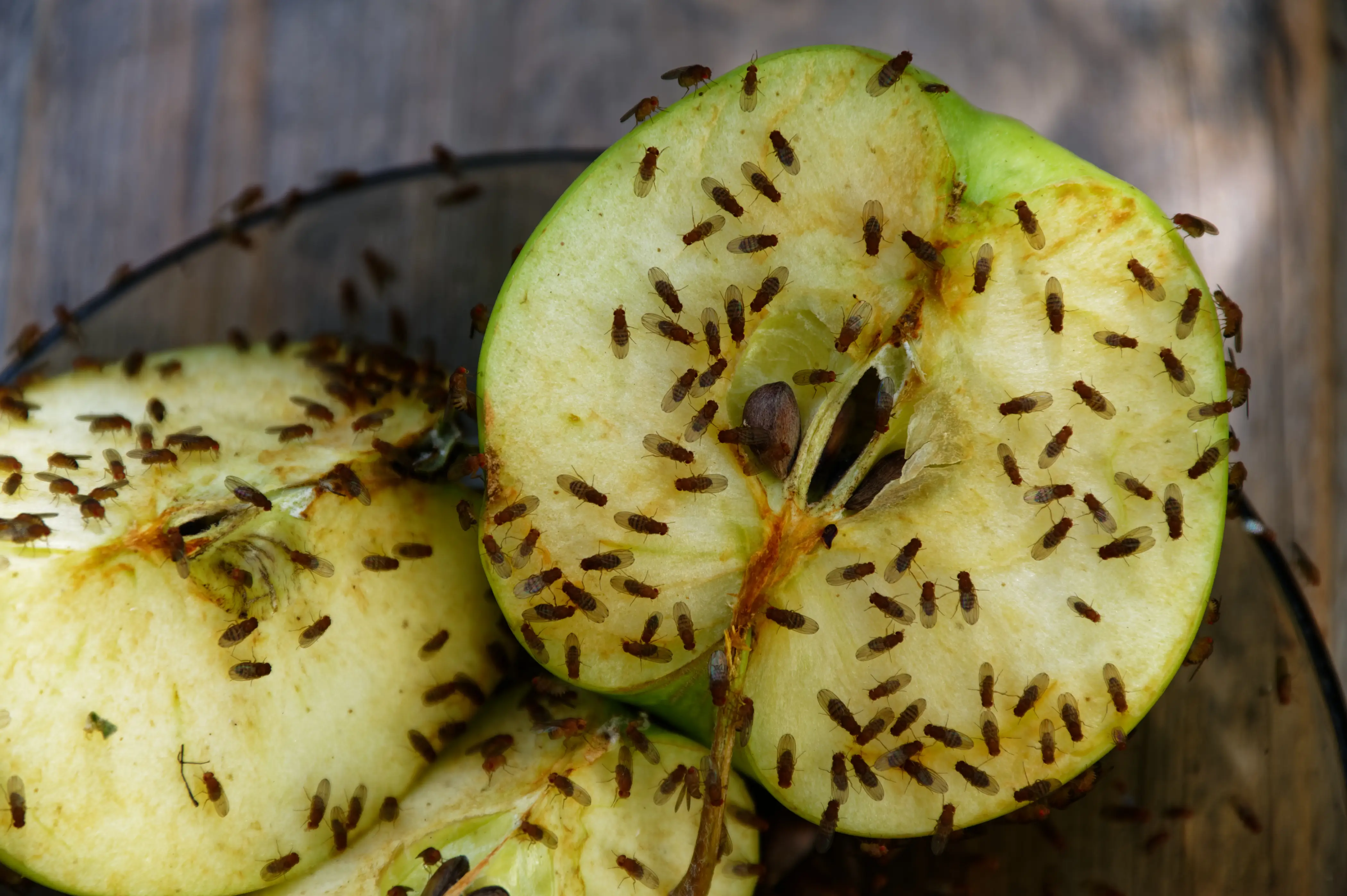
Overripe fruit and fermenting produce attracting fruit flies

🍎 Fermenting Food Sources

Overripe fruits, vegetables, and other fermenting organic materials provide ideal feeding and breeding sites. Fruit flies have highly sensitive olfactory systems that can detect ethanol and other fermentation byproducts from remarkable distances.

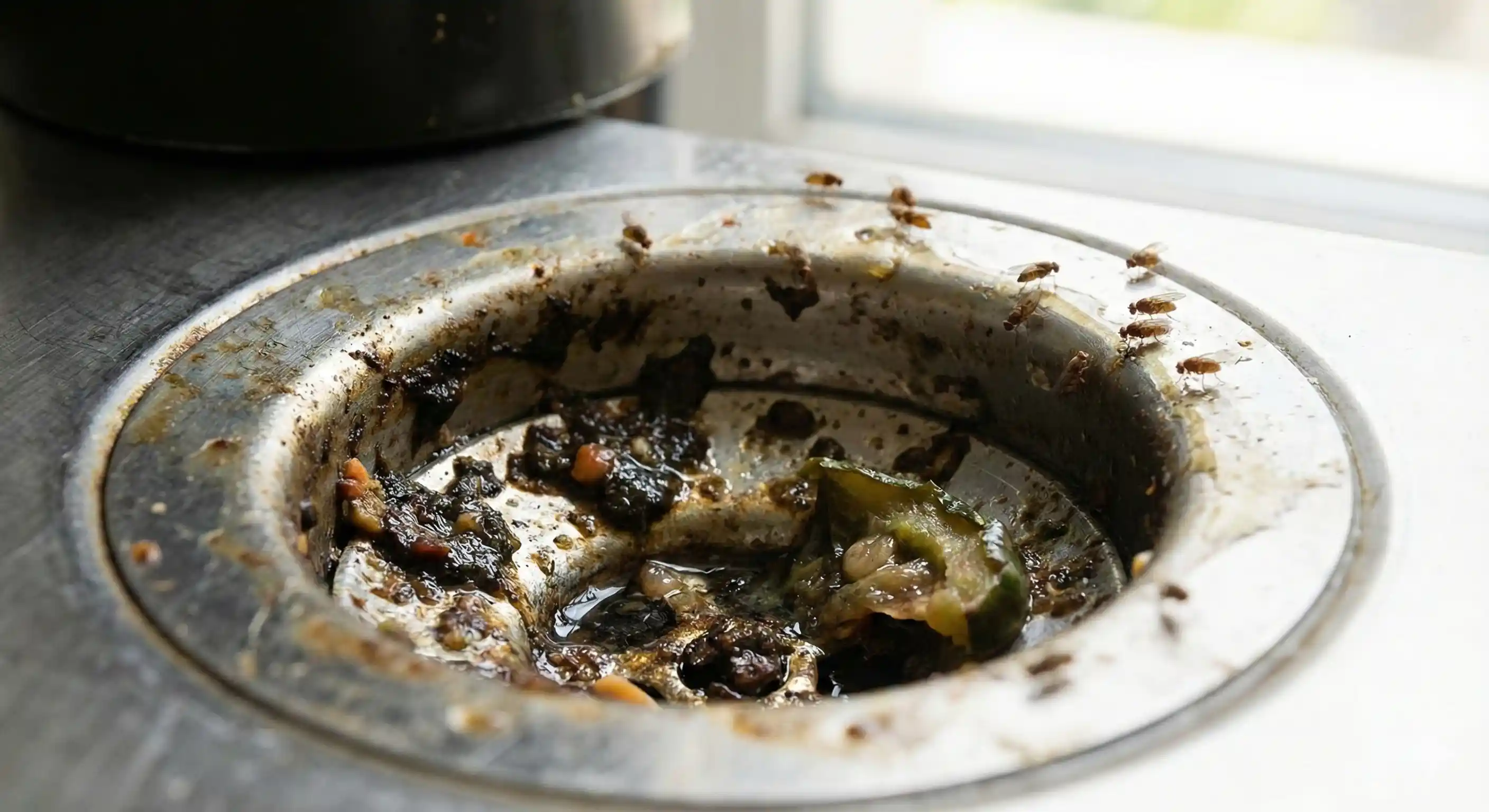
Drain and moist area with organic debris providing fruit fly breeding site

🗑️ Moisture & Organic Debris

Fruit flies require moist environments for breeding, making areas with consistent dampness and organic matter buildup particularly attractive, especially drains, garbage disposals, recycling bins, and mop buckets.

Unsealed food containers and open produce attracting fruit flies

💧 Unsealed Food Containers

Open or improperly sealed food storage, particularly fruits, vegetables, wine, vinegar, and other fermentable items, creates powerful attractants that can draw fruit flies from surprising distances into your kitchen.

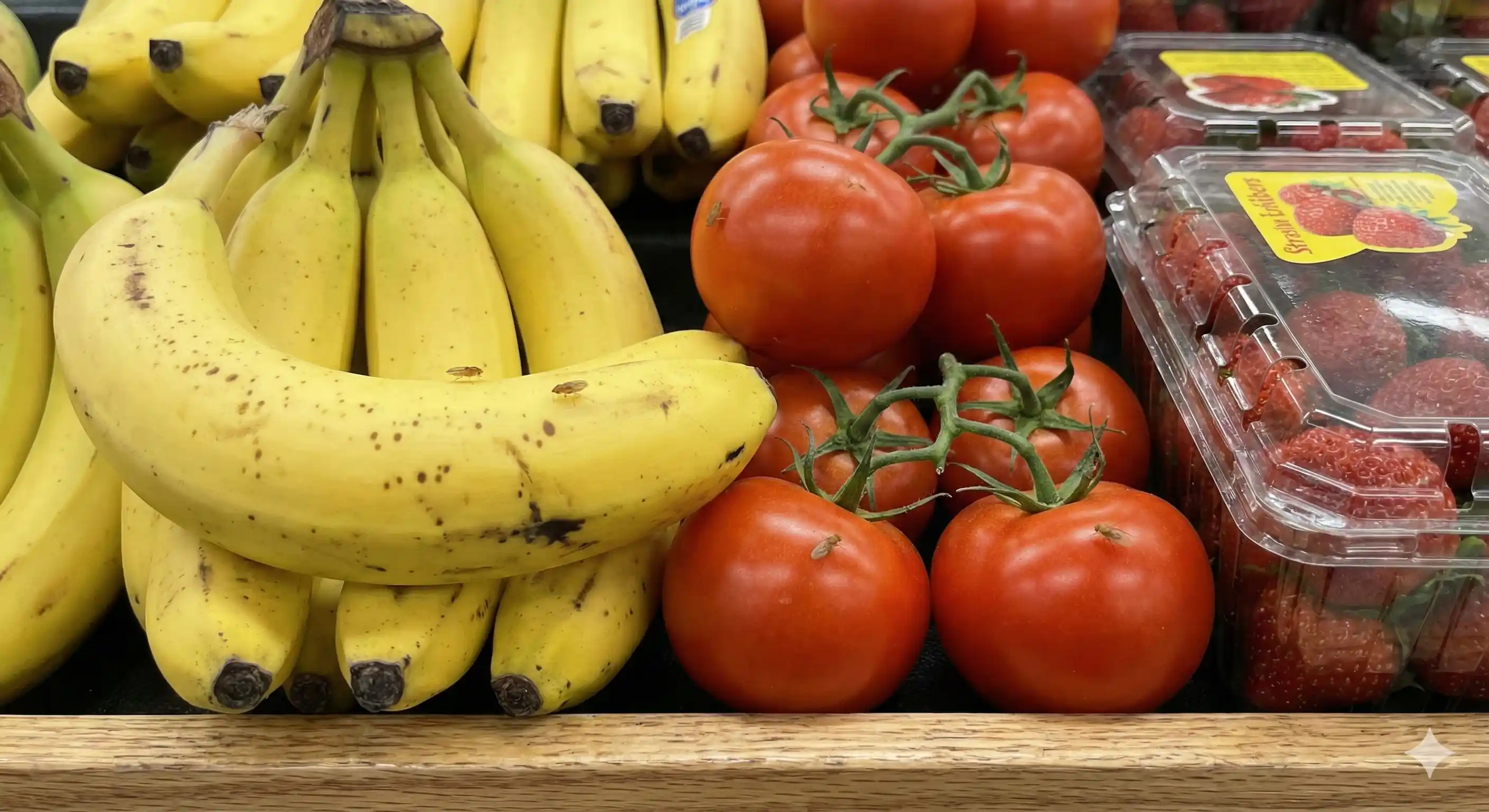
Fresh produce from grocery store potentially harboring fruit fly eggs

🌡️ Imported Infestations

Fruit flies and their eggs often enter homes on purchased produce, especially bananas, tomatoes, and other fruits that may harbor microscopic eggs or larvae, allowing infestations to establish even in meticulously maintained environments.

Learn More About Fruit Fly Prevention →

What Are Signs of Fruit Flys in Your Home?

Watch for these distinctive indicators of fruit fly activity to catch infestations early before populations explode.
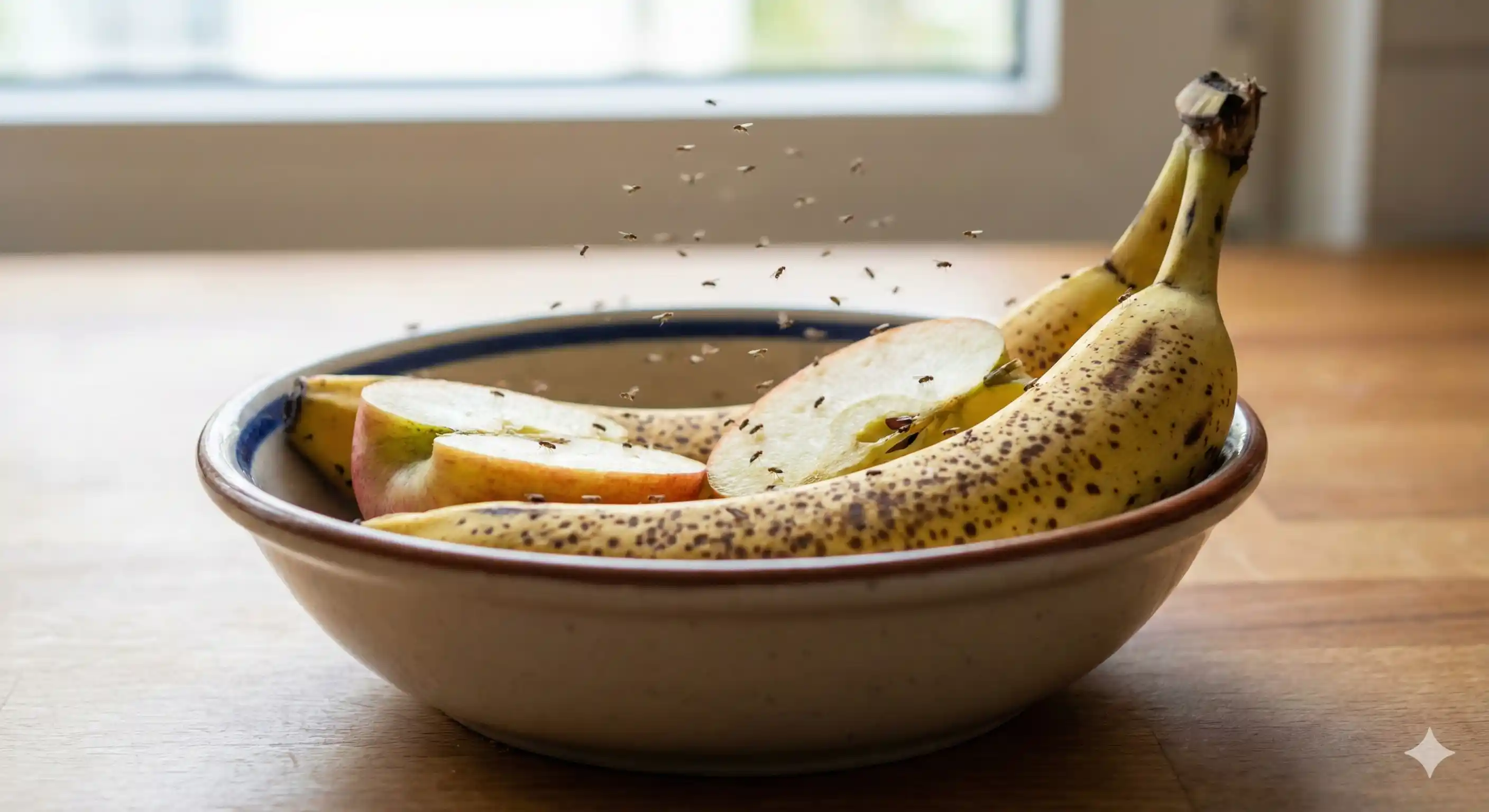
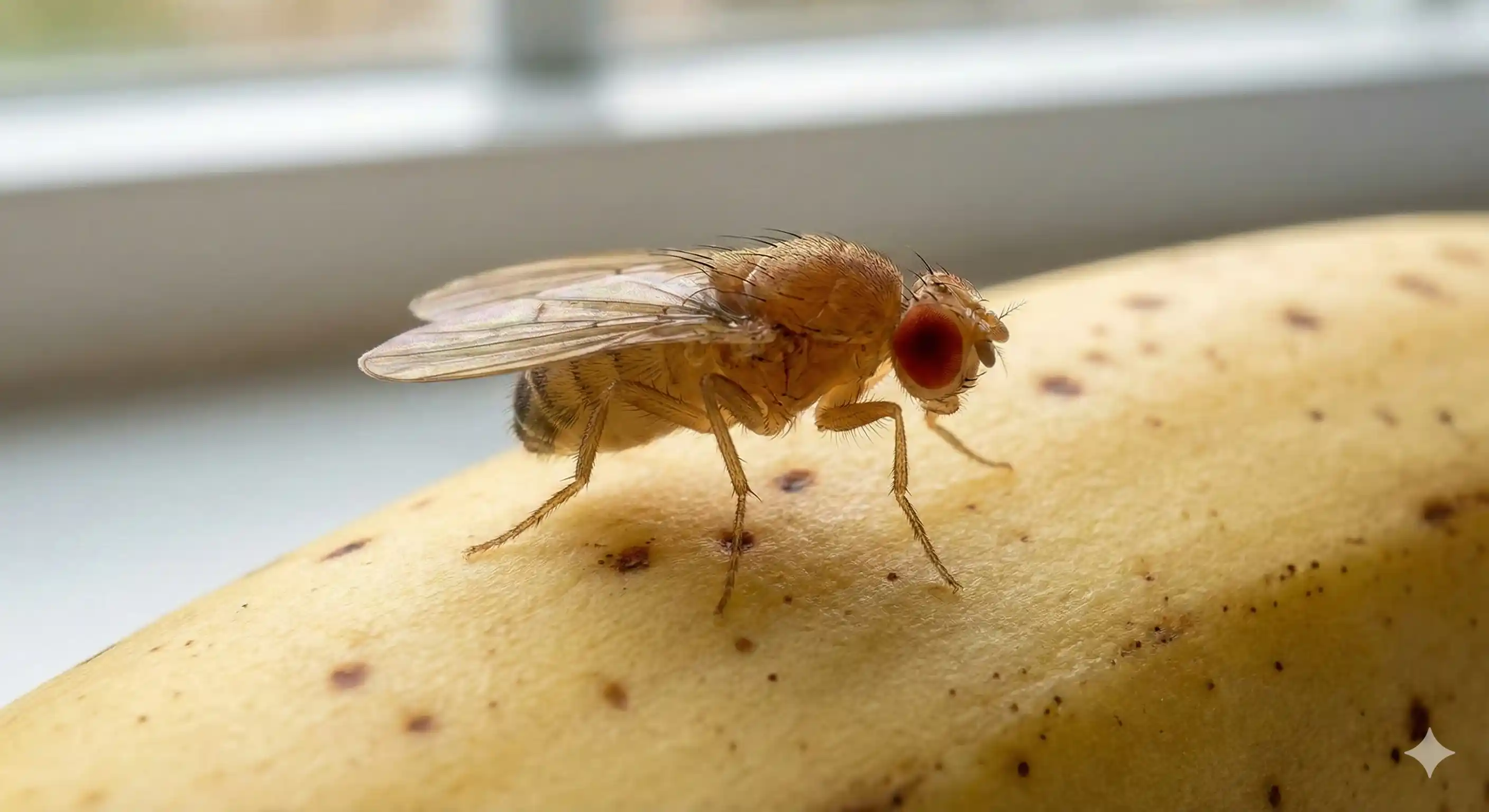
Adult fruit flies with characteristic red eyes hovering near fruit

Adult Fruit Flies

Small (approximately 1/8 inch) tan or brownish flies with distinctive red eyes, typically seen hovering around fruit bowls, recycling bins, garbage containers, and anywhere fermenting materials are present.

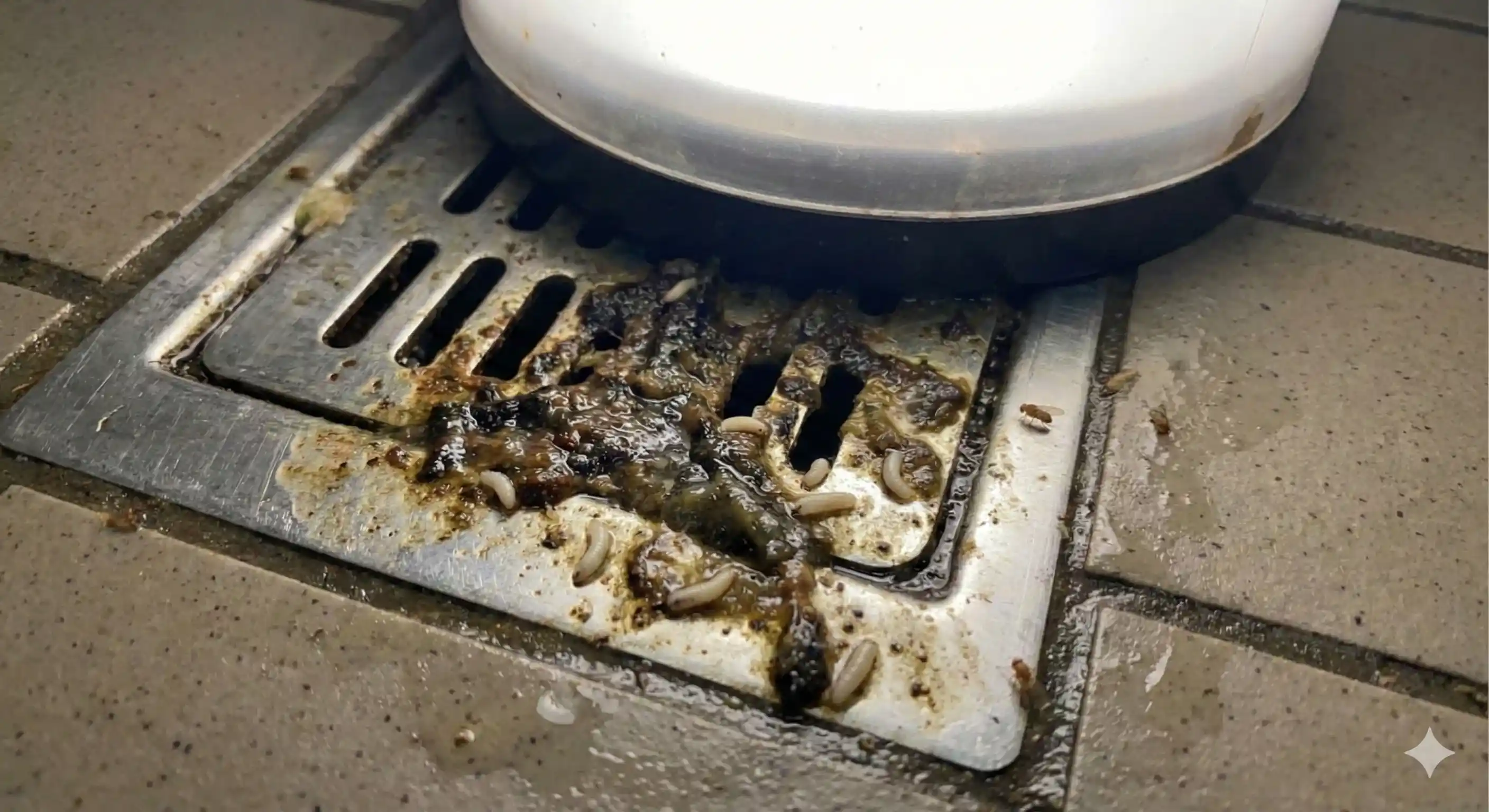
Fruit fly breeding site in drain or moist area with organic debris

Active Breeding Sites

Dark, moist areas with visible larval activity, particularly in drains, garbage disposals, mop buckets, and areas beneath refrigerators where condensation collects and organic matter accumulates.

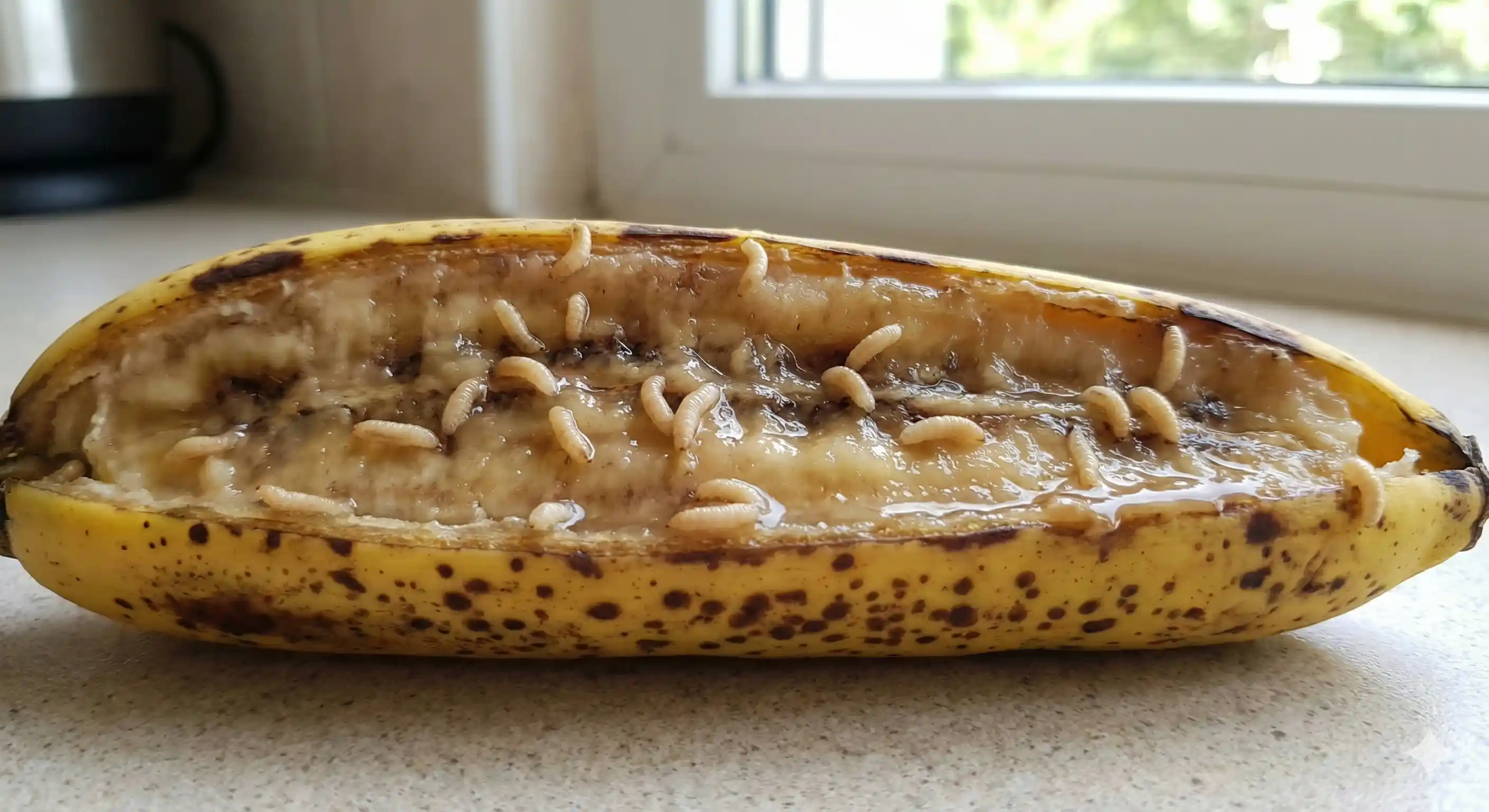
Fruit fly larvae visible in decaying fruit or produce

Larvae in Produce

Tiny, cream-colored maggots approximately 1/4 inch long, visible in decaying fruits, vegetables, and other moist organic materials where they feed before pupation into adult flies.

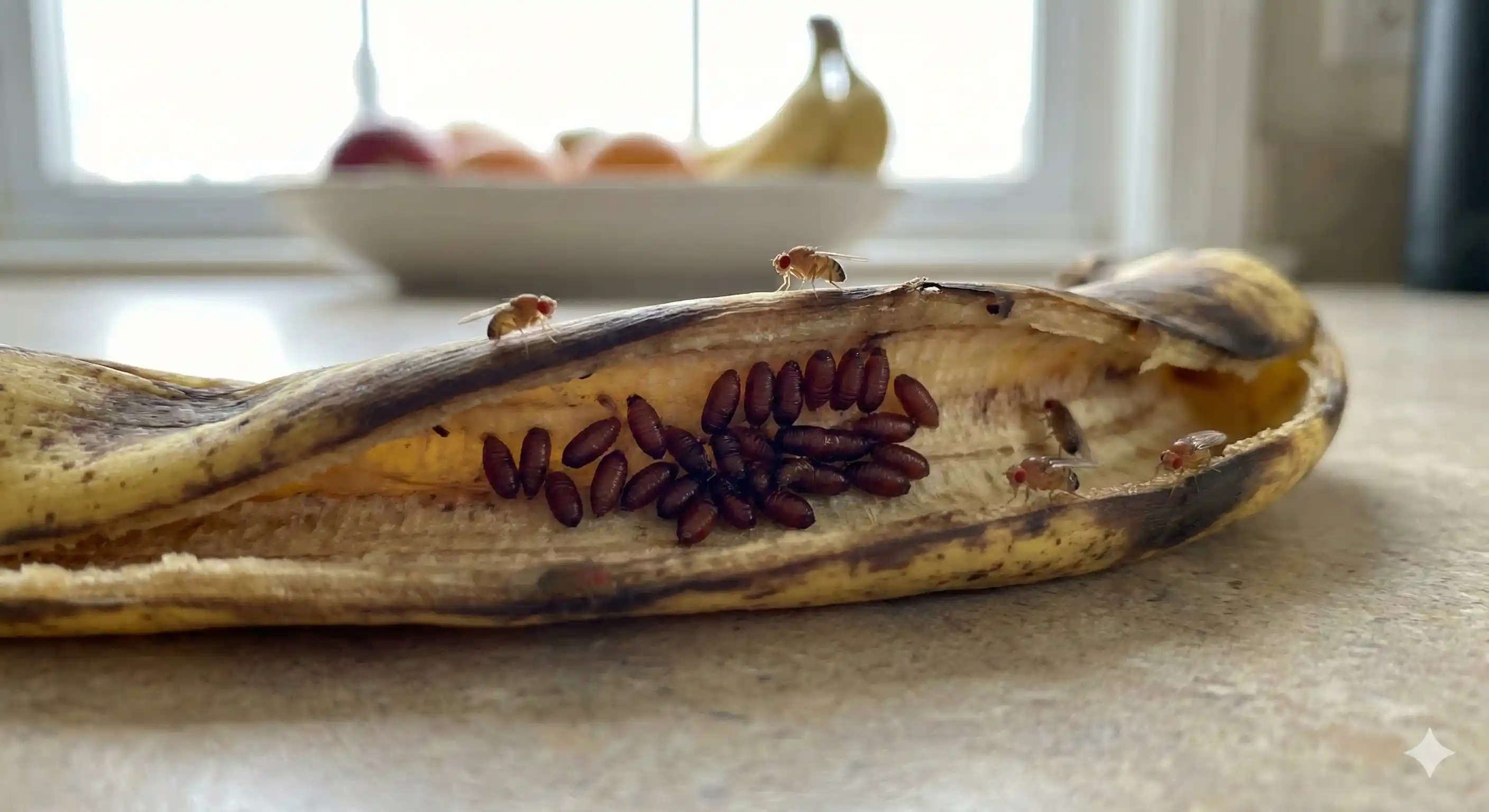
Fruit fly pupal cases near breeding site

Pupal Cases

Small, dark brown, capsule-shaped cases about 1/8 inch long found near breeding sites, representing the transitional stage between larvae and adult fruit flies—indicating active reproduction.

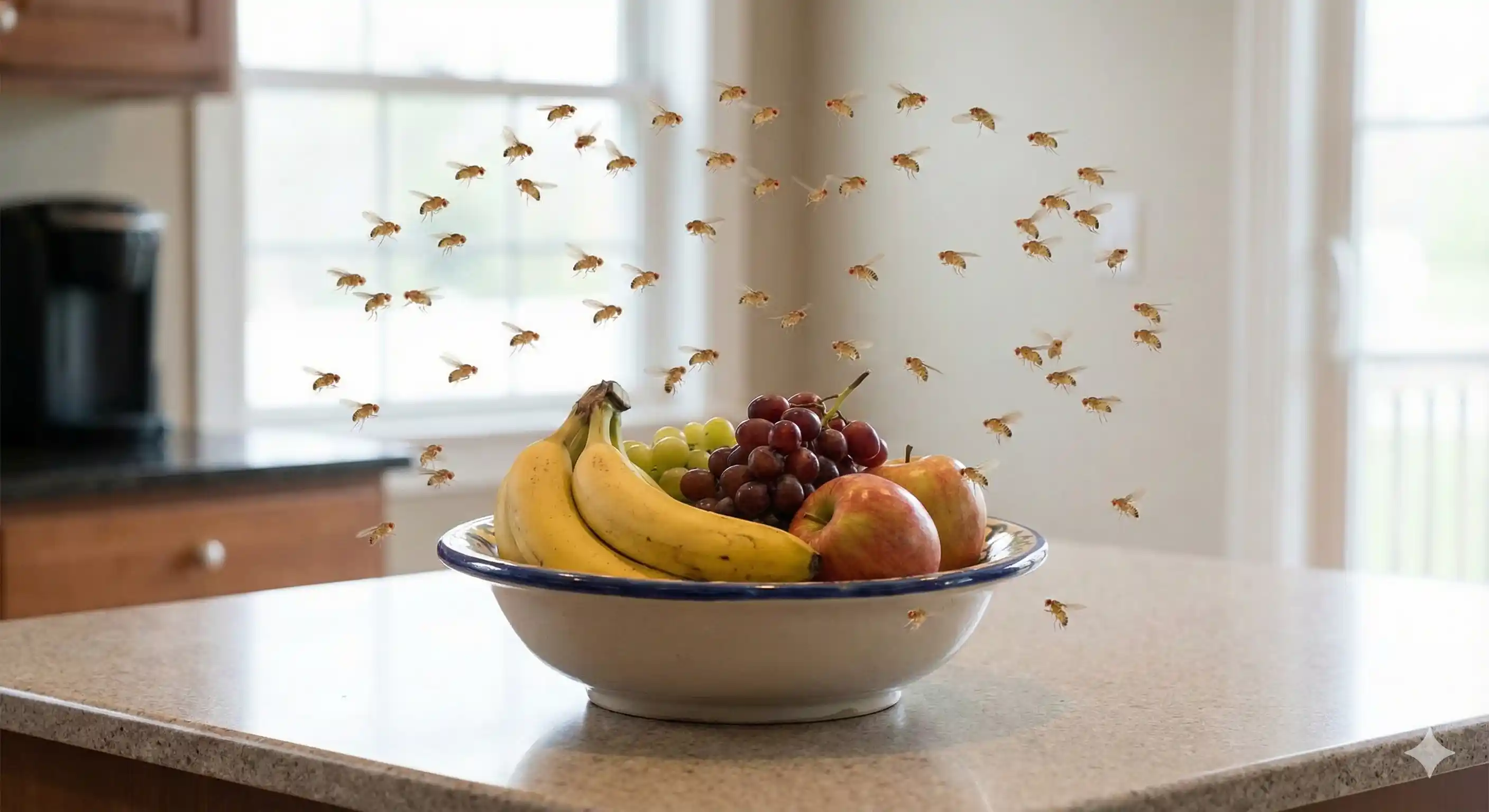
Fruit flies hovering around fruit bowl or trash area

Hovering Behavior

Characteristic flight pattern of small groups of fruit flies circling above fruits, drains, trash receptacles, and wine or vinegar containers, particularly noticeable when these items are disturbed.

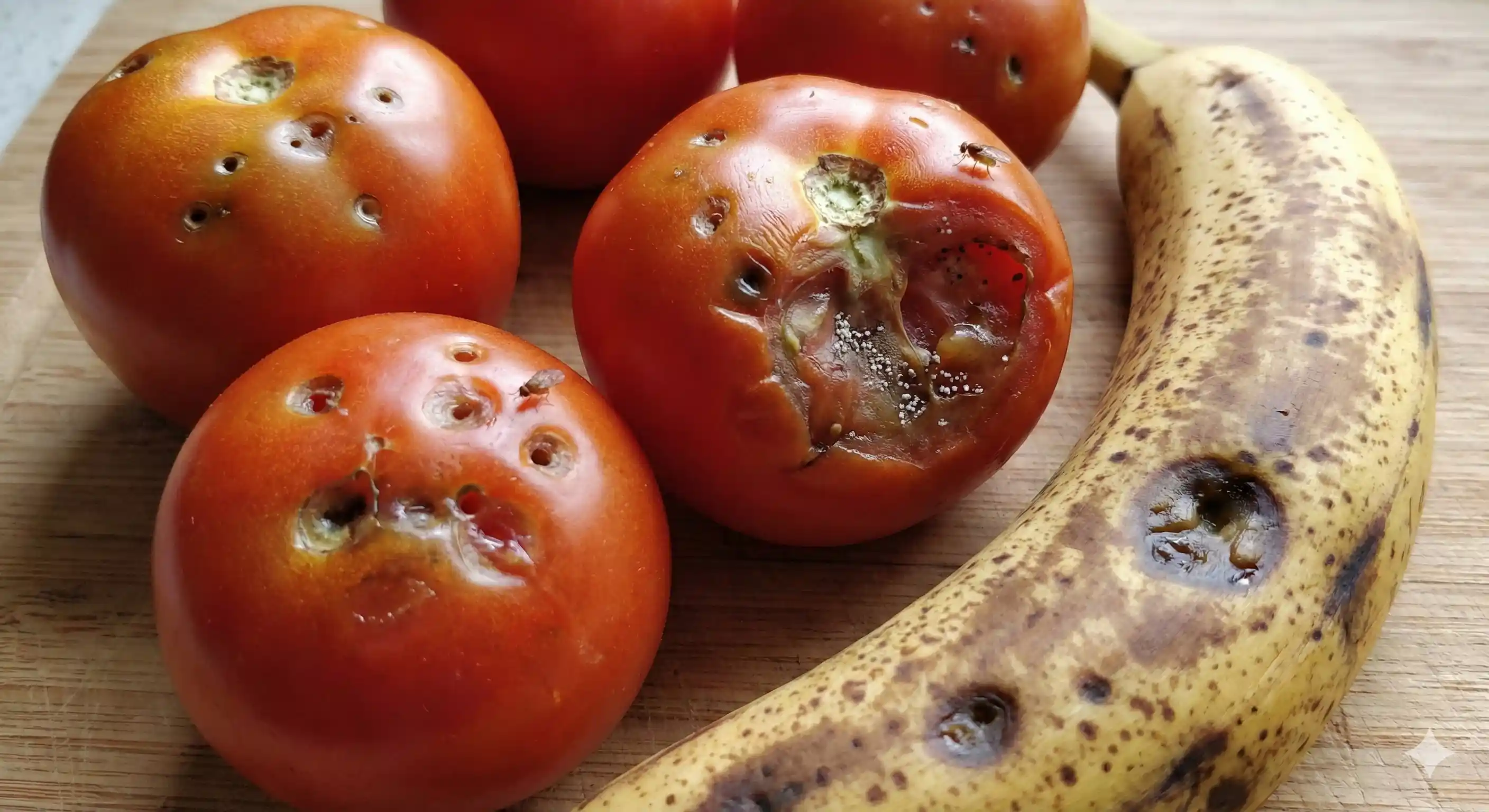
Fruit showing damage and soft spots from fruit fly egg laying

Damaged Produce

Visible deterioration of produce surfaces where fruit flies have laid eggs, often appearing as small, soft spots that rapidly expand into fully decayed areas as larvae develop inside the fruit.

Learn More About Fruit Fly Detection →

DIY vs Professional Treatment

While retailers offer various fruit fly control products, DIY approaches rarely provide lasting relief from these persistent pests. Consumer-grade products often deliver immediate but temporary results, frequently failing to address hidden breeding sites where most population development occurs. Improper application of repellent products can actually interfere with more effective control strategies. With fruit flies completing their lifecycle in just 8-10 days, populations quickly rebound after ineffective treatments.

Our technicians employ Integrated Pest Management (IPM) approaches that begin with thorough inspection to identify primary breeding areas and infestation sources that homeowners typically miss. We utilize professional-grade products including specialized drain treatments that penetrate deeply into pipes where organic matter accumulates, insect growth regulators that disrupt reproduction, and targeted applications addressing adult populations. Our strategic combination of multiple control methods targets all life stages simultaneously to prevent the rapid rebound that follows DIY treatments.

❌ DIY Treatment

  • Fails to address hidden breeding sites
  • Provides only temporary population reduction
  • Cannot penetrate deep into drain systems
  • Misses 80% of larvae in inaccessible areas
  • Allows rapid population rebound
  • No lifecycle disruption strategy

✓ Professional Treatment

  • Thorough breeding site identification
  • Deep-penetrating drain treatments
  • Insect growth regulators break breeding cycle
  • Targets all life stages simultaneously
  • Professional monitoring systems
  • Prevents rapid reinfestation

Commercial Fruit Fly Control

EcoGuard Pest Management implements customized fruit fly control programs for commercial facilities that prioritize operational continuity while ensuring effective pest elimination. Our comprehensive commercial fruit fly protection programs combine discrete treatment applications with flexible scheduling to maintain your business operations while ensuring complete elimination of fruit fly problems.

We specialize in fruit fly control solutions for:

  • Restaurants and food service establishments
  • Healthcare facilities
  • Hotels and hospitality venues
  • Educational institutions
  • Office complexes
  • Food processing facilities
  • Warehouses and storage facilities
  • Retail spaces
  • Manufacturing facilities
  • Multi-unit residential properties
Learn About Commercial Pest Control
100% SATISFACTION GUARANTEE

The EcoGuard Guarantee

EcoGuard offers a 100% satisfaction guarantee for all of our customers, and we stand by our promise to eradicate your fruit fly problem until the very last fruit fly is gone. That fruit fly control guarantee comes with every service and if the fruit flys come back, then so do we, at no additional cost. We are standing by to give you a free estimate and to help you set your first fruit fly pest control service appointment.

📞 Call (866) 326-2847 Today

Our Fruit Fly Control Process

A comprehensive approach to complete fruit fly elimination and prevention

1

Thorough Inspection

Our technicians conduct comprehensive property examination focusing on kitchens, food storage areas, waste management zones, and other susceptible locations. Using specialized equipment including high-intensity flashlights, inspection mirrors, and drain cameras, we identify primary infestation sources, breeding sites, and conditions supporting fruit fly activity.

2

Multi-Method Treatment

Based on inspection findings, we implement a customized control strategy combining multiple treatment methods targeting all fruit fly life stages simultaneously. Our approach integrates professional-grade drain treatments, targeted surface applications, insect growth regulators, and source elimination to ensure comprehensive control.

3

Exclusion & Sanitation

We identify and address structural and sanitation issues contributing to fruit fly problems, providing detailed recommendations for moisture management, food storage practices, and waste handling procedures. These measures create less hospitable conditions and help prevent reinfestation.

4

Ongoing Monitoring

Regular follow-up inspections allow us to evaluate treatment effectiveness, identify any remaining activity, and make necessary adjustments. Our monitoring program includes placement of specialized detection devices in key areas to provide early warning of new activity.

Seasonal Plan for Fruit Fly Control

Year-round protection adapted to seasonal fruit fly behavior patterns

Spring Fruit Fly Control

Spring

Critical preparation period as warming temperatures accelerate fruit fly development and activity; focus on comprehensive drain treatments; address winter harborage sites; implement preventive measures before seasonal produce becomes abundant

Summer Fruit Fly Control

Summer

Peak activity phase when higher temperatures and increased fruit availability create optimal breeding conditions; frequent monitoring of high-risk areas; additional preventive measures around food preparation zones; targeted applications to intercept emerging adults

Fall Fruit Fly Control

Fall

Harvest season vigilance when abundance of ripening fruits creates significant attraction; enhanced monitoring systems; comprehensive source management; reinforced treatment protocols for home gardens and local produce challenges

Winter Fruit Fly Control

Winter

Maintenance phase focused on indoor breeding sites where populations continue developing despite cold outdoor temperatures; detailed inspection of drains and moisture sources; targeted treatments; preventive measures for spring activity

What Our Customers Say

Trusted by homeowners and businesses for professional fruit fly elimination

★★★★★

"We tried every DIY trap and spray for weeks with no luck. The fruit flies just kept coming back. EcoGuard found they were breeding in our garbage disposal and drains—places we never thought to check. Problem solved in days!"

Michelle T.
Austin, TX
★★★★★

"Our restaurant was struggling with fruit flies near the bar area. EcoGuard set up a complete treatment program with drain treatments and monitoring traps. We passed our health inspection with flying colors. Worth every penny!"

Carlos M.
Sacramento, CA
★★★★★

"The technician was incredibly thorough—he found fruit flies breeding under our refrigerator in the condensation tray. We had no idea that was even a thing! Great education on prevention too. Highly recommend!"

Jennifer & David K.
Portland, OR

Fruit Fly Control FAQs

Everything you need to know about fruit fly control and treatment

Our trained technicians distinguish between various fruit fly species and similar-looking pests like phorid flies and fungus gnats through examination of captured specimens. This precise identification is crucial because different species have distinct breeding preferences and behavior patterns that influence treatment strategies, ensuring treatments target the specific pest present.

Fruit flies transmit bacteria by traveling between decaying organic matter and food preparation surfaces. Studies have documented fruit flies carrying E. coli, Salmonella, Listeria, and over 100 other pathogens capable of causing foodborne illness. In commercial settings, their presence constitutes health code violations that can trigger inspection failures and potential business closure.

Professional fruit fly control typically achieves 80-90% population reduction within 24-48 hours of initial treatment, with complete elimination generally requiring 7-14 days as treatments interrupt the breeding cycle across all developmental stages. This significantly outperforms DIY methods, which often show initial success but fail as new adults emerge from untreated breeding sites.

Professional fruit fly control employs multiple technologies unavailable to consumers including bio-foam applicators that expand within drain systems, microscopic inspection equipment to identify breeding sites, UV monitoring traps, and precision application tools. This equipment allows treatments to reach breeding sites in wall voids, beneath equipment, and inside plumbing systems.

Fruit flies have red eyes, tan bodies, and breed primarily in fermenting organic materials. Drain flies display a moth-like appearance with fuzzy wings and breed exclusively in the gelatinous biofilm inside drains. Misidentifying these pests leads to ineffective treatment strategies—proper identification ensures the right approach for your specific infestation.

Professional inspections frequently reveal hidden breeding sites including condensation trays beneath refrigerators, floor drains with organic buildup, recycling bins, overlooked produce in pantry corners, garbage disposal units, potted plants with overwatering issues, and mop buckets with stagnant water. Even sponges, bar mats, or flower vases can support fruit fly development.

Commercial kitchens typically require monthly preventative service visits, with frequency adjustments based on facility size, menu complexity, waste management protocols, and historical patterns. High-risk operations like breweries or facilities processing large produce volumes may benefit from bi-weekly service during peak season.

Our commercial food service treatments utilize specialized formulations designed specifically for food handling environments, including FDA and EPA approved materials. Applications employ targeted delivery methods like gel baits and crack/crevice treatments that minimize exposure risk. Many treatments use bioenzyme formulations that work through natural processes.

The fruit fly lifecycle progresses from egg to adult in just 8-10 days under optimal conditions, with females laying up to 500 eggs during their 30-day lifespan. This compressed timeline necessitates professional treatments that simultaneously target multiple lifecycle stages—adults, larvae, and eggs—to prevent rapid population rebound.

Fruit flies can develop insecticide resistance, particularly in facilities with long-term control programs using consistent chemistry. Professional pest management counters this through product rotation, combining chemical and non-chemical approaches, emphasizing source elimination, and utilizing bacterial/enzymatic products that target breeding media rather than insects directly.

Effective fruit fly management includes structured follow-up beginning 3-5 days after initial treatment. This allows technicians to evaluate effectiveness, identify remaining breeding sites, apply supplemental treatments, and adjust recommendations. Comprehensive programs include scheduled inspections typically at 30-day intervals with adjustment based on activity levels.

Commercial programs incorporate documentation for regulatory compliance, utilize intensive monitoring systems including trap arrays and light traps, focus on staff training regarding sanitation protocols, and include periodic structure treatments addressing drainage and ventilation systems. Commercial programs operate on contracted schedules for preventative rather than reactive management.

Professional exclusion strategies include air curtains at exterior doorways, fine mesh screening on windows and ventilation intakes, positive air pressure systems, modification of exterior lighting to reduce attractancy, and sealing utility penetrations. For food service facilities, we recommend dedicated protocols for receiving areas and quarantine procedures for suspect produce.

Fruit fly populations peak during late summer and early fall when temperatures are warm and fruit abundance is highest, requiring more aggressive treatment with shortened intervals. Winter constrains populations to indoor breeding sites with stable temperatures, often concentrated around drains. Professional treatments adapt to these seasonal patterns.

Professional monitoring uses specialized glue traps with pheromone attractants, light traps visible to flies but not customers, systematic drain inspection using specialized equipment, and direct observation protocols. Advanced monitoring may include electronic systems quantifying activity over time for data-driven treatment adjustments.

Our commercial programs integrate with health department compliance through detailed service documentation, logbooks with monitoring data and treatment records, treatments meeting food safety requirements, staff training on sanitation protocols, and emergency response services for addressing activity prior to scheduled inspections.

Control programs maintain populations below acceptable thresholds through ongoing management, recognizing complete elimination may not be sustainable in restaurants with continuous breeding opportunities. Eradication aims for complete elimination requiring intensive treatments and strict sanitation cooperation. Most commercial programs focus on control while residential programs can often achieve true eradication.

Adult fruit flies can travel significant distances following odor plumes from fermenting materials. This allows infestations to spread between adjacent properties, particularly in multi-unit buildings. For neighborhoods, composting activities, fruit trees with dropped fruit, and improperly managed waste can create external reservoirs supplying flies to nearby properties.

Recommendations may include drain screens with fine mesh, floor drainage modifications to eliminate standing water, sealing cracks around sinks and equipment, upgrading waste handling systems, and improving ventilation to reduce humidity. In commercial settings, modifications to equipment installation facilitating proper cleaning are often recommended.

Professional determination uses multiple assessment methods: systematic monitoring over 2-3 complete lifecycle periods (21-30 days) showing no captures, thorough inspection of breeding sites showing no larvae or pupae, verification of proper drainage, confirmation of sanitation improvements, and testing potential breeding sites using fermentation traps.

Ready to Eliminate Your Fruit Fly Problem?

Get a free estimate for your fruit fly problem today. Our experts will assess your property and provide a customized treatment plan.

Connect With Us

Follow EcoGuard Pest Management for tips, updates, and special offers

f𝕏yin