EcoGuard Pest Management
Termite queen identification
By Gary Anderson||4 min read

Termite Queen

Appearance, size, role in the colony, egg production, and lifespan.

1,000/Day
Eggs produced
Up to 6 Inches
Queen size
10-50 Years
Lifespan
9 Million+
Lifetime eggs

Termites are social creatures with their own caste system, and termite queens are the matriarch. Every single termite inside a colony has hatched from one of her eggs.

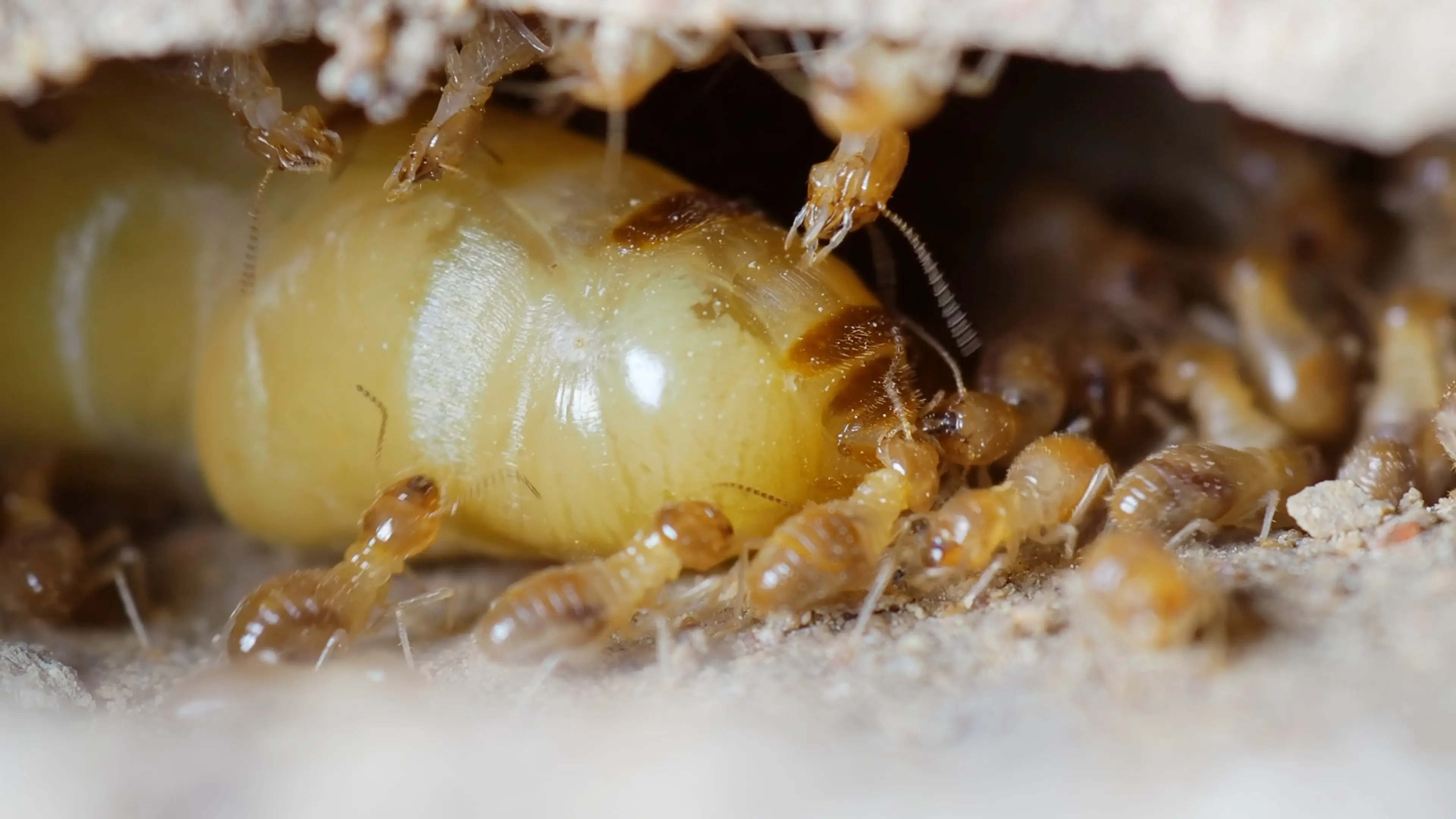
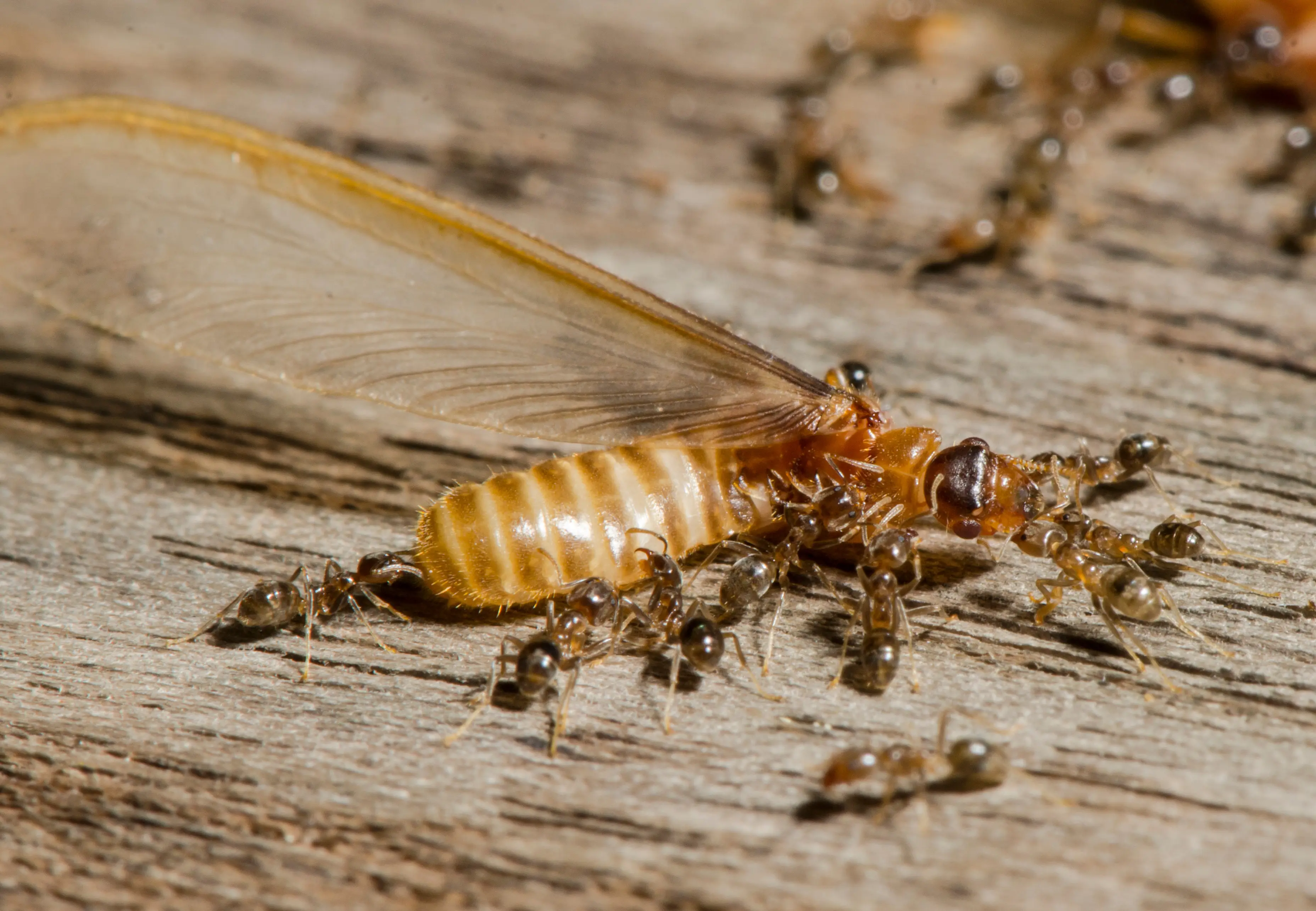
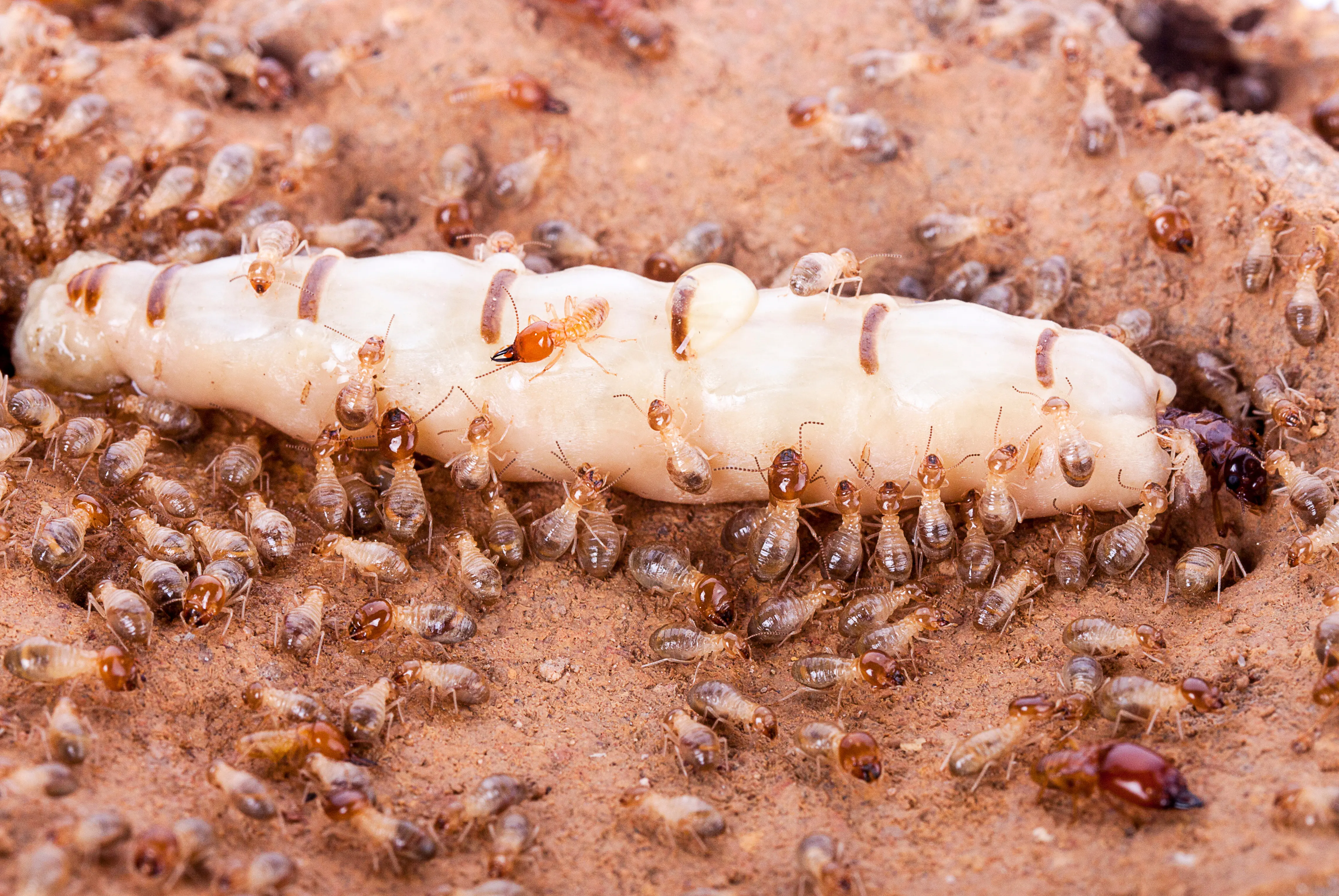
Queens are easily identified by an engorged body much larger than every other termite. This body pulsates as it produces roughly 1,000 eggs per day at optimal capacity. They are incapable of moving and require support from worker termites.
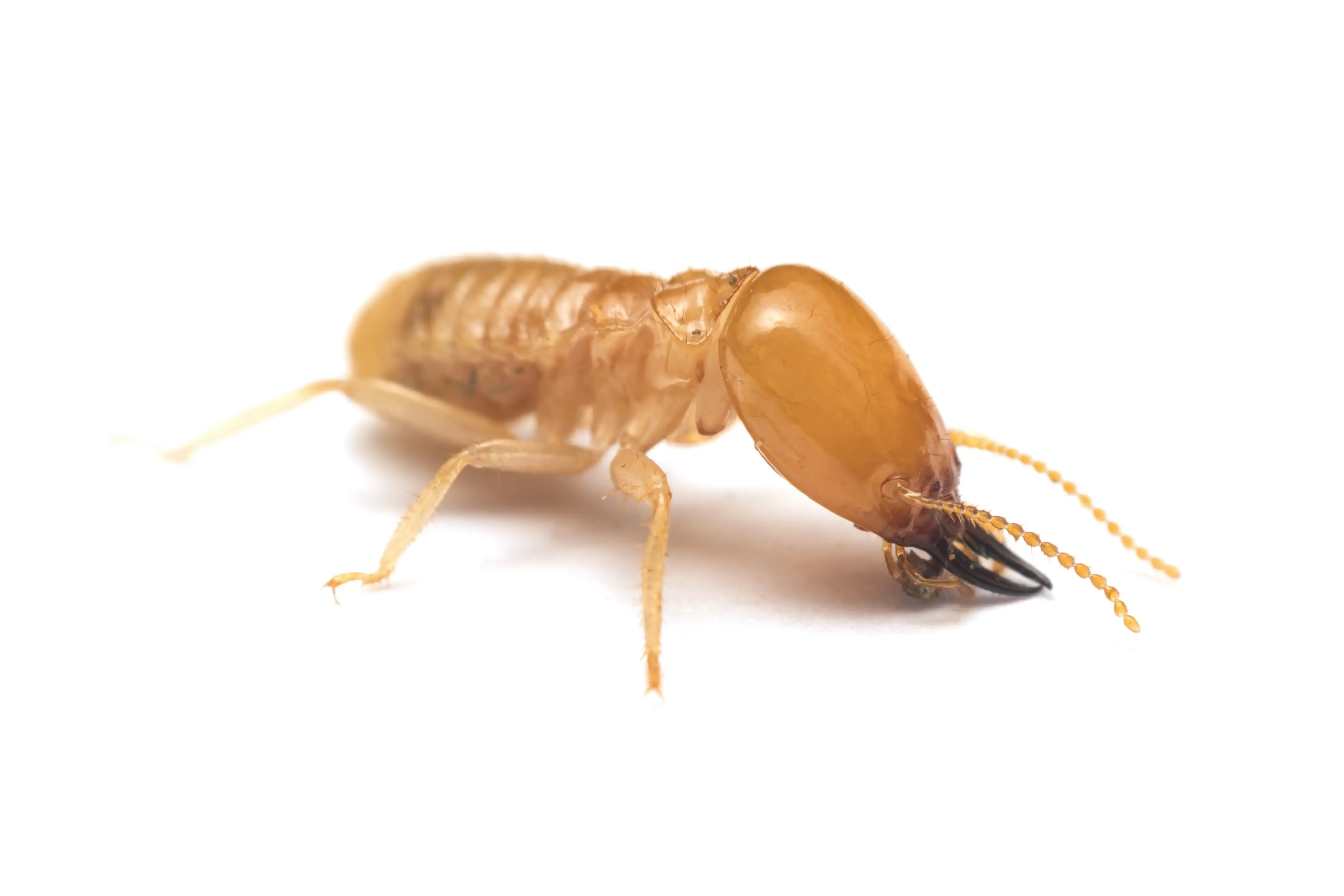

What Does a Termite Queen Look Like?

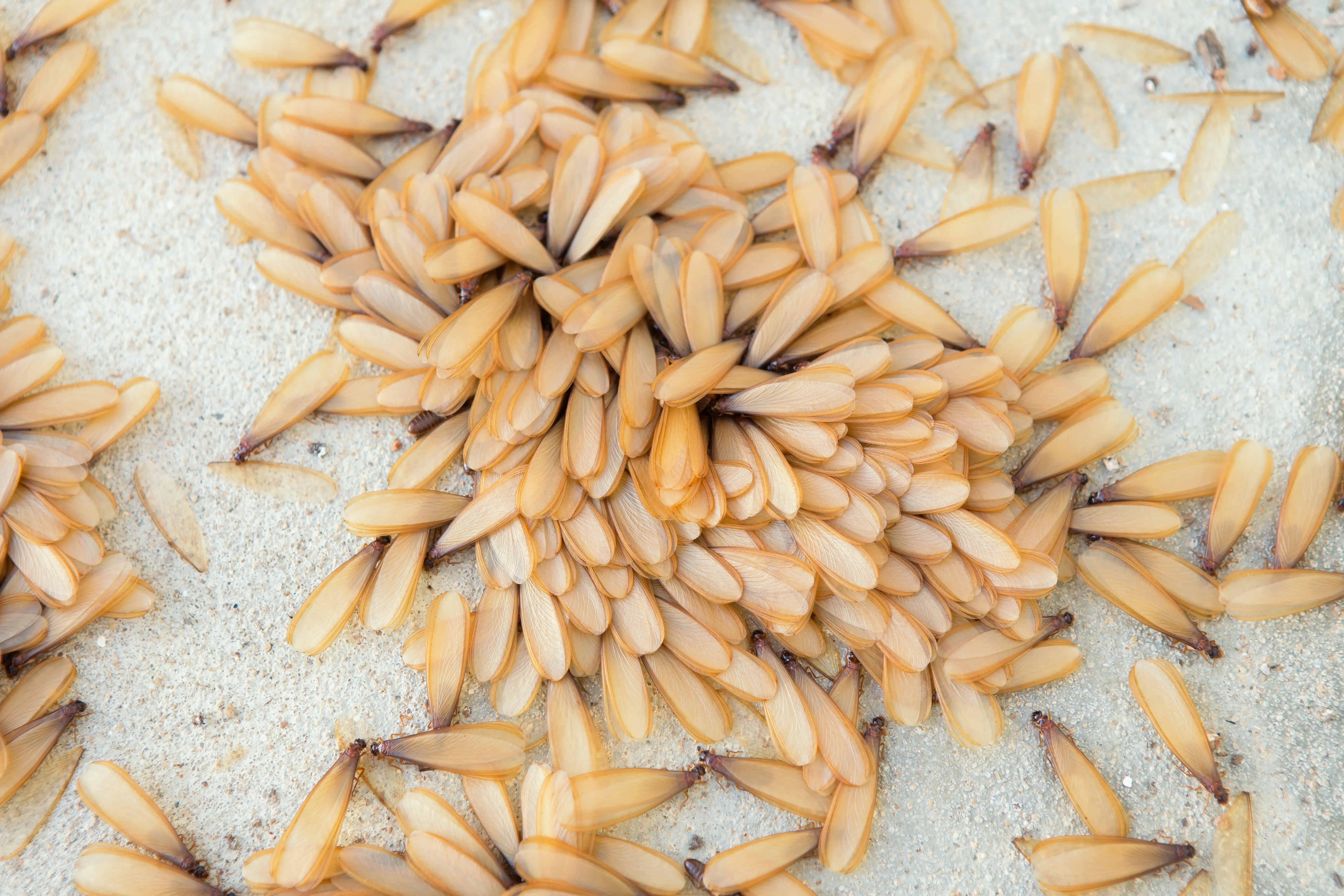
Originally a primary reproductive emerges from swarmers to become queen of a new colony. At this time, her body resembles a swarmer with wings and normal size. After fertilization, her body changes dramatically to accommodate egg production.

Body Transformation

Body expands until exoskeleton is so thin it turns translucent. At peak production, queen can be the size of a human finger.

Coloration

Subterranean queens are lighter colored (never emerge from underground). Drywood queens are more yellow or brown.

Size

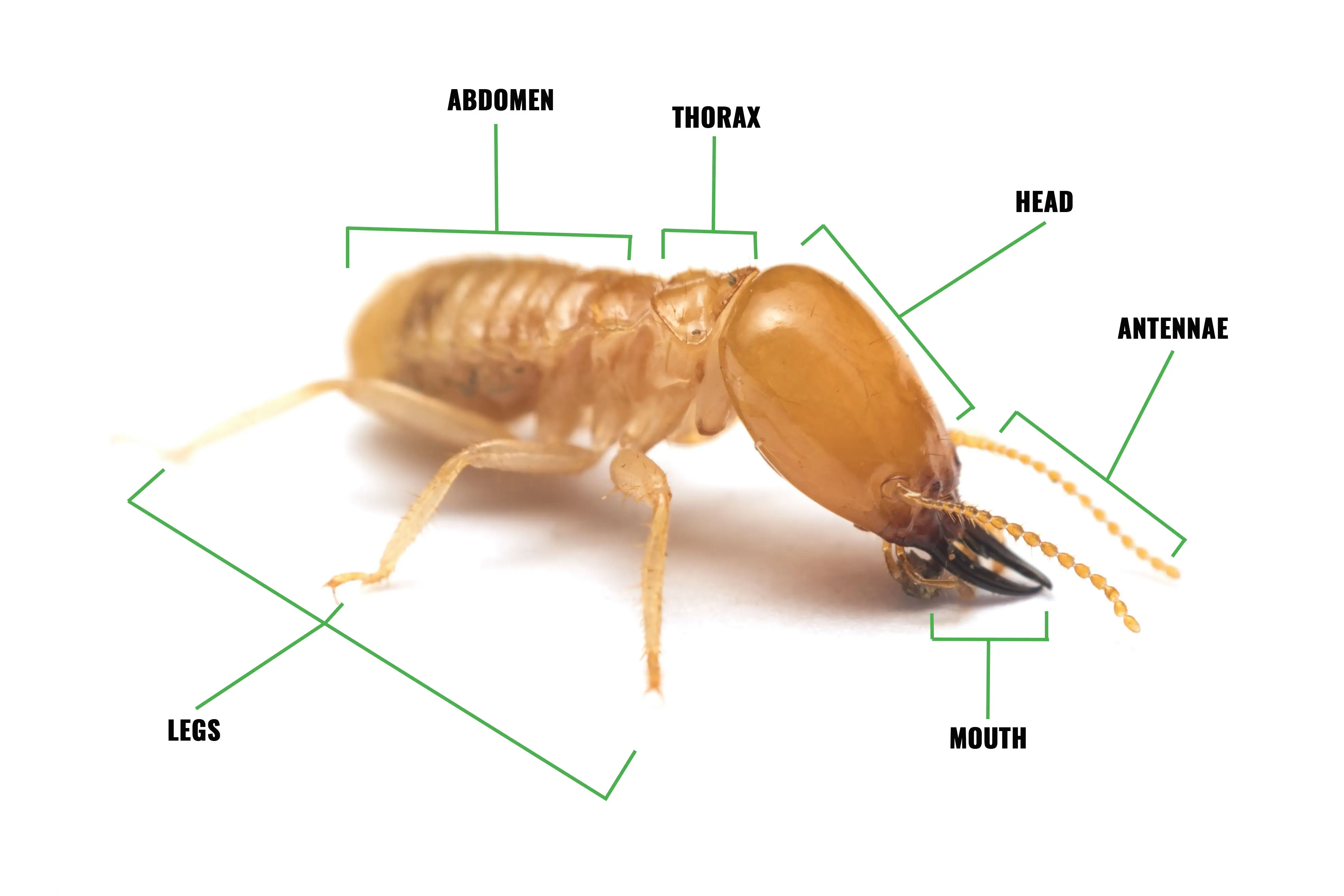
Can grow up to 6 inches long (100x bigger than typical termite). Head and legs remain same size while body engorges.

Role of the Queen Termite

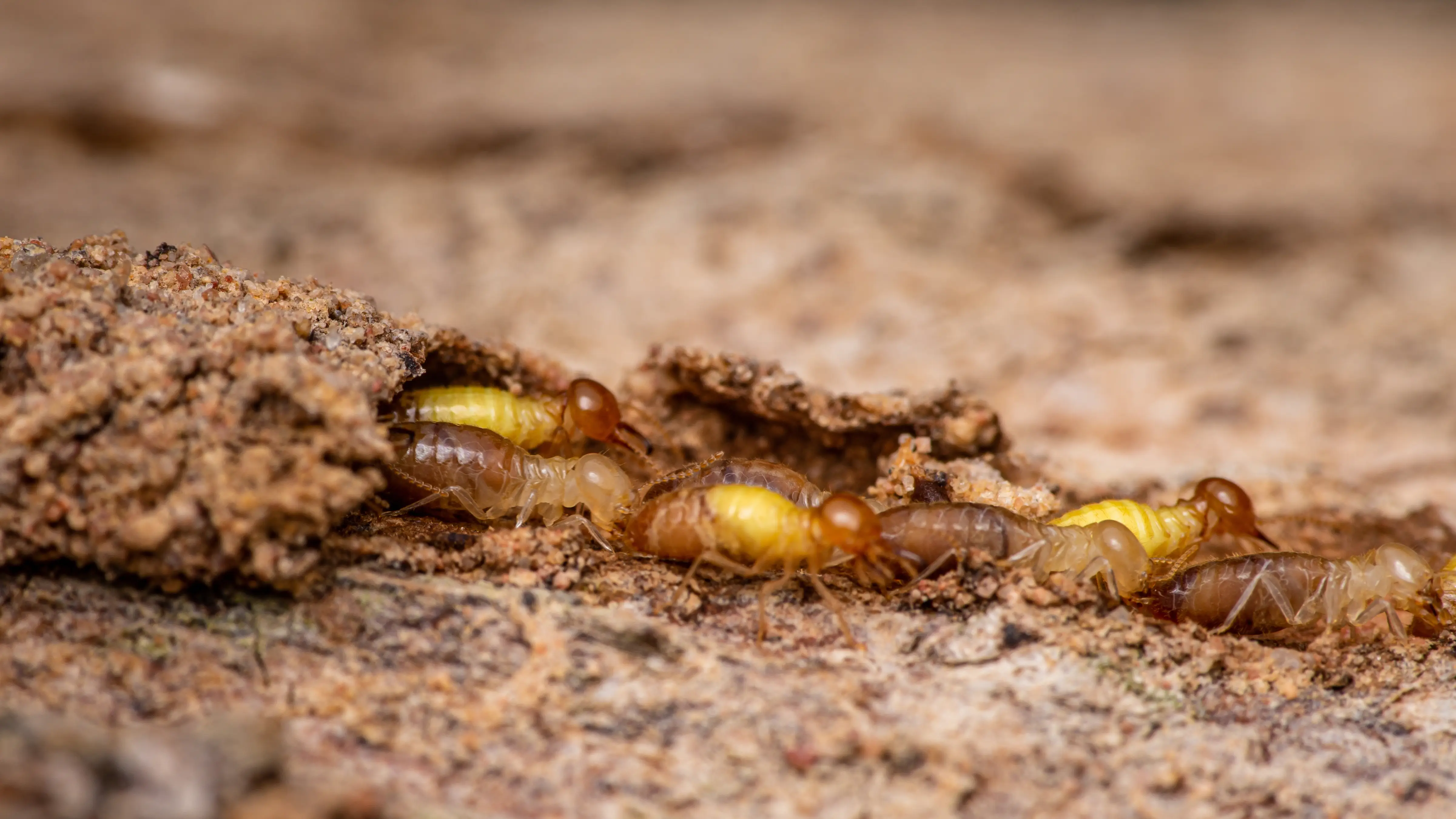
The termite queen plays the most critical role in the entire colony. She is responsible for producing all eggs the colony needs. Worker termites carry eggs out of the royal chambers to clean and maintain them until hatching.

Egg Production

Initially production is not at full capacity. After growing into her fully formed body, she produces several hundred to 1,000 eggs daily depending on species.

Colony Communication

Controls pheromones that trigger development cues determining caste selection of nymphs. Secretes substance that workers consume.

Reproductive Classes

Primary Reproductives

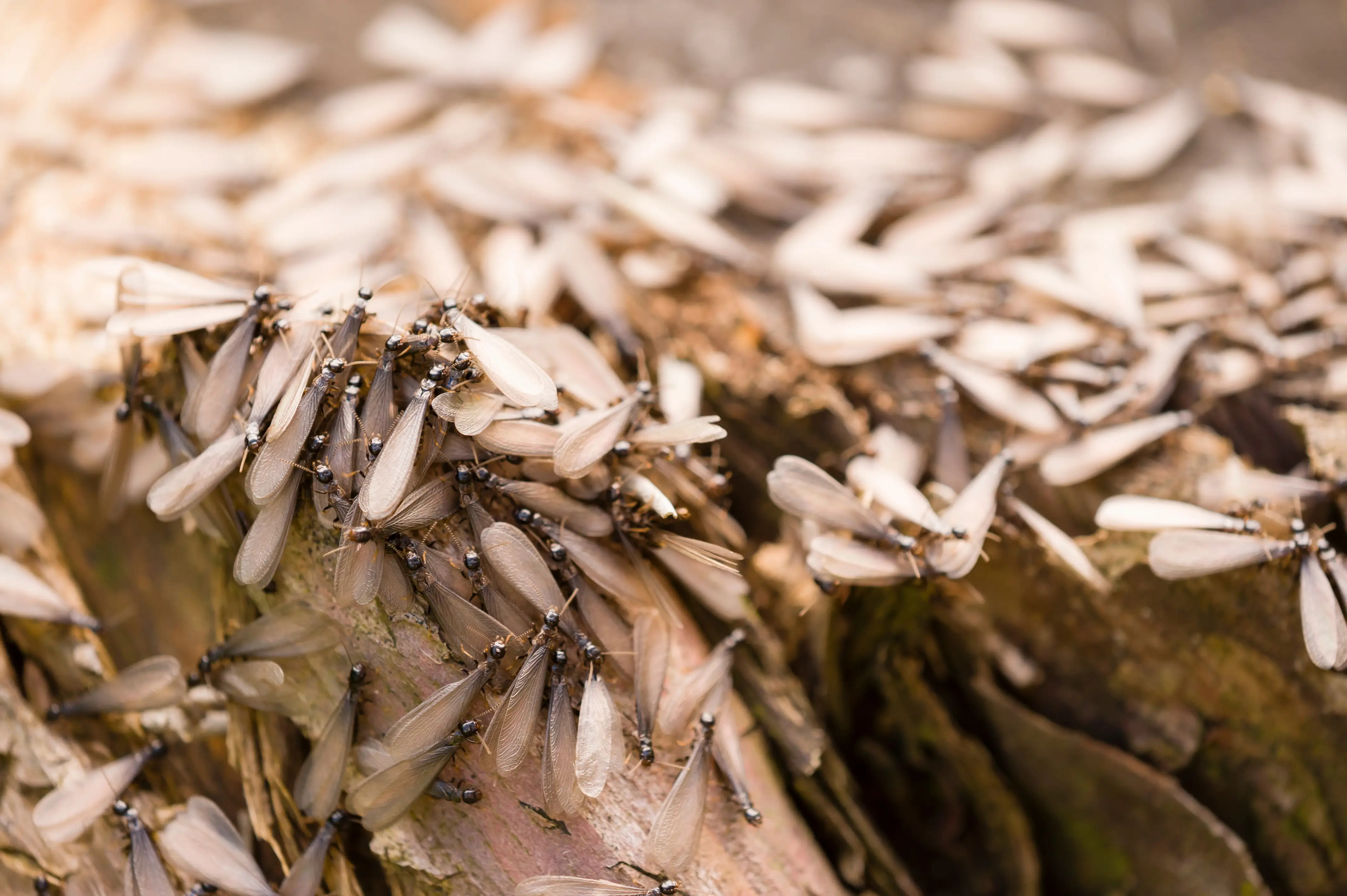
Includes queen, king, and alates (all fertile termites). Alates swarm to new location where only one emerges as queen.

Secondary Reproductives

Queen controls whether secondary reproductives develop. Introduces new egg-laying queen to expand colony if needed.

Termite Colony in Your Home?

Professional treatment causes the entire colony to collapse.

Call (866) 326-2847

Termite Queen Lifespan

10-25
Years (average)
Up to 50
Years (some species)

Important: Termites should be caught much sooner than the queen's lifespan because most termites can completely destroy a house in a few years if not treated in time.

How Many Eggs Do Queens Lay?

During optimal conditions, termite queens can lay several thousand eggs in one day. With year-round egg laying, that can result in over 9 million eggs in a termite's lifespan. New satellite colonies could also emerge, producing the same number of hatchlings.

How to Find and Eliminate the Queen

Finding the Queen

Found deep within colony, protected by thick walls or underground. Since she cannot move, getting her out is unlikely. Colony must be destroyed to reach her.

Treatment Approach

Locating the queen is not required. Fumigation, baiting, and soil treatments cause colony collapse. Without workers, queen and eggs cannot survive.

What Happens When a Queen Dies?

The queen releases a pheromone that stifles development of secondary reproductives. Once she dies and that pheromone stops, another queen emerges from the nymphs to perpetuate the colony. This is why complete colony treatment is essential.

Professional Termite Treatment

While finding the queen is rare, it is important that termites are effectively treated to prevent further damage. EcoGuard Pest Management can help inspect and properly treat for termites, causing the entire colony including the queen to be eliminated.

Call (866) 326-2847Get Free Quote

Termite Queen FAQs

What is a termite queen?

The termite queen is the egg-producing matriarch of a termite colony. Every termite in a colony has come from one of her eggs. She plays a large role in colony development, communication, and task delegation.

Can queen termites move?

Termite queens' bodies are so large that their legs are not strong enough to move without worker termite help. It is not until fully developed that she becomes immobile.

Do queen termites bite?

Queen termites can technically bite but they do not leave the safety of their breeding chambers. Soldier termites are the ones that bite to protect the queen.

Where do you find queen termites?

Termite queens are found deep within the colony in the breeding chambers. This part of the nest is connected by tunnels to chambers used to house and hatch eggs.

From Our Blog

Related Articles

Do Termites Bite People? Risks, Symptoms & What to Do

Do Termites Bite People? Risks, Symptoms & What to Do

Learn if termites bite humans, what termite bites look like, the real risks of termites, and how to prevent and get rid...

Read Article
Does Mulch Attract Termites? Complete Guide to Safe Mulching

Does Mulch Attract Termites? Complete Guide to Safe Mulching

Learn the truth about mulch and termites. Discover which mulch types are termite-resistant, proper installation...

Read Article
How Long Does Termite Treatment Last? Duration by Type

How Long Does Termite Treatment Last? Duration by Type

Learn how long different termite treatments last including baits, liquid treatments, fumigation, and Termidor. Factors...

Read Article
Signs of Termites: How to Detect Termite Activity in Your Home

Signs of Termites: How to Detect Termite Activity in Your Home

Learn the common signs of termite activity including swarmers, mud tubes, wood damage, droppings, and more. Early...

Read Article
Termite Droppings (Frass): Identification, Location & What to Do

Termite Droppings (Frass): Identification, Location & What to Do

Learn how to identify termite droppings (frass), where to find them, drywood vs subterranean termite waste, and what to...

Read Article
Termite Eggs: Identification, Location & What Finding Eggs Means

Termite Eggs: Identification, Location & What Finding Eggs Means

Learn what termite eggs look like, where to find them, how many queens lay, hatching time, and what to do if you...

Read Article
Termite Life Cycle: Stages, Castes, Reproduction & Lifespan

Termite Life Cycle: Stages, Castes, Reproduction & Lifespan

Learn about the termite life cycle including egg, nymph, and adult stages, castes (workers, soldiers, reproductives),...

Read Article
Termites vs Ants: How to Tell the Difference

Termites vs Ants: How to Tell the Difference

Learn how to identify termites vs ants by appearance, antennae, wings, body shape, behavior, diet, and damage caused....

Read Article
Termites with Wings: What Flying Termites Mean & What to Do

Termites with Wings: What Flying Termites Mean & What to Do

Learn what flying termites (alates) mean, how to identify them vs flying ants, when they swarm, and what to do if you...

Read Article
What Are Termite Mud Tubes? Identification & Treatment

What Are Termite Mud Tubes? Identification & Treatment

Learn what termite mud tubes are, how to identify them, the different types, what they mean for your home, and how to...

Read Article
What Are Termites? Facts, Signs, Damage, and Control

What Are Termites? Facts, Signs, Damage, and Control

Learn what termites are, how to identify them, the 3 main types, 15 signs of infestation, structural damage they cause,...

Read Article
What Do Termite Larvae Look Like? Identification Guide

What Do Termite Larvae Look Like? Identification Guide

Learn how to identify termite larvae by their shape, color, and size. Discover the differences between termite larvae...

Read Article
What Do Termites Look Like? Identification Guide

What Do Termites Look Like? Identification Guide

Learn how to identify termites by appearance, size, and color. Compare different termite species and distinguish them...

Read Article