EcoGuard Pest Management
Black widow spider identification
By Gary Anderson||5 min read

What are Black Widow Spiders?

Identification, diet, habitat, reproduction, life cycle, and bite symptoms.

15x Stronger
Than rattlesnake venom
Up to 200 Eggs
Per egg sac
70-90 Days
To reach maturity
Rarely Fatal
With treatment

Black widow spiders were named because it was once believed that females were cannibals that fed on males after mating. This does happen occasionally but not as frequently as once thought.

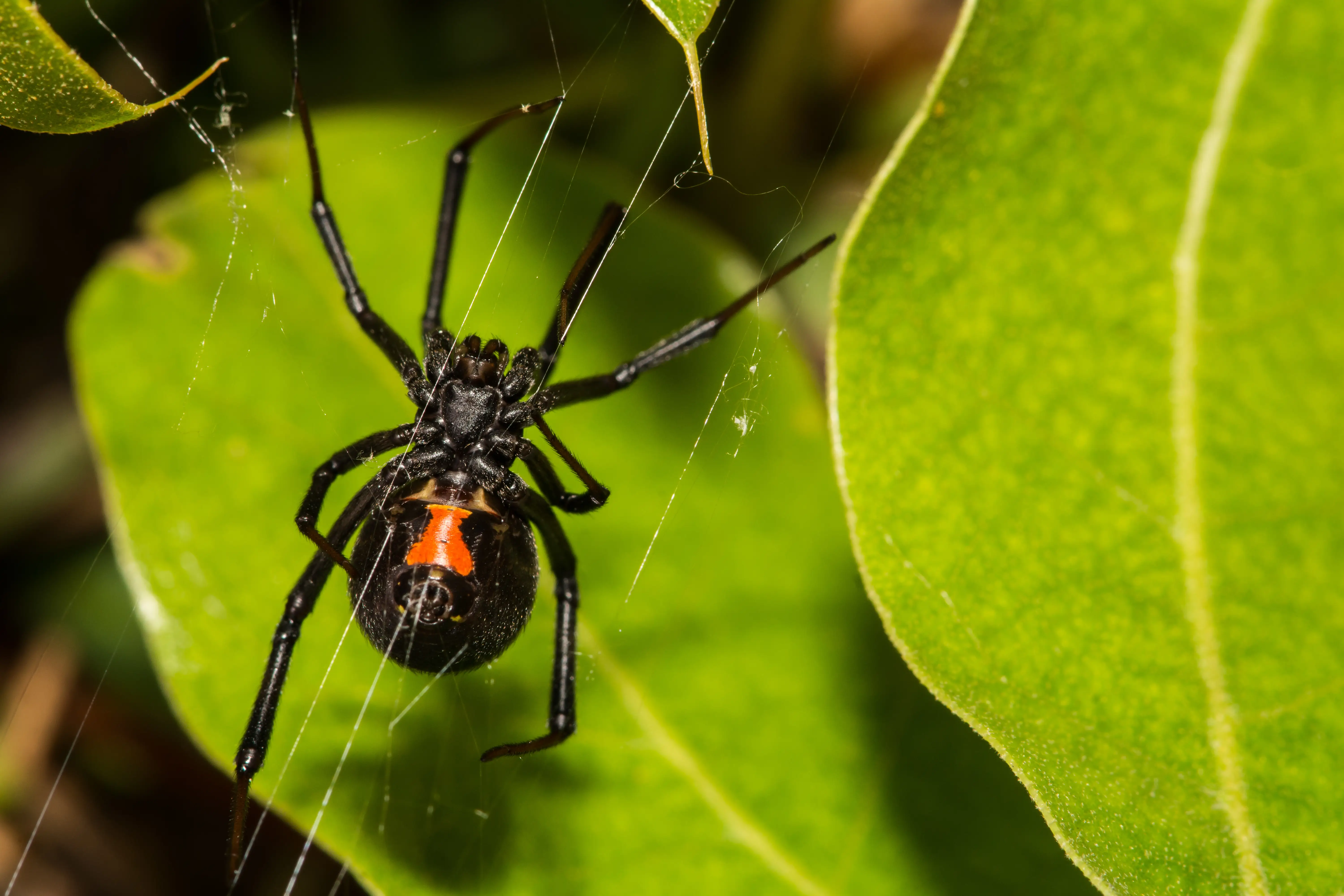
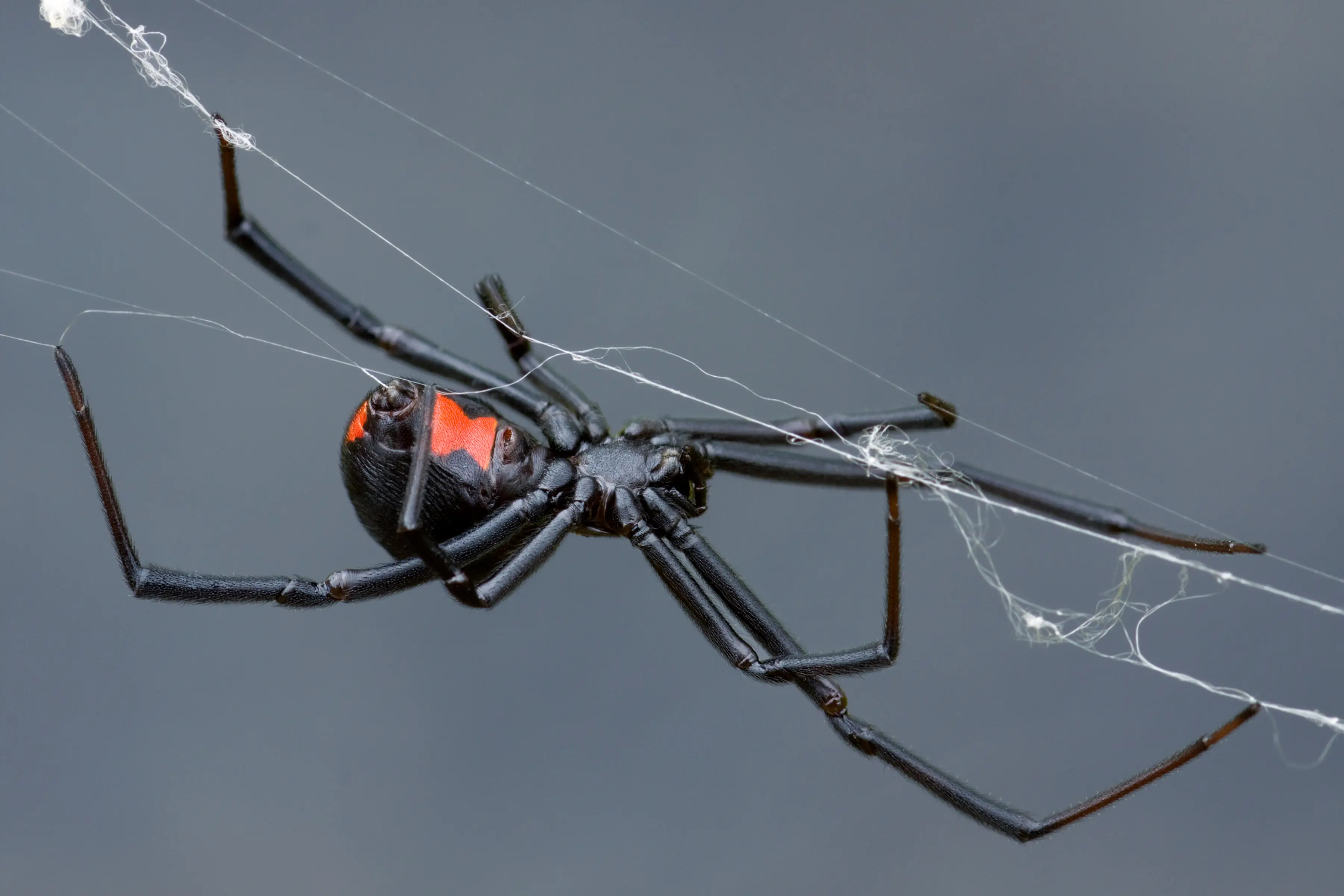
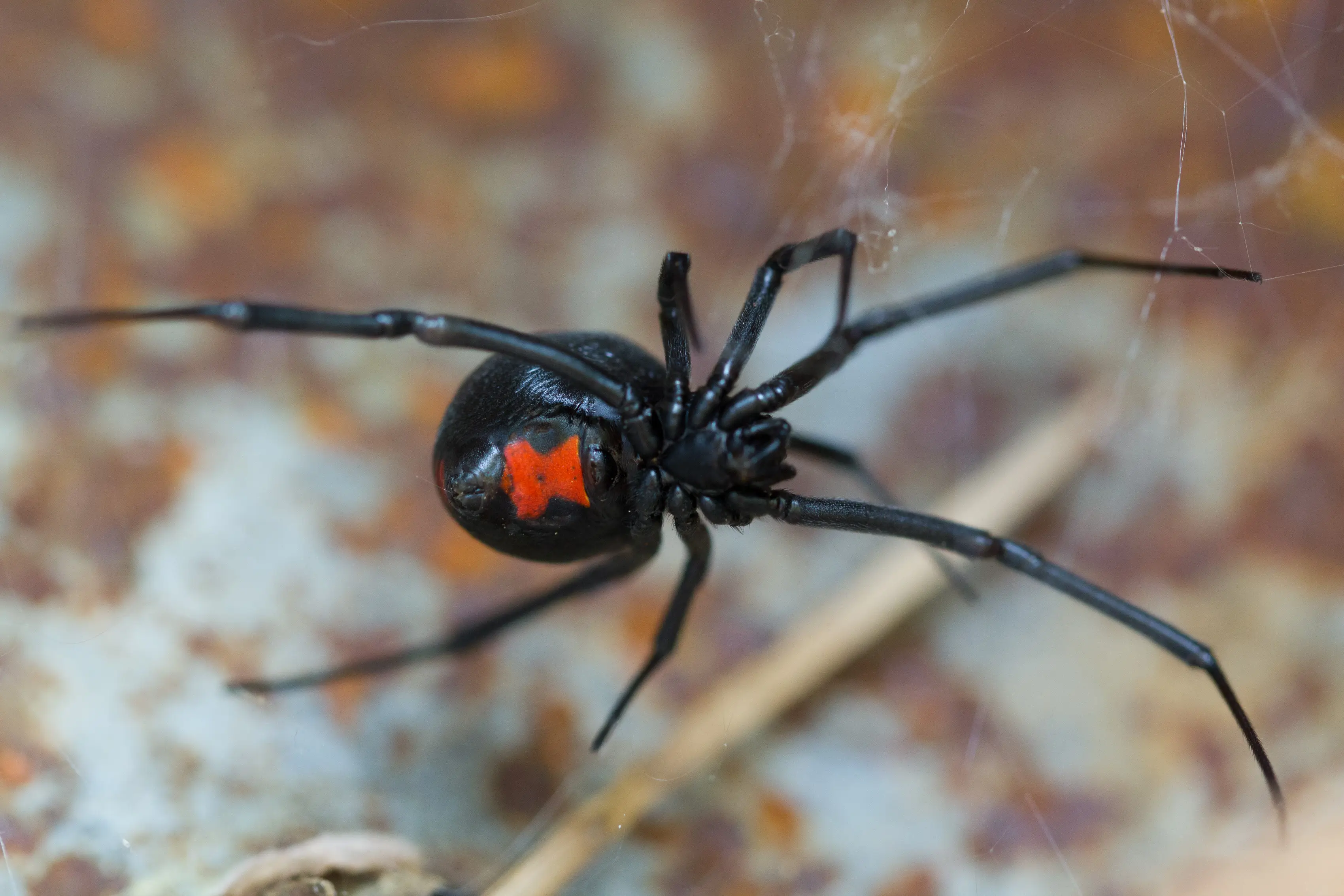
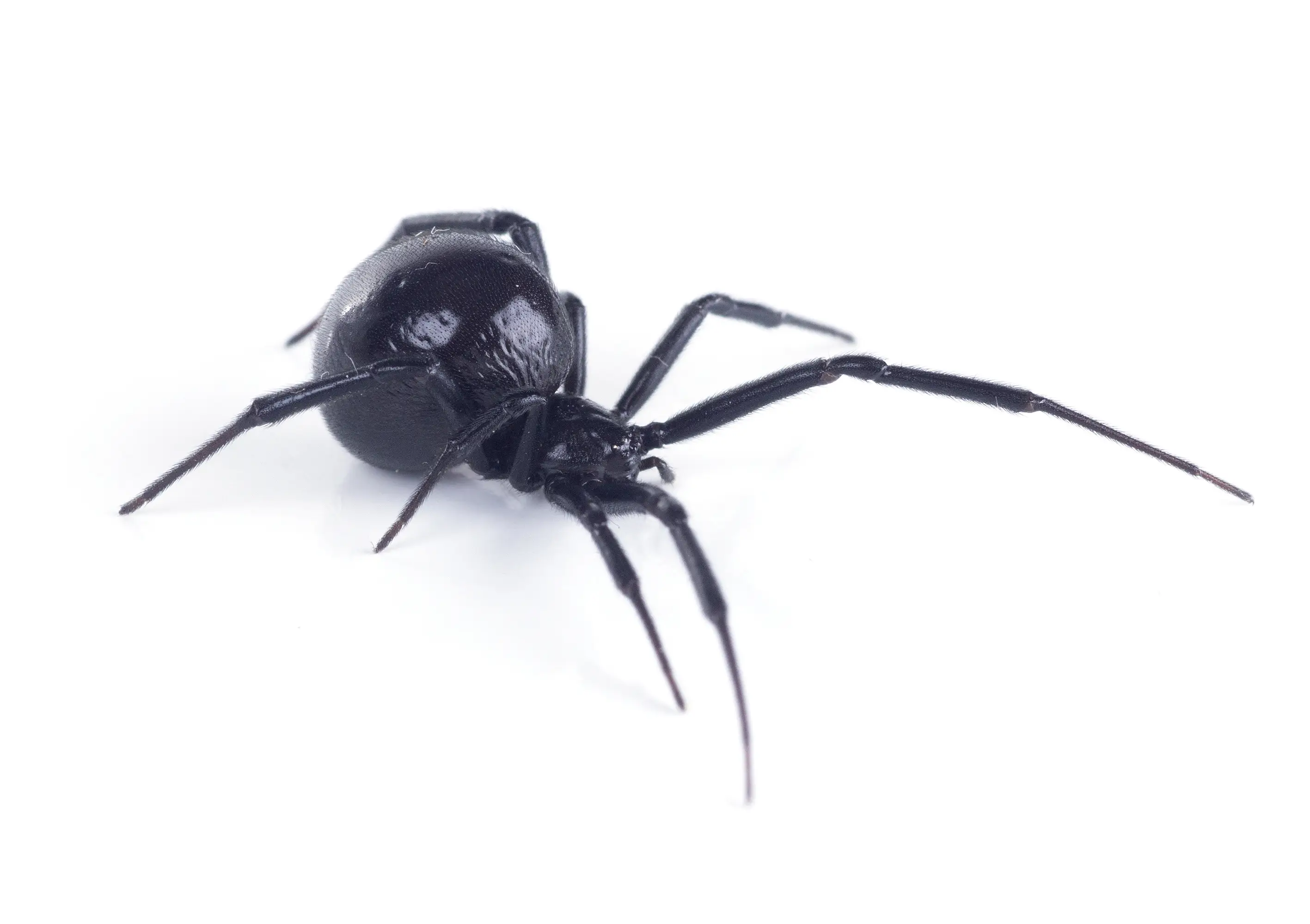
Females are more imposing with their shiny black exoskeleton marked with a red hourglass symbol. They have a venomous bite used to disable prey. Males are smaller and not much of a threat. They hide in dark, cool, undisturbed areas.

Classification: Black widows are invertebrates in the genus Latrodectus, which includes brown widows. They produce venom containing the neurotoxin Latrotoxin.
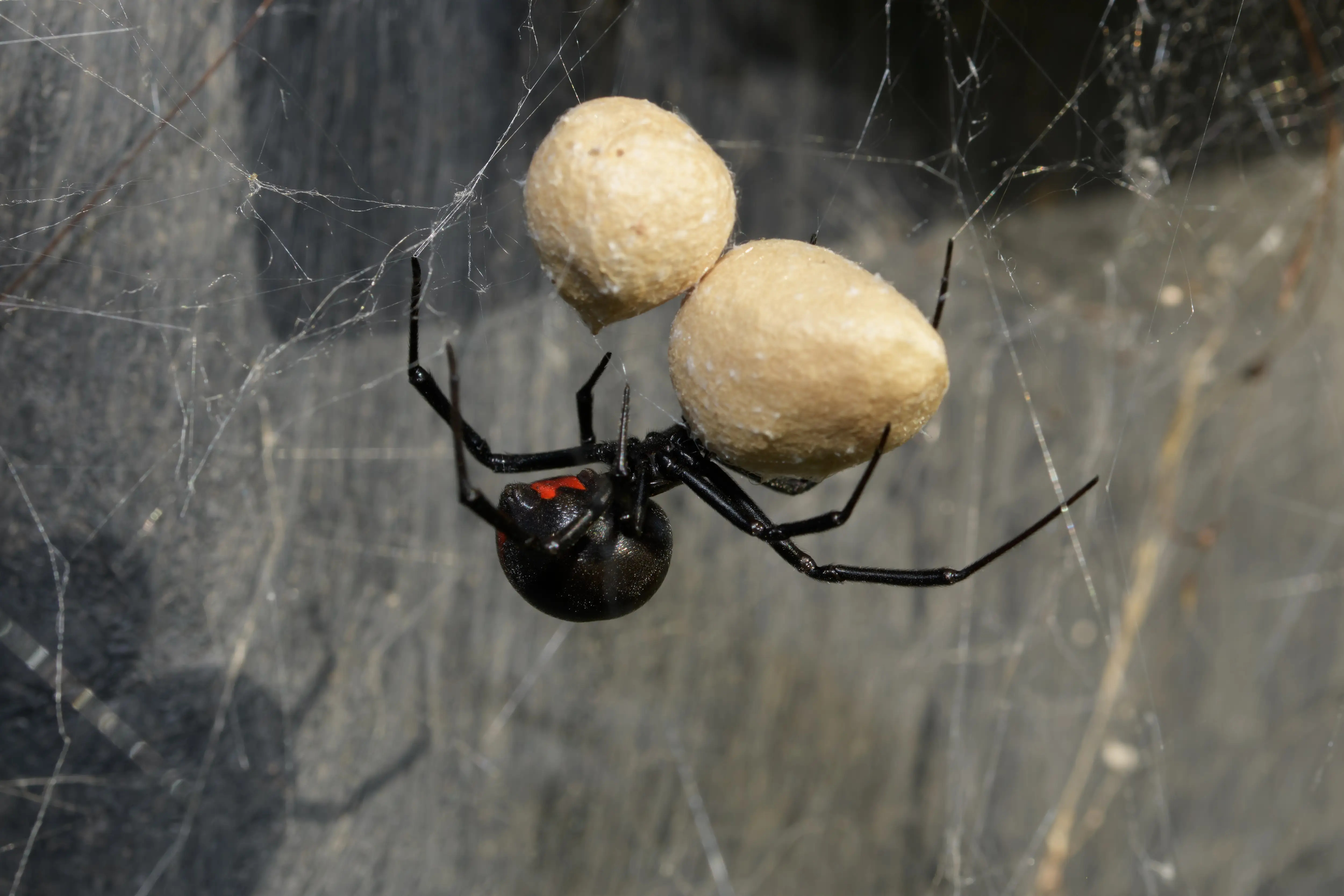
What Does a Black Widow Look Like?

Female Black Widows

  • About 1 to 1.5 inches long
  • Large, shiny black body
  • Bright red hourglass marking on back
  • Venomous bite

Male Black Widows

  • Half the size of females
  • Much lighter in color
  • Brown or grey coloring
  • No red spot
  • Not a significant threat

What Do Black Widows Eat?

Black widows create webs close to the ground forming a complex, asymmetrical net that gets disturbed as bugs fly or crawl by. When they feel another bug interacting with their web, they strike.

Primary Diet

MosquitoesFliesGrasshoppersBeetlesCaterpillarsOther spiders

Feeding Process: When a bug is caught, black widows inject prey with venom and digestive enzymes which liquefy the body for consumption.

Are Black Widow Bites Dangerous?

Black widows can control venom amount, so some bites are "dry" without venom. When venom is injected, it is 15 times stronger than rattlesnake venom but delivered in smaller amounts, so it is rarely fatal. It attacks the nervous system causing intense pain and muscle stiffness. Children and elderly are particularly vulnerable.

Bite Symptoms

Swelling and redness around wound
Muscle soreness, stiffness, spasms
Nausea and vomiting
Sweating
Intense abdominal and back pain
Hypertension
Intense pain around bite
Difficulty breathing

Recovery: Intense pain may last 12+ hours. Other symptoms fade after 3-7 days, or weeks if untreated. Antivenom makes intense pain fade in roughly 30 minutes.

Spotted Black Widows?

Professional treatment eliminates black widows safely and effectively.

Call (866) 326-2847

Black Widow Reproduction

Black widows are generally solitary and only interact during late spring mating. Some regional species are reproductive cannibals, but most do not eat mates unless hungry at mating time.

Mate Selection

Males detect if potential partners are fed through chemicals on their web.

Egg Sac

Female spins sac containing up to 200 eggs. Incubates 20-30 days in silk cocoon.

Hatchlings

Baby spiders remain in cocoon for another month before emerging.

Black Widow Life Cycle

Up to 200
Eggs per sac
20-30 Days
Egg incubation
70-90 Days
To reach maturity
6 Months
Female adult lifespan

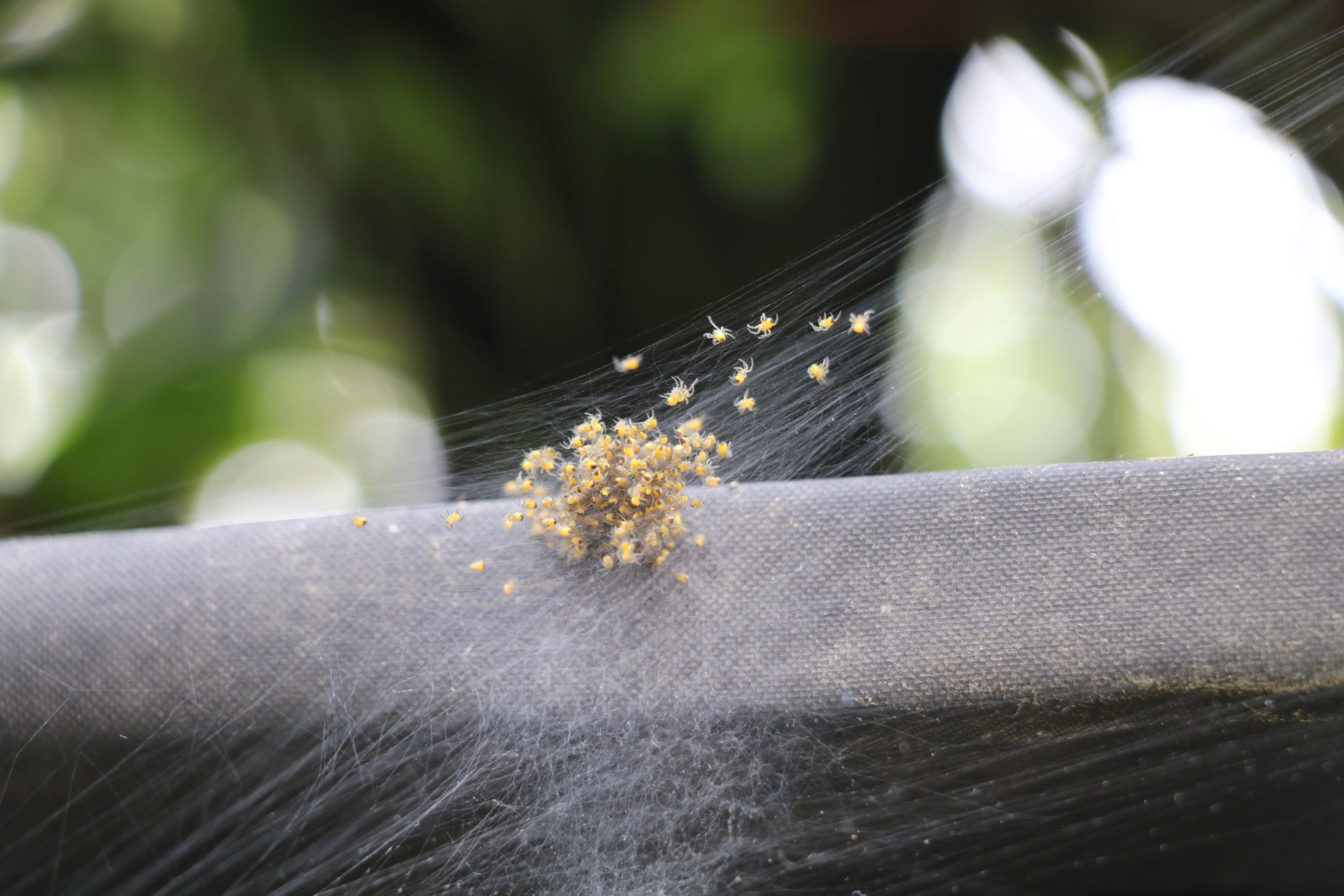
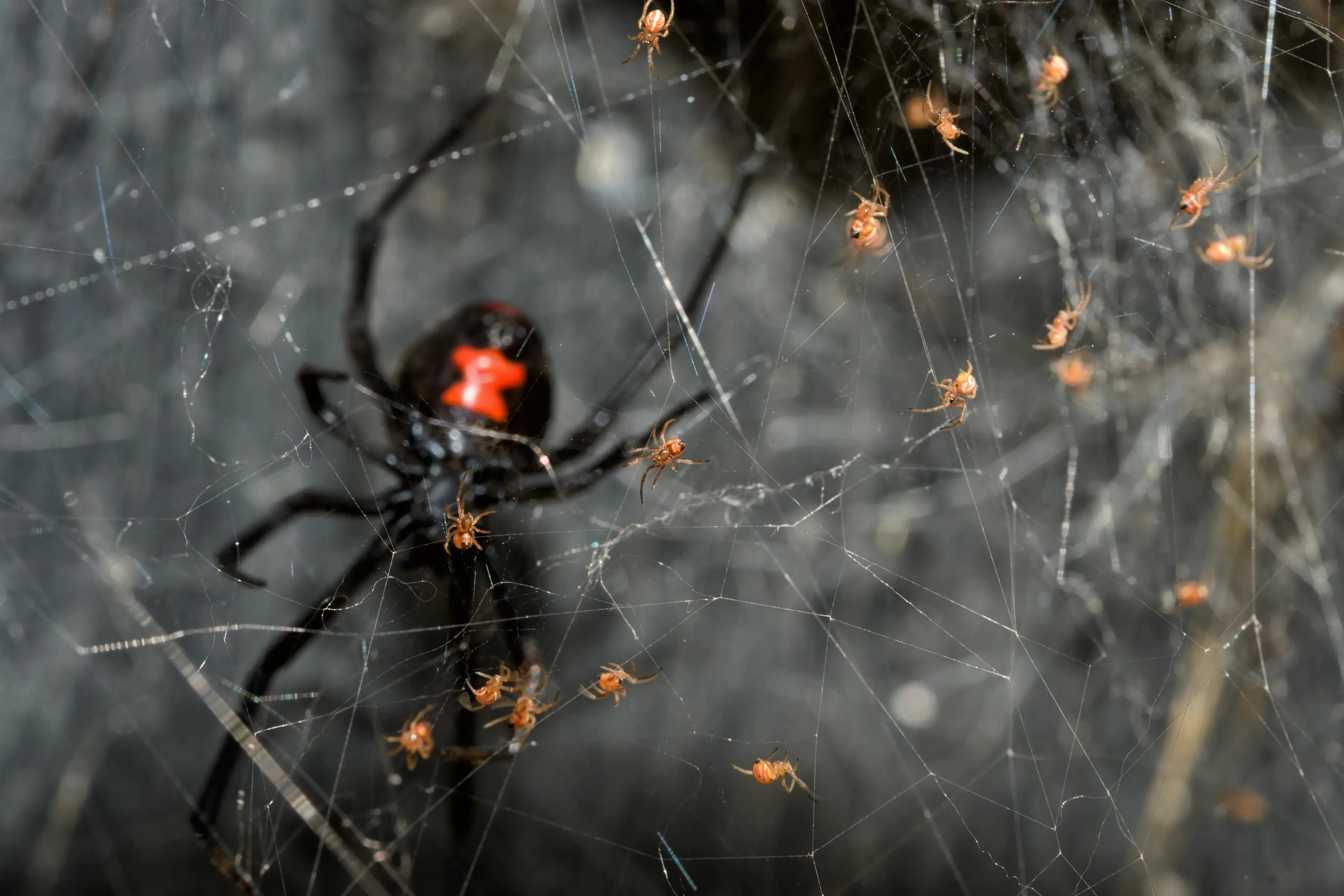
Spiderlings: Upon hatching, they are tiny, white or pale-yellow spiders. Males live only about a month after reaching adulthood.

Where Do Black Widows Live?

Black widows exist across the globe in temperate regions of North and South America, Europe, Asia, Africa, and Australia. They prefer dark, dry, low, and undisturbed locations.

Outdoor Locations

Under patios/decks, inside firewood, hollow tree stumps, large debris piles.

Indoor Locations

Garages, basements, barns, outhouses, sheds, crawl spaces. Move indoors for warmth.

How to Get Rid of Black Widows

Declutter & Organize

Keep basements, garages, sheds, and barns clean to reduce other pests that black widows feed on.

Vacuum Webs

Use vacuum to clear webbing and any black widow egg sacs you find.

Wear Gloves

Always wear gloves when treating and cleaning areas for black widows to prevent bites.

Professional Black Widow Control

If you are dealing with a black widow infestation or want to ensure they are not a problem in the future, call EcoGuard Pest Management. Our team of licensed experts will identify problematic areas and create an effective plan to treat and exterminate black widows from your property.

Call (866) 326-2847Get Free Quote

Black Widow FAQs

Are black widow spiders harmful?

Black widow bites can deliver a toxin that causes intense pain and other symptoms. Medical treatment is sometimes needed for serious symptoms, but black widow bites are rarely fatal.

What do you do if you find a black widow spider?

Use gloves and a pesticide spray for local spot treatment. Spray the black widow and wait for the pesticide to work. Then remove the dead spider, any egg sacs, and the webbing.

Where is the black widow spider found?

Black widows are found in webs that are low, in dark, dry, and undisturbed locations including under patios and decks, crawl spaces, garages, sheds, outhouses, and firewood piles.

From Our Blog

Related Articles

21 Different Types of Spiders in North America

21 Different Types of Spiders in North America

Comprehensive guide to spider species in North America including black widows, brown recluses, wolf spiders, house...

Read Article
Are Black Widows Dangerous? Bites, Symptoms & Treatment

Are Black Widows Dangerous? Bites, Symptoms & Treatment

Learn if black widow spiders are dangerous, bite symptoms, what to do if bitten, risk factors, and when to seek medical...

Read Article
Are Wolf Spiders Poisonous? Bites, Symptoms & Treatment

Are Wolf Spiders Poisonous? Bites, Symptoms & Treatment

Learn if wolf spiders are poisonous, bite symptoms, treatment steps, allergic reactions, and how to prevent them from...

Read Article
Do Spiders Lay Eggs in the House? Identification & Removal

Do Spiders Lay Eggs in the House? Identification & Removal

Learn about spider eggs, how to identify egg sacs, where spiders lay eggs in homes, how many eggs they lay, and how to...

Read Article
House Spiders: Complete Guide to Indoor Spider Identification & Control

House Spiders: Complete Guide to Indoor Spider Identification & Control

Learn to identify common house spiders, distinguish harmless from dangerous species, and implement effective prevention...

Read Article
How Long Do Garden Spiders Live? Complete Lifespan Guide

How Long Do Garden Spiders Live? Complete Lifespan Guide

Learn how long garden spiders live, their annual life cycle, factors affecting longevity, and practical management...

Read Article
How to Get Rid of Black Widow Spiders

How to Get Rid of Black Widow Spiders

Learn how to get rid of black widow spiders using pesticides, natural methods, habitat modifications, and exclusion...

Read Article
How to Get Rid of Spiders in Your Home and Yard

How to Get Rid of Spiders in Your Home and Yard

Learn how to get rid of spiders using traps, cleaning, pesticides, natural deterrents, and prevention tips. Indoor and...

Read Article
Most Venomous Spiders in North America & the World

Most Venomous Spiders in North America & the World

Learn about the most venomous spiders including black widows, brown recluses, funnel-web spiders, and Brazilian...

Read Article
What Do Black Widow Spiders Eat? Complete Diet Guide

What Do Black Widow Spiders Eat? Complete Diet Guide

Discover what black widow spiders eat including insects, arthropods, and other prey. Learn about their hunting methods,...

Read Article
Where Do Black Widow Spiders Live? Habitat Guide

Where Do Black Widow Spiders Live? Habitat Guide

Discover where black widow spiders live in America, their preferred habitats indoors and outdoors, and how to prevent...

Read Article
Where Do Brown Recluse Spiders Live?

Where Do Brown Recluse Spiders Live?

Learn where brown recluse spiders live, the 16 states they are native to, where they hide indoors and outdoors, bite...

Read Article