EcoGuard Pest Management
Professional beekeeper removing a beehive safely
By Gary Anderson||7 min read

How to Get Rid of a Beehive

Safe, effective methods for removing beehives while protecting these vital pollinators, and knowing when to call professionals.

Getting rid of a beehive requires careful consideration because bees play a crucial role in our ecosystem as pollinators, contributing to the production of many fruits and vegetables. Given the global decline in bee populations, the EPA and conservation groups advocate against unnecessary eradication.

If a beehive poses a threat, the best course of action is to contact a professional who can safely relocate the hive. If relocation is not possible, hiring a pest control service is advisable.

Best Approach

Contact a professional beekeeper or pest control company for safe removal. Many beekeepers relocate honeybee hives for free. For DIY removal, use proper safety gear and thoroughly remove all traces to prevent future infestations.
How to Remove a Beehive Safely

The safest approach is to enlist professional help. They have the knowledge, tools, and experience to handle bee removal thoroughly while minimizing risk to you and your family.

1

Identify the Hive Location

Carefully inspect your property to find where bees have established their hive.

2

Give Bees Space

Keep your distance to avoid provoking them. Bees only sting when they perceive a threat.

3

Protect Vulnerable People

Keep pets, children, and anyone allergic to stings away from the area.

4

Call a Professional

Contact a beekeeper or pest control company for safe removal or relocation.

5

Remove All Traces

After removal, clean thoroughly and seal entry points to prevent return.

Common Beehive Locations

Bees often choose hidden or hard-to-reach spots for shelter and security. Here is where to look:

Behind Bricks & Siding

Bees only need a 1/8 inch gap to enter. Nests in these locations often go unnoticed and become substantial.

Eaves & Soffits

High, isolated spots favored by bees. Can cause roof damage and attract rats, possums, and raccoons.

Concrete Blocks

Hollowed-out cinder blocks offer ideal nesting sites. Bees can easily squeeze into or behind them.

Hollow Trees

Perfect natural shelter for bees. Removal can be challenging due to access issues.

Under Sheds

Bees nest under floorboards and support structures where there is less foot traffic.

Calling a Professional Beekeeper or Pest Control

Local Beekeepers

For honeybees, a beekeeper might relocate the hive at little to no cost since they can integrate bees into their operations.

Find beekeepers through: American Beekeeping Federation, local farmers' markets, plant nurseries, or stores selling local honey.

Pest Control Professionals

Necessary for large hives, indoor locations, or non-honeybee species. Exterminators handle challenging removals where hives are hard to reach or deep in structures like walls or chimneys.

Need Professional Beehive Removal?

Our experts safely remove or relocate beehives while protecting these essential pollinators.

Call (866) 326-2847

DIY Beehive Removal Tips

If you decide to attempt removal yourself, take these precautions to ensure safety and effectiveness:

Wait for the Right Time

Best time of day:

Late evening or early morning when bees are less active

Best season:

Late winter to early spring when hive population is smallest

Night tip:

Use red cellophane over flashlight since bees cannot see red light

Essential Protective Gear

White beekeeper suit or light-colored heavyweight clothing
Leather gloves that are heavy and durable
Helmet with bee shield or beekeeper's veil
Boots instead of canvas shoes (bees can sting through canvas)
Bee smoker to calm the bees
Sting treatment kit on hand

Avoid perfume, cologne, or scented products as these attract bees.

If Extermination is the Only Option

Use a commercial insecticide specifically designed for bees rather than homemade remedies. These products are tested for efficacy and safety.

  1. Locate the main entry hole of the hive
  2. Hold nozzle directly at opening and spray for several seconds
  3. For dust: insert applicator tip into hole and squeeze
  4. If entry is inaccessible, spray outside of hive (may need multiple applications)
  5. Once no bees are flying, physically remove the hive

What NOT to Do: Ineffective Strategies

These common approaches are ineffective and potentially dangerous:

Do Not Use Bee Deterrents

Soap, water, and other deterrents will not make established hives leave. Once honeybees have built a hive, they are highly committed and will not abandon it due to minor irritants.

Do Not Seal Bees Inside

Trapped bees have food and air to survive. They will seek alternative exits into your living space, creating a persistent problem for weeks.

Do Not Smoke Them Out

Smoke forces bees deeper into the house, making removal harder. It also presents significant fire hazards since improperly handled smoke can ignite surrounding materials.

Important Considerations

Leave Non-Problematic Bees Alone

Bees are vital pollinators experiencing population declines. If they are just pollinating your garden and not threatening anyone, let them be. They typically do not sting unless threatened.

Confirm They Are Bees, Not Wasps

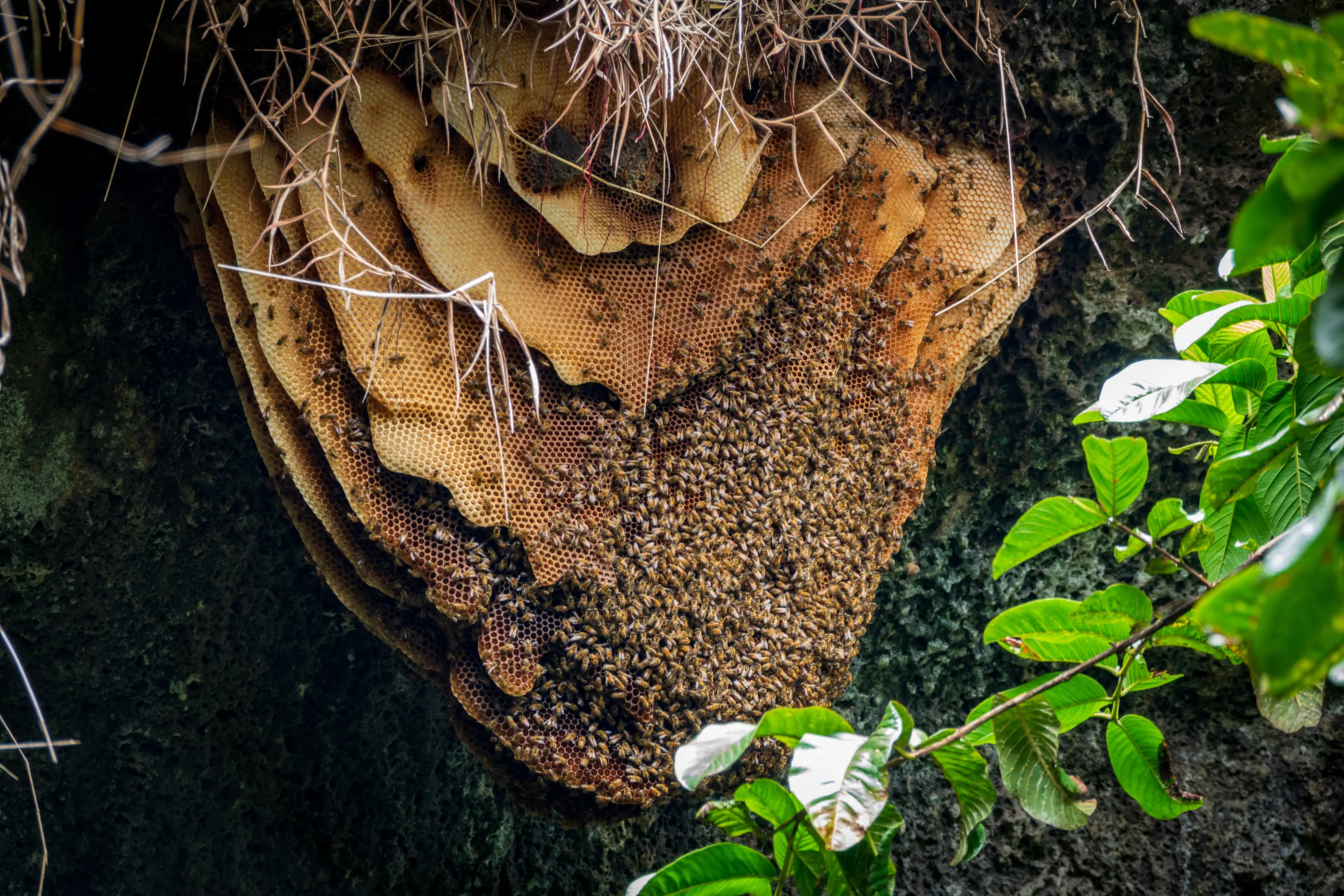
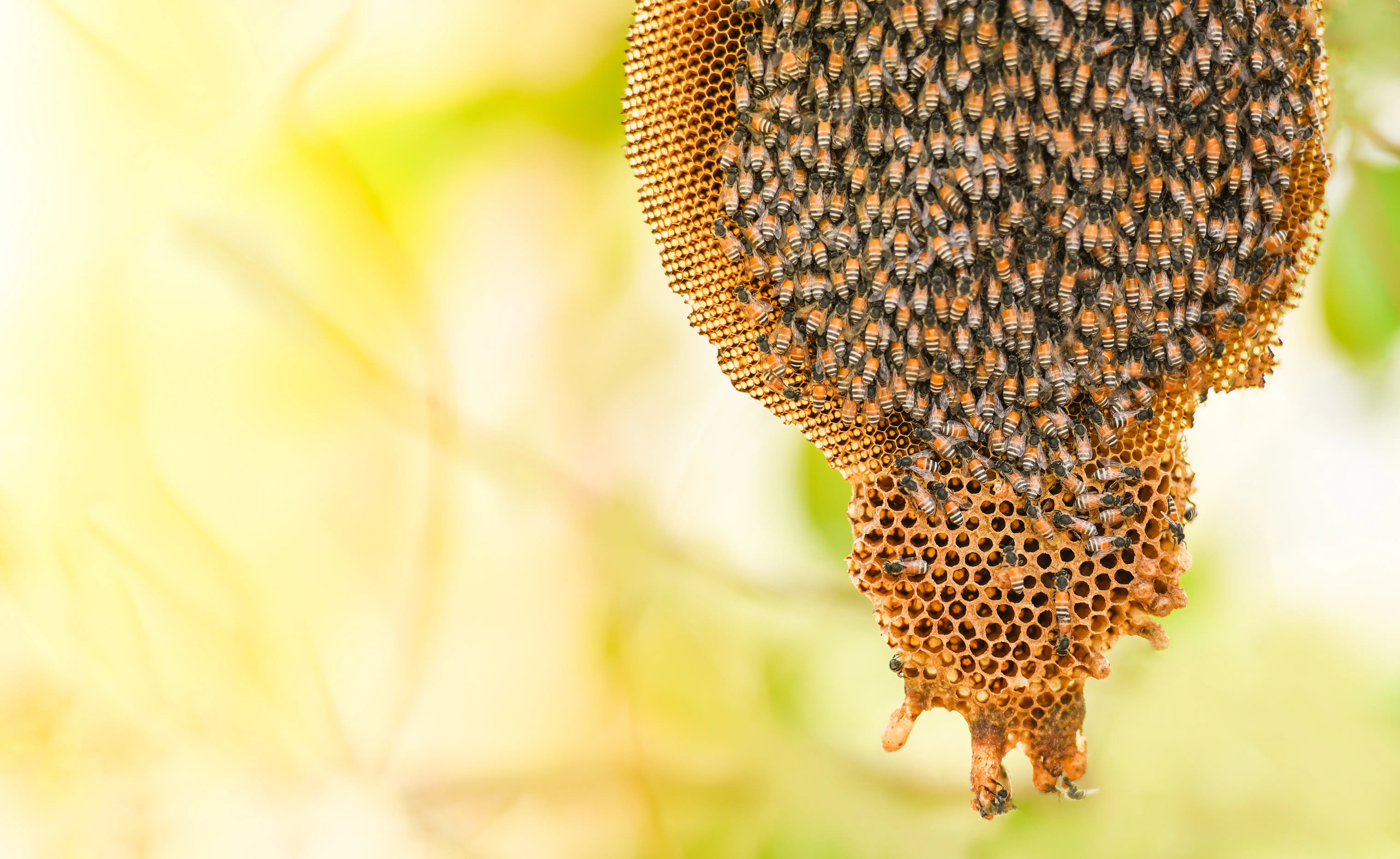
Wasps and hornets require different handling. Beehives are waxy with 10,000-50,000 bees. Wasp nests are not waxy and have different characteristics.

Africanized Killer Bees

Present in TX, FL, AZ, NM, CA. Highly defensive and sting in large numbers. Never attempt DIY removal and contact experienced professionals only.

Do Not Wait for Bees to Leave

Hives do not go away on their own. They grow larger and harder to remove. Spring swarming can establish new colonies elsewhere on your property.

Preventing Bees from Returning

After removal, thorough cleanup and exclusion are essential. Pheromones left behind can attract new colonies to the same spot.

Remove All Traces

Completely remove honeycombs, honey, and wax since these attract other insects and animals. Use heavy-duty trash bags for disposal.

Seal Entry Points

Use expanding spray foam, mesh screens, or other barriers. For tree trunks, block access completely.

Eliminate Odors

Scrub the area with soap and water to remove pheromones and bacteria that could attract new swarms.

Repair Damage

Patch any structural damage and seal openings. If repairs are beyond your capabilities, hire a professional.

Remember: If a location was good enough for one bee colony, it will be good enough for others. Proper exclusion is essential.

Contact EcoGuard for Professional Beehive Removal

Dealing with a beehive can be challenging and potentially hazardous. EcoGuard Pest Management offers comprehensive beehive removal services, ensuring the safety of your family and the preservation of beneficial bee populations. Do not risk getting hurt or delay treatment. Contact us today for reliable, humane, and efficient solutions.

Call (866) 326-2847Get Free Quote

Beehive Removal FAQs

Do bees come back after hive removed?

Bees may return to the same location if traces of the old hive (like honeycomb or pheromones) are left behind. To prevent this, it is essential to thoroughly clean the area and seal any openings. Professional removal services ensure these steps are properly taken.

Do beekeepers remove bees for free?

Many beekeepers are willing to remove swarms for free or a nominal fee, as they can integrate the bees into their own colonies. However, cost may vary depending on location and complexity. Contact local beekeepers to inquire about their specific policies.

Do bee hives need to be removed?

Bee hives often need removal if they pose a threat to people or property, such as being inside a home or in high-traffic areas. Unattended hives can cause structural damage and attract other pests. However, a hive in a non-disruptive location may be left undisturbed to continue contributing to the local ecosystem.

Do beehives go away on their own?

Beehives generally do not go away on their own. Bees are highly committed to their colonies and will continue to expand their hives. If left undisturbed, the hive will grow larger and more established, eventually causing more significant problems. Professional removal is often essential.

From Our Blog

Related Articles

Are Honeybees Dangerous to Humans? Bee Safety Guide

Are Honeybees Dangerous to Humans? Bee Safety Guide

Learn when honeybees become dangerous, symptoms of bee stings, Africanized bees, and when to call professional bee...

Read Article
Are Honeybees Endangered Species in the US?

Are Honeybees Endangered Species in the US?

Learn about honeybee and native bee population status, Colony Collapse Disorder, why bees are declining, and how to...

Read Article
Do Bees Die After They Sting You? The Truth About Bee Stingers

Do Bees Die After They Sting You? The Truth About Bee Stingers

Learn which bees die after stinging, why honeybees sacrifice their lives, how the stinger works, and what to do if you...

Read Article
Do Bees Fly at Night? Nocturnal vs Diurnal Bee Behavior

Do Bees Fly at Night? Nocturnal vs Diurnal Bee Behavior

Learn which bees can fly at night, why most bees are diurnal, and how nocturnal bees have adapted to see in the dark....

Read Article
Do Bumble Bees Sting Humans? Stings, Reactions & Treatment

Do Bumble Bees Sting Humans? Stings, Reactions & Treatment

Learn if bumble bees sting, why they sting, how painful their stings are, allergic reactions, and treatment options for...

Read Article
Do Carpenter Bees Sting? Sting Treatment & Prevention

Do Carpenter Bees Sting? Sting Treatment & Prevention

Learn if carpenter bees sting, the difference between male and female carpenter bees, sting treatment, allergic...

Read Article
How Long Do Bees Live? Lifespan by Species & Role

How Long Do Bees Live? Lifespan by Species & Role

Learn how long different bee species live including honeybees, bumblebees, and carpenter bees. Discover lifespan...

Read Article
How Long Does a Queen Bee Live? Lifespan & Life Cycle Guide

How Long Does a Queen Bee Live? Lifespan & Life Cycle Guide

Learn how long queen bees live, their life cycle from egg to matriarch, mating flights, succession, and what happens...

Read Article
How to Repel Bees Naturally from Your Yard

How to Repel Bees Naturally from Your Yard

Learn natural ways to repel bees including deterring plants, essential oils, and habitat modification. Keep bees away...

Read Article
Identifying Different Types of Bee Species | Complete Guide

Identifying Different Types of Bee Species | Complete Guide

Learn to identify different bee species including honeybees, bumblebees, carpenter bees, and more. Understand...

Read Article
When Are Bees Most Active? Daily & Seasonal Bee Activity

When Are Bees Most Active? Daily & Seasonal Bee Activity

Learn when bees are most active throughout the day and year. Understand bee seasons, temperature requirements, and when...

Read Article
Where Do Bees Go in the Winter?

Where Do Bees Go in the Winter?

Learn how honeybees, bumblebees, and solitary bees survive winter through clustering, hibernation, and dormancy, and...

Read Article
Why Do Bees Sting People if it Kills Them? | Complete Guide

Why Do Bees Sting People if it Kills Them? | Complete Guide

Learn why bees sting even when it kills them, which bees die after stinging, bee sting symptoms, treatment, and how to...

Read Article