EcoGuard Pest Management
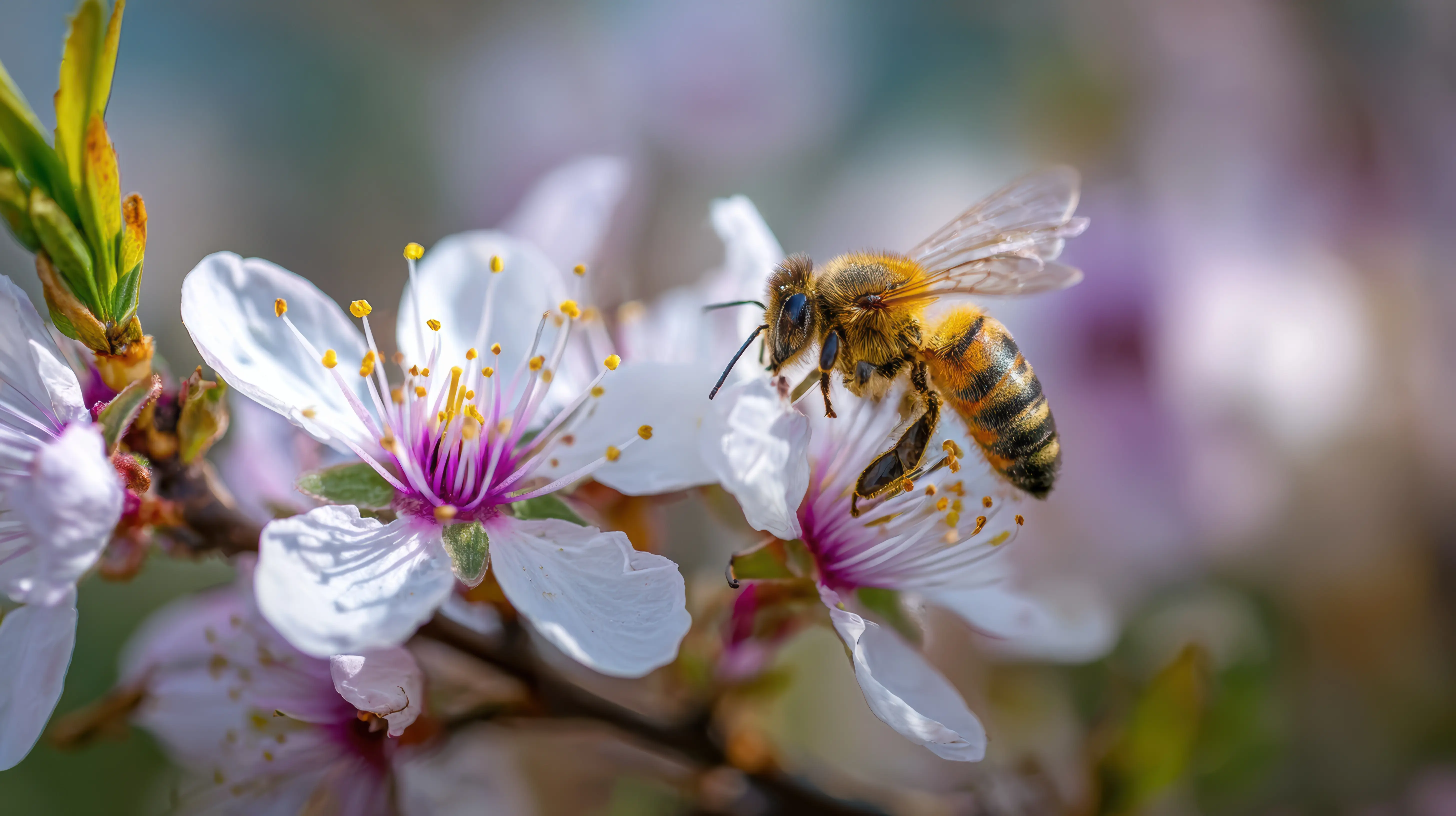
Bumble bee on flower showing fuzzy body
By Gary Anderson||7 min read

Do Bumble Bees Sting Humans?

Understanding bumble bee stings, reactions, treatment options, and how to avoid getting stung.

Female bumblebees possess the ability to sting if they feel threatened or disturbed. They are generally docile compared to wasps and hornets, but they will use their stingers to defend themselves or their colony.

When a bumblebee decides to sting, it is usually because their ground-based nests are disturbed or accidentally dug up. While bumblebees typically are not much of a threat, they can sting multiple times due to having a smooth stinger without barbs, which can amplify the impact of their sting.

Bumble Bee Sting Facts

Who Can Sting: Only females (queens and workers)
Stinger Type: Smooth, barbless (can sting multiple times)
Pain Index: Up to 2 on Schmidt Pain Index
Temperament: Generally docile
What Are Bumble Bees?

Bumblebees are found all over the world and play an important role as pollinators in their respective ecosystems. These important pollinators ensure that plants are able to flower and bear seeds for the next generation of plant growth.

Why Bumble Bees Matter

Without insects like bumblebees to pollinate, plant life in general would suffer catastrophic losses. This highlights the importance of these insects and why they should be left alone whenever possible. This is also important because bumblebees do have stingers, and leaving bumblebees alone is a good way to avoid getting stung.

Do All Bumble Bees Have Stingers?

Only female bumblebee workers and the queen possess stingers which they can use when they feel threatened. Male bumblebees, known as drones, lack stingers entirely and cannot sting.

Females (Can Sting)

Female bumblebees possess a specialized structure called an ovipositor. This structure was originally an egg-laying apparatus but evolved over time into a stinger for defense.

Males (Cannot Sting)

Male bumblebees never needed an ovipositor since their sole purpose was to mate. As a result, they never developed stingers and are completely harmless.

Why Do Bumble Bees Sting?

Bumblebees are generally non-aggressive, but females possess stingers primarily as a means of defense:

Colony Defense

Females safeguard the colony and repel predators

Nest Protection

Protecting pollen stores and larvae near the nest

Queen Competition

Queens use stingers against rival queens for nesting sites

How Do Bumble Bees Sting?

Bumble Bee Stinger

Type: Smooth, hollow, barbless
Retractable: Yes
Multiple Stings: Yes
Bee Survives: Yes

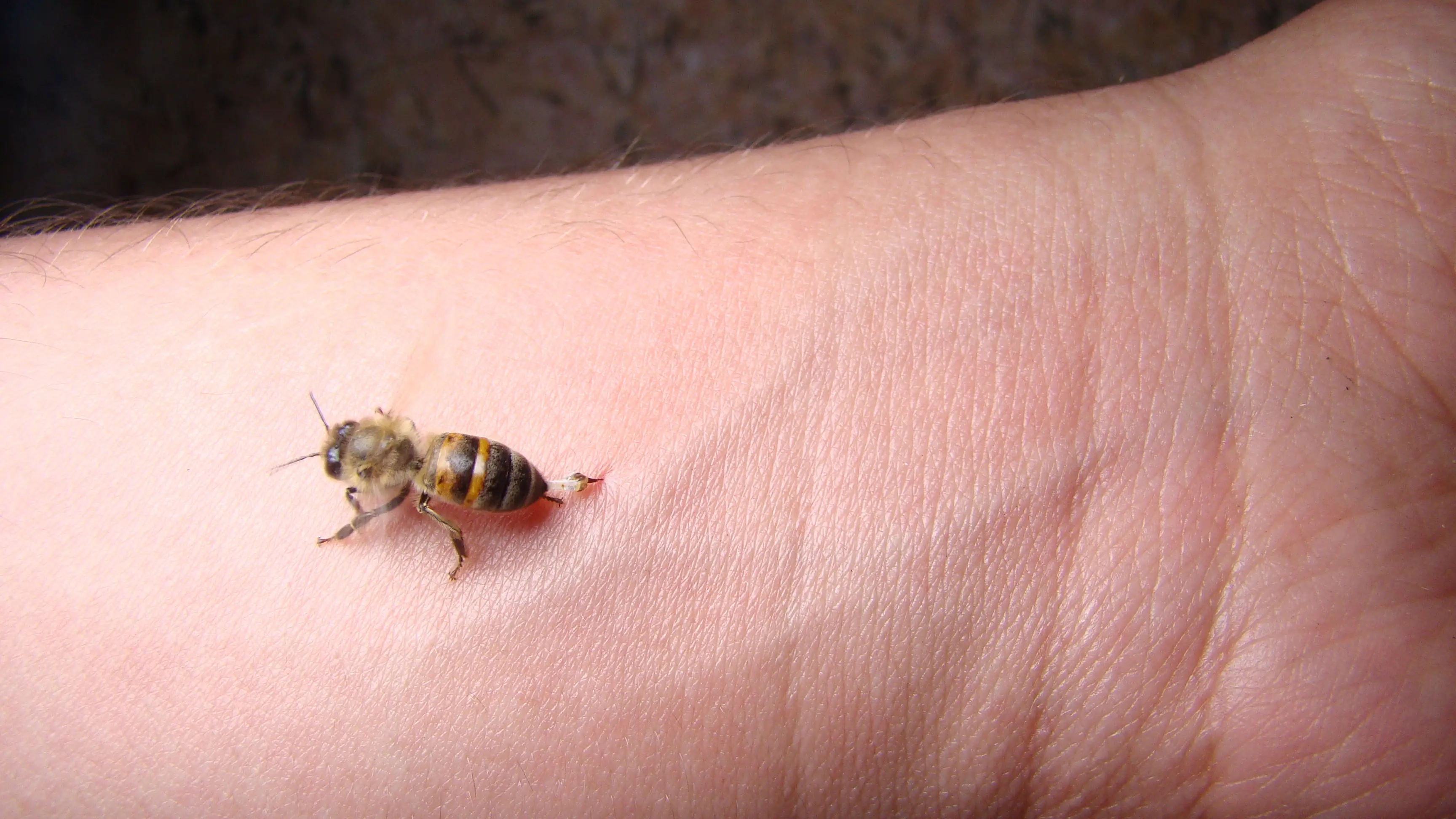
Honeybee Stinger

Type: Barbed
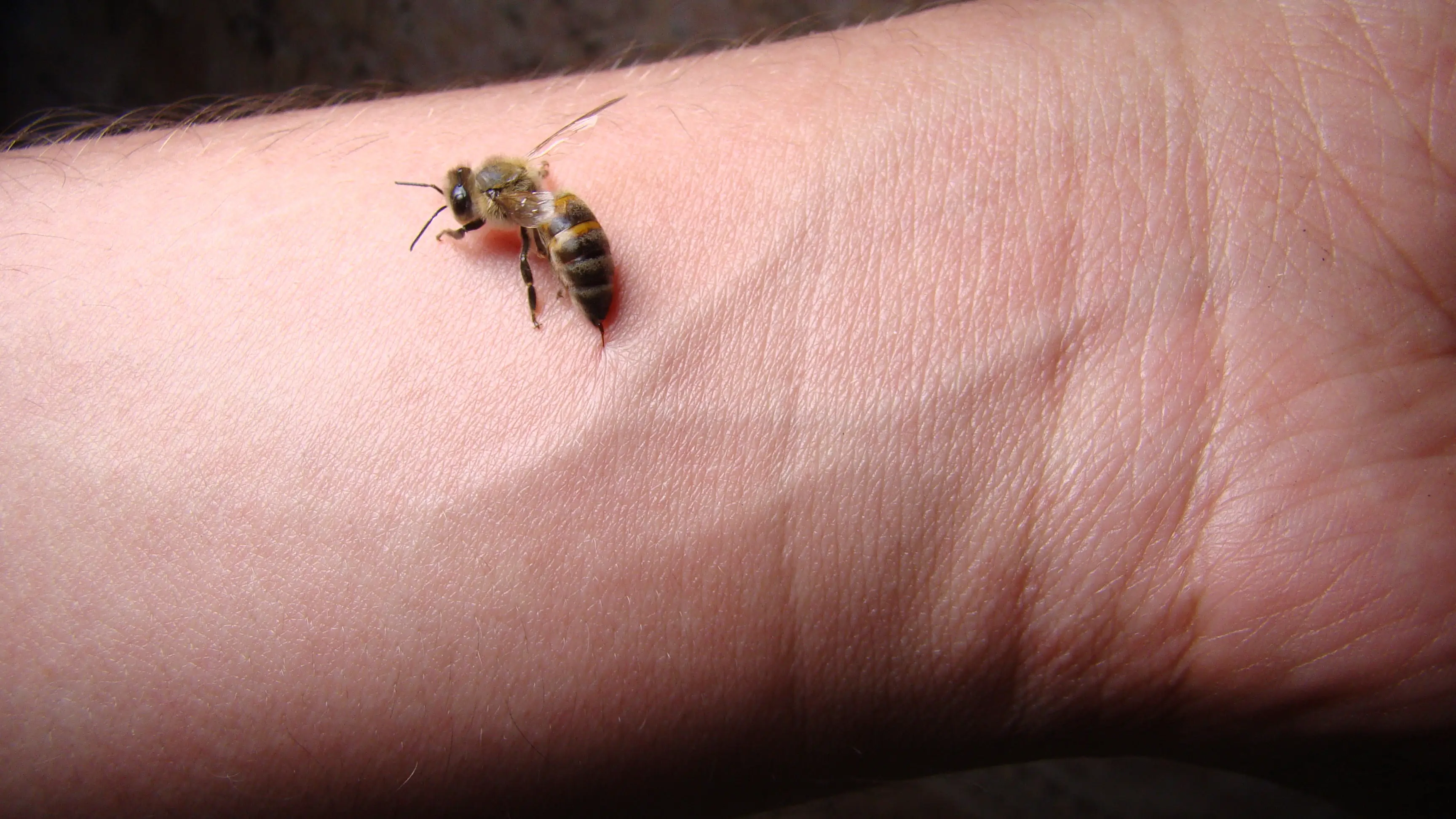
Retractable: No (gets embedded)
Multiple Stings: No
Bee Survives: No (dies after stinging)

Are Bumble Bee Stings Painful?

Bumblebee stings are considered one of the more painful bee stings because they have a smooth stinger that can sting multiple times in succession. This repeated stinging amplifies the pain because each sting injects venom that results in swelling and redness.

Schmidt Pain Index

The Schmidt Pain Index categorizes the severity of stings from various insects on a scale of 1 to 4, with 1 being least painful and 4 being most painful.

1
Honeybee
2
Bumble Bee
3
Paper Wasp
4
Bullet Ant

Bumble Bee Nest Near Your Home?

We provide safe, humane removal that protects both your family and these important pollinators.

Call (866) 326-2847

Reactions to Bumble Bee Stings

Bumblebees inject venom that can result in various symptoms depending on an individual's sensitivity. The most common reaction is a localized painful reaction accompanied by swelling, redness, and itchiness lasting from a few hours to a few days.

Allergic Reaction Severity Levels

Approximately 1% of individuals may develop an allergic reaction after repeated stings:

Level 1 - Mild

Generalized itching, redness, and swelling across the body

Level 2 - Moderate

Level 1 symptoms plus gastrointestinal issues like vomiting and diarrhea

Level 3 - Severe

Previous symptoms plus respiratory challenges such as difficulty breathing or sensation of suffocation

Level 4 - Life-Threatening

Previous symptoms plus cardiac symptoms like heart palpitations, fainting, and potentially anaphylactic shock

Important: Allergic reactions typically manifest within 30 minutes after getting stung. Seek medical attention immediately if any signs of an allergic response are observed.

How to Treat Bumble Bee Stings

1

Clean the Area

Wash the sting site with antiseptic soap and water to prevent infection. Do not scratch the wound as this may introduce bacteria.

2

Reduce Swelling and Pain

Apply an ice pack to the sting site to reduce swelling and numb localized pain. Anti-inflammatory medication can also help.

3

Manage Itchiness

Use over-the-counter antihistamines or anti-itch ointments. Topical creams designed for insect stings can also provide relief.

4

Seek Medical Attention for Allergic Reactions

Seek emergency medical attention immediately if symptoms like respiratory problems, rapid heartbeat, or swelling of the throat occur.

Treating Severe Allergic Reactions

For severe reactions, adrenaline (epinephrine) is the primary treatment. It can be self-administered using an EpiPen, typically prescribed to individuals with known bee sting allergies. Important: An EpiPen is only a temporary fix designed to give someone suffering from a severe reaction enough time to get to a hospital. Medical attention is still needed even after an EpiPen is used.

How to Avoid Bumble Bee Stings

Stay Calm

Do not swat at bumblebees. Sudden movements may be seen as a threat. If a bumblebee lands on you, gently brush it off and move away slowly.

Avoid Disturbing Nests

Bumblebees generally only sting if threatened or if their ground-based nests are disturbed. Be careful when gardening or mowing.

Contact Professionals

If you identify a bumblebee nest on your property, contact a pest control professional for guidance and potential safe removal.

How to Get Rid of Bumble Bees

Bumble bee colonies are annual, meaning a queen establishes a new nest each year. By the following year, the previous colony will have naturally dispersed or died off.

Clear Nesting Sites

Remove brush and grass piles that provide cover

Maintain Moist Ground

Wet soil is not conducive to bumblebee tunneling

Secure Trash Cans

Clean regularly and use tight-sealing lids

Contact EcoGuard if You Are Dealing with Bumble Bees

If you are dealing with a bumble bee issue near your home or property, it is important to approach the situation with care because of the potential danger involved and the important role they play in their habitats. At EcoGuard Pest Management, we prioritize both the safety of our clients and the preservation of these beneficial insects. Our team of professionals is equipped with the knowledge and tools to address your bumble bee concerns effectively and humanely.

Call (866) 326-2847Get Free Quote

Bumble Bee Stinger FAQs

Does a bumble bee sting or bite?

Bumble bees do not bite. However, female bumblebees can sting if they feel threatened. Only bumble bee queens and female workers have a stinger that can sting. This is due to evolutionary changes that caused their ovipositors to develop into defensive tools.

Do bumble bee stings hurt?

A bumble bee sting can be painful for many people just like stings from other bees or wasps. The pain is often described as a sharp, burning sensation that may be followed by redness and swelling. However, individual reactions can vary, with some people experiencing more discomfort than others.

Do bumble bees harm humans?

Bumble bees are generally not aggressive and prefer to go about their business of foraging and pollinating. Female bumble bees can sting if they feel threatened or if their nest is disturbed. While most people experience a localized reaction to a sting, a small percentage may have allergic reactions that require medical attention.

From Our Blog

Related Articles

Are Honeybees Dangerous to Humans? Bee Safety Guide

Are Honeybees Dangerous to Humans? Bee Safety Guide

Learn when honeybees become dangerous, symptoms of bee stings, Africanized bees, and when to call professional bee...

Read Article
Are Honeybees Endangered Species in the US?

Are Honeybees Endangered Species in the US?

Learn about honeybee and native bee population status, Colony Collapse Disorder, why bees are declining, and how to...

Read Article
Do Bees Die After They Sting You? The Truth About Bee Stingers

Do Bees Die After They Sting You? The Truth About Bee Stingers

Learn which bees die after stinging, why honeybees sacrifice their lives, how the stinger works, and what to do if you...

Read Article
Do Bees Fly at Night? Nocturnal vs Diurnal Bee Behavior

Do Bees Fly at Night? Nocturnal vs Diurnal Bee Behavior

Learn which bees can fly at night, why most bees are diurnal, and how nocturnal bees have adapted to see in the dark....

Read Article
Do Carpenter Bees Sting? Sting Treatment & Prevention

Do Carpenter Bees Sting? Sting Treatment & Prevention

Learn if carpenter bees sting, the difference between male and female carpenter bees, sting treatment, allergic...

Read Article
How Long Do Bees Live? Lifespan by Species & Role

How Long Do Bees Live? Lifespan by Species & Role

Learn how long different bee species live including honeybees, bumblebees, and carpenter bees. Discover lifespan...

Read Article
How Long Does a Queen Bee Live? Lifespan & Life Cycle Guide

How Long Does a Queen Bee Live? Lifespan & Life Cycle Guide

Learn how long queen bees live, their life cycle from egg to matriarch, mating flights, succession, and what happens...

Read Article
How to Get Rid of a Beehive Safely | Complete Removal Guide

How to Get Rid of a Beehive Safely | Complete Removal Guide

Learn how to safely remove a beehive from your property. Professional removal steps, DIY precautions, what to avoid,...

Read Article
How to Repel Bees Naturally from Your Yard

How to Repel Bees Naturally from Your Yard

Learn natural ways to repel bees including deterring plants, essential oils, and habitat modification. Keep bees away...

Read Article
Identifying Different Types of Bee Species | Complete Guide

Identifying Different Types of Bee Species | Complete Guide

Learn to identify different bee species including honeybees, bumblebees, carpenter bees, and more. Understand...

Read Article
When Are Bees Most Active? Daily & Seasonal Bee Activity

When Are Bees Most Active? Daily & Seasonal Bee Activity

Learn when bees are most active throughout the day and year. Understand bee seasons, temperature requirements, and when...

Read Article
Where Do Bees Go in the Winter?

Where Do Bees Go in the Winter?

Learn how honeybees, bumblebees, and solitary bees survive winter through clustering, hibernation, and dormancy, and...

Read Article
Why Do Bees Sting People if it Kills Them? | Complete Guide

Why Do Bees Sting People if it Kills Them? | Complete Guide

Learn why bees sting even when it kills them, which bees die after stinging, bee sting symptoms, treatment, and how to...

Read Article