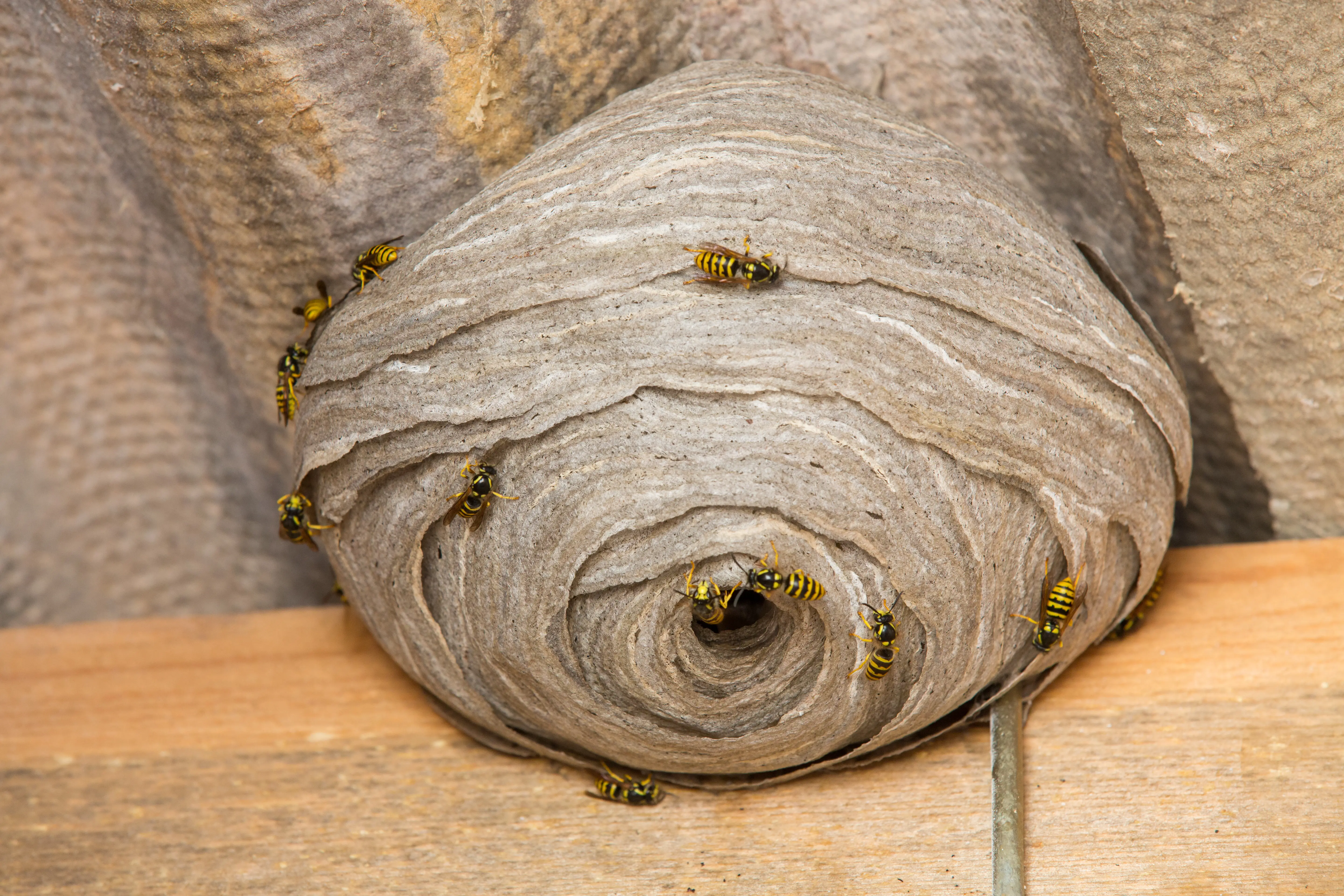
Wasps come out in force when temperatures rise in California. These seasonal threats are annoying at best, but their stingers can make them deadly for some. To exterminate wasp populations, you need to prepare so you do not accidentally agitate the nest.
Traps
Capture wasps
Sprays
Kill on contact
Prevention
Seal entry points
Professional
Safest option
Ways to Eliminate Wasps
Hang Wasp Traps
Yellow bags with sweet liquid attractant. Wasps enter past no-return barrier and drown.
Spray Nests
Store-bought pesticides effective from a distance. Wear full coverage.
Soap and Water
Soap suffocates wasps. Effective for smaller nests.
Homemade Traps
2-liter bottle cut in half with inverted top. Add rotting fruit, water, and soap.
Perimeter Applications
Spray potential nesting sites to prevent wasps.
Seal Entry Points
Close all openings that provide wasps access to your home.
Call Professionals
Licensed experts handle dangerous situations safely.
What to Know When Treating Nests
- Spray at dusk when wasps have returned and are less active
- Wear protective clothing from head to toe
- Stand away from nest, not underneath or downwind
- Never treat alone in case of medical emergency
- Always follow product directions
- Check for survivors before removal
- Get professional help for high or far nests
How to Remove a Wasp Nest
- Check the day after spray application for survivors
- Approach only when certain all wasps are dead
- Use a plastic trash bag to cover the nest
- Use the bag to pull down and remove the nest
- Encase and dispose in outdoor trashcan
Wasp Nest Too Dangerous to Handle?
Our licensed technicians safely remove wasp nests every day.
Call (866) 326-2847Protective Clothing
Wasps are more aggressive than bees and can sting multiple times. They are extremely territorial and release pheromones when stung that alert the colony to swarm. Cover as much exposed skin as possible.
Long socks with pants
Multiple layers
Gloves
Tuck pants into socks
Tuck sleeves into gloves
Face covering (screen or bandana)
Identifying Wasp Types and Nests
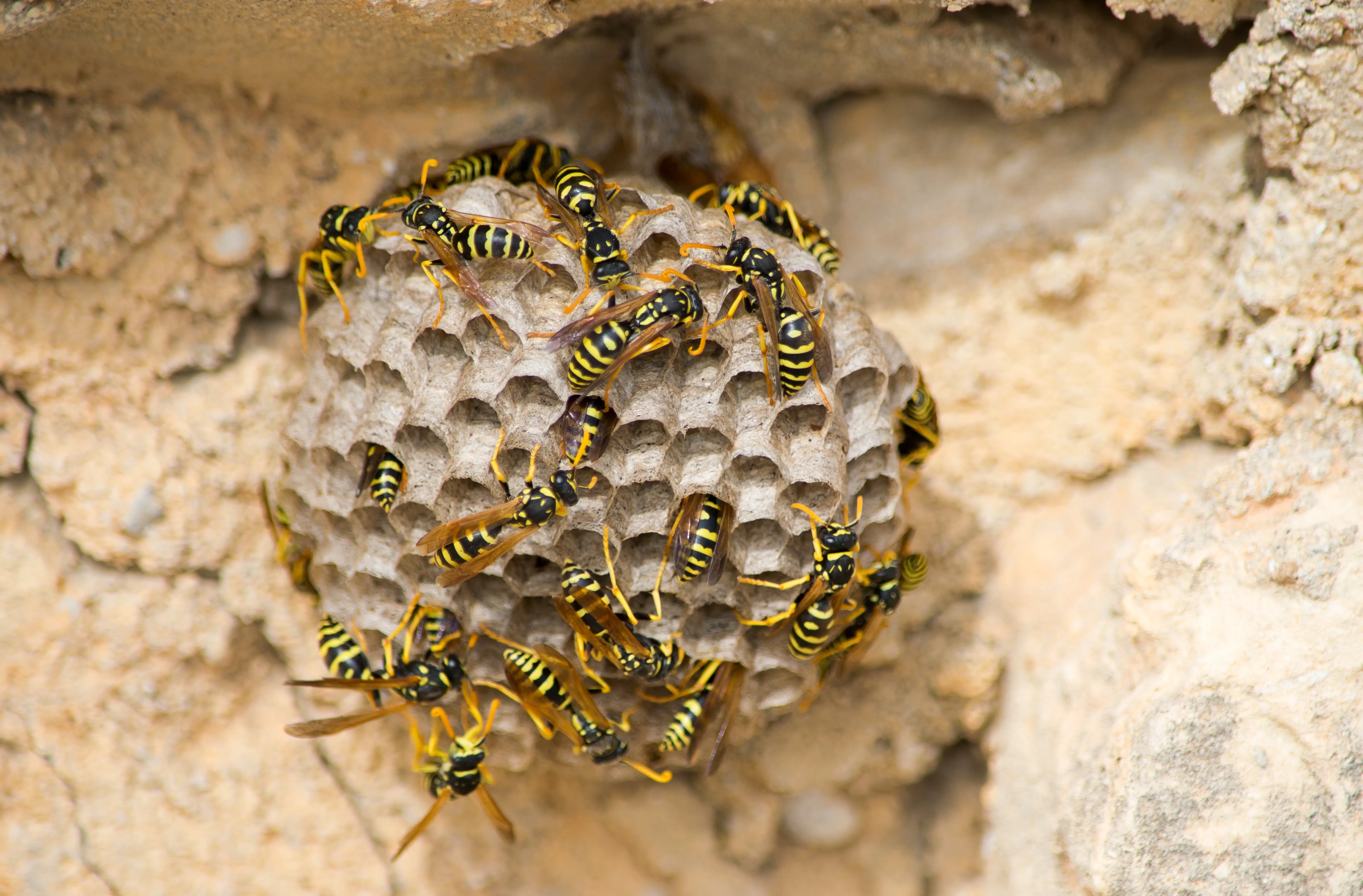
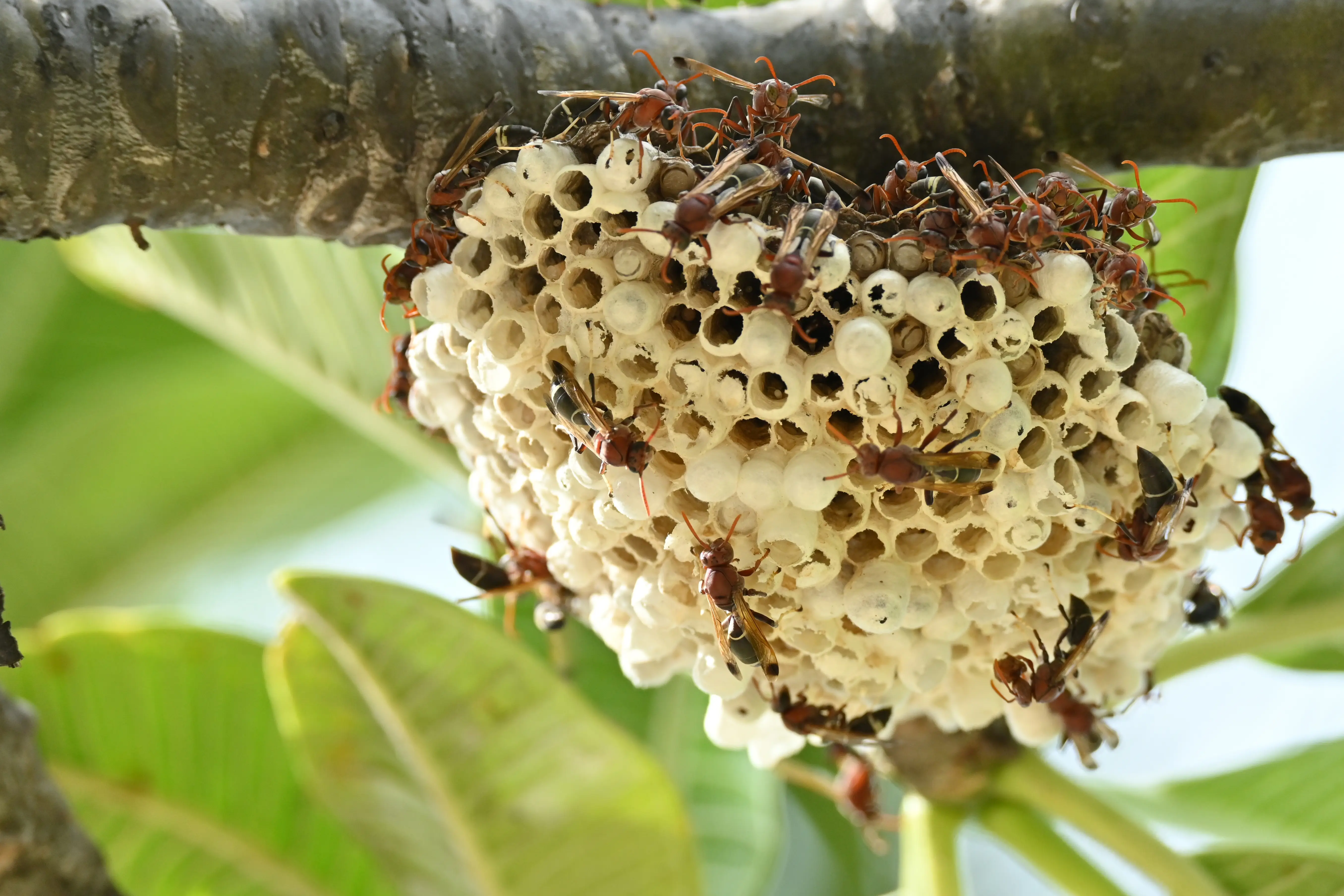
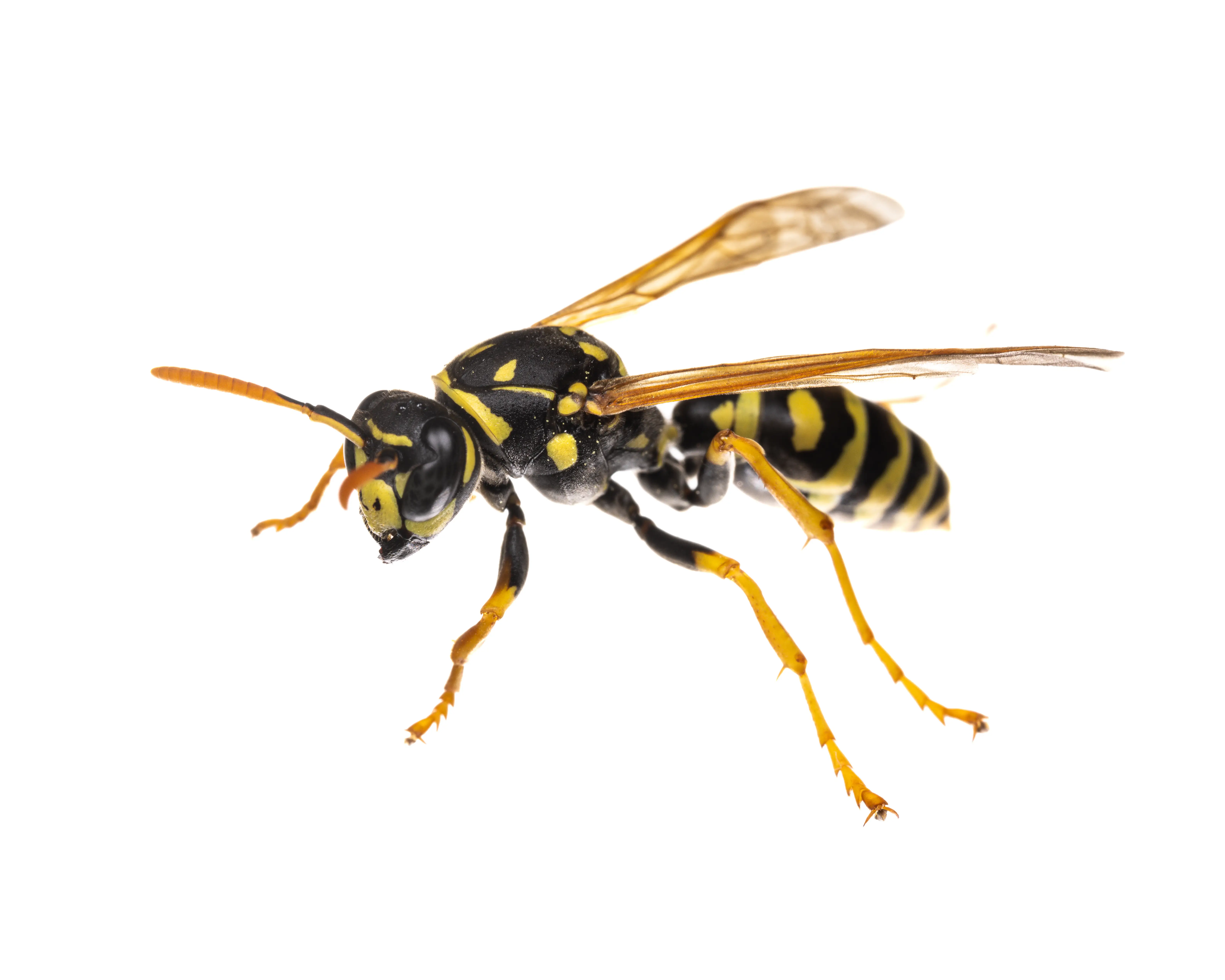
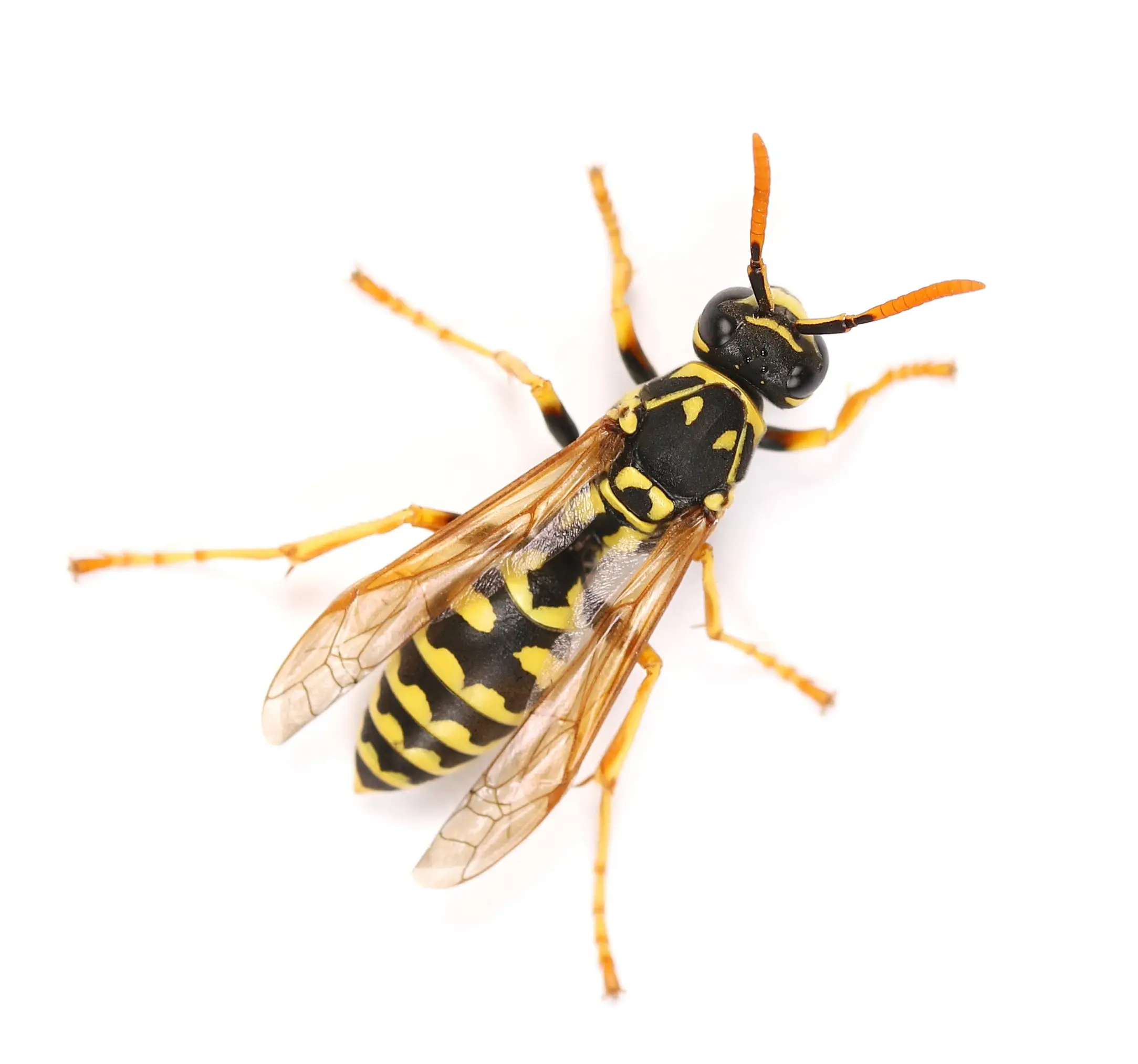
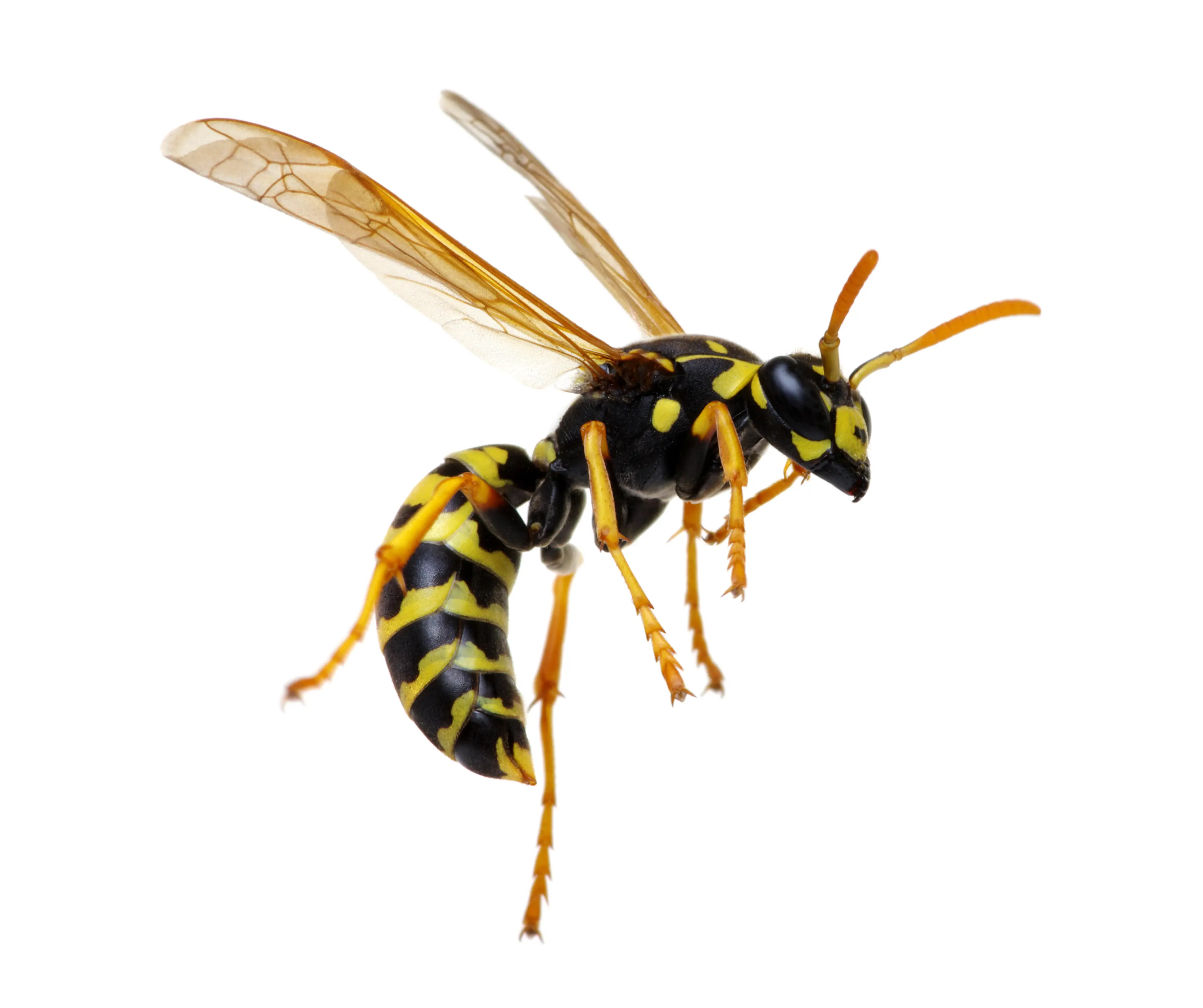
Paper Wasps
Appearance: Golden brown with yellow or red patches, long slender waists
Behavior: Gentle until disturbed
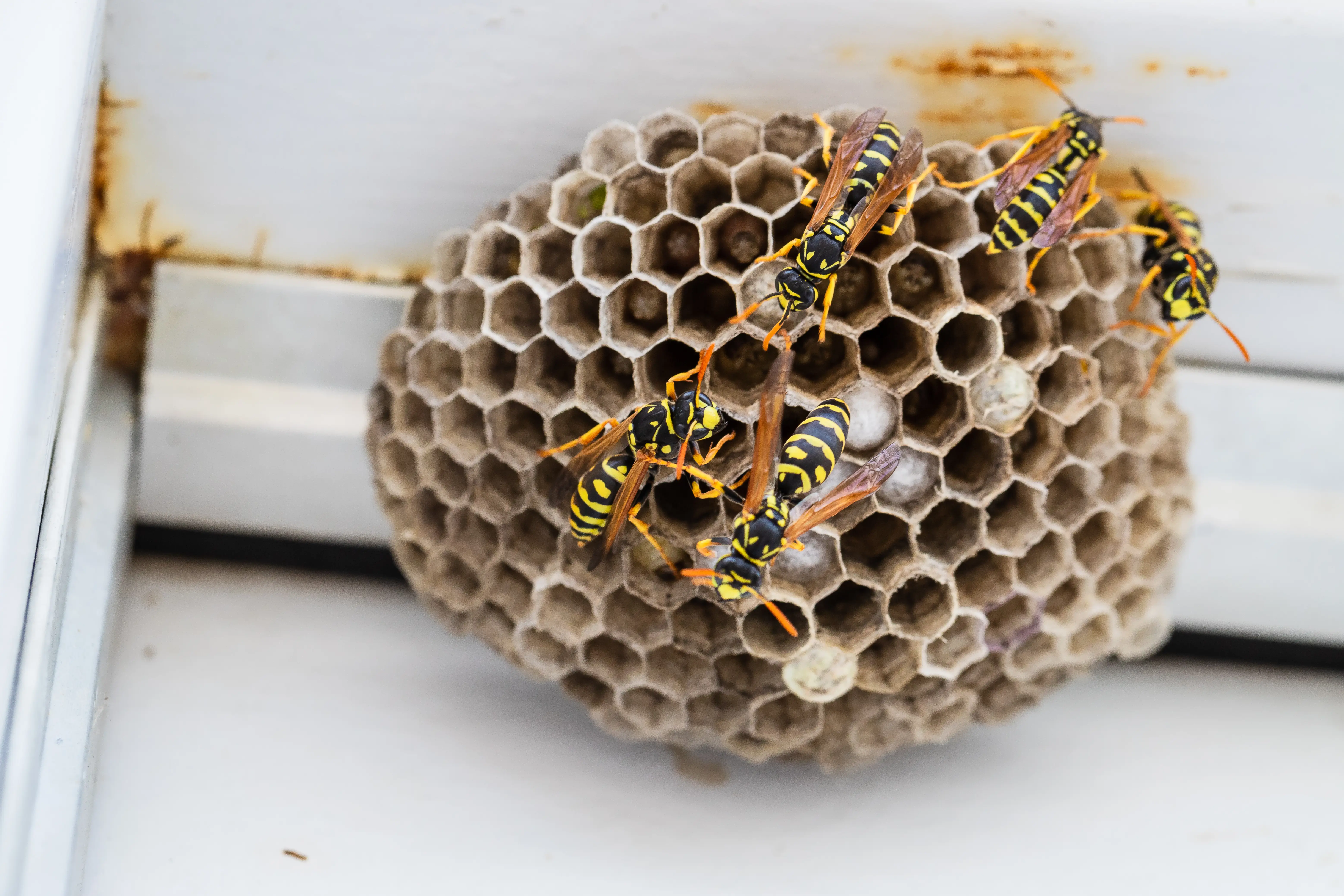
Nest: Paper nests with open cells, hanging like umbrella under eaves, gutters, patios
Yellow Jackets
Appearance: Bright yellow and black patterns
Behavior: Aggressive, scavenge around trash
Nest: Underground dens or shaded areas, large with single visible opening
Hornets
Appearance: Black, yellow, brown; slightly larger
Behavior: Aggressive when agitated
Nest: Paper, fully enclosed with single entry; tree branches, siding, poles, wall cavities
Treatment Strategies
Nest Drenching
Safest and easiest. Stand far away, spray downwind. Completely saturate nest with pesticide spray or foam.
Nest Dusting
Effective but requires close proximity to pour dust into entry point. Risk of close-contact swarming.
Perimeter Spraying
Like drenching plus residual pesticide that prevents future wasp activity. Great deterrent and preventative.
Baiting
Good when nest is unfindable or unreachable. Select trap for your wasp type. Replace as traps fill.
Timing: Treat at dusk when wasps are home and less active. In early spring, remove nests before they grow to 2,000+ wasps. Use amber-colored flashlight at night to avoid alerting wasps.
How to Keep Wasps Away
Eliminate Food Sources
Remove rotting fruit from fruit trees. Secure trash. Wasps feast on fruits and proteins around your property.
Seal Access Points
Fill cracks and crevices. Repair open screens. Prevent wasps from entering your home.
Grow Repelling Plants
Mint, basil, marigold, and pennyroyals act as natural wasp deterrents.
Inspect Lawn Holes
Some species build underground nests. Check entry points with wasps flying from openings.
Professional Wasp Removal
Our licensed technicians provide thorough inspection, identify wasp type and locate the nest, destroy and remove the nest safely, and offer recurring services to maintain a wasp-free environment. DIY methods can work, but professional help keeps you out of harm's way.
Wasp Removal FAQs
How do you keep wasps away?
Preventing wasps requires sealing access points, removing food/resources/shelter, and removing nests. By implementing these 3 measures, you should prevent most wasp activity.
What smell do wasps hate?
Several naturally occurring scents repel wasps. Herbs like spearmint, thyme, eucalyptus, and citronella all act as wasp deterrents.
Do wasps come back to the same nest each year?
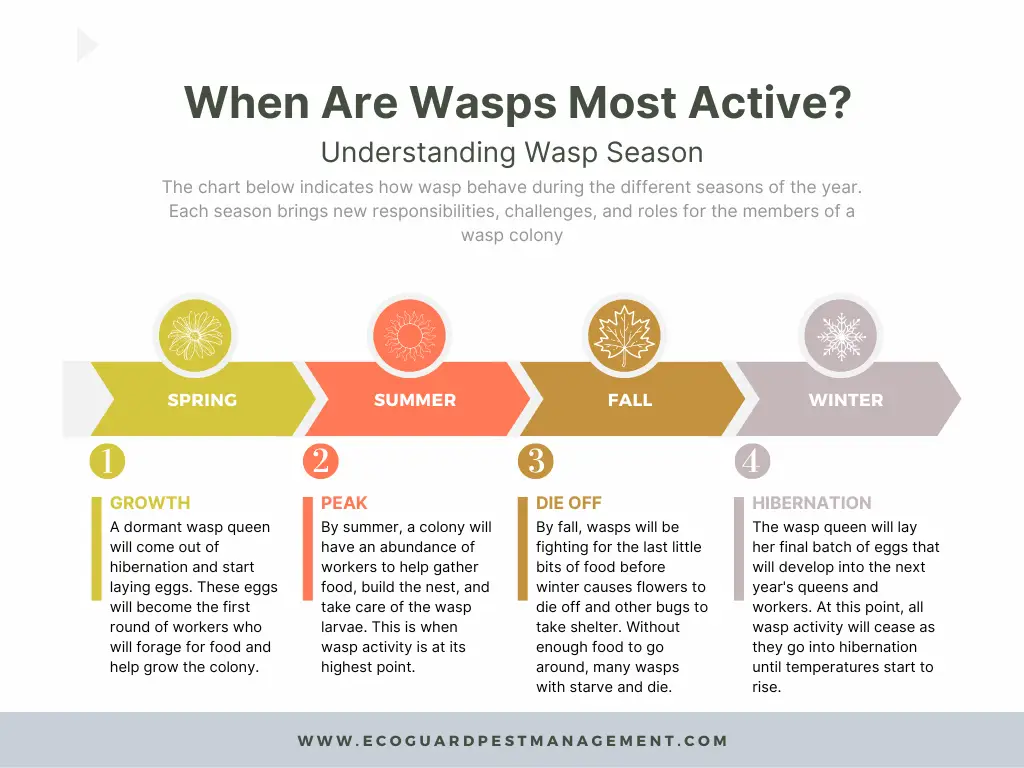
Once the season passes, workers abandon the nest and die while the queen hibernates. In spring, the queen may continue building her nest or move on, depending on if the location is still suitable.
From Our Blog