EcoGuard Pest Management
Mouse droppings identification guide
By Gary Anderson||4 min read

What Does Mouse Poop Look Like?

Identification, size comparison, cleanup procedures, and health risks.

1/4 inch
Mouse Poop Size
50-75
Droppings Per Day
Black to Gray
Color Change Over Time
30 min
Air Out Before Cleanup

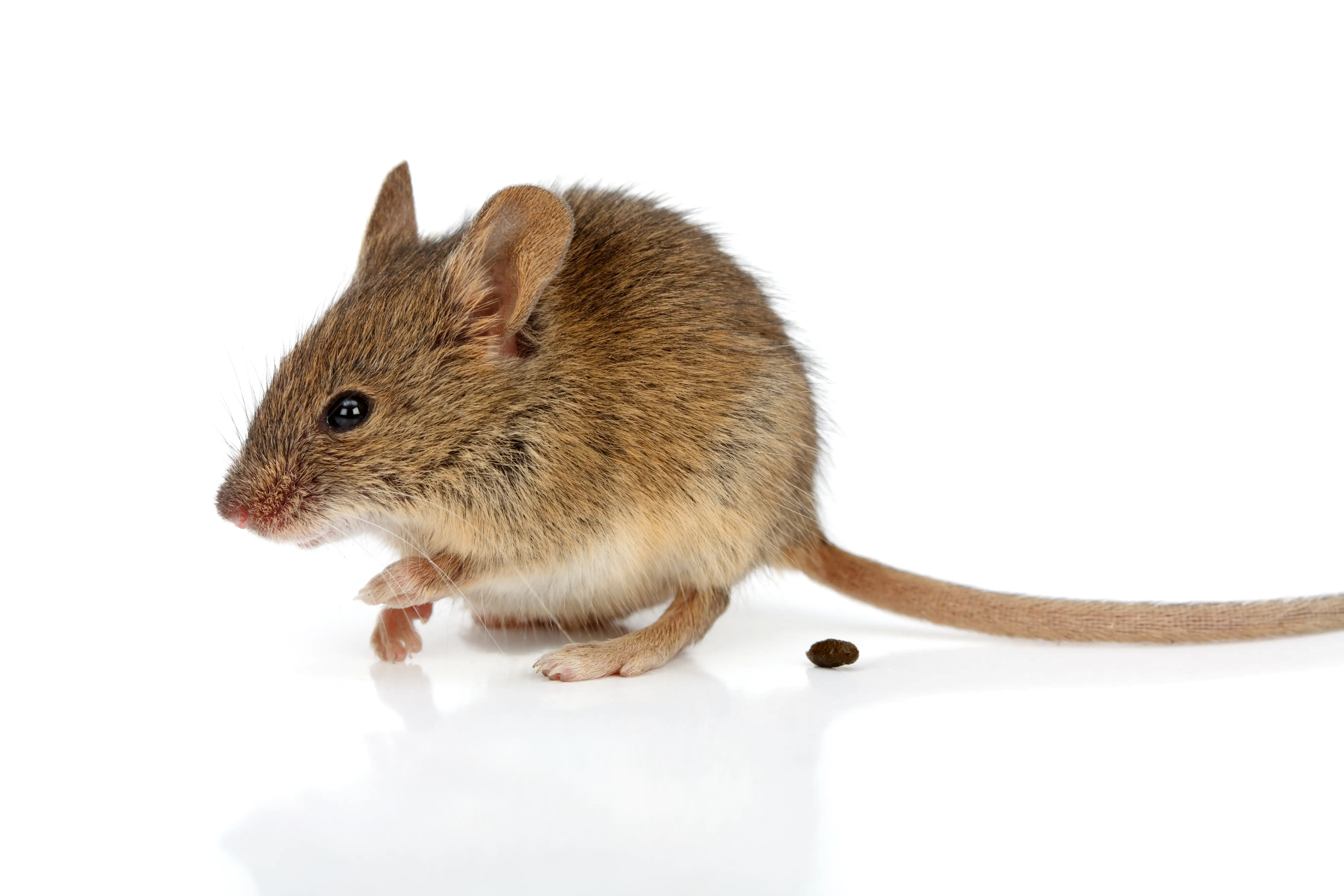
Mouse poop looks like small dark brown or black granular pellets about 1/4 inch long with pointed ends. They resemble seeds or small dark grains of rice. Fresh pellets are black and wet-looking, then turn brown within a week before fading to gray.

Mice leave 50-75 pellets per day and poop while traveling, so droppings are commonly found along mouse runways throughout a home.

How to Identify Mouse Poop

Mouse droppings are small, thin, pointed pellets that are black or dark brown. Often mistaken for rat or cockroach feces. Size is the best indicator to tell them apart.

Mouse Poop

Quantity: 50-75 daily
Size: 1/4 inch
Shape: Granular pellet with pointed tips

Roof Rat Poop

Quantity: 40-50 daily
Size: 3/4 inch
Shape: Thick pellets with blunt ends

Norway Rat Poop

Quantity: 40-50 daily
Size: 1/2 inch
Shape: Longer pellets with pointed ends

Where to Look for Mouse Droppings

Since mice are nocturnal, you are more likely to find droppings than see mice. They poop while traveling, so feces can be found everywhere they are active:

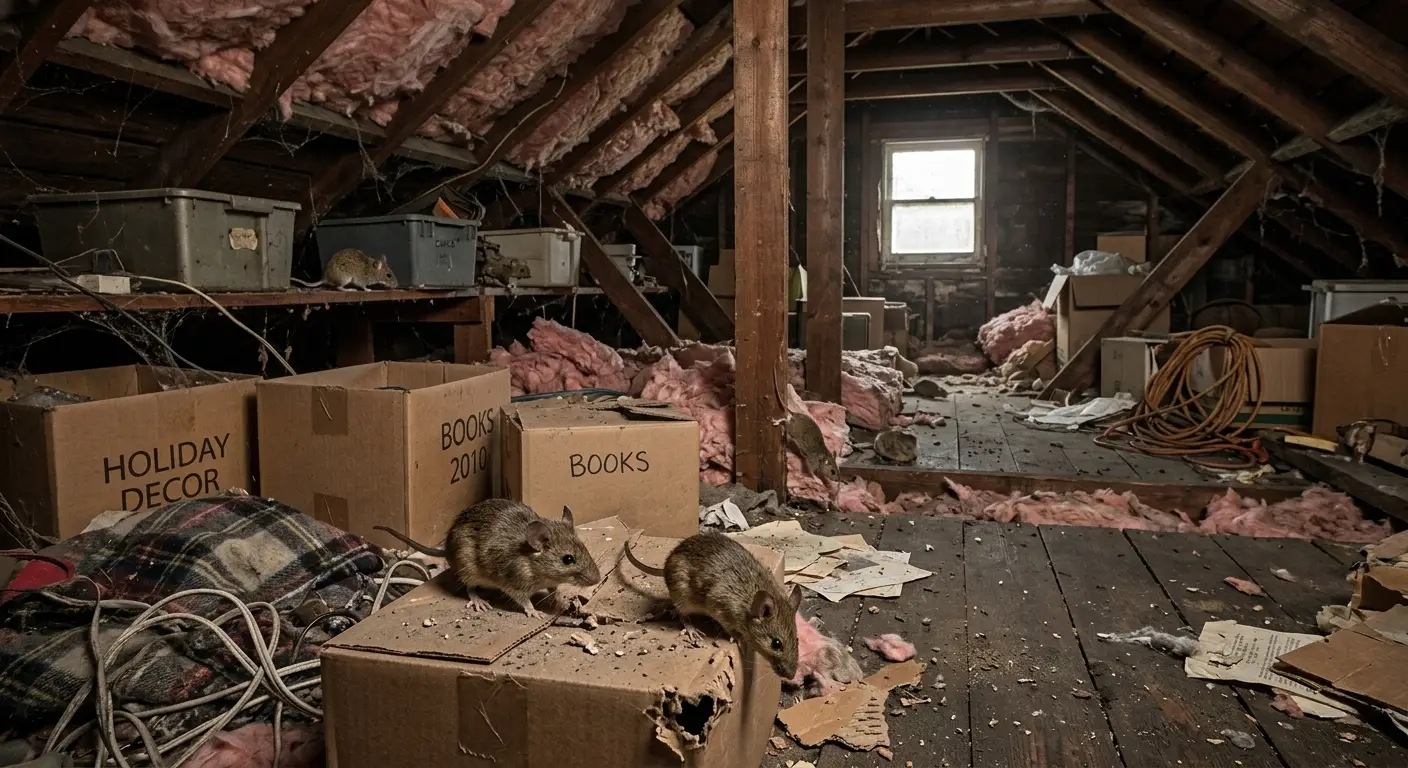
Attics, crawlspaces, basements
Garages
Kitchen cabinets and pantries
Around refrigerator
Near laundry machine
Around water heater
Bathroom cabinets
Under sinks
Around vents and pipes
Under furniture
Along baseboards
Inside closets
Storage spaces
Near trash

Note: Mouse poop builds up in undisturbed areas with little human activity. Large amounts often go unnoticed until furniture is moved or deep cleaning occurs.

Does Mouse Poop Smell?

In small amounts, mouse poop does not smell much. But it builds up quickly and leaves a musty, stale smell. The smell of mouse urine is a much bigger problem and gives off a pungent ammonia odor.

Why Clean Urine Quickly

Male mice leave urinary pheromones that attract female mice, prompting reproductive response. This leads to rapid increases in infestation rates.

Need Professional Rodent Cleanup?

Safe, thorough cleanup following CDC guidelines.

Call (866) 326-2847

Mouse Poop Cleanup (CDC Guidelines)

After mice are removed, cleanup should follow immediately. The CDC recommends these precautions:

1Air out the area for at least 30 minutes prior to cleanup
2Wear protective rubber gloves, glasses, and masks
3Use disinfectant spray (1 part bleach : 10 parts water), saturate surfaces and let soak 5 minutes
4Remove poop with paper towels or disposable rags (NO broom or vacuum)
5Discard used paper towels in a covered trashcan
6Repeat disinfecting as needed before final mop up
7Seal all waste in plastic bag and discard outside
8Wash gloved hands with soap, then disinfectant, before removing gloves
9Wash hands again after removing gloves
10Disinfect anything touched with gloves on

Warning: Do NOT use a vacuum or broom. This can disturb dander, dust, allergens, and dangerous pathogens, making them airborne and causing illness.

Is Mouse Poop Dangerous?

Mouse poop can carry dangerous pathogens and bacteria that cause serious illness. Handle with extreme caution:

Hantavirus Pulmonary Syndrome

Affects lungs and respiratory system. Caused by breathing air contaminated with rodent feces particles.

Lymphocytic Choriomeningitis

Neurological disease that can occur if an open wound contacts mouse feces.

Salmonellosis

Infection caused by consuming food or drink contaminated by mouse waste.

Rat Bite Fever

Bacterial infection from contact with water or food contaminated with mouse waste.

Leptospirosis

Bacterial infection from contact with water or food contaminated with mouse waste.

Recommended PPE: Gloves, safety glasses, long sleeves and pants, facemask designed to filter contaminants. Avoid touching eyes, nose, or mouth until done.

Cleaning Specific Areas

Sheds, Barns, Cabins

More likely to have unnoticed problems. Air out for 30+ minutes. Discard contaminated items downwind so contaminants do not blow back.

Attics, Basements, Crawlspaces

Use filtering mask in tight spaces. Dirt floors still need disinfectant. Insulation is often contaminated and needs replacement.

Air Ducts & HVAC

Call professionals for AC maintenance. HVAC can spread pathogens throughout the entire house if contaminated.

How to Prevent Mice

Lay out snap traps to eliminate existing mice
Seal all entry points (vents, loose pipes, etc.)
Clean debris and clutter used for nesting
Store all food properly
Keep trash to a minimum
Clear hiding areas in and around home
Call professionals to manage populations

How to Know if Mice Are Gone: Clean the area thoroughly, then check for fresh droppings. Fresh poop is black and wet-looking. If new droppings appear, mice are still active.

Contact EcoGuard to Exterminate Mice

If you have found mouse poop inside your home, call EcoGuard Pest Management for a free rodent inspection. Our team has years of experience dealing with different types of rodents and knows exactly how to effectively treat for mice.

Call (866) 326-2847Get Free Quote

Mouse Poop FAQs

How do you know if it's mouse poop?

Mouse droppings are about 1/4 inch long with tapered points. Fresh droppings are black but fade with time. Rat poop is much bigger, which is the easiest way to tell the difference.

Can you get sick from mouse droppings?

Yes. Mouse poop can contain bacteria and viruses harmful to humans. It can contaminate food and drink. Dried fecal matter can trigger allergic reactions and respiratory problems.

What do you do if you find mouse droppings?

Follow CDC guidelines: ventilate the area for 30 minutes, wear protective gear, saturate with disinfectant, remove poop with paper towels (not broom or vacuum), perform final disinfection, and properly discard all trash.

Can one mouse leave a lot of droppings?

Yes. One mouse can leave up to 75 fecal pellets per day. This is exacerbated when there is more than one mouse and they start breeding.

From Our Blog

Related Articles

Are Mice Nocturnal? When Mice Are Most Active

Are Mice Nocturnal? When Mice Are Most Active

Learn if mice are nocturnal, when they are most active, how they navigate at night, and signs of mice activity in your...

Read Article
Can Mice Climb Walls and Other Surfaces?

Can Mice Climb Walls and Other Surfaces?

Learn if mice can climb walls, what surfaces they can and cannot climb, how they get inside walls, and how to prevent...

Read Article
Common Types of Mice in North America

Common Types of Mice in North America

Identify different types of mice including house mice, deer mice, white-footed mice, and more. Learn appearance,...

Read Article
Do Mothballs Keep Mice Away? The Truth Revealed

Do Mothballs Keep Mice Away? The Truth Revealed

Learn why mothballs are ineffective and illegal for mouse control. Discover safer, proven alternatives to keep mice out...

Read Article
How Long Do Mice Live? Mouse Lifespan & Life Cycle

How Long Do Mice Live? Mouse Lifespan & Life Cycle

Learn how long mice live, their complete life cycle from pup to adult, lifespans by species, and why quick action on...

Read Article
How to Find Where Mice Are Getting In

How to Find Where Mice Are Getting In

Learn how to locate mouse entry points in your home. Complete guide to inspecting indoors and outdoors, common access...

Read Article
How to Get Rid of Mice in the Walls

How to Get Rid of Mice in the Walls

Learn how to detect, trap, and eliminate mice in your walls. Covers entry points, infestation signs, trap types,...

Read Article
How to Get Rid of Mice in Your House in 9 Steps

How to Get Rid of Mice in Your House in 9 Steps

Learn how to get rid of mice in your house with 9 proven steps. Covers trap types, bait stations, wall mice, prevention...

Read Article
Mouse vs Rat: Key Differences in Appearance & Behavior

Mouse vs Rat: Key Differences in Appearance & Behavior

Learn the differences between mice and rats including size, appearance, behavior, eating habits, droppings, and...

Read Article
What Are Mice? Identification, Behavior & Control Guide

What Are Mice? Identification, Behavior & Control Guide

Complete guide to mice including identification, species, behavior, diet, reproduction, threats, prevention, and...

Read Article
What Do Mice Eat? Wild & House Mouse Diet Guide

What Do Mice Eat? Wild & House Mouse Diet Guide

Learn what mice eat in the wild and in your home. Discover their favorite foods, what attracts them, and the best bait...

Read Article
What is the Best Bait for Mouse Traps? Complete Guide

What is the Best Bait for Mouse Traps? Complete Guide

Discover the most effective baits for mouse traps, from peanut butter to chocolate. Learn proper baiting techniques and...

Read Article
What Repels Mice? Natural Deterrents & Scents That Work

What Repels Mice? Natural Deterrents & Scents That Work

Learn what repels mice including natural deterrents, scents, essential oils, and exclusion tactics. Find out which...

Read Article