EcoGuard Pest Management
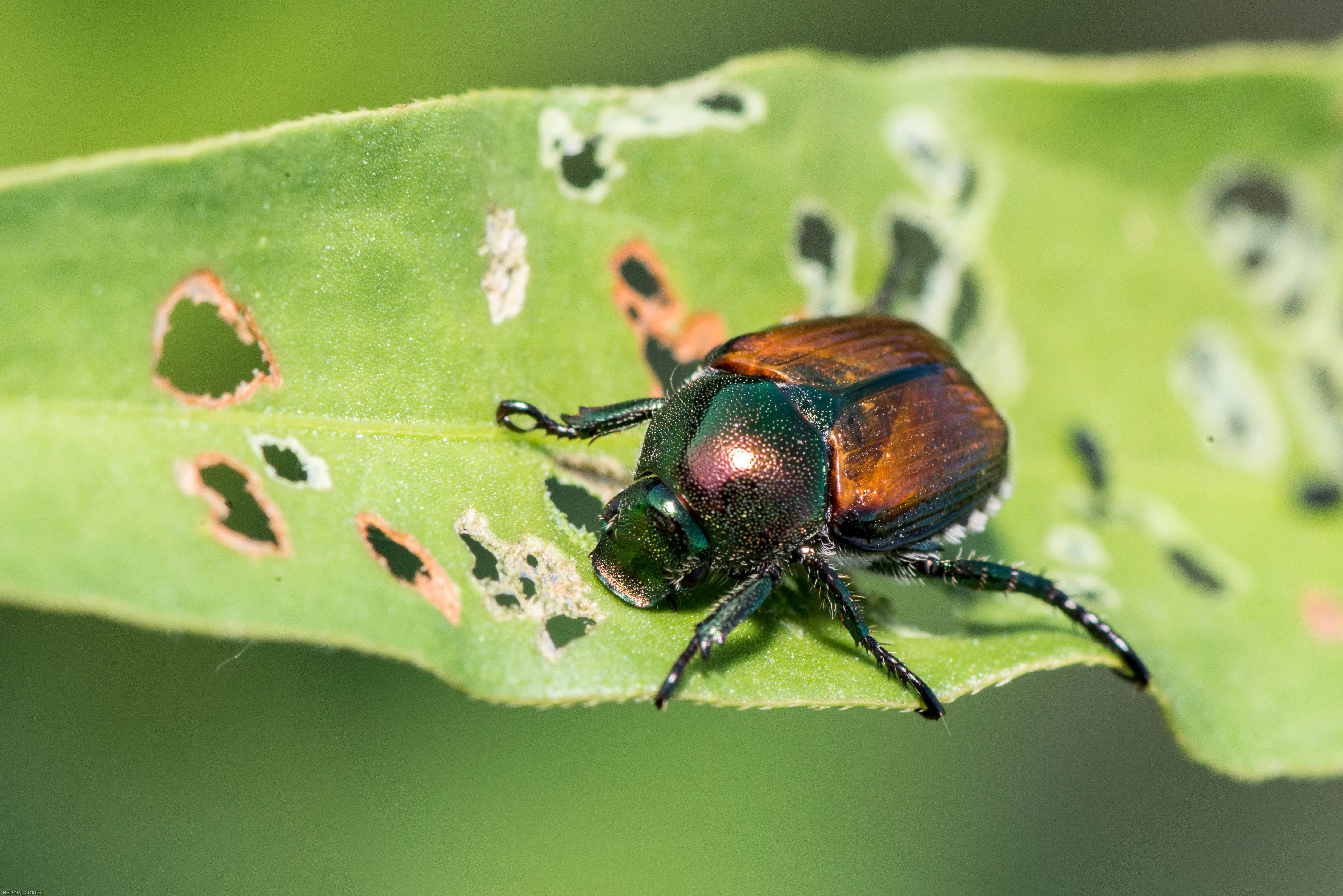
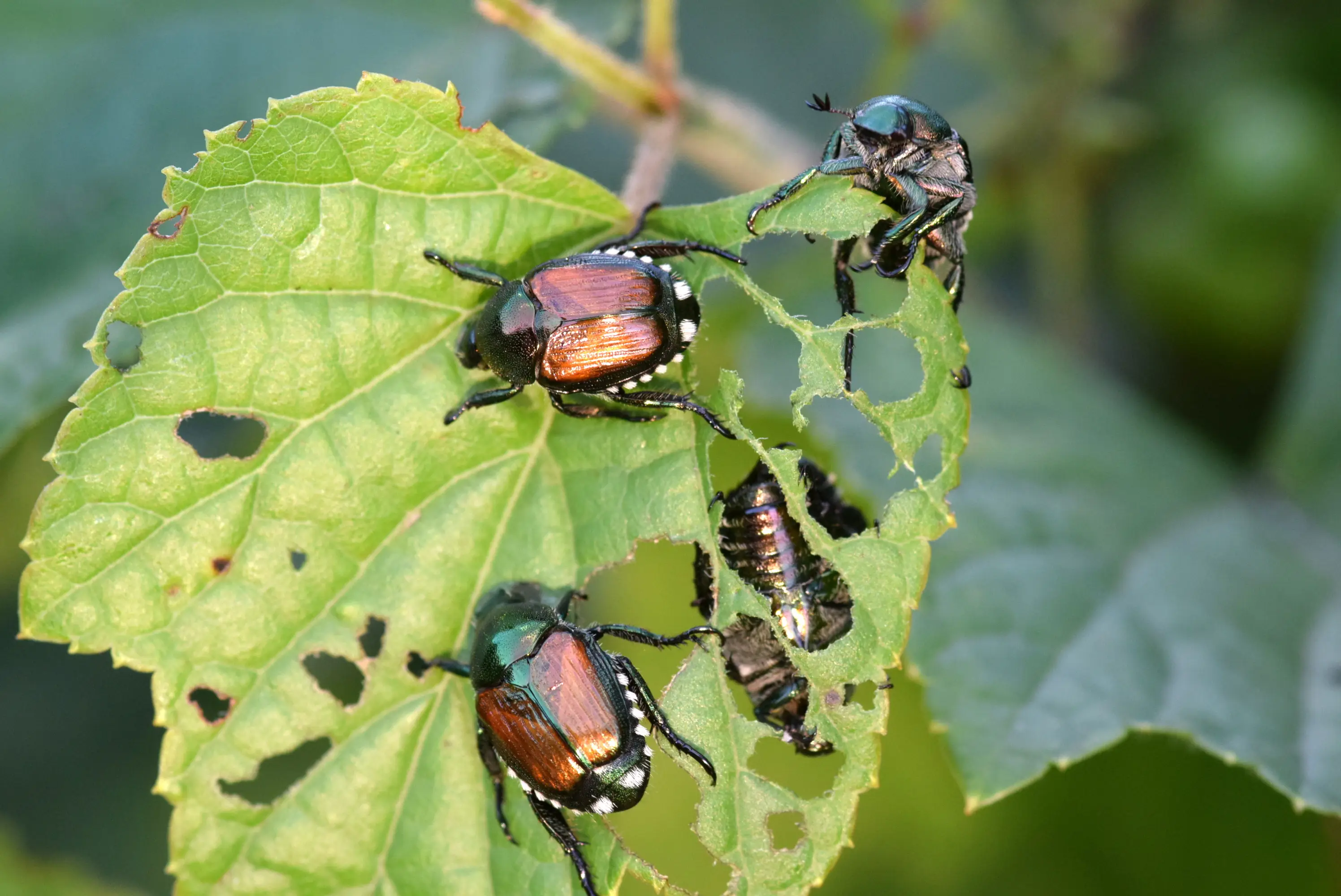
Japanese beetle with metallic green body and copper wings on a leaf
By Gary Anderson||8 min read

What Are Japanese Beetles?

A comprehensive guide to identifying these destructive invasive pests, understanding their life cycle, and recognizing the damage they cause.

Japanese beetles (Popillia japonica) are a highly destructive invasive pest that first appeared in the United States in 1916 after being accidentally introduced into New Jersey. These insects are native to Japan where they are not a major pest due to natural predators, but have since spread across the Eastern and Central United States.

They are notorious for their extensive damage to over 300 species of plants including turf, ornamental, and agricultural crops. Effective management requires addressing both the adult beetles and their larvae.

Economic Impact

Japanese beetles cost an estimated $460 million per year to control in the United States according to the USDA. By 2015, they were fully or partially established in over 70% of the contiguous United States.

Quick ID Guide

Size
1/3 to 1/2 inch long
Body
Metallic green, oval shape
Wings
Bronze or copper-colored
Key Feature
White hair tufts on sides

Identifying Japanese Beetles

Identifying Japanese beetles is crucial for effective management and control as these pests can cause significant damage to a wide variety of plants.

Adult Japanese Beetle Appearance

Physical Features

  • Approximately 1/3 to 1/2 inch long
  • Shiny, oval, metallic-green bodies
  • Bronze or copper-colored outer wings
  • Metallic blue-green heads
  • Males slightly smaller than females

Distinctive Markings

  • Six small white hair tufts along sides and back
  • Five white patches on each side of abdomen
  • Two white patches at the tip
  • Hair tufts located under wing edges

Japanese Beetle Larvae (Grubs) Appearance

Physical Features

  • C-shaped body posture
  • Translucent white to cream-colored
  • Yellowish-brown head
  • Strong, dark-colored mandibles
  • Size ranges from 1/8 inch to 1 inch

Body Structure

  • Visible, segmented legs
  • Scattered long brown hairs
  • Short, blunt spines interspersed
  • Three thoracic segments with leg pairs
  • Ten abdominal segments

Japanese Beetle Pupae Appearance

Pupae undergo pupation within an earthen cell formed by the last larval stage. They are approximately 1/2 inch long and 1/4 inch wide. Their coloration starts pale cream and gradually changes to metallic green as they age, preparing to emerge as fully developed adult beetles.

Japanese Beetle Life Cycle

The Japanese beetle undergoes complete metamorphosis with four distinct life stages: egg, larva, pupa, and adult.

1. Egg Stage

Females lay eggs in soil of healthy, well-irrigated lawns that get lots of sun. Eggs hatch into larvae within 10 to 14 days.

2. Larval Stage

Grubs go through three growth stages (instars), becoming progressively larger. By late fall, they burrow deeper to overwinter. In spring, they return to feed for 4 to 6 weeks.

3. Pupal Stage

Pupation occurs within an earthen cell near the soil surface and lasts 1 to 3 weeks. The beetle transforms from larval to adult form during this stage.

4. Adult Stage

Adults emerge in late June or early July, live for 30 to 45 days. They feed on plants and mate. Females periodically burrow into soil to lay eggs throughout summer.

Where Are Japanese Beetles Found?

Japanese beetles are native to Japan but have spread to various parts of the world, including China, Russia, Portugal, Canada, and the United States. They were first discovered in the U.S. in a nursery near Riverton, New Jersey, in 1916.

States with Established Populations

Wisconsin, Minnesota, Iowa, Missouri, Nebraska, Kansas, Arkansas, Oklahoma, Texas, South Dakota, Washington, North Dakota, and sporadic locations in California, Oregon, and Nevada.

Why They Spread

  • Favorable climatic conditions
  • Wide variety of host plants
  • Absence of natural predators
  • Turfgrass expansion (breeding grounds)

By 2015: The USDA reported Japanese beetles were fully or partially established in over 70% of the contiguous United States, making them the most widespread turfgrass pests in the country.

Suspect Japanese Beetle Infestation?

Our experts can identify the problem and implement effective control strategies for your property.

Call (866) 326-2847

Japanese Beetle Damage

Japanese beetles cause extensive damage to flowers, trees, shrubs, fruits, vegetables, field crops, and turf. The damage from both adults and larvae makes them an economic and ecological threat requiring proactive management.

Adult Beetle Damage

Adults cause significant damage to leaves, flowers, and fruits of more than 300 plant species. Preferred plants include maples, roses, grapes, corn, plums, peaches, birches, willows, apple, cherry, elm, raspberry, basil, marigold, and soybean.

Skeletonized Leaves

Beetles eat tissue between veins, leaving lace-like appearance

Brown/Fallen Leaves

Damaged leaves turn brown and may fall off

Plant Stress

Young or unhealthy plants may be stunted or killed

Ruined Blooms

Flowers like roses survive but blossoms are ruined

Larvae (Grub) Damage

Grubs chew on grass roots, reducing the grass's ability to take up water and nutrients. This results in dead patches that can be rolled back like carpet due to lack of root support.

Threshold: Healthy turf can tolerate up to 10 grubs per square foot. Beyond this, severe damage occurs. Moles, skunks, and crows digging for grubs cause additional turf damage.

Damage Impact

Economic Impact

Costs an estimated $460 million per year to control. Damages pastures and crop fields, reducing yields and threatening staple crops.

Ecological Impact

Reduces food for wildlife during feeding stages. Stressed plants become susceptible to other insects and diseases, creating cascading ecosystem effects.

Social Impact

Severely affects lawns, golf courses, sports fields, and parks. Brown patches impact recreation and aesthetics. Animals digging for grubs cause further destruction.

How to Get Rid of Japanese Beetles

Controlling Adult Beetles

Physical Removal

Handpick or knock beetles into soapy water. Check plants daily. Removing damaged leaves reduces chemicals that attract more beetles.

Physical Barriers

Fine netting protects plants from beetle access. Do not cover blooming plants that need pollination until fruit begins to set.

Traps (Limited Use)

Not recommended for home gardens. Traps attract more beetles than they capture, leading to increased damage. Useful only for monitoring new infestations.

Less Preferred Plants

Plant beetle-resistant species: boxwood, clematis, chrysanthemum, conifers, daylily, geranium, ginkgo, forsythia, lilac, magnolia, red/silver maple, oak, redbud, rhododendron.

Pesticide Options

Low-Risk Insecticides

  • Neem oil: Deters beetles, requires repeat applications
  • BTG: 1-2 weeks protection, safe for bees

Residual Insecticides

  • Chlorantraniliprole: 2-4 weeks, low risk to bees
  • Pyrethroids: 2-3 weeks (toxic to bees)

Systemic Insecticides

  • Applied as soil drench, trunk spray, or injection
  • Caution: Neonicotinoids highly toxic to pollinators

Controlling Larvae (Grubs)

Biological Insecticides

  • Parasitic nematodes: Heterorhabditis bacteriophora, applied after eggs hatch during cool, overcast conditions
  • Milky spore bacteria: Paenibacillus popilliae, specifically targets Japanese beetle grubs
  • Tiphiid wasps: Natural biocontrol agents that target grubs in spring and late summer

Preventive Insecticides

Apply mid-June to mid-July before adults lay eggs. Chlorantraniliprole is effective and low risk to bees. Products with imidacloprid or clothianidin are effective but hazardous to pollinators.

Curative Insecticides

Apply late July to mid-September when damage is noticeable and grubs are small. Trichlorfon, clothianidin, and carbaryl are effective but toxic to bees. Mow flowering weeds before application.

Best Time to Manage Infestations

Adults: Begin in late June/early July when beetles first appear. Continue for 6 to 8 weeks until numbers decrease.
Larvae: Preventive treatment in June/July; curative treatment late July to mid-September. Spring treatment is generally ineffective.

Contact EcoGuard if You Are Dealing with Japanese Beetles

If you are struggling with Japanese beetles and need expert assistance, EcoGuard Pest Management is here to help. Our team of professionals is equipped with the knowledge and tools to effectively manage and control Japanese beetle infestations, ensuring the health and beauty of your garden and lawn.

Call (866) 326-2847Get Free Quote

Japanese Beetle FAQs

Why is the Japanese beetle harmful?

The Japanese beetle is harmful because it feeds on over 300 plant species and causes significant damage to foliage, flowers, and fruits, which can weaken and even kill plants. Additionally, the larvae feed on grass roots which leads to dead patches in lawns.

Should you get rid of Japanese beetles?

Yes, you should get rid of Japanese beetles to prevent them from causing extensive damage to your plants and lawn. Their feeding can weaken and even kill plants, while their larvae can destroy grass roots, leading to unsightly and unhealthy lawns. Effective management can help protect your landscape and maintain plant health.

What do Japanese beetles turn into?

Japanese beetles undergo complete metamorphosis. They start as eggs which hatch into larvae known as grubs. The grubs then pupate and transform into their adult beetle form. The grubs primarily feed on grass roots, while the adult beetles emerge to feed on a wide variety of plants.

What attracts Japanese beetles to your house?

Japanese beetles are attracted to your house primarily by the presence of lush, well-irrigated lawns and a variety of plants they prefer to feed on like roses, grapes, and fruit trees. Additionally, damaged or stressed plants can emit odors that further attract these beetles to your garden or yard.

From Our Blog

Related Articles

6 Common Signs of Carpet Beetles in Your Home

6 Common Signs of Carpet Beetles in Your Home

Learn the signs of carpet beetle infestation including damage to fabrics, shed skins, fecal pellets, and skin...

Read Article
Are Beetles Dangerous to Humans? Risks & Safety Guide

Are Beetles Dangerous to Humans? Risks & Safety Guide

Learn which beetles can harm humans through bites, pinches, or chemical defenses. Discover blister beetles, stag...

Read Article
Beetle Life Cycle and Lifespan: Complete Metamorphosis Guide

Beetle Life Cycle and Lifespan: Complete Metamorphosis Guide

Learn about beetle life cycle stages including eggs, larvae, pupae, and adult. Understand beetle lifespan, mating...

Read Article
Common Types of Beetles Found in North American Homes

Common Types of Beetles Found in North American Homes

Complete guide to beetle types including ladybugs, weevils, scarabs, carpet beetles, Japanese beetles, and more....

Read Article
How to Get Rid of Beetles: Complete Removal Guide

How to Get Rid of Beetles: Complete Removal Guide

Learn how to get rid of beetles including carpet beetles, pantry beetles, and Japanese beetles. Natural and...

Read Article
How to Get Rid of Carpet Beetles: Complete Removal Guide

How to Get Rid of Carpet Beetles: Complete Removal Guide

Learn how to get rid of carpet beetles with natural and chemical treatments. Identify, eliminate, and prevent carpet...

Read Article
How to Get Rid of Japanese Beetles: Complete Control Guide

How to Get Rid of Japanese Beetles: Complete Control Guide

Learn how to eliminate Japanese beetles from your garden. Control adults and larvae with natural methods, pesticides,...

Read Article
What Are Carpet Beetles? Identification, Life Cycle & Control

What Are Carpet Beetles? Identification, Life Cycle & Control

Learn what carpet beetles are, how to identify them, their life cycle, diet, and how to prevent and control...

Read Article
What Causes Carpet Beetles Inside Your Home?

What Causes Carpet Beetles Inside Your Home?

Learn what causes carpet beetles to infest your home, how they get inside, signs of infestation, and effective...

Read Article
What Does a Beetle Eat? Diet by Species & Type

What Does a Beetle Eat? Diet by Species & Type

Learn what beetles eat including plants, other insects, decaying matter, wood, and household materials. Understand...

Read Article