EcoGuard Pest Management
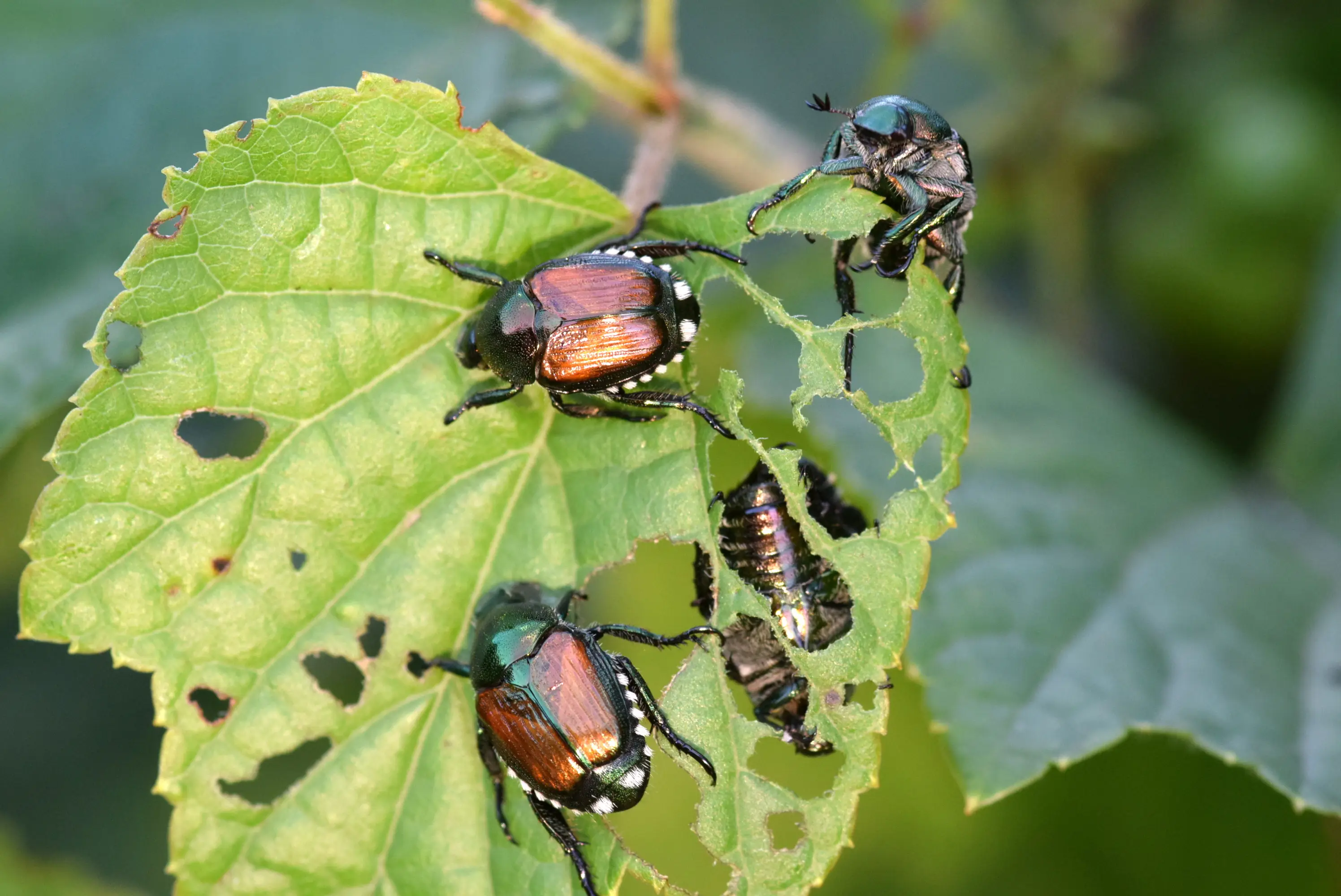
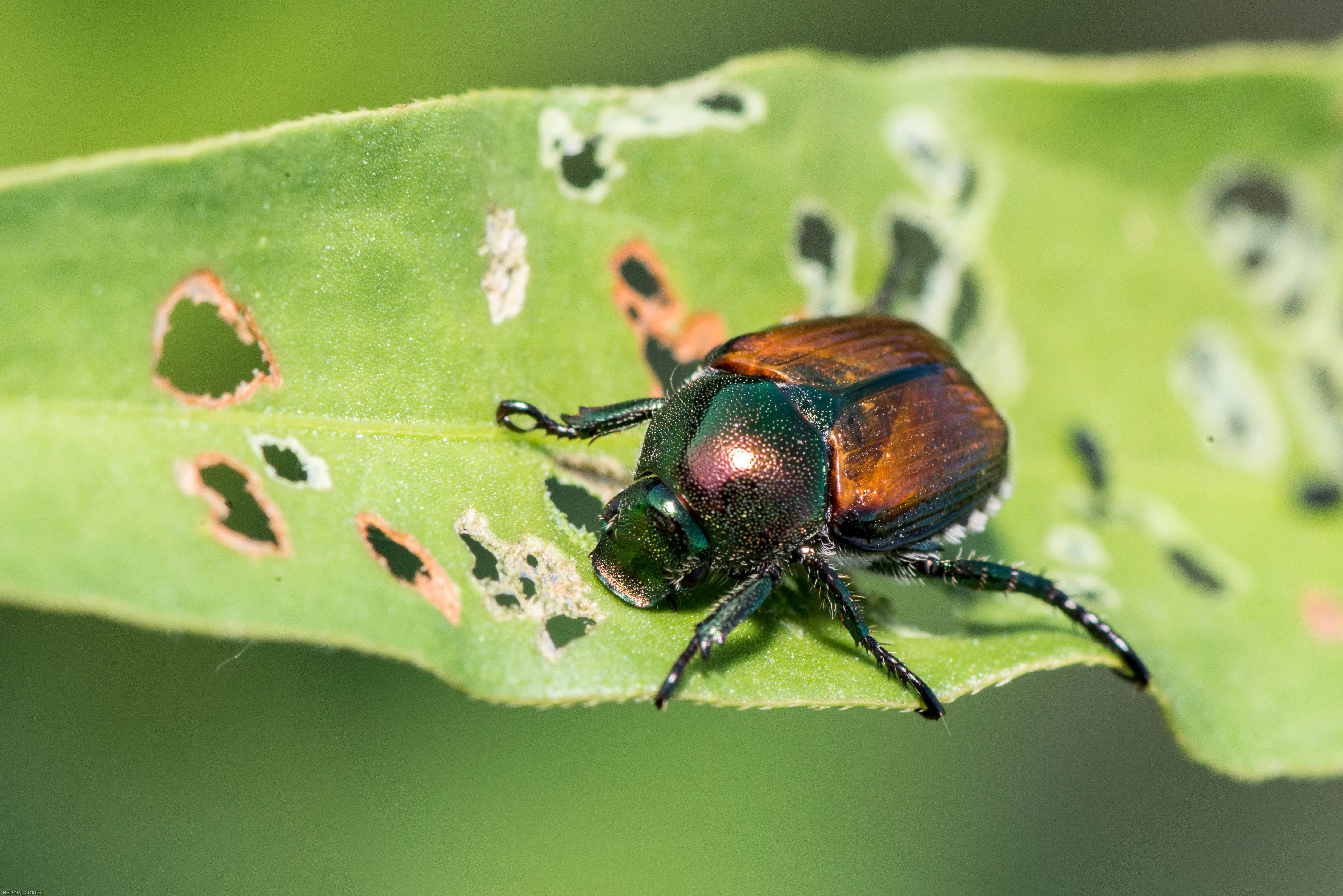
Japanese beetle with iridescent green shell on a rose leaf
By Gary Anderson||8 min read

How to Get Rid of Japanese Beetles

Comprehensive strategies to eliminate these voracious pests and protect your garden from their six-week feeding frenzy.

Japanese beetles (Popillia japonica) are known for their beautiful iridescent green shells and the devastation they cause to gardens and landscapes. These pests are notorious for their summer feasts where they indulge in a six-week feeding frenzy that can decimate roses, perennials, bushes, and fruit trees.

While they may prefer certain plants, when they reach larger populations, they consume other plants they would typically ignore, leaving a trail of destruction. The key to managing these voracious eaters lies in early detection and intervention.

Two-Fold Strategy Required

Effective Japanese beetle control requires targeting both adults and larvae. Adults decimate foliage and flowers while grubs feed on grass roots causing lawn damage. Combining methods for both life stages significantly reduces their impact.

Quick Facts

Size
About 3/8 inch long
Feeding Period
6-week summer frenzy
Plants Affected
Over 300 species

What Are Japanese Beetles?

The Japanese beetle is an unwelcome invasive species that originated from Japan. Since its introduction onto American soil in 1916, it has established itself as a notorious pest across much of the United States, particularly east of the Mississippi River.

Identification

  • About 3/8 inches long
  • Coppery green coloring
  • Iridescent shell
  • Easily recognizable appearance

Feeding Habits

  • Voracious leaf eaters
  • Do not discriminate between plants
  • Favorites include roses
  • Feed on hundreds of species

Why They Thrive

  • No natural predators in U.S.
  • Favorable environment
  • Eradication abandoned by 1920
  • Prolific and widespread

What Kind of Damage Do Japanese Beetles Cause?

Japanese beetles unleash a two-pronged attack on landscapes and crops, causing significant damage that can devastate gardens, lawns, and agricultural areas.

Adult Beetle Damage

Adults are aggressive, indiscriminate feeders that consume foliage and flowers of over 300 plant varieties. They chew leaf tissue away from the veins, creating a distinctive skeletonized, lace-like appearance.

This is often the first unmistakable sign of infestation.

Grub (Larvae) Damage

Grubs feed on grass root systems, causing unsightly, unhealthy brown patches across lawns. Damaged grass can be easily pulled up due to weakened roots.

This is a clear indication of underground destruction.

Getting Rid of Adult Japanese Beetles

Getting rid of adult Japanese beetles is crucial to prevent further damage to foliage and flowers. The following methods can be combined for a comprehensive integrated pest management strategy.

Hand Pick and Drown

A direct, eco-friendly approach that can significantly reduce beetle numbers. Knock beetles off plants directly into a bucket of soapy water. The soap breaks water surface tension, ensuring beetles cannot escape.

Best Time: Early evening around 7 p.m. when beetles are most active yet somewhat sluggish. Wearing nitrile gloves makes the task less unpleasant.

Japanese Beetle Traps

Traps capture only about 75% of beetles they attract, leaving 25% free to feast on your garden. They can help if used correctly as part of a multi-pronged approach.

Set Early

Catch beetles before they reproduce

Position 50+ Feet Away

Away from plants you want to protect

Empty Daily

Dead beetles deter others from entering

Targeted Pesticides (Neem Oil)

Neem oil is an organic insecticide and fungicide highly effective against adult Japanese beetles. It interferes with their life cycle, and when ingested and passed onto eggs, leads to premature larval death.

Pros: Low risk to bees and beneficial insects, organic

Caution: Apply before populations grow large; toxic to aquatic life

Avoid systemic pesticides: Active ingredients have been linked to honeybee colony collapse disorder.

Japanese Beetles Destroying Your Garden?

Our professionals provide targeted treatments to eliminate beetles and protect your landscape.

Call (866) 326-2847

Getting Rid of Japanese Beetle Larvae (Grubs)

Targeting larvae is crucial for breaking the life cycle and preventing future infestations. Various sustainable methods can combat grubs in the soil.

Soil Aeration

Lawn aerating sandals with spikes can penetrate soil and spear grubs. Focus on browned lawn areas where grub activity is likely high.

Early Fall

Grubs feed near surface

Early Spring

When soil reaches ~60°F

Beneficial Nematodes

Soil-dwelling microscopic worms (Heterorhabditis bacteriophora) are natural predators that seek out and kill grubs by invading their bodies and releasing lethal bacteria.

  • Purchase from reputable beneficial insect suppliers
  • Apply in early fall or spring when grubs are vulnerable
  • Requires annual applications (nematodes do not persist)
  • Enriches biological diversity of garden ecosystem

Beneficial Soil Bacteria (BTG)

Bacillus thuringiensis galleriae (BTG) is a naturally occurring bacterium that specifically targets Japanese beetle grubs. Larvae ingest toxic spores while feeding on roots.

Safe for bees
Safe for pets
Lasts several weeks

Introduce Natural Predators

Birds

Catbirds, cardinals, and robins eat adults. Starlings and crows target grubs. Provide food, shelter, and water to attract them.

Tachinid Flies

Native predators that lay eggs on adult beetles. Larvae burrow in and kill the beetle. Attract with dill, fennel, sweet clover, and mint.

Milky Spore

A naturally occurring fungal disease that specifically targets grubs. Infected grubs distribute spores further into soil, enhancing effectiveness over time. Organic and safe for children, pets, and non-target species.

Application

  • Best time: Late August to September
  • Soil temp: 60 to 70°F
  • Spread evenly across affected areas
  • Water in to help spores reach grubs
  • No adverse effects on bees

How to Prevent Japanese Beetles

Employing a combination of homemade repellent sprays, physical barriers, and careful lawn management can significantly reduce beetle invasions without relying on harsh chemicals.

Homemade Repellent Spray

Interestingly, the scent of dead Japanese beetles acts as a deterrent. Collect beetles from hand-picking or traps, blend with water, strain, dilute, and spray on plants. Chemical-free and safe to reapply as needed.

Protect Plants with Row Covers

Lightweight fabrics draped over plants create a physical barrier preventing beetle access during peak feeding periods (6 to 8 weeks).

Northern Regions

Mid-to-late June

Southern Regions

Mid-to-late May

Note: Do not cover flowering plants until after pollination has occurred and fruit has begun to set.

Reduce Lawn Watering

Beetles are drawn to well-irrigated turf because their eggs require consistent moisture. Reducing or halting watering during peak season (late June to late July) decreases lawn attractiveness for egg-laying females. Letting grass go dormant is a natural deterrent.

Careful Planting Considerations

Japanese beetles are particularly attracted to plants with high sugar content. Avoid clustering these susceptible species:

Japanese and Norway maples, birches, crabapples, cherries, raspberries, roses, plums, and grapes

Contact EcoGuard if You Are Dealing with Japanese Beetles

If you are facing a challenging battle against Japanese beetles and need expert assistance, EcoGuard Pest Management is here to help. Our team of knowledgeable professionals is equipped with the tools and expertise necessary to effectively manage beetle infestations and protect your garden and lawn.

Call (866) 326-2847Get Free Quote

Getting Rid of Japanese Beetle FAQs

How do you keep Japanese beetles away?

Use natural repellents like neem oil to keep Japanese beetles away because diluted neem oil mixtures can deter the beetles when applied to plants. Additionally, employ physical barriers like row covers to protect plants during peak beetle activity. It is also effective to maintain a less appealing environment by reducing lawn watering during their breeding season. This helps discourage adult beetles from laying eggs in your yard.

Does dish soap get rid of Japanese beetles?

Yes, dish soap and water can be used to get rid of Japanese beetles. Mixing dish soap with water and spraying it directly onto the beetles can effectively suffocate them. However, this method should be used cautiously as it can also harm beneficial insects and plants if not properly diluted.

What is the best repellent for Japanese beetles?

Neem oil is considered one of the best repellents for Japanese beetles due to its effectiveness and safety for beneficial insects and plants. It disrupts the feeding and reproduction of beetles when sprayed directly on foliage. Additionally, milky spore powder is highly recommended for treating lawns and gardens as it targets the larvae stage of Japanese beetles which reduces future populations.

What can I spray on my plants to get rid of Japanese beetles?

To get rid of Japanese beetles on your plants, you can spray neem oil or insecticidal soap solutions. Neem oil works by disrupting the feeding and reproductive behaviors of the beetles, while insecticidal soap kills them on contact. Both solutions should be applied regularly and after rainfall for continued effectiveness.

From Our Blog

Related Articles

6 Common Signs of Carpet Beetles in Your Home

6 Common Signs of Carpet Beetles in Your Home

Learn the signs of carpet beetle infestation including damage to fabrics, shed skins, fecal pellets, and skin...

Read Article
Are Beetles Dangerous to Humans? Risks & Safety Guide

Are Beetles Dangerous to Humans? Risks & Safety Guide

Learn which beetles can harm humans through bites, pinches, or chemical defenses. Discover blister beetles, stag...

Read Article
Beetle Life Cycle and Lifespan: Complete Metamorphosis Guide

Beetle Life Cycle and Lifespan: Complete Metamorphosis Guide

Learn about beetle life cycle stages including eggs, larvae, pupae, and adult. Understand beetle lifespan, mating...

Read Article
Common Types of Beetles Found in North American Homes

Common Types of Beetles Found in North American Homes

Complete guide to beetle types including ladybugs, weevils, scarabs, carpet beetles, Japanese beetles, and more....

Read Article
How to Get Rid of Beetles: Complete Removal Guide

How to Get Rid of Beetles: Complete Removal Guide

Learn how to get rid of beetles including carpet beetles, pantry beetles, and Japanese beetles. Natural and...

Read Article
How to Get Rid of Carpet Beetles: Complete Removal Guide

How to Get Rid of Carpet Beetles: Complete Removal Guide

Learn how to get rid of carpet beetles with natural and chemical treatments. Identify, eliminate, and prevent carpet...

Read Article
What Are Carpet Beetles? Identification, Life Cycle & Control

What Are Carpet Beetles? Identification, Life Cycle & Control

Learn what carpet beetles are, how to identify them, their life cycle, diet, and how to prevent and control...

Read Article
What Are Japanese Beetles? Identification, Life Cycle & Damage

What Are Japanese Beetles? Identification, Life Cycle & Damage

Learn about Japanese beetles: identification of adults, larvae, and pupae, their life cycle, the damage they cause, and...

Read Article
What Causes Carpet Beetles Inside Your Home?

What Causes Carpet Beetles Inside Your Home?

Learn what causes carpet beetles to infest your home, how they get inside, signs of infestation, and effective...

Read Article
What Does a Beetle Eat? Diet by Species & Type

What Does a Beetle Eat? Diet by Species & Type

Learn what beetles eat including plants, other insects, decaying matter, wood, and household materials. Understand...

Read Article