EcoGuard Pest Management
Mosquito larvae wrigglers in standing water
By Gary Anderson||6 min read

What Does Mosquito Larvae Look Like?

Learn to identify and eliminate mosquito breeding grounds before they become adult biters.

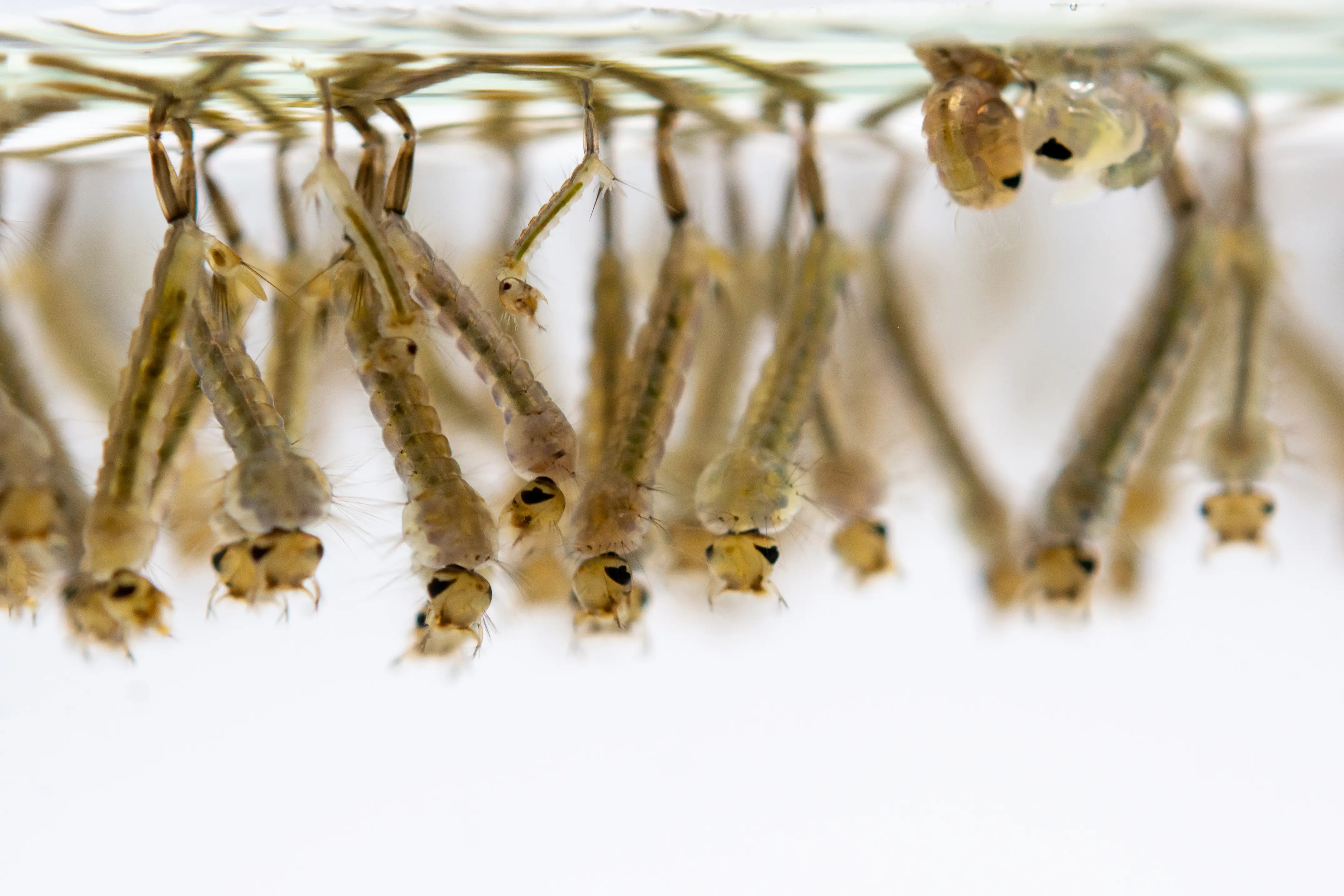
Mosquito larvae, commonly referred to as "wrigglers," represent the second stage of the mosquito life cycle and exhibit distinct physical traits that aid in identification.

These aquatic organisms appear as small, wormlike creatures with cylindrical bodies, enlarged heads and thoraxes, and slender abdomens. They typically suspend themselves just beneath the water surface, using specialized tubes to breathe air.

Quick Identification

Mosquito larvae are about 1/4 inch long, wormlike with large heads, covered in thin black hairs. They hang just below the water surface and display a characteristic wriggling motion when disturbed. Look for them in any standing water.
Key Features of Mosquito Larvae

Body Shape

Large head and thorax with a slender, wormlike abdomen. Covered in hundreds of thin, black hairs that help gather food.

Habitat

Inhabit still or stagnant water: swampy areas, puddles, gutters, or anywhere water pools.

Breathing

Hang just below water surface using tubes at end of abdomen to breathe air.

Movement

Display vigorous wriggling movements when threatened, propelling downward for safety.

How to Spot Them: Look for tails protruding from water surface to breathe (causes ripples), or egg rafts (clusters of eggs) indicating a breeding ground.

The Mosquito Life Cycle

1

Eggs

Female lays 100-400 eggs on/near water after blood meal. Can survive dry conditions for months.

2

Larvae (Wrigglers)

Aquatic stage. Go through 4 instar phases, molting skin each time. Takes 4-10 days in summer.

3

Pupae (Tumblers)

Do not feed. Focus on metamorphosis. Stage lasts 2 days to 1 week.

4

Adult

Emerges from pupal case, flies away. Mates within days. Females seek blood meals.

Complete cycle: A few weeks typically, but can be as short as 10 days under optimal conditions.

Found Mosquito Larvae on Your Property?

Eliminate breeding grounds before they become biting adults. Professional treatment is most effective.

Call (866) 326-2847

What Do Mosquito Larvae Eat?

Primary Diet

Feed on algae and microscopic organisms in water. Possess mouth brushes that function as filters to extract small food sources.

Predatory Species

Some species exhibit predatory behavior, preying on other mosquito larvae. One species (Psorophora ciliata) uses a "harpoon head" to capture prey.

Feeding Strategy

Some larvae use a harpoon-like method, projecting their heads with mouths wide open to reel in prey using a thin neck membrane. Remarkably quick process.

Where to Find Mosquito Larvae

Female mosquitoes seek water sources that provide sufficient food for offspring. Larvae remain in water until they develop into adults with wings.

Dormant Fountains

Unused water features, especially with algae or organic materials. Prime mosquito hotspots.

Dog Bowls & Containers

Even small containers like pet bowls or overturned frisbees provide suitable egg-laying environments.

Swimming Pools

Pools not regularly cleaned or covered become breeding sites during warmer months.

Ponds

Small ponds offer abundant food for larvae and serve as excellent habitats for egg-laying.

Rain Gutters

Clogged gutters with standing water are common breeding grounds often overlooked.

Old Tires & Buckets

Any container that collects rainwater. Turn items over when not in use.

How to Kill Mosquito Larvae

Targeting mosquitoes during their larval stage is most effective. They cannot fly and are found in concentrated locations.

Breeding Site Reduction

Primary method. Eliminate stagnant water:

  • Empty containers, turn over when not in use
  • Clean rain gutters, unclog downspouts
  • Change bird bath water weekly
  • Keep pools clean and chlorinated
  • Fill/drain ditches and tree holes

Mosquito Larvicides

When elimination is impractical. Most contain methoprene or Bti (Bacillus thuringiensis israelensis).

Disrupts larvae development or attacks digestive tract. Safe for other wildlife when used as directed.

Natural Predators

Mosquitofish (Gambusia) feed on mosquito larvae. Can be introduced into ponds suspected to be breeding grounds. Harnesses natural food chain.

Household Products

Cinnamon oil and dish soap suffocate larvae by coating water surface. Apple cider vinegar requires high concentration.

Warning: Do not use in water with fish or other organisms.

Why Call Professional Mosquito Exterminators

Expertise & Experience

Accurately locate and identify breeding grounds. Target all stages of the life cycle.

Thoroughness

Comprehensive approach: inspect property, implement control, advise on preventing future infestations.

Safety

Trained to use substances safely. Proper dosages reduce risk of environmental damage.

Long-term Solution

Address conditions that invite breeding. Provide strategies for ongoing prevention.

Contact EcoGuard if You Are Dealing with Mosquito Problems

Managing mosquito populations requires diligence and professional expertise. EcoGuard Pest Management provides effective, comprehensive solutions with environmentally friendly practices. Our professional mosquito control experts keep mosquito populations at bay. Call today and enjoy your outdoor spaces in comfort and peace.

Call (866) 326-2847Get Free Quote

Mosquito Larvae FAQs

How do you get rid of mosquito larvae?

The most effective method is to eliminate standing water where mosquitoes lay their eggs. Other methods include using growth regulators, mosquito larvicides, natural predators like mosquitofish, and in some cases household products. Consider the environmental impact to ensure native species remain safe.

Are mosquito larvae harmful to humans?

Mosquito larvae are not typically harmful to humans as they have no ability to bite or spread disease. However, consuming water infested with mosquito larvae could introduce pathogens, parasites, and dangerous bacteria which could have negative outcomes.

What is the larva of mosquito?

The larvae of a mosquito is the second stage of its life cycle after the egg. This stage is identified by its aquatic environment and worm-like appearance. It needs to develop through 4 instar phases before maturing into the pupal stage, feeding on algae and organic material.

Can mosquito larvae be seen?

Mosquito larvae are visible to the naked eye but can be difficult to see because of their size. They dive underwater when disturbed. When found, they are normally about a quarter inch long and wriggling near the surface to breathe.

From Our Blog

Related Articles

Am I Allergic to Mosquito Bites? Skeeter Syndrome Guide

Am I Allergic to Mosquito Bites? Skeeter Syndrome Guide

Learn about mosquito bite allergies and skeeter syndrome. Understand symptoms, causes, treatments, and when to seek...

Read Article
Can Mosquitoes Bite Through Clothes? Protection Guide

Can Mosquitoes Bite Through Clothes? Protection Guide

Learn if mosquitoes can bite through clothing, what fabrics offer best protection, and how to prevent bites with the...

Read Article
Different Types of Mosquito Species in the US

Different Types of Mosquito Species in the US

Learn about the most common mosquito species in the United States, including Aedes, Culex, and Anopheles. Understand...

Read Article
How Long Do Mosquitoes Live? Life Cycle & Lifespan Guide

How Long Do Mosquitoes Live? Life Cycle & Lifespan Guide

Learn how long mosquitoes live, their life cycle stages, and factors affecting lifespan. Discover the differences...

Read Article
How to Get Rid of Mosquitoes: Indoor & Outdoor Control

How to Get Rid of Mosquitoes: Indoor & Outdoor Control

Learn how to get rid of mosquitoes inside and outside your home. Discover treatment methods, natural deterrents, and...

Read Article
Mosquito Diseases: Complete List & Prevention Guide

Mosquito Diseases: Complete List & Prevention Guide

Learn about diseases mosquitoes carry including malaria, West Nile, Zika, dengue fever. Discover who is at risk and how...

Read Article
No See Um Bites Vs Mosquito Bites: How to Tell the Difference

No See Um Bites Vs Mosquito Bites: How to Tell the Difference

Learn how to identify no see um bites vs mosquito bites. Compare symptoms, treatment options, and prevention strategies...

Read Article
What Are Mosquitoes? Anatomy, Life Cycle & Facts

What Are Mosquitoes? Anatomy, Life Cycle & Facts

Learn about mosquitoes including anatomy, life cycle, what attracts them, diseases they carry, and how to get rid of...

Read Article
What Attracts Mosquitoes to Humans & Your Home

What Attracts Mosquitoes to Humans & Your Home

Learn what attracts mosquitoes to certain people including CO2, sweat, blood type, and body heat. Discover why...

Read Article
What Blood Type Do Mosquitoes Like Best?

What Blood Type Do Mosquitoes Like Best?

Learn which blood type mosquitoes prefer. Studies show Type O blood is twice as attractive to mosquitoes as Type A....

Read Article
When Do Mosquitoes Come Out? Season, Time of Day & Activity

When Do Mosquitoes Come Out? Season, Time of Day & Activity

Learn when mosquitoes are most active including time of day, mosquito season by region, and temperature thresholds....

Read Article