EcoGuard Pest Management
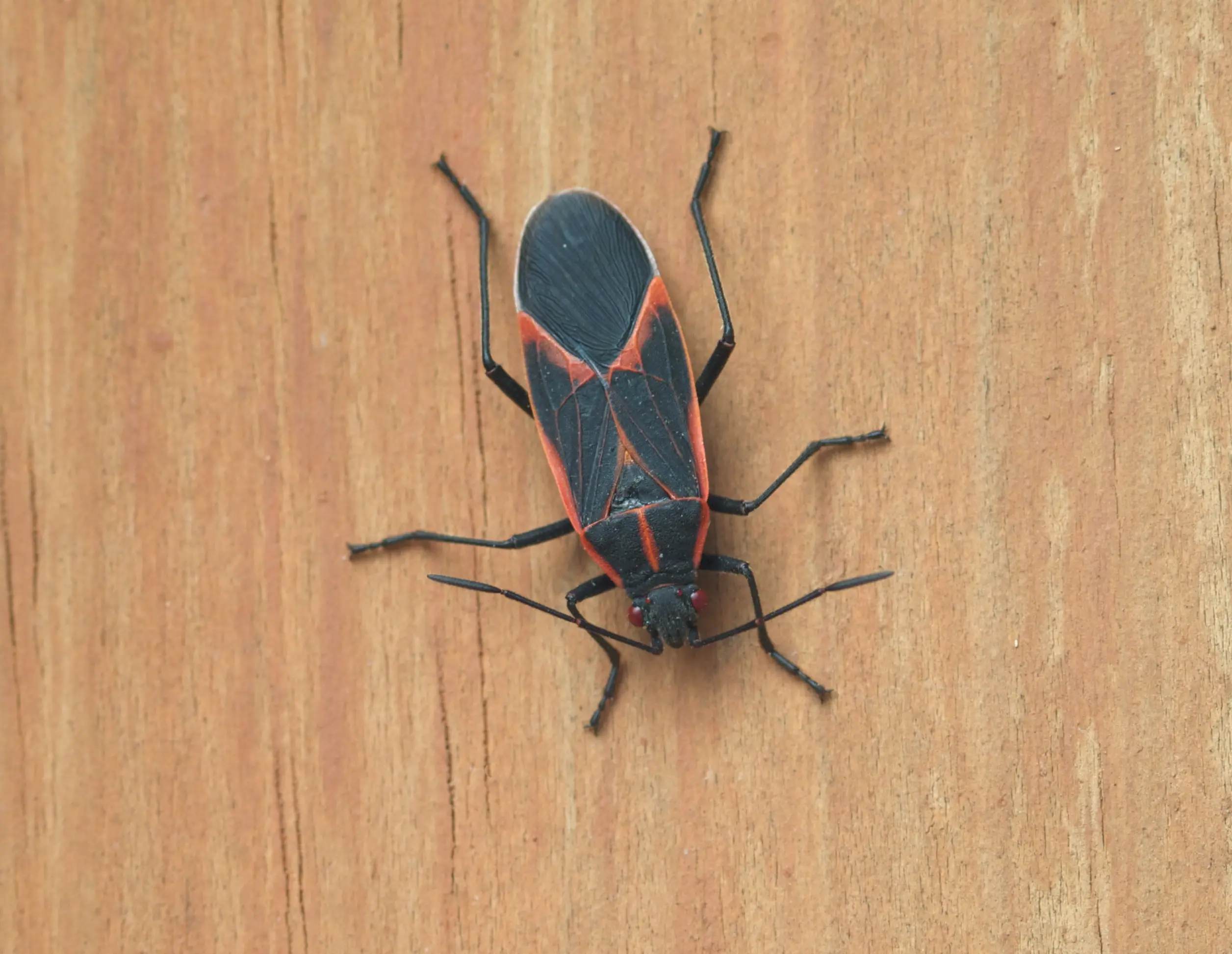
Close-up of boxelder bug showing red and black markings
By Gary Anderson||6 min read

What Are Boxelder Bugs?

Understanding boxelder bugs, their behavior, and how to keep them out of your home.

Boxelder bugs are a common North American insect that gets their name from the trees they rely on for food and shelter: the boxelder tree. These trees have been used as both ornamental trees and for erosion control, so they are found all over the US.

While boxelder bugs prefer boxelder trees, they also feed on other maple and fruit trees. They do not cause enough damage to impact tree growth, making them a neutral pest. However, they are still a nuisance that will aggregate in large numbers before looking for warm places to overwinter, like your home.

Boxelder Bug Quick Facts

Size: Up to 1/2 inch long
Color: Black body with red markings, red eyes
Classification: True bug (Hemiptera)
Threat Level: Neutral pest (nuisance only)
Boxelder Bug Identification

Boxelder bugs are a true bug that can reach up to 1/2 inch long at maturity:

Adult Boxelder Bugs

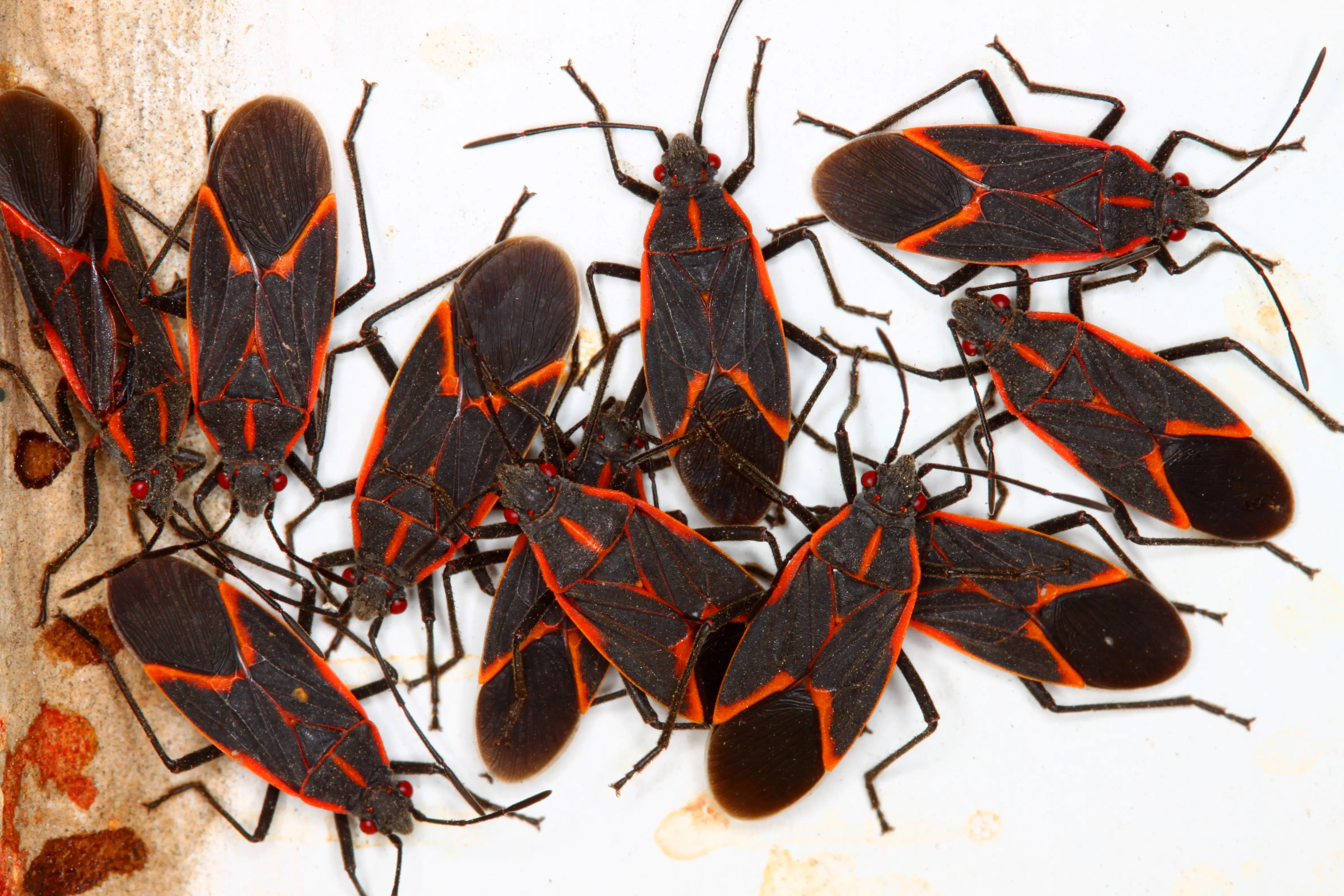
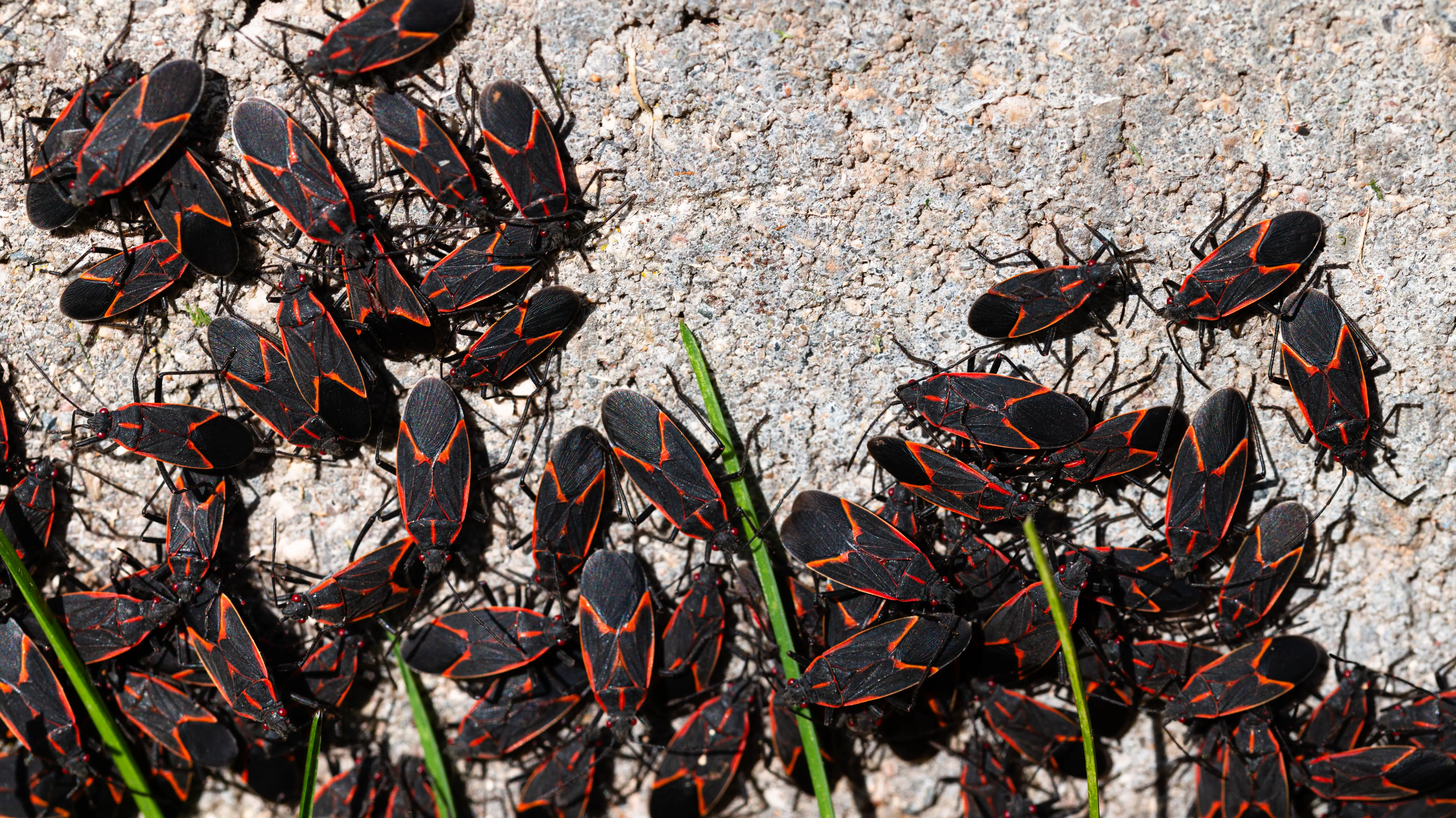
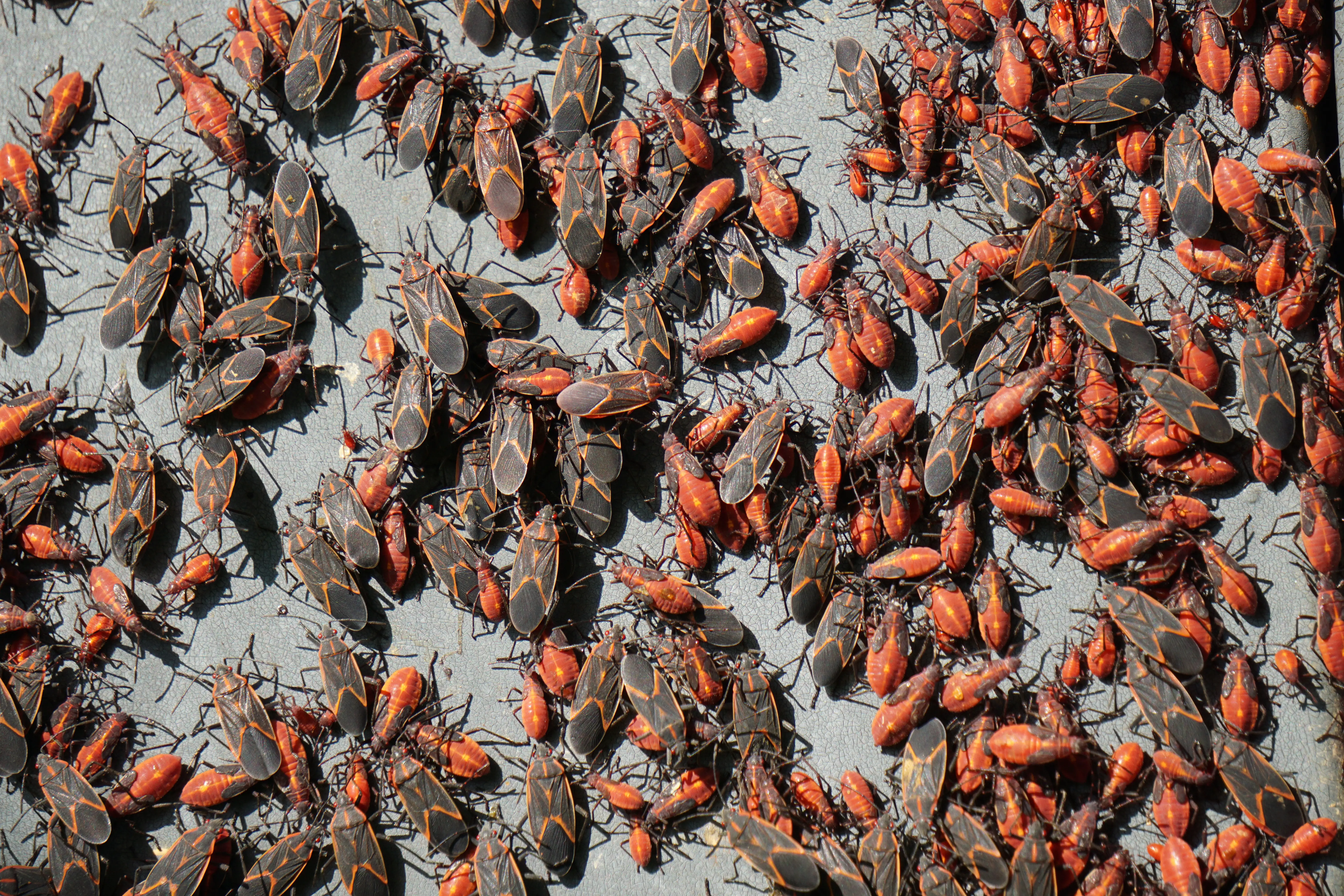
Flattened, oval, black body with red markings, red eyes, six legs, and long antennae. Two black wings with red ridges that create an "X" or "W" pattern when laid back.

Boxelder Nymphs

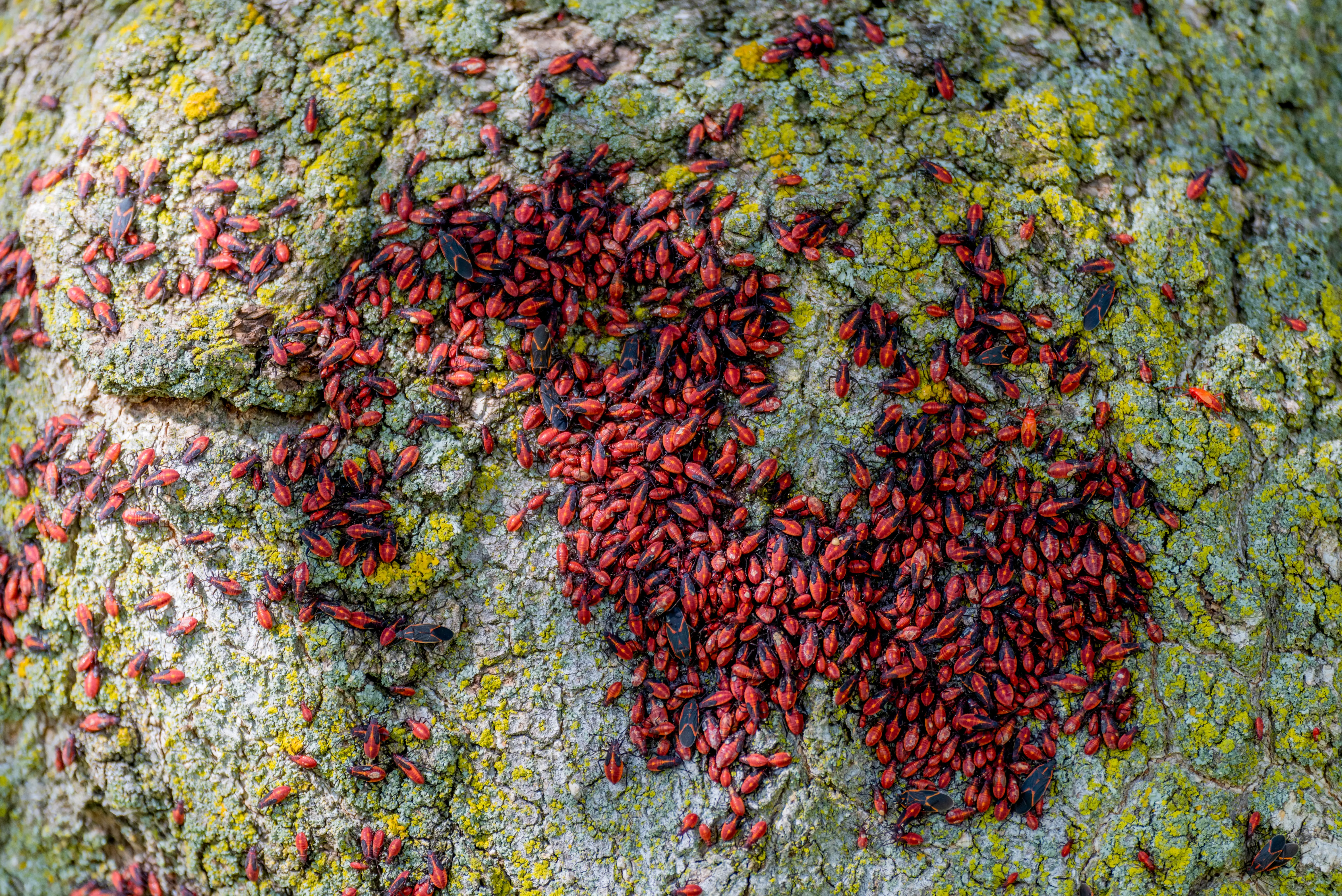
Smaller versions of adults with bright red bodies that do not darken or develop wings until final molts. Typically clustered together creating bright red patches on tree surfaces.

Boxelder Bug Behavior

Warm Weather Behavior

Boxelder bugs spend much of the year sunning themselves on tree surfaces to stay warm. Their nymphs primarily feed on boxelder seed pods. They can be found on boxelder, maple, and ash trees.

Cold Weather Migration

As temperatures drop in fall, boxelder bugs migrate to warm places to overwinter. They may take refuge in tree cavities, but often find cracks and crevices leading inside homes.

Aggregation Pheromone

If boxelder bugs find a safe place inside your home, they will release a pheromone that attracts other boxelder bugs. During winter, they remain mostly dormant in hibernation.

Life Cycle of Boxelder Bugs

Spring

Adults awaken from hibernation and return outside to feed on boxelder trees

Summer

Eggs laid on female seed-bearing boxelder trees; by mid-July, large clusters visible

Fall

Mature bugs leave trees seeking warm places; nymphs that do not mature will not survive winter

Winter

Boxelder bugs lay dormant in their hibernation spots until spring

Boxelder Bugs Invading Your Home?

Our professionals can eliminate boxelder bugs and implement exclusion strategies to prevent future infestations.

Call (866) 326-2847

What Do Boxelder Bugs Eat?

Boxelder bugs are sap suckers that use a thin proboscis to extract juices from leaves and fruits:

Nymph Diet

Nymphs rely on boxelder seed pods as their primary food source, which is why reproducing boxelder bugs are found on or near female boxelder trees.

Adult Diet

Adults feed on boxelder, maple, ash, plum, and apple trees. They mostly feed on leaves but can also feed on fruit, causing bruising, scarring, and deformation.

Are Boxelder Bugs a Threat?

Boxelder bugs are considered a neutral pest due to them not having any significant positive or negative impact on their ecosystems.

Do Boxelder Bugs Bite?

No. While anecdotal reports exist, boxelder bugs are strictly herbivores and incapable of biting due to their anatomy. They do not have chewing mouthparts and rely on a straw-like proboscis to suck fluids from leaves.

Damages Caused by Boxelder Bugs

Outdoor Damages

They drain fluids from leaves and fruits, causing browning, bruising, and scarring. Damage is largely aesthetic and does not significantly impact plant health.

Indoor Damages

Their fecal matter stains fabrics a reddish color. They also leave bright red stains if smashed or crushed. They do not cause structural damage or contaminate food.

Do Boxelder Bugs Smell?

Yes. Similar to stink bugs, they produce an unpleasant odor and taste designed to deter predators. They also produce an aggregation pheromone that attracts other boxelder bugs. When hundreds gather, the accumulated smell becomes much more noticeable.

Signs of a Boxelder Bug Infestation

Outdoor Signs

Large clusters of boxelder bugs on tree surfaces from late spring to late fall.

Indoor Signs

Large clusters indoors or reddish fecal stains on fabrics and surfaces where boxelder bugs have been.

How to Prevent Boxelder Bugs

The best way to stop boxelder bugs is to prevent them altogether through exclusion strategies and eliminating attractants.

Exclusion Strategies

Seal cracks, crevices, and gaps in foundation, stucco, or plaster
Repair damaged or torn window and door screens
Repair damaged vent covers and vent screens
Seal access points around electrical, phone, cable, and plumbing lines
Install door sweeps
Fill gaps under fascia board or siding with appropriate filler

Inside Prevention

Use a vacuum cleaner to remove boxelder bugs without smashing them and leaving red stains. If bugs are discovered inside wall voids, wait until spring so they vacate before applying treatment, as dead bugs may attract other pests.

Contact EcoGuard if You Are Dealing with Boxelder Bugs

If you are currently dealing with a boxelder bug infestation, it may be time to enlist the help of qualified professionals. EcoGuard Pest Management has a team of licensed and trained boxelder bug experts standing by to provide you with an inspection and treatment. Our integrated pest management approach combines treatment with exclusion strategies and ongoing maintenance to ensure that boxelder bugs do not pose an ongoing problem.

Call (866) 326-2847Get Free Quote

Boxelder Bug FAQs

Are boxelder bugs harmful to humans?

Boxelder bugs are not particularly harmful to humans in any way. The biggest impact these insects have on humans is their offensive odor. Boxelder bugs release a chemical that smells bad and acts as a defense mechanism against predators.

Should I worry about boxelder bugs?

Boxelder bugs are considered a neutral pest that have very little noticeable impact on their ecosystems. While they do cause some aesthetic damage to the plant life they feed on, they do not significantly impact crop harvests.

What attracts boxelder bugs?

Boxelder bugs are attracted to boxelder trees because the seed pods dropped by these trees is the preferred food source for boxelder nymphs. These bugs also release an aggregation pheromone that they use to attract other boxelder bugs. This likely increases their exposure to potential mates as well as increases the power of their defensive odor.