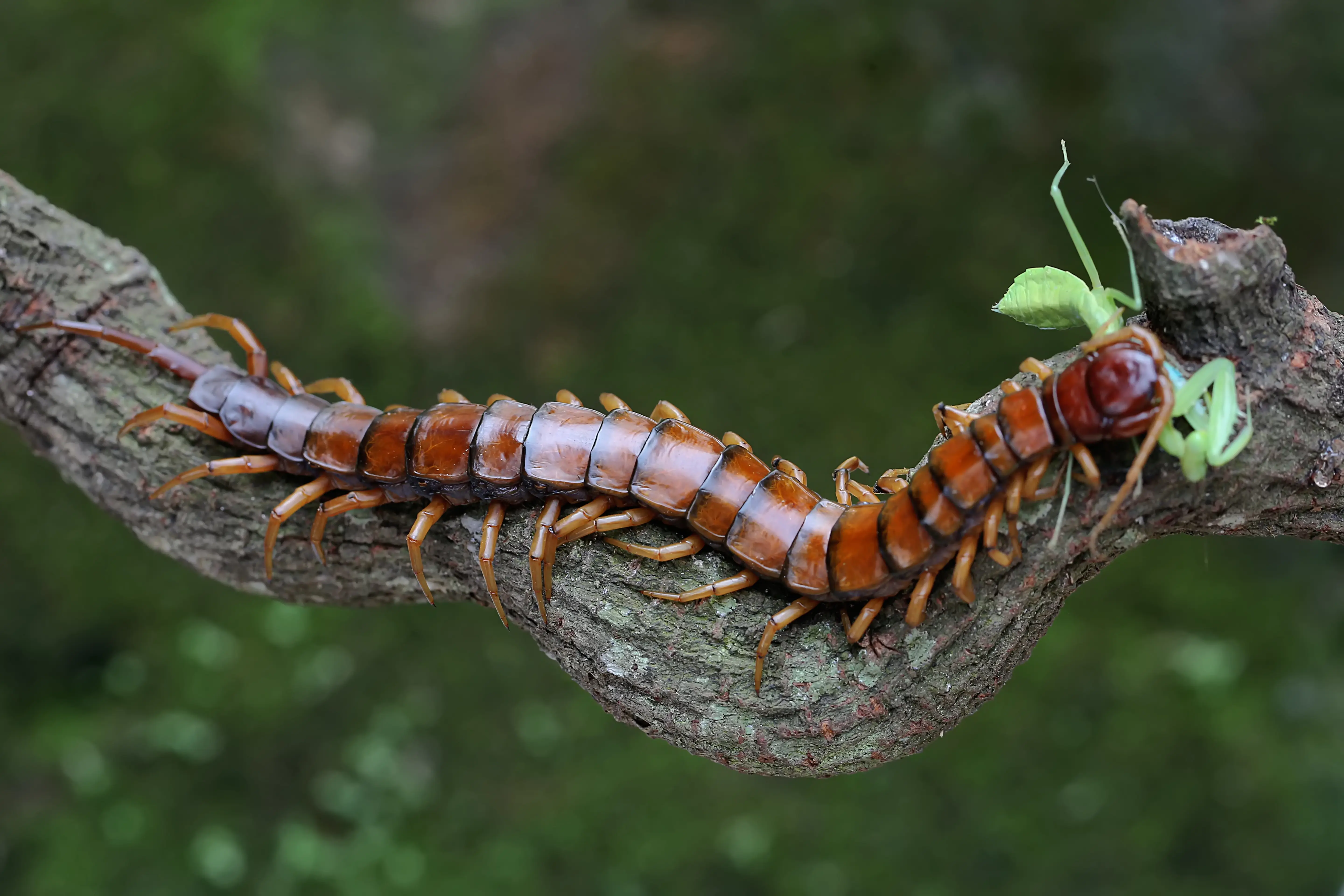
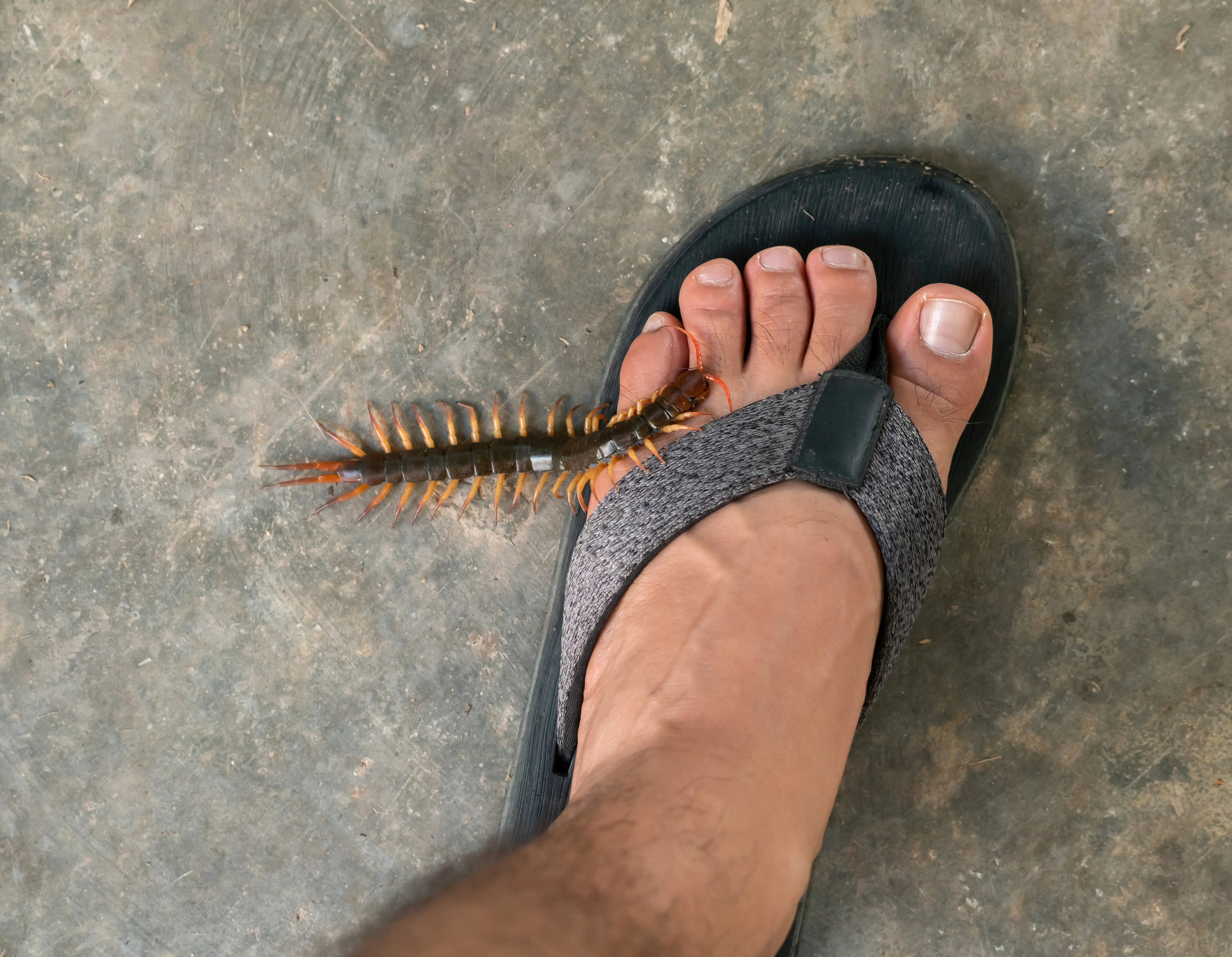
Centipedes are not typically aggressive towards humans, but they can inflict painful "bites" when provoked. They do so using their forcipules — stinger-like appendages that are a modified pair of legs capable of piercing skin. This results in a wound often characterized by a pair of bleeding bite marks forming an inverted V shape.
These bites inject venom which enables centipedes to immobilize prey like insects and worms. While most centipede bites are not life-threatening for humans, the venom can cause localized pain and swelling — and may pose serious risk to children and those susceptible to allergic reactions.
Quick Answer
Yes, centipedes can bite and are venomous — but bites are rare and usually not dangerous to healthy adults. Symptoms typically include localized pain, swelling, and redness lasting 30 minutes to 3 days.
In This Article:
Bite Severity Guide
Mild pain, rarely breaks skin
Moderate pain, swelling 1-3 days
Severe pain, may need medical care