
EcoGuard Pest Management
Aphids feeding on a plant leaf
By Gary Anderson||3 min read

What Are Aphids & What Do They Look Like?

Tiny sap-sucking insects that can rapidly multiply and damage your plants.

Aphids are tiny insects that suck the sap from leaves and plants. While harmless in small numbers, they can rapidly multiply into huge populations and damage the plants they are feeding on.

Aphid infestations can lead to discolored or wilted leaves, stunted plant growth, and mold growth, all of which can ruin your home's landscaping. Thankfully, there are several effective ways to handle or prevent an infestation.

1,350
Species in N. America
7-10 Days
To Reproduce
40-60
Offspring Per Female

How to Identify Aphids

Shape

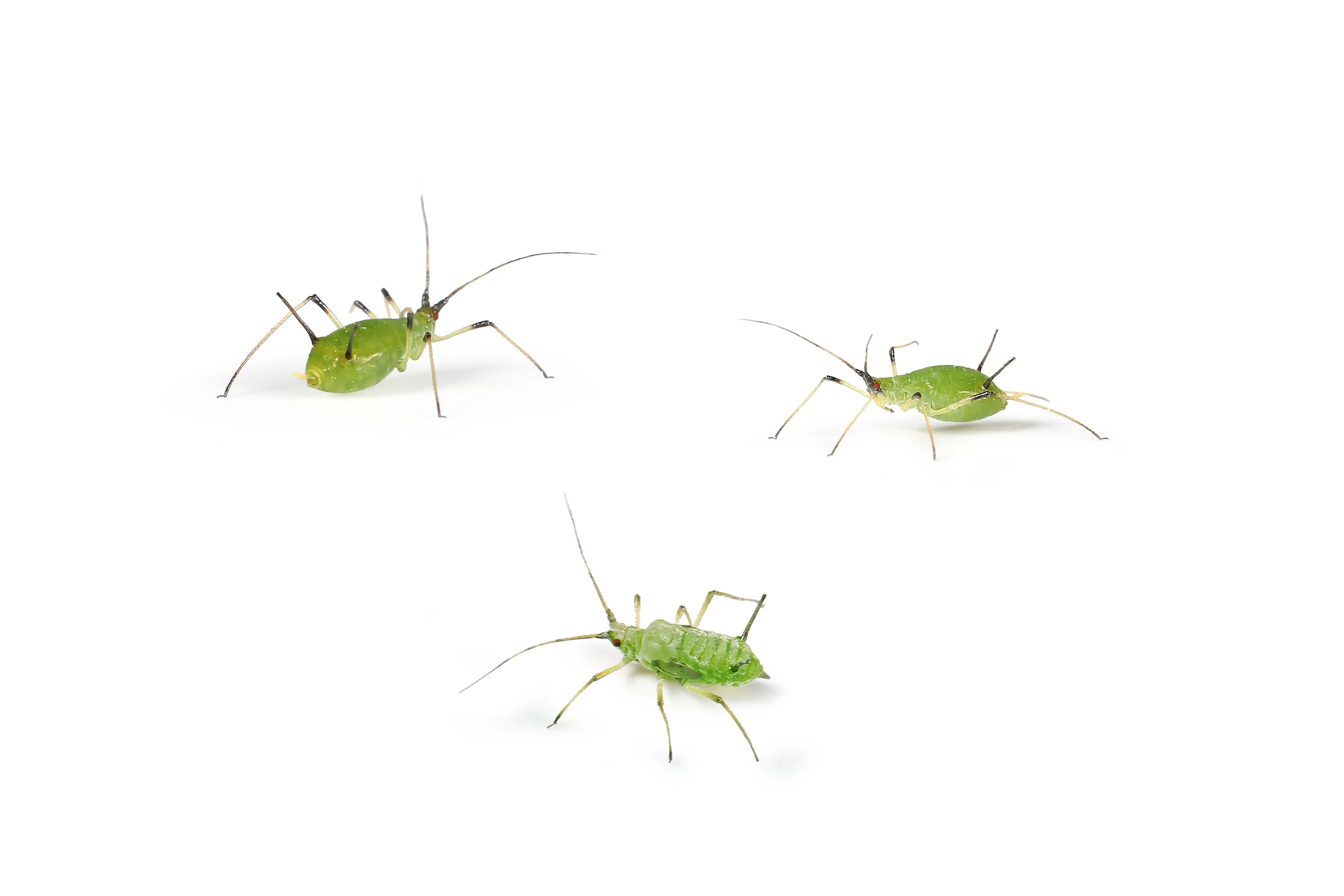
Pear-shaped bodies with antennae. Two tails ("cornicles") at end of abdomen - easiest way to identify aphids.

Size

2-4mm long (1/16-1/8 inches). Tiny and hard to spot unless inspecting closely or population is large.

Color

Green, yellow, black, red, or gray depending on species and plants eaten. Winged aphids may be darker.

Wings

Most are wingless. Some develop wings when population is crowded and plants lose nutrients.

Numbers

Usually feed in large groups. Can nearly blanket leaves when population is large.

Young

Nymphs look like smaller adults. Shed white exoskeletons on leaves as they grow.

What Problems Do Aphids Cause?

Damaged Leaves

Leaves become twisted, curled, or yellow from sap removal.

Common
Poor Plant Growth

Plants struggle to grow. Shoots may die and be unable to produce flowers.

Moderate
Virus Transmission

Some aphids carry plant viruses like cucumber mosaic virus, infecting vegetables and flowers when they bite.

Serious
Honeydew Deposits

Sugary liquid waste dots plants and surfaces below. Attracts ants and yellow jackets.

Nuisance
Sooty Mold

Black fungus grows on honeydew, turning leaves black. Unsightly and potential health hazard.

Moderate

Aphid Life Cycle

Population Explosion Warning

A dozen aphids can lead to hundreds of thousands infesting a plant in just weeks. Females can reproduce asexually and produce 40-60 offspring each. Young mature in only 7-10 days.

Arrival

Winged aphids fly to plant and leave behind young aphids.

Feeding

Young feed on plant sap and grow rapidly.

Reproduction

Mature in 7-10 days. Can reproduce asexually.

Spread

When plant loses nutrients, winged aphids carry young to new plants.

Lifespan: Most aphids only live for about 1 month. Asexual reproduction takes 20-30 days. Some species give birth to live young while others lay eggs.

Aphids Damaging Your Plants?

Professional treatment protects your landscaping and garden.

Call (866) 326-2847

How to Control Aphids

Natural Predators

Ladybugs
Lacewings
Parasitic Wasps
Syrphid Fly Larvae

Home Remedies

High Pressure Water

Spray aphids off plants. One of the most effective methods.

Soapy Water

Few drops of dish soap in water. Reapply every 2-3 days for 2 weeks.

Prune Infested Areas

Remove heavily infested leaves or crush small numbers by hand.

Summer Oils

Disrupt aphid membranes. Avoid high temperatures and growing season.

Remove Weeds

Sowthistle and mustard can support large aphid populations.

Water & Fertilize

Makes plants more resilient against aphid feeding.

Pesticide Options

Low-Risk Pesticides

Insecticidal soap, salts, summer oils, neem (azadirachtin). Little harm to environment and helpful insects. Neem causes aphids to stop feeding and slowly starve.

Residual Pesticides

Work quickly, do not need reapplication. Includes acephate, permethrin, bifenthrin. Downside: can kill helpful bugs and harm plants in wrong season.

Systemic Pesticides

Applied to tree base, transported through sap to leaves. Effective for trees. Takes 2-4 weeks. Includes imidacloprid, dinotefuran. Also kills other insects.

Call EcoGuard Pest Control for Aphid-Related Problems

Need to get rid of an aphid infestation? Contact EcoGuard Pest Control as soon as possible. Our pest control experts will determine the most effective and eco-friendly way to deal with your aphid infestation and prevent further damage to your landscaping.

Call (866) 326-2847Get Free Quote

Aphid FAQs

What do aphids look like?

Aphids have pear-shaped bodies with antennae and two tails (cornicles) at the end of their abdomens. They are 2-4mm long and range in color from green, yellow, black, red, or gray depending on species and the plants they eat.

How fast do aphids reproduce?

Aphids mature and can start reproducing in only 7-10 days. Each female can produce 40-60 offspring, and many can reproduce asexually. A dozen aphids can lead to hundreds of thousands infesting a plant in just weeks.

What is the best way to get rid of aphids?

High-pressure water spray is one of the most effective methods for small infestations. For larger problems, insecticidal soaps or professional treatment may be needed. Encouraging natural predators like ladybugs can also help prevent populations from growing.